Cameras & Photography

9 Best Underwater Camera of 2026: Match Your Actual Depth and Use-Case

Which underwater camera actually fits your depth, budget, and shooting style — from pool toys to macro machines.

Most underwater cameras on the market claim impressive depth ratings, but that number often refers to the maximum with an included housing — not the depth you can safely use straight out of the box. A camera that says '131ft waterproof' only hits that depth when sealed inside a plastic case; without it, many are barely splash-proof. That disconnect leaves snorkelers and divers with unexpected limitations.

Battery life is another gap between marketing and reality. Advertised runtimes assume ideal conditions, but recording 4K video underwater drains batteries in 20–30 minutes on many budget models. And once you're in the water, swapping a battery means surfacing, drying off, and losing the shot.

This guide cuts through the spec sheet confusion by focusing on three things that actually matter underwater: true depth without extra housing, real-world battery endurance, and the stabilization needed to keep footage watchable. The right camera for you depends on whether you’re snorkeling in clear shallows, diving for macro subjects, or handing the camera to a kid.

1

AKASO Brave 7 LE

Top Pick
AKASO Brave 7 LE

Best Overall

Our Score 8.8/10
Check Price

Worth Noting

  • In windy or splashy environments, the internal microphone picks up distracting noise
  • Image stabilization smooths casual motion but struggles with fast, jarring movement
Rating
4.4 ★
Battery
2x 1350mAh
Best For
Snorkeling & vlog
Video Res
4K @30fps

The Akaso Brave 7 LE stands out by including a front-facing screen alongside the rear touch display, making it one of the few mid-range action cameras where you can frame selfies and vlogs without guesswork. It records 4K video at 30fps and captures 20MP stills, with image clarity that holds up well in bright outdoor and underwater conditions.

In real-world snorkeling use, the included waterproof housing keeps the camera dry down to 131 feet, and the dual 1350mAh batteries each deliver roughly two hours of recording, which covers a full day of intermittent shooting. The electronic image stabilization EIS 2.0 smooths out moderate walking and swimming motion, but if you plan to film high-speed activities like mountain biking or wakeboarding, the stabilization will show some residual jitter compared to top-tier models from GoPro or DJI.

This camera suits snorkelers who want to capture both above-water commentary and underwater scenes without swapping gear, as well as vloggers on a mid-range budget who need a front screen for self-framing. The audio from the internal microphones is usable for wind-free conditions but becomes thin and muffled around moving water or wind, so for clear voice narration, pairing it with an external microphone via the adapter is necessary.

Tip: Attach an external microphone via the USB-C adapter for clearer voice recording in windy or wet conditions.

Bottom line: For snorkelers and vloggers who need a front screen and solid 4K at a mid-range price, the Brave 7 LE delivers exactly what it promises — just pair it with an external mic if audio matters.

2

DJI Osmo Action 4

DJI Osmo Action 4

Best Premium

Our Score 9.2/10
Check Price

Worth Noting

Rating
4.6 ★
Battery
1770mAh
Best For
Action videographers
Video Res
4K @120fps

The DJI Osmo Action 4's 1/1.3-inch sensor delivers noticeably better low-light footage than the top pick, with improved dynamic range that handles contrast between bright surface light and dark underwater shadows. RockSteady 3.0 stabilization smooths out hand tremors and current movement. The battery lasts up to 150 minutes—enough for a full day of diving without recharging. Its 4K 120fps capture allows smooth slow-motion playback of fast-moving marine life.

This camera is best for underwater videographers who shoot in challenging light conditions—twilight, deep dives, or overcast days—and need a battery that keeps going. The cold-resistant design works reliably down to -20°C, making it suitable for ice diving or cold-water excursions. Buyers who want a front screen for selfie framing and prefer a camera with extensive community-verified performance may find the top pick a better match.

Bottom line: The DJI Osmo Action 4 is the choice for underwater videographers who prioritize low-light quality and battery endurance over a wider base of user-verified performance.

3

OM System TG-7

OM System TG-7

Best for Macro

Our Score 8.6/10
Check Price

Worth Noting

  • Battery life drains faster in cold water, which can shorten dive sessions.
  • Interface requires time to learn for full manual control.
  • Some units may cease operation after limited use in certain cases.
Rating
4.3 ★
Battery
Best For
Macro photography
Video Res
4K @30fps

The OM System TG-7 stands apart from standard action cameras by offering true macro photography underwater, down to 1cm with a built-in LED ring light that illuminates tiny subjects. Its rugged construction handles drops, crushing, and freezing temperatures, making it a companion for harsh environments. The 4x optical zoom adds framing flexibility that fixed-lens action cams lack.

This camera suits snorkelers and divers who prioritize capturing detailed close-ups of nudibranchs, corals, and other small marine life over video frame rates or ease of use. The waterproofing reaches 50ft without a housing, adequate for shallow dives. However, the interface requires time to learn for full manual control, and battery life drains faster in cold water, so plan accordingly. Some units may cease operation after limited use, meaning a backup is worth considering for critical trips.

When used for its intended purpose — underwater macro — the TG-7 delivers sharp, color-accurate images that few other compact cameras can match. The LED ring light provides consistent illumination at short distances. For general snorkeling video, the 4K at 30fps is adequate, but those needing high frame rates will look elsewhere.

Tip: Practice navigating the menu system before a dive; setting up manual focus and white balance in advance saves time underwater.

Bottom line: For a dedicated underwater macro photographer, the TG-7 is the only compact that brings true close-up capability and ruggedness — but the possibility of early unit failure and a learning curve mean it is not a casual purchase.

4

AKASO Brave 4

AKASO Brave 4

Best Budget Action Camera

Our Score 8.8/10
Check Price

Worth Noting

  • No front-facing screen for framing selfies or vlogging.
  • Battery life in 4K recording is limited to around 20-30 minutes per battery.
Rating
4.4 ★
Battery
2x 1050mAh
Best For
Budget action
Video Res
4K @30fps

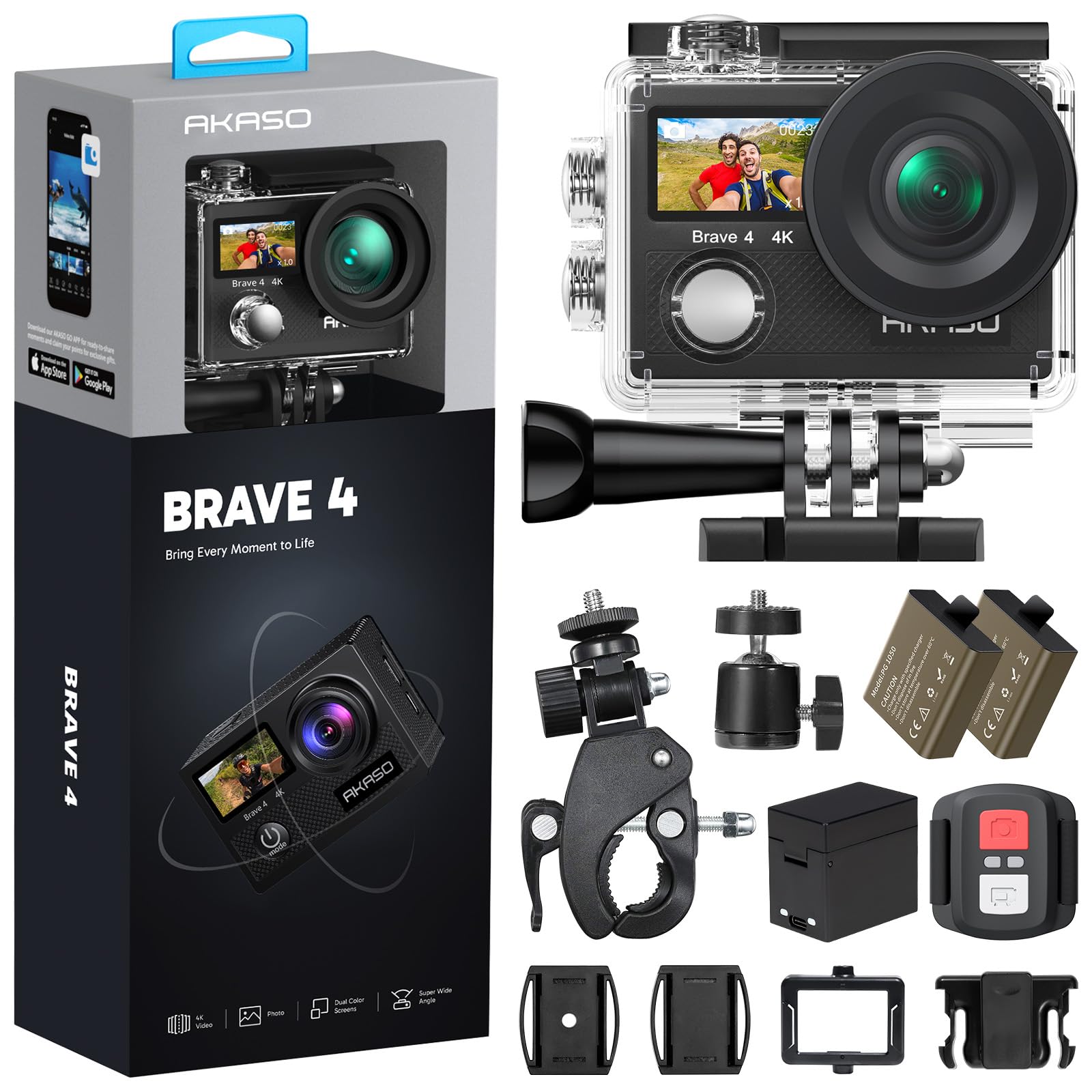
The AKASO Brave 4 records clear 4K video at 30 frames per second, with electronic stabilization that reduces shake during active water sports. Its included waterproof case allows diving to 131 feet, and the bundle comes with adhesive mounts, a head strap, and two rechargeable batteries — ready to use out of the box. Unlike the top pick, it lacks a front-facing screen, which is irrelevant for underwater framing but limits above-water selfie shots.

Battery life is the primary tradeoff: each cell provides roughly 20 to 30 minutes of 4K recording, so carrying spares is essential for longer dives or multi-hour outings. The plastic housing seals reliably for snorkeling depths, though checking the o-ring before each use is wise. For beginners focused on underwater action, this camera offers a low-cost entry point with performance that exceeds expectations.

The controls are straightforward: a single mode button and a top shutter, plus Wi-Fi for app-based remote control. Image quality is good in daylight, with natural colors after a quick white balance adjustment. Nighttime or low-light footage shows noticeable noise, but that is common at this price point.

Tip: Keep spare batteries charged and cycle them during long underwater shoots.

Bottom line: For snorkelers and beginner divers wanting decent 4K video without the premium price, the Brave 4 is a capable choice that pairs well with spare batteries.

5

YISENCE 806

YISENCE 806

Best for Families & Kids

Our Score 9.6/10
Check Price

Worth Noting

  • Depth limit of 16ft restricts use to shallow snorkeling only.
  • Battery life of 70 minutes may run short during long beach days.
Rating
4.8 ★
Battery
1250mAh
Best For
Family beach
Video Res
4K

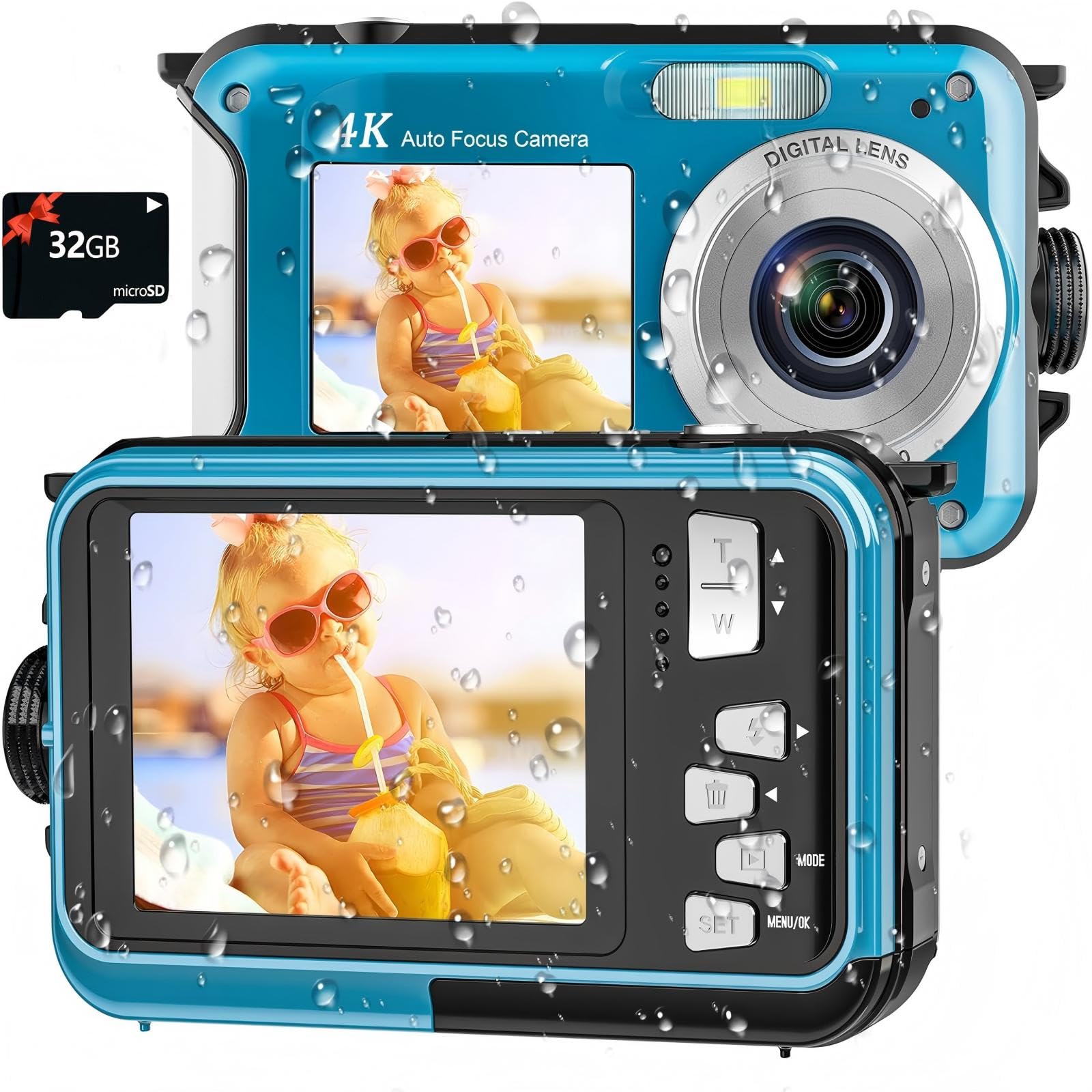
Unlike action cameras that require a separate waterproof housing, this YISENCE is fully waterproof to 16ft without any extra case — and it floats, so a dropped camera won’t sink to the bottom. The dual-screen design adds convenience for selfies, a feature missing from many underwater compacts at this price.

This camera is designed for families with kids who want a worry-free, grab-and-go option for pool days and beach snorkeling. It is less suited for deeper dives or for buyers who need manual controls or raw photo files. Keep in mind that its long-term durability under frequent heavy use is not yet confirmed, making it best treated as a dedicated vacation camera rather than an everyday tool.

Image quality holds up well in both sunlit and underwater conditions, with consistent feedback noting vibrant colors and sharp detail. The front screen makes it easy for kids to frame their own shots, and the included 32GB memory card gets you started right away with no extra purchases needed.

Bottom line: For families who want a simple, floatable camera for pool and shallow snorkeling, this YISENCE delivers sharp photos and easy operation at a budget-friendly price.

6

AKASO EK7000

AKASO EK7000

Also Great

Our Score 8.8/10
Check Price

Worth Noting

  • Each battery lasts about 25-30 minutes when recording 4K
  • 4K video looks soft and upscaled in low light or fine detail; best for social media rather than large screens
Rating
4.4 ★
Battery
2x 1050mAh
Best For
Budget entry
Video Res
4K @30fps

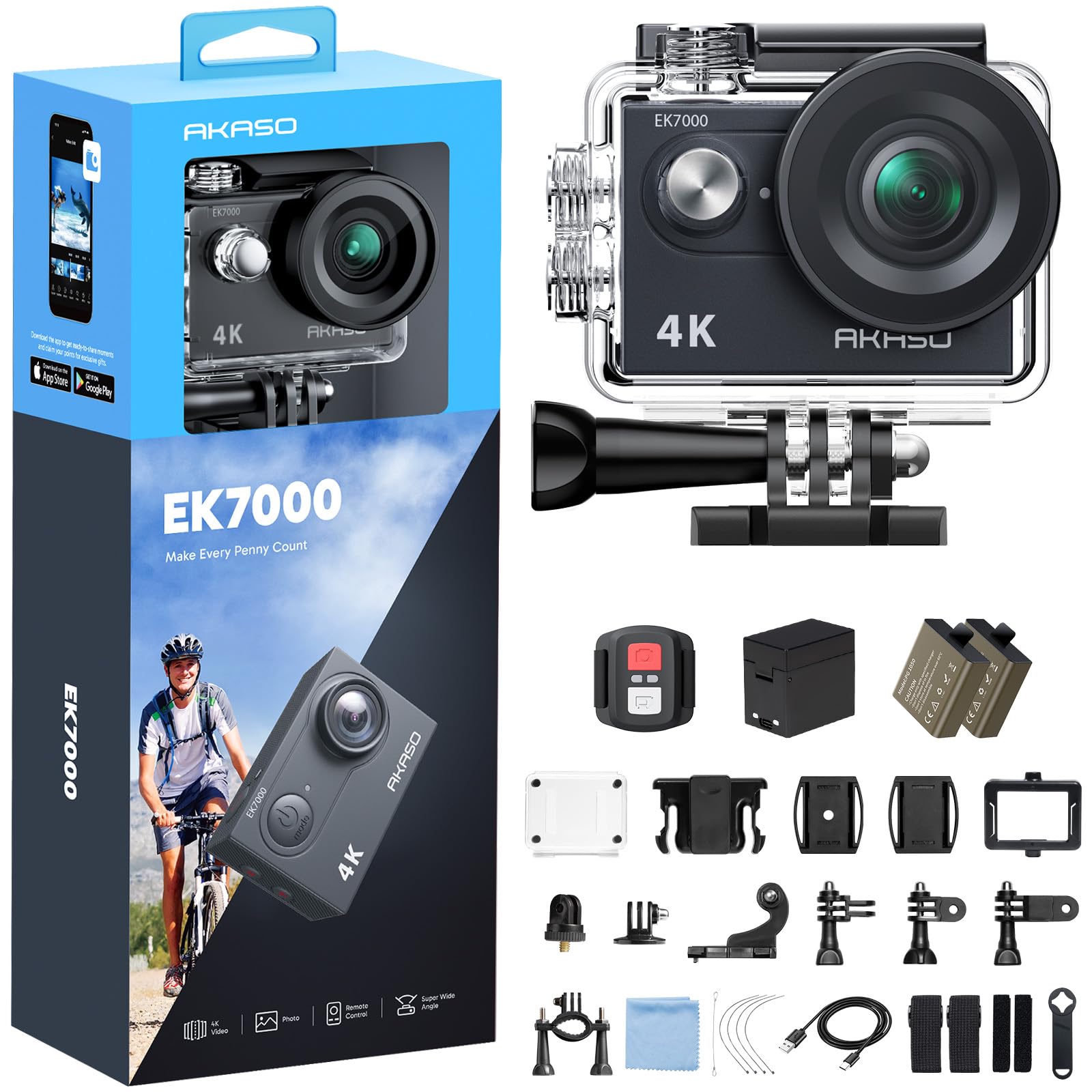
Functional 4K video and 20MP photos at a price well below most competitors. The waterproof housing reaches 131 feet, and the bundle includes mounts, a remote, and spare batteries. For casual snorkeling or first-time users, bright daylight shots are decent. Battery life runs about 25-30 minutes per cell when recording 4K – fine for short clips but requires swapping for longer sessions. The footage looks softer than true 4K, better for social media than large screens. No front screen or touch controls, but the remote helps. These compromises fit buyers focused on budget.

Bottom line: This camera suits budget-first snorkelers who accept shorter recording and softer detail in exchange for a complete, low-cost kit.

7

Yifecial UP014

Yifecial UP014

Also Great

Our Score 9.6/10
Check Price

Worth Noting

Rating
4.8 ★
Battery
650mAh
Best For
Kids pool
Video Res
4K

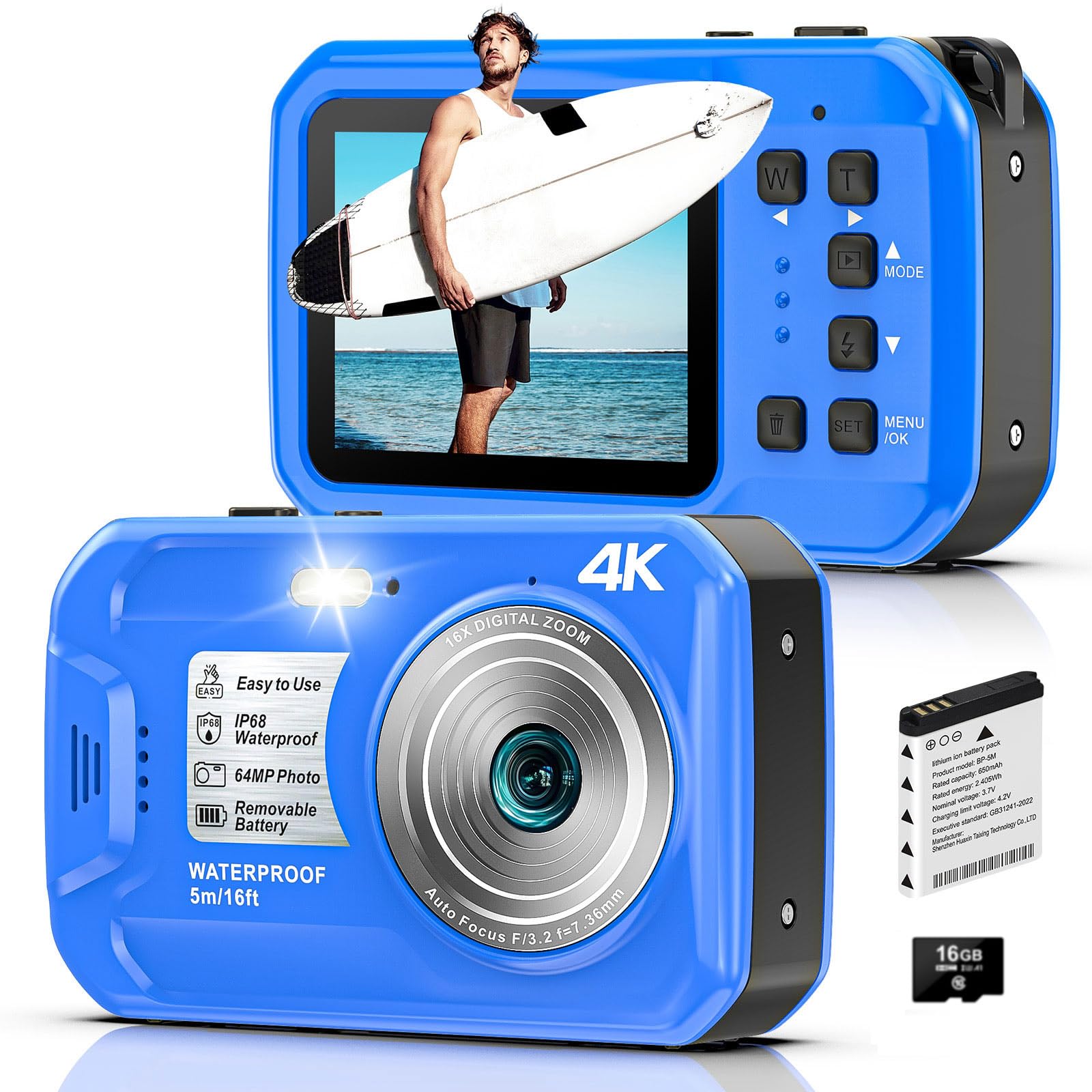
The Yifecial UP014 delivers clear, colorful images both above and underwater at a price that undercuts most competitors. Its floating body adds peace of mind around pools and shorelines, and the simple controls suit young children or first-time users. However, the camera has a limited track record — unit-to-unit consistency and longevity are unverified. This makes it a practical choice for occasional shallow snorkeling or as a disposable beach toy, rather than a long-term investment for regular use.

Bottom line: Best suited for families who want an inexpensive camera for shallow pool or beach use, with the understanding that long-term durability is not guaranteed.

8

Insta360 X5

Insta360 X5

Also Great

Our Score 9.4/10
Check Price

Worth Noting

  • Requires post-processing to extract traditional frames; not a point-and-shoot workflow for underwater stills.
Rating
4.7 ★
Battery
208 min
Best For
360 vlogging
Video Res
8K @30fps 360°

The Insta360 X5 delivers a 360-degree view that lets you reframe shots after the dive, making it possible to capture every angle at once and later choose the best frame. Its FlowState stabilization keeps horizons locked even in rough water, and the claimed 3-hour battery supports extended sessions. However, extracting traditional flat video or stills requires dedicated editing time, and the workflow is a mismatch for divers who want immediate, single-lens shots. This camera suits content creators who enjoy post-processing for creative results, not those seeking a straightforward underwater point-and-shoot.

Bottom line: Best for creative vloggers and VR enthusiasts who want to capture everything underwater and edit later, but skip it if you need instant, traditional underwater photos or video.

9

Pentax WG-90

Pentax WG-90

Also Great

Our Score 8.4/10
Check Price

Worth Noting

  • Water resistance seals can leak during normal use in some units.
  • Video recording is capped at 1080p, a limitation at this price point.
Rating
4.2 ★
Battery
Best For
Macro specialist
Video Res
Full HD

The Pentax WG-90 delivers strong macro performance with its 6-LED ring light, making it a capable choice for close-up photography in wet or dusty environments. Its robust build handles shock, freeze, and dust. For general snorkeling or diving, it falls short: video is limited to 1080p, and some units have experienced water seal leaks. The TG-7 offers better underwater macro and 4K video at a similar price. Consider the WG-90 only if your primary need is the unique LED ring light for extreme conditions.

Bottom line: Only consider the WG-90 if your primary need is the 6-LED ring light for extreme macro work, and you can accept 1080p video and potential seal variability.

How to Choose

True Waterproof Depth Without Housing

Depth ratings are often quoted with a supplied housing. Without it, a camera may be only splash-resistant. Dedicated compact cameras like the OM System TG-7 or Pentax WG-90 are genuinely waterproof to 50ft and 46ft respectively without any case. Action cameras such as the DJI Osmo Action 4 go to 59ft without housing, but budget models require the included case to reach even 10ft.

If you plan to snorkel or dive without fiddling with a housing, choose a camera that states its depth rating without a case. For shallow pool or beach use, 16ft is sufficient; for deeper dives, look for 50ft or more.

Image Stabilization Type

Electronic image stabilization (EIS) is common in action cameras. It works well for walking or slow panning, but under fast underwater movements — like swimming or waves — it can create a jello effect. Optical stabilization (OIS) is rare at budget prices. The DJI Osmo Action 4's RockSteady and Insta360's FlowState are among the best for active water sports.

For casual snorkeling, basic EIS is enough. If you plan to use the camera for fast action like surfing or diving, spring for a model with advanced stabilization.

Video Resolution and Frame Rate

4K at 30fps is the minimum for decent underwater footage; 1080p often looks soft and lacks detail, especially in low light. Higher frame rates (60fps or 120fps) help capture fast-moving subjects like fish or kids splashing. The GoPro HERO13 and DJI Osmo Action 4 offer 5.3K/60 and 4K/120 respectively, but for most users, 4K/30 is sufficient.

Note that high resolution and frame rates drain batteries faster. If you primarily share on social media, 4K/30 with good stabilization is the sweet spot.

Battery Life and Number of Batteries

Advertised battery life is measured under ideal lab conditions. In real-world underwater use with 4K recording, cameras often last 20–30 minutes per battery. Models that include two batteries are a practical necessity — you can swap without waiting for a recharge. The AKASO Brave 7 LE includes two 1350mAh batteries, giving about 2 hours total.

Watch for reports of batteries failing to hold charge after a few months, a common complaint with budget cameras. Removing the battery when not in use can extend its lifespan.

Front Screen for Selfies

A front-facing screen makes framing underwater selfies and vlogs much easier without guessing. Only a few models in this range offer it: the AKASO Brave 7 LE and YISENCE 806, and the Yifecial UP014. If you plan to take group shots at the beach or record yourself, this feature saves a lot of hassle.

Without a front screen, you have to rely on the wide-angle lens to include everyone, which can lead to cut-off heads or distorted faces.

Frequently Asked Questions