Cameras & Photography

9 Best Film Camera of 2026: Avoid Hidden Costs, Match Your Skill

Struggling to choose between 35mm, instant, or half-frame? This guide helps you pick a film camera that matches your experience and avoids expensive mistakes.

Picking a film camera today means navigating a market full of reissued classics and new budget models. Many affordable options suffer from flimsy build or unreliable flashes, while the cost of film and development can quickly exceed the camera price. It's easy to end up with a camera that doesn't fit how you actually shoot.

The best film camera for you depends on whether you want instant prints, a classic 35mm experience, or the economy of half-frame. This guide lays out the real trade-offs in build, image quality, and ongoing costs so you can choose the one that matches your skill level and budget without surprises.

1

Fujifilm Instax Mini 12

Top Pick
Fujifilm Instax Mini 12

Kids & Parties

Our Score 9.4/10
Check Price

Worth Noting

  • In low light or with darker subjects, some prints may come out blurry or overexposed.
  • Ongoing film costs make the long-term value debatable for budget-conscious buyers.
Film Format
Instax Mini
Lens Quality
Fixed focus, close-up
Build Material
Plastic
Exposure Control
Automatic

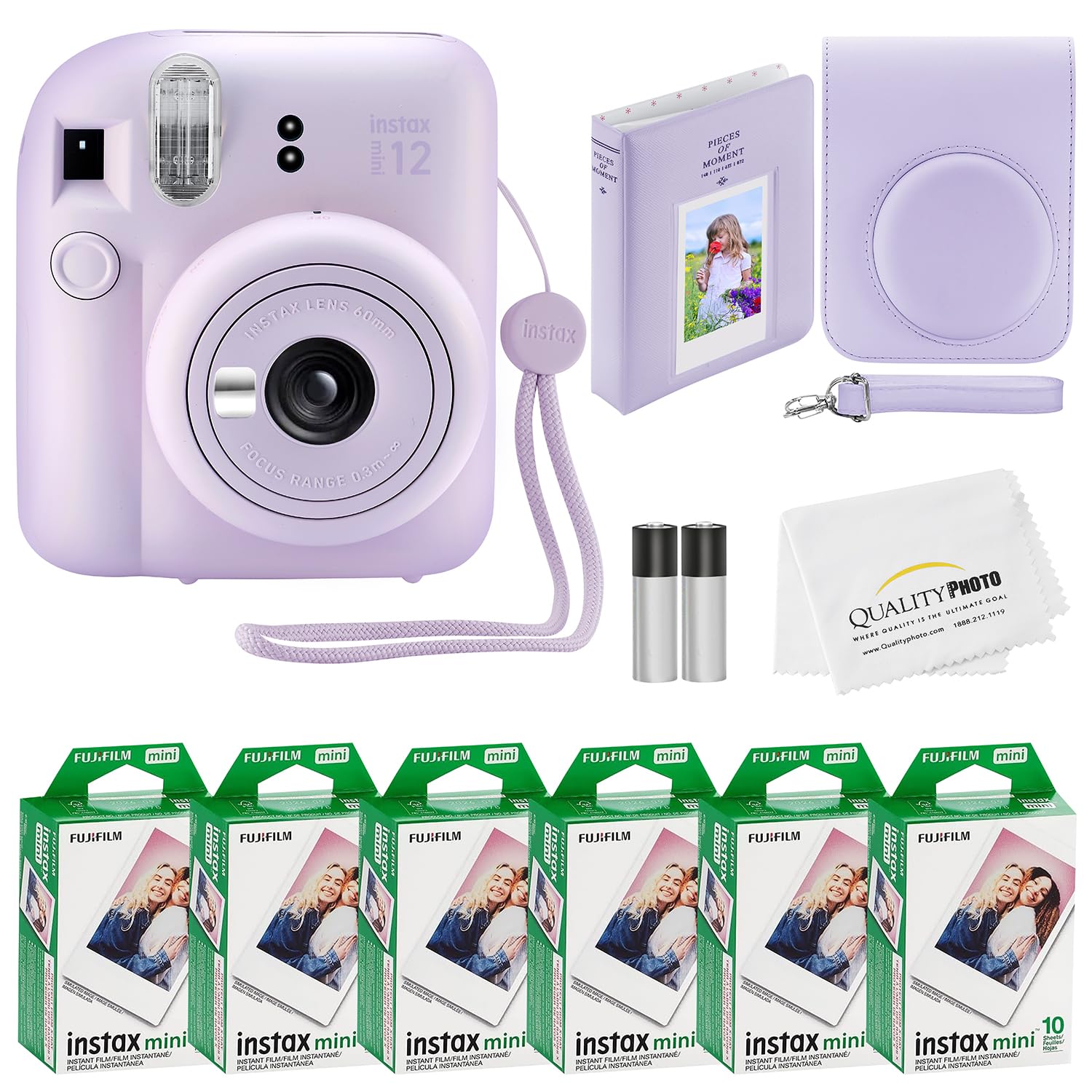
The Fujifilm Instax Mini 12 arrives with 60 film sheets, a protective case, album, stickers, and a close-up lens — everything needed to start shooting immediately. Its automatic exposure system handles most daytime conditions without any adjustments, and the close-up mode allows for sharp portraits at arm's length.

In bright daylight, prints are vibrant and clear, but in low-light settings or with subjects wearing dark clothing, the automatic exposure can overcompensate, leading to washed-out or blurry results. The optical viewfinder provides a rough frame, and the camera's lightweight plastic build keeps it portable for parties and travel.

This camera is ideal for children ages 8 and up, party hosts, and gift-givers who want immediate prints without learning curves. While the image quality can be hit-or-miss in dim environments, the tradeoff is acceptable for scrapbooking, party favors, and casual snapshots where the fun of instant prints outweighs precision. The lilac purple finish and bundled stickers make it especially appealing as a present.

Tip: For sharper prints, use the close-up mode for subjects within arm's length and avoid backlit scenes or dark clothing.

Bottom line: The Instax Mini 12 delivers exactly what it promises: easy, instant fun with a complete accessory set — the film costs are the real long-term investment.

2

Pentax 17

Pentax 17

Film enthusiasts

Our Score 8.8/10
Check Price

Worth Noting

  • Film advance lever may become unresponsive after moderate use.
  • Premium pricing places it above most half-frame competitors.
Film Format
35mm half-frame
Lens Quality
25mm f/3.5 HD
Build Material
Magnesium alloy
Exposure Control
Auto with manual focus

The Pentax 17 uses magnesium alloy top and bottom plates and a multi-coated HD lens, a step up from the plastic-bodied half-frame alternatives. The 25mm f/3.5 glass produces crisp 35mm negatives stretched to 72 exposures per roll, and the six-zone manual focus gives you precise creative control without autofocus guesswork.

This camera suits photographers who want tactile mechanical controls and a premium feel. The film advance lever is a mechanical part that may require attention over time – a tradeoff of its classic design. At a premium price, it’s not for casual shooters or those expecting all-automatic operation; it rewards users who value build quality and lens sharpness above everything else.

The lightweight body makes it easy to slip into a pocket for spontaneous shooting, and the vertical orientation encourages a different framing habit. The 1/2000s max shutter gives flexibility in bright conditions, though the zone focus demands a moment of attention before each shot.

Tip: After each roll, gently advance the lever a few extra clicks to keep the mechanism smooth.

Bottom line: A premium half-frame camera for film enthusiasts who prioritize build and lens quality over cost – but check the advance mechanism early in ownership.

3

Kodak Snapic A1

Kodak Snapic A1

Beginners & casual

Our Score 9.0/10
Check Price

Worth Noting

  • No way to adjust aperture or shutter speed
Film Format
35mm
Lens Quality
3-element glass
Build Material
Plastic
Exposure Control
Automatic

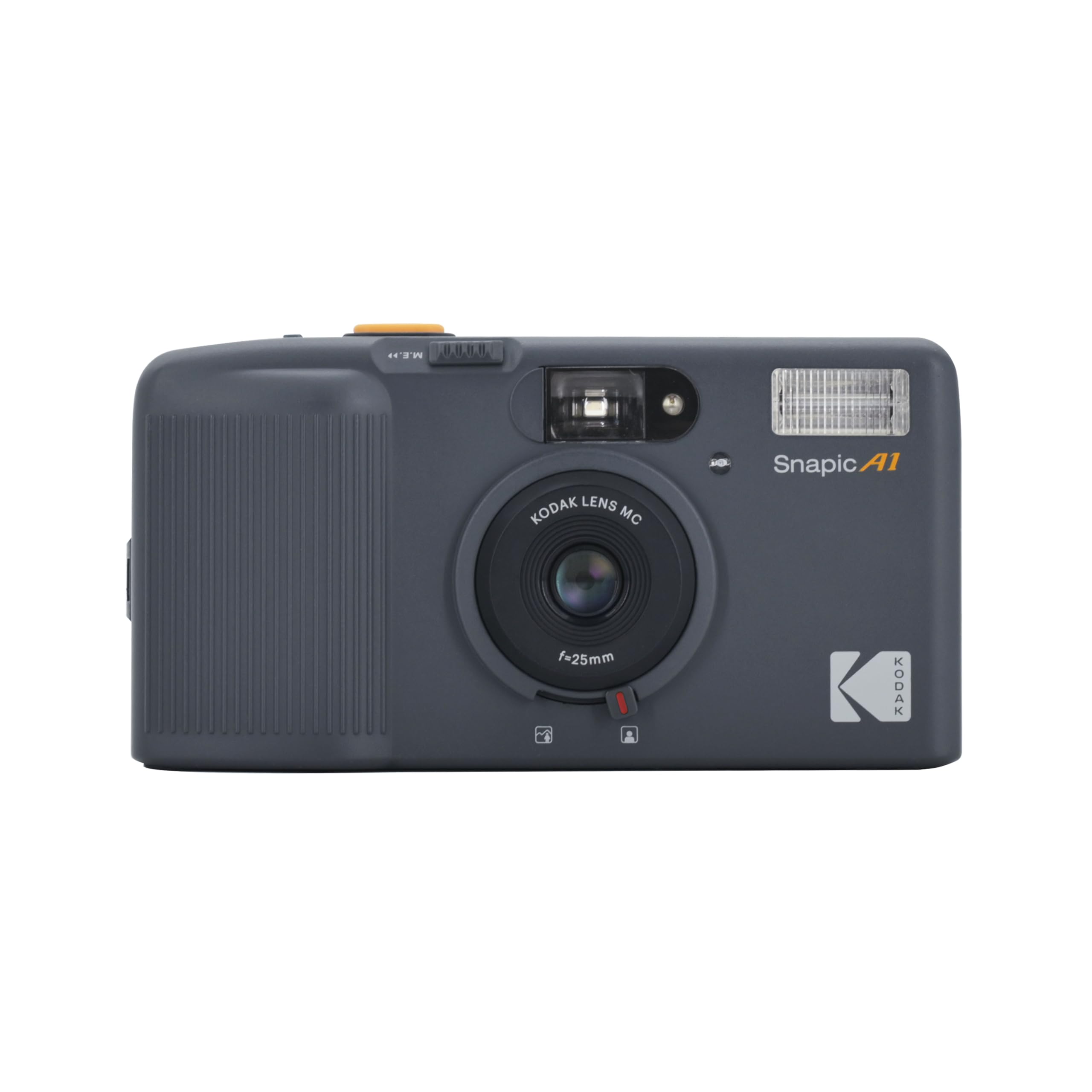
The 3-element glass lens sets the Snapic A1 apart from the plastic-lensed competitors and disposables that dominate the budget 35mm space. Images come out noticeably sharper, with less distortion and better color rendering for the price. The compact body slips into a jacket pocket, making it a practical daily carry for casual shooters.

This camera is best for beginners or anyone who wants the film look without learning aperture or shutter speed. Point, advance the film, and shoot — the automatic metering handles the rest. If you need control over exposure or plan to shoot in tricky lighting consistently, the lack of manual settings will be a limitation. For the price, it’s a reliable upgrade over a disposable, but not a creative tool.

Tip: Use ISO 400 film for balanced results in mixed lighting — the auto meter works best with consistent brightness.

Bottom line: A smart first step into 35mm film if you want better image quality than a disposable without the complexity of manual controls.

4

Canon AE-1

Canon AE-1

Purists & students

Our Score 8.8/10
Check Price

Worth Noting

  • Renewed units can develop mechanical issues like film jams or shutter misbehavior after limited use
Film Format
35mm
Lens Quality
50mm f/1.8 FD
Build Material
Metal
Exposure Control
Manual & shutter-priority

The Canon AE-1 delivers a traditional 35mm SLR experience with its iconic 50mm f/1.8 lens and full manual control. This sets it apart from point-and-shoot instant cameras and from newer autofocus film SLRs like the Rebel G — it forces the photographer to engage directly with aperture, shutter speed, and focus.

This camera is best suited for film purists who want to learn the fundamentals or enjoy the tactile feel of a mechanical camera. Because this is a renewed unit, hidden mechanical issues can surface — a professional CLA (clean, lubricate, adjust) service may be needed to ensure long-term reliability.

The refurbished units generally arrive in near-mint condition, and the FD lens mount opens access to a wide range of Canon glass for added creative flexibility. Shutter-priority AE mode helps beginners, while manual mode gives experienced shooters full control over exposure.

Tip: Consider budgeting for a professional CLA service to ensure the camera operates reliably for years.

Bottom line: For photographers who value manual control and the classic look, the AE-1 delivers — just factor in a possible CLA service.

5

Fujifilm Instax Mini EVO

Fujifilm Instax Mini EVO

Social & families

Our Score 9.2/10
Check Price

Worth Noting

  • Some buyers consider it overpriced given the plasticky build.
  • Power circuit issues can cause the camera to become non-functional in some units.
Film Format
Instax Mini
Lens Quality
Fixed focus, plastic
Build Material
Plastic
Exposure Control
Automatic

The Instax Mini EVO’s 2-inch LCD lets you preview each shot before printing, saving film on misfires. A microSD slot (not included) stores selected images for later, and Bluetooth pairing enables printing directly from your phone. With 10 lens and 10 film effect combinations — 100 total — creative control goes well beyond a basic instant camera.

This hybrid suits social media enthusiasts who want digital flexibility and instant prints, or families who enjoy sharing photos via app and then handing out physical copies. The app supports remote shutter release, making group shots easier. However, the all-plastic build keeps weight low, and some units may develop power circuit problems that render the camera inoperable — a tradeoff that favors buyers willing to test the unit early.

Compared to the top-pick Instax Mini 12, the Mini EVO trades simpler one-button operation for more features and creative control. Its mid-range price feels reasonable given the hybrid capabilities, though some consider it steep against simpler models with identical film format.

Tip: Test all functions within the return period to identify any power or screen defects early.

Bottom line: For those who value shot preview and phone integration, this hybrid delivers a unique balance of digital control and film output — but the occasional power issue means it suits cautious buyers more than those seeking a set-and-forget instant camera.

6

Kodak EKTAR H35

Kodak EKTAR H35

Budget beginners

Our Score 8.6/10
Check Price

Worth Noting

  • Flash may stop working after a few rolls
  • Plastic build and moving parts can become unreliable, especially the frame counter and film advance
Film Format
35mm half-frame
Lens Quality
Fixed focus, plastic
Build Material
Plastic
Exposure Control
Automatic

Packing 72 exposures per roll into a pocket-sized body, the EKTAR H35 gives beginners the cheapest possible way to shoot half-frame film. The simple point-and-shoot operation and lightweight design make it easy to carry and use. However, the built-in flash can stop working after a few rolls, and the plastic build may show wear quickly — this is a tradeoff for the sub-$60 price. Compared to the Snapic A1, the EKTAR is less consistent, making it better suited for casual experimentation than regular shooting.

Tip: Shoot in well-lit conditions to avoid reliance on the flash; the half-frame design gives you 72 chances per roll to learn composition.

Bottom line: Best for budget-conscious beginners who treat the camera as a disposable experiment rather than a long-term shooter — the half-frame format doubles your practice per roll at minimal cost.

7

Canon Rebel G

Canon Rebel G

Budget SLR

Our Score 8.8/10
Check Price

Worth Noting

  • A portion of units may not operate correctly out of the box, requiring immediate inspection and possible return.
Film Format
35mm
Lens Quality
35-80mm f/4-5.6 zoom
Build Material
Plastic
Exposure Control
Auto, program, manual

The Canon Rebel G offers autofocus and multiple exposure modes in a lightweight film body, giving beginners a hassle-free bridge from digital to 35mm. Images produced with the included 35-80mm kit lens come out sharp and well-exposed. However, because this is a renewed camera, there is a possibility of receiving a unit with functional defects — a risk that makes it a secondary choice next to the more thoroughly proven Canon AE-1 if reliability is a priority.

Tip: Test all functions (shutter, film advance, autofocus, flash) as soon as the unit arrives to catch any defects before the return window closes.

Bottom line: Best suited for Canon EF lens owners who accept the possibility of a lemon — a low-cost entry into autofocus film shooting.

8

RETO Ultra Wide

RETO Ultra Wide

Ultra-budget outdoors

Our Score 8.0/10
Check Price

Worth Noting

  • Without a flash, the camera requires bright sunlight
  • Build may not withstand extended use; some units stop working after a few rolls.
Film Format
35mm
Lens Quality
22mm ultra-wide fixed
Build Material
Plastic
Exposure Control
Fixed

Weighing just 69g and costing less than a roll of premium film, the RETO Ultra Wide offers the cheapest way to shoot 22mm wide-angle 35mm film. For absolute beginners experimenting with film in bright outdoor light, that low barrier to entry is its main draw. However, the ultra-light build may feel fragile, and the shutter mechanism can become unresponsive after a few rolls. Without a flash, indoor or low-light shooting produces dark frames. This is a novelty toy for sunny days, not a dependable camera for regular use.

Bottom line: Best for absolute beginners who want to dip a toe into 35mm film on sunny days, and are comfortable with the camera possibly not lasting beyond a few rolls.

9

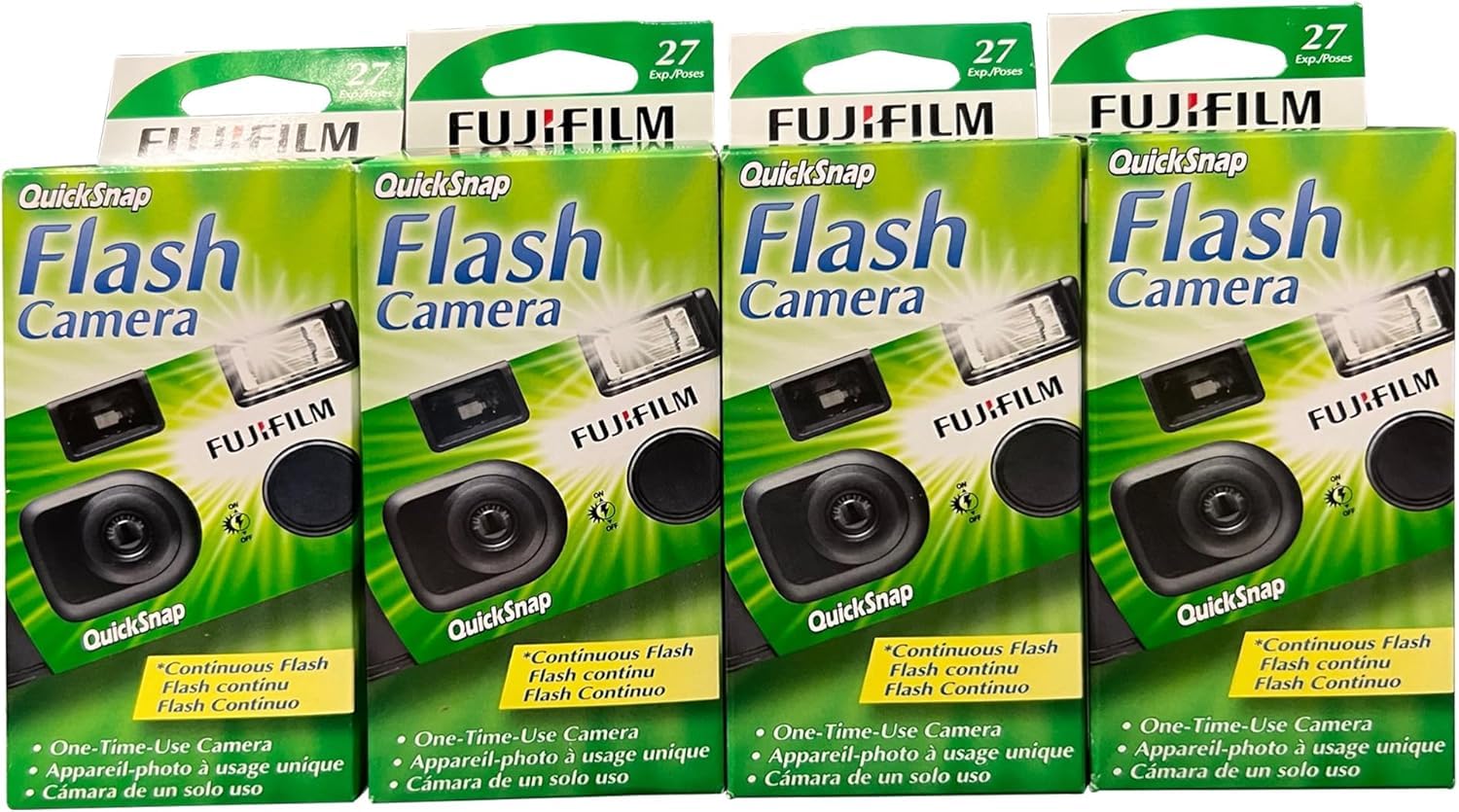
Fujifilm QuickSnap 4pk

Fujifilm QuickSnap 4pk

Events & travel

Our Score 9.0/10
Check Price

Worth Noting

  • Cannot reuse
  • Image quality is limited compared to reusable film cameras
Film Format
35mm disposable
Lens Quality
Fixed focus
Build Material
Plastic
Exposure Control
Fixed

The four-pack delivers ready-to-shoot cameras that require no loading, settings, or charging, making them ideal for weddings, birthday parties, or travel backups. Each camera is single-use, so the waste is a factor for eco-conscious buyers, and the 35mm image quality won't match a proper point-and-shoot or SLR. This pack solves the 'hand out a camera to every table' need without commitment, but it's not a long-term film investment.

Bottom line: Best for event planners or travelers who need a no-fuss, single-use option and accept the waste and limited quality.

How to Choose

Film Format: 35mm, Instant, or Half-Frame

35mm film offers the widest lens selection and highest image quality, but each roll yields 24 or 36 shots. Instant film gives you a physical print seconds after shooting, but each print costs around $1 or more. Half-frame cameras squeeze 72 exposures from a standard 35mm roll, cutting film costs in half at the expense of lower resolution.

Choose 35mm if you want the most creative control and plan to scan your negatives. Instant is best for social gatherings and immediate memories. Half-frame makes sense for travelers who want to pack more shots into a single roll.

Lens Quality and Type

A glass lens produces sharper, more contrasty images than plastic, especially in varying light. Most budget film cameras use plastic lenses, while higher-end models like the Pentax 17 feature multi-element glass optics. The difference is visible in fine details and low-light performance.

If you plan to enlarge prints or view images on a monitor, invest in a camera with at least a 3-element glass lens. For snapshots and social media, plastic lenses can be acceptable.

Flash Reliability and Performance

Flash is one of the most common failure points in budget film cameras. Manual flash rings often stop working after a few rolls, while automatic flashes tend to be more durable but can still fail. If you shoot indoors regularly, a camera with a proven flash is critical.

Check user reports for flash issues before buying. Some cameras have no flash at all, limiting you to daylight shooting.

Build Material and Durability

Plastic bodies reduce weight and cost but are prone to cracking or breaking if dropped. Metal or magnesium alloy cameras like the Canon AE-1 and Pentax 17 withstand years of use but are heavier. For everyday carry, a plastic camera is fine; for regular use over several years, a metal build pays off.

Exposure Control: Manual vs Automatic

Automatic exposure lets you focus on composition without worrying about settings, ideal for beginners and quick shots. Manual controls give you creative freedom to adjust aperture and shutter speed, but require a basic understanding of exposure. Some cameras offer both, like shutter-priority on the Canon AE-1.

If you want to learn photography, start with a manual SLR. If you just want to capture memories, an automatic point-and-shoot is simpler.

Frequently Asked Questions