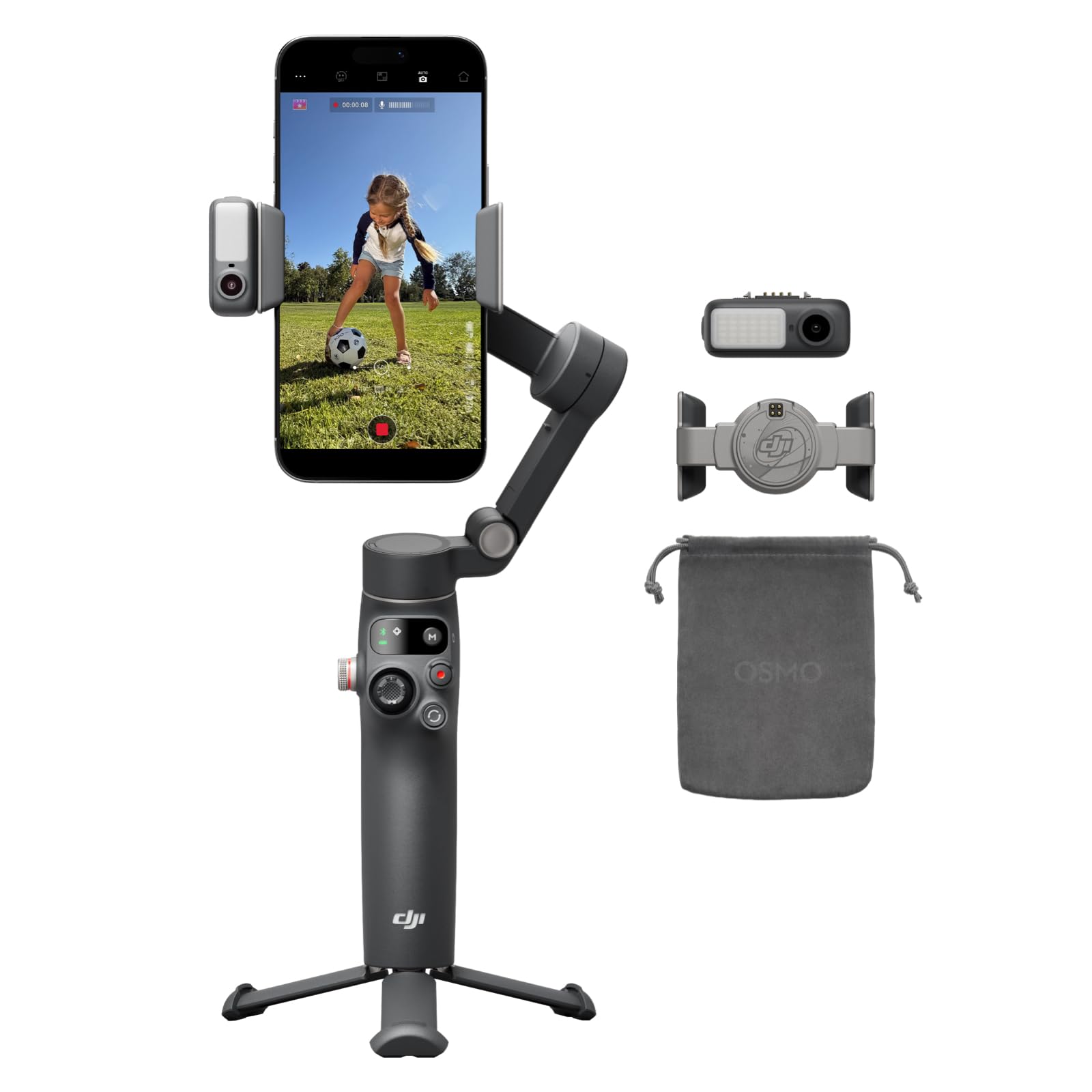
DJI RS 4
Top Pick
What We Like
- Premium build quality and materials
- Smooth stabilization that holds up during professional shoots
- Intuitive balancing and calibration
- 3 kg payload supports most mirrorless and DSLR setups
- Fast transition to native vertical shooting
Worth Noting
- Axis locks can become slightly loose with heavy use, requiring occasional manual tightening.
- Battery life may drop below the advertised 12 hours when paired with heavy camera and lens combinations.
- Battery Life
- 12h (29.5h ext.)
- Payload Capacity
- 3kg / 6.6lbs
- Balancing / Setup
- Teflon coat, native vertical
- Compatible Cameras
- DSLR & Mirrorless
The DJI RS 4 brings a 3 kg payload capacity to mirrorless and compact DSLR setups, supported by Teflon-coated axis arms that make balancing a quick process. The gimbal’s stabilization motors keep footage smooth even during brisk walking or panning, and the solid metal construction gives it a premium, reassuring weight. Auto-locking axes deploy in seconds, and the 2nd-gen native vertical mount lets you switch orientation without adding brackets or rebalancing.
Actual use reveals that the 12-hour battery claim holds under standard configurations, but heavy lenses and accessories can reduce runtime noticeably. The auto-lock mechanism, while handy for transport, may develop slight play over months — a quick screw check restores firmness. Build quality remains a strength; the gimbal handles day-long event coverage without overheating or drift.
This gimbal suits mirrorless camera owners who shoot with standard zooms and primes, as well as wedding and event videographers who need a single stabilizer to run all day. The native vertical mode appeals to creators producing social media content without extra gear. Potential buyers should inspect the box contents immediately; units occasionally ship without the battery grip or tripod.
Compared to the heavy-duty Pro model, the RS 4 skips LiDAR focusing and video transmission, keeping weight and cost manageable. It outclasses the RS 4 Mini with higher payload and auto-locks, making it the sensible choice for users who need headroom for heavier lenses but don't require cinema rig capabilities.
Setup is intuitive: the balancing procedure is straightforward, and the joystick mode switch lets you toggle between follow modes without diving into menus. From unboxing to first smooth shot can take under ten minutes.
Bottom line: For mirrorless shooters who need a capable gimbal without the bulk or expense of a full cinema rig, the RS 4 is the sweet spot — provided you check the box contents and give the locks an occasional twist.