Computers & Accessories

9 Best Ultrawide Monitor of 2026: Reliable Picks Without the Gamble

Avoid the reliability lottery of budget ultrawides. This guide finds monitors with great visuals and lasting build—workhorses to gaming beasts.

Ultrawide monitors promise immersive productivity and gaming, but the market is split between budget models with alarming failure rates and premium displays that demand a hefty price. Many buyers discover dead pixels or a dead monitor within months of purchase, especially on low-cost 34-inch panels. The real investment is not just in screen size—it's in avoiding that reliability gamble.

The sweet spot sits in the mid-range, where monitors combine solid image quality, USB-C connectivity, and a track record of lasting more than a year. Here, the trade-off often comes down to what matters most: high refresh rates for smooth gaming or robust ports and ergonomics for daily work. A few extra dollars spent on a proven design can save months of hassle.

This guide focuses on monitors that consistently deliver on their promises, whether you are building a command center for spreadsheets or a battlestation for sim racing.

1

Dell S3425DW 34" Plus

Top Pick
Dell S3425DW 34" Plus

Productivity & Value

Our Score 9.0/10
Check Price

Worth Noting

  • USB-C connection can drop signal after extended use, requiring a monitor power cycle.
  • The 21:9 aspect ratio may feel less spacious for side-by-side windows than some expect.
Ergonomics
Height
Panel Type
VA 3000:1
Connectivity
USB-C 65W, 2x HDMI, DP
Refresh Rate
120Hz FreeSync Premium

The Dell 34 Plus delivers a noticeably sharp 3440x1440 image with deep blacks courtesy of its VA panel. Colors appear vivid and accurate, covering 99% of sRGB, which suits photo browsing, video playback, and general desktop work. The 120Hz refresh rate keeps motion smooth for everyday scrolling and casual gaming without introducing visible tearing when paired with FreeSync Premium.

A single USB-C cable handles both video and 65W laptop charging, reducing desk clutter effectively. Some units may experience USB-C signal dropouts after extended use, requiring a monitor power cycle to restore connection. This intermittent behavior is worth noting for those who rely on a consistent single-cable setup.

Built-in speakers provide adequate audio for calls and occasional media playback, and the height-adjustable stand allows comfortable positioning. Dell includes a 1-year advanced exchange warranty, simplifying replacement if a hardware issue arises.

Home office users and MacBook owners benefit most from this monitor’s clean connectivity and sharp display. The 120Hz cap keeps competitive gaming out of reach for high-refresh-rate enthusiasts, but for productivity and casual play it handles everyday demands well. Those who need more horizontal space for multiple documents may find the 21:9 width narrower than expected, though it suits most single-window workflows.

Tip: If USB-C signal drops, power cycling the monitor or trying a different cable may resolve the issue.

Bottom line: For productivity-focused buyers and casual gamers, the Dell 34 Plus balances image quality, connectivity, and everyday dependability without straining the budget.

2

Alienware AW3425DWM

Alienware AW3425DWM

High Refresh Gaming

Our Score 9.2/10
Check Price

Worth Noting

  • No built-in speakers
  • Some units may have dead pixels or fail to power on
Ergonomics
Height, tilt
Panel Type
VA 3000:1
Connectivity
DP, 2x HDMI
Refresh Rate
180Hz FreeSync Premium

The Alienware AW3425DWM delivers 180Hz smoothness and vivid colors at a mid-range price that undercuts many competitors. Where the top pick offers USB-C connectivity and built-in speakers at 120Hz, this monitor prioritizes gaming fluidity with a VA panel that provides deep blacks and a 95% DCI-P3 color gamut.

The 34-inch 3440x1440 resolution pairs well with the high refresh rate, making fast-paced games feel responsive. The 3000:1 contrast ratio gives dark scenes depth, and the height-adjustable stand adds ergonomic flexibility — a rarity at this price point.

This monitor suits gamers who want a smooth, immersive experience without paying OLED prices. However, there are no built-in speakers, so external audio is required, and occasional unit variance means inspecting for dead pixels or backlight issues upon delivery is prudent. For productivity-minded users who need USB-C or a hub, the top pick is a better fit.

Tip: Inspect the panel immediately after unboxing — if you notice dead pixels or backlight bleed, exchange within the return window.

Bottom line: If gaming smoothness and color pop are your priorities and you can forgo built-in speakers and USB-C, this Alienware delivers excellent value — just give it a thorough check out of the box.

3

Samsung S95UA 49" Business

Samsung S95UA 49" Business

Large Productivity

Our Score 8.8/10
Check Price

Worth Noting

  • Mac devices may not connect properly due to lack of driver support.
  • On-screen control buttons are small and awkwardly positioned, making adjustments tedious.
Ergonomics
Height
Panel Type
VA 3000:1
Connectivity
USB-C 90W, DP, 2x HDMI
Refresh Rate
120Hz FreeSync

The Samsung 49-inch Business monitor combines a roomy 5120x1440 display with a built-in KVM and 90W USB-C charging, making it a central hub for dual-computer setups. Unlike smaller ultrawides, this screen fits three full-size windows side by side without bezels, a setup that measurably improves multitasking speed for power users.

The VA panel delivers 3000:1 contrast and 120Hz refresh, suitable for productivity and occasional gaming. However, Mac compatibility is inconsistent – some systems fail to receive a signal, and no native driver support exists. For PC users on Windows or Linux, the experience is straightforward. The physical OSD buttons are small and hard to press, but most adjustments are set once during initial setup.

This monitor targets PC-oriented professionals who need maximum screen real estate for spreadsheets, code, or design tools, along with the convenience of a KVM to control two workstations. It is not a strong match for Mac users expecting plug-and-play operation, nor for competitive gamers seeking refresh rates above 120Hz.

Tip: If using a Mac, test with your specific model first – many users find no signal without a workaround.

Bottom line: For Windows/Linux users who need a massive screen for productivity, the Samsung 49-inch delivers on space and connectivity. Mac users should verify compatibility before buying.

4

LG 34WR55QK-B

LG 34WR55QK-B

Office & Student

Our Score 9.2/10
Check Price

Worth Noting

  • 100Hz refresh rate limits smoothness in fast-paced games.
  • VA panel's blacks may appear grey in dark scenes, reducing contrast.
Ergonomics
Height, tilt
Panel Type
VA 3000:1
Connectivity
USB-C 65W, HDMI, DP
Refresh Rate
100Hz FreeSync

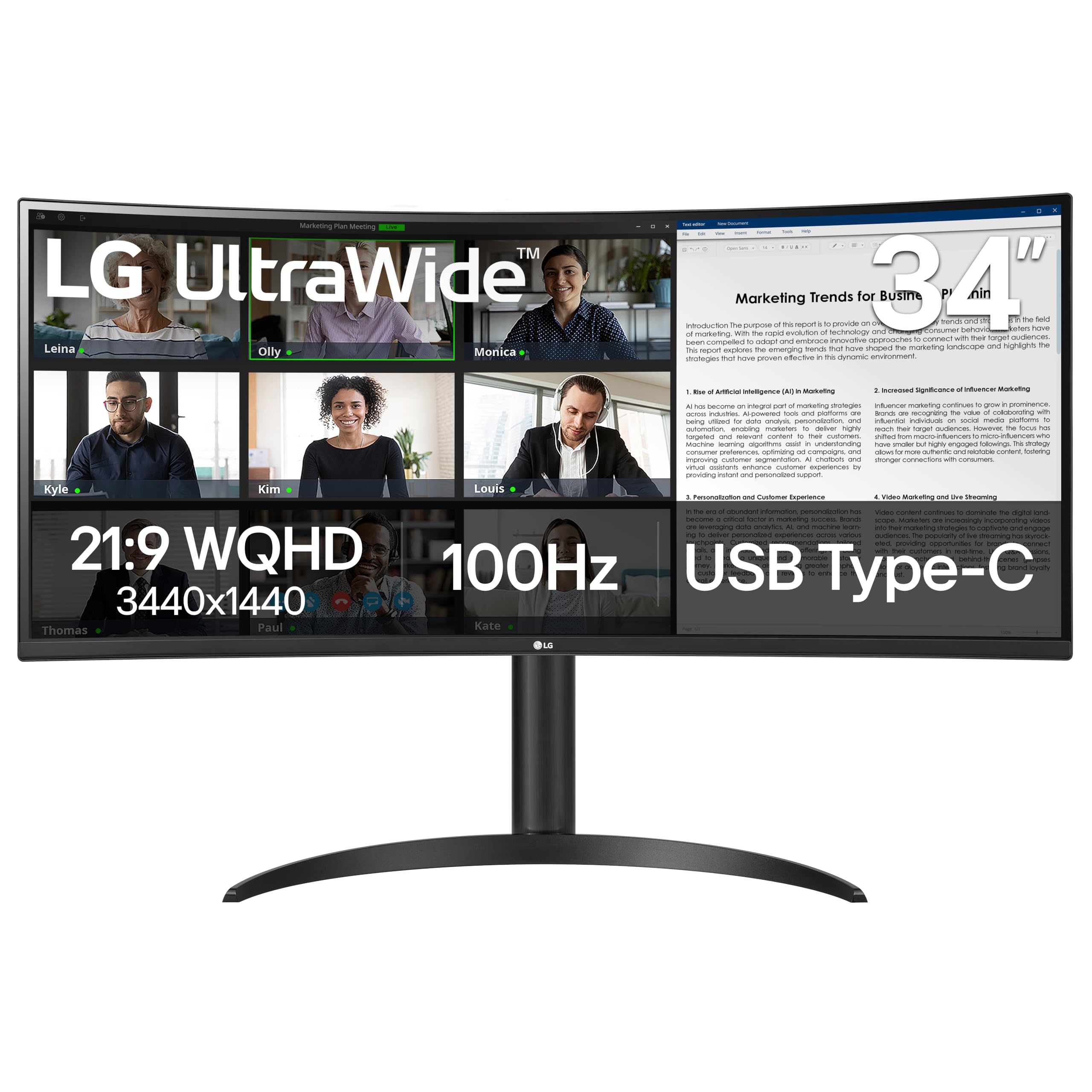
The LG 34WR55QK-B delivers a well-constructed, easy-to-set-up ultrawide that stands out among budget options. Its height-adjustable stand and USB-C with 65W power delivery make it a practical choice for office setups, while the VA panel offers decent contrast for the price.

This monitor suits office workers and students who need a dependable 34-inch screen for spreadsheets and documents, not gamers chasing 144Hz+ motion. The 100Hz refresh rate is sufficient for casual use, but the VA panel's blacks can appear grey in dark scenes – a tradeoff common at this price tier.

Compared to the top pick Dell 34 Plus, the LG sacrifices 20Hz of refresh rate and sharper image quality for a lower price and equally stable build. For buyers who prioritize cost savings and don't require HDR pop, this monitor delivers on the essentials.

Bottom line: For office workers and students who value build quality and easy setup over high refresh rates and deep blacks, the LG 34WR55QK-B offers a cost-effective ultrawide with USB-C convenience.

5

Sceptre C345B-QUT168

Sceptre C345B-QUT168

Budget Gaming

Our Score 8.6/10
Check Price

Worth Noting

  • Stand stability can be an issue; the base may wobble on uneven or soft surfaces
  • Some units may develop display irregularities such as black screens or pixel anomalies within the first year of use
Ergonomics
Panel Type
VA 3000:1
Connectivity
DPx2, HDMIx2
Refresh Rate
165Hz FreeSync

At a budget-friendly price, the Sceptre C345B-QUT168 offers a 34-inch 3440x1440 VA panel with a 165Hz refresh rate, 1ms MPRT, and FreeSync support — specs that typically cost significantly more. The picture quality impresses for the price: crisp resolution and vibrant colors that make games and media look lively, with a 99% sRGB coverage that adds pop to content.

This monitor is made for budget-constrained gamers who want an immersive ultrawide experience without the premium cost, provided they accept the possibility of needing a replacement within a year. It works well as a secondary display or for a temporary gaming rig where cost is the primary concern and long-term consistency isn't critical.

The built-in speakers are usable for casual audio, and the 1000:1 dynamic contrast ratio adds depth to dark scenes. However, the included stand limits tilt adjustment and may feel unstable on some surfaces — a VESA arm resolves that. For its price tier, the tradeoff between features and long-term dependability is clear.

Tip: The included stand offers only tilt and may feel wobbly; a VESA arm provides better stability and ergonomic flexibility.

Bottom line: For a temporary gaming setup or secondary display where budget is the priority, the Sceptre delivers impressive specs; just account for the possibility of an early upgrade.

6

Alienware AW3425DW

Alienware AW3425DW

Premium OLED Gaming

Our Score 9.0/10
Check Price

Worth Noting

  • Vertical height is less than a standard 27-inch monitor, which may feel cramped for productivity tasks.
  • Burn-in or screen imperfections can appear over time, though the warranty covers it.
Ergonomics
Height, tilt
Panel Type
QD-OLED infinite
Connectivity
DP, 2x HDMI
Refresh Rate
240Hz FreeSync Premium Pro

The Alienware AW3425DW brings QD-OLED's deep blacks and vibrant colors to a 34-inch ultrawide frame, paired with a 240Hz refresh rate that keeps motion crisp. Alienware backs it with a three-year warranty covering burn-in, rare at this price point.

Where it loses ground is vertical real estate: the 3440x1440 resolution offers less height than a 27-inch 16:9 monitor, so documents and web pages require more scrolling. It also costs more than comparable VA-panel ultrawides, limiting its appeal to shoppers focused on pure gaming.

Tip: Register the monitor to activate the three-year burn-in warranty — it covers the main OLED risk.

Bottom line: This monitor is right for gamers who want OLED's image quality without the 49-inch price tag or size. Productivity users or budget-conscious buyers should look at VA-panel alternatives.

7

Philips 346E2CUAE

Philips 346E2CUAE

Office With Warranty

Our Score 8.4/10
Check Price

Worth Noting

  • Color banding and washed-out blacks visible in darker scenes
  • USB-C connectivity may become intermittent or stop working
Ergonomics
Height
Panel Type
VA 3000:1
Connectivity
USB-C 65W, DP, HDMI
Refresh Rate
100Hz FreeSync

The Philips 346E2CUAE delivers strong value for its price with a USB-C hub and a long warranty that covers advance replacement for four years. For office productivity — spreadsheets, documents, web browsing — the 34-inch VA panel offers enough clarity at 3440x1440. However, the picture quality falls short: color banding and washed-out blacks are noticeable, especially in darker content, and the narrow viewing angles limit shared viewing. USB-C connectivity can be inconsistent, with some ports becoming unresponsive over time. The built-in speakers are adequate for system sounds but not for media. This monitor makes sense when the priority is a hassle-free replacement policy rather than vibrant visuals.

Bottom line: Pick this only if a long warranty with advance replacement matters more than color accuracy for daily office work.

8

Samsung Odyssey G9 G95

Samsung Odyssey G9 G95

Sim Racing Enthusiast

Our Score 8.4/10
Check Price

Worth Noting

  • Some units may develop screen defects or stop working within the first few months
  • The 1000R curve can cause eye strain during productivity or general desktop use
Ergonomics
Height, tilt, swivel
Panel Type
VA w/ local dimming
Connectivity
DP, 2x HDMI
Refresh Rate
240Hz FreeSync Premium Pro

Samsung's 49-inch Odyssey G9 G95 delivers an immersive sim racing experience with its HDR1000 and 240Hz refresh rate — colors are vivid, blacks deep, and motion smooth. The aggressive 1000R curve wraps around peripheral vision, which works great for flight sims and racing titles. However, reports of screen defects and failures suggest durability is not guaranteed, and the extreme curve may cause eye strain during non-gaming tasks. This monitor is best suited for sim enthusiasts who can accept the risk and have a return policy handy.

Bottom line: Only for sim racing and flight sim enthusiasts who prioritize immersion over long-term reliability and who have a backup monitor.

9

ASUS ROG XG34WCDG

ASUS ROG XG34WCDG

Early Adopter OLED

Our Score 9.2/10
Check Price

Worth Noting

  • Long-term reliability under heavy use is not yet confirmed, adding risk for daily drivers
  • Premium pricing for a 34-inch monitor compared to VA or IPS alternatives
Ergonomics
Panel Type
QD-OLED infinite
Connectivity
DP, 2x HDMI
Refresh Rate
175Hz G-Sync Compatible

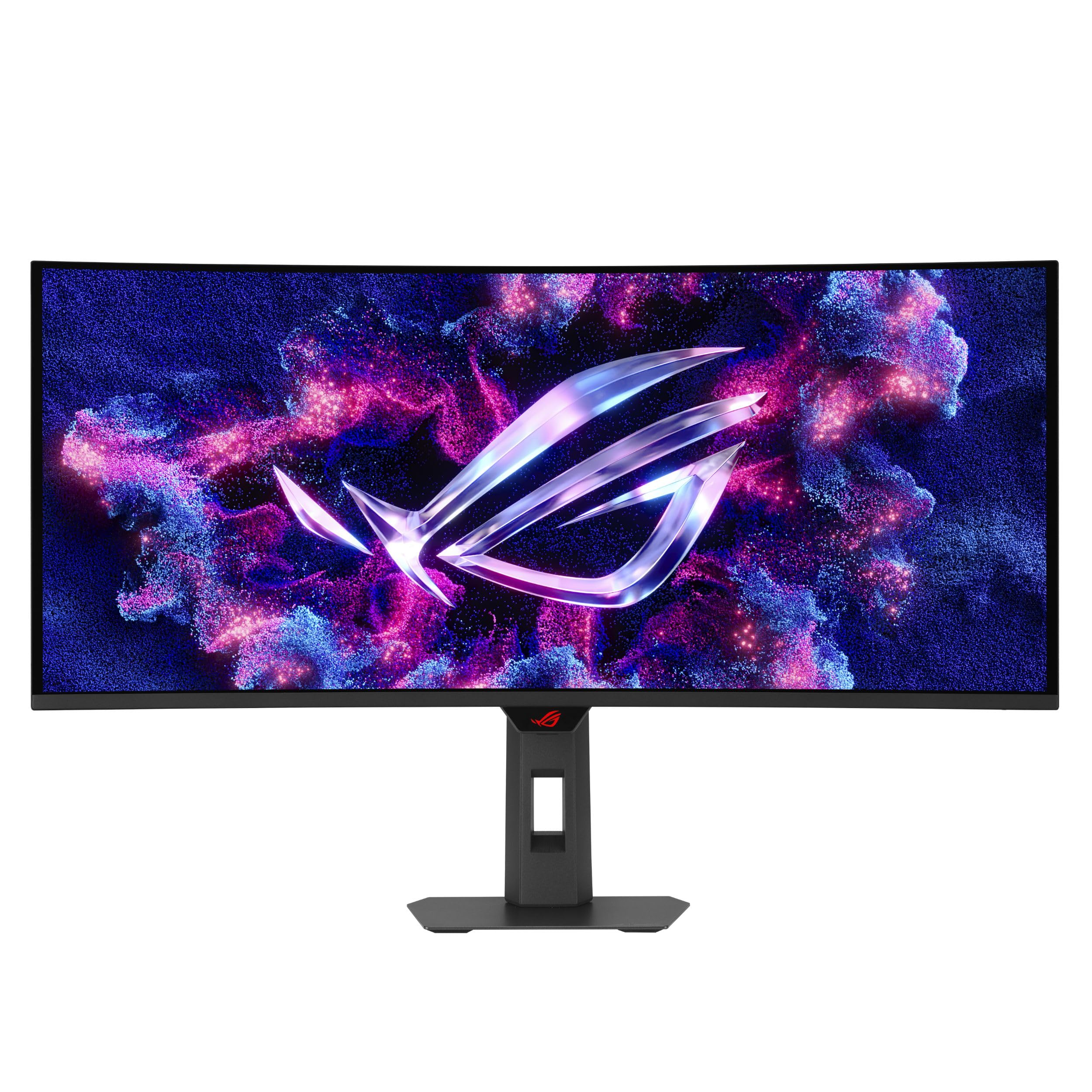
QD-OLED panel produces deep blacks and vivid colors that make games and HDR content look striking, and the OLED Care Pro system uses a proximity sensor to detect when you step away, running pixel refresh cycles before burn-in can set in. The tradeoff is that long-term durability under heavy daily use is still being assessed — early reports are positive, but the lack of extensive real-world data means cautious buyers should weigh this against the premium price for a 34-inch monitor.

Bottom line: This monitor fits early adopters who want the latest QD-OLED tech and can accept the uncertainty of a new model, but those prioritizing proven durability should look to monitors with broader user feedback.

How to Choose

Screen Size & Aspect Ratio

The most visible choice is 34-inch 21:9 versus 49-inch 32:9. A 34-inch ultrawide mimics two 27-inch 16:9 monitors side by side, fitting most desks and eyes. A 49-inch 32:9 is effectively two 27-inch monitors in one, but requires a deep desk—at least 30 inches—and a monitor arm for proper positioning.

The extra width of 32:9 is ideal for day traders who need multiple charts open or sim racers who want a wider field of view. For general productivity and gaming, 34-inch 21:9 offers a more manageable footprint and often lower cost.

Panel Type & Contrast

VA panels dominate the mid-range with 3000:1 contrast ratios, delivering deep blacks and good color. QD-OLED panels offer infinite contrast and vibrant colors but are more expensive and vulnerable to burn-in over years of static UI elements.

For mixed use with office applications, VA is the safer, more affordable choice. QD-OLED shines for dark-room gaming and HDR content but requires burn-in precautions like pixel shift and hiding taskbars.

Refresh Rate & Adaptive Sync

Refresh rate directly affects motion smoothness. At 60Hz, scrolling and fast-paced games appear stuttery. 100-120Hz is a noticeable upgrade for casual gaming and general desktop use. 165-240Hz provides a competitive edge for fast-paced shooters and racing games.

Adaptive sync (FreeSync or G-Sync) eliminates screen tearing when frame rates fluctuate. FreeSync Premium adds low framerate compensation for smoother play at 30-60fps. Most monitors support both now, but check for proper compatibility with your GPU.

Connectivity & USB-C Power Delivery

USB-C with power delivery (PD) lets you connect a laptop with one cable that carries video, data, and charging. PD wattage matters: 65W charges most ultrabooks, while 90W supports larger laptops. Missing USB-C means extra cables and a separate charger.

The number of video ports determines how many devices you can leave plugged in. Two HDMI and one DisplayPort is standard; some add a second DisplayPort or HDMI 2.1 for higher bandwidth. Built-in USB hubs allow connecting peripherals directly to the monitor.

Ergonomics

Height adjustment is the most important ergonomic feature—it lets you align the top of the screen with eye level to avoid neck strain. Tilt and swivel add flexibility but are secondary. Many budget monitors offer only tilt, forcing you to add monitor risers or arms.

A monitor with height adjustment out of the box saves $30-60 on a separate arm. If you plan to use a monitor arm anyway, ergonomics on the stand become less critical.

Frequently Asked Questions