Computers & Accessories

9 Best Presentation Clicker of 2026: Reliable Performance at Every Price Point

The best presentation clickers for 2026: which ones deliver consistent, trouble-free slides without draining your wallet.

Presenters know the sinking feeling when a clicker refuses to advance slides or the laser barely registers on a bright screen. Many models that promise plug-and-play simplicity end up failing within weeks of regular use, either through dead batteries or flimsy construction.

That gap between marketing claims and real-world durability is the real problem buyers face. The best clickers don't offer flashy extras; they deliver consistent connectivity, a visible pointer, and a build that survives repeated packing and travel.

This guide focuses on the specific features that actually matter for everyday presentations: range that works in conference rooms, a laser that cuts through projector glare, and a power source that won't quit mid-slide.

1

Logitech R400

Top Pick
Logitech R400

Frequent presenters

Our Score 9.4/10
Check Price

Worth Noting

  • Battery drain can be faster than expected in some units, making spare AAA batteries a useful backup.
  • Requires a USB-A port; laptops with only USB-C need an external adapter to use the receiver.
Laser Type
Red (Class 2)
Connectivity
2.4GHz RF USB-A
Power Source
2 AAA batteries
Wireless Range
50 ft

The R400 starts working the moment you insert the USB-A receiver and open your presentation — no pairing, no app installation, no driver needed. The red Class 2 laser cuts through ambient light well enough for typical conference rooms and lecture halls, with a visible dot that holds steady on projection screens and even some LCD panels.

The remote is shaped to fit comfortably in either hand, with raised buttons that you can locate by touch without glancing down. The four-button layout covers forward, back, a laser toggle, and a blank-screen button — enough control to move through slides without reaching for the keyboard.

This is a straightforward tool for presenters who prioritize instant reliability over modern connectivity. It uses a USB-A receiver (an adapter is needed for USB-C-only laptops) and runs on two AAA batteries whose drain rate can vary between units — keeping spares on hand is sensible for frequent use. For anyone giving regular slide decks in settings where a red laser works fine, the R400 removes all setup friction.

At a mid-range price, it holds its own against more expensive presenters: the 2.4GHz RF range reaches 50 feet, the receiver stores inside the remote, and the overall build feels solid enough for years of daily carrying. No unnecessary features, nothing to configure, just a dependable pointer that does what it says.

Tip: Keep a spare set of AAA batteries in your laptop case — battery life varies between units and a dead remote mid-presentation is easily avoided.

Bottom line: If you want a no-surprises clicker that works out of the box every time and don't mind a USB-A receiver or the odd battery swap, the R400 is a durable, well-reviewed choice that has earned its place in the category.

2

Logitech Spotlight

Logitech Spotlight

Tech-savvy presenters

Our Score 8.8/10
Check Price

Worth Noting

  • No physical laser pointer
  • Battery charging may stop working on some units after extended use, requiring replacement.
  • Full functionality requires Logitech Options+ software; not truly plug-and-play out of the box.
Laser Type
Digital spotlight
Connectivity
Bluetooth + USB-A
Power Source
Rechargeable Li-ion
Wireless Range
98 ft

The Spotlight replaces a physical laser with digital highlighting and magnification, letting you draw attention to specific areas on large projection screens or during virtual presentations. That approach works well when you need to zoom into charts or circle details without fumbling with a pointer — the effect stays crisp on video feeds too. Bluetooth pairing is quick, and the included USB receiver offers a fallback for older computers.

This remote is best for presenters who already present from a laptop or tablet and want software-enhanced control over what the audience sees. The tradeoff comes in three forms: no physical laser for in-person pointing, the need to install Logitech Options+ for the spotlight and magnifier to work, and occasional battery charging issues that can surface after months of use. Those who prefer a grab-and-go clicker with a classic red dot should look at the top pick R400 instead.

Tip: Keep the software installed and update it periodically; the digital pointer will revert to basic slide controls if Options+ is missing.

Bottom line: Choose the Spotlight if your presentations rely on digital screens and you want software-powered effects — accept the setup steps and the lack of a physical laser.

3

VILNIU WP71

VILNIU WP71

Budget teachers

Our Score 9.4/10
Check Price

Worth Noting

  • Forward button can stick on some units, causing unintended multiple slide advances.
Laser Type
Red
Connectivity
2.4GHz RF USB-A
Power Source
2 AAA batteries
Wireless Range
98 ft

The VILNIU WP71 stands apart from other budget presentation clickers by delivering a failure rate low enough to rival the top pick, without demanding a premium. Its 2.4GHz RF connection and red laser reach up to 98 feet for slide control and 328 feet for the pointer – more than enough for most lecture halls and conference rooms.

This clicker is best for teachers and presenters who want a simple, no-fuss tool: insert the USB-A dongle, open PowerPoint, and it just works. The included AAA batteries last through many presentations. However, the forward button has been noted to stick on some units, advancing multiple slides. If you deliver presentations where a single stray click could derail your flow, this is a tradeoff to consider.

The rubberized grip and dongle storage in the battery compartment add practical touches. At its price point, the WP71 offers exceptional endurance – no battery drain surprises like some competitors.

Tip: If the forward button begins sticking, a light tap or cleaning the button edge with a dry cloth often resolves it.

Bottom line: A budget clicker that acts like a workhorse – stickiness aside, it's the safest bet for cost-conscious presenters.

4

TITIANCOOL DM102

TITIANCOOL DM102

Bright room presenters

Our Score 9.2/10
Check Price

Worth Noting

  • Closely spaced buttons can trigger unintended slides or laser activation during quick gestures
  • Battery life may decline after several months of use, requiring more frequent charging than expected
Laser Type
Green
Connectivity
2.4GHz RF USB-A
Power Source
Rechargeable Li-ion
Wireless Range
164 ft control

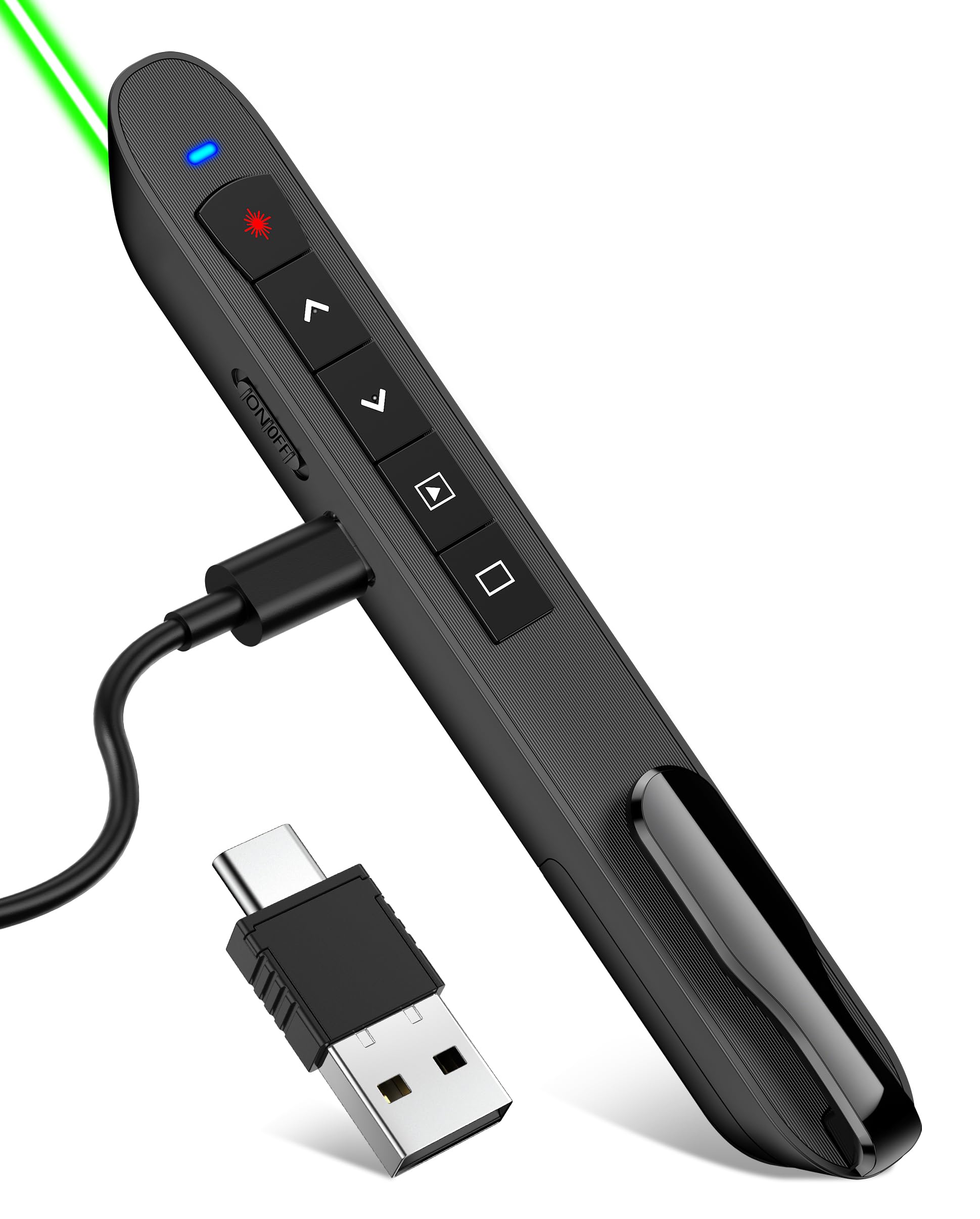
The TITIANCOOL DM102 stands out with its green laser, which remains visible on brightly lit projector screens and LCD displays where red lasers fade. At a mid-range price, it offers USB-C rechargeability - a modern convenience the top pick lacks - and a build that feels solid in hand for daily classroom or auditorium use.

This clicker fits teachers and presenters working in large rooms with ambient light that drowns standard red pointers. However, battery longevity can degrade over months of regular use, and the closely spaced buttons may lead to accidental slide advances during fast-paced presentations - tradeoffs worth weighing if you plan to charge weekly rather than daily.

The 2.4GHz RF connection reaches 164 feet, and the magnetic dongle storage keeps the receiver secure. The green laser beam itself extends over 600 feet, giving you clear pointing ability in venues where a red dot would simply disappear.

Tip: Practice slide navigation before live use - the close button spacing takes a session or two to get used to.

Bottom line: For presenters who need a green laser to cut through bright lighting, the DM102 delivers at a reasonable price - just be prepared for battery aging and a learning curve on the button layout.

5

DINOSTRIKE DM100

DINOSTRIKE DM100

Air mouse users

Our Score 8.8/10
Check Price

Worth Noting

  • Air mouse cursor can be jerky or lose connection intermittently
  • Reliability varies between units; some may stop working or fail to charge
Laser Type
Red
Connectivity
2.4GHz RF USB-A/C
Power Source
Rechargeable 300mAh
Wireless Range
164 ft control

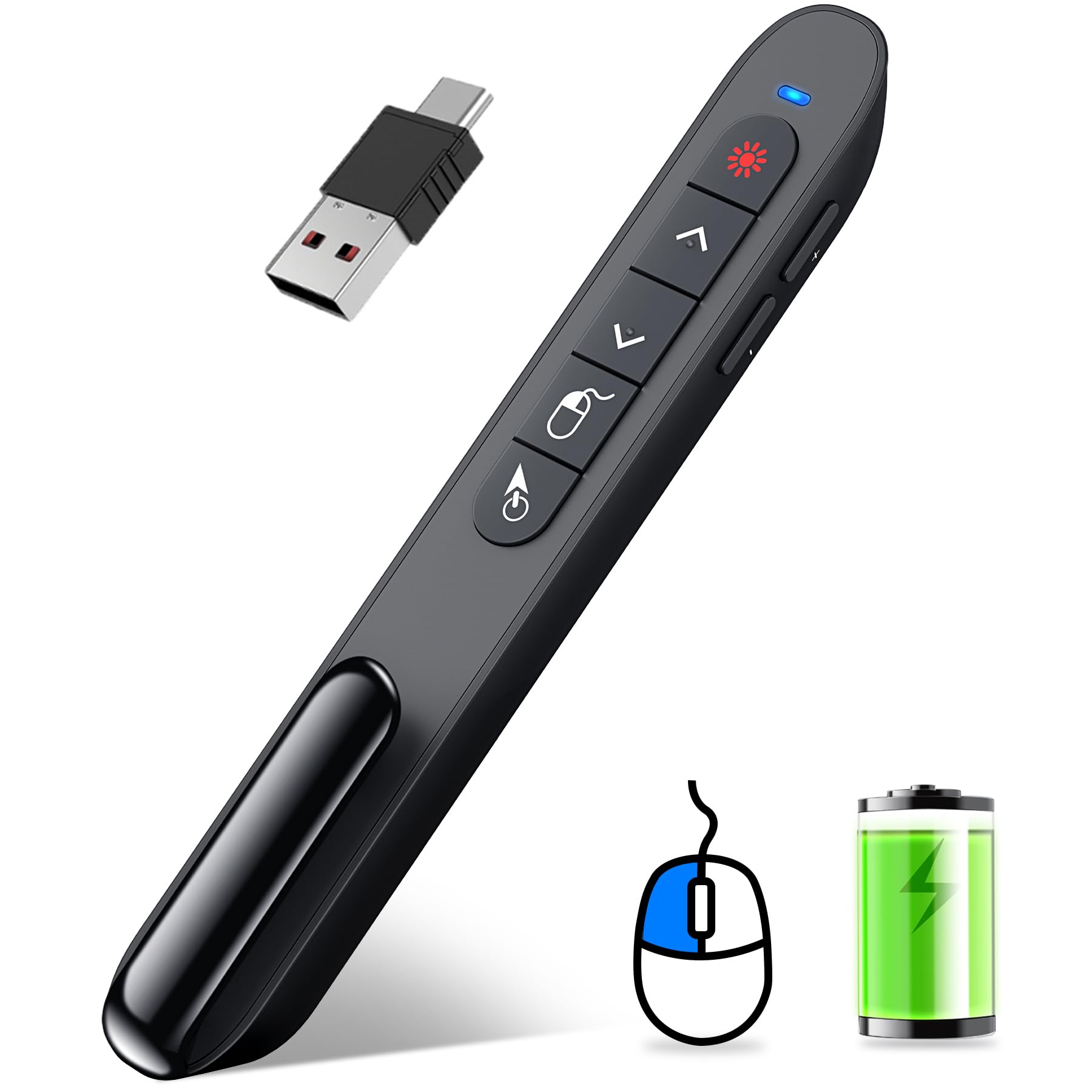
The DINOSTRIKE DM100 stands apart from typical clickers by adding an air mouse that lets you move a cursor across websites, apps, or embedded media without touching the keyboard. That capability, combined with volume up/down buttons and a clip-on design, makes it feel more like a media remote than a slide advancer.

This model suits teachers and presenters who frequently navigate non-slide content — pulling up a browser, scrolling a document, or adjusting playback volume from across the room. The air mouse works well for such tasks, though the cursor can feel jerky or lose sync in some cases, which may frustrate users who need pixel-precise pointing.

The built-in rechargeable battery holds enough charge for a full day of presenting, and the included USB-A and USB-C receiver covers modern laptops. What keeps it from competing with simpler plug-and-play clickers is the possibility of unit-to-unit variation: some remotes may stop responding or fail to recharge, so buying from a retailer with a lenient return policy is worth considering.

Tip: Store the receiver inside the remote when idle to avoid losing it — the compartment is built into the clip.

Bottom line: Best for presenters who want cursor control from a distance and are willing to accept occasional quirks; if simple slide advancement with zero fuss is the priority, a standard clicker like the Logitech R400 is a safer bet.

6

UBUYONE GX60

UBUYONE GX60

Ultra-budget shoppers

Our Score 9.2/10
Check Price

Worth Noting

  • Button layout can feel reversed or non-intuitive for some users.
  • Magnetic receiver storage may be fiddly to detach.
Laser Type
Red
Connectivity
2.4GHz RF USB-A
Power Source
1 AAA battery
Wireless Range
328 ft (stated)

At under $10, this clicker fits in a pocket and adds hyperlink and volume control - an unusual combination at this price. The advertised 100-meter range is optimistic; in typical meeting rooms it covers the distance just fine, but don't expect it to work across a large auditorium. The button layout may feel reversed to some hands - the slide-forward button sits where the back button normally is, which takes a few minutes to adjust to. The magnetic receiver is a clever storage solution but can be a bit fiddly to pop out.

Tip: Spend a minute reorienting your thumb to the button order - it becomes natural after a few slides.

Bottom line: Best for budget-conscious presenters who need hyperlink support in a compact stick and are comfortable adapting to a non-standard button layout.

7

Kensington K33272

Kensington K33272

Secure environments

Our Score 9.2/10
Check Price

Worth Noting

  • USB receiver stored inside battery compartment makes access slower
  • Red laser may be too weak for large or brightly lit rooms
Laser Type
Red
Connectivity
2.4GHz RF USB-A
Power Source
AAA battery
Wireless Range
65 ft

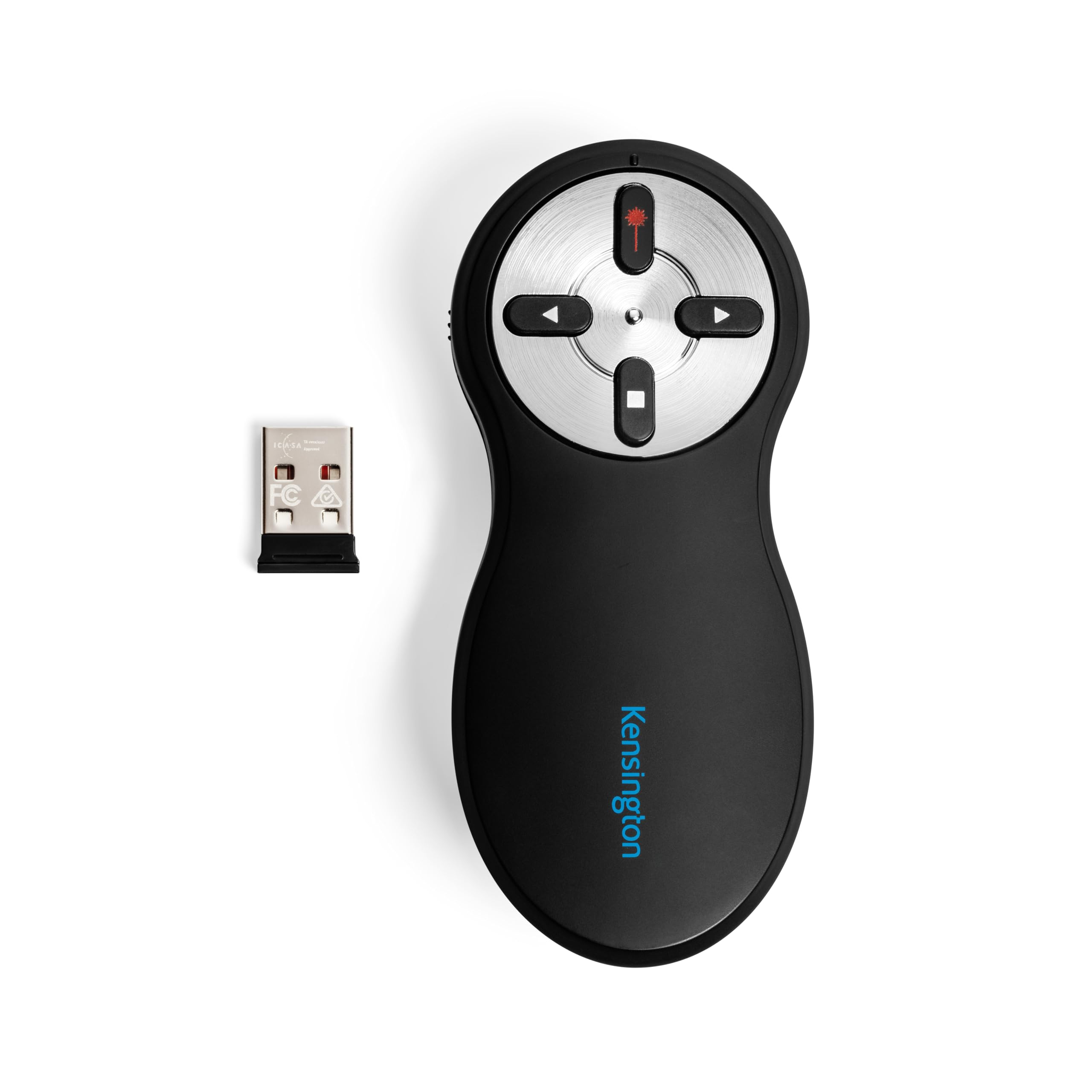
The Kensington K33272 prioritizes data security with AES 128-bit encryption and TAA compliance, making it a natural fit for government contractors and IT departments that require encrypted wireless connections. The ergonomic shape fits the hand well during longer presentations. However, the red laser may not stand out in brightly lit conference halls, and the USB receiver lives inside the battery compartment — a design that slows down setup compared to competitors that store the dongle externally. For organizations where security protocols trump convenience, this clicker covers the essentials without the extra frills found in top-tier options.

Bottom line: Pick the K33272 if your workplace requires encrypted wireless and TAA compliance — for everyone else, a simpler clicker at this mid-range price offers more convenience.

8

CLIKBUTM WP08-R

CLIKBUTM WP08-R

Budget classrooms

Our Score 9.2/10
Check Price

Worth Noting

  • Some units may stop responding after a few weeks of use, requiring early replacement.
  • Dongle storage inside battery compartment forces battery removal to access the receiver.
Laser Type
Red
Connectivity
2.4GHz RF USB-A
Power Source
1 AAA battery
Wireless Range
100 ft

The CLIKBUTM WP08-R delivers straightforward plug-and-play slide control at a budget-friendly price, using a compact form that stores its receiver inside the battery compartment. For presenters who need to advance slides from up to 100 feet away, this does the job with no software or setup required. However, unit-to-unit consistency varies; occasional early stoppage has been noted, making it less suited for high-stakes business presentations where any interruption is unacceptable. The dongle storage design also means you must remove the battery to access the receiver, a minor inconvenience for frequent use.

Bottom line: Best for budget classroom environments where a replacement clicker on hand is acceptable.

9

Microsoft Presenter+

Microsoft Presenter+

Teams users

Our Score 9.0/10
Check Price

Worth Noting

  • 33-foot range is short for large presentation spaces or moving around a stage.
  • Mac compatibility can be inconsistent, with some users unable to connect at all.
Laser Type
Digital pointer
Connectivity
Bluetooth
Power Source
Rechargeable Li-ion
Wireless Range
33 ft

The Microsoft Presenter+ offers direct integration with Teams and PowerPoint, giving Windows users one-touch access to mute, raise hand, and a digital pointer. That seamlessness is its main draw—no extra software or mapping needed. But the tradeoffs are clear: the wireless range stops at 33 feet, which limits use in larger rooms, and Mac compatibility is inconsistent, making it a Windows-only tool. The mute button may also stop working with newer Teams versions. This is a niche clicker for presenters who spend most of their time in Microsoft’s ecosystem and don’t need a laser or long-range control.

Bottom line: Only consider this clicker if you present exclusively on Windows and depend on Teams meeting controls—otherwise the short range and Mac issues make it a poor general-purpose choice.

How to Choose

Wireless Range

Advertised ranges (100 ft or more) are measured in open air with zero interference. In real conference rooms with walls, projectors, and Wi-Fi signals, usable range typically drops by 30-50 percent.

For a standard boardroom, 50 ft of reliable control is plenty. If you present in large auditoriums or need to walk deep into the audience, look for models with at least 100 ft of rated range and 2.4GHz RF (not Bluetooth).

Laser Type

Red lasers are standard and visible on most screens, but they wash out on bright projectors, LCD displays, or in daylight conditions. Green lasers are 8-10x brighter to the human eye and remain visible in those scenarios.

The trade-off: green laser modules draw more power, often causing faster battery drain. If you present in dimly lit rooms, red is sufficient. For bright auditoriums or daytime classrooms, green is worth the battery hit.

Connectivity

Most clickers use a 2.4GHz RF dongle for instant pairing. The connector type matters: USB-A is still the norm, but many newer laptops only have USB-C ports. Some clickers ship with a dual USB-A/C receiver, saving you from carrying an adapter.

Bluetooth clickers skip the dongle but can suffer from longer pairing delays and occasional interference in crowded wireless environments. For reliability, a dedicated RF dongle is still the safest bet.

Power Source

Replaceable AAA batteries remain the most predictable power source. A set typically lasts 6-12 months under weekly use. Clickers with rechargeable lithium-ion batteries are convenient but often show significant capacity loss after 12-18 months.

If you present daily, stick with AAA-powered models. Rechargeables make sense for occasional users who can tolerate a declining battery over time and don't want to keep spare batteries on hand.

Additional Controls

Volume, hyperlink, and timer buttons add convenience but also increase the risk of accidental presses. Cramped button layouts are a common source of frustration, especially on budget clickers.

If you only need slide advance, back, and a laser, a 3-button design minimizes mishaps. Presenters who often navigate hyperlinks or want a countdown timer will appreciate more buttons, but test the layout before committing.

Frequently Asked Questions