PC Components & Storage

11 Best Thermal Paste of 2026: Save Degrees Without Breaking the Bank

Find the right thermal paste for your build — from budget-friendly options to premium overclocking compounds — without overpaying for marginal gains.

Many thermal pastes claim 'premium performance,' but in practice the temperature difference between top contenders is often just a couple of degrees. The real deciding factors are how easy the paste is to apply, how much you get for your money, and whether it suits your specific hardware — from a budget office PC to a liquid-cooled overclocking rig.

Thick pastes resist pump-out on bare dies but can be frustrating to spread; small syringes run out quickly; some require a cure period. Knowing these trade-offs upfront saves you from buying a tube that doesn't match your skill level or project.

This guide cuts through the marketing noise to highlight the pastes that deliver consistent performance, safe operation, and clear value — no matter if you're building your first computer or chasing every last megahertz.

1

ARCTIC MX-4 (4g)

Top Pick
ARCTIC MX-4 (4g)

Budget builds

Our Score 9.6/10
Check Price

Worth Noting

  • For extreme overclocking loads, the MX-4 trails premium pastes by 1-3°C
Conductive?
No
Package Size
4g
Spread Consistency
Medium viscosity, easy spread
Thermal Conductivity
High (carbon microparticles)

ARCTIC MX-4 uses carbon microparticles to achieve high thermal conductivity, routinely reducing CPU and GPU temperatures by 10 to 20 degrees Celsius in standard builds. The paste is non-conductive, adding safety for first-time builders who may overapply.

The syringe delivers a consistency that spreads evenly without being too runny or too thick, making it straightforward to apply. Its thermal stability holds up over years – many builders apply it once and leave it through the system's lifespan.

This paste is designed for budget-conscious builders, first-time PC assemblers, and anyone needing general-purpose CPU or GPU cooling. For extreme overclockers chasing every fraction of a degree, premium options like the ARCTIC MX-7 offer a marginal advantage, but the difference is negligible for the vast majority of users.

With a 4-gram syringe, there is enough material for multiple builds or reapplication. The non-conductive nature and long lifespan make it a safe, cost-effective choice that avoids the higher price of enthusiast-grade pastes without sacrificing meaningful performance in typical use.

Bottom line: The ARCTIC MX-4 is the thermal paste to grab for any standard PC build – it delivers consistent performance without the premium price tag.
2

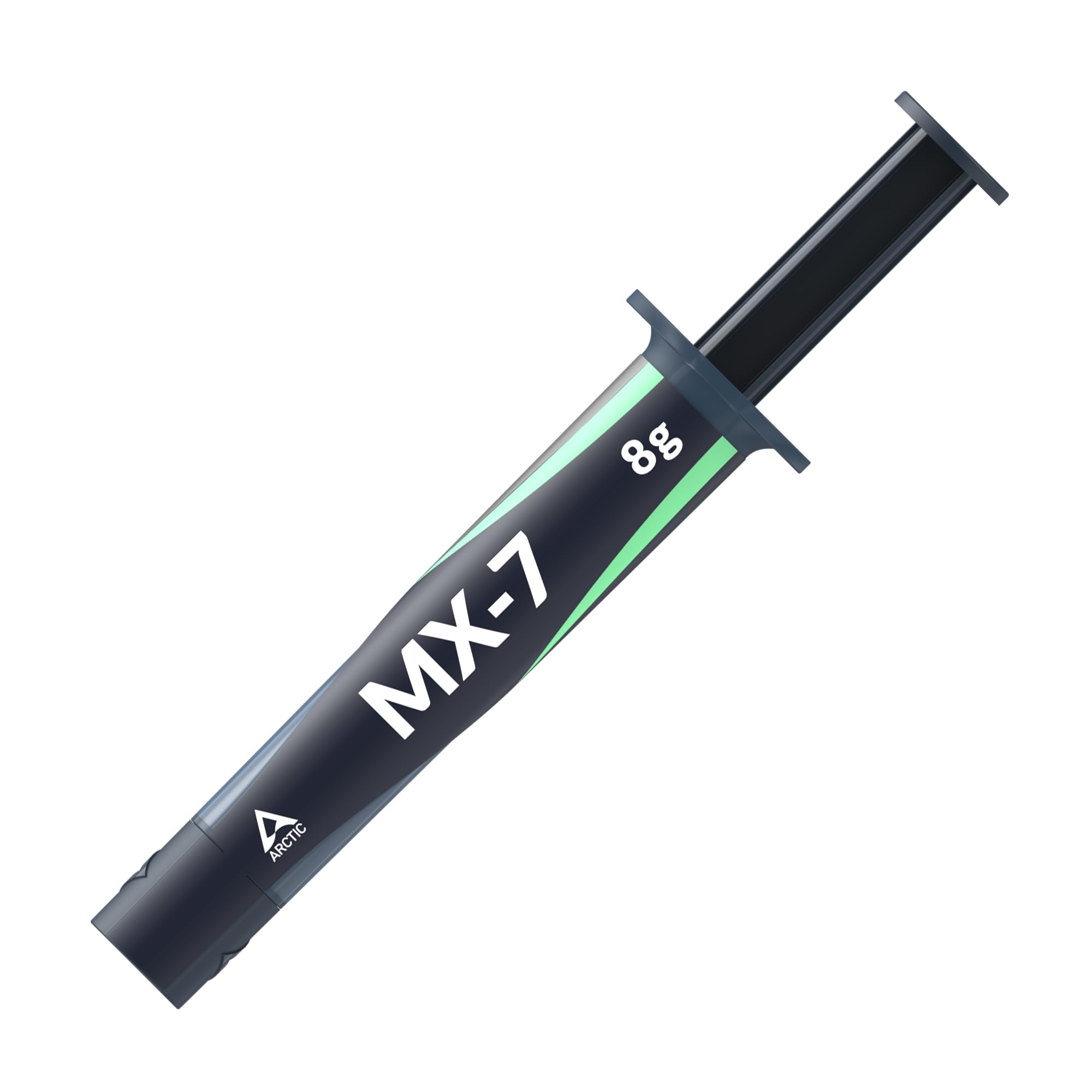
ARCTIC MX-7 (8g)

ARCTIC MX-7 (8g)

Enthusiast builds

Our Score 9.6/10
Check Price

Worth Noting

  • Very thick consistency can be difficult to spread manually, requiring warming or careful technique.
Conductive?
No
Package Size
8g
Spread Consistency
Very thick
Thermal Conductivity
Extremely high

ARCTIC MX-7 brings a denser formulation that targets CPU, GPU, and console cooling scenarios where standard pastes can shift under heat cycles. The 8-gram tube provides enough material for multiple builds, and the non-conductive formula removes short-circuit concerns during application.

This paste suits builders who want the extra 2–5°C headroom over MX-4 and need long-term stability in high-movement environments like laptops or repasted consoles. The thick consistency requires deliberate spreading; warming the syringe before use helps, but this is a paste for those who are comfortable with careful application rather than quick dabs.

The high filler density also resists pump-out better than many alternatives, which matters in direct-die applications where thermal cycling is aggressive. For users who have already used MX-4 and want a tangible upgrade without jumping to premium-priced options, MX-7 hits a cost-effective middle ground.

Tip: Warm the syringe in your hand or set it near a low heat source for a few minutes to improve spreadability.

Bottom line: A straightforward upgrade for anyone repasting a GPU, console, or laptop who values pump-out resistance and is comfortable with a thicker paste.

3

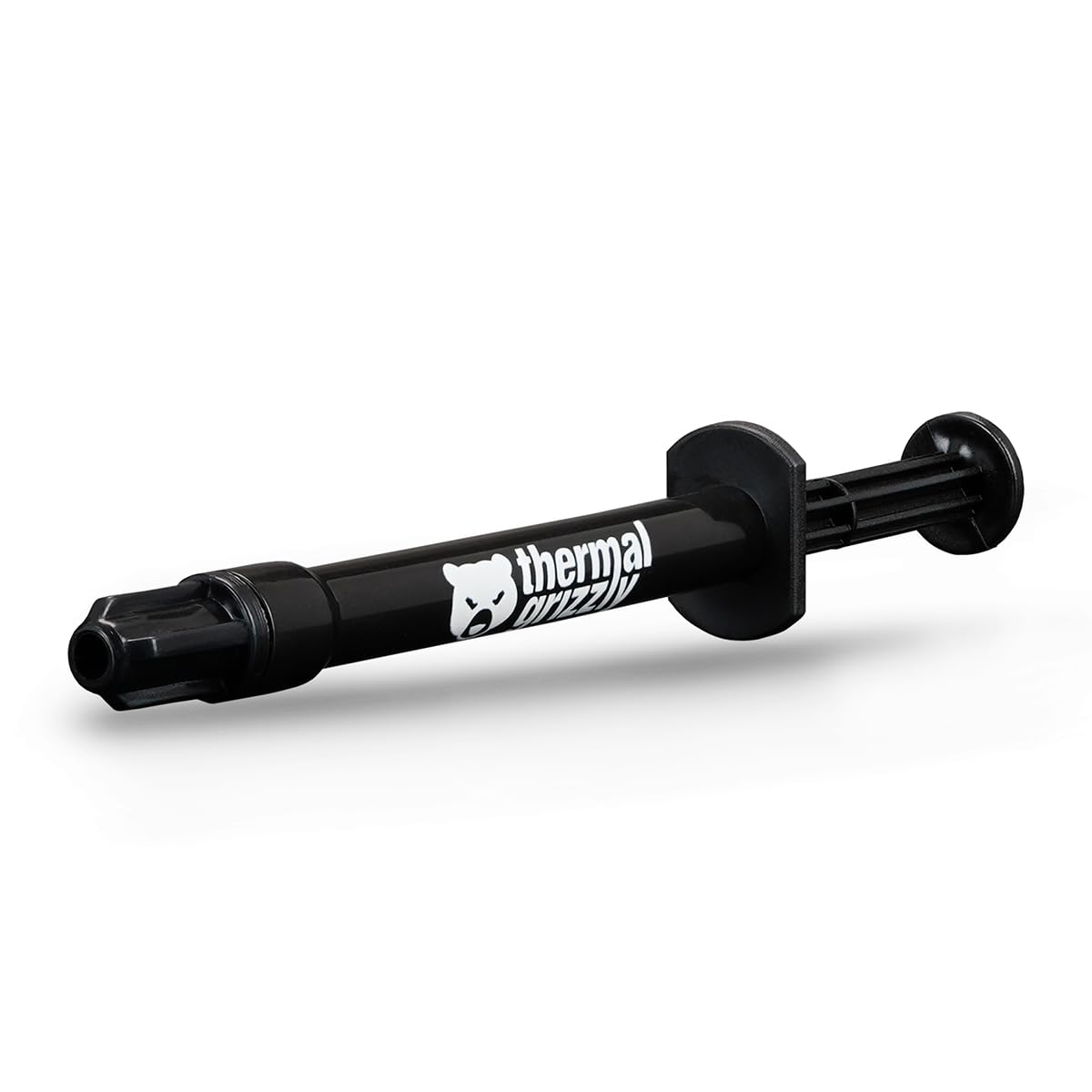
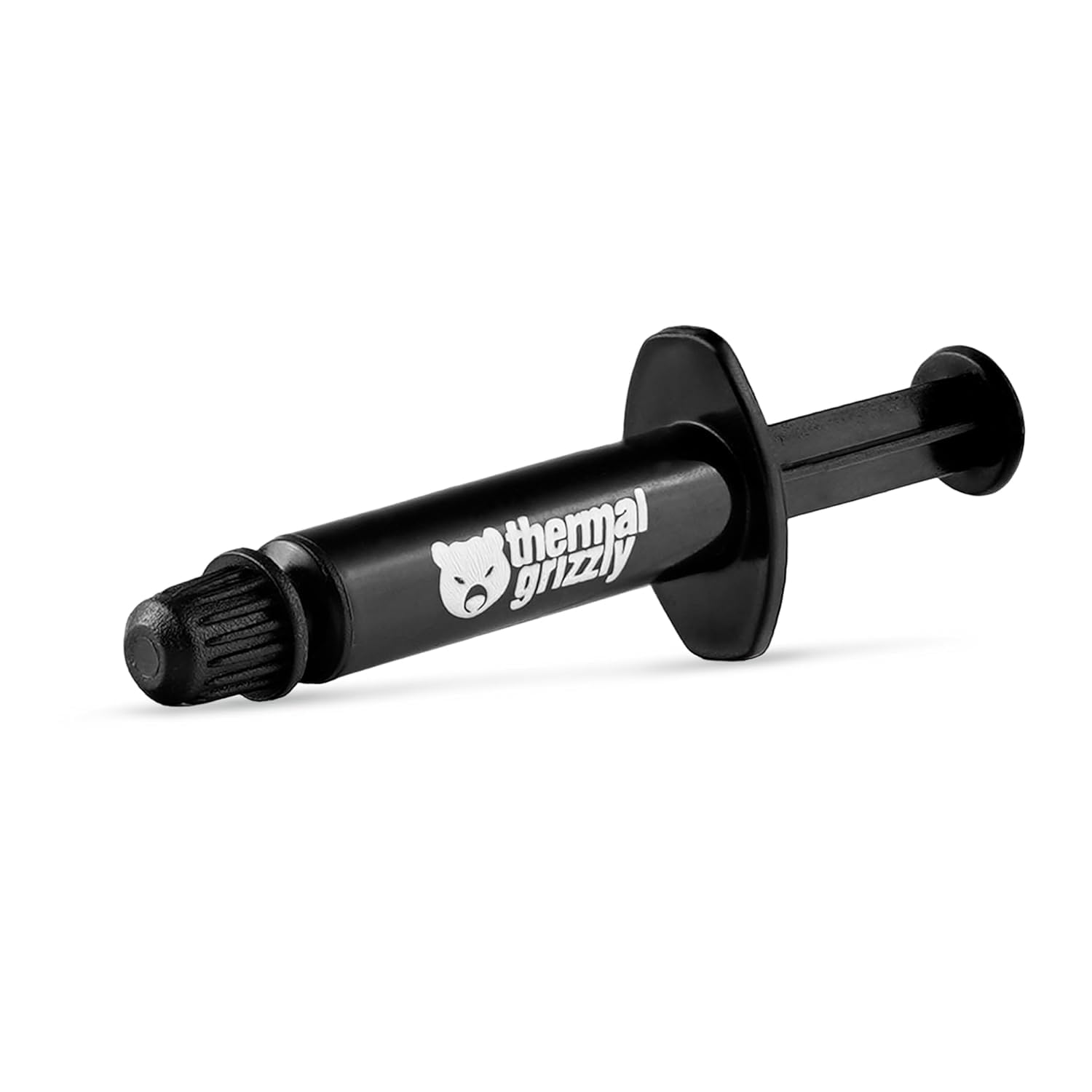
Thermal Grizzly Kryonaut 1g

Thermal Grizzly Kryonaut 1g

Overclocking builds

Our Score 9.4/10
Check Price

Worth Noting

  • Only 1g
  • Spreadability can vary between batches, requiring careful technique
Conductive?
No
Package Size
1g
Spread Consistency
Inconsistent (varies)
Thermal Conductivity
Extremely high

Thermal Grizzly Kryonaut delivers industry-leading thermal performance for overclockers targeting the lowest possible temperatures. Where the top pick ARCTIC MX-4 balances value and everyday reliability, Kyronaut prioritizes raw conductivity — making it the reference paste for high-TDP CPUs and GPUs in competition builds.

The included spatula aids application, but the paste's consistency varies between batches — some tubes spread smoothly, others require more effort. The 1g syringe is enough for one application on a large IHS, so plan accordingly. Despite the small quantity, the immediate temperature drop under load justifies the premium for those pushing extreme voltages.

This paste is for enthusiasts who need every degree of headroom — delidding GPUs or running 250W+ CPUs at max overclocks. The high cost per gram and small tube are acceptable tradeoffs only if raw thermal transfer trumps cost efficiency. For budget builds or multiple systems, a larger tube of MX-4 makes more sense.

Tip: If the paste feels thick, apply light pressure with the spatula to achieve a thin, even layer.

Bottom line: If maximum thermal transfer is your priority, Kryonaut delivers — just be prepared for the small tube and variable spreadability. For most builders, the top pick MX-4 offers stronger value per gram.

4

Noctua NT-H2 (3.5g)

Noctua NT-H2 (3.5g)

User-friendly builds

Our Score 9.6/10
Check Price

Worth Noting

  • Higher per-gram cost compared to alternatives like the top pick, though the included wipes add value.
  • The 3.5g tube provides enough for a few applications, but budget-focused builders may prefer larger syringes at lower cost.
Conductive?
No
Package Size
3.5g
Spread Consistency
Easy, medium viscosity
Thermal Conductivity
Premium-grade

The Noctua NT-H2 sets itself apart from many thermal pastes by including a precision syringe and three cleaning wipes, making application cleaner and more convenient than pastes that require separate tools. The syringe tip deposits paste exactly where needed, reducing mess and waste.

Thermal performance is on par with other premium pastes in this class, delivering measurable temperature improvements over budget options without requiring a cure period. The non-conductive formula adds a layer of safety for builders who are new to CPU or GPU assembly.

This paste suits builders who value convenience and are willing to pay a modest premium for the included wipes and syringe. It particularly appeals to Noctua cooler owners looking to match brands, and anyone assembling a mid-range to high-end system. The per-gram cost is higher than the top pick ARCTIC MX-4, though the wipes offset some of that difference for users who would otherwise buy them separately.

Bottom line: For builders who prioritize clean application and don't mind paying extra for the included wipes, the NT-H2 is a well-rounded choice that performs consistently.

5

BSFF Thermal Paste 1.8g

BSFF Thermal Paste 1.8g

Budget beginners

Our Score 9.4/10
Check Price

Worth Noting

  • For users building multiple systems or doing frequent repasting, the 1.8g tube covers only a few jobs.
  • The short included spreader can make achieving an even layer less intuitive for those who prefer a larger spatula.
Conductive?
No
Package Size
1.8g
Spread Consistency
Easy with included spreader
Thermal Conductivity
Carbon-based

This kit delivers a syringe of carbon-based thermal compound alongside a plastic spreader, cleaning wipes, and finger cots – all priced to compete with paste-only tubes from larger brands. The non-conductive carbon microparticles provide solid heat transfer for everyday CPU and GPU cooling tasks.

It targets budget builders and first-time applicators who want a complete setup without buying separate tools. The 1.8g quantity covers two to three CPU applications, making it economical for a single build or shared projects. The included spreader is short, which can make spreading less precise than using a dedicated spatula – a tradeoff acceptable given the low overall cost.

Thermal performance is comparable to mid-range pastes, with users seeing measurable temperature drops after replacing stock paste. The non-conductive formula removes short-circuit risk, a practical safety advantage for those new to the process.

While the top pick ARCTIC MX-4 offers a larger syringe and a longer track record, this kit provides a lower barrier to entry for anyone who needs a complete solution on a tight budget. The small tube and short spreader are intentional tradeoffs to keep the price entry-level.

Tip: Use the included finger cots to smooth the paste if the spreader feels too short – a clean fingertip can work just as well.

Bottom line: For budget builders and first-time applicators, this kit offers everything needed in one package at a compelling price – just be aware the small tube and short spreader are tradeoffs for the low cost.

6

Gennel GT-1 2-Pack

Gennel GT-1 2-Pack

Shared builds

Our Score 9.4/10
Check Price

Worth Noting

  • For a single large CPU cooler, the 1g syringe may not be enough
Conductive?
No
Package Size
2g (2x1g)
Spread Consistency
Medium viscosity
Thermal Conductivity
Carbon compound

Two syringes of thermal paste for less than a single tube of many competitors — a clear value for budget builds. Unlike the BSFF beginner kit that offers one 1.8g tube with a short spreader, this pack gives you two separate 1g syringes, enough for two distinct applications. It also includes cleaning wipes, finger cots, and a spatula, making it a near-complete kit for the price. Each syringe is small — 1g covers one thin application on a standard CPU or GPU die.

Thermal performance holds its own against more expensive pastes in typical desktop and console use. Users report noticeable temperature drops after application. The carbon-based compound is non-conductive, so no risk of short circuits if you overapply. The included spatula is functional but basic — fine for spreading the paste evenly. Its temperature range of -50°C to 240°C covers any realistic cooling scenario.

This dual-pack is best suited for builders who need paste for two separate machines, or want to share with a friend. Beginners will appreciate the low cost and low-risk entry for repasting a console or laptop. For larger projects requiring more than 2g total, the small syringe size means you will need to buy another pack — consider a larger tube like the top pick's 4g or 8g options instead.

Bottom line: Right for anyone needing two separate small applications or a backup syringe at a very low cost.

7

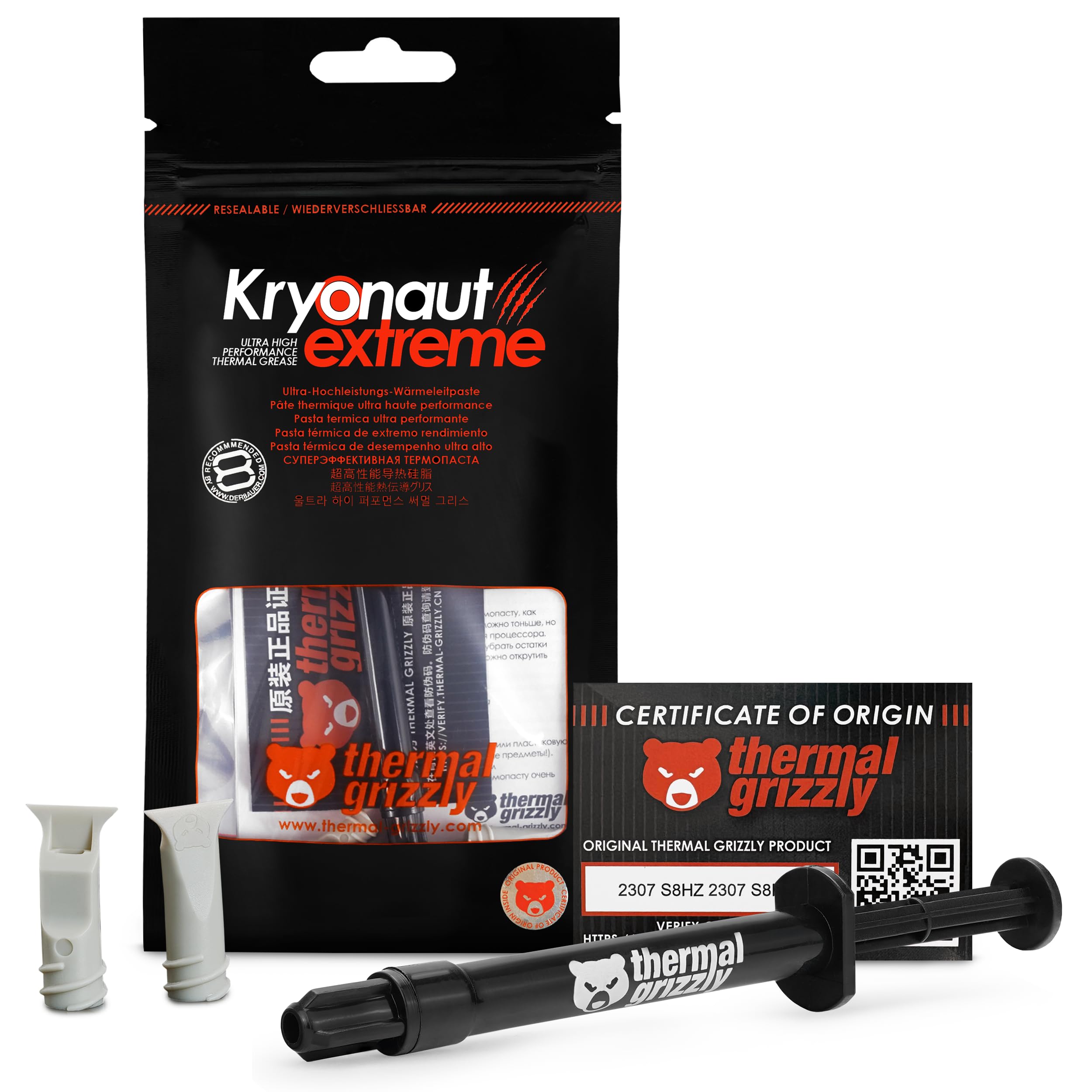
TG Kryonaut Extreme 2g

TG Kryonaut Extreme 2g

Extreme overclocking

Our Score 9.4/10
Check Price

Worth Noting

  • Expensive per gram compared to other premium pastes.
  • Very thick consistency; requires heating or considerable patience to spread evenly.
Conductive?
No
Package Size
2g
Spread Consistency
Very hard to spread
Thermal Conductivity
Extreme (highest)

Delivers best-in-class thermal conductivity for extreme overclocking, with temperature drops of up to 20°C under load. However, the thick consistency makes application difficult without preheating, and the high cost per gram limits its value to those chasing every last degree. For most builds, the standard Kryonaut provides nearly identical performance at a fraction of the effort and price.

Bottom line: Only for extreme overclockers who need every last degree of performance; standard Kryonaut is a more practical choice for all other builders.

8

Noctua NT-H1 (3.5g)

Noctua NT-H1 (3.5g)

General builds

Our Score 9.6/10
Check Price

Worth Noting

  • In high-end overclocking builds, thermal conductivity trails the NT-H2 by a small margin
  • Does not include cleaning wipes or spreader, requiring separate purchase
Conductive?
No
Package Size
3.5g
Spread Consistency
Easy, pressure-based
Thermal Conductivity
Pro-grade

The Noctua NT-H1 has earned over 150 awards for its thermal performance and long-term consistency. Application is straightforward – a single dot in the center spreads evenly under cooler pressure. The compound remains stable for up to five years without drying out. For extreme overclockers chasing every degree, the higher-end NT-H2 offers a modest thermal improvement and includes cleaning wipes. The NT-H1 omits those accessories, so you'll need separate supplies. Still, for general CPU and GPU cooling, it delivers ample conductivity at a lower price point.

Bottom line: Choose this paste when you want Noctua's long-term consistency without paying extra for marginal performance gains and accessories you may already have.

9

Corsair TM30 (3g)

Corsair TM30 (3g)

Budget builds

Our Score 9.4/10
Check Price

Worth Noting

  • Runny consistency may cause messy application if not careful
  • Performance ceiling too low for extreme overclocking or high-TDP chips
Conductive?
No
Package Size
3g
Spread Consistency
Runny, hard to control
Thermal Conductivity
Zinc Oxide based

The Corsair TM30 hits a useful spot for budget builders who want a known brand and a straightforward application kit without spending much. The syringe and stencil make a clean spread possible, and performance holds up for daily gaming and general use. But the paste’s runny consistency can turn into a mess if you apply too much, and the thermal conductivity tops out well before enthusiast-grade needs. For similar money, the ARCTIC MX-4 delivers comparable results with better consistency and a lower price per gram.

Tip: Warm the tube to room temperature and apply a small dot – the runny consistency spreads easily without excess.

Bottom line: A decent entry-level paste for budget builds, but buyers targeting high-performance cooling should look at the ARCTIC MX-4 for better value and consistency.

10

PolarTronix Liquid Metal 1g

PolarTronix Liquid Metal 1g

Console modding

Our Score 9.0/10
Check Price

Worth Noting

  • Electrically conductive
  • Corrodes aluminum heatsinks; only use with copper, nickel, or silver cold plates.
Conductive?
Yes
Package Size
1g
Spread Consistency
Liquid, requires care
Thermal Conductivity
Extreme (gallium-indium)

The PolarTronix Liquid Metal delivers thermal conductivity that outperforms standard pastes by 10-20°C on copper and nickel cold plates, making it a strong option for PS5 repasting and direct-die GPU cooling. Its gallium-indium-tin formulation is electrically conductive and will corrode aluminum heatsinks, so it is not suitable for laptops or most consumer CPU coolers. This is a tool for advanced users who understand the risks of short circuits and need precise, careful application. The included cleaning wipe and fine-tip applicator help, but the product’s requirements limit it to experienced modders.

Bottom line: Fits best for modders and overclockers who need maximum heat transfer on compatible hardware and accept the precision and risk that liquid metal demands.

11

TG Duronaut (2g)

TG Duronaut (2g)

Industrial use

Our Score 8.8/10
Check Price

Worth Noting

  • Clay-like consistency can roll up rather than stick, making even coverage a challenge
  • Thick texture requires warming before application to achieve a thin layer
Conductive?
No
Package Size
2g
Spread Consistency
Clay-like, very thick
Thermal Conductivity
Aluminum + zinc oxide

Thermal Grizzly Duronaut resists pump-out better than typical pastes, making it a strong candidate for high-vibration environments like servers or industrial equipment. The unique particle composition holds up under thermal cycling over extended periods.

The tradeoff is a clay-like consistency that can be extremely difficult to spread evenly. Warming the paste before use helps, but this paste is only suitable for users comfortable with thick, non-stick textures — general PC builders should look elsewhere.

Tip: Warm the paste to 40-50°C before use to improve spreadability.

Bottom line: This paste fits only when pump-out resistance is critical and you are already comfortable applying thick paste — not for general CPU or GPU builds.

How to Choose

Thermal Conductivity Rating

Higher W/mK numbers don't always translate to real-world gains because application thickness and mounting pressure matter more. A mid-range paste applied evenly can outcool a high-end paste applied too thickly.

Focus on the paste's reputation and user feedback for specific CPUs rather than chasing the highest conductivity rating.

Viscosity and Spreadability

Thick pastes resist pump-out on bare dies (GPUs, consoles) but are harder to spread evenly. Thin pastes spread effortlessly but may leak out on vertical surfaces or degrade over time.

If you choose a thick paste, warm the syringe in your hand for 2 minutes before application to soften it. For runny pastes, use the included applicator or a credit card edge for control.

Electrical Conductivity

Non-conductive pastes are safe for beginners and can be applied liberally without risk of short circuits. Conductive pastes like liquid metal offer superior thermal transfer but require careful masking and are only for experienced builders.

Liquid metal should never be used on aluminum heatsinks as it causes corrosion. Stick to copper or nickel surfaces and apply a thin, even layer.

Quantity Per Package

A single CPU application uses about 0.1-0.2g. A 4g tube covers 20-40 builds, making larger syringes much more cost-effective per application even if the upfront price is higher.

If you only need one or two applications, a smaller tube or a two-pack (like the Gennel GT-1) saves money without waste.

Long-Term Durability

Some pastes degrade or dry out after 2-3 years; others last 5-8 years. High-viscosity pastes tend to resist pump-out better under thermal cycling, which is critical for laptops and consoles that experience frequent heating and cooling.

If you plan to keep a system for 5+ years, choose a paste with proven longevity like ARCTIC MX-4 or Noctua NT-H1.

Frequently Asked Questions