PC Components & Storage

8 Best External Hard Drive of 2026: Reliable Storage Without the Gamble

Which external hard drives survive daily use? From budget HDDs to blazing SSDs, find the right balance of speed, capacity, and reliability.

Every external hard drive promises to keep your files safe, but customer experiences reveal a gap: portable HDDs fail far more often than most buyers expect. The low cost per terabyte is tempting, but that price often means a gamble on data security.

Solid-state drives have dropped enough in price that the trade-off isn’t as steep as it used to be. For most people, the extra speed and shock resistance of an SSD now justify the premium — especially if you carry your drive around or rely on it for work.

The right choice depends on whether you need bulk storage you can afford to lose, or reliable access to critical files — and the difference is bigger than most spec sheets show.

1

Samsung T7 1TB SSD

Top Pick
Samsung T7 1TB SSD

Creative professionals

Our Score 9.4/10
Check Price

Worth Noting

  • The aluminum shell can get warm under heavy sustained writes, potentially triggering thermal throttling
  • Some units have been noted to drop connection intermittently during use
Portability
Portable (2.5-inch)
Failure Rate
Few failures
Compatibility
PC, Mac, PS5, Xbox
Transfer Speed
USB 3.2 Gen2, 1050MB/s

The Samsung T7 hits its advertised 1,050 MB/s reads and 1,000 MB/s writes across a wide range of USB-C and USB-A devices, with no special drivers required. This means large project files load in seconds and console game installs take noticeably less time than with a spinning hard drive. The USB 3.2 Gen 2 interface is widely supported, so you are not limited to niche ports.

Under sustained transfers of several hundred gigabytes, the aluminum casing does get warm to the touch, and in some cases the drive may throttle its speed to cool down. For typical daily backups, media transfers, or loading games, this thermal behavior is rarely encountered. The drive resumes full speed once it cools, and the temperature does not affect data integrity or longevity.

This drive suits creative professionals who move large video or design files, gamers wanting faster loading on PS5 or Xbox, and students looking for a rugged portable backup. It is not for budget shoppers who prioritize cost per gigabyte over speed, nor for those needing more than 4TB of external capacity. If your workflow involves hours of uninterrupted 4K video dumping in direct sun, a larger desktop SSD with active cooling would be a better fit.

The credit-card footprint and shock-resistant design make it easy to slip into a bag or pocket, and the bundled USB-C and USB-A cables cover most modern laptops and consoles. The AES 256-bit encryption adds a layer of security for sensitive files without slowing down everyday transfers. Combined with the drive's consistent speed and broad device support, the T7 covers the essentials without overcomplicating things.

Tip: For prolonged sequential writes, keep the drive on a cool surface or pause transfers briefly to let it cool down.

Bottom line: If you need a portable SSD that just works with your current hardware and delivers full-speed transfers every time, the T7 is the default pick over faster but pickier options like the T9.

2

Samsung T9 1TB SSD

Samsung T9 1TB SSD

Video editors

Our Score 9.2/10
Check Price

Worth Noting

  • Full speed requires a USB 3.2 Gen 2x2 port
  • Premium price over the T7 is hard to justify if your system lacks the compatible port.
Portability
Portable (2.5-inch)
Failure Rate
Few failures
Compatibility
PC (Gen2x2), Mac (capped)
Transfer Speed
USB 3.2 Gen2x2, 2000MB/s

The Samsung T9 delivers sequential read speeds up to 2,000 MB/s, making it the fastest external drive in this roundup. This blistering pace is achieved through a USB 3.2 Gen 2x2 interface that doubles the bandwidth of standard USB-C ports. For video editors transferring large 4K files or gamers loading massive game libraries, this drive shaves minutes off transfer times.

This speed comes with a condition: you need a USB 3.2 Gen 2x2 port on your PC or console to see anything beyond what a T7 provides. Most laptops, including all current Macs, are capped at 10Gbps, limiting the T9 to around 1,050 MB/s — identical to the T7. The T9 is for professionals who have verified their hardware supports the 20Gbps interface and work with files large enough to justify the premium.

Samsung's thermal management keeps the drive cool during sustained writes, and the compact, rubberized housing protects against drops. The 5-year warranty adds confidence, but the core value proposition hinges on that port compatibility.

Tip: Check your system's USB specifications before buying — a simple USB-C port won't deliver 2,000 MB/s.

Bottom line: The T9 is the right choice for professionals with a Gen 2x2 port who need top transfer speeds. For most other buyers, the T7 offers the same real-world performance at a lower price.

3

Lexar ES3 1TB SSD

Lexar ES3 1TB SSD

Budget users

Our Score 8.8/10
Check Price

Worth Noting

  • Some iPhone and USB-C devices may experience intermittent disconnections
Portability
Portable (2.5-inch)
Failure Rate
14% (small sample)
Compatibility
PC, Mac, iPhone, consoles
Transfer Speed
USB 3.2 Gen2, 1050MB/s

The Lexar ES3 delivers fast USB 3.2 Gen 2 speeds at a price that undercuts most other 1TB SSDs. It is notably slimmer and lighter than similarly-priced rugged drives, making it easy to slip into a pocket or bag alongside a laptop. The aluminum enclosure feels dense and the drive runs silently, with no moving parts to worry about.

This drive suits buyers who need a fast, portable SSD for daily file transfers, backups, and light gaming storage — and who prioritize upfront savings over a decades-long track record. Those planning to store critical data for years may prefer a model with more extensive field history, but for typical home and office use the ES3 performs reliably. It works well with Windows, Mac, PS5, and Xbox consoles; iPhone users should verify compatibility before committing.

Tip: If you use an iPhone 17 series, check for firmware updates before relying on the drive for backups.

Bottom line: For buyers on a tight budget who want SSD speeds without the premium price, the Lexar ES3 delivers where it counts — just confirm compatibility with your primary devices.

4

LaCie Rugged 5TB HDD

LaCie Rugged 5TB HDD

Field workers

Our Score 9.2/10
Check Price

Worth Noting

  • Compatibility with some computers can be hit or miss; the drive may not be recognized without reformatting.
  • Transfer speeds are slower than SSDs, especially when writing large files.
  • Internal consistency can vary; the drive may stop working after a period of use despite the rugged casing.
Portability
Portable (2.5-inch, rugged)
Failure Rate
45% negative
Compatibility
PC, Mac
Transfer Speed
USB 3.0, ~120MB/s

The LaCie Rugged 5TB survives drops up to four feet, dust, and rain, setting it apart from standard portable hard drives. This physical resilience makes it a viable option for outdoor shoots, construction sites, or travel. However, the internal drive's durability has been inconsistent — some units have been reported to stop working even though the casing remains intact.

This drive suits photographers, field workers, and travelers who need to carry large files into rough conditions where a typical portable drive would not last. The slower write speeds (common for a 5,400 RPM HDD) and occasional compatibility hiccups with certain computers are acceptable tradeoffs when physical protection is the priority. Users who expect long-term dependability without a separate backup plan should look elsewhere.

At 5TB capacity and a mid-range price, it offers competitive storage per dollar among rugged drives. Combined with the orange rubber bumper that adds grip and extra shock absorption, it delivers on its outdoor promise.

Tip: Because internal consistency can vary, maintain a separate backup of any critical data stored on this drive.

Bottom line: For fieldwork where physical damage is the main risk, the LaCie Rugged 5TB provides the protection you need — but plan for backups given the mixed internal track record.

5

WD 20TB Elements Desktop

WD 20TB Elements Desktop

Home media backup

Our Score 9.0/10
Check Price

Worth Noting

  • Some drives may develop issues within the first year, making this a better fit for non-critical data backups
  • Write speeds are typical for a desktop HDD (around 190 MB/s), slower than SSDs for large file transfers
Portability
Desktop (3.5-inch, AC)
Failure Rate
37% negative
Compatibility
Windows, Mac (reformat)
Transfer Speed
USB 3.0, ~150MB/s

WD's 20TB Elements delivers the most capacity per dollar among desktop external drives, with plug-and-play setup on Windows and a sturdy enclosure that suits stationary use.

This drive is suited for home server archives or media libraries where it sits in a dedicated storage area. The operation noise (audible seeking and hum) is not a concern in a closet or basement. However, some units may experience early failures, so it is best used for secondary backups rather than primary data storage.

Transfer speeds are typical for a 3.5-inch HDD (around 190 MB/s) — adequate for overnight backups but slower than SSDs for frequent file access or active projects.

Tip: Keep a separate backup of any critical data stored on this drive, as occasional early failures have been noted.

Bottom line: For buyers prioritizing capacity over portability and silence, this drive offers the best value — just be prepared to accept the possibility of early failure and locate it away from quiet spaces.

6

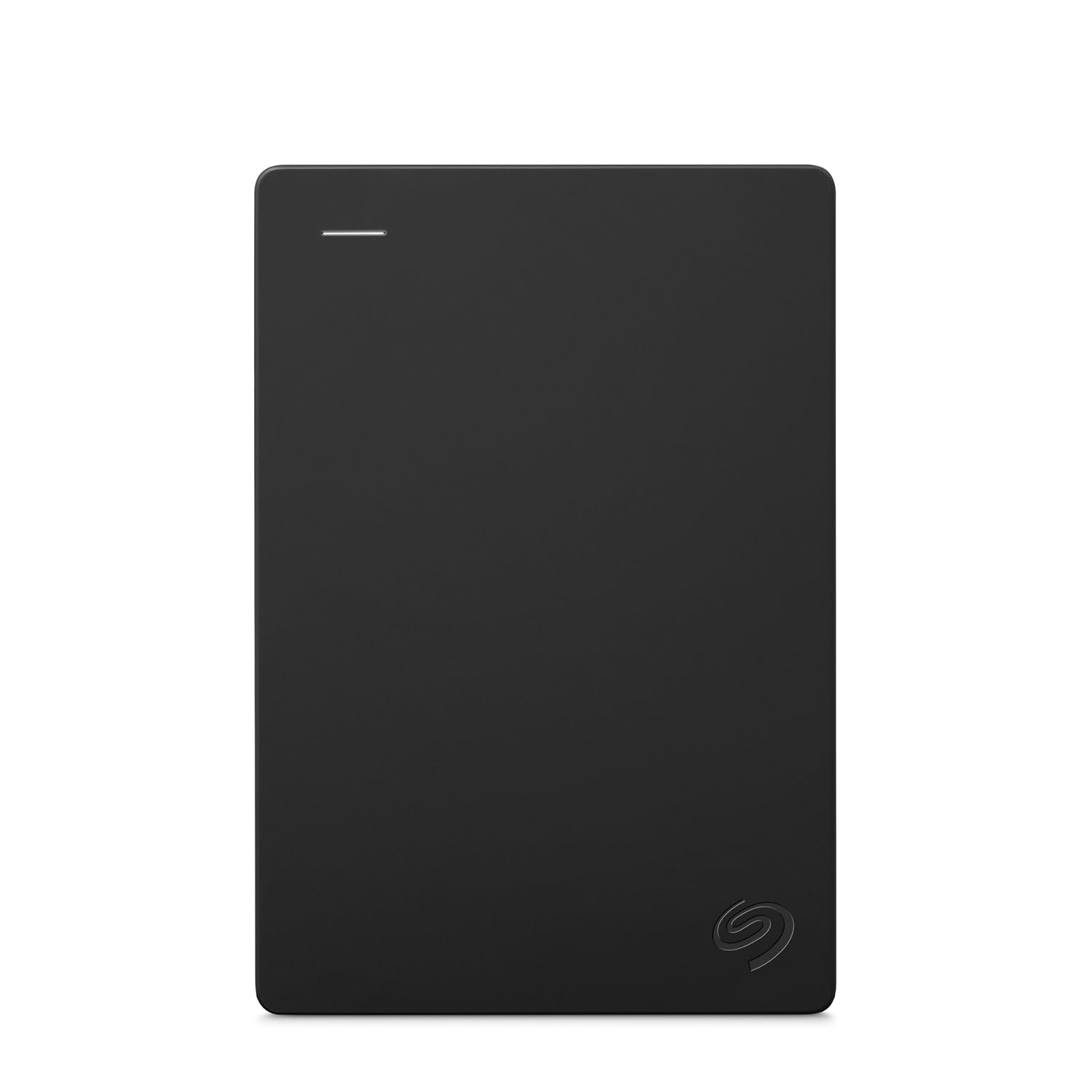
Seagate Portable 2TB HDD

Seagate Portable 2TB HDD

Console gamers

Our Score 9.2/10
Check Price

Worth Noting

  • Mac users must reformat the drive or install third-party software before it works out of the box.
  • Some units may become unresponsive unexpectedly
Portability
Portable (2.5-inch)
Failure Rate
38% negative
Compatibility
PC, Mac (reformat), PS, Xbox
Transfer Speed
USB 3.0, 120MB/s

Plug it into a PS4, Xbox, or PC and you have 2TB of game space in seconds — no setup, no software. That ease of use and the budget price explain why this is one of the best-selling external HDDs on the market. But the tradeoffs are real: some units can become unusable without warning, and Mac users will need to reformat the drive before it works natively. For console gamers who treat the drive as expendable game storage rather than a backup vault, those risks are easy to live with.

Bottom line: For expanding game libraries on a console where data is replaceable, this is the cheapest way to add 2TB — but treat it as expendable, not archival.

7

SanDisk 1TB Portable SSD

SanDisk 1TB Portable SSD

Windows users

Our Score 9.2/10
Check Price

Worth Noting

  • Mac compatibility can be unreliable; some systems may not recognize the drive without workarounds
  • Reliability concerns noted: individual units can stop functioning after short usage periods
Portability
Portable (2.5-inch)
Failure Rate
32% negative
Compatibility
PC, Mac (may not work)
Transfer Speed
USB 3.2 Gen2, 800MB/s

This SanDisk portable SSD offers a good mix of low price, compact size, and fast USB 3.2 Gen 2 transfers (up to 800 MB/s), with a rubberized casing rated for 2m drops. It's a practical choice for Windows users who need a tough drive for outdoor or on-the-go storage. However, compatibility with Macs can be spotty — some systems simply do not recognize the drive, and there have been occasional reports of units becoming unresponsive after a few months of use. Those limitations make it less suitable for cross-platform workflows or primary backups, but for a secondary Windows drive the value is hard to beat.

Bottom line: Best for Windows users on a budget who need a rugged, portable SSD for non-critical outdoor or travel use, but not for Mac users or anyone depending on the drive for primary backups.

8

Toshiba Canvio 4TB HDD

Toshiba Canvio 4TB HDD

Secondary backup

Our Score 9.2/10
Check Price

Worth Noting

  • Internal drive may stop working within the first year, not for long-term storage
  • Transfer speeds can be slow when moving large files
Portability
Portable (2.5-inch)
Failure Rate
37% negative
Compatibility
PC, Mac (reformat)
Transfer Speed
USB 3.0, ~120MB/s

At under $0.05 per gigabyte, the Toshiba Canvio Basics delivers the lowest cost per terabyte among portable HDDs. That value comes with a known tradeoff: the internal drive can fail within the first year, so it is not suited for long-term archival or critical backups. Transfer speeds are adequate for occasional file moves but slow for large volumes. For short-term file transfers, secondary copies of non-critical data, or budget overflow storage, the low price may be worth the reliability gamble.

Bottom line: Best for budget-conscious users who need a secondary drive for temporary transfers and don't mind replacing it if it stops working.

How to Choose

Capacity and Drive Type

HDDs use spinning platters and a read arm, making them vulnerable to physical shock and mechanical wear. A drop of a few feet can render the drive unreadable. SSDs have no moving parts, which makes them far more durable and faster, but the cost per gigabyte is still higher. For files you move regularly or need to access quickly, an SSD is worth the premium.

Transfer Speed

USB generation determines the maximum speed, but actual throughput depends on the drive internals. An HDD connected to USB 3.0 tops out around 150 MB/s, while a modern SSD can hit 1,000 MB/s or more. For frequent large file transfers, the time difference is hours, not minutes. If you only copy small documents occasionally, a slower drive won't be a bottleneck.

Portability

2.5-inch drives are bus-powered, meaning they draw power from the USB port and fit in a pocket. 3.5-inch desktop drives require an AC outlet, making them stationary. The trade-off is capacity: desktop drives can hold 20TB or more, while portable caps around 6TB in a 2.5-inch HDD, and SSDs offer up to 4TB in a pocketable size.

Compatibility

Most external drives are pre-formatted for Windows, so Mac users often need to reformat the drive to exFAT or APFS. Some drives claim Mac compatibility but still require this step. Consoles like PS5 and Xbox support both HDDs and SSDs, but only SSDs deliver faster load times. If you switch between devices frequently, look for a drive that ships with exFAT.

Reliability

The biggest hidden factor is failure rate. Among portable HDDs, customer reviews consistently report premature failures within the first year — sometimes at rates of 30-50% negative mentions. SSDs have far fewer failure reports. Always maintain a separate backup of any critical data, regardless of the drive type, as no single external drive is infallible.

Frequently Asked Questions