Tools & DIY

10 Best Thermal Imaging Camera 2026: Real Detail Without the Premium

Professional-grade thermal imaging cameras that deliver real detail without the premium price — for inspections, diagnostics, and troubleshooting.

Many thermal cameras boast impressive pixel counts, but real-world image quality often comes down to native sensor resolution versus software upscaling. Misaligned MSX overlays and calibration drift are common frustrations that make inspection work harder than it needs to be.

The market now offers capable cameras from under $100 to over $600, but the sweet spot sits between $150 and $300 where you get reliable accuracy and durable build. The key choice isn t just price — it s whether you prioritize a larger display and onboard storage or a compact, long-battery device that fits in a pocket.

This guide cuts through the spec sheet noise to highlight which cameras consistently deliver sharp thermal images, accurate readings, and the right features for electrical, HVAC, and building inspections.

1

TOPDON TC004

Top Pick
TOPDON TC004

Professional inspections

Our Score 9.2/10
Check Price

Worth Noting

  • Boot-up takes longer than some competing models.
Durability
IP54, 2m drop
Temp Range
-20C to 400C
Battery Life
8 hours rechargeable
Image Fusion
TISR

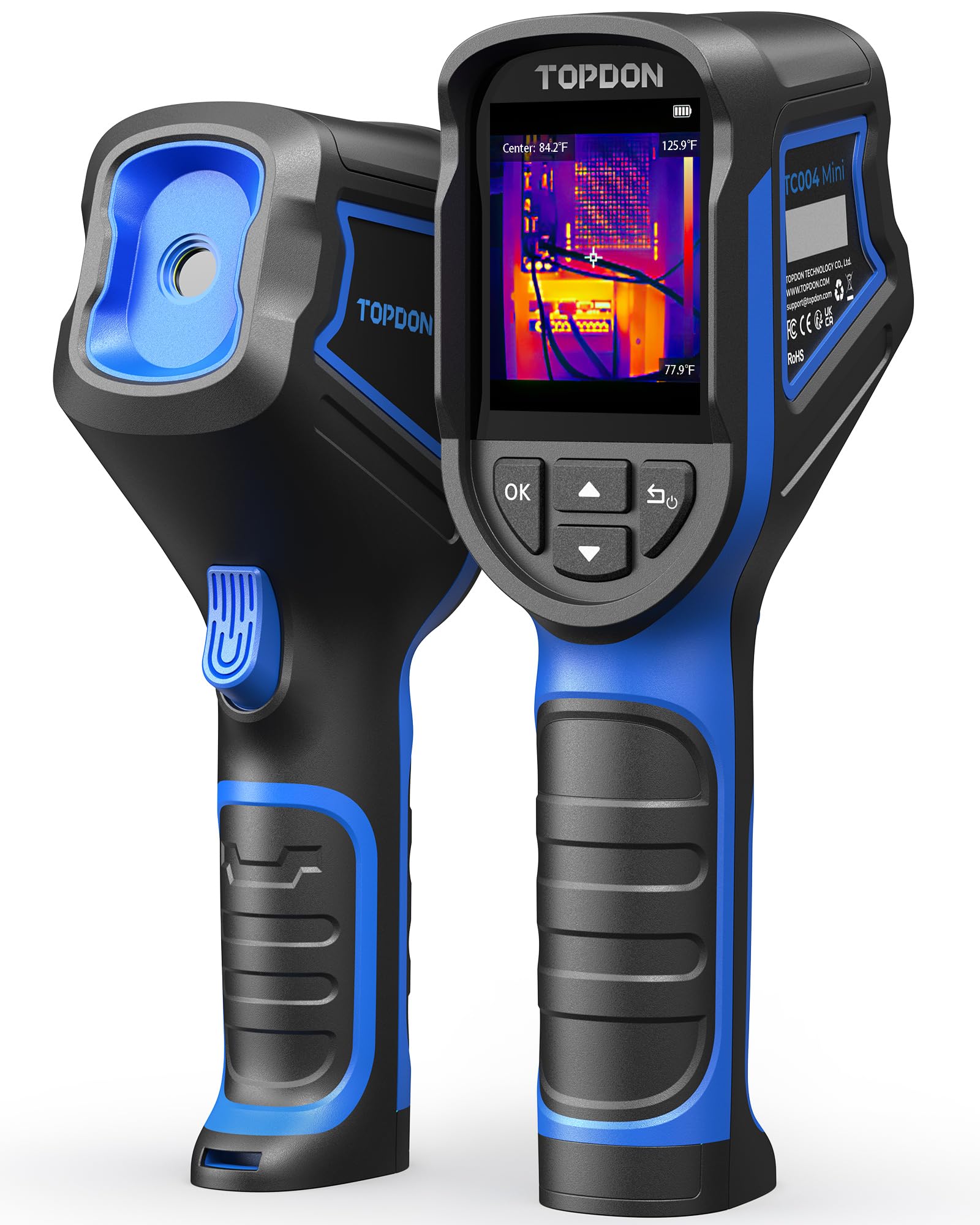
The TC004's 256x192 native IR sensor, upscaled to 512x384 via TOPDON's TISR algorithm, produces thermal images with enough detail to identify hot spots on electrical panels and temperature differentials in HVAC ductwork. The 3.5-inch display is bright and responsive, making on-site diagnosis straightforward without squinting at a phone screen. Temperature readings are consistently accurate, with fast response to target changes.

The 8-hour rechargeable battery covers a full shift, and the 64GB internal storage handles thousands of images without needing a memory card. Wi-Fi connectivity allows quick transfers to a phone or tablet for report generation. The IP54 rating and 2-meter drop resistance add durability for job sites.

This standalone camera suits HVAC technicians, electricians, and building inspectors who need a dependable thermal imaging tool for daily diagnostics. It measures temperatures from -20°C to 400°C, covering the vast majority of building and equipment checks. For applications above 400°C — such as industrial furnaces or engine exhaust aftertreatment — this is the wrong tool.

Bottom line: For field technicians who need sharp thermal images, long battery life, and ample onboard storage without spending FLIR-level money, the TC004 is the practical choice.
2

TOPDON TC004 Mini

TOPDON TC004 Mini

Home, auto, DIY

Our Score 9.0/10
Check Price

Worth Noting

  • Screen resolution is modest, and text can be hard to read for detail-oriented work.
  • No Wi-Fi or cloud connectivity for instant image sharing or reporting.
  • Native 128x128 resolution limits fine detail capture needed for forensic analysis.
Durability
IP54, 2m drop
Temp Range
-20C to 450C
Battery Life
15 hours
Image Fusion
TISR

The TC004 Mini stands apart from its larger sibling by offering a 15-hour battery life and a rugged, pocketable build at a mid-range price. It keeps core thermal accuracy intact while cutting bulk and cost, making it the go-to for extended field sessions without charging.

This camera fits DIYers, home inspectors, and automotive techs who need a reliable tool for diagnostics and troubleshooting but can work with a modest screen. The 128x128 native resolution (enhanced to 240x240 via TISR) handles HVAC leaks, electrical hotspots, and brake caliper checks, but the small display makes fine text and small temperature labels hard to read in some conditions.

Tip: Use the high-contrast color palette to improve readability of temperature annotations on the small display.

Bottom line: Buy this if you want a standalone thermal imager that lasts through a full workday and fits in a tool pouch, and you are comfortable working with a smaller, lower-res screen.

3

TOPDON TC002C Duo

TOPDON TC002C Duo

Smartphone users

Our Score 9.2/10
Check Price

Worth Noting

  • USB-C connectivity may be intermittent with some Android 16 phones, and extended use drains the phone battery noticeably.
Durability
Temp Range
-20C to 550C
Battery Life
Powered by phone
Image Fusion
TISR

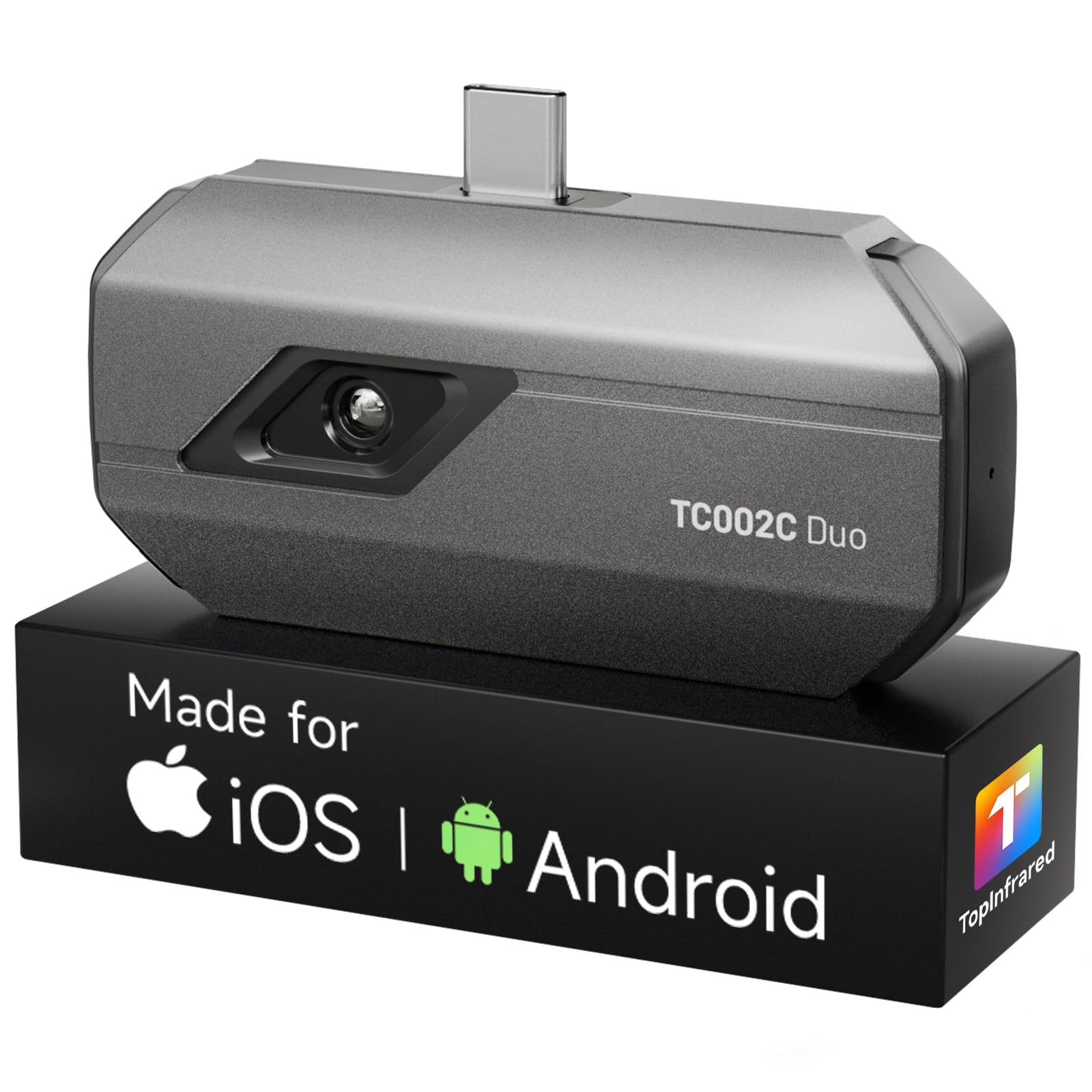
The TC002C Duo delivers the sharpest thermal images we've seen from a phone attachment, thanks to its 256×192 native sensor upscaled to 512×384 via super-resolution. Cross-platform app support means it works with both Android and iOS, making it a genuinely universal tool for inspectors who already rely on their smartphone for documentation.

This camera is best suited for technicians who want a pocketable thermal solution and are comfortable leaning on their phone's battery and USB port. If you prefer a standalone device with its own display and battery, the top-pick TC004 is a better fit. The tradeoff comes in two forms: the TC002C draws power from your phone, which can drain it noticeably during extended sessions, and a small number of Android 16 users have reported USB connectivity drops that require unplugging and reconnecting.

Setup is minimal — plug into a modern USB-C phone, launch the app, and the live view appears. The temperature range from -20°C to 550°C covers electrical, HVAC, and building diagnostics. Image sharpness stays usable even when zooming, and the 25Hz refresh rate keeps motion artifacts low. For the price, it undercuts dedicated units while delivering comparable clarity for most inspection tasks.

Tip: Carry a power bank if you plan sessions longer than 30 minutes; the phone battery will drop noticeably.

Bottom line: For inspectors who prefer a single-device workflow and want true pocketability, the TC002C Duo delivers near-dedicated image quality at a fraction of the cost — just keep a power bank within reach for long jobs.

4

AMPBANK H128

AMPBANK H128

Extended fieldwork

Our Score 8.8/10
Check Price

Worth Noting

  • Thermal images appear blocky due to 128x128 native sensor
Durability
IP65, 6.6ft drop
Temp Range
-20C to 450C
Battery Life
24 hours
Image Fusion
TISR

The AMPBANK H128 delivers a full 24 hours of continuous runtime on a single charge, backed by an IP65-rated housing that survives drops from 6.6 feet. This makes it a practical choice for technicians who spend entire shifts inspecting electrical panels or HVAC systems without access to charging.

Field service technicians who need all-day durability and accurate spot temperature measurements will find the H128 well-suited. The native 128x128 thermal sensor produces blocky images even with TISR upscaling to 240x240, so it’s not ideal for reading fine PCB traces or small components. For identifying hot breakers, checking insulation gaps, or locating pipe blockages, the resolution is adequate.

Accuracy across the -20°C to 450°C range is consistent in electrical panel inspections, and the high-temperature alarm adds a safety layer. The interface is straightforward: point, shoot, and read. No Wi-Fi or cloud sync, but the 24-hour battery eliminates the need to recharge mid-shift.

Tip: Use the H128 for broad thermal sweeps and hotspot detection; for detailed component analysis, a higher-resolution model like the TOPDON TC004 is more suitable.

Bottom line: For field technicians who prioritize battery life and durability over image sharpness, the AMPBANK H128 handles long inspections without interruption.

5

FLIR E8-XT

FLIR E8-XT

Professional clarity

Our Score 9.4/10
Check Price

Worth Noting

  • Price is not listed
  • Stock is very limited; only one unit may be available at purchase time.
  • Battery runtime is shorter than some competitors in this category, limiting extended field sessions without a power source.
Durability
IP54
Temp Range
-20C to 550C
Battery Life
Rechargeable
Image Fusion
MSX

The FLIR E8-XT delivers a native 320x240 thermal sensor — the highest resolution in this comparison. Combined with MSX fusion, it overlays visible-light edge detail onto the thermal image, making outlines of pipes, wires, and structural gaps crisp and easy to identify. Built-in Wi-Fi and FLIR Ignite cloud upload let you transfer and share images directly from the field.

This camera is designed for electrical contractors, building diagnosticians, and HVAC technicians who need to spot subtle temperature anomalies in complex environments. The high resolution and MSX clarity reduce guesswork when tracking down air leaks or failing components. That said, the E8-XT carries practical constraints: the price is not published (requires contacting a distributor), availability is limited (often single-unit stock), and battery life trails some competitors — enough for a half-day of inspections but not a full shift without a recharge.

Tip: Carry a portable power bank to recharge during lunch breaks — the battery handles a typical inspection session but not a full day without a top-up.

Bottom line: For professionals who need the sharpest thermal images and are willing to handle purchase logistics, the FLIR E8-XT is unmatched. If you prefer transparent pricing and longer battery life, the TOPDON TC004 is a more accessible alternative.

6

Klein TI250

Klein TI250

Tradespeople

Our Score 8.8/10
Check Price

Worth Noting

  • No Wi-Fi; getting images off the unit requires a USB-C cable rather than wireless sharing.
  • Image quality is decent for general diagnostics but lacks the sharpness needed for fine detail work.
Durability
Temp Range
-20C to 400C
Battery Life
Rechargeable Li-Ion
Image Fusion

The Klein TI250 keeps things simple: an easy-to-read display, decent pixel count for spotting temperature differences, and no fussy smartphone pairing. It covers the basics — adjustable emissivity, three color palettes, a wide temperature range — and does so without glitches. But it lacks Wi-Fi and MSX image fusion, so you are stuck with a USB-C cable for transfers and won't get the sharp overlay detail that helps identify problem areas quickly. The image quality is fine for circuit panels or ductwork, but if you need to spot hairline cracks or small moisture trails, a model with higher native resolution and MSX will serve you better.

Bottom line: Pick the TI250 if you want a dependable, no-app thermal camera from Klein and can work without wireless transfer or MSX overlay — it fits casual troubleshooting better than precision inspection.

7

HSFTOOLS HF96

HSFTOOLS HF96

Energy audits

Our Score 9.0/10
Check Price

Worth Noting

  • Battery charging issues may appear after several months of use in some units.
Durability
IP54
Temp Range
-20C to 550C
Battery Life
11 hours
Image Fusion
TISR

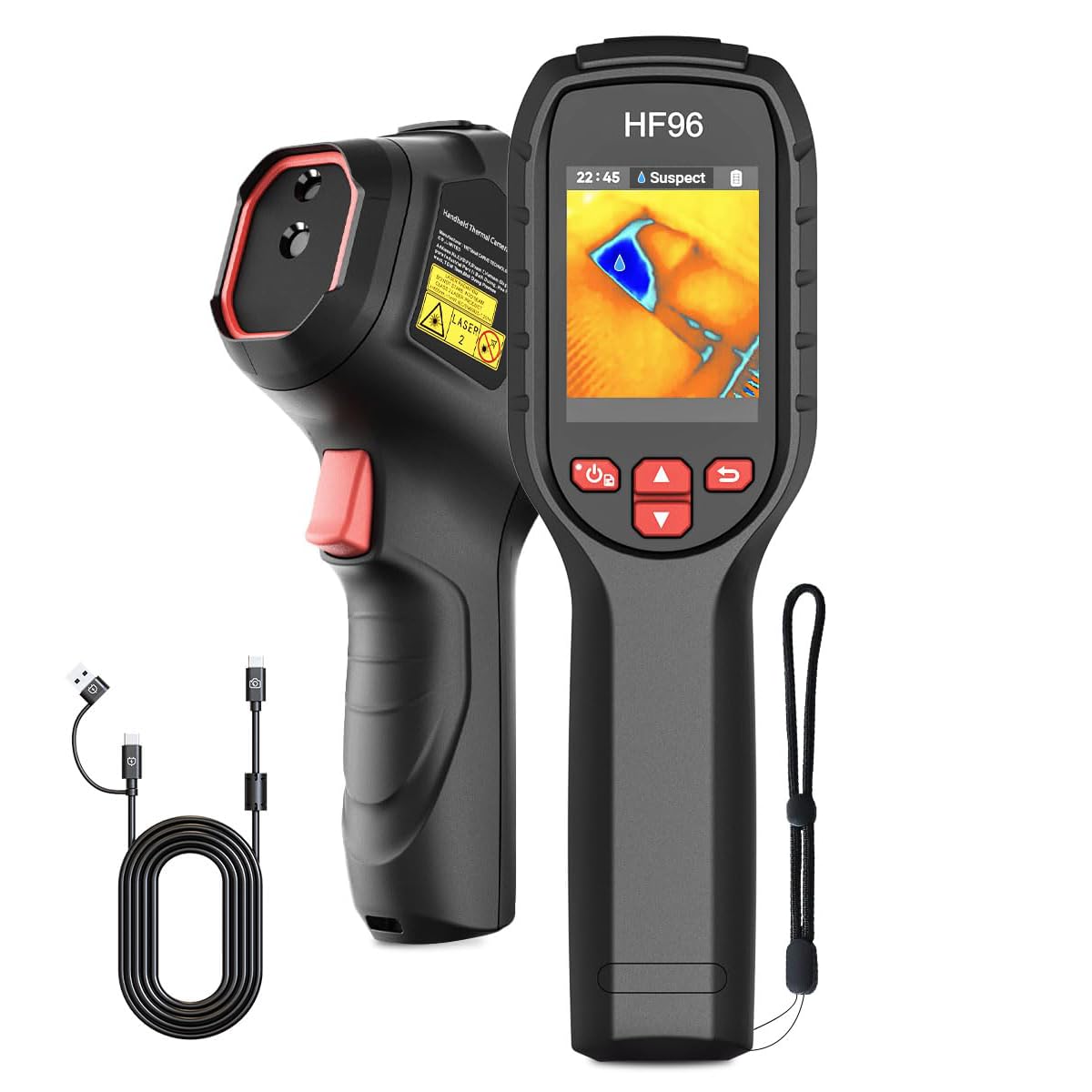
The HSFTOOLS HF96 delivers accurate temperature readings with clear thermal imaging, while its AI scene detection helps identify potential leaks or insulation gaps during energy audits. The competitive price includes a laser pointer and up to 11 hours of battery life, making it a practical tool for homeowners. However, some units may develop battery or charging issues after months of use, and the native 128x128 sensor (upscaled to 240x240) limits detail for professional-grade analysis. For those who value AI assistance over peak resolution, it's a capable choice, but the TOPDON TC004 Mini offers higher native resolution and more consistent battery performance at a similar mid-range price.

Bottom line: Best suited for homeowners and energy auditors who want AI-assisted leak detection without spending on a native high-resolution model, provided they accept the possibility of battery variance.

8

AccuMEMS GT14S

AccuMEMS GT14S

Also Great

Our Score 8.8/10
Check Price

Worth Noting

  • Low image resolution prevents detailed analysis of small targets or precise temperature gradients
  • Limited to basic temperature reading

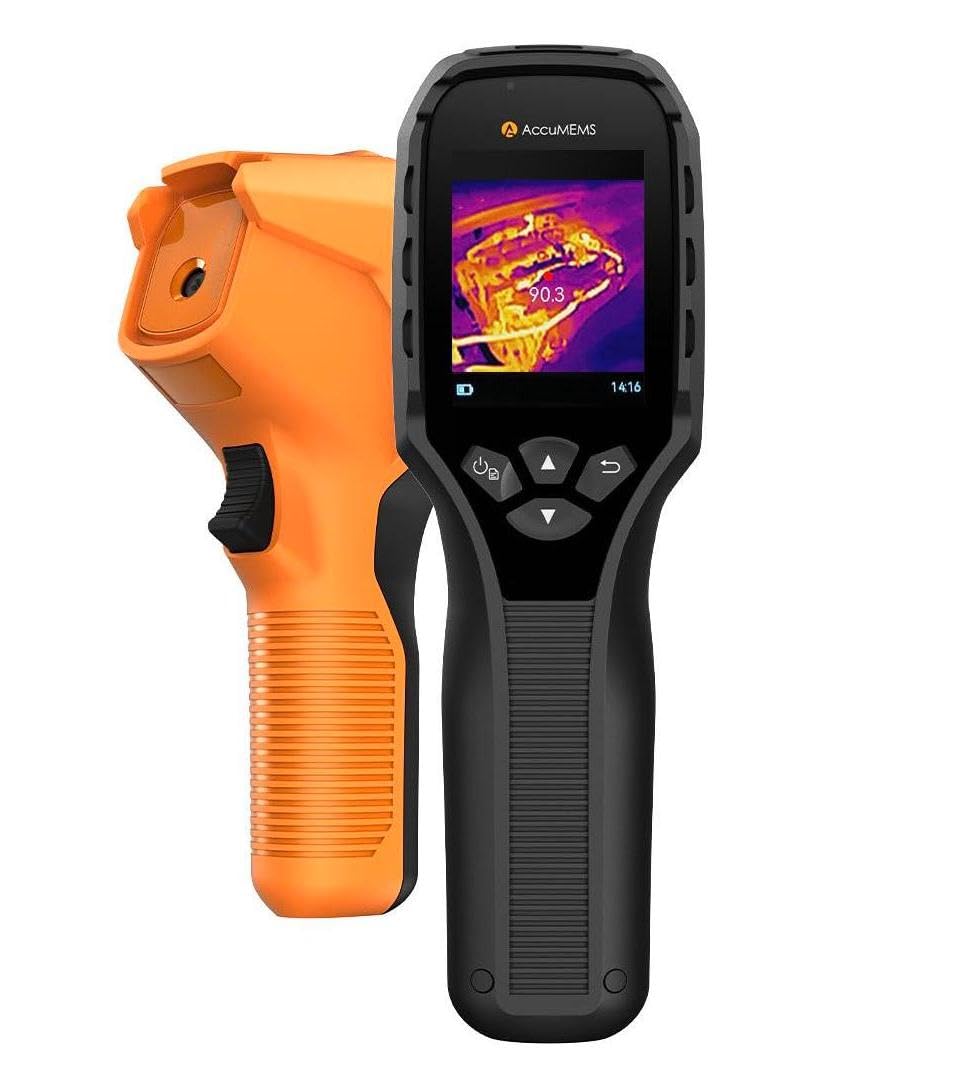
The AccuMEMS GT14S offers a very low entry price for basic temperature measurement, with decent accuracy for tasks like checking HVAC vents or appliance surfaces. Its 14-hour battery and thermometer mode are convenient for quick spot checks. However, the native resolution is too low to distinguish fine detail, and the lack of image storage or report generation means it cannot replace a proper inspection tool. Limited user feedback makes long-term reliability difficult to assess. For professionals needing detailed thermal analysis, this model is not a suitable choice.

Bottom line: Best for hobbyists or homeowners who need a quick, cheap temperature checker for occasional use and don't require detailed thermal images or reports.

9

Flagfront YXI96

Flagfront YXI96

Budget home use

Our Score 9.0/10
Check Price

Worth Noting

  • Images appear fuzzy and lack fine detail, even with super-resolution enabled
Durability
IP54, 6.6ft drop
Temp Range
-20C to 550C
Battery Life
Rechargeable
Image Fusion
TISR

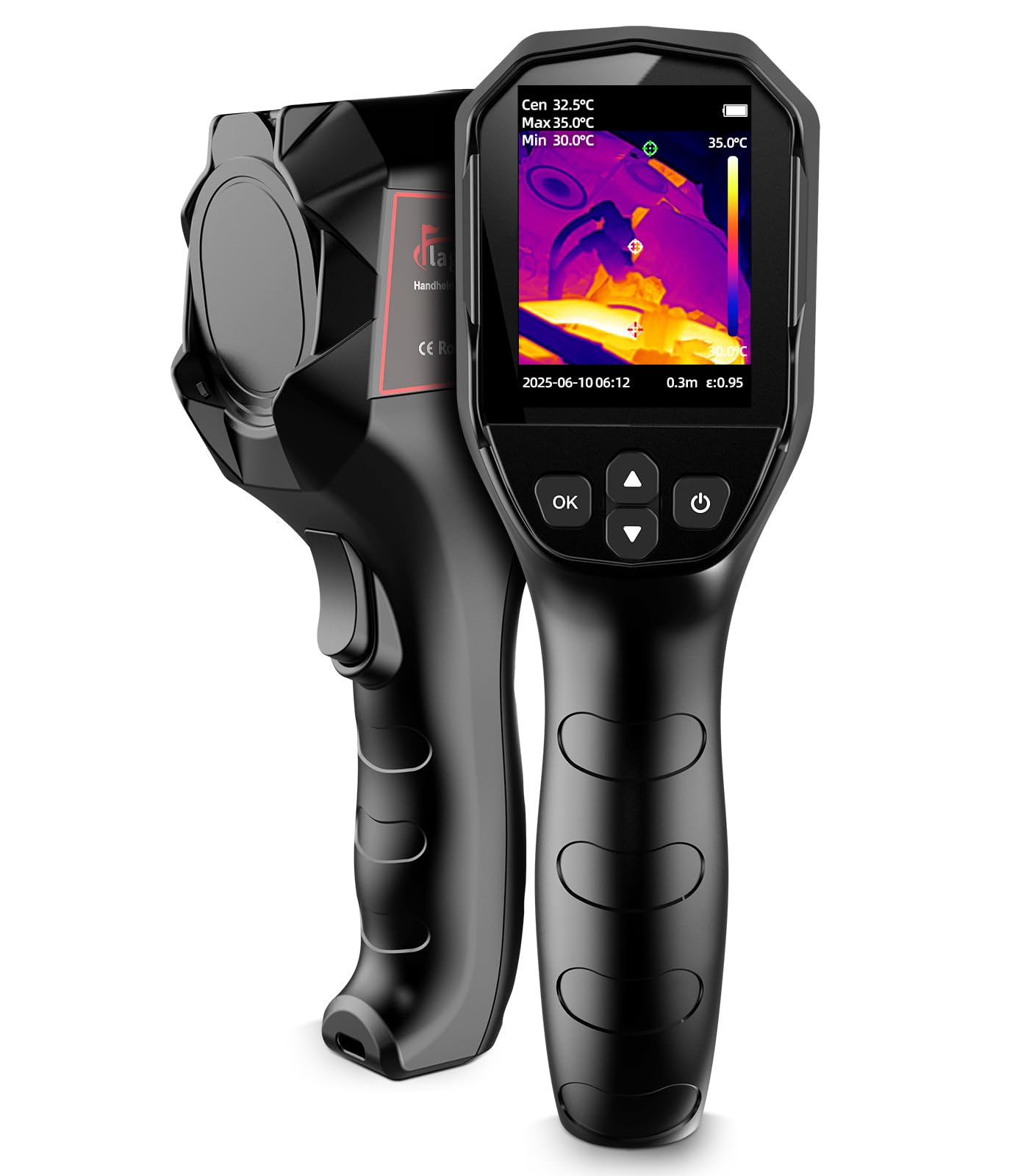
The Flagfront YXI96 offers an accessible entry point for basic home energy audits, with a temperature range covering most household scenarios and a rechargeable battery that keeps it running. Its value is hard to beat for casual leak detection and spotting temperature anomalies around windows or ducts. However, the 240x240 TISR super-resolution claim doesn't translate to sharp, detailed images — the output remains fuzzy and lacks the fine detail needed for precise diagnostics. This limitation, along with modest build features, keeps it from competing with pricier models that deliver the clarity professionals require.

Bottom line: For a quick check of drafty windows or a warm circuit breaker, this gets the job done without straining the budget.

10

FLIR C5

FLIR C5

WiFi sharing

Our Score 8.6/10
Check Price

Worth Noting

  • Battery life can be short, with some units draining in as little as 10 minutes.
  • Some units may freeze or refuse to boot, requiring replacement.
Durability
Temp Range
-20C to 400C
Battery Life
~4 hours
Image Fusion
MSX

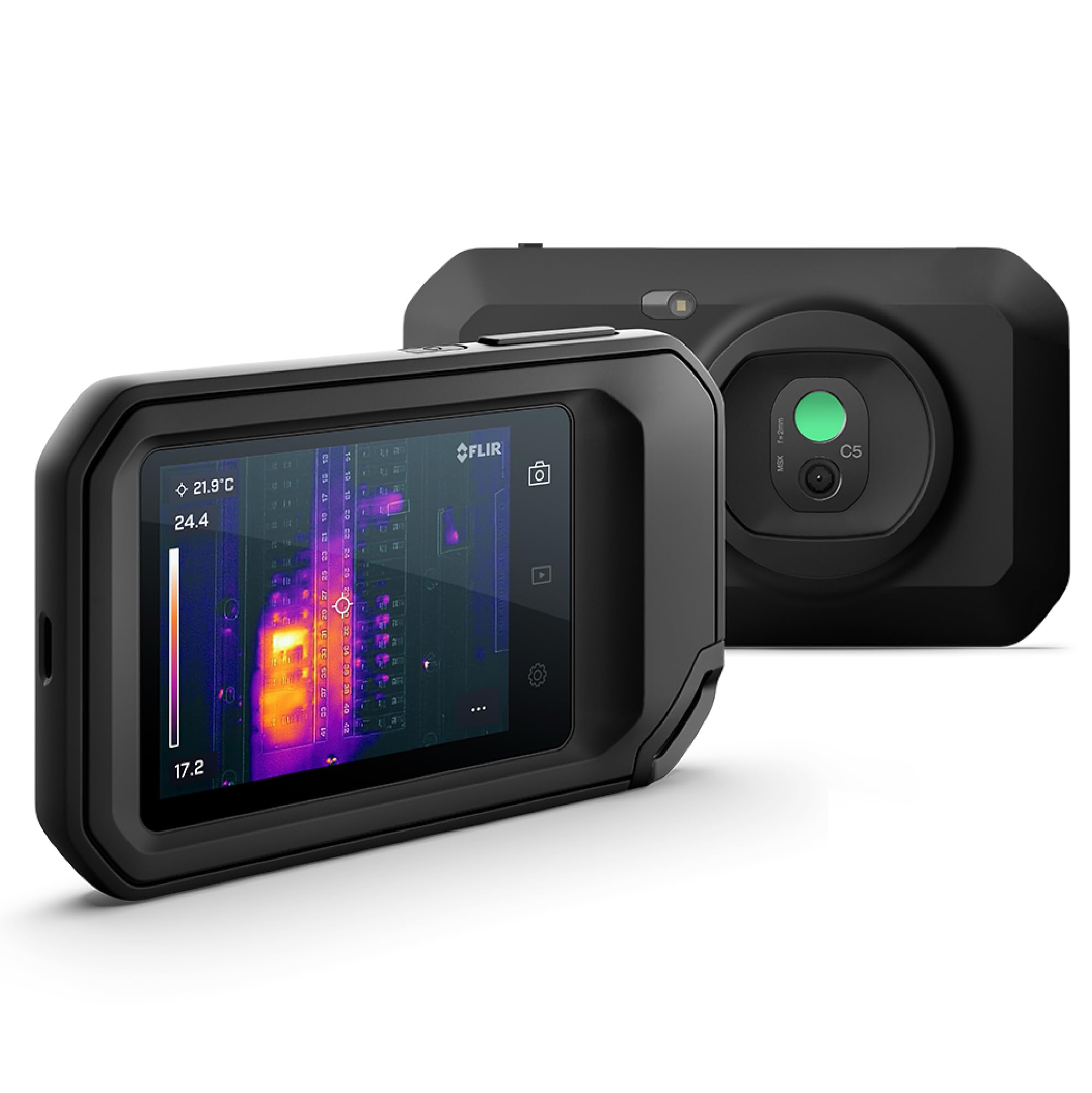
The FLIR C5 delivers a compact body with MSX image fusion and WiFi upload to FLIR Ignite, making it easy to capture and share thermal data on the go. Its 160x120 sensor provides more detail than entry-level units, and the pocket-sized build is convenient for field work. However, the premium price and the possibility of unit-to-unit variation mean this camera is best suited for professionals who prioritize cloud integration over dependability and are prepared for potential inconsistencies. Most buyers will find more consistent performance in other options at lower or similar prices.

Bottom line: The FLIR C5 makes sense if you specifically need WiFi cloud upload in a compact thermal camera and can accept the possibility of unit-level inconsistencies; otherwise, more reliable alternatives exist.

How to Choose

Infrared Resolution

Native IR resolution sets a hard limit on detail. A camera with a 160x120 sensor captures 19,200 individual temperature measurements; a 320x240 sensor captures 76,800. Software upscaling (TISR, MSX) can interpolate missing pixels, but it cannot recover heat signatures the sensor never saw. For tasks like finding a missing stud or a small electrical hotspot, higher native resolution means fewer false positives and clearer boundaries.

The budget segment often touts numbers like 240x240 from a 128x128 sensor. That interpolation is fine for spotting large temperature differences (e.g., a warm pipe against a cold wall) but struggles with fine details. For professional reports or diagnosing subtle thermal bridges, aim for at least 160x120 native.

Temperature Range

Most handheld cameras cover -20C to 400C, which handles HVAC, building envelopes, and electrical panels. If you work on high-heat industrial equipment or engine exhausts, you need a range up to 550C or more. The trade-off: wider range often comes with lower measurement accuracy at the extremes. A camera that spans -20C to 550C may drift more at low end than one optimized for building inspection.

Also check the stated accuracy (usually +/-2C or +/-2%). Cheaper cameras may meet that spec only in a narrow mid-range, so when measuring a 80C pipe, the error could be larger than expected. Always cross-check with a contact thermometer on critical readings.

Battery Life

Battery life advertised is often under ideal lab conditions. In real use, continuous scanning, Wi-Fi streaming, and bright screens cut runtime by 30-50%. A camera claiming 8 hours may last 4-5 hours in actual fieldwork. For all-day inspections without recharging, look for at least 8 hours advertised or models with replaceable batteries.

Smartphone-attached cameras bypass this issue by drawing power from the phone, but that drains the phone battery. For extended use, a dedicated handheld with a rechargeable battery that can be swapped or charged via USB-C during lunch is more practical.

Image Fusion

MSX (Multi-Spectral Dynamic Imaging) overlays visible-light edges onto the thermal image, making it easier to read labels and identify objects. TISR is a super-resolution algorithm that blends multiple frames to boost effective resolution. MSX works best on cameras with a dedicated visual camera and good alignment; misalignment (a common complaint) can render the overlay useless. TISR helps smooth blocky patterns but does not create detail from nothing.

For reporting and documentation, MSX provides the clearest context. If the camera lacks it, you may have to switch between thermal and visual modes manually, which slows down inspection. Choose MSX if you frequently photograph findings for clients; TISR is a secondary benefit.

Durability

IP54 means dust-protected and splash-resistant (not submersible), which is adequate for indoor construction sites and light outdoor use. IP65 offers better dust and water jet protection, critical for outdoor or wet environments. Drop ratings (2m vs 1.5m) matter more for handheld use on ladders or scaffolding.

A camera with rubberized corners and a lanyard is less likely to slip. If you work in rain or around water, prioritize IP65. For occasional indoor use, IP54 is sufficient and keeps weight down.

Frequently Asked Questions