Tools & DIY

8 Best Stud Finder of 2026: Find Studs Reliably Without False Alarms

Not all stud finders work on every wall. This guide helps DIYers and homeowners choose the right tool for standard drywall, plaster, or metal studs.

Many electronic stud finders promise pinpoint accuracy but deliver false positives or die within months. Battery drains fast, and instructions are often unclear. Some finders work on standard drywall but fail on thicker plaster walls. The result is frustration and holes in the wrong places.

Magnetic finders avoid those issues but can't show stud width or work on surfaces without metal fasteners. The right choice depends on your wall type and how much you want to invest. This guide focuses on models that actually deliver on their core job: telling you where the stud is, reliably, the first time.

We prioritize accuracy, ease of use, and long-term value across different budgets and wall types. The recommendations below reflect what real users have experienced over months of use.

1

JAXWQ 5-in-1

Top Pick
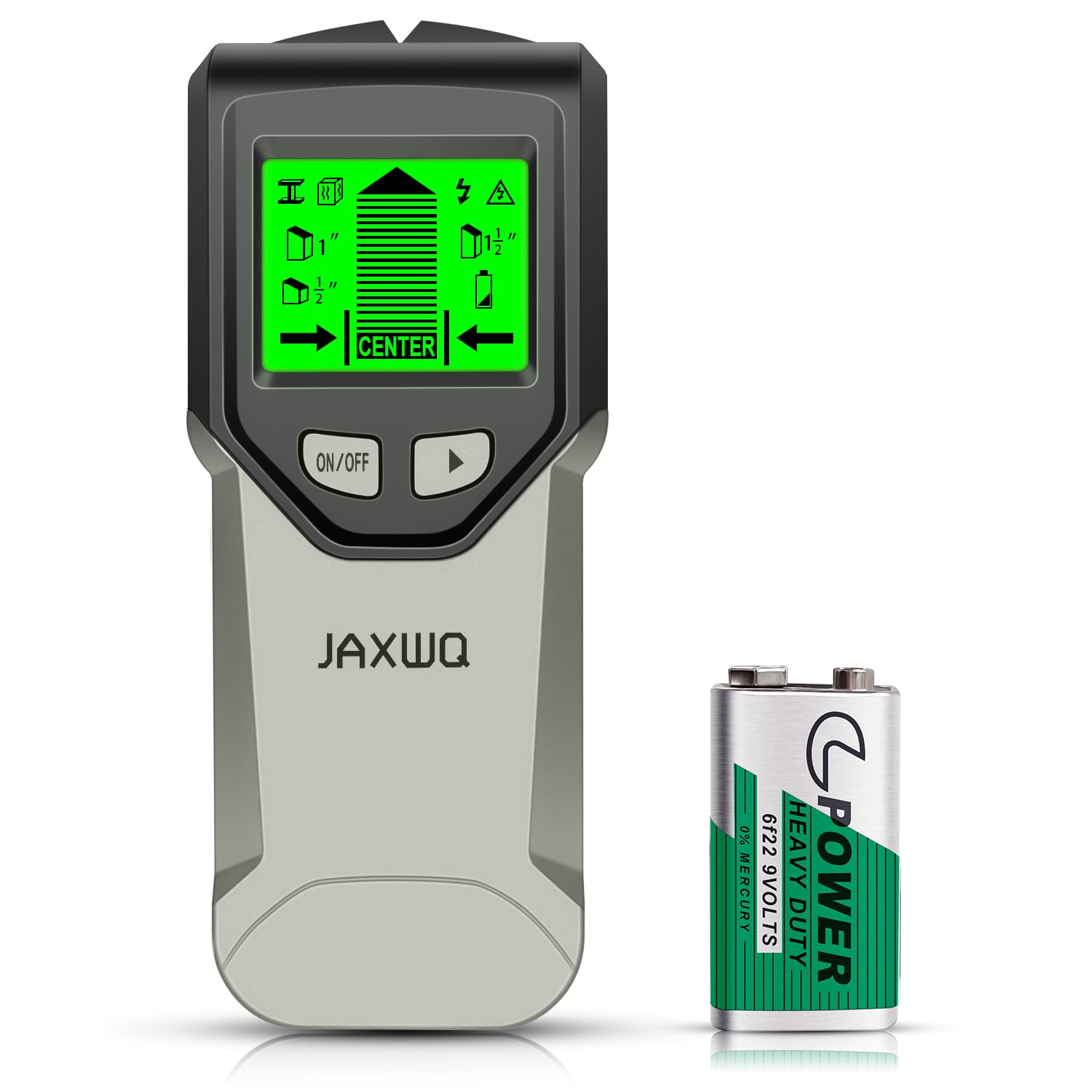
JAXWQ 5-in-1

General-purpose use

Our Score 8.6/10
Check Price

Worth Noting

  • Requires careful calibration on a bare wall section to avoid false readings.
Battery
9V included
Live Wire
Yes

The JAXWQ 5-in-1 stands out for its simple operation: the HD LCD display clearly indicates stud edges and centers, wood, metal, and live AC wires. Multiple detection modes cover wood studs up to 1.5 inches, metal, and AC wiring, so a single tool handles common household tasks.

When calibrated on a bare wall section, readings are generally consistent. A minority of users have encountered false signals if the calibration step is skipped or performed on an uneven surface — consistent with the electronic-sensor tradeoff seen in this price range.

This model suits budget-conscious DIYers, first-time stud finder buyers, and general home tasks like hanging shelves or mounting lightweight items. For those mounting heavy TVs or needing extra depth beyond 1.5 inches, a premium model with deeper scan would be more appropriate. The calibration step is a minor but necessary user responsibility.

Tip: Always calibrate on a smooth, unpainted section of drywall before scanning — this ensures consistent accuracy.

Bottom line: For most homeowners, the JAXWQ 5-in-1 delivers consistent detection and clear feedback at a low cost — enough for typical hanging and wiring tasks without overspending.
2

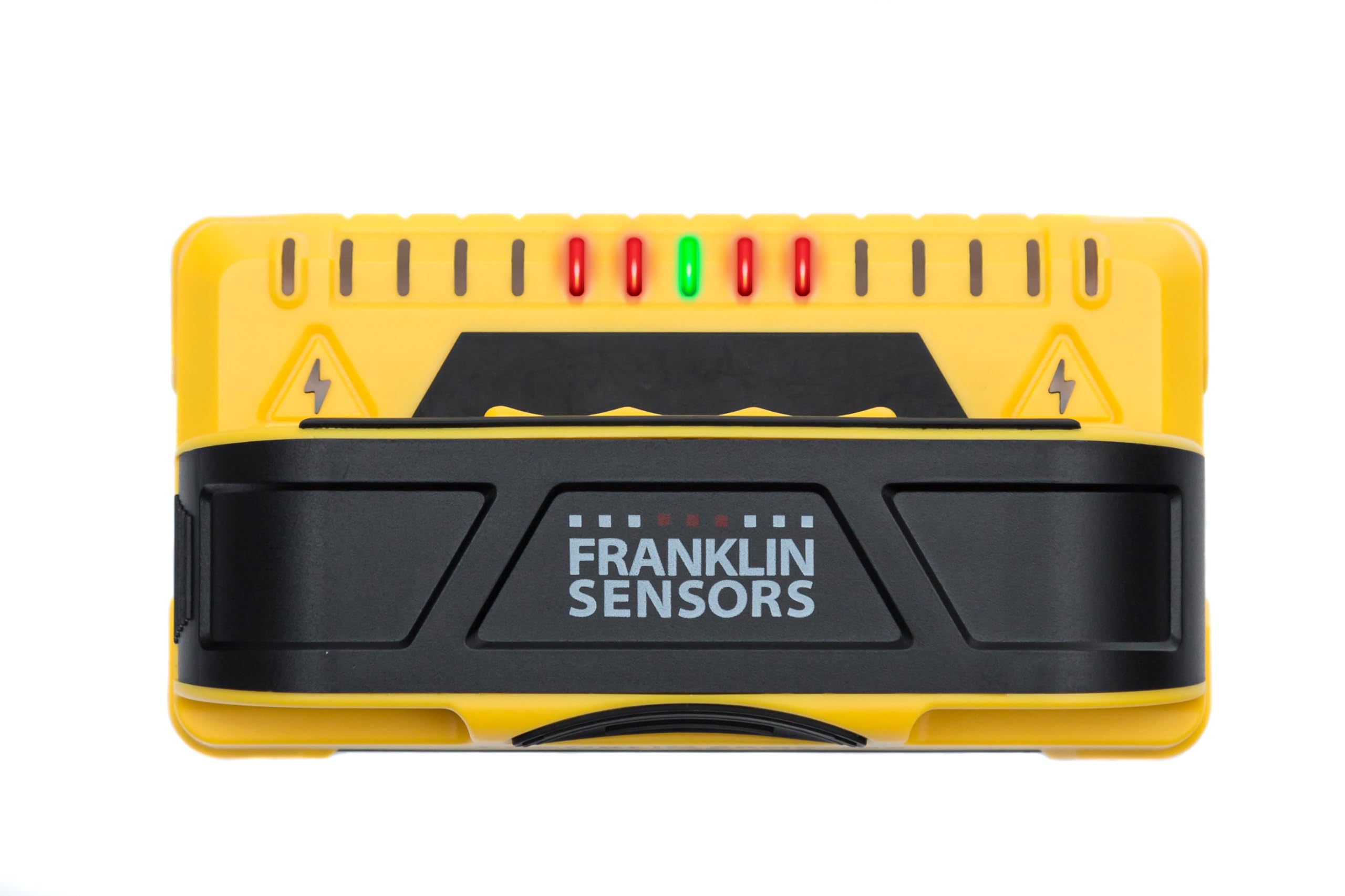
Franklin M210

Franklin M210

Heavy mounting, safety

Our Score 9.2/10
Check Price

Worth Noting

  • Inconsistency can occur on certain wall types like textured or thick plaster
  • Premium pricing may feel high for infrequent use
Battery
2 AAA (not incl.)
Live Wire
Yes

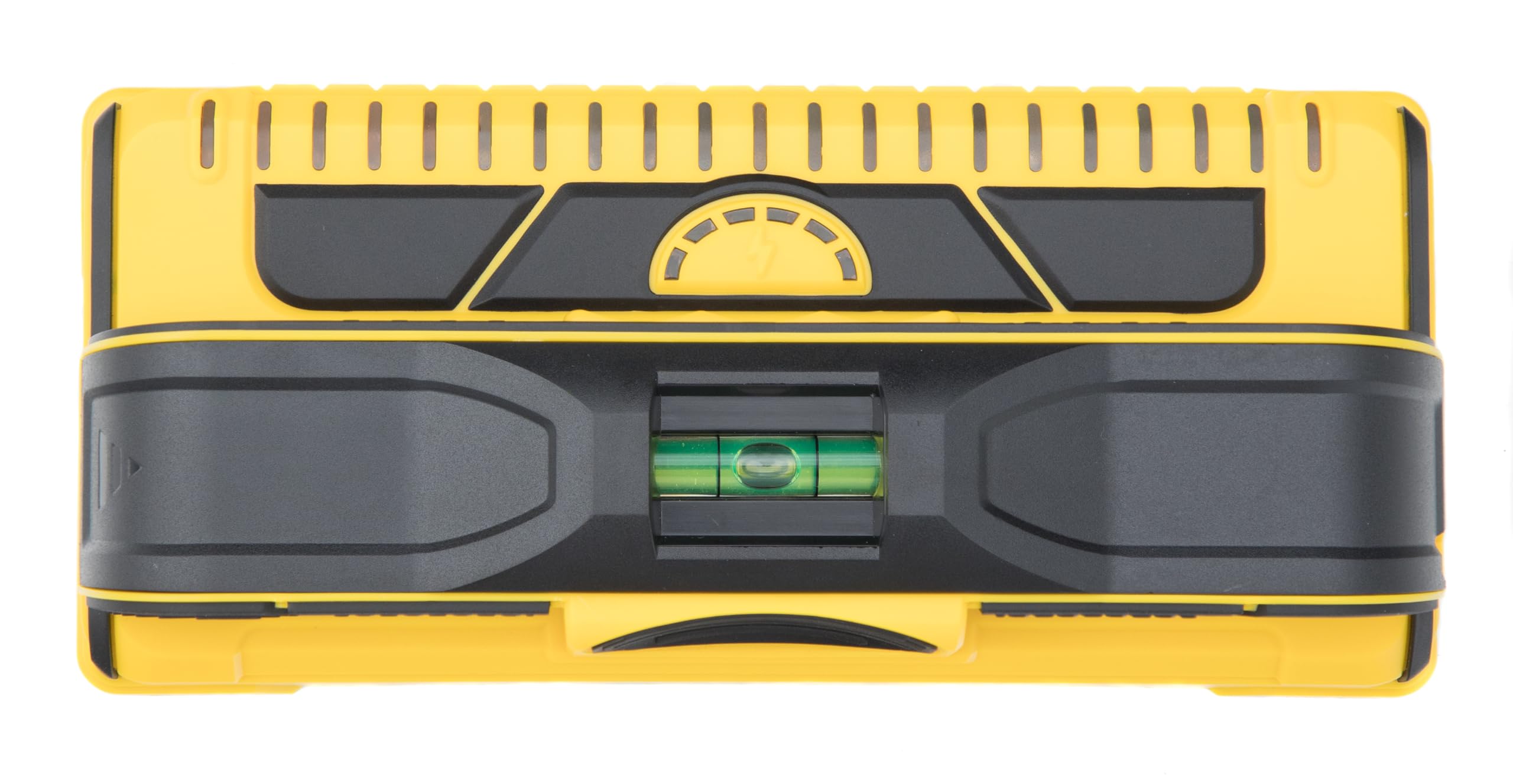
The Franklin M210 brings professional-grade accuracy to stud finding with its 13-sensor array that displays full stud width and live wire locations without any calibration step. This makes it a step above simpler electronic finders for users who want the most detail before drilling into walls.

This model suits homeowners mounting heavy TVs or cabinets where a missed stud means a damaged wall or failed mount. The live wire detection adds a layer of safety when working near outlets. It costs more than most alternatives, and on certain wall types such as textured or thick plaster, the sensor reading may occasionally vary, so a test pass on a known stud is worth the extra minute.

Tip: Test on a known stud first to get familiar with the sensor response on your wall type.

Bottom line: For homeowners mounting heavy TVs or cabinets where a miss could be costly, the M210's extra accuracy and wire detection justify the premium over budget alternatives.

3

StudBuddy Magnetic

StudBuddy Magnetic

Standard drywall

Our Score 9.0/10
Check Price

Worth Noting

  • Magnet may not grab on thickly painted or textured walls
  • Cannot indicate stud width or center location
Battery
None
Live Wire
No

The StudBuddy strips away every complication: no buttons, no batteries, no calibration. You simply slide it across the wall until the magnet catches a nail or screw. This makes it faster to use than any electronic model, though it works only on standard drywall where metal fasteners are present. For homeowners who just need to know roughly where a stud is for hanging a picture or shelf, this is the most direct tool available.

This magnetic finder suits budget-conscious DIYers who want a no-nonsense tool for standard drywall. It will not detect stud edges or center, only the metal fastener itself, so it's not for precise mounting of heavy items like TVs. Owners of lath and plaster walls or heavily painted surfaces may find the magnet pulls too weakly. For light to medium hanging tasks on modern drywall, the StudBuddy delivers on its simple promise.

Tip: On walls with multiple layers of paint, move the finder slowly to feel the magnet's pull; it may be weaker than on bare drywall.

Bottom line: For straightforward stud detection on standard drywall, the StudBuddy gives you everything you need and nothing you don't — just keep its limitations in mind for thicker walls or precision work.

4

StudPoP Magnetic

StudPoP Magnetic

Plaster & lath walls

Our Score 9.0/10
Check Price

Worth Noting

  • Magnet may not attract strongly through heavily painted or thickly coated drywall
  • Cannot reveal stud edges or center position, only the fastener location
Battery
None
Live Wire
No

The StudPoP stands out with a unique pop-up mechanism that gives a clear visual signal when it finds a nail or screw behind the wall. This design is especially effective on lath and plaster surfaces, where electronic stud finders often produce false readings due to uneven density and metal mesh.

This tool is a straightforward choice for homeowners with older construction who want a no-battery method to locate studs behind plaster. The magnet strength is adequate for most painted walls, but multiple layers of paint or thick coatings can weaken the pull — a tradeoff to consider if your walls have heavy buildup.

Tip: On walls with multiple layers of paint, the magnet may not attract strongly enough — try a stronger magnet or use a different method.

Bottom line: Best for owners of older homes with lath and plaster who want a simple, battery-free finder. Not ideal if you need precise stud edges or work on walls with heavy paint layers.

5

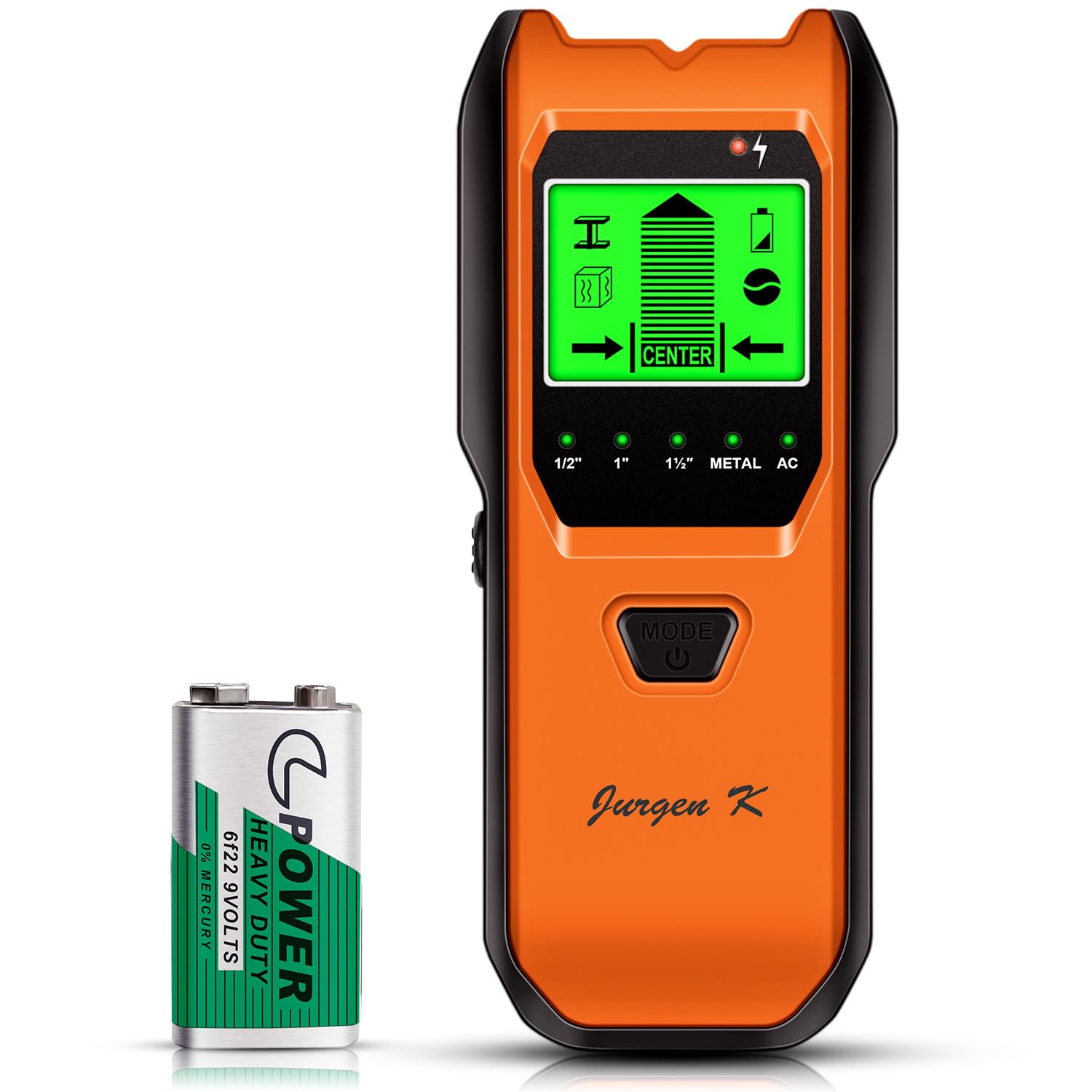
Jurgen K 5-in-1

Jurgen K 5-in-1

Budget multi-mode

Our Score 8.6/10
Check Price

Worth Noting

  • Calibration instructions can be unclear; some users may need to refer to online resources for proper setup.
Battery
9V included
Live Wire
Yes

The Jurgen K 5-in-1 scans for studs, metal, and live AC wires with a bright backlit display and audio alarm. It offers the same multi-mode capabilities as the JAXWQ for the same cost, making it a direct alternative. The calibration process is less intuitive, and the manual could be clearer for new users.

This unit is for DIY homeowners who want a full-featured finder without paying a premium. The calibration learning curve is minor for those willing to practice. Professionals who need a rugged build or faster setup may prefer the top pick.

Bottom line: A strong budget alternative to the top pick, provided you're comfortable with a brief calibration learning curve.

6

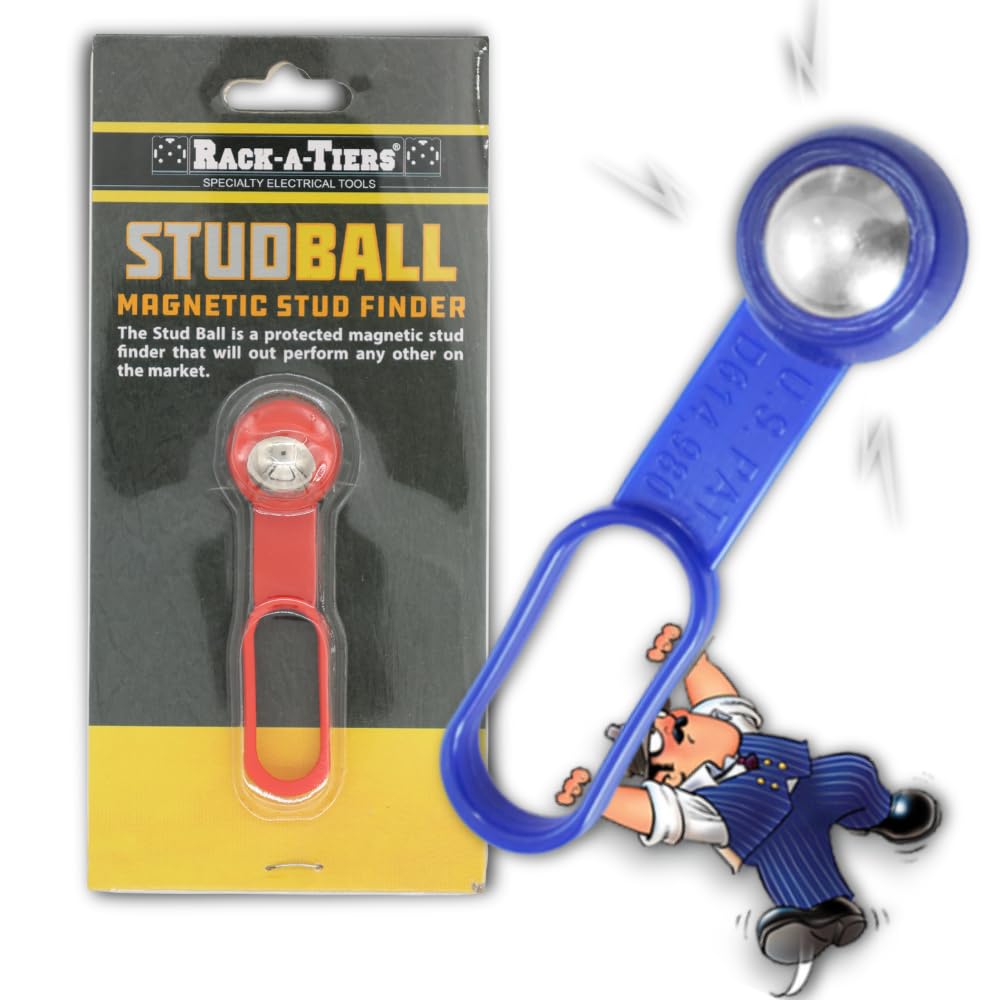
Rack-A-Tiers Stud Ball

Rack-A-Tiers Stud Ball

Metal studs, pros

Our Score 9.6/10
Check Price

Worth Noting

  • May not stick firmly to screws recessed under multiple paint layers
  • Priced higher than basic magnetic finders despite no center/width detection
Battery
None
Live Wire
No

The Rack-A-Tiers Stud Ball is a powerful magnetic ball designed for speed on metal studs and thick walls. Its 27-pound pull reliably grabs nails and screws through drywall, and the spherical shape with finger loop makes it easy to carry. However, on heavily painted walls adhesion can be weak, and it cannot show stud width or center like an electronic finder. For homeowners doing general stud hunting, simpler magnets cost less and work similarly.

Bottom line: Best left to electricians and pros who need fast metal-finder confirmation on job sites; most homeowners will get equal results from a cheaper magnet.

7

CH Hanson 2-Pack

CH Hanson 2-Pack

Compact backups

Our Score 9.6/10
Check Price

Worth Noting

  • Small size can be easily misplaced if not stored in a dedicated spot.
Battery
None
Live Wire
No

These magnetic stud finders use powerful rare earth magnets to locate nails holding drywall, slipping easily into a pocket for quick jobs. They don't require batteries and work on any standard wall. However, the small size makes them easy to misplace, and they cannot show stud width or detect wires – fine for occasional use or as a backup, but not a replacement for an electronic finder when precision matters.

Tip: Store the pair in a dedicated toolbox compartment or attach a lanyard to avoid losing them.

Bottom line: Best as a spare or for simple stud-edge finding where a full-featured electronic model is unnecessary.

8

Franklin M150

Franklin M150

Value wire detection

Our Score 9.0/10
Check Price

Worth Noting

  • Some units may become inoperative after limited use
  • Indicator lights can be confusing or inconsistent
Battery
2 AAA (not incl.)
Live Wire
Yes

The Franklin M150 brings a 9-sensor array and live wire detection at a mid-range price, showing stud width for accurate mounting. Its accuracy trails the top pick, and some units may become inoperative after limited use. This makes it a fit for budget-conscious homeowners doing occasional projects.

Tip: Test indicator lights on a known stud to learn the pattern before relying on them.

Bottom line: Best for budget-conscious homeowners who need wire detection and occasional mounting projects, provided they accept possible unit variability.

How to Choose

Number of Sensors

More sensors generally mean a wider detection area and better stud width display. A single-sensor finder tells you a stud is there; a 9- or 13-sensor array shows where the edges are, making it easier to center your drill bit.

For hanging heavy items like shelves or TVs, a multi-sensor model reduces guesswork. For simple tasks like mounting a picture, a basic sensor or magnetic finder may suffice.

Detection Depth

Standard drywall is about 0.5 to 0.75 inches thick, so a depth of 1.5 inches is sufficient for most studs. Deeper detection (up to 1.7 inches) helps when walls have multiple layers or tile backing.

However, deeper detection often reduces accuracy on shallow studs. A finder that adjusts depth modes gives you more control.

Live Wire Detection

Live wire detection is a safety feature that alerts you to active electrical cables behind the wall. It adds peace of mind when drilling near outlets or switches.

Not all electronic finders include this; magnetic models never do. If you frequently work near wiring, prioritize a model with AC detection, but note that it may reduce battery life.

Battery Type and Life

Electronic stud finders typically use AAA or AA batteries, with some using a 9V. Battery life varies dramatically - some units drain alkaline cells in weeks, and many cannot use rechargeables due to voltage issues.

Magnetic finders need no batteries, making them always ready. If you dislike hunting for dead batteries, a magnetic model is a smart backup for everyday use.

Display Type

LED arrays show stud width with bars or lines, while LCD screens provide numerical depth and mode info. LCDs are easier to read in bright light but can be slow to update.

For quick visual feedback, a wide LED display with center and edge indicators is ideal. Budget LCD models often work fine but may lack backlighting - check if you work in dim spaces.

Frequently Asked Questions