Cameras & Photography

9 Best Telescope for Kids of 2026: Portable Options for Family Stargazing

Find a kids telescope that is easy to set up, portable enough for trips, and delivers clear moon views - without overspending.

Most kids telescopes look similar on paper, but the real differences become clear the first time you try to focus on Jupiter or pack it for a camping trip. Some sacrifice portability for a bit more magnification, while others trade a longer tube for a more complete kit. This guide cuts through the spec sheets to find the models that actually deliver on both ease of use and image quality.

Parents often overestimate the magnification needed; a 70mm aperture with a steady tripod will show the moon's craters and Jupiter's moons far better than a flimsy 90mm with wobbly legs. We have focused on what matters: aperture, tripod stability, and accessories that make the first experience a success.

1

Gskyer 70mm 400mm AZ Refractor

Top Pick
Gskyer 70mm 400mm AZ Refractor

First-time buyers, families

Our Score 8.6/10
Check Price

Worth Noting

  • Some units arrive with a broken tripod leg rivet, requiring a return or replacement
  • Wireless remote pairing can be inconsistent with certain phones
Mount
Altazimuth
Max Mag
120x
Aperture
70mm
Includes
Carry bag, phone adapter, remote

The Gskyer 70mm refractor stands out among entry-level telescopes for offering a full set of accessories that actually work together. The 70mm aperture and 400mm focal length provide crisp views of the moon's craters and Jupiter's moons, and even Saturn's rings are discernible under steady skies. Assembly takes minutes with straightforward instructions, and the altazimuth mount moves smoothly for tracking objects.

Portability is a practical advantage here: the telescope weighs under 6 pounds and comes with a padded carry bag, making it easy to bring to darker locations. The included phone adapter lets you capture Moon photos, though the wireless remote can be finicky to pair with some phones — using the phone's self-timer is a reliable fallback. For daytime terrestrial viewing, the optics work well too, adding flexibility for curious kids.

This scope fits families with children aged 8 to 14 and first-time buyers who want a low-hassle introduction to astronomy. It's not suited for those seeking larger apertures for deep-sky objects or for users on a very tight budget. One thing to check on arrival: the tripod leg rivets can occasionally be damaged in shipping. Inspect the legs before first use; if there's an issue, a replacement is straightforward.

Tip: Inspect the tripod leg rivets upon arrival; if damaged, request a replacement – the scope itself is fine.

Bottom line: For families seeking a first telescope that works as expected without tinkering, the Gskyer 70mm delivers a user-friendly experience backed by a generous accessory set.

2

ToyerBee 70mm 300mm

ToyerBee 70mm 300mm

Budget families, kids 8-12

Our Score 8.6/10
Check Price

Worth Noting

  • Short tripod requires a table or stool for comfortable viewing.
Mount
Altazimuth
Max Mag
150x
Aperture
70mm
Includes
Phone adapter, wireless remote

The ToyerBee 70mm telescope pairs a 70mm aperture with a phone adapter and wireless remote, offering a complete starter kit under $60. Tool-free assembly and an intuitive altazimuth mount make it accessible for kids. The 300mm focal length provides steady views of the moon and brighter planets at low to moderate magnification. It is functionally identical to the sibling model but available in a different color finish.

This telescope suits budget-conscious families introducing kids aged 8-12 to astronomy. The short tripod means it works best on a table or stool – comfortable indoor use or on a picnic table outdoors. Taller adults or anyone expecting a full-height ground setup will find the tripod too low. The 300mm focal length also limits the level of detail visible on the moon's surface and planets compared to longer scopes, but for a first telescope it delivers satisfying views.

Tip: Set up on a sturdy table or countertop for comfortable viewing.

Bottom line: For families seeking an affordable first telescope that includes phone sharing and remote shutter, the ToyerBee delivers exactly what's needed – just remember to bring a stool.

3

EACONN 80mm 600mm

EACONN 80mm 600mm

Travelers, beginners

Our Score 8.8/10
Check Price

Worth Noting

  • Phone adapter alignment requires patience to center the camera.
  • No wireless remote included for hands-free photo capture.
Mount
Altazimuth
Max Mag
120x
Aperture
80mm
Includes
Backpack, phone adapter

Delivers clearer moon and planetary detail than many 70mm travel scopes thanks to its 600mm focal length and 80mm aperture. The included backpack keeps everything organized and protected, making it easy to carry on hikes or trips. Setup requires no tools, so kids can start observing within minutes of unpacking.

Best suited for families who prioritize portability and want a scope that can handle both quick backyard sessions and travel. The phone adapter allows sharing views through a smartphone, but alignment takes some practice to get centered. For younger children who just want to look through the eyepiece, the adapter can stay in the bag without issue. No wireless remote is included, so group photo timed captures require a separate purchase.

The combination of aperture and focal length provides steady performance on the moon and bright planets like Jupiter and Saturn. The altazimuth mount is simple to move and hold position, even for small hands. At this mid-range price, the build quality and included accessories offer a solid entry point for astronomy with room to grow.

Tip: Practice aligning the phone adapter in daylight first; for younger children, skipping the adapter and viewing through the eyepiece is simpler.

Bottom line: For travel-focused families, this is the better choice over the top pick if portability and longer focal length matter more than a wireless remote.

4

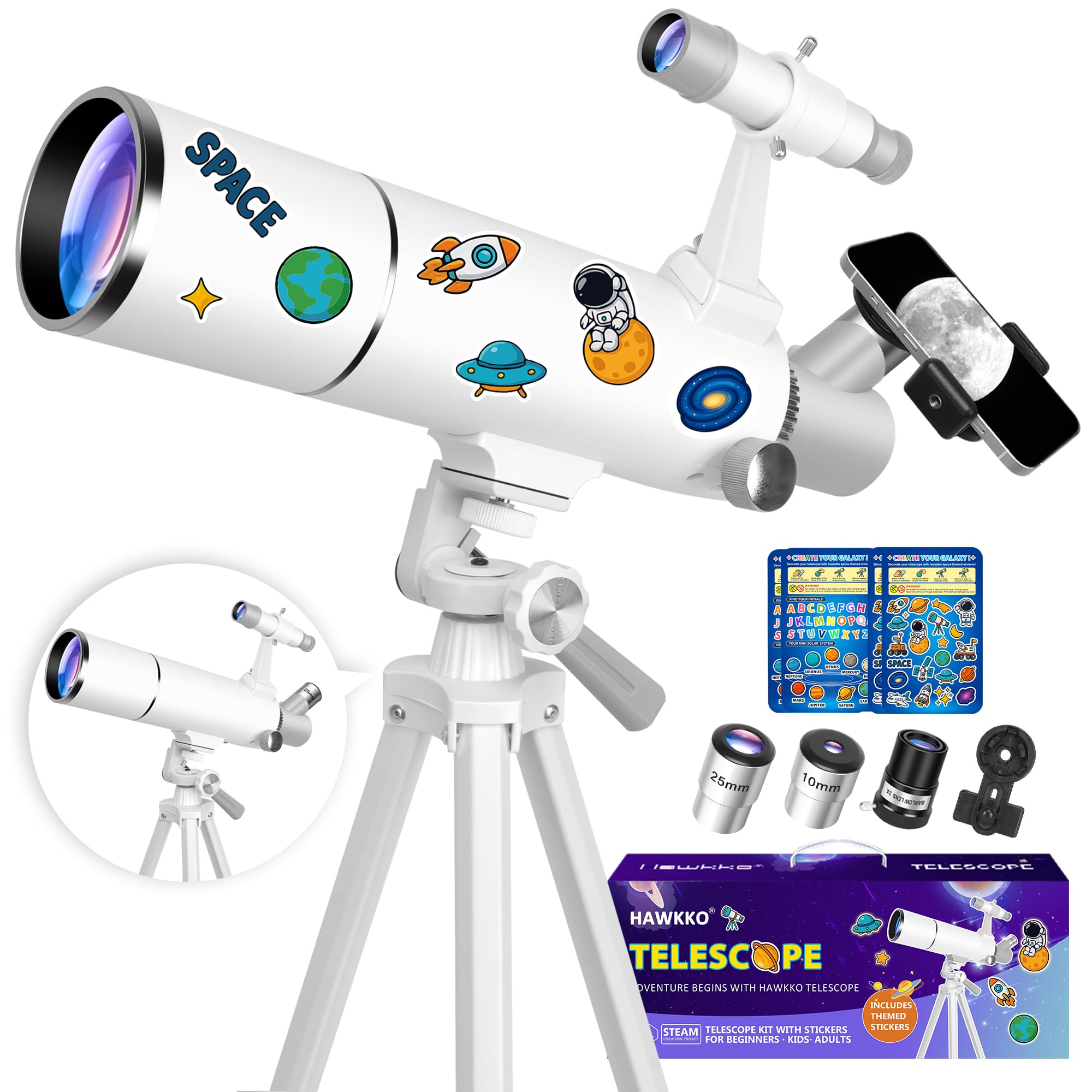
Hawkko 80mm 500mm

Hawkko 80mm 500mm

Creative kids, beginners

Our Score 8.8/10
Check Price

Worth Noting

  • Some units may deliver blurry images due to quality-control variance
Mount
Altazimuth
Max Mag
150x
Aperture
80mm
Includes
Stickers, phone adapter

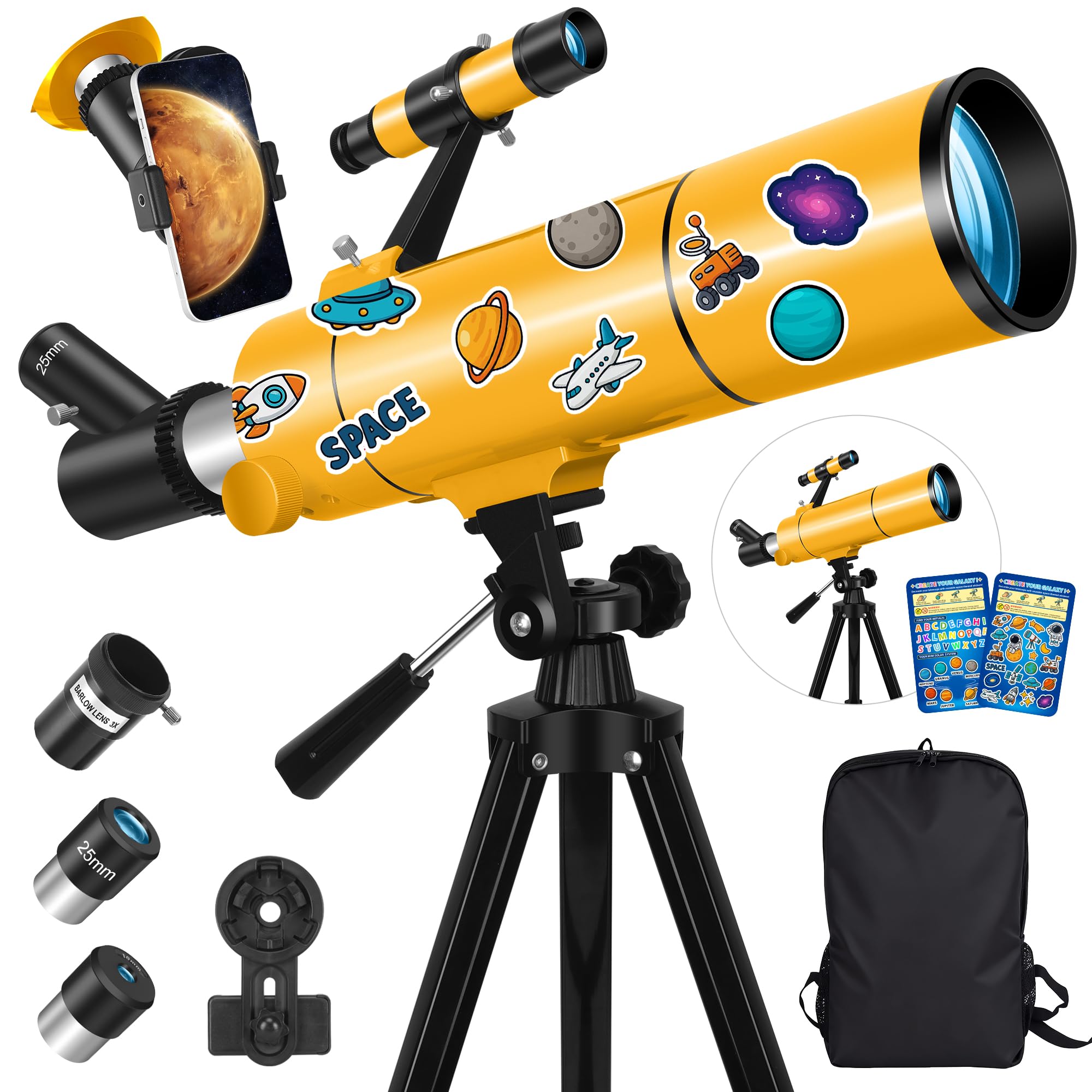
The Hawkko Telescope’s included sticker set is the clearest differentiator—kids can personalize the tube with space-themed decals, making this feel like their own instrument. The 80mm aperture gathers enough light to show the Moon’s craters and Jupiter’s four largest moons at 50x, and the optical quality holds up well at that magnification for the price tier.

Assembly is simple: the altazimuth mount screws onto the tripod without tools, and the red-dot finder aligns in minutes. The included phone adapter works for casual snapshots of the Moon, though centering the image on the phone screen takes a little patience. This telescope suits families who want a first scope that feels personal and doesn’t require a steep learning curve—just be aware that a small number of units have shipped with blurry optics, so checking the view on arrival is wise.

Tip: Test the telescope on a distant terrestrial object during the day to confirm focus clarity; if the image stays soft, request a replacement under the return policy.

Bottom line: The Hawkko combines a capable 80mm starter scope with a fun customization angle that gives kids ownership over the gear—just verify the optics work on arrival.

5

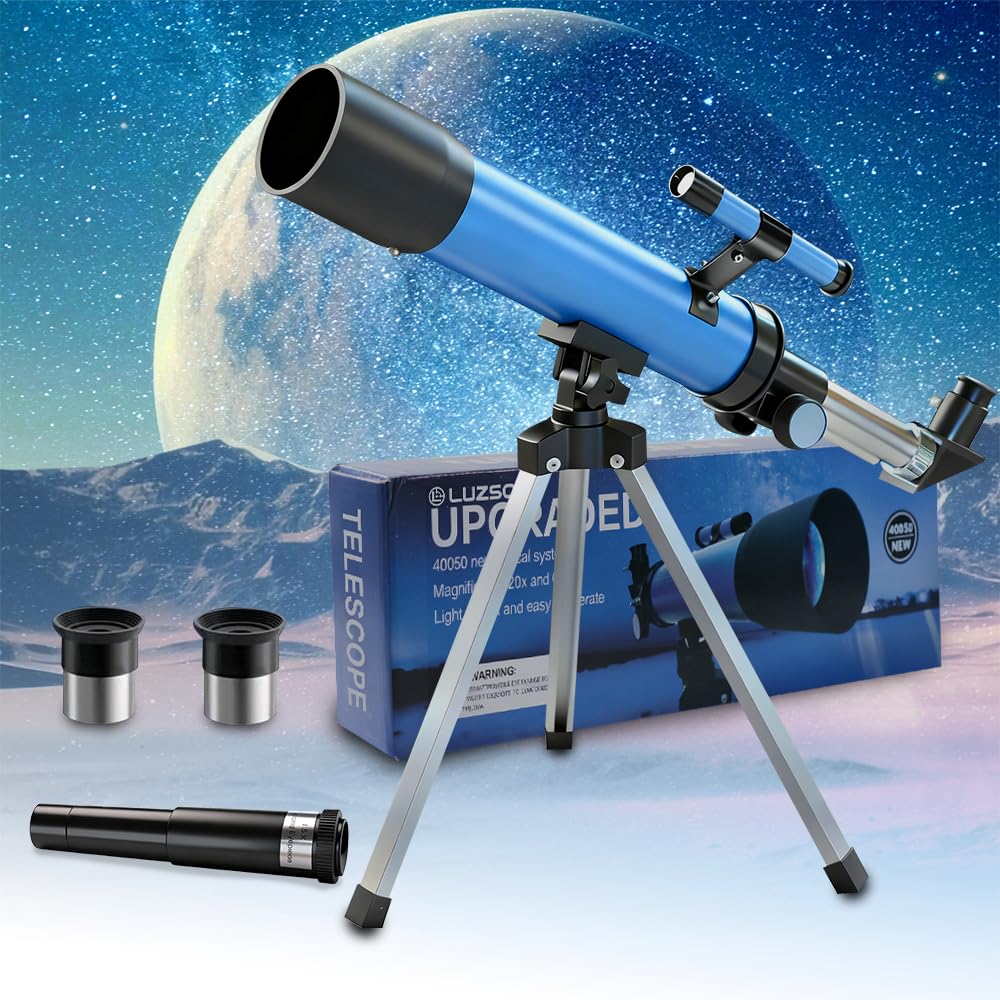
Luzsco 50mm Kids Telescope

Luzsco 50mm Kids Telescope

Youngest kids, ages 6-8

Our Score 8.4/10
Check Price

Worth Noting

  • Image quality is limited to the moon; planets appear too faint for detail.
  • Plastic body can feel flimsy and may not withstand rough handling.
Mount
Fixed
Max Mag
100x
Aperture
50mm
Includes
Tripod, 2 eyepieces, finder scope

The Luzsco 50mm telescope goes together in minutes with no tools — a straightforward setup that children ages 6-8 can handle with minimal help. Its lightweight frame makes it easy for young kids to carry outside and set up on their own.

The 50mm aperture captures enough light to reveal the moon's craters, but anything fainter — planets like Jupiter or Saturn — will appear as dim points with no detail. This is a physical limit of the small lens, not a build defect.

This telescope fits families seeking an affordable first look at astronomy for a young child. If the goal is to see Saturn's rings or Jupiter's moons, a larger aperture is necessary. For moon-gazing and learning basic telescope operation, it's a low-risk starting point.

Tip: The plastic construction is best for supervised use; consider storing it in a padded case to avoid damage.

Bottom line: For a child's first telescope that won't break the bank, this is a capable moon-watcher. Keep expectations aligned with its 50mm aperture.

6

Koolpte 70mm 500mm

Koolpte 70mm 500mm

Value-conscious families

Our Score 8.6/10
Check Price

Worth Noting

  • Image sharpness can soften at high magnification (above 100x), requiring careful focus.
  • 70mm aperture limits light gathering
Mount
Altazimuth
Max Mag
150x
Aperture
70mm
Includes
Carrying bag, phone adapter, remote

The Koolpte 70mm delivers clear lunar views right out of the box, with assembly taking under 10 minutes. At magnifications above 100x, image sharpness can soften – but the scope excels at low-power moon observation, which is exactly what young astronomers need. It lacks the aperture of top-tier picks, so deep-sky targets are out of reach, but as a budget entry point with carry bag and phone adapter, it's a low-risk choice for families who want a no-fuss starter scope.

Bottom line: Best for families who primarily want to observe the moon and bright planets without investing in a higher-aperture scope.

7

Celticbird 80mm 600mm

Celticbird 80mm 600mm

Moon enthusiasts

Our Score 8.8/10
Check Price

Worth Noting

  • Focus mechanism can be finicky and may require patience to achieve a sharp image.
  • Priced higher than some similar 80mm telescopes without the same accessory bundle.
Mount
Altazimuth
Max Mag
120x
Aperture
80mm
Includes
Backpack, phone adapter, moon filter

This 80mm refractor delivers crisp views of the moon and bright stars right out of the box, helped by the included moon filter that reduces glare. The backpack makes it easy to carry to darker spots, and the phone adapter lets you snap quick shots. However, the focusing mechanism can be touchy — some units require careful adjustment to hit sharp focus, and the price sits a bit higher than comparable 80mm models that lack the filter and bag.

Tip: Use the included moon filter first and turn the focus knob very slowly; a steady hand helps reach sharp focus.

Bottom line: Best for moon enthusiasts who want a ready-to-go kit with a filter and backpack, but only if you can accept the occasional focus fussiness.

8

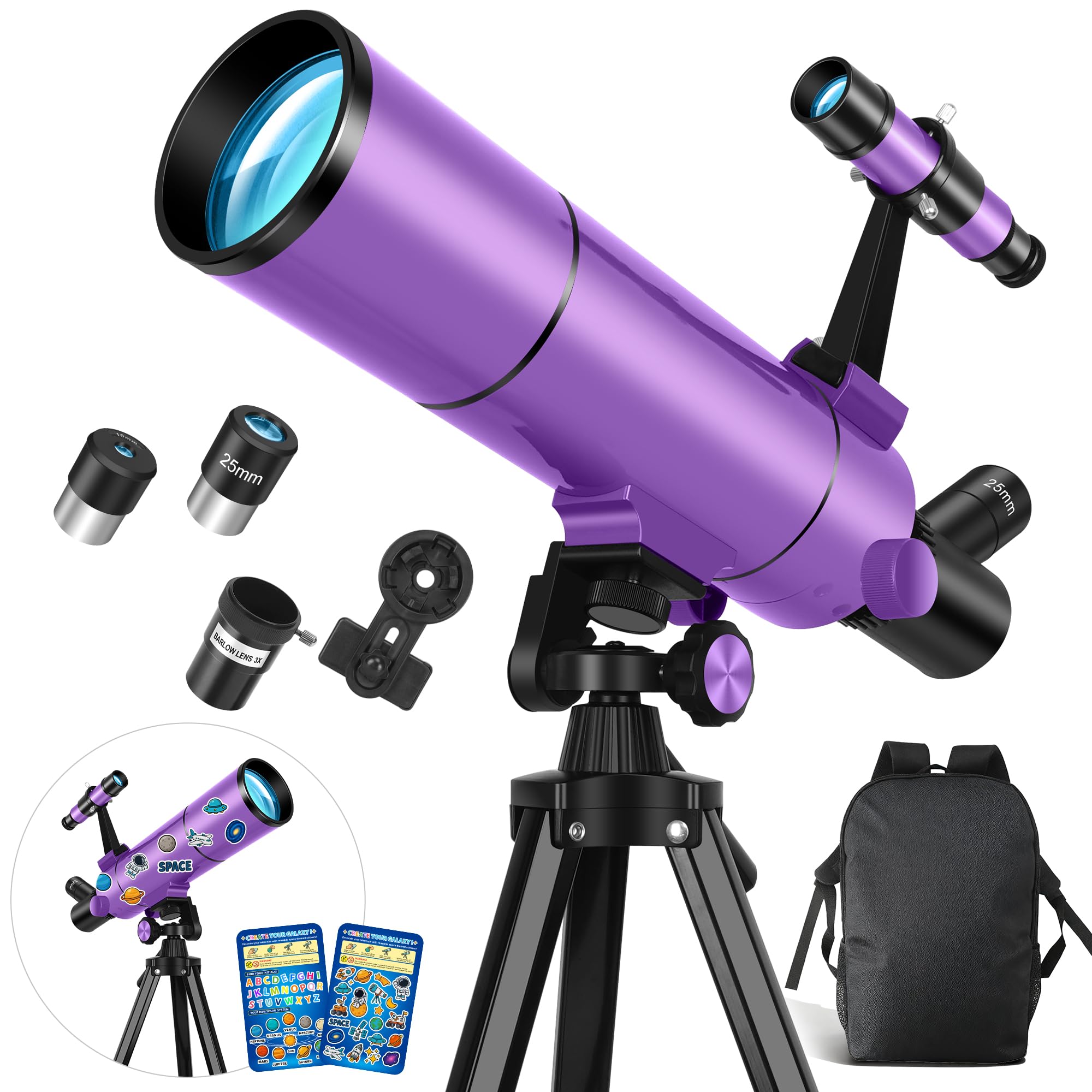
Dianfan 80mm 500mm Purple

Dianfan 80mm 500mm Purple

Creative kids

Our Score 8.8/10
Check Price

Worth Noting

  • Tripod may feel wobbly on uneven surfaces, particularly after extended use.
Mount
Altazimuth
Max Mag
150x
Aperture
80mm
Includes
Backpack, stickers, phone adapter

This telescope pairs a solid 80mm aperture with a sticker set that lets kids customize their own scope. Assembly takes minutes, the backpack makes it travel-ready, and views of the moon and bright planets are clear enough to spark curiosity. The tradeoff is that the tripod can feel unsteady on uneven ground - a few users noted wobble after repeated adjustments. With fewer established reviews than some competitors, it's a mid-range package that leans hard on personalization. The purple color and sticker theme will delight children who want something that feels uniquely theirs, but anyone expecting a rock-solid metal tripod should look elsewhere.

Tip: Check that all tripod leg locks are tightened before use; setting up on a flat surface reduces wobble.

Bottom line: Best suited for young space fans who want a telescope that feels like their own, complete with stickers and a purple frame - just check the tripod joints on arrival.

9

MEEZAA 80mm 500mm

MEEZAA 80mm 500mm

Early adopters

Our Score 8.6/10
Check Price

Worth Noting

Mount
Altazimuth
Max Mag
150x
Aperture
80mm
Includes
Backpack, phone adapter, stickers

This 80mm refractor delivers clear moon and planet views with a setup that takes minutes – a solid pick for families who want portability without sacrificing aperture. The included backpack makes it easy to take to a dark backyard or campsite, and the phone adapter lets kids snap quick shots of the moon. As a recently introduced model, its long-term durability under regular use is still being established, but early experience points to sharp optics and straightforward operation.

Bottom line: Worth a look for families who prioritize aperture and portability over a proven track record – check back for more user feedback as the review base grows.

How to Choose

Aperture

Aperture is the diameter of the main lens; it determines how much light the telescope collects. A 70mm aperture gathers about twice the light of a 50mm, making the moon and planets appear brighter and more detailed. For a kids telescope, 70mm is the minimum for satisfying lunar views - 50mm models are best for very young children who just want to see a bright dot.

Larger apertures like 80mm or 90mm capture even more light, but they also make the tube heavier and longer. A 90mm scope often needs a sturdier tripod to avoid wobbling, which can frustrate a child. Balancing light-gathering with portability is key.

Focal Length

Focal length controls magnification: longer tubes (500mm-600mm) produce higher native magnification, which helps see Saturn's rings or Jupiter's cloud bands. But longer tubes are also harder to pack and may require a tall tripod. For a first telescope, 400mm-500mm is a sweet spot - enough for crisp moon views without becoming unwieldy.

Short focal lengths (300mm) are very portable and work well on a table, but they max out at lower magnification. They are fine for bright objects like the moon but struggle with smaller planets. If your child wants to see more than the moon, aim for at least 400mm.

Mount

Altazimuth mounts are the simplest: they move up-down and left-right, like a camera on a tripod. Kids can intuitively point the scope without learning celestial coordinates. Equatorial mounts (often claimed on cheap scopes) are complex and rarely useful for beginners - they require balancing and alignment that most children cannot manage.

Stick with an altazimuth mount for a frustration-free experience. Some inexpensive scopes claim an equatorial mount but are actually just a fixed head - check reviews for ease of use. A smooth, slow-motion control is a nice bonus for fine-tuning aim.

Included Accessories

A phone adapter turns a telescope into a sharing device - kids can snap photos of the moon and show friends. A wireless remote lets them trigger the shutter without touching the scope, reducing vibrations. A carry bag or backpack protects the optics and makes it easy to take to dark-sky locations.

Not all phone adapters are equal; some are fiddly to align. Look for models with a spring-loaded clamp and a central screw. Extra eyepieces are less important than a Barlow lens, which doubles magnification without sacrificing quality - but only if the aperture is large enough to handle it.

Tripod Stability

A wobbly tripod ruins the view - even a gentle breeze or a child's touch can send the image shaking. Lightweight aluminum legs are common at this price, but the key is the joint quality and leg locks. Telescopes with a central brace or spreader are more rigid. Tabletop tripods are inherently stable on a flat surface but limit where you can set up.

For ground use, a tripod with adjustable leg angles and a weight of at least 4-5 pounds provides a solid foundation. If the tripod feels flimsy out of the box, you can hang a weight (like a water bottle) from the center hook to add stability.

Frequently Asked Questions