Cameras & Photography

15 Best Telescope Eyepieces of 2026: Match Views to Your Scope

Which telescope eyepieces actually deliver sharp, comfortable views for your observing style — and which trade-offs matter most.

Choosing a telescope eyepiece often feels like picking between convenience and optical purity. Kits promise a complete set at a tempting price, while zooms offer one eyepiece that covers many magnifications. But the real challenge isn't which package to buy — it's understanding how eye relief, field of view, and magnification interact to create a comfortable, sharp view.

Many first-time buyers focus on magnification numbers, only to find that high-power views are blurry or uncomfortable to use. That's because a short focal-length eyepiece with poor eye relief forces you to press your eye close to the lens — frustrating for eyeglass wearers and anyone wanting long sessions. The best eyepiece for you depends on your telescope, your targets, and whether you value flexibility or dedicated performance.

This guide cuts through the marketing to highlight the key specs that matter: apparent field of view, eye relief, and optical design. Whether you're a beginner assembling your first set or an experienced observer upgrading one piece at a time, you'll find clear guidance on what to look for — and what to avoid.

1

Celestron 8-24mm Zoom

Top Pick
Celestron 8-24mm Zoom

Zoom convenience

Our Score 9.2/10
Check Price

Worth Noting

  • Image sharpness softens at the 8mm and 24mm ends of the zoom range.
  • Eye relief becomes tight at high magnification, less comfortable for eyeglass wearers.
Kit Contents
Single eyepiece
Apparent Field
55°
Focal Length Range
8-24mm zoom
Optical Design & Coatings
Multi-element, fully multi-coated

Twisting the barrel smoothly shifts magnification from a wide 24mm to a tighter 8mm, eliminating the need to stop and swap eyepieces mid-session. That single convenience is the core reason this eyepiece suits observers who want to spend less time fumbling with a case and more time actually looking at the sky.

Optically, the zoom delivers a fully multi-coated view that is crisp across much of its range. At the wider settings, the image holds up well for scanning star fields or framing the Andromeda Galaxy. Toward the 8mm end, some softening in sharpness becomes noticeable, and the view darkens slightly compared to a dedicated high-power eyepiece. This is the tradeoff for flexibility: you gain range, but peak sharpness is reserved for fixed focal-length designs.

This eyepiece fits any telescope that accepts 1.25-inch eyepieces, and the twist-up eyecup makes installation quick. Eye relief gets tight at the highest magnifications, which can be a limitation for eyeglass wearers who need to keep their glasses on. For observers without glasses, the 55-degree apparent field is comfortable through the entire zoom.

Beginners learning their preferred magnification will appreciate being able to dial in exactly the right view without buying a full set. Travelers benefit from carrying one eyepiece instead of several. If your primary goal is maximum sharpness for critical planetary observing, a premium fixed eyepiece in the needed focal length remains a better choice.

Tip: At 8mm, fold down the rubber eyecup to get a bit more eye relief; eyeglass wearers may still find it snug.

Bottom line: Ideal for observers who prioritize versatility over absolute optical fidelity — especially travel-friendly and beginner-oriented.

2

Celestron 5-Eyepiece Kit

Celestron 5-Eyepiece Kit

Complete starter set

Our Score 9.4/10
Check Price

Worth Noting

  • High-magnification eyepieces (6mm, 8mm) may deliver soft views depending on telescope optics and seeing conditions.
  • Short eye relief on the 6mm and 8mm makes them hard to use for eyeglass wearers and during long sessions.
Kit Contents
5 eps, 2x Barlow, filters, case
Apparent Field
52°
Focal Length Range
6-32mm (5 eps)
Optical Design & Coatings
4-element Plossl, fully multi-coated

This Celestron kit bundles five Plossl eyepieces, a 2x Barlow, three filters, and a metal case into one package -- a one-stop shop for beginners assembling their first eyepiece collection. For those who prefer fixed focal lengths over a zoom, this set provides distinct magnifications from 32mm down to 6mm, covering low-power sweeps to high-power planetary views.

It suits beginners and families who want a complete set without researching individual eyepieces. However, the 6mm and 8mm eyepieces have very short eye relief, making them uncomfortable for extended use -- a trade-off beginners should be aware of. The metal foam-lined case keeps everything organized and protected during transport.

Tip: Use the 2x Barlow with the 17mm eyepiece instead of the 6mm for more comfortable high-power views.

Bottom line: A practical all-in-one kit for newcomers who want a full set of eyepieces right out of the box, with the understanding that the highest-power eyepieces require patience to use comfortably.

3

SVBONY SV135 7-21mm Zoom

SVBONY SV135 7-21mm Zoom

Budget zoom

Our Score 9.0/10
Check Price

Worth Noting

  • Edge sharpness drops off noticeably at the extremes of the zoom range
  • Field of view narrows at higher zoom settings, limiting the immersive experience
Kit Contents
Single eyepiece
Apparent Field
40-57°
Focal Length Range
7-21mm zoom
Optical Design & Coatings
6-element, fully multi-coated

The SVBONY SV135 delivers a smooth 7-21mm zoom range at roughly half the price of the Celestron alternative, making it a practical option for those who want zoom convenience without the premium cost. The rotating barrel moves through the range gradually, so you can dial in the exact magnification without hunting for the right stop.

This eyepiece suits budget-conscious observers who prioritize convenience over peak optical performance. Beginners will appreciate covering multiple magnifications with one eyepiece. However, the field of view narrows and edge sharpness softens noticeably at higher zoom settings — it is not for critical lunar or planetary observers who demand crisp, wide views at every power.

Build quality feels solid for the price, with a metal barrel and smooth locking collar. The fully multi-coated optics produce decent contrast in the middle of the zoom range, where most casual observing happens. At 21mm the 40-degree apparent field is noticeably narrower than a typical Plossl, and at 7mm the edges become hazy — a typical tradeoff for a budget zoom.

Tip: For the best image quality, avoid the extreme 7mm setting and instead use a dedicated high-power eyepiece if needed; the middle range (14-17mm) gives the most balanced views.

Bottom line: For casual observers and beginners on a tight budget, the SV135 offers genuine zoom convenience without breaking the bank — just keep expectations realistic at the high-magnification end.

4

SVBONY 68° EP Set 6-20mm

SVBONY 68° EP Set 6-20mm

Wide-field views

Our Score 9.2/10
Check Price

Worth Noting

  • Outer portion of the field shows noticeable blurring; best to keep targets centered
  • Limited light transmission makes it less suitable for nebulae and galaxies
Kit Contents
4 eps, no Barlow or case
Apparent Field
68°
Focal Length Range
6-20mm (4 eps)
Optical Design & Coatings
Multi-element, fully multi-coated

Four eyepieces with a 68° apparent field give Moon and planet views a spacious feel uncommon at this price. While premium 82° eyepieces offer even wider fields and sharper edges, this set costs a fraction and still provides a noticeable upgrade over standard Plossls.

Planetary and lunar observers who want a wide field without heavy spending are the primary audience. The center of the field stays crisp, but the outer 20% shows noticeable edge distortion – less problematic when the target is kept central. Dimness on faint deep-sky objects makes this set best for bright targets.

Eye relief is comfortable for eyeglass wearers, and the fully multi-coated green film helps contrast on planets. The four focal lengths (6,9,15,20mm) cover from high to medium magnification, though the 6mm may be too powerful for short-focal-length telescopes.

Tip: Keep the target in the central 80% of the field to avoid edge softness.

Bottom line: For planetary and lunar observers who prioritize wide apparent field and low cost, this set delivers a big step up from basic Plossls without breaking the bank.

5

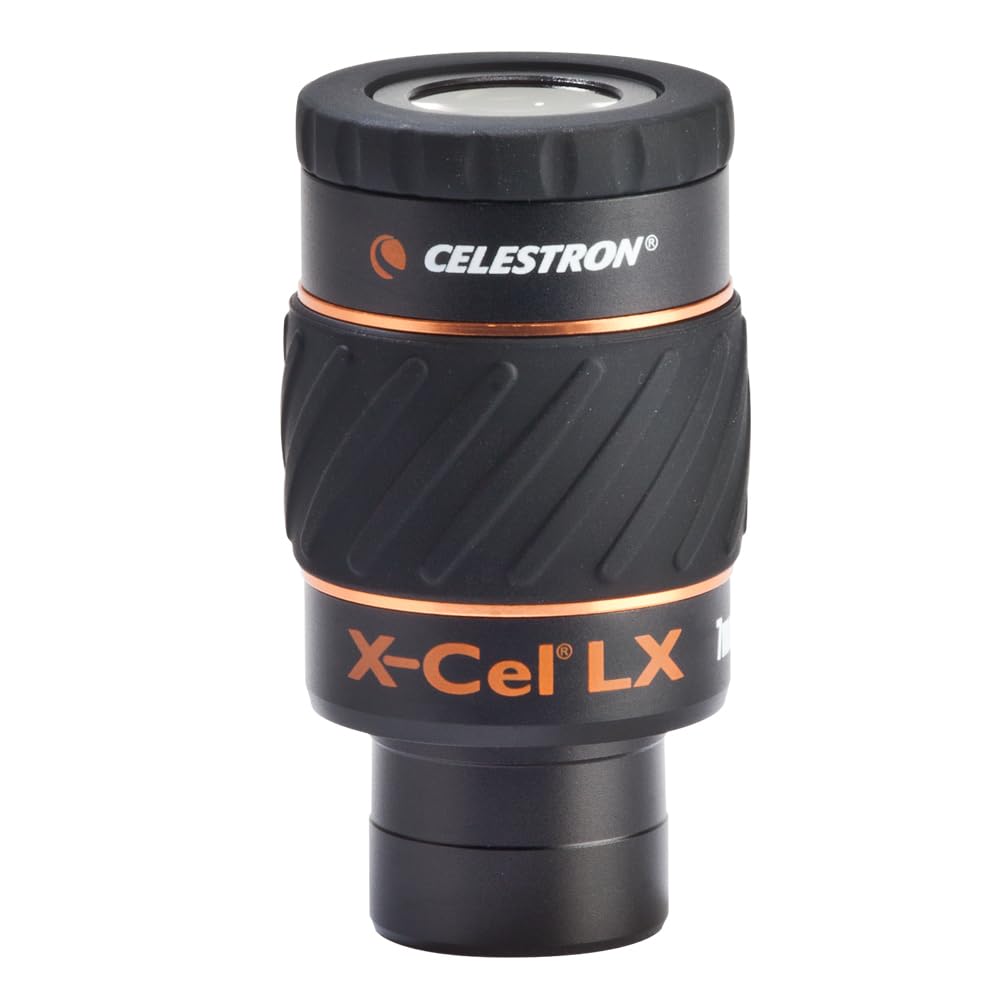
Celestron X-Cel LX 7mm

Celestron X-Cel LX 7mm

Planetary with glasses

Our Score 9.2/10
Check Price

Worth Noting

  • Blurriness may appear on some units; inspect upon arrival
  • Higher price than comparable fixed-focal-length eyepieces
Kit Contents
Single eyepiece
Apparent Field
60°
Focal Length Range
7mm fixed
Optical Design & Coatings
6-element, fully multi-coated

The 7mm X-Cel LX delivers crisp details on Jupiter’s cloud bands and Saturn’s rings, with a twist-up eyecup that provides generous eye relief for observers who wear glasses. Unlike the budget 6mm Plossl that forces you to mash your eye against the lens, this eyepiece lets you see the full field without smudging your glasses.

This eyepiece is built for planetary observers who need high magnification and want to keep their glasses on. The trade-off: image quality can vary between units — some buyers have noted blurriness on arrival, so it pays to inspect the eyepiece and use a generous return policy. This is not a general-purpose eyepiece; the Celestron Omni series or a zoom covers low-to-mid power better.

When the optics are sound, the view is sharp and contrasty thanks to the six-element fully multi-coated design. The 60-degree field frames planets comfortably, and the adjustable eyecup locks securely at your preferred height. At a mid-range price, it costs more than a basic Plossl but less than premium planetary eyepieces — the value depends on how much comfortable eye relief matters to you.

Tip: Test on a bright star to verify sharpness within the return period.

Bottom line: If comfortable eye relief for glasses and sharp planetary views are your priority, this eyepiece delivers — but check the unit for optical defects as soon as it arrives.

6

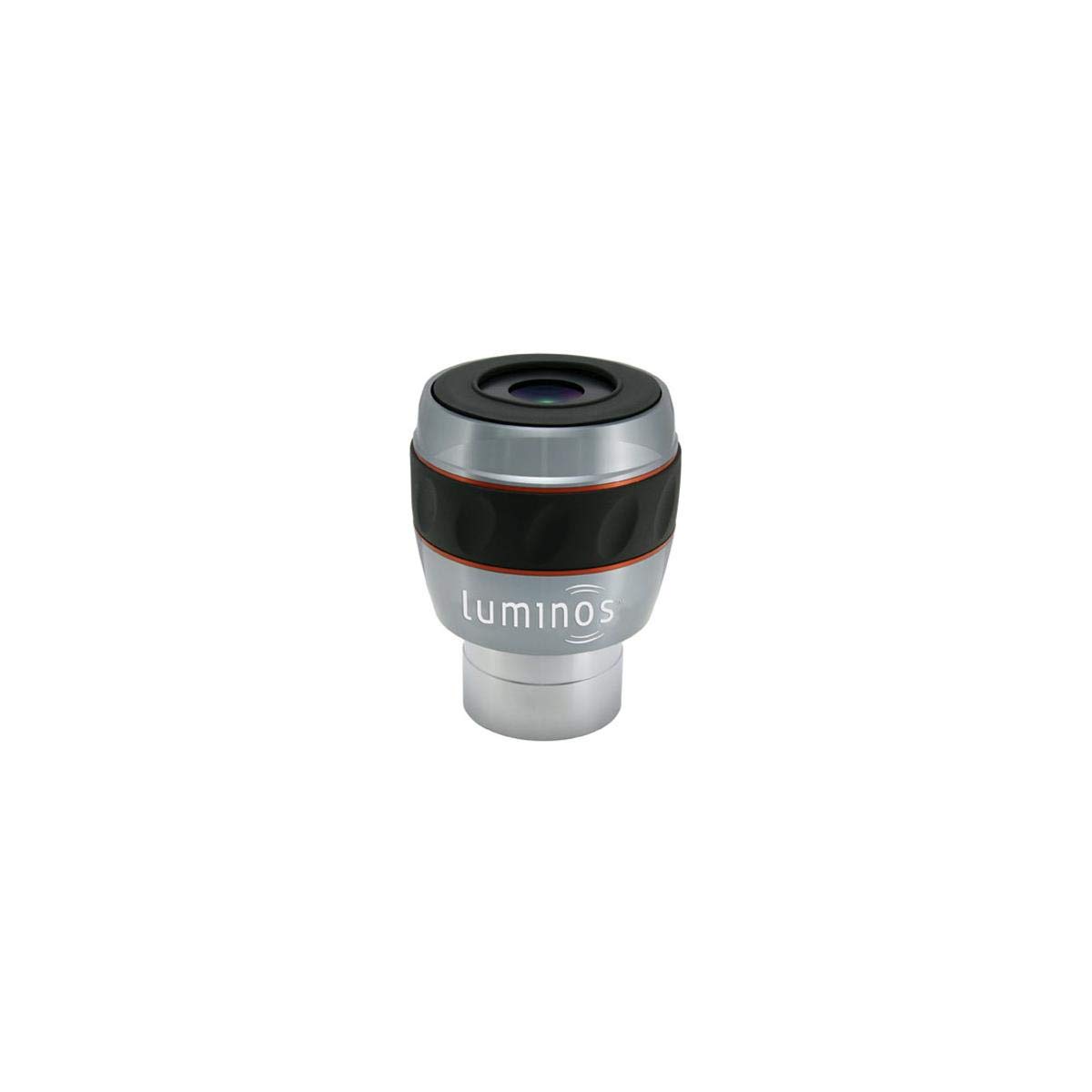
Celestron Luminos 23mm 82°

Celestron Luminos 23mm 82°

Premium wide-field

Our Score 9.2/10
Check Price

Worth Noting

  • Significant weight may unbalance telescopes; rebalancing often required
  • Large size can feel cumbersome on compact mounts or in tight eyepiece cases
Kit Contents
Single eyepiece
Apparent Field
82°
Focal Length Range
23mm fixed
Optical Design & Coatings
Multi-element, fully multi-coated

The Celestron Luminos 23mm delivers an immersive 82-degree apparent field with sharp, contrasty views that bring out detail in star fields and nebulae. Its fully multi-coated optics produce images with minimal scatter, making it a clear step above budget wide-field alternatives that often exhibit edge softness.

This eyepiece is built for observers with heavy-duty mounts and larger telescopes. The substantial weight (over one pound) and large barrel can unbalance smaller setups, requiring rebalancing after insertion. For deep-sky enthusiasts using a sturdy German equatorial or fork mount, the tradeoff is worth it for the panoramic view.

Under dark skies, the Luminos 23mm shows extended objects like the Andromeda Galaxy and Orion Nebula with impressive brightness and field curvature control. The combination of wide field and high contrast makes it a strong choice for sweeping Milky Way star clouds, provided your telescope can handle the load.

Tip: Ensure your mount has sufficient counterweight; you may need to rebalance after swapping eyepieces.

Bottom line: A top-tier wide-field eyepiece for deep-sky observers with adequate mount capacity – those on smaller scopes should look to lighter alternatives.

7

Celestron AstroMaster Kit

Celestron AstroMaster Kit

Budget starter

Our Score 9.2/10
Check Price

Worth Noting

  • Filters may reduce image contrast and obscure subtle detail
  • Narrow field of view and occasional difficulty achieving sharp focus
Kit Contents
2 eps, 2x Barlow, filters, case
Apparent Field
Focal Length Range
6-15mm (2 eps)
Optical Design & Coatings
Kellner & Plossl, multi-coated

The AstroMaster kit delivers a 2x Barlow with T-threads for camera attachment, a 15mm Kellner eyepiece, and a 6mm Plossl at a price that undercuts nearly any other bundle. For someone still using the stock 20mm that came with their first scope, these additions provide useful magnification range and the ability to screw in a DSLR. However, the kit’s optical quality is noticeably limited: the three included filters (Moon, Blue, Red) can wash out detail rather than enhance it, and the eyepieces have a narrow apparent field that makes centering objects fiddly. The Celestron five-piece kit includes more eyepieces and better glass, but if your budget is absolute bottom, this set gets you started—just know you’re trading refined views for rock-bottom price.

Bottom line: Only buy this if your absolute priority is the lowest possible cost to get a Barlow and a couple of eyepieces—and you’re willing to accept soft edges, touchy focus, and filters that dull the view.

8

SVBONY 40mm Plossl

SVBONY 40mm Plossl

Budget low-power

Our Score 9.2/10
Check Price

Worth Noting

  • Rubber eyecup can be flimsy and may not hold a phone adapter securely
Kit Contents
Single eyepiece
Apparent Field
40°
Focal Length Range
40mm fixed
Optical Design & Coatings
4-element Plossl, fully multi-coated

For budget-conscious beginners, this 40mm eyepiece delivers exceptional value with a solid metal build and clear images at a fraction of the cost of alternatives. Its 40mm focal length pushes the limits of the 1.25" format, giving the widest possible true field for finding deep-sky objects. However, the 40° apparent field restricts the immersive experience — this is best for scanning rather than settling in to enjoy the view.

Tip: The rubber eyecup may slide off when using a phone adapter — consider securing it with a small piece of tape.

Bottom line: Best as a finder eyepiece for budget-conscious beginners who prioritize low cost and wide true field over wide apparent field.

9

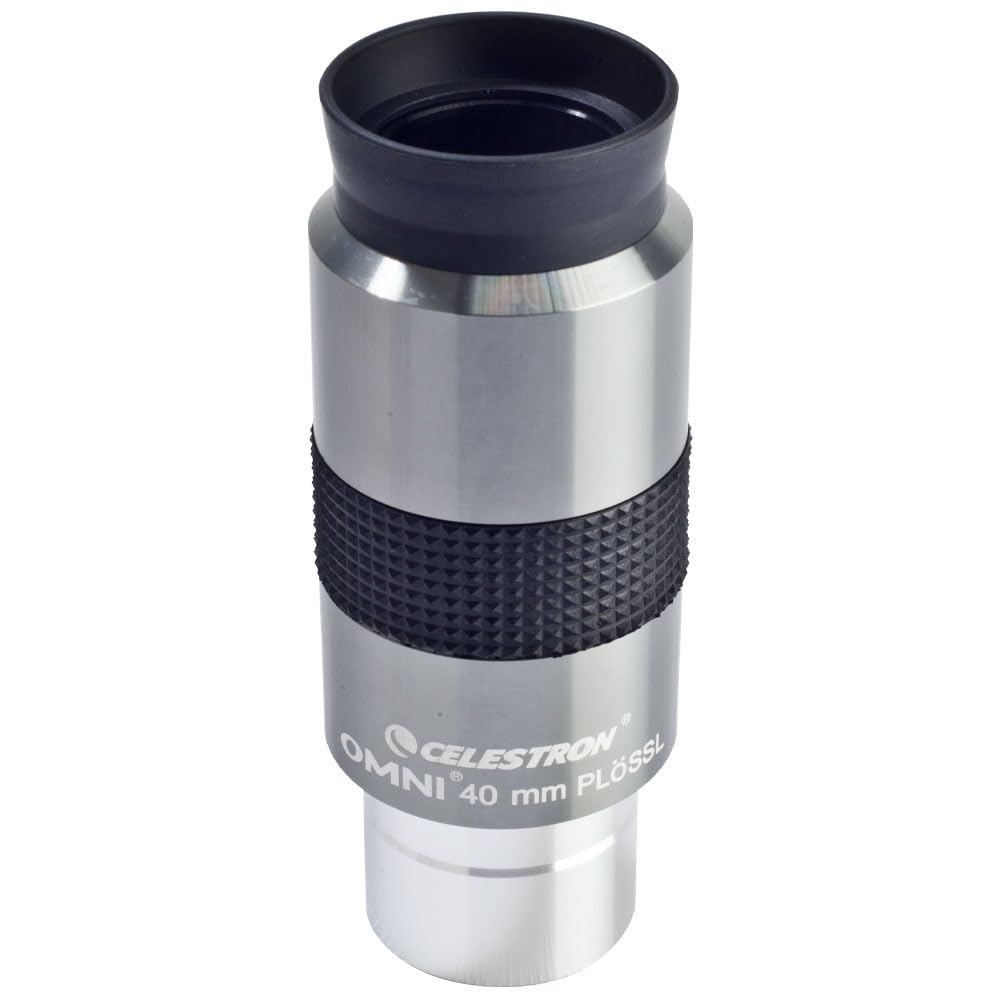
Celestron Omni 40mm

Celestron Omni 40mm

Low-power finder

Our Score 9.2/10
Check Price

Worth Noting

  • 40-degree apparent field is narrow compared to modern wide-angle eyepieces
  • Priced higher than some 40mm Plossls from other brands, offering no optical advantage for the extra cost.
Kit Contents
Single eyepiece
Apparent Field
Focal Length Range
40mm fixed
Optical Design & Coatings
4-element Plossl

The Celestron Omni 40mm delivers sharp, bright images typical of a well-made Plossl. Its 40-degree apparent field is adequate for locating objects but won't provide the immersive experience of wider eyepieces.

For observers who prioritize brand consistency over absolute low cost, this eyepiece offers solid metal construction and reliable performance. It doesn't bring anything unique to the table – similar focal lengths from other manufacturers offer comparable views at lower prices.

Bottom line: A safe, no-surprises choice if you need a basic low-power eyepiece and trust the Celestron brand, but not the best value for field width.

10

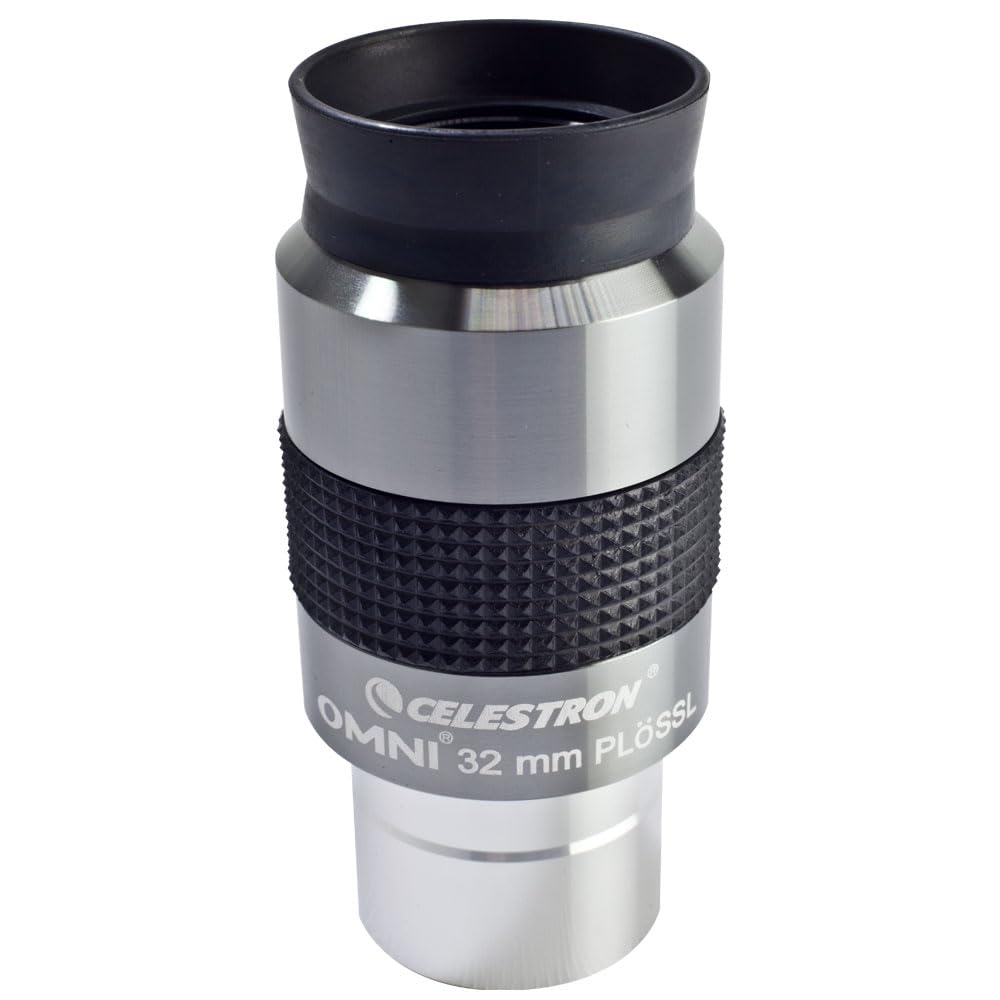
Celestron Omni 32mm

Celestron Omni 32mm

Mid-power general

Our Score 9.0/10
Check Price

Worth Noting

  • Not suited for high-power planetary detail; stays in moderate magnification territory.
  • Overlaps in use case with the 40mm Omni; selection depends on your telescope's focal length and desired magnification.
Kit Contents
Single eyepiece
Apparent Field
Focal Length Range
32mm fixed
Optical Design & Coatings
4-element Plossl

The 32mm focal length gives a wide, bright field for moderate magnification — a solid step up from a kit eyepiece. Image quality holds up across most of the field, and the price stays within reach of budget-conscious observers. This eyepiece shares its Plossl lineage with the 40mm Omni, so the choice between them comes down to your telescope's focal length: the 32mm delivers a tighter, higher-power view while the 40mm gives the widest possible true field for the 1.25-inch format. Neither is built for high-magnification planetary work — that's the 6mm Omni's role.

Bottom line: Pick the 32mm Omni if your telescope's focal length puts moderate magnifications (40-60x) at the sweet spot for lunar and deep-sky observing — just know the 40mm Omni is a near-twin for lower-power viewing.

11

CelticBird 5-EP Kit

CelticBird 5-EP Kit

Kit with extra filters

Our Score 9.6/10
Check Price

Worth Noting

  • Brand recognition is lower than Celestron
Kit Contents
5 eps, 2x Barlow, filters, case
Apparent Field
Focal Length Range
6-40mm (5 eps)
Optical Design & Coatings
Plossl, multi-coated

This CelticBird accessory kit bundles five Plossl eyepieces (6, 8, 12.5, 20, 40mm), a 2x Barlow with T-adapter, and seven filters (five color, one polarizing, one moon) inside a foam-lined metal case. Compared to the popular Celestron kit, you get more filters and a similar spread of magnifications. The case has spare cutouts for additional eyepieces, keeping everything organized. For beginners who want a single box covering their first year of observing, this offers strong value — especially if filter experimentation appeals.

The trade-off is brand familiarity. CelticBird lacks the decades of reputation Celestron carries, and quality consistency may be less documented. The eyepieces perform adequately for casual lunar, planetary, and bright deep-sky targets, but observers who prioritize optical pedigree may prefer a more established name. If you filter variety and a complete kit matter more than brand cachet, this is a practical mid-range buy.

Bottom line: Best for beginner to intermediate observers who want more filters than the comparable Celestron set and are comfortable with a lesser-known brand.

12

Celestron Omni 6mm

Celestron Omni 6mm

Budget high-power

Our Score 9.0/10
Check Price

Worth Noting

  • The narrow field means objects drift out of view quickly; edges can appear soft.
  • Extremely short eye relief makes it difficult to see the full field without pressing close.
Kit Contents
Single eyepiece
Apparent Field
Focal Length Range
6mm fixed
Optical Design & Coatings
4-element Plossl

This eyepiece gets you to high magnification without spending much — a functional choice for catching lunar craters and planetary bands on a budget. The tradeoff is a very short eye relief that can make it fiddly to use, especially for eyeglass wearers or during longer sessions. It is best suited as a backup or for quick peeks at bright targets, where the low cost justifies the compromise.

Bottom line: Pick this if you need the cheapest route to 6mm for occasional planetary observing and can tolerate a tight eye relief.

13

SVBONY SV154 26mm 70°

SVBONY SV154 26mm 70°

Wide-field refractor

Our Score 9.4/10
Check Price

Worth Noting

  • Not recommended for use with Newtonian reflector telescopes
  • Substantial weight may cause balance issues on lighter mounts
Kit Contents
Single eyepiece
Apparent Field
70°
Focal Length Range
26mm fixed
Optical Design & Coatings
5-element, fully multi-coated

The SVBONY SV154 26mm offers a genuinely wide 70-degree apparent field at a price that undercuts many competitors, making it an appealing option for refractor and SCT owners who want to sweep star fields or view large nebulae. However, it's not suitable for Newtonian reflectors – the manufacturer warns against it – and its weight can upset telescope balance if your mount isn't sturdy. Edge sharpness falls off in the outer field, which matters less for low-power scanning but is noticeable for critical observers.

Tip: If your telescope requires precise balance, factor in the SV154's weight and adjust counterweights accordingly.

Bottom line: A good buy for refractor or SCT owners who prioritize wide fields over edge-to-edge sharpness and have a mount that can handle the extra weight.

14

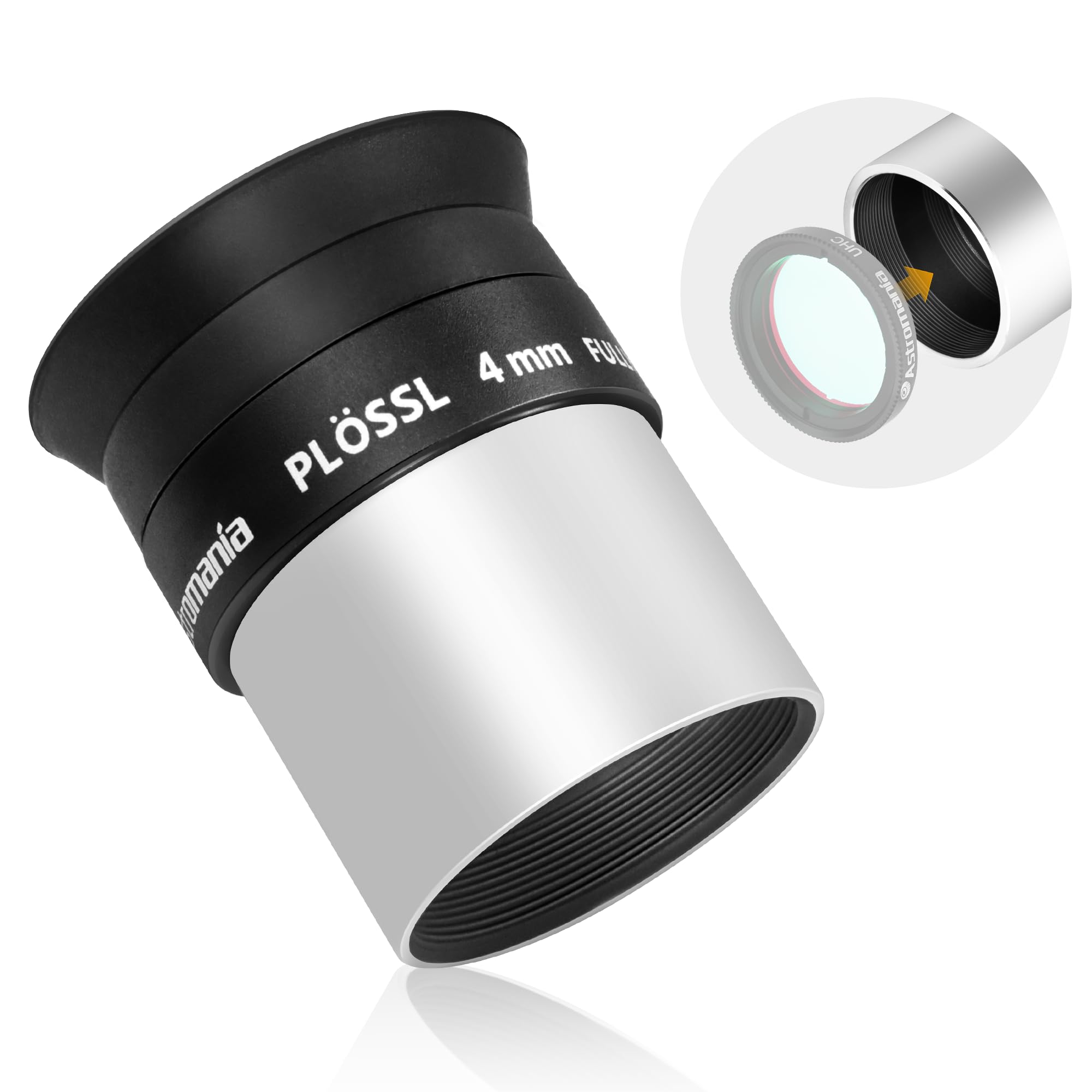
Astromania 4mm Plossl

Astromania 4mm Plossl

Ultra-budget high-power

Our Score 9.2/10
Check Price

Worth Noting

  • Very short eye relief makes it difficult to view without eyeglasses and can cause eye strain during prolonged sessions
  • 50-degree apparent field feels cramped compared to wider eyepieces, reducing immersion
Kit Contents
Single eyepiece
Apparent Field
50°
Focal Length Range
4mm fixed
Optical Design & Coatings
4-element Plossl, fully multi-coated

The Astromania 4mm Plossl offers the highest magnification at the lowest price in its class, making it an attractive option for observers on a tight budget. Its fully multi-coated lenses are a bonus. However, like all short-focal-length Plossls, it comes with design tradeoffs that limit comfortable extended use — better suited as a backup or occasional high-power tool. Detailed user reports on image quality are scarce, so there is some uncertainty about unit-to-unit consistency.

Tip: This eyepiece requires a telescope with sufficient focus travel; some scopes may not reach focus with a 4mm eyepiece.

Bottom line: Reserve this eyepiece for an occasional high-power look at the Moon or planets when budget is the top priority and comfort is secondary.

15

starboosa 3-EP Set

starboosa 3-EP Set

Absolute beginner

Our Score 9.0/10
Check Price

Worth Noting

  • Not suited for users who require proven optical performance from established brands
  • The 4mm eyepiece may produce dim images on telescopes with slower focal ratios, limiting its usefulness
Kit Contents
3 eps, no Barlow, no case
Apparent Field
Focal Length Range
4-20mm (3 eps)
Optical Design & Coatings
Multi-coated

The starboosa set delivers three focal lengths at a price that's hard to beat, making it a practical entry point for beginners or children using starter telescopes. The multi-coated optics provide decent clarity for basic lunar and planetary views, though feedback on long-term consistency is limited. This is best treated as a low-cost introduction rather than a permanent upgrade—suitable for occasional use where proven optical performance isn't a priority.

Bottom line: This set works as a no-risk starter kit for absolute beginners or children's telescopes where cost outweighs optical refinement, but it's not a substitute for a properly vetted eyepiece collection.

How to Choose

Focal Length and Magnification

Focal length (in mm) determines magnification when combined with your telescope's focal length. Shorter focal lengths yield higher magnification but demand steadier seeing and more precise focusing. A 4mm eyepiece might deliver 300x on a 1200mm scope, but that view will be dimmer and more sensitive to atmospheric turbulence than a 20mm eyepiece at 60x.

Beginners often reach for the shortest focal length first, only to find blurry, shaky images. A better approach is to start with a medium-power eyepiece around 20mm and move shorter as conditions allow. Matching the eyepiece to your telescope's maximum useful magnification avoids wasted money on unusable high-power views.

Apparent Field of View

Apparent field of view (AFOV) is the angular width of the image you see through the eyepiece, independent of magnification. A 50° Plossl feels like looking through a soda straw; a 68° or 82° eyepiece gives a panoramic, immersive window into the sky. Wider fields make it easier to track celestial objects and are especially rewarding for sweeping star fields or the Milky Way.

The trade-off is that wide-field eyepieces often have more complex glass arrangements, which can introduce edge softness or distortion. Many affordable 'ultra-wide' options sacrifice sharpness at the outer 20% of the field. For planetary and lunar observing, a moderately wide 60-68° field offers a good balance between immersion and edge-to-edge clarity.

Eye Relief

Eye relief is the distance your eye needs to be from the eyepiece's top lens to see the full field. Short eye relief forces you to press your eye uncomfortably close, which is problematic for eyeglass wearers and anyone who prefers long observing sessions. For high-power Plossl eyepieces (below 10mm), eye relief can drop to 5-7mm, making them nearly unusable with glasses.

Long eye relief designs, such as the Celestron X-Cel LX or certain wide-field eyepieces, use more elements to position the exit pupil farther from the lens. If you wear glasses, look for eyepieces with at least 15-20mm of eye relief and a twist-up eyecup that lets you adjust the distance. This makes a bigger difference to comfort than a slightly wider field.

Optical Design and Coatings

The internal lens arrangement and anti-reflection coatings define image quality. Simple Plossl and Kellner designs use 3-4 elements and work well at low to medium power but tend to have short eye relief and narrower fields at high power. More complex multi-element designs (5-7 groups) can correct aberrations and provide wider fields, but they also add cost and weight.

Fully multi-coated (FMC) eyepieces have multiple anti-reflection layers on all glass surfaces, increasing light transmission and contrast. Budget eyepieces may only have single-layer 'coated' optics, which can reduce image brightness and introduce ghosting. The difference is subtle in daylight but noticeable on faint deep-sky objects like galaxies and nebula.

Kit Completeness

All-in-one kits bundle several eyepieces, a Barlow lens, filters, and a case. They offer an easy way to try multiple magnifications without researching individual purchases. The most popular kits include five Plossl eyepieces covering 6-32mm, a 2x Barlow to double that range, and colored filters for planetary contrast. The hard case protects the set and makes transport convenient.

The downside is that kit eyepieces rarely perform as well as individually selected ones at the same price point. The high-power eyepieces (6mm, 8mm) often have poor eye relief and field curvature. Also, the included filters may be of low optical quality or rarely used. If you prefer to buy one excellent eyepiece rather than five average ones, a single zoom or fixed eyepiece is a better investment.

Frequently Asked Questions