Tools & DIY

4 Best Resin 3D Printer 2026: Picks for Reliable High-Detail Prints

Find a resin 3D printer that delivers high detail and speed without frequent failures, based on real user experiences and durability factors.

Resin 3D printing has become more accessible than ever, but the gap between advertised specs and day-to-day experience remains wide. High-resolution screens and fast print speeds are common claims, yet many users report FEP film tears, LCD damage, and adhesion failures within weeks. Smart features like tank heating and AI monitoring help, but they often mask underlying build quality issues.

This guide cuts through the marketing to highlight printers that actually deliver consistent, high-detail prints. The picks focus on models with a proven track record for reliability, balancing resolution and speed with durable components. Expect to replace FEP film every few months regardless, but some printers make that process simpler. Whether you are a first-time buyer or upgrading, the right printer depends on how much maintenance you are willing to accept and what size prints you need.

1

ELEGOO Saturn 4 Ultra 16K

Top Pick
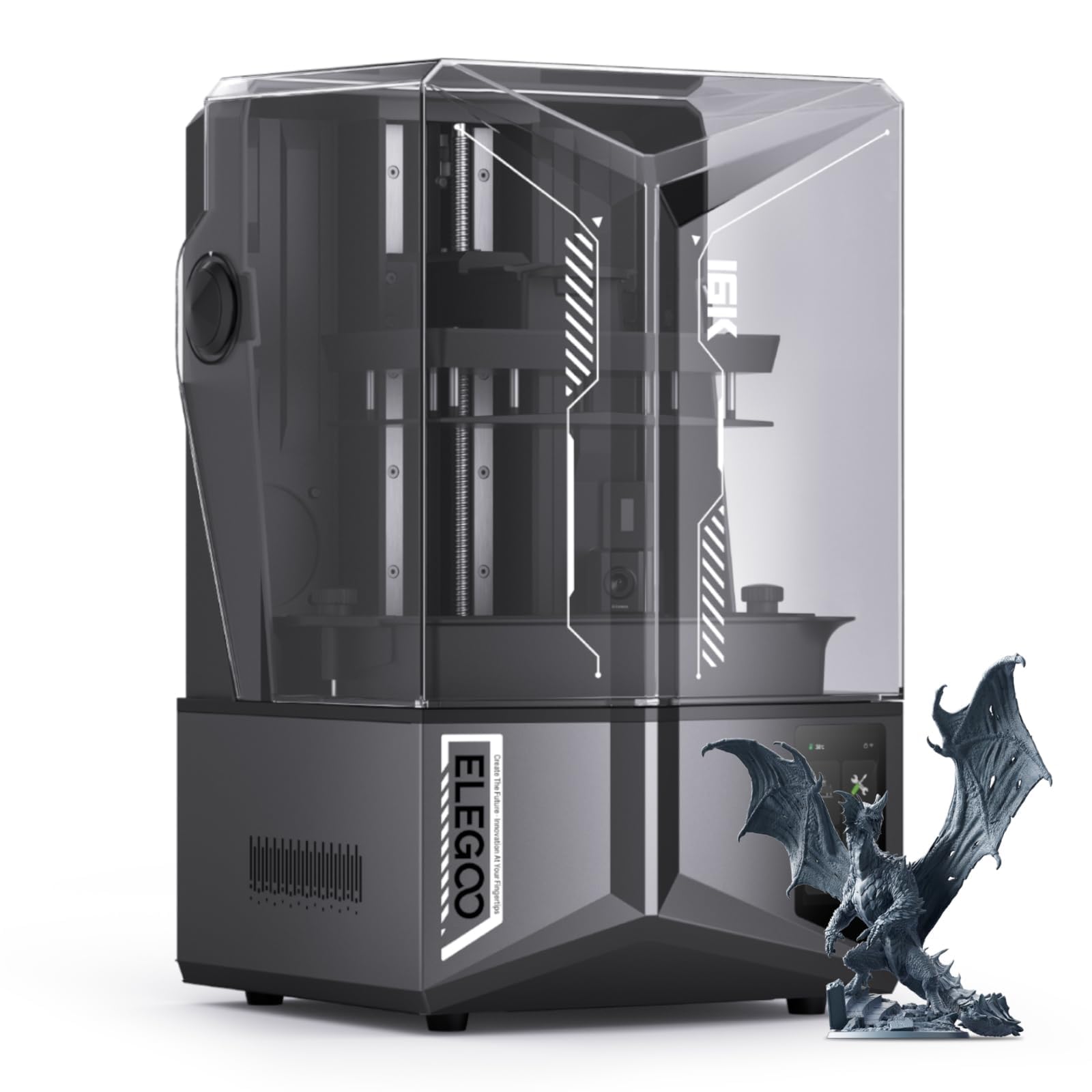
ELEGOO Saturn 4 Ultra 16K

Detail hobbyists

Our Score 8.8/10
Check Price

Worth Noting

  • Inconsistent print success between units (some prints may fail due to adhesion or leveling issues)
Resolution
16K
Print Speed
150 mm/h
Build Volume
8.33x4.66x8.66 in
Smart Detection
AI camera

The ELEGOO Saturn 4 Ultra delivers 16K resolution prints with consistent detail, supported by a heated resin tank that maintains 30°C for stable curing. Print speed reaches 150 mm/h, and the AI camera provides real-time monitoring to catch failures early.

Setup is minimal: the tilt-release mechanism and auto-leveling get you printing quickly. Most prints complete without issue, with the AI camera helping to reduce wasted resin by spotting failed supports or adhesion problems.

This printer suits detail-oriented hobbyists who want high resolution and smart features without a steep price. Build plate warping or resin tray leaks may occur in some units, so checking the hardware on arrival is wise. Those on a tight budget or needing a larger build volume should look elsewhere. For attentive users, the Saturn 4 Ultra provides a strong balance of speed, resolution, and convenience.

The mid-range pricing aligns with its feature set, offering better resolution than similarly priced competitors while including heating and camera that reduce failed prints. It's a capable workhorse for regular use, provided you're okay with occasional quality checks.

Tip: Before first print, verify the build plate is flat and the FEP film is tensioned to avoid leaks or adhesion failures.

Bottom line: The Saturn 4 Ultra delivers high-resolution prints with smart heating and monitoring for hobbyists who accept occasional hardware checks.

2

ANYCUBIC Photon Mono 4

ANYCUBIC Photon Mono 4

Entry-level users

Our Score 8.8/10
Check Price

Worth Noting

  • Build volume restricts prints to small objects; batch printing requires multiple runs
  • LCD screen and FEP film may need replacement after months of use, adding to long-term cost
Resolution
10K
Print Speed
70 mm/h
Build Volume
6.04x3.42x6.49 in
Smart Detection
None

The ANYCUBIC Photon Mono 4 stands out in the resin printer market for offering 10K resolution at an entry-level price point. While the upgrade version adds faster prints and intelligent detection, the Mono 4 focuses on delivering high detail without unnecessary features — a trade-off that keeps costs down and setup simple.

This printer suits beginners, miniature painters, and tabletop gamers who want crisp detail without a steep learning curve. The small build volume (6x3.4x6.5 inches) limits prints to small figures or single parts, and the LCD screen and FEP film can show wear after months of use, making it a practical choice for hobbyists rather than high-volume production.

A large user community and abundant online resources make troubleshooting and learning accessible, lowering the barrier for first-time resin users. The manual 4-point leveling is straightforward, though it requires patience to get right initially.

Tip: Applying a screen protector and replacing the FEP film every few months can help maintain print quality and avoid leaks.

Bottom line: For hobbyists and beginners who prioritize budget and detail over speed and volume, the ANYCUBIC Photon Mono 4 delivers exceptional value — just factor in periodic consumable costs.

3

ELEGOO Mars 5 Ultra 9K

ELEGOO Mars 5 Ultra 9K

Budget hobbyists

Our Score 8.6/10
Check Price

Worth Noting

  • Getting prints to stick to the build plate can take extra effort, especially for those new to resin.
  • The FEP film is thin and can tear with repeated use; the LCD screen has been reported to crack in some cases.
  • Long-term consistency between units can vary, so some owners may see more failures over time.
Resolution
9K
Print Speed
150 mm/h
Build Volume
6.04x3.06x6.49 in
Smart Detection
AI camera

The ELEGOO Mars 5 Ultra 9K delivers print speeds up to 150 mm/h and includes an AI camera for remote monitoring, all at a budget-friendly price that undercuts many competitors. Its 9K resolution and auto-leveling simplify the setup process, making it a strong contender for hobbyists who want quick results without spending a premium. In contrast to the top pick's 16K resolution and tank heating, this model focuses on raw speed and affordability.

This printer suits budget-conscious users who print frequently and are comfortable with occasional maintenance tasks. The FEP film is thin and can tear with repeated use, and the LCD screen has been noted to crack in some cases. Adhesion to the build plate may require extra attention to leveling and surface prep, particularly for those new to resin printing. Long-term consistency between units can vary, meaning some owners may encounter more failures over time. For hobbyists willing to handle these trade-offs, the Mars 5 Ultra offers exceptional value.

Tip: Regularly inspect the FEP film for wear and replace it as needed to reduce tear risk and protect the LCD screen.

Bottom line: If you prioritize speed and affordability over long-term durability and are ready to perform basic maintenance, the Mars 5 Ultra is a compelling choice.

4

ANYCUBIC Mono 4 Ultra 10K

ANYCUBIC Mono 4 Ultra 10K

Early adopters

Our Score 9.2/10
Check Price

Worth Noting

Resolution
10K
Print Speed
120 mm/h
Build Volume
6.04x3.42x6.49 in
Smart Detection
Intelligent sensors

The Mono 4 Ultra prints at 120 mm/h, a noticeable jump from the standard Mono 4, and adds five types of intelligent detection that pause prints for resin level, temperature, and other variables. The COB light source with Fresnel lens contributes to consistent exposure across the build area.

This printer fits users upgrading from the Mono 4 who want faster prints and smarter failure prevention, or early adopters comfortable with some uncertainty around long-term durability — the review sample is small, so extended reliability isn't yet established. Those needing a large build volume or proven long-term performance should look at the premium 16K model instead.

Bottom line: If you already own a Mono 4 and value speed and smart features over ultimate resolution, this is a well-priced step forward.

How to Choose

Resolution

Higher resolution increases pixel count, but each pixel must expose for a fraction longer to prevent undercuring. This trade-off affects print speed – a 16K printer may require 20% longer layer times than a 9K printer for the same resin. For miniatures and jewelry, 10K is often sufficient; for large, highly detailed models, 16K makes a visible difference.

Also consider that higher resolution screens are more sensitive to light bleed and require well-calibrated exposure settings. Beginners often get better results with a proven 10K printer than a finicky 16K one.

Build Volume

Bigger build plates let you print large objects or multiple parts at once, but they also introduce more stress on the FEP film and the Z-axis. Larger prints are more likely to fail due to suction forces and uneven curing. If you mostly print small models or single miniatures, a compact printer saves space and reduces consumable waste.

A larger volume also means more resin in the vat, which can cool down faster and cause viscosity changes. Tank heating becomes more important as volume increases.

Print Speed

Faster printers achieve higher speeds by increasing light intensity and using larger layer heights or a higher-powered light source. This can reduce quality on delicate overhangs and cause resin to cure too aggressively, leading to loss of detail. The 120–150 mm/h range is a good balance for most users. Speeds above 170 mm/h often come with reliability trade-offs.

Speed claims are often measured with specific resins and layer heights. Real-world throughput depends on your model geometry and resin choice. Don't just compare numbers – look for user reports of consistent speeds over time.

Auto-Leveling & Heating

Auto-leveling saves setup time but doesn't eliminate the need for periodic checks – the build plate can drift over time due to thermal expansion or mechanical wear. Tank heating stabilizes resin viscosity, which is critical for consistent layer adhesion and reducing print failures. In a 20°C room, a heated tank can cut failure rates by half.

Not all auto-leveling systems are equal. Some use a spring-loaded mechanism that requires occasional re-calibration. Heating adds electrical consumption and a warm-up delay, but the reliability gain is worth it for frequent users.

Smart Detection

AI cameras and sensors can detect failed prints (e.g., a blob on the FEP) and automatically pause the printer, saving time and resin. However, these features rely on good lighting and proper calibration. In dim environments, false positives or missed detections are common. The technology is evolving, but current systems are helpful for monitoring rather than fail-safe automation.

Intelligent detection is a nice-to-have, not a must-buy feature. Prioritize build quality and user-reported reliability over sensor count.

Frequently Asked Questions