Power & Charging

9 Best Portable Solar Panels of 2026: Choose by Build, Not Specs

Foldable solar panels often deliver far less power than advertised. Find which 200W models actually produce close to their rating and which ones waste your money.

That 200W portable solar panel in your cart likely won't deliver 200 watts. Most fall short by 20-50 percent once sunlight angle, temperature, and power station limits come into play. The question isn't whether you'll lose power, but how much and whether the build quality holds up over time.

The difference between panels that get close to their rating and those that don't often comes down to construction. Rigid frames and solid kickstands maintain consistent cell angle and airflow, while flimsy fabric panels sag and overheat, dropping output further. Cell efficiency numbers printed on the box matter far less than how the panel is built to handle real conditions.

This guide focuses on real-world output, portability trade-offs, and long-term durability. The right panel for you depends on whether you prioritize weight, compatibility, or maximum wattage per dollar.

1

HQST 200W Ultra-Light

Top Pick
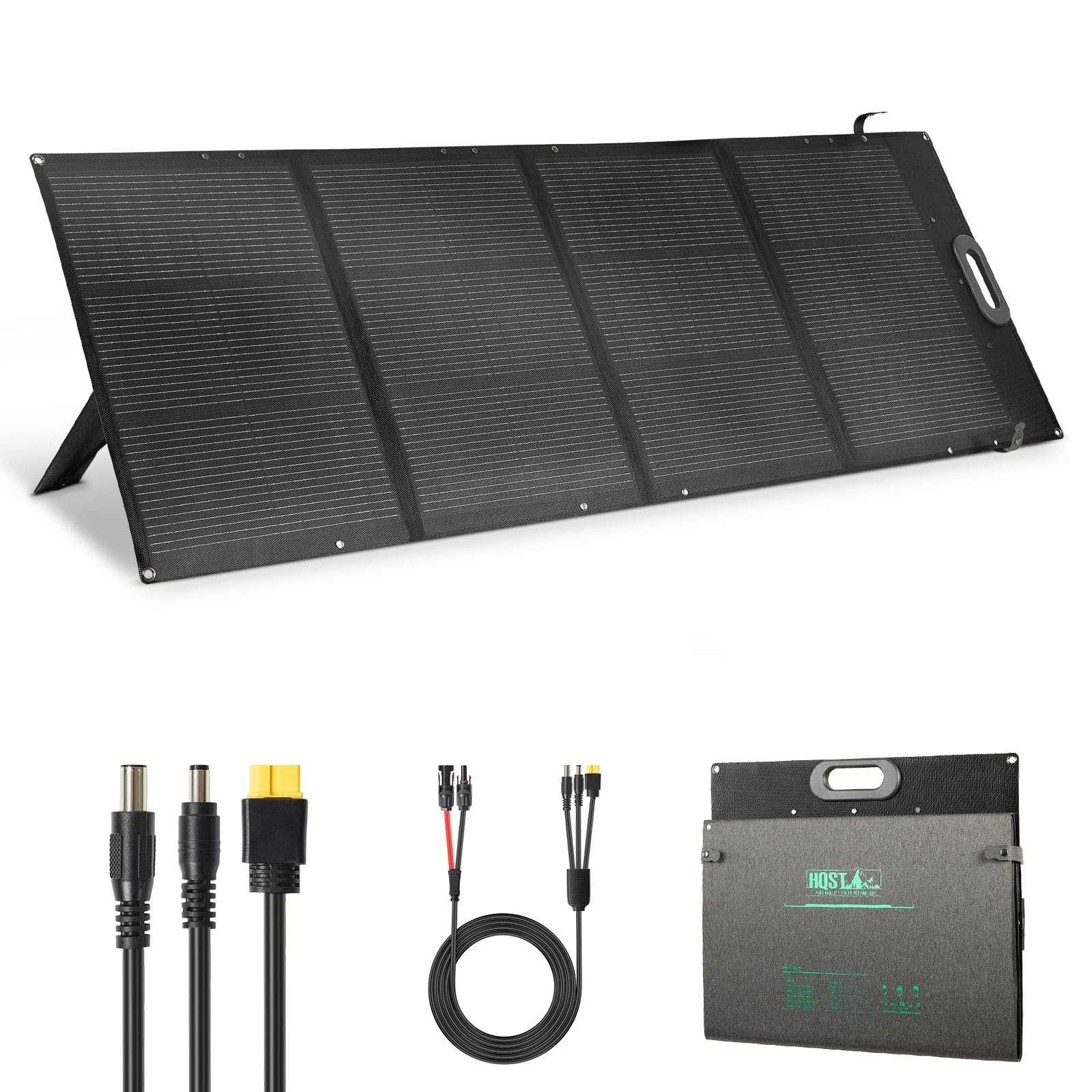
HQST 200W Ultra-Light

RV & campers

Our Score 9.2/10
Check Price

Worth Noting

  • Aluminum frame may arrive with dents from shipping
  • Only USB-A ports; no high-wattage USB-C for direct device charging.
Waterproof
IP67
Real Output
Up to 160W+
Weight & Size
11 lbs, 23x26x3 in

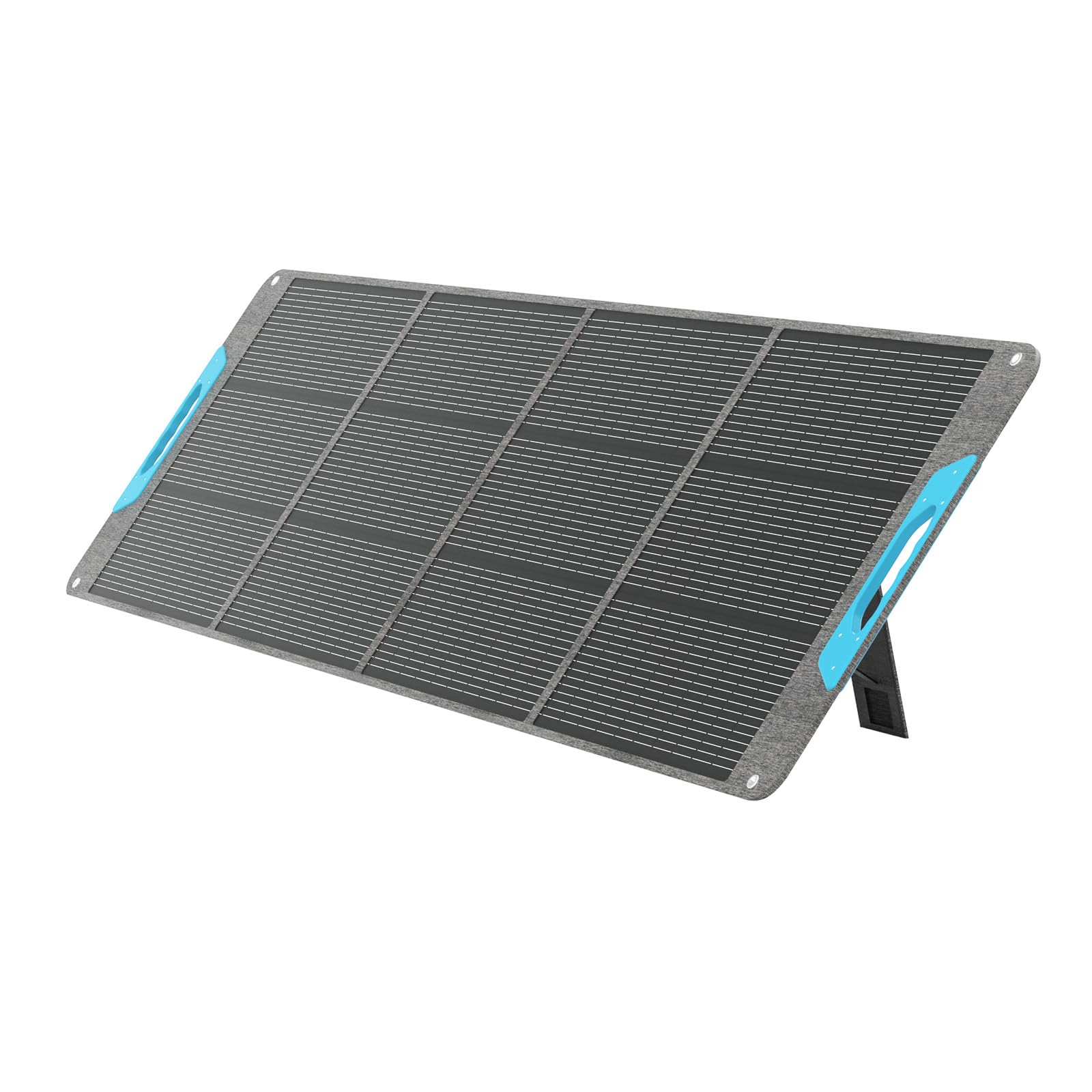
Weighing only 11 lbs, the HQST 200W panel is noticeably easier to carry than other 200W options. Its N-type cells achieve 25% efficiency, and the IP67 waterproof rating means rain won't stop a charging session. The rigid aluminum frame adds stability when propped up with the built-in kickstands.

Real-world output consistently reaches above 160W, often hitting 170W or more under clear sun – numbers that match or beat panels costing twice as much. The included 3-in-1 adapter cable (XT60, DC7909, DC5521) covers most portable power stations. Another 200W panel on the market adds a 4-in-1 cable but weighs 5.5 lbs more and sees more reports of output dropping below 150W.

This panel suits campers and RV owners who want a lightweight 200W panel without paying a premium. It's not for backpackers needing under 10 lbs, nor for those who rely on high-wattage USB-C ports – only USB-A is built in. A shipping risk to note: the aluminum frame may arrive with minor dents; inspect the package upon delivery.

Build quality holds up well in the field. The fabric covering feels tough, and the kickstands angle the panel for optimal sun capture. The 11 lb weight makes it manageable for one person to set up at a campsite or on an RV roof.

Tip: Inspect the aluminum frame upon delivery – shipping damage can occur, but it is cosmetic and does not affect performance.

Bottom line: For campers and RV owners needing a lightweight, high-output 200W panel without paying a premium, this is the pick.
2

GRECELL 200W Panel

GRECELL 200W Panel

RV owners

Our Score 9.0/10
Check Price

Worth Noting

Waterproof
IP65
Real Output
100-150W typical
Weight & Size
16.5 lbs, 25.8x21.1x3 in

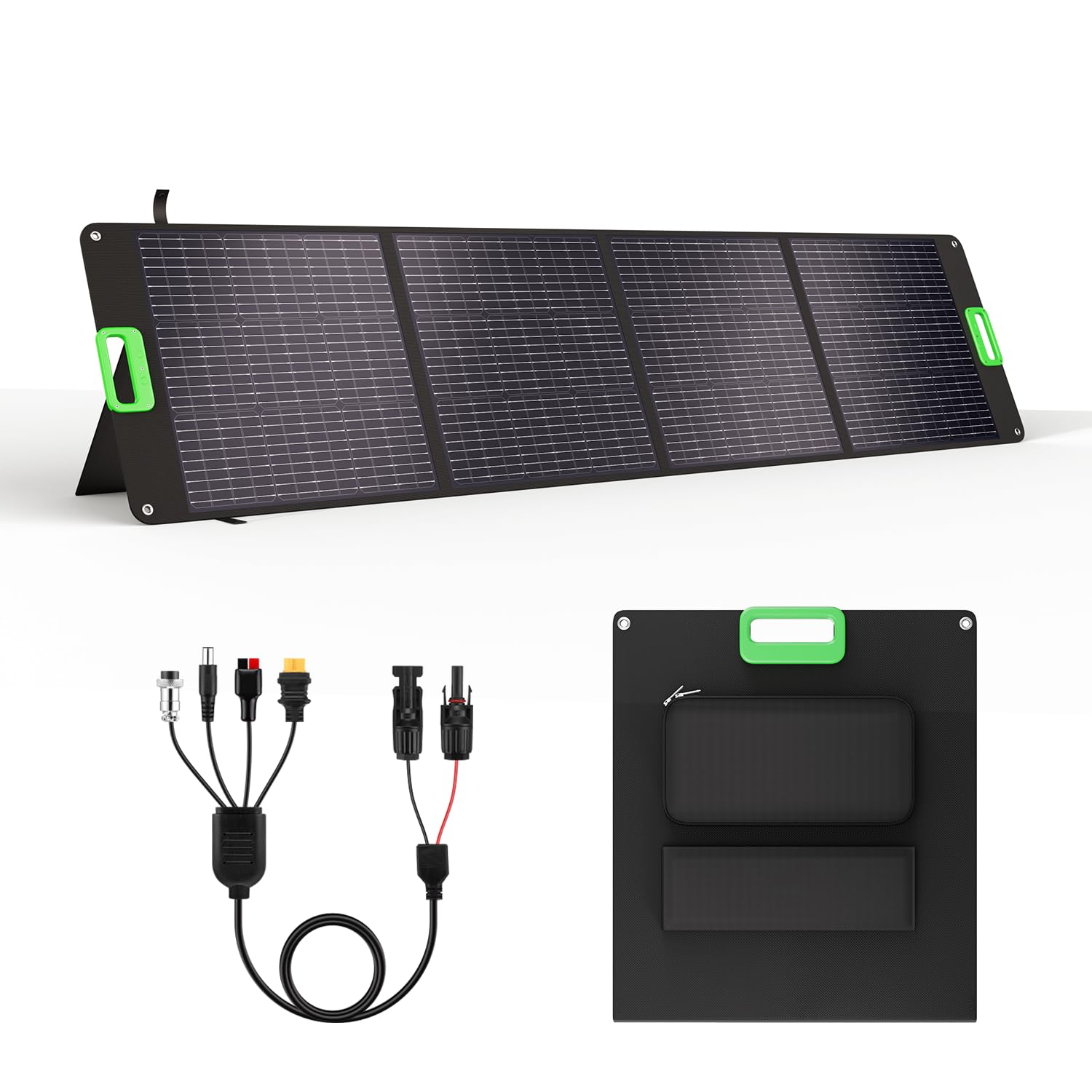
The GRECELL 200W portable solar panel includes a 4-in-1 adapter cable covering XT60, Anderson, DC7909, and aviation connectors — a rare breadth of compatibility for under $160.

Four kickstands allow stable positioning on uneven ground, and the IP65 waterproof rating handles light rain. The panel folds to about the size of a large suitcase, making it manageable for RV storage.

This panel suits RV owners with multiple power station brands who want one cable set to cover them all. At 16.5 lbs, it is heavier than the top pick, and real-world output can fall to 100-150W under less than ideal sun — tradeoffs worth considering if weight or maximum speed are priorities.

Bottom line: A cost-effective option for RV owners who need to connect a variety of power stations without carrying multiple adapter cables.

3

EcoFlow 220W Bifacial

EcoFlow 220W Bifacial

EcoFlow owners

Our Score 9.2/10
Check Price

Worth Noting

  • At 15.4 lbs, the weight is higher than many 200W competitors, noticeable when carrying over distance
  • Kickstand angle adjustment is not intuitive and can be frustrating to lock in place
  • Glass surface is fragile
Waterproof
IP68
Real Output
Up to 232W
Weight & Size
15.4 lbs, 24.2x23.2x1.3 in

The EcoFlow 220W achieves its peak output by collecting light from both sides, a design that can deliver more power per panel than conventional models in open setups. Real-world users see numbers above the rated 220W in good sun, making it one of the more efficient portable panels available.

At 15.4 lbs with a glass front, this panel is not the lightest or most rugged option — the top pick HQST 200W weighs 11 lbs and uses an aluminum frame that handles bumps better. The kickstand legs require a specific angle adjustment that some find finicky, especially on uneven ground. These tradeoffs matter most to those who move their panel often or set up in variable terrain.

Where the EcoFlow shines is pairing with an EcoFlow power station for smart charging optimization. The bifacial gain adds 10-25W in diffuse light situations, and the IP68 rating means rain won't stop charging. For buyers who prioritize maximum wattage per panel over portability or price, this is a strong match.

Tip: Practice unfolding and adjusting the kickstand on flat ground before taking it to an uneven campsite.

Bottom line: This panel suits EcoFlow power station owners who want maximum output per square foot and are comfortable with the extra weight and care needed to protect the glass.

4

Renogy 400W Blanket

Renogy 400W Blanket

Overlanders, vanlivers

Our Score 8.8/10
Check Price

Worth Noting

  • Flexible construction may cause cell separation or broken loops with frequent handling.
  • Not suited for rough outdoor use where the panel could be dragged or sharply flexed.
Waterproof
IP65
Real Output
Up to 300W
Weight & Size
16.1 lbs, 16.5x15.8x4.1 in

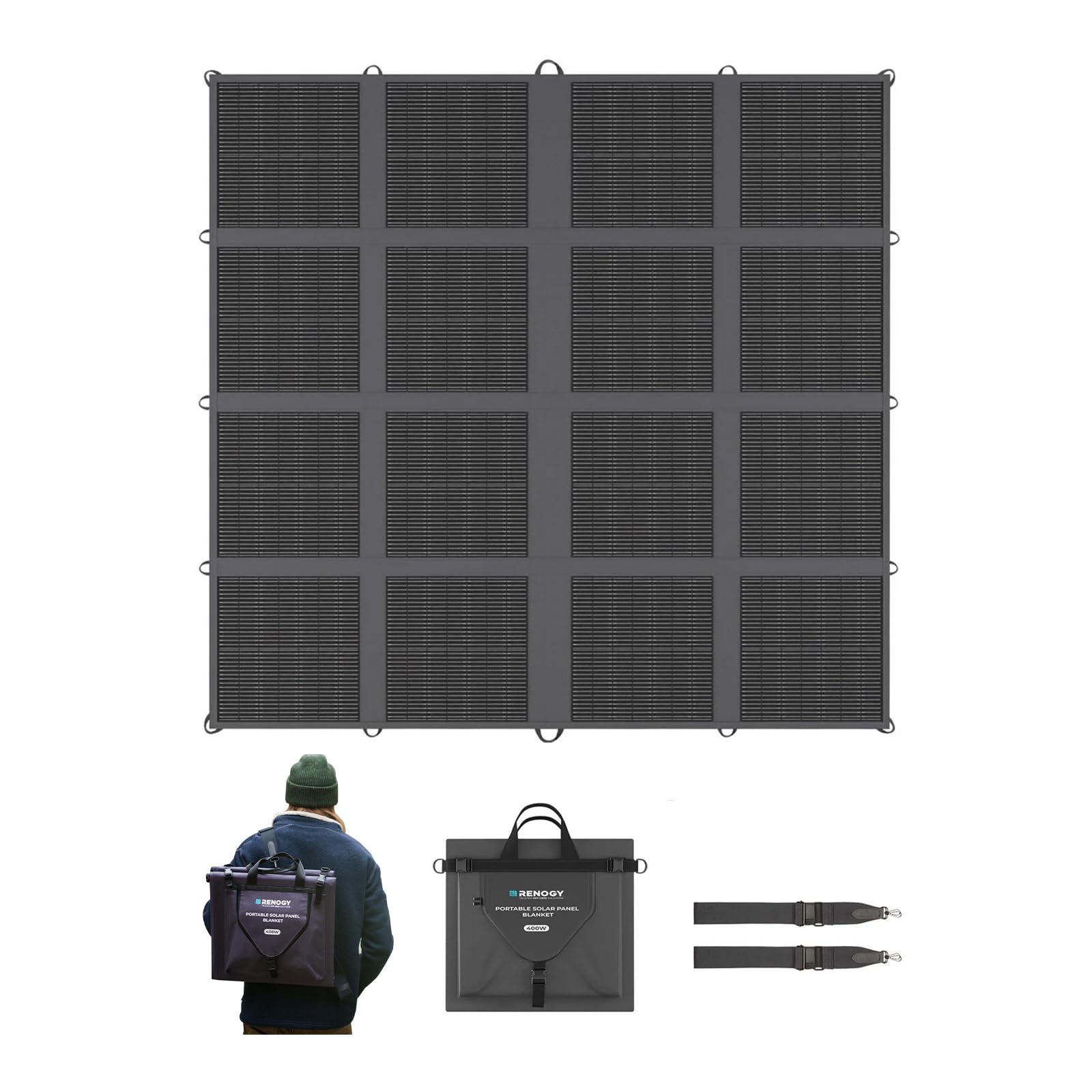
The Renogy 400W Blanket crams 400 watts into a 16-pound, 16-fold package that packs smaller than a briefcase – the most space-efficient high-wattage panel available. This folding blanket design makes it the lightest 400W option for its power class, a clear win for weight-constrained setups.

In direct sun, the blanket can deliver over 300W real-world output, enough to recharge large power stations during a midday stop. The 25% N-type cells help efficiency, but the flexible construction means output drops if the panel isn't laid perfectly flat on a clean surface.

This blanket is built for overlanders and vanlivers who swap campsites daily and need maximum power in minimal storage space. The tradeoff is that the cells may separate and mounting loops can break after repeated handling. For stationary off-grid use or rougher terrain, the heavier Renogy 200W folding panel or the HQST 200W offer better durability.

Tip: Store in a padded bag and avoid sharp folds to extend cell life.

Bottom line: Choose this if your storage space is tighter than your budget for ruggedness and you handle gear with care. The power-per-cubic-inch ratio is unmatched.

5

FlexSolar 100W Panel

FlexSolar 100W Panel

Backpackers, hikers

Our Score 8.8/10
Check Price

Worth Noting

  • Build uses lighter materials that may feel less durable than heavier panels.
  • Quality control can be inconsistent; some units have been noted to stop working after short use.
Waterproof
IP67
Real Output
~70W steady
Weight & Size
4.1 lbs, 13x10.4x2.2 in

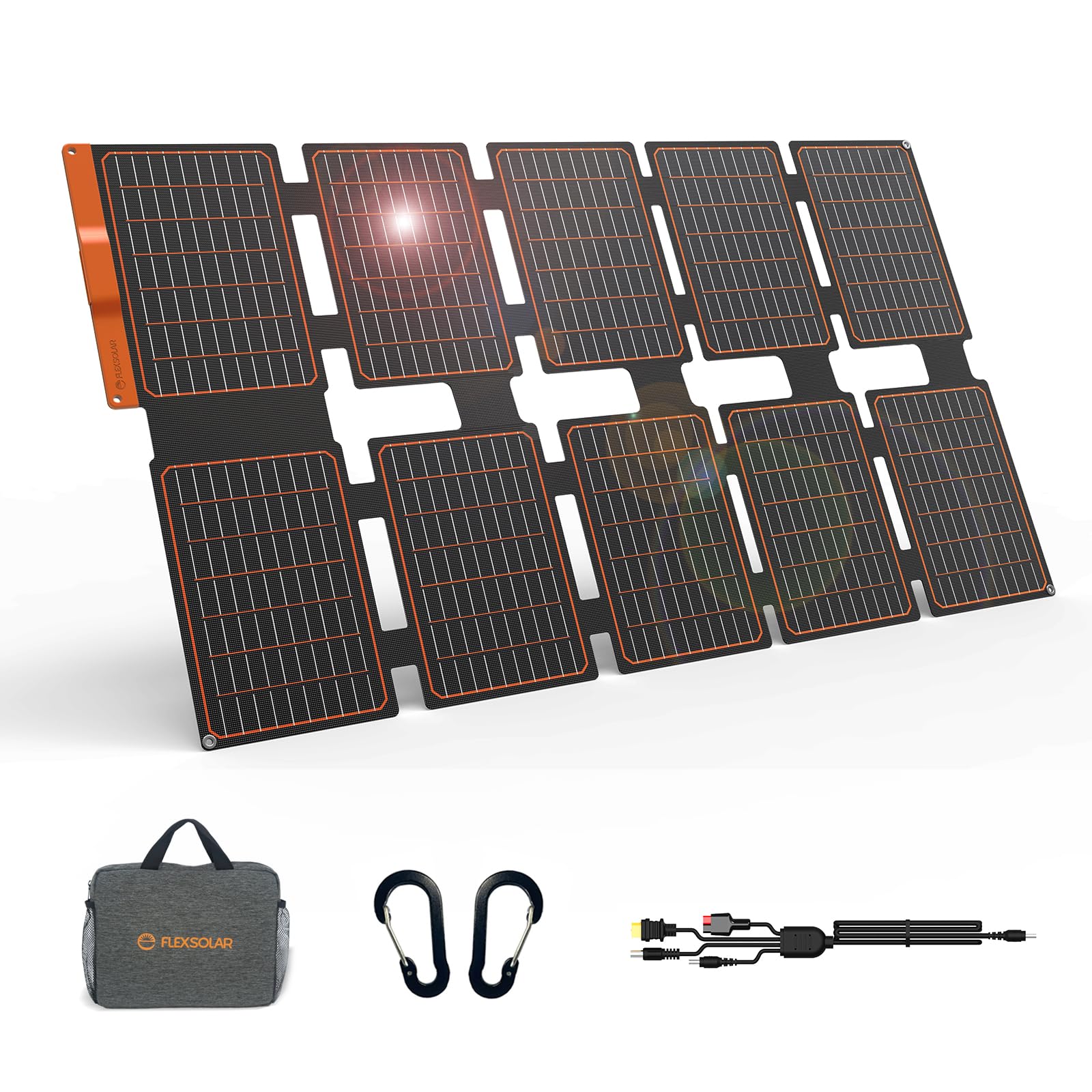
FlexSolar packs 100W into a package that folds smaller than a notebook and weighs just over 4 lbs — making it one of the lightest panels at this wattage. In good sunlight, users report steady output around 70W, enough to charge phones, power banks, or a small power station during a multi-day trip. The built-in 45W USB-C PD and QC3.0 USB-A ports simplify direct device charging without needing an extra adapter.

This panel suits backpackers and hikers who need to save every ounce and only charge small devices occasionally. The tradeoff: quality control varies between units, so some can stop working after limited use. The build uses lighter materials that feel less rugged than heavier folding panels. If daily heavy charging or long-term durability is your priority, the top pick in this roundup is a better fit.

Tip: The lightweight build means extra care when folding and unfolding to avoid stress on connectors.

Bottom line: For backpackers who prioritize weight savings and occasional device charging, this FlexSolar panel delivers on portability and value — just be prepared for possible early failure in a small number of units.

6

Renogy 200W Portable Panel

Renogy 200W Portable Panel

RV owners

Our Score 9.0/10
Check Price

Worth Noting

  • Kickstand alignment may require a second person to set up efficiently
  • Real-world power output may be 130-160W rather than 200W, extending charging times
Waterproof
IP65
Real Output
130-160W peak
Weight & Size
13.9 lbs, 23.7x23x2 in

Renogy's 200W panel delivers a solid build with reinforced panels and robust kickstands that inspire confidence during setup. However, the real-world power output typically lands between 130-160W, significantly below the advertised 200W, and the panel weighs 13.9 lbs — about three pounds more than the lighter HQST alternative. For campers who prioritize brand reputation and don't mind the trade-offs in weight and output, this panel is a dependable companion. But buyers seeking the best value per watt will get more from the lighter, cheaper HQST panel.

Bottom line: This panel fits RV owners who trust Renogy's reputation and don't need peak wattage; for lighter and more cost-effective options, consider the HQST.

7

SOKIOVOLA 200W Panel

SOKIOVOLA 200W Panel

Budget buyers

Our Score 9.0/10
Check Price

Worth Noting

  • Short built-in cables may require an extension when the power station cannot sit nearby.
  • Thin panel material feels less robust than rigid-framed alternatives
Waterproof
IP68
Real Output
125-160W
Weight & Size
16.3 lbs, 21x23 in

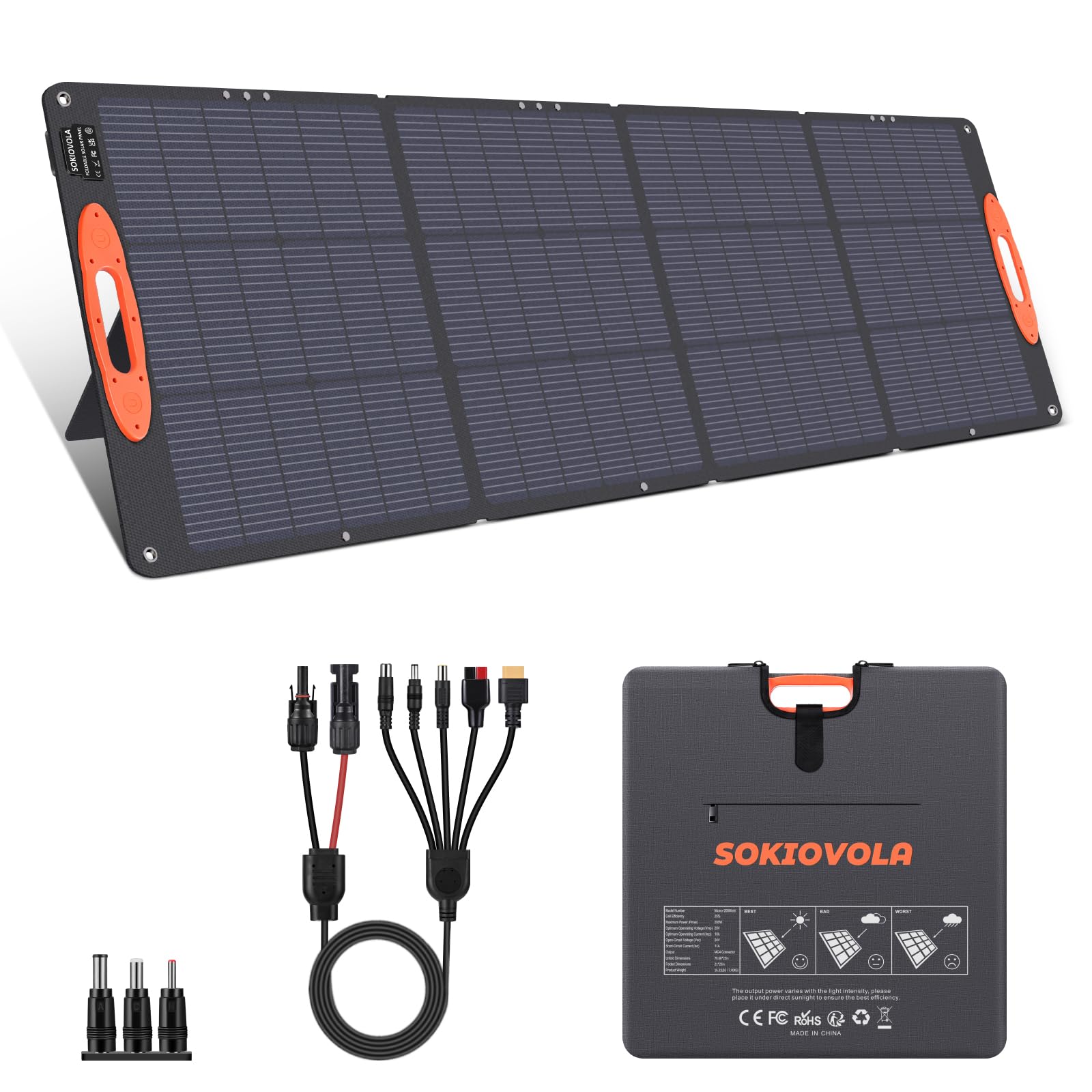
The SOKIOVOLA 200W stands out for its 5-in-1 adapter cable, enabling direct connection to most power stations without extra dongles. However, the thin fabric build and short built-in cables mean it works best when the power station can sit close to the panel. Real-world output can land around 125–160W rather than the rated 200W — suitable for topping off batteries in good sun, but less capable for sustained charging in marginal conditions. Compared to other budget-friendly panels, the tradeoff for that adapter variety is a less durable feel and less placement freedom.

Bottom line: Best for budget-conscious campers who own multiple power station brands and can position their gear close to the panel.

8

FlexSolar 40W Charger

FlexSolar 40W Charger

Backpackers

Our Score 8.8/10
Check Price

Worth Noting

  • Maximum real-world wattage is around 30W, below the advertised 40W.
  • Some USB devices may not charge or may stop charging after a few seconds.
Waterproof
IP67
Real Output
~30W max
Weight & Size
1.76 lbs, 11.1x8x1.8 in

The FlexSolar 40W is an ultra-lightweight, compact panel suited for backpackers who need to top off phones and power banks during hikes. Real-world output may reach around 30W rather than the advertised 40W, and some USB devices may not charge or may drop connection after a few seconds. This makes it a poor fit for charging larger gear like laptops or power stations. For hikers seeking an emergency USB top-off who can accept occasional charging uncertainty, it is a worthwhile packable option.

Bottom line: If you need a featherlight backup for phone charging and don't mind the risk of inconsistent output, the FlexSolar 40W fits in a pack without weighing you down.

9

BigBlue 28W Charger

BigBlue 28W Charger

Hikers, emergency

Our Score 8.8/10
Check Price

Worth Noting

  • Charging is hit-or-miss
  • Some units can stop functioning after a few weeks of use, raising long-term concerns
Waterproof
IP44
Real Output
28W, variable
Weight & Size
1.5 lbs, 11x6x1.4 in

The BigBlue 28W is one of the most popular portable solar chargers, folding to about the size of a magazine for easy backpacking. Charging performance varies by device – some phones and tablets may not charge at all, and a small number of units have stopped working after a few weeks. It works best as a lightweight backup for hikers or in emergency kits where any solar power helps, but it is not suited for guaranteed power needs or charging larger power stations.

Bottom line: A viable emergency backup for hikers who can verify device compatibility in advance, but not a reliable choice for consistent charging or powering larger battery banks.

How to Choose

Real-World Wattage Output

Rated wattage is measured in perfect lab conditions with direct sunlight at a 90-degree angle. In real life, clouds, heat, and suboptimal angles cut output by 15 to 30 percent. A 200W panel that delivers 140W consistently is actually performing well.

The panel's construction affects this more than the cell type. Rigid panels with aluminum frames hold their angle and stay cooler, while fabric-based panels sag and trap heat, reducing output further. Look for user reports of typical wattage rather than peak claims.

Weight and Folded Size

Every pound saved in a portable panel usually comes from thinner materials, smaller cells, or fewer layers of protective coating. Sub-12-pound 200W panels often use fabric backings that degrade faster when frequently folded and unfolded.

If you move your panel between sites daily, a heavier rigid panel may last several seasons longer than an ultralight fabric model. For occasional weekend use, the weight saving is worth the durability trade-off.

Waterproof Rating

IP67 means the panel can be submerged in one meter of water for 30 minutes, while IP65 only guarantees protection against low-pressure water jets. Neither rating means the connectors or USB ports are sealed the same way.

Rain exposure is fine for IP65 panels, but leaving an IP65 panel face-down in a puddle can damage the cells over time. IP68 panels handle accidental submersion better, but all panels benefit from being stored dry.

Included Adapter Cables and Connectors

Most portable panels come with adapter sets for common power station inputs, but the number and type vary widely. A 4-in-1 cable covers XT60, Anderson, DC7909, and Aviation connectors, while a 3-in-1 may omit one you need.

Check your power station's input port before buying. Some panels require an extra adapter for Bluetti or Jackery models that use proprietary connectors. The included cables are often short – a 3-foot cable limits placement, so factor in an extension if your station won't sit next to the panel.

Built-in USB Ports

USB ports on a solar panel can be convenient for charging phones directly, but they often deliver less power than a dedicated power bank plugged into the panel's DC output. USB-C PD ports (up to 45W) are faster but still dependent on stable sun.

For most users, using the panel's main output to charge a power station and then the station's USB ports is more reliable. Built-in USB is best for topping off small devices while the panel is in use, not for primary device charging.

Frequently Asked Questions