Power & Charging

12 Best Portable EV Charger of 2026: Match Speed to Your Car and Outlet

Confused by charging speeds, cable lengths, and connector types? This guide helps EV and PHEV owners pick the right portable charger for their outlet and driving needs.

Picking a portable EV charger feels easy until you realize the spec sheet doesn't tell you how it handles cold weather, whether the cable reaches your car from the garage outlet, or if the app actually works. Speed ratings (16A, 32A, 40A) only matter if your breaker and plug support them. Connector type alone can lock you out if you own a Tesla and buy a J1772 unit without an adapter.

The real divide isn't between budget and premium — it's between charging speed that fits your daily commute and cable length that reaches your parking spot. A 16A charger works fine for plug-in hybrids or overnight top-ups, but full EV owners need at least 32A to avoid hours-long waits. This guide emphasizes proven reliability, which only products with thousands of reviews can confirm over time.

The trade-off most buyers face is between physical-button simplicity and WiFi app convenience, or between a shorter premium cable and a longer budget one. There's a portable charger matched to your specific outlet and car — here's how to find it.

1

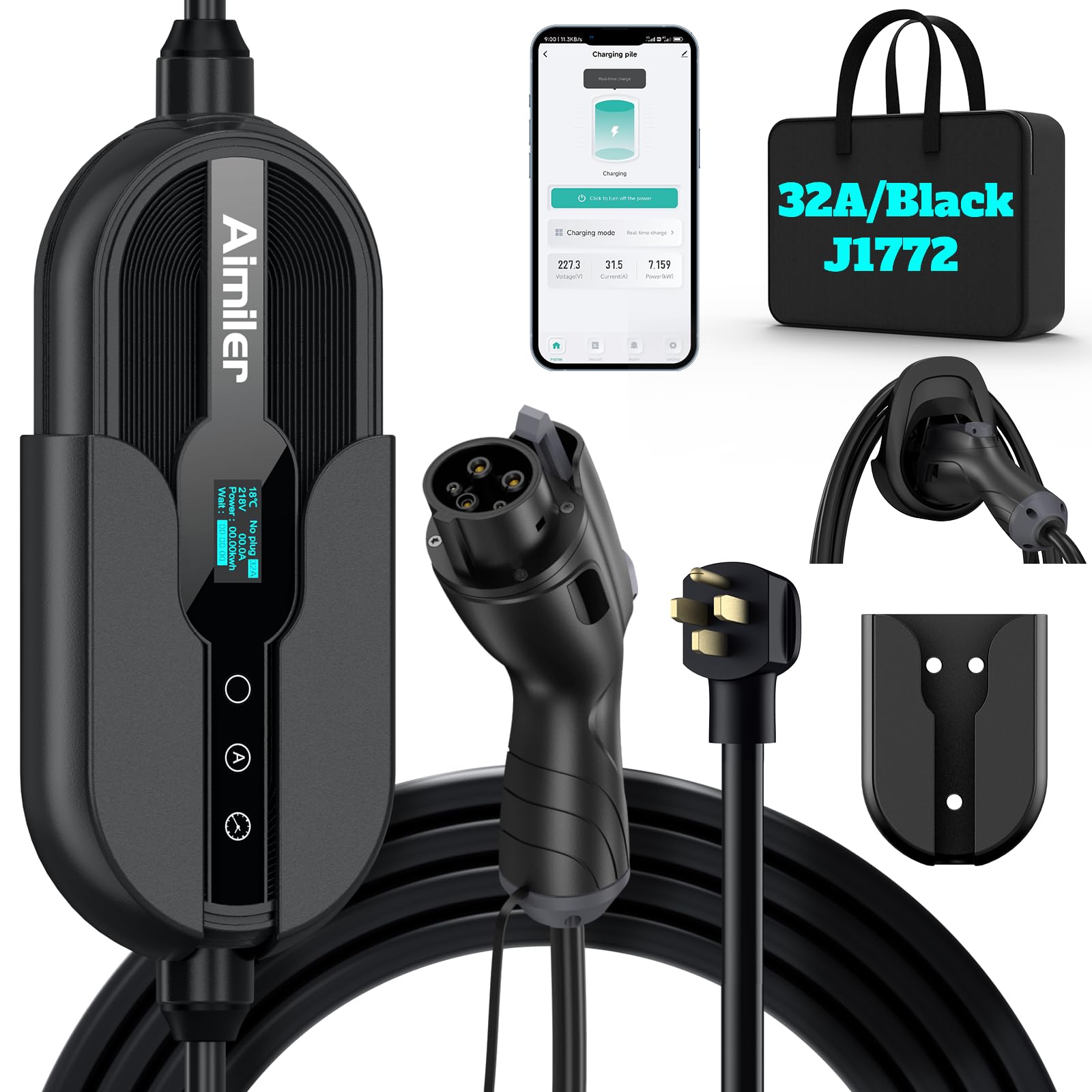
AIMILER 32A WiFi Charger

Top Pick
AIMILER 32A WiFi Charger

J1772 EV owners

Our Score 9.2/10
Check Price

Worth Noting

  • App scheduling only sets a charging start time
Connector
J1772
Portability
Cable Length
25ft
Charging Speed
32A

With more user feedback than any other portable Level 2 charger on the market, the AIMILER has a history of consistent charging through rain, snow, and heat. The heavy-duty cable stays flexible in cold weather, and the unit delivers its full 32A rated output without hiccups — exactly what a road-tripper or daily commuter wants.

The WiFi app provides remote start/stop and real-time charge monitoring, a useful addition for tracking sessions. Where this charger stumbles is scheduling: you can set a start time but not an end time. If your utility plan rewards precise off-peak windows, you may need a workaround like a timer outlet.

This is the right choice for Chevy Bolt, Nissan Leaf, Hyundai Ioniq, or any J1772 EV owner who wants one charger that lives on the garage wall and travels in the trunk. Tesla owners will need a J1772 adapter; the scheduling limitation matters most to time-of-use rate optimizers, but for everyone else the charger’s build and performance justify the mid-range price.

Tip: If you rely on off-peak rates, pair with a timer outlet or use the app to start charging at your window's start; the lack of an end-time setting isn't an issue for most users.

Bottom line: A straightforward pick for J1772 EV owners who value consistent performance and WiFi features over niche scheduling controls.
2

bokman 16A Tesla Charger

bokman 16A Tesla Charger

Budget Tesla owners

Our Score 9.2/10
Check Price

Worth Noting

  • For daily full EV charging beyond a short commute, the 16A output delivers slower speeds than 32A chargers
Connector
NACS
Portability
Cable Length
20ft
Charging Speed
16A

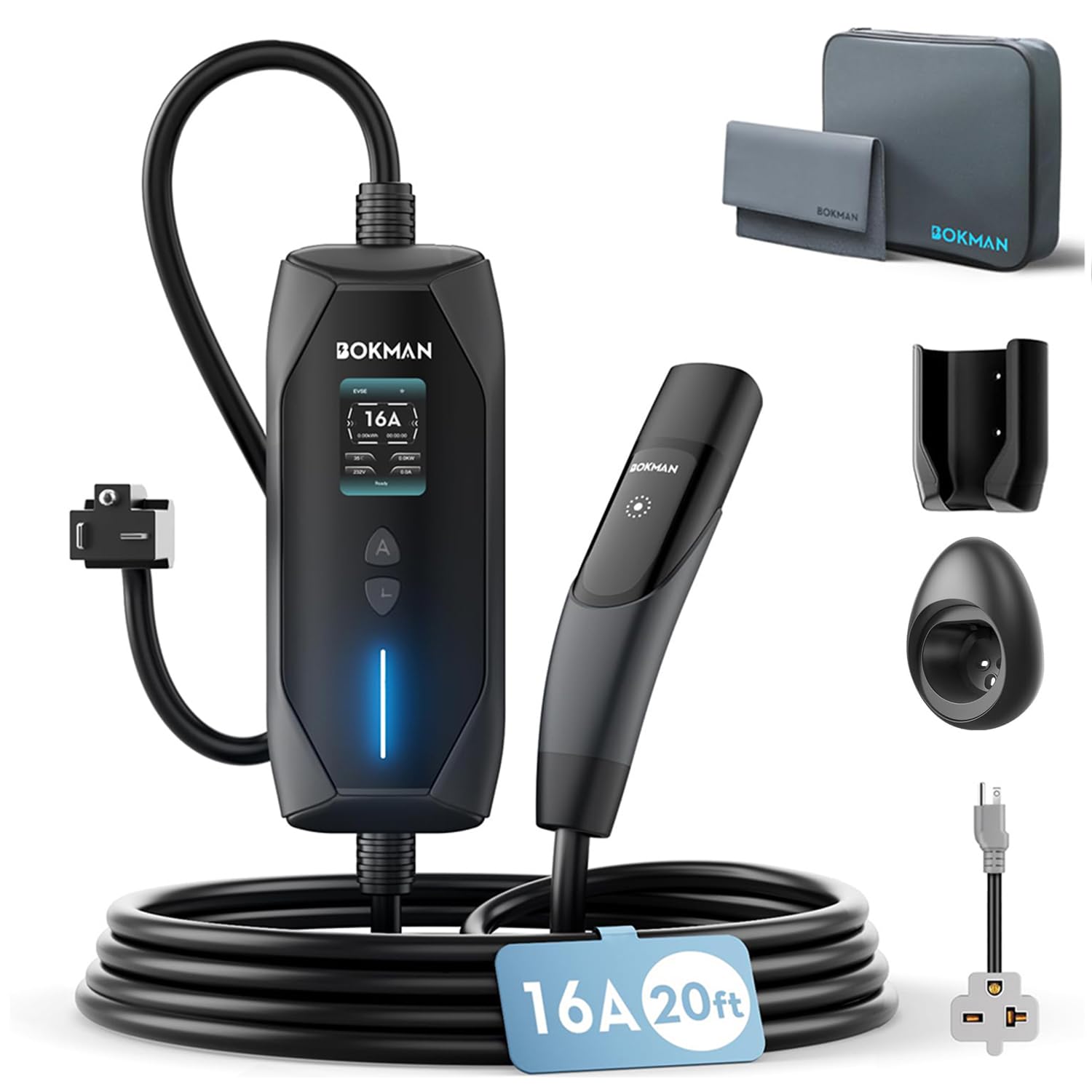
The bokman charger plugs directly into any Tesla model with its native NACS connector, and the physical buttons for delay timer and current adjustment work without an app. Build quality feels solid, with multiple positive mentions comparing it favorably to Tesla's own mobile unit. The tradeoff for this low price and simple operation is the 16A output: Level 2 charging at 3.68 kW is slower than 32A alternatives, but fine for overnight top-ups or short commutes.

This charger suits Tesla owners on a budget who have a 240V outlet available — think apartment dwellers or travelers who need a backup unit for overnight charging. It comes with NEMA 6-20 and 5-15 adapters, covering basic Level 1 and Level 2 needs. If your daily commute exceeds 40 miles or you need to replenish a large battery in a few hours, the 16A limit will feel slow.

Tip: Use it for overnight top-ups from a 240V outlet — 16A adds about 12-15 miles per hour, enough to replenish a daily commute by morning.

Bottom line: If you need a simple, portable backup charger for overnight use and already have a 240V outlet, this bokman delivers reliable NACS charging at a budget price.

3

EVDANCE 40A

EVDANCE 40A

J1772 EV owners

Our Score 9.2/10
Check Price

Worth Noting

  • All charging adjustments and scheduling are done on the unit's TFT display
Connector
J1772
Portability
Cable Length
25ft
Charging Speed
40A

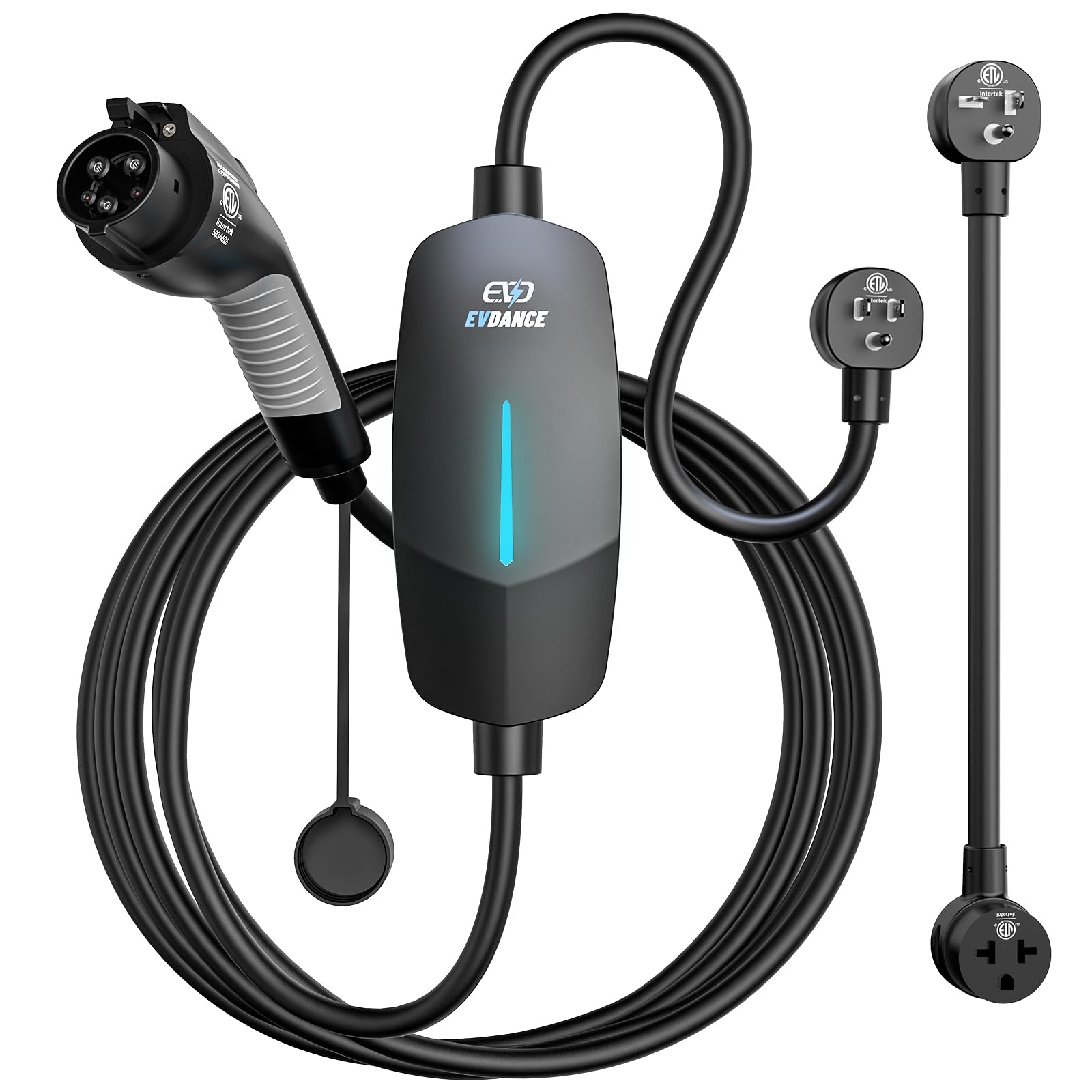
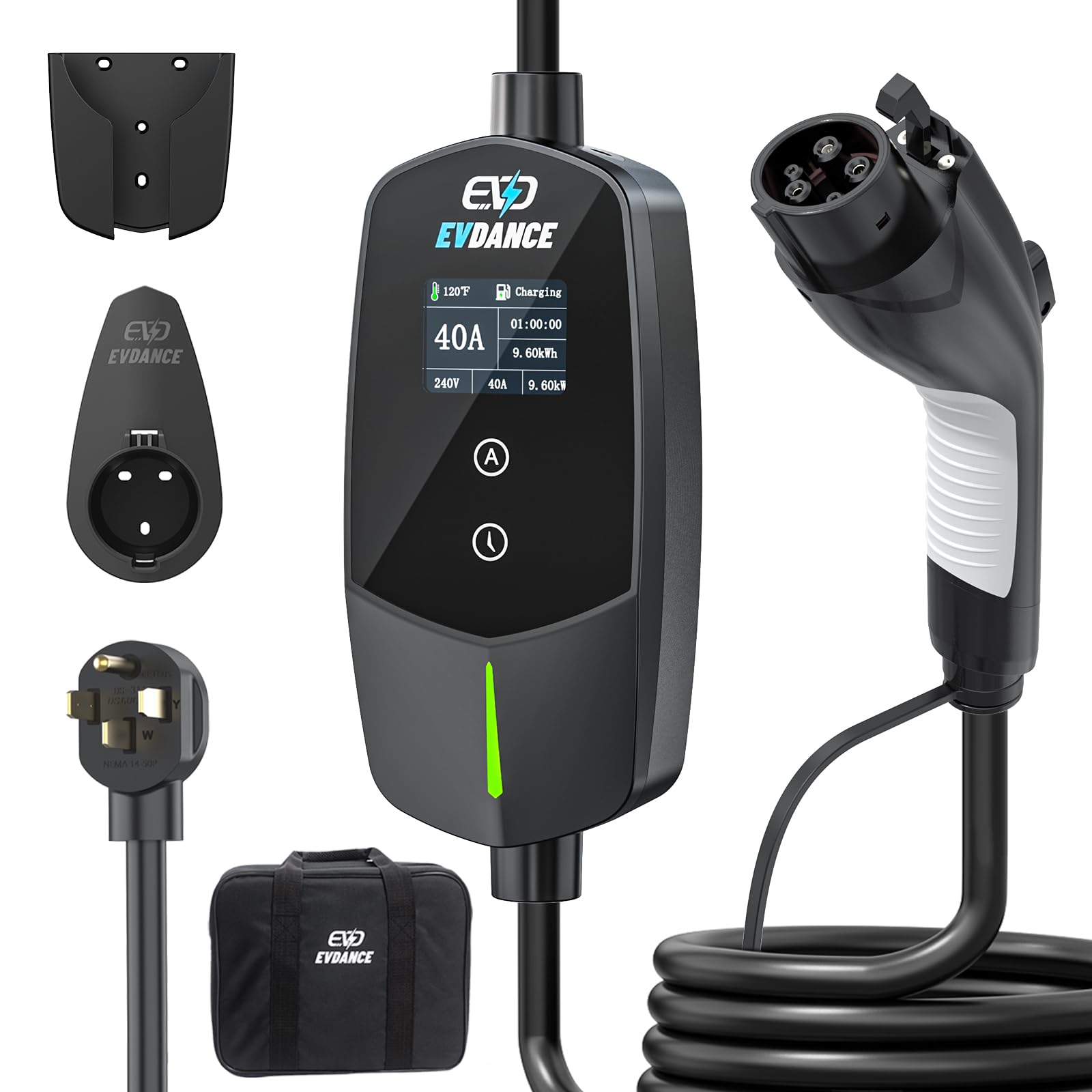
The EVDANCE 40A provides the full 40A (9.6kW) charging speed at a mid-range price, paired with a 25ft cable and adjustable current from 10 to 40A. Unlike the Energy Star certified competitor with a shorter cable, this unit offers more reach for larger garage setups. It suits J1772 EV owners who want fast home charging without smart features and are comfortable setting controls on the unit's TFT display. Tesla owners will need a J1772 adapter.

Tip: Use the adjustable current setting to match your circuit's breaker rating — the TFT display shows real-time charging data.

Bottom line: For J1772 owners who prioritize fast charging speed and cable length over app connectivity, the EVDANCE 40A is a cost-effective home charging solution.

4

bokman 32A J1772

bokman 32A J1772

J1772 EV owners

Our Score 9.6/10
Check Price

Worth Noting

  • All settings are made on the unit
Connector
J1772
Portability
Cable Length
25ft
Charging Speed
32A

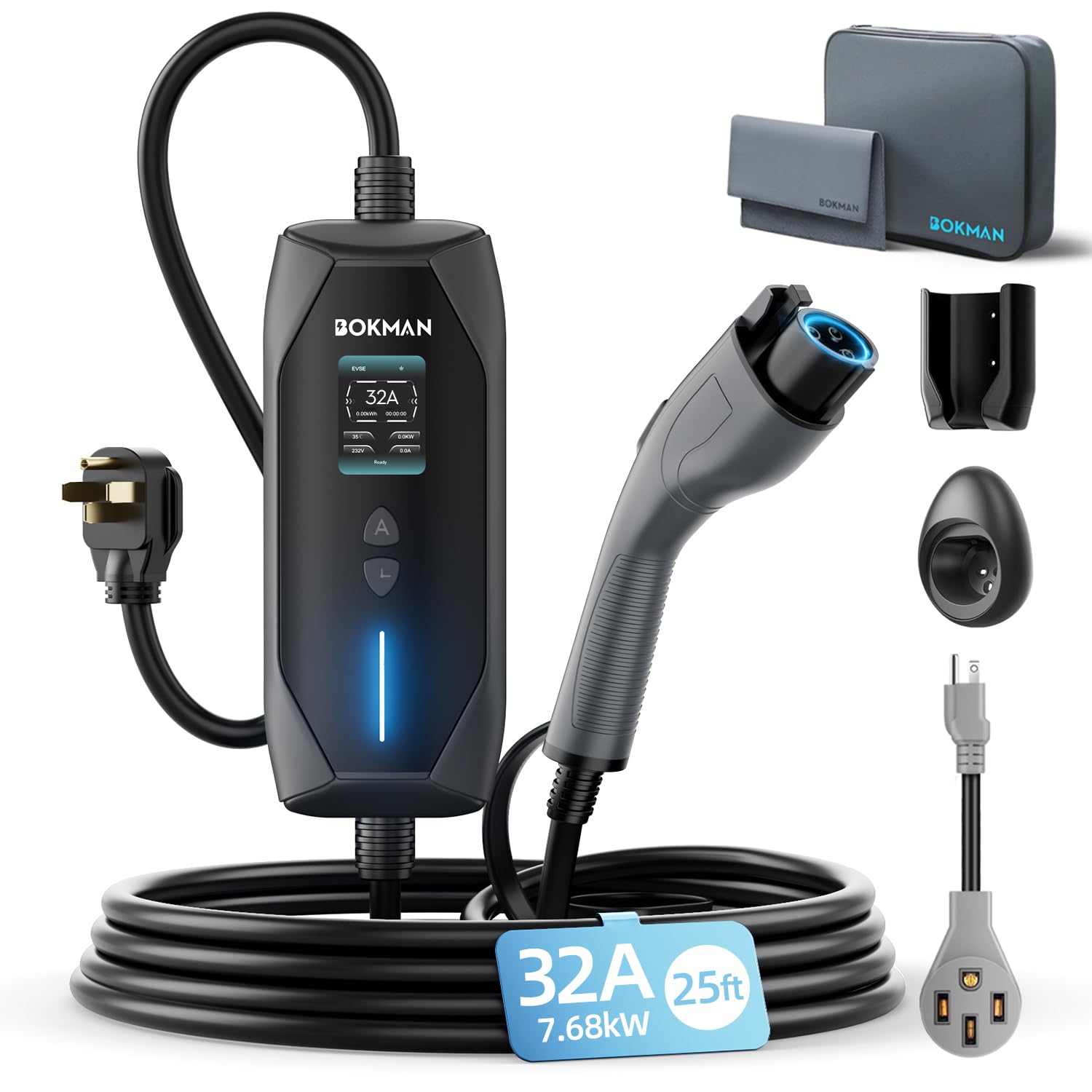
The bokman 32A J1772 charger delivers fast Level 2 charging with a 25ft cable and adjustable current from 6 to 32 amps, all controlled via physical buttons on the unit. There is no WiFi or smart scheduling — every setting is made directly on the housing. This approach suits anyone who values rugged simplicity over app connectivity: road trippers carrying a portable unit, or J1772 EV owners who plug in and walk away. The included NEMA 14-50 and 5-15 adapters make it ready for both home and travel use, and the IP65 weather rating handles outdoor placement.

Tip: Set the delay timer manually on the unit for off-peak charging — no app needed.

Bottom line: A straightforward, well-built charger for J1772 owners who don't need phone integration. Its physical controls and adjustable current make it a solid travel companion.

5

NexCyber 40A WiFi

NexCyber 40A WiFi

Tech-savvy J1772

Our Score 9.8/10
Check Price

Worth Noting

  • Included carry case adds bulk for those who prefer a more compact transport setup
Connector
J1772
Portability
Carry case
Cable Length
25ft
Charging Speed
40A

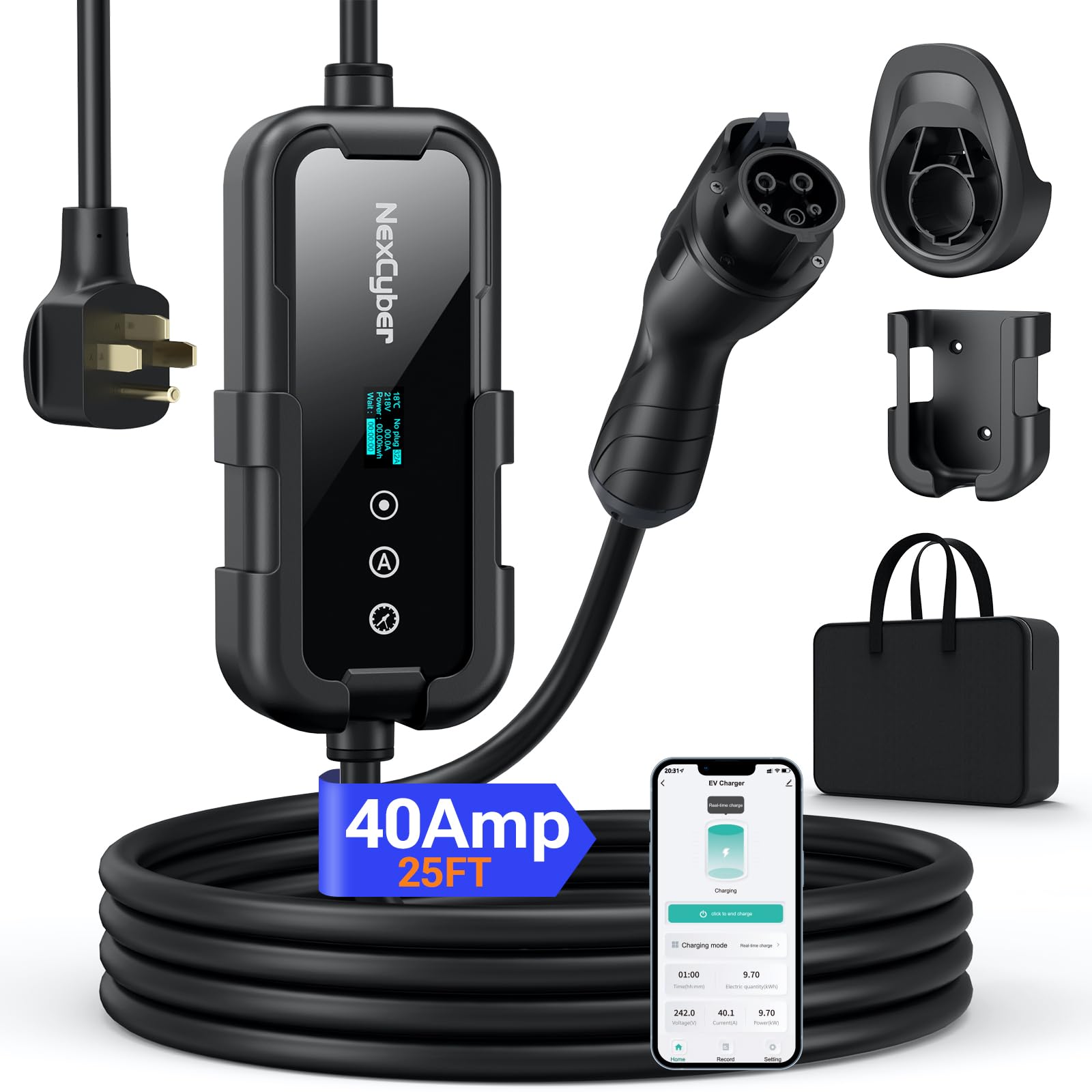
The NexCyber 40A WiFi stands out with its industrial build feel and a WiFi app that allows monitoring and scheduling from your phone. The 25-foot cable gives plenty of reach in most garages, and the 40A output (up to 9.6kW) means faster top-ups for J1772 EVs. This is a smart pick for tech-savvy owners who want app control and a long cable at a mid-range price.

It fits best for home use on a 50A circuit, and the included NEMA 14-50 plug is standard for Level 2 setups. The touch screen adds a modern touch, though those who prefer physical buttons may want to look elsewhere. Overall, it delivers on its feature set without major tradeoffs.

Bottom line: For buyers who want a well-built 40A charger with WiFi scheduling and a generous cable, this is a compelling choice.

6

Lectron Tesla 40A

Lectron Tesla 40A

Tesla owners

Our Score 8.6/10
Check Price

Worth Noting

  • Some units can stop charging after weeks or months of use
  • 16ft cable limits placement options for garages with outlets far from the vehicle
Connector
NACS
Portability
Carry case
Cable Length
16ft
Charging Speed
40A

For Tesla owners with a NEMA 14-50 outlet, the Lectron delivers native 40A charging — up to 36 miles per hour — in a case-ready portable package.

This charger suits Tesla drivers who prioritize speed and portability and have the outlet within 16ft. Reliability reports indicate some units can stop charging after a few months, and one isolated report of prong melting has been noted. Buyers who need a longer cable or greater long-term certainty should look elsewhere.

Bottom line: Best for Tesla owners who want the fastest portable charging speed and accept the reliability risk.

7

EVDANCE 16A Portable

EVDANCE 16A Portable

PHEV owners

Our Score 8.8/10
Check Price

Worth Noting

  • On Level 1, charging rate is slow, making it impractical for daily full EV use
Connector
J1772
Portability
Carry case
Cable Length
25ft
Charging Speed
16A

The EVDANCE 16A charger offers a budget-friendly way to keep a plug-in hybrid topped up or serve as an emergency kit. Its 16A output means full EV charging takes considerable time, especially on Level 1, and occasional grounding faults can interrupt a session. The included carrying case adds to its portability, but this unit suits occasional use rather than daily full-EV charging.

Bottom line: Best kept in the trunk for PHEV road trips or as a backup when the main charger fails — not a primary charger for a full EV.

8

Junsun 32A

Junsun 32A

Budget EV owners

Our Score 9.0/10
Check Price

Worth Noting

  • 20ft cable is shorter than many 25ft competitors, limiting placement options.
Connector
J1772
Portability
Cable Length
20ft
Charging Speed
32A

The Junsun 32A offers a competitive 32A charging speed and includes both NEMA 14-50 and 5-15 adapters, making it a versatile budget option. The 20ft cable is shorter than many 25ft alternatives, which may limit placement for some garage layouts. This charger is best for home use with a nearby outlet; it's a solid pick if cable reach isn't a constraint.

Bottom line: Best suited for home setups where the outlet is within 20ft; a cost-effective 32A option if cable length isn't a priority.

9

ELEGRP 40A

ELEGRP 40A

J1772 EV owners

Our Score 8.8/10
Check Price

Worth Noting

  • In garages with tight spaces, the stiff cable resists easy coiling, and the plug may not seat securely in all NEMA 14-50 outlets
Connector
J1772
Portability
Cable Length
25ft
Charging Speed
40A

The ELEGRP 40A charger delivers IP67-rated weather resistance and a generous 25ft cable at a mid-range price. However, some outlets may not fit the NEMA 14-50 plug securely, and the cable can feel stiffer than expected — making it less consistent than the EVDANCE 40A for daily use.

Bottom line: Best for outdoor or garage installations where IP67 sealing matters and plug fit can be confirmed beforehand — not ideal for portable use or frequent cable handling.

10

Lectron 40A J1772

Lectron 40A J1772

50A circuit owners

Our Score 9.2/10
Check Price

Worth Noting

  • 16ft cable requires the car to be parked very close to the outlet, limiting garage flexibility
Connector
J1772
Portability
Cable Length
16ft
Charging Speed
40A

This Lectron charger delivers 40A (9.6kW) with Energy Star certification, appealing to owners who want maximum portable speed from a 50A circuit. However, the premium price and 16ft cable limit its value compared to competitors with longer cables. Some units may show power stability at full amperage, so a robust circuit is advisable.

Bottom line: Best suited for buyers who have a NEMA 14-50 outlet directly next to their parking spot and prioritize fast Level 2 charging over cable length or overall value.

11

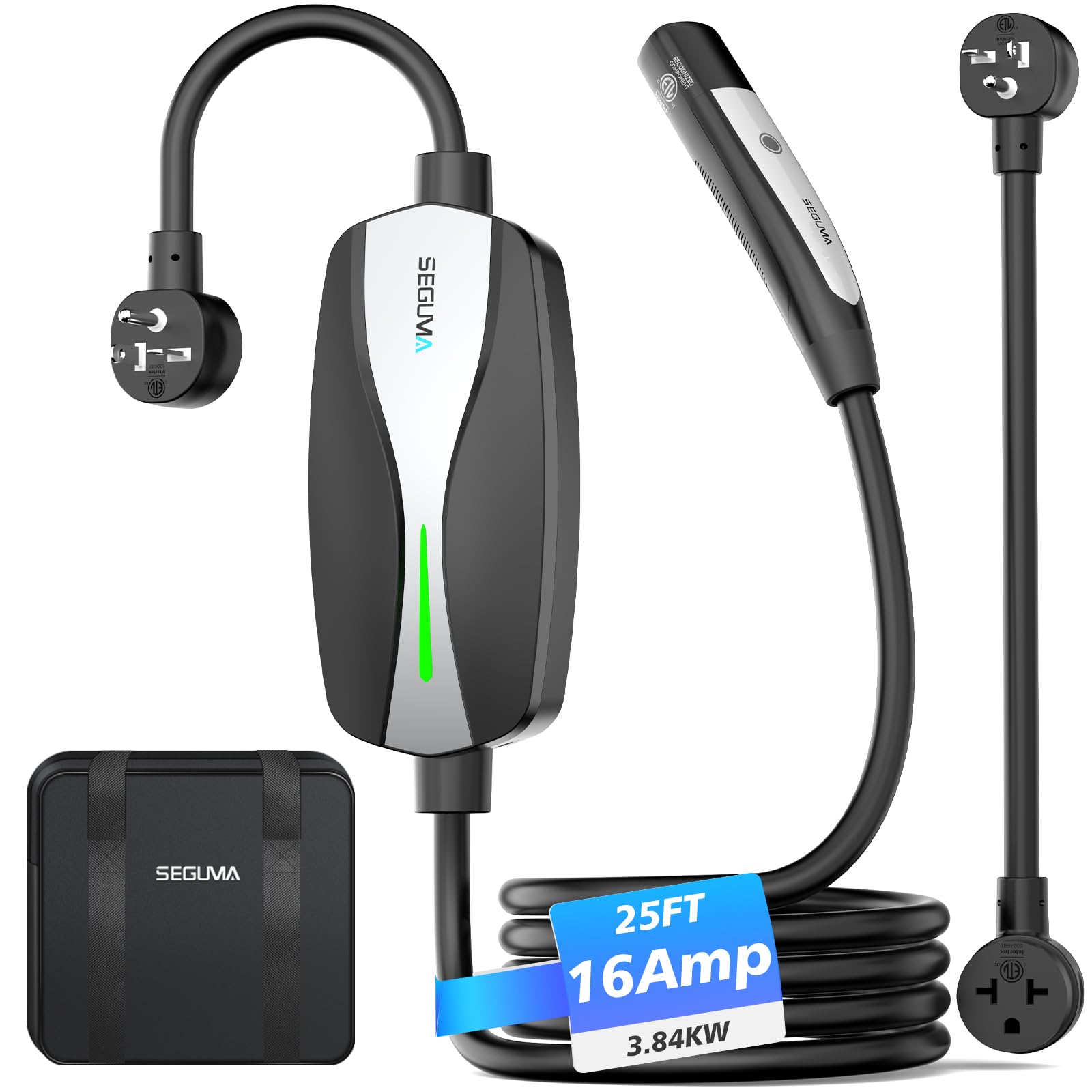
SEGUMA 16A Tesla

SEGUMA 16A Tesla

Tesla owners

Our Score 8.8/10
Check Price

Worth Noting

  • Charging speed adds only 3-5 miles per hour
Connector
NACS
Portability
Cable Length
25ft
Charging Speed
16A

The 25ft cable and wireless charge port button make this charger especially convenient for Tesla owners who need extra reach or easy access on trips. Build quality feels solid. However, its 16A output adds only 3-5 miles per hour, and some units can experience intermittent charging stops, so it fits best as a travel backup rather than a daily driver.

Bottom line: A reasonable choice as a backup or travel charger for overnight use, but not for daily fast charging needs.

12

Lectron Level 1 WiFi

Lectron Level 1 WiFi

Apartment dwellers

Our Score 9.0/10
Check Price

Worth Noting

  • Charging speed is very slow, around 4 miles per hour
Connector
J1772
Portability
Cable Length
16ft
Charging Speed
15A Level 1

The Lectron Level 1 WiFi offers app-based kWh tracking for 120V charging, a feature uncommon in this category. However, the charging speed is very slow at about 4 miles per hour, making it impractical for daily full EV use. Its premium price does not match the capability; it is only a sensible choice for apartment dwellers lacking 240V access.

Bottom line: Best reserved for apartment dwellers without 240V access who need app-based tracking of kWh usage.

How to Choose

Charging Speed

Portable chargers come in 16A, 32A, and 40A ratings. 16A delivers about 3-4 kW, which adds roughly 12-15 miles of range per hour — fine for plug-in hybrids or overnight full EV top-ups. 32A (7.7 kW) cuts that time in half, restoring about 25-30 miles per hour. 40A (9.6 kW) is the fastest portable option but requires a 50A breaker and a NEMA 14-50 outlet.

The hidden trade-off: many EVs have onboard chargers that max out at 32A. A 40A charger won't charge a 32A-limited car any faster — you'll pay extra for speed you can't use. Always check your vehicle's maximum AC charge rate before deciding.

Cable Length

Cable length directly affects parking flexibility. A 25ft cable lets you reach the charge port from most garage positions, while a 16ft cable may force you to park nose-in or back in awkwardly. Shorter cables are easier to coil and store but reduce usable range.

Longer cables are heavier and stiffer in cold weather, making them harder to handle. If you charge outdoors or in a shared garage, extra length often means the difference between plugging in comfortably and not reaching at all.

Connector Type

J1772 is the standard for most non-Tesla EVs (Chevy Bolt, Nissan Leaf, Hyundai Ioniq). NACS is Tesla's native connector. If you drive a Tesla, a native NACS charger avoids needing an adapter — Tesla includes a J1772 adapter, but it adds another connection point that can wear over time.

For non-Tesla owners, J1772 is the only direct-fit option. Some chargers offer interchangeable connectors, but they are rare in this price range. Choose based on your car's port — adapters work but are one more thing to carry and potentially lose.

Smart Features

WiFi-connected chargers let you schedule charging during off-peak hours and monitor energy usage from a phone app. Physical-button chargers offer built-in delay timers and current adjustment without app dependency. The trade-off: apps can have connectivity issues, while physical controls work every time in any weather.

If you have time-of-use electricity rates and want automated schedules, a WiFi charger is worth it. If you just need a simple delay timer or reliable operation in a garage without strong WiFi, physical buttons are the better choice.

Portability

A portable charger should come with a carrying case and be compact enough to throw in the trunk. Most units weigh 5-10 pounds and have similar dimensions. The main differentiator is whether the cable is permanently attached or detachable — detachable cables are easier to replace if damaged.

For road trippers, a charger with a built-in cable management loop or velcro strap makes packing cleaner. Some chargers include a wall-mount bracket for home use, adding dual utility.

Frequently Asked Questions