Power & Charging

13 Best Portable Power Station for Cpap 2026: Guaranteed All-Night with Humidifier

Which portable power station can keep your CPAP running all night with humidifier? Find the best balance of capacity, portability, and charging speed.

Many portable power stations advertise CPAP compatibility, but real-world runtime often falls short when the humidifier and heated tube are on. A unit that promises 7 hours without heat can drop to 3 hours with them on.

This guide focuses on stations that deliver a guaranteed full night of CPAP therapy, even with accessories running. We've identified models that balance capacity, recharge speed, and portability for campers and home backup users.

The key trade-off: weight vs. runtime. A 1kWh station gives you a full night with heat and leaves margin, while smaller units force you to choose between comfort and battery life.

1

Jackery Explorer 1000 v2

Top Pick
Jackery Explorer 1000 v2

CPAP camping, home backup

Our Score 9.4/10
Check Price

Worth Noting

  • Cooling fan produces audible hum during AC charging, which may bother light sleepers in quiet rooms
  • A small fraction of units may stop charging or shut down unexpectedly after a few months of use
Weight
23.8 lbs
Capacity
1070Wh
AC Output
Pure sine wave
Battery Chem
LiFePO4

The Explorer 1000 v2 packs 1070Wh of LiFePO4 capacity into a 23.8-pound package, with a 1500W AC inverter and 100W USB-C output. AC charging reaches full in about 1.7 hours, or under an hour in emergency mode — fast enough to top up between camping trips or during a short power window.

For CPAP users running machines drawing 30-120W, this station provides two to three nights of use without humidifier, or a full night with heat on without worrying about remaining charge. The pure sine wave AC output keeps sensitive devices running smoothly, and the 23.8-pound carry weight with a foldable handle makes it easy to move from car to tent.

This power station suits campers who need reliable power for CPAP through the night, as well as home backup for essential medical devices during outages. The cooling fan is audible during charging — if you plan to charge in a bedroom while sleeping, the hum may be noticeable. For those charging in a garage or during the day, it’s a non-issue.

The LiFePO4 chemistry supports around 4000 cycles, meaning long-term use without battery degradation. The unit also includes a 100W USB-C output for fast charging phones or tablets, and multiple AC ports to power a CPAP machine alongside a small fan or phone charger.

A small number of units have experienced early shutdowns after a few months of use — something to keep in mind if you need a single, critical backup without an alternative. The majority operate without issue, but the occasional defect exists in any mass-produced device.

Tip: Charge the unit during the day or outside the bedroom to avoid fan noise while sleeping.

Bottom line: If you need a portable power station that handles CPAP overnight, recharges quickly, and stays light enough for camping, the Explorer 1000 v2 is a balanced pick at a mid-range price.
2

Anker SOLIX C1000 Gen 2

Anker SOLIX C1000 Gen 2

Home CPAP backup

Our Score 9.4/10
Check Price

Worth Noting

  • In a drawer-as-emergency-backup scenario, some units may drain idle battery over weeks
  • Adjusting fast-charge mode requires the app, which may irk users who prefer manual controls
Weight
24.9 lbs
Capacity
1024Wh
AC Output
Pure sine wave
Battery Chem
LiFePO4

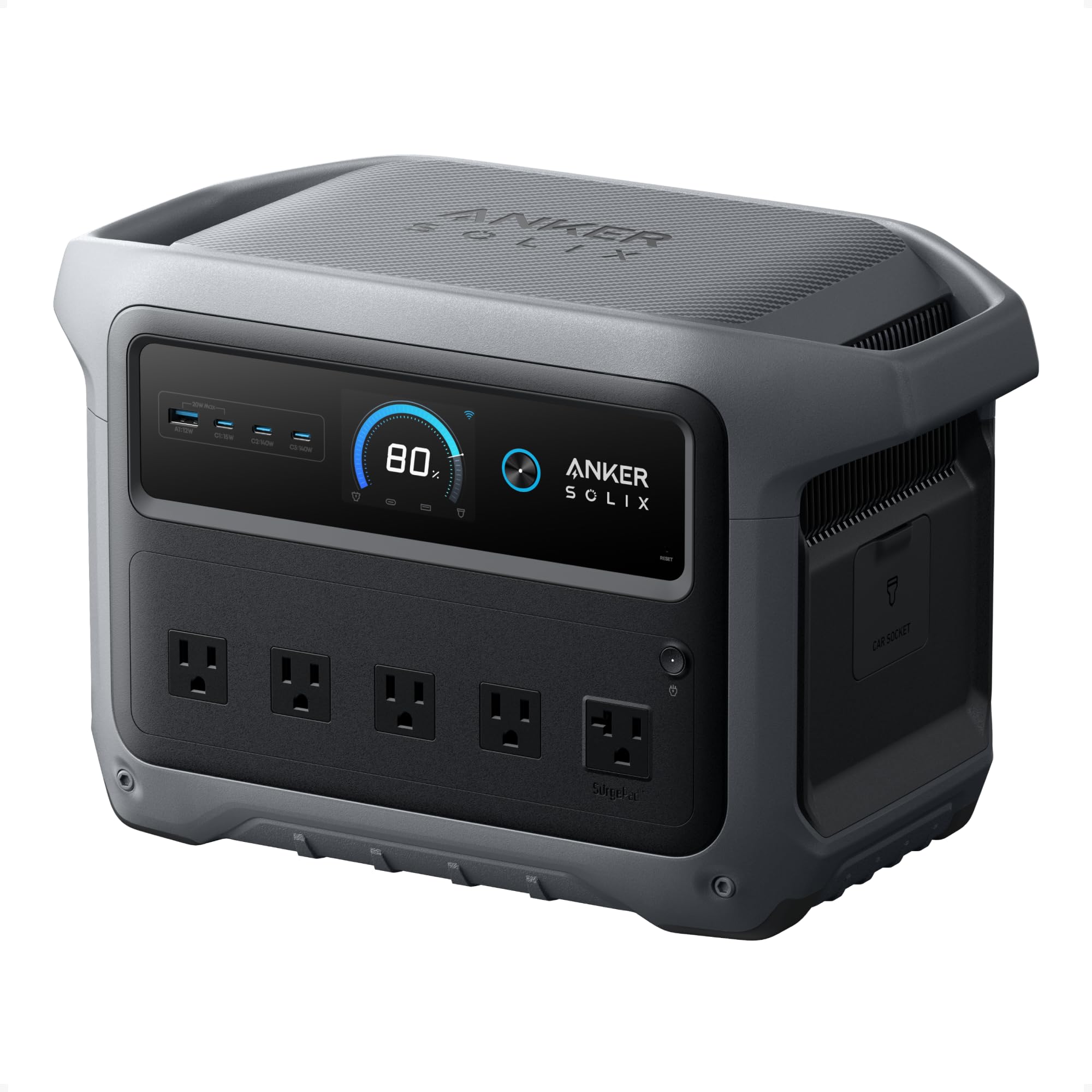
The Anker SOLIX C1000 Gen 2 hits 100% charge in 49 minutes, which means you can plug your CPAP in for a full night, recharge the station during breakfast, and have it ready for the next sleep session. The UPS mode transitions in under 10ms — fast enough that even sensitive medical devices won't hiccup during a power blip.

This unit is lighter than many 1kWh competitors at 24.9 pounds, with an ergonomic handle that makes it a sensible travel companion for camping or road trips. The LiFePO4 battery is rated for 4000 cycles, so daily use for years isn't a stretch. Where it falls short of the top pick is in idle behavior: some units can lose charge when left untouched for weeks, and a few features — like the fast-charging toggle — require the app to adjust. For CPAP users who keep the station actively cycling (charge by day, use by night) the drain is irrelevant, but if you plan to stash it for emergency-only backup, it's a detail to budget for.

The 2000W AC output (3000W surge) easily covers a CPAP even with heated humidification at full draw. The pure sine wave inverter runs the machine cleanly, and the 1024Wh capacity provides a full night plus morning top-off for most setups. Portability and charge speed make it especially suited for campers who power up at a campsite hookup or in a vehicle between destinations.

Tip: Keep the unit plugged in or charge it every 2–3 weeks if storing long-term idle to avoid phantom drain issues.

Bottom line: If you recharge daily — camping with a hookup or rotating between sleep sessions — this station's blistering charge speed and UPS performance make it a natural fit for CPAP duty. Skip it if you need a set-and-forget emergency backup that won't lose charge over months of storage.

3

BLUETTI AC70

BLUETTI AC70

Camping CPAP value

Our Score 9.4/10
Check Price

Worth Noting

  • Off-center handle can make carrying feel unbalanced when the unit is fully loaded.
  • Battery percentage estimate can drift, leading to unexpected shutdown if the reading shows more charge than available.
Weight
22.5 lbs
Capacity
768Wh
AC Output
Pure sine wave
Battery Chem
LiFePO4

The AC70's 768Wh capacity provides enough energy for a full night of CPAP with humidifier, leaving about 10% reserve. Compared to the Jackery 1000 v2, it has less capacity but charges faster and weighs slightly less — a practical tradeoff for shorter trips. Unlike the Anker SOLIX C1000, which emphasizes UPS features, the AC70 focuses on portability and quick solar or AC refueling.

Best suited for campers who can recharge during the day, the AC70 handles a full night with humidifier consistently. The off-center handle may feel unbalanced when carrying the unit fully loaded, and the battery percentage estimate can occasionally drift — a minor inconvenience if you monitor charge levels rather than relying solely on the gauge.

Tip: Fully charge before use and check the percentage periodically — if it drops faster than expected, plan to recharge sooner.

Bottom line: For CPAP users on a mid-range budget who need a consistent overnight solution with humidifier and fast recharge, the AC70 delivers good value — just keep an eye on the battery meter and the handle's balance.

4

EcoFlow DELTA 2

EcoFlow DELTA 2

Expandable CPAP

Our Score 9.4/10
Check Price

Worth Noting

  • Power output may cut off without warning when approaching the 1800W limit, which could interrupt sleep.
  • At 27 lbs, it's heavier than similarly sized units, making it less suited for backpacking or air travel.
Weight
27 lbs
Capacity
1024Wh
AC Output
Pure sine wave
Battery Chem
LiFePO4

The DELTA 2 recharges from empty to 80% in under an hour — a pace unmatched by most 1kWh units. That speed, combined with the ability to double or triple capacity via extra batteries, gives it a clear edge for CPAP campers who want to add runtime without buying an entirely new station. It is heavier than the top pick, though, at 27 lbs, which matters if you’re hiking to a campsite rather than driving.

This unit suits CPAP users who plan to expand their power over time — starting with one night and later adding batteries for multi-night trips. A minority of units may shut off unexpectedly when the AC output nears 1800W, so it’s wise to keep a cushion below that limit when powering medical gear. For home backup where you can leave it plugged in, the weight is less of a concern; for backpacking, look for a sub-15 lb option.

Tip: To avoid unexpected shutdowns, keep your total AC load under 1400W as a safety buffer, especially when powering medical devices.

Bottom line: If you plan to scale up capacity later and value the fastest recharge over a lighter carry, this is a strong choice for CPAP camping and home backup.

5

Jackery Explorer 2000 v2

Jackery Explorer 2000 v2

Multi-night CPAP

Our Score 9.2/10
Check Price

Worth Noting

  • Fan can be noticeable during high-power charging in a quiet campsite
  • At 39.5 lbs, it's too heavy for backpacking or air travel
Weight
39.5 lbs
Capacity
2042Wh
AC Output
Pure sine wave
Battery Chem
LiFePO4

The Jackery Explorer 2000 v2 packs 2042Wh of capacity — enough to run a CPAP with heated humidifier for three to four nights straight without needing a recharge. It also refuels rapidly, hitting 0-80% in about 66 minutes, which is rare for a unit this large. Despite the big battery, it weighs 39.5 lbs, making it the lightest in the 2kWh class, though moving it around a campsite requires a bit of effort. That weight tradeoff pays off in runtime: fewer stops to top off the battery means more uninterrupted sleep.

This station suits CPAP users who camp with a vehicle, live in an RV, or need a home backup that can power medical gear through multi-day outages. The 39.5 lb weight rules out backpacking or air travel — you won't carry this on a flight or hike. But if your setup stays put in a van or at a basecamp, the weight is a fair exchange for the generous runtime. The fan can be audible during high-load charging, though a silent night mode quiets it down for sleeping hours.

Tip: Use the silent night mode during sleep hours and save high-power charging for daytime when ambient noise masks the fan.

Bottom line: If your CPAP camping or backup priority is multi-night endurance and you have a vehicle to carry it, the Explorer 2000 v2 delivers that without the typical weight penalty of other 2kWh stations.

6

LIBRIDS C600

LIBRIDS C600

Budget CPAP camping

Our Score 9.4/10
Check Price

Worth Noting

  • AC output capped at 600W
Weight
~13 lbs
Capacity
640Wh
AC Output
Pure sine wave
Battery Chem
LiFePO4

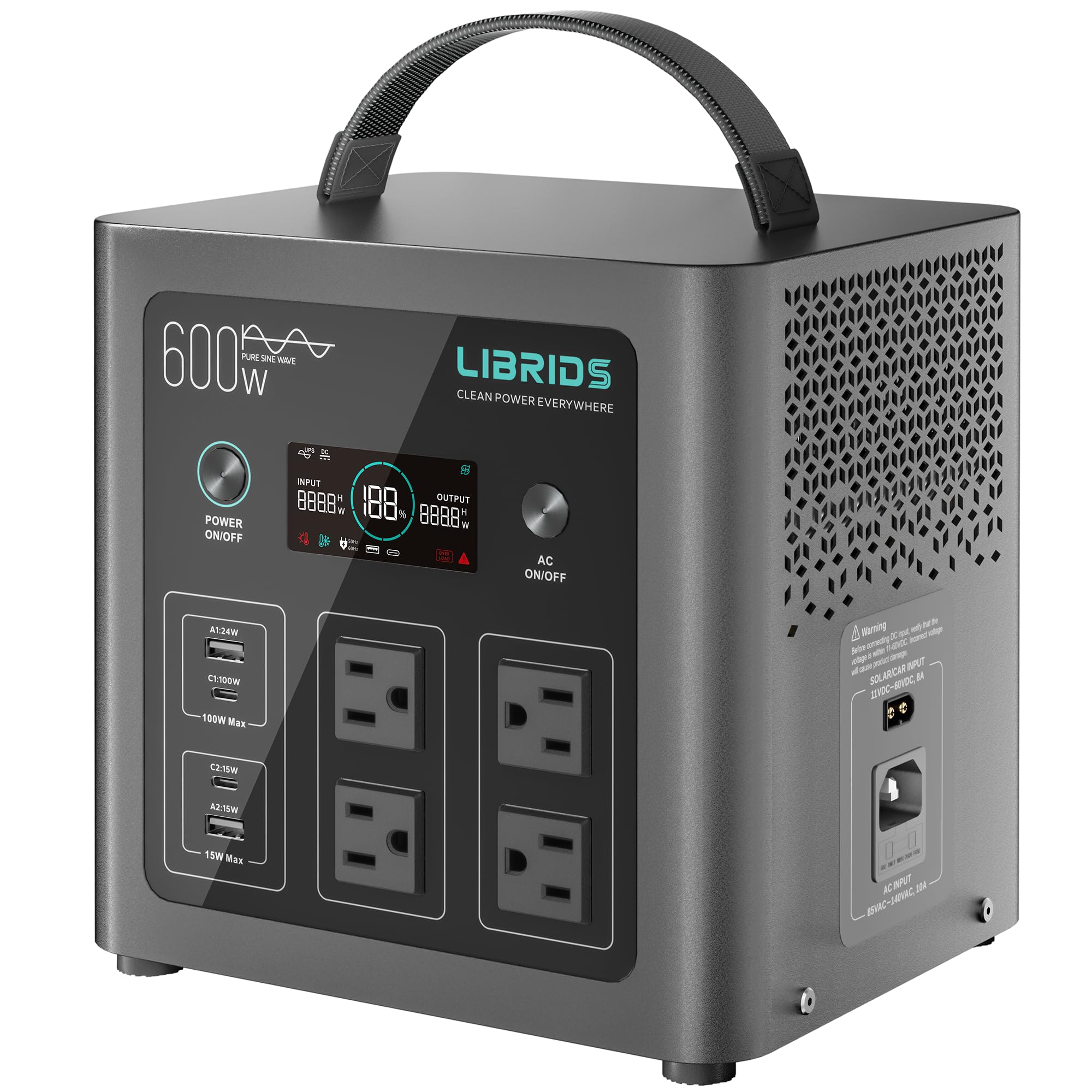
The LIBRIDS C600 delivers 640Wh at a budget-friendly price, undercutting most competitors while still supporting a night of CPAP with humidifier. Its metal enclosure and 10ms UPS mode make it a pragmatic choice for campers who need a compact, durable backup without spending extra.

This station weighs roughly 13 lbs and fits easily into a duffel, a clear step up in portability from larger units like the Jackery 1000 v2. The tradeoff comes in AC output: at 600W continuous, you can run a CPAP alone, but adding a heated blanket or other high-draw device may push it past its limit. For single-device overnight use, the capacity is more than adequate.

Tip: Keep the CPAP as the sole AC device; if you need to charge a laptop or phone, use the USB ports to stay within the 600W AC budget.

Bottom line: A high-value station for budget-focused CPAP campers who need one full night with humidifier and don't plan to run additional high-wattage gear alongside their machine.

7

Anker SOLIX C1000

Anker SOLIX C1000

CPAP camping backup

Our Score 9.4/10
Check Price

Worth Noting

  • Some units may drain battery when left idle for extended periods, requiring a top-off before use.
  • At 27.6 lbs, the unit can feel heavy for older users or very short trips.
Weight
27.6 lbs
Capacity
1056Wh
AC Output
Pure sine wave
Battery Chem
LiFePO4

With 1056Wh capacity and a 58-minute full recharge, this power station handles a full night of CPAP with humidifier for most users. Its LiFePO4 battery supports 3000 cycles, and the 1800W output covers higher-draw devices. However, some units experience idle power drain after storage, so it's best to top off before trips. It charges slightly slower than the Gen 2 (58 vs 49 minutes) and lacks its UPS improvements, but if found at a discount, it's a capable choice for camping and home backup.

Bottom line: Best for CPAP users who want a fast-charging backup at a discount and are comfortable topping off before each outing.

8

BLUETTI AC180

BLUETTI AC180

Home CPAP backup

Our Score 9.2/10
Check Price

Worth Noting

  • At 37.4 lbs, carrying it any distance is awkward
  • A minority of units may shut down unexpectedly or fail to charge, worth checking for critical backup use.
Weight
37.4 lbs
Capacity
1152Wh
AC Output
Pure sine wave
Battery Chem
LiFePO4

The BLUETTI AC180 delivers a fast full charge in about an hour and offers 1152Wh of LiFePO4 capacity with a UPS mode that suits CPAP machine backup. At 37.4 lbs, it's not something you'd want to carry far, and some units have exhibited unexpected shutdowns when drawing near their output limit. This makes it a sensible choice for home or car camping where weight isn't a primary concern, but not for backpacking or air travel.

Bottom line: A strong home backup if you need quick recharge and can keep it stationary; the reliability risk means it's not ideal for critical off-grid use.

9

Anker SOLIX S2000

Anker SOLIX S2000

Home UPS backup

Our Score 8.8/10
Check Price

Worth Noting

  • Fan noise during charging may be audible in a quiet bedroom.
  • At 35.7 lbs, moving it for travel or repositioning is a physical chore.
Weight
35.7 lbs
Capacity
2010Wh
AC Output
Pure sine wave
Battery Chem
LiFePO4

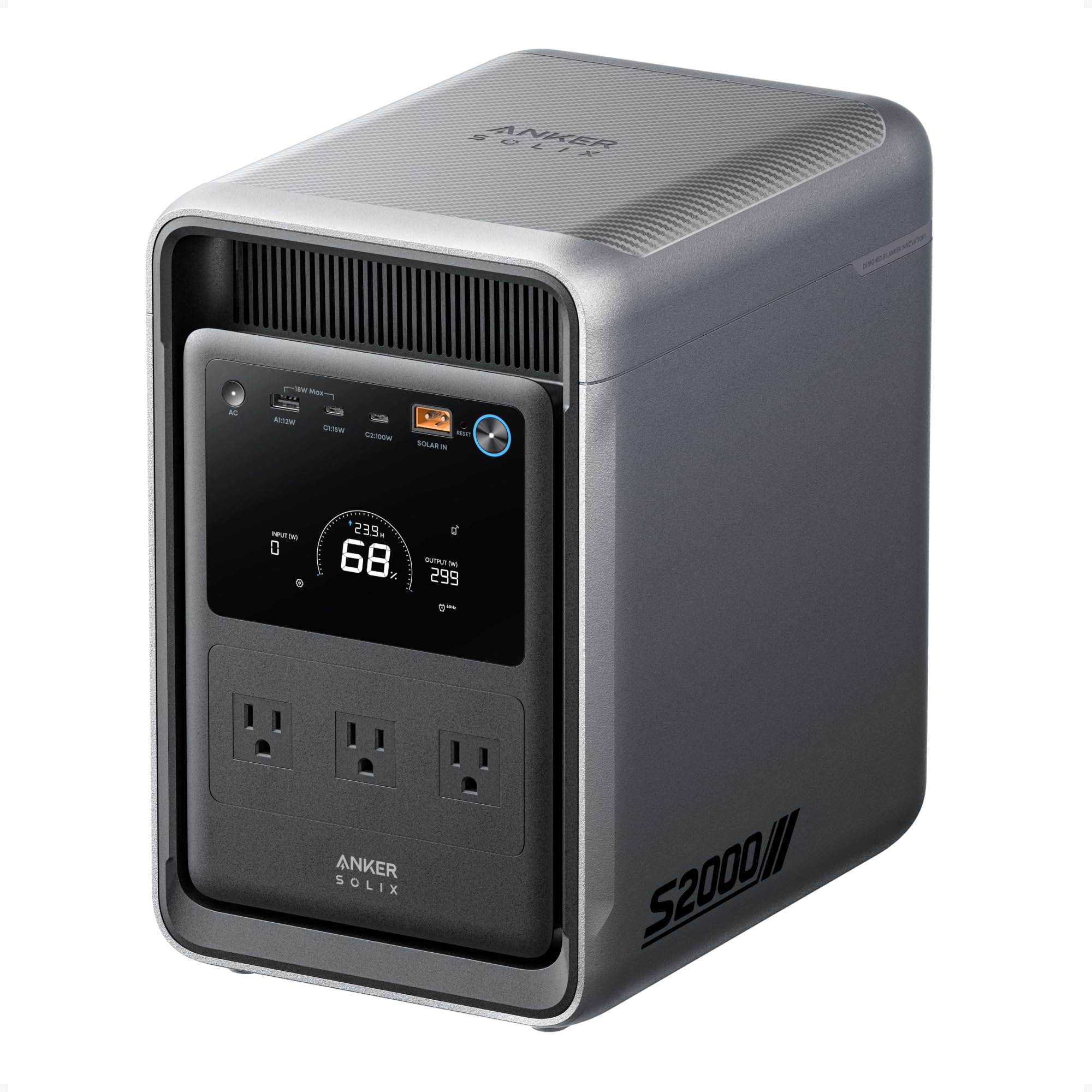
The Anker SOLIX S2000 packs 2,010Wh into a chassis 30% smaller than average, and its LiFePO4 cells are rated for 10,000 charge cycles — enough for daily UPS use over many years. Standby draw is low at 6W, so it can sit plugged in as an always-on CPAP backup without wasting power. The tradeoff: fan noise during charging is noticeable in a quiet bedroom, and at 35.7 lbs this unit is better left in place than carried to a campsite. For buyers who want a long-term home CPAP generator and don’t mind the charging fan, it’s a focused option.

Bottom line: Best suited for home CPAP backup where it stays plugged in and the charging fan is not a concern.

10

Jackery HomePower 3600 Plus

Jackery HomePower 3600 Plus

Whole-home backup

Our Score 9.2/10
Check Price

Worth Noting

  • At 77 lbs, the unit is too heavy for camping or travel use even with wheels
  • Premium pricing far exceeds what a CPAP-only buyer needs, making it overkill
Weight
77.2 lbs
Capacity
3584Wh
AC Output
Pure sine wave
Battery Chem
LiFePO4

The Jackery HomePower 3600 Plus delivers 3584Wh of capacity and recharges in 2.5 hours on AC or 2 hours via hybrid input. Its telescoping handle and wheels make the 77 lb unit manageable on flat surfaces. For CPAP use, this means over a week of uninterrupted operation even with humidification, plus power for a fridge and other home essentials. However, this size and weight make it impractical for camping or travel. The $1619 price tag (luxury tier) is justified only if you need whole-house backup; for CPAP-only use, smaller stations cost a fraction and are more portable.

Bottom line: Consider this only if you need whole-house backup and CPAP is one appliance among many—otherwise a lighter, smaller station at a lower price is a better fit.

11

Anker SOLIX C300

Anker SOLIX C300

Ultra-compact travel

Our Score 9.2/10
Check Price

Worth Noting

  • 288Wh capacity supports only 4–6 hours of CPAP without humidifier
Weight
9.1 lbs
Capacity
288Wh
AC Output
Pure sine wave
Battery Chem
LiFePO4

The Anker SOLIX C300 is light enough to pack in a weekend bag and quiet enough to keep on a nightstand without disturbing sleep. Its 288Wh capacity handles 4–6 hours of CPAP operation when you turn off the heated humidifier and tube, and the 50-minute wall recharge means you can top it up between naps. That same capacity falls short for a full night with any heat or humidification attached, so this unit works best as a travel companion for short trips or as a backup to a larger station rather than a standalone sleep solution.

Bottom line: Pick this if you need a lightweight, fast-recharging power station for short CPAP trips without heat, or as a supplemental battery for daytime electronics.

12

VTOMAN Jump 600X

VTOMAN Jump 600X

CPAP jump starter

Our Score 9.0/10
Check Price

Worth Noting

  • For CPAP use with a heated humidifier, the 299Wh capacity may not last a full night.
  • AC charging takes three hours, which is slower than many competing models.
Weight
14.6 lbs
Capacity
299Wh
AC Output
Pure sine wave
Battery Chem
LiFePO4

The VTOMAN Jump 600X stands out by combining a CPAP-friendly regulated 12V DC output with a built-in car jump starter, making it a practical companion for roadside emergencies. However, its 299Wh capacity sits just below the threshold needed for a full night of CPAP therapy with a heated humidifier—users who skip humidity will get closer to a full night. AC charging takes three hours, which is slower than many alternatives in this price range. This unit suits car campers who want a compact emergency kit that can also power a CPAP for shorter sessions, or serve as a jump starter when needed.

Tip: Use the 12V DC output for your CPAP to maximize runtime — it draws less power than inverting to AC.

Bottom line: Best for car campers who need a compact jump starter and can accept shorter CPAP runtime without heated humidity, or as a dedicated roadside emergency backup.

13

EASYLONGER ES960

EASYLONGER ES960

Dedicated CPAP kit

Our Score 9.2/10
Check Price

Worth Noting

  • Runtime with heated humidification is limited, often less than a full night
  • Not a general-purpose power station; limited to CPAP use
Weight
6.6 lbs
Capacity
297.6Wh
AC Output
Pure sine wave
Battery Chem
LiFePO4

The EASYLONGER ES960 is built exclusively for CPAP users, with included cables for AirSense, AirCurve, DreamStation, and other major models — no adapter hunting. Run it without heated humidification and you can get two or more nights of sleep from a single charge. The tradeoff: its 297.6Wh capacity falls short for anyone relying on a heated humidifier, lasting barely a night with that feature on. This makes it a good fit for car campers or travelers who don't need heat, but it's expensive per watt-hour compared to general-purpose power stations and offers no utility beyond CPAP.

Bottom line: Best suited for CPAP users who can sleep without humidifier and want a turnkey kit for short camping trips or travel — not for anyone needing heat or multi-device power.

How to Choose

Capacity (Wh)

Capacity measured in watt-hours determines how long you can run your CPAP. A CPAP without humidifier draws 30-60W, so a 300Wh battery gives 5-10 hours. With humidifier and heated tube, draw jumps to 80-120W, cutting runtime in half or more.

For a reliable full night with accessories, choose at least 700Wh. Units around 1000Wh provide margin for a second night or other devices. Sub-300Wh units work only for short sessions or without heat.

AC Output Type

CPAP machines require pure sine wave AC power to operate correctly. Modified sine wave inverters can cause motor noise, reduced efficiency, or even damage over time. All power stations listed here output pure sine wave, but always verify the spec before buying.

Weight and Dimensions

Weight scales with capacity. A 1000Wh station typically weighs 22-27 lbs — manageable for car camping but not for backpacking. Lighter units under 10 lbs offer portability but sacrifice runtime. Consider your transport method: if you drive to camp, 25 lbs is fine; if you hike, look for under 15 lbs with trade-offs on runtime.

Battery Chemistry

LiFePO4 (LFP) batteries last 3000-4000 charge cycles compared to 500 for older NMC chemistry. They are safer (lower fire risk) and maintain capacity longer. All modern CPAP-focused power stations use LiFePO4. The extra upfront cost pays off over years of regular use.

Charge Speed

Faster charging means less downtime between CPAP sessions. Many mid-range units can recharge to 80% in under an hour, letting you top up between sleep shifts. Some offer emergency fast-charge modes that refill in even less time. If you camp without shore power, consider solar panel compatibility for daytime recharging.

Frequently Asked Questions