Power & Charging

11 Best Power Bank for Laptops of 2026: Find the Right One for Your Carry

Which laptop power bank actually fits your travel style and charging needs? This guide helps you decide between power, portability, and built-in cables.

High-wattage power banks pack serious charging speed, but they also come with a weight penalty. A 25,000mAh unit often weighs over 1.3 pounds – more than some laptops themselves. The promise of all-day power collides with the reality of a heavier backpack.

Built-in cables add daily convenience, but they also create a potential failure point. Once that cable breaks, the whole unit becomes less useful. The real choice is between buying for today's ease or tomorrow's reliability.

This guide matches power banks to how you actually carry and charge. The right pick balances wattage, capacity, and weight for your specific laptop and travel habits.

1

Anker 25K 165W Retractable

Top Pick
Anker 25K 165W Retractable

Cable-free travelers

Our Score 9.0/10
Check Price

Worth Noting

  • At 1.31 lbs, the weight makes pocket or small-purse carry impractical
  • Some units may stop charging or turn off unexpectedly after months of use
Ports
3 USB-C + 1 USB-A
Weight
1.31 lbs
Capacity (mAh)
25,000
Max Output (W)
165W total, 100W per port

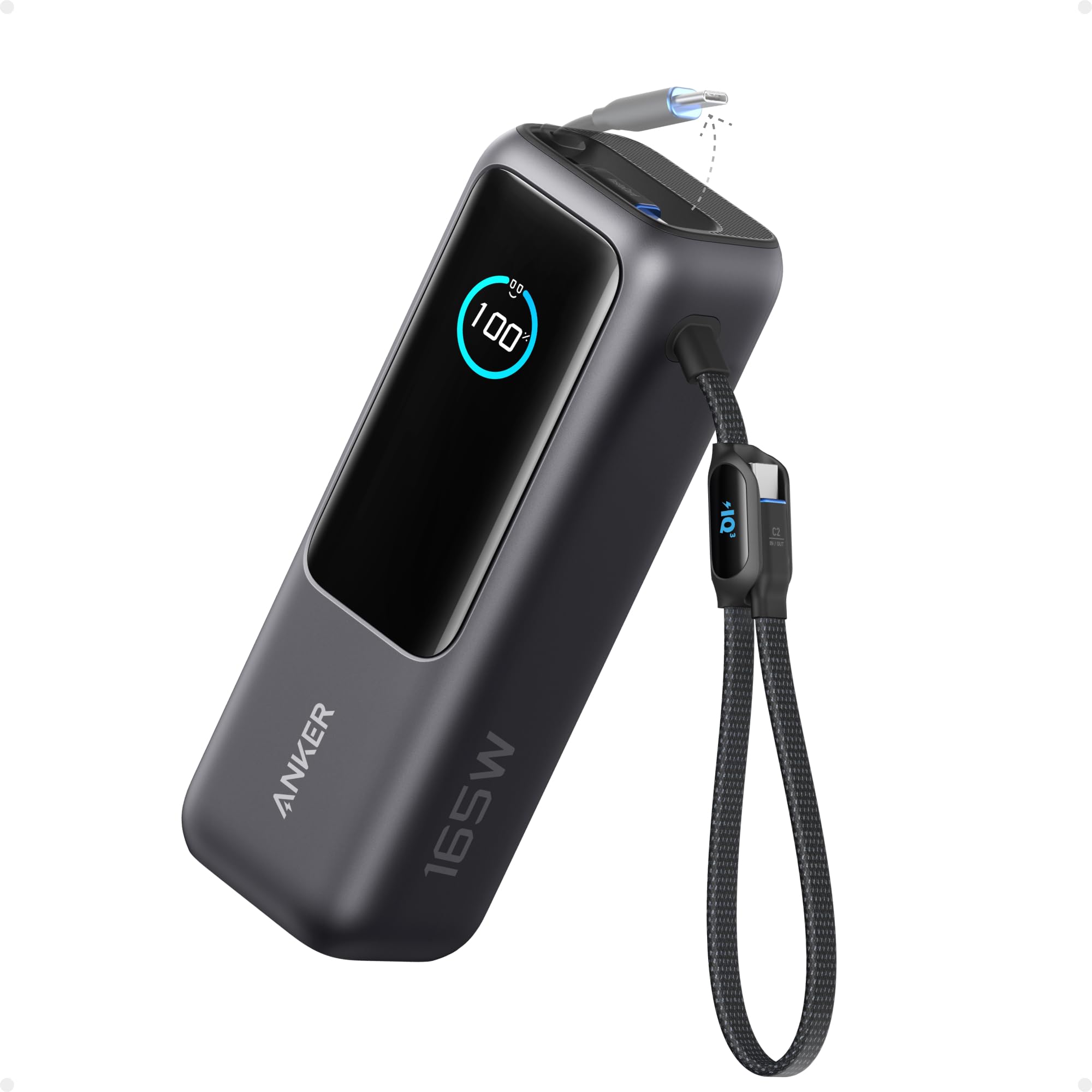
The Anker 25K 165W Retractable delivers its headline promise: two built-in USB‑C cables (one retractable, one strap) eliminate the need to carry separate cords, while each of its three USB‑C ports outputs up to 100W. That means you can charge a MacBook Pro, an iPhone, and a Steam Deck simultaneously without hunting for cables or adapters.

In practice, the 25,000mAh capacity handles a full laptop charge plus several phone top‑ups. The retractable cable extends smoothly and locks in place, and the strap cable stays attached to the side for quick access. Users running a 16-inch MacBook Pro under heavy load report the power bank maintains the full 100W output without throttling, keeping the laptop charged during long flights or meetings.

The chassis feels solid, with a textured finish that resists scratches and a weight of 1.31 lbs that sits comfortably in a backpack but is too heavy for a pocket or small purse. The retractable cable mechanism has held up in daily use, though occasional units have shown the latch losing tension over months of hard travel. Anker's build quality is consistent, and the power bank includes multiple safety protections against overcurrent and overheating.

This power bank suits travelers who want a single device for laptops, tablets, and phones without dealing with extra cables. It is ideal for MacBook users, high-power laptop owners, and anyone who regularly charges two or more devices at once. The weight is a clear tradeoff — if you need an ultra-light option for pocket carry, a smaller 20,000mAh unit with lower output would be more appropriate, but for backpack carry, the Anker’s convenience justifies the bulk.

Tip: Tuck the retractable cable fully back into its slot after each use to reduce wear on the latch mechanism over time.

Bottom line: If you carry a backpack and prioritize cable-free convenience over a few ounces, the Anker 25K 165W Retractable is the most practical high-wattage power bank for daily laptop charging and travel.
2

Anker 737 24K 140W

Anker 737 24K 140W

Power users

Our Score 8.8/10
Check Price

Worth Noting

  • Weighs 1.39 lbs, among the heaviest portable power banks in its capacity class.
  • Some units have been reported to stop functioning after a few months of use.
Ports
2 USB-C + 1 USB-A
Weight
1.39 lbs
Capacity (mAh)
24,000
Max Output (W)
140W single

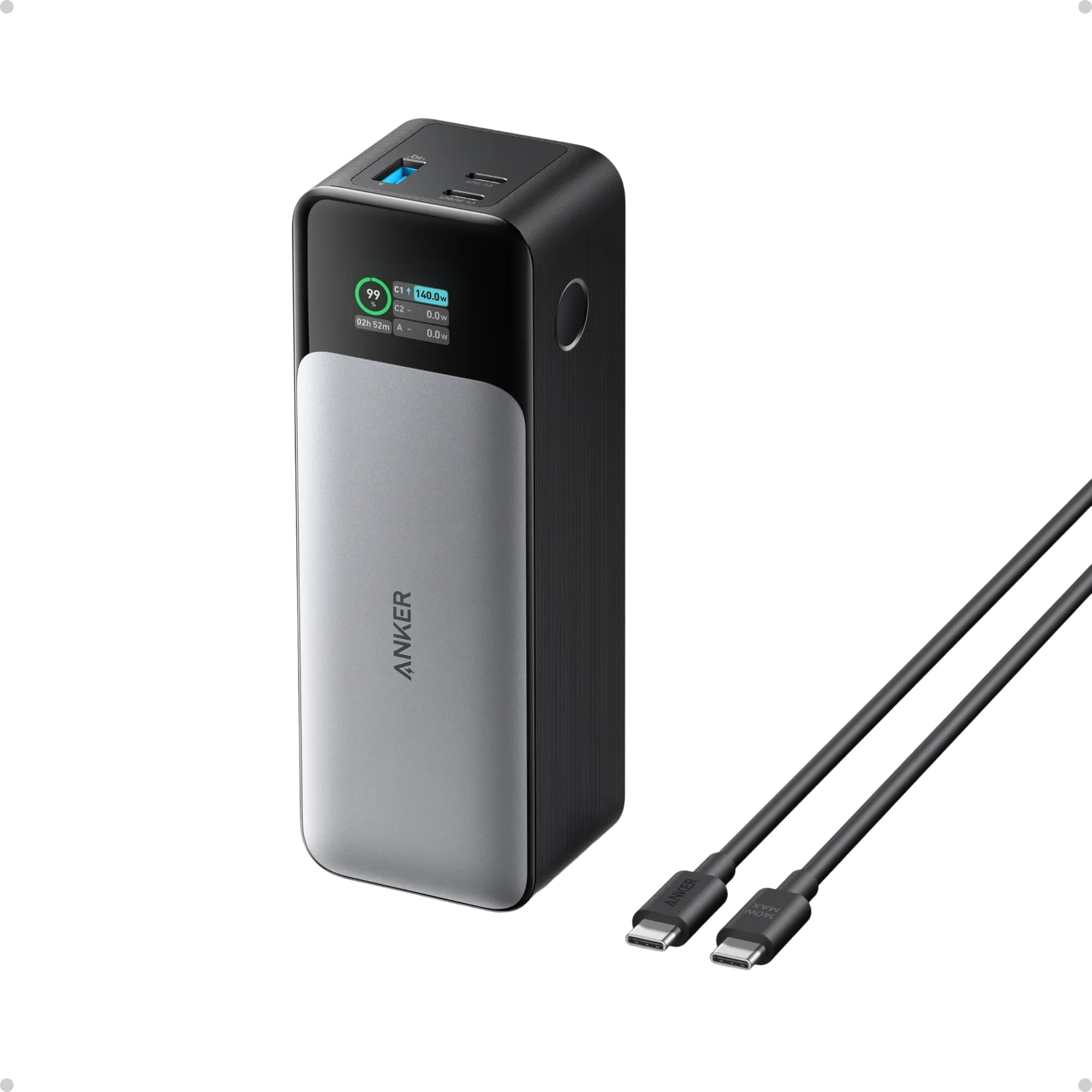
The Anker 737 stands out for its ability to go from empty to full in about 50 minutes when paired with a 140W charger — the fastest self-recharge in this roundup. Its smart display shows real-time wattage and remaining capacity, a useful touch for those who want to track charging behavior precisely. That speed and visibility come at the cost of a heavier build and no built-in cables, which is why the top pick's retractable cords and similar portability win for most travelers.

This power bank suits power users who regularly charge a gaming laptop, phone, and earbuds at the same time, and tech enthusiasts who appreciate the live display data. It delivers consistent 140W output from either USB-C port, enough for a 16-inch MacBook Pro under load. The tradeoff is the 1.39 lb weight — among the heaviest in its class — so it is better suited to a backpack than a pocket or handbag.

Charging multiple devices simultaneously works without hiccups: the unit handles a Steam Deck, a phone, and a tablet at full speed without throttling. However, a notable slice of owners report that their unit stopped working after a few months of use, so long-term durability under regular heavy use is worth monitoring. For buyers who prioritize fast recharge and data feedback over absolute portability, this is a strong option.

Tip: Since this power bank is heavier than most, plan to keep it in a backpack rather than a pocket.

Bottom line: If your priority is the fastest possible self-recharge and you value the live display, this is the power bank to get — just keep an eye on early performance.

3

UGREEN 25K 145W

UGREEN 25K 145W

Budget shoppers

Our Score 8.8/10
Check Price

Worth Noting

  • No built-in cable
  • Battery capacity may underperform the advertised 25,000mAh in some units.
  • Ports can stop functioning after several months of use.
Ports
2 USB-C + 1 USB-A
Weight
1.11 lbs
Capacity (mAh)
25,000
Max Output (W)
145W total, 140W single

The UGREEN 25,000mAh 145W power bank delivers the highest laptop-charging wattage per dollar in this roundup. With 140W on a single USB-C port and 145W total, it charges most laptops at full speed. While some competitors include integrated cables for convenience, this model focuses on raw power output at a price that undercuts premium options by a wide margin.

This power bank is best for budget-conscious buyers who need laptop charging on the go and prioritize power output over long-term durability. The tradeoff is that some units may develop port issues or deliver battery capacity below the advertised 25,000mAh over time. It suits those comfortable with a higher risk of early failure in exchange for significant upfront savings.

Bottom line: For buyers on a tight budget who need laptop charging power and are willing to accept a higher chance of early failure, this UGREEN delivers the highest wattage per dollar available.

4

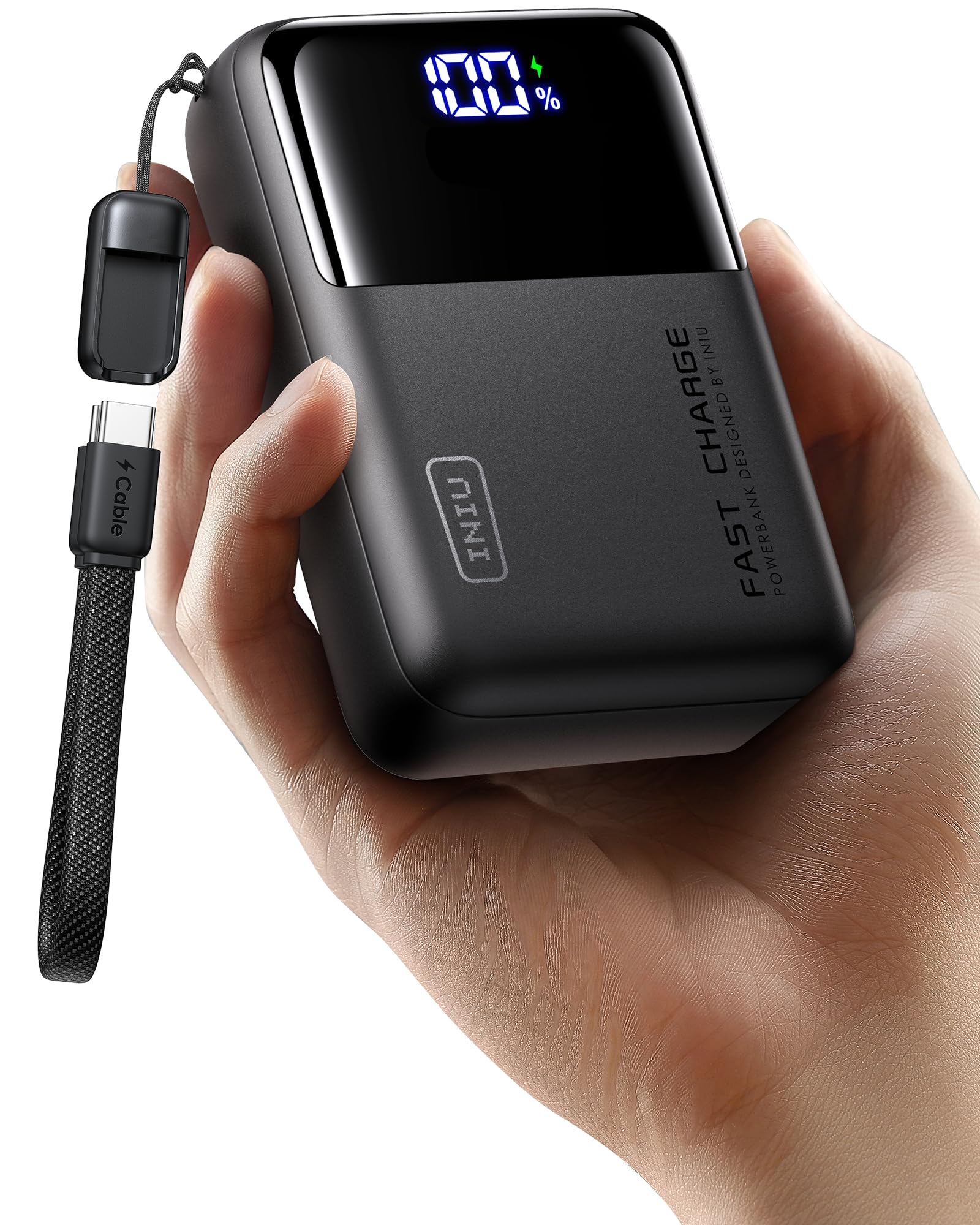
INIU 25K 100W Compact

INIU 25K 100W Compact

Compact travelers

Our Score 9.0/10
Check Price

Worth Noting

  • 100W output may charge a 16-inch MacBook Pro slower than expected under sustained load
  • In some cases, the unit may stop working after several months of use
Ports
2 USB-C + 1 USB-A
Weight
0.99 lbs
Capacity (mAh)
25,000
Max Output (W)
100W single

This INIU delivers the tightest capacity-to-size ratio in the roundup: 25,000mAh packed into a frame 30% smaller than a standard soda can. At 0.99 lbs, it slips into a pocket or tech pouch without the heft of most 25K units. A 100W USB-C port supports laptops up to that ceiling, and the two USB-C and one USB-A ports allow simultaneous charging with pass-through support.

Charging performance is snappy for phones and ultrabooks; a 14-inch MacBook Pro tops up in under two hours. The 100W ceiling means a 16-inch MacBook Pro under sustained load may charge slower than with a 140W bank, but for intermittent use or lighter laptops, the speed is fine. A minority of units have shown early failure within months, so verifying warranty coverage is wise.

This power bank suits travelers who want maximum capacity in minimum space and accept that 100W is a practical ceiling for most laptops, not a universal solution. If you regularly push a high-end gaming laptop at full draw, a higher-wattage option like the top pick with 165W total output would better match your load. The tradeoff is worthwhile for those who value compact size above all else.

Tip: For heavy laptop use, connect the power bank when the laptop is idle to maximize charging speed; sustained full-load charging may be slower.

Bottom line: For travelers who prioritize compact size and are comfortable with a 100W ceiling, this is the most space-efficient 25,000mAh power bank available – just keep an eye on unit consistency.

5

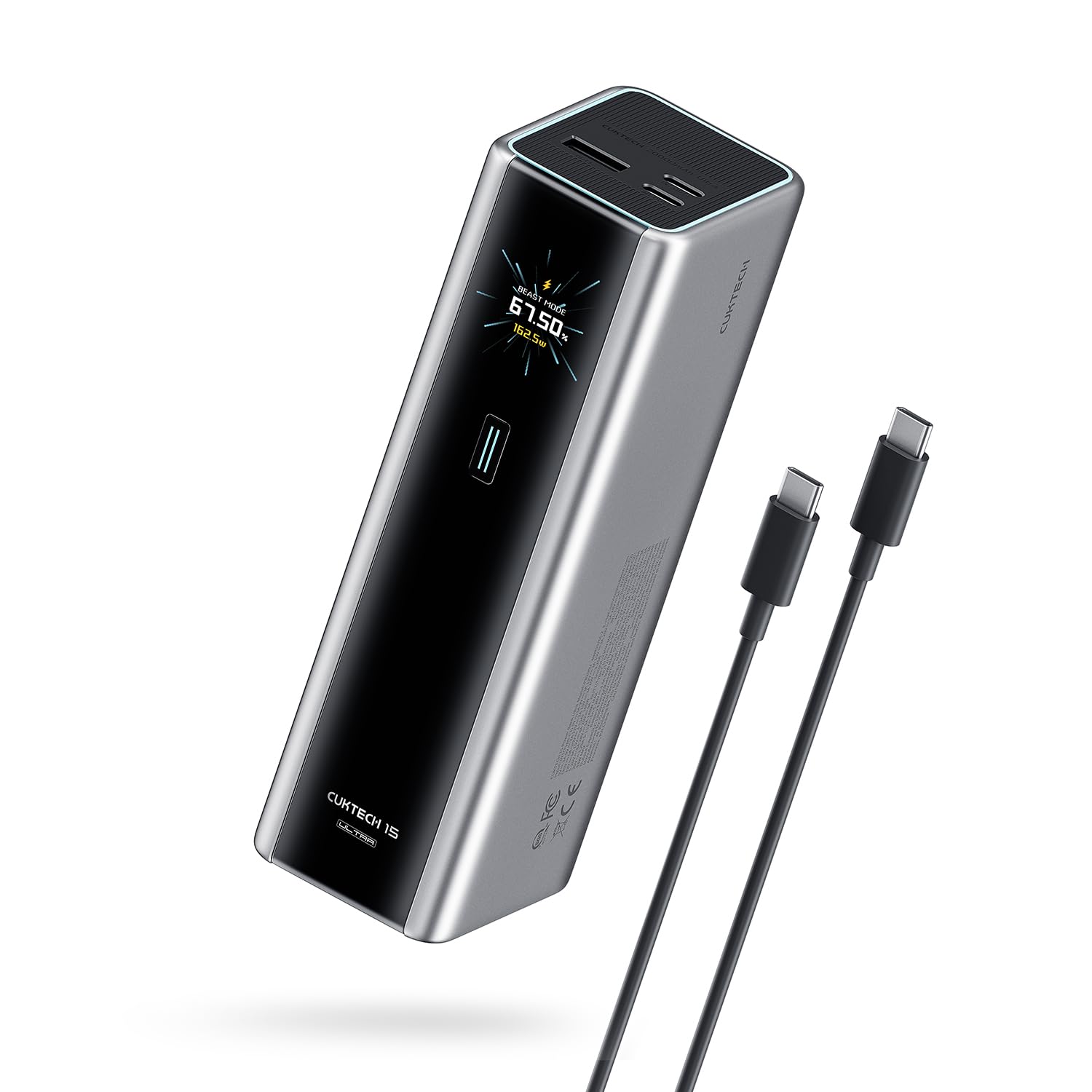
CUKTECH 20K 140W

CUKTECH 20K 140W

Quick top-ups

Our Score 9.4/10
Check Price

Worth Noting

  • Weighs 1.30 lbs
Ports
3 USB-C
Weight
1.30 lbs
Capacity (mAh)
20,000
Max Output (W)
165W total, 140W single

The CUKTECH 15 Ultra stands out by recharging itself faster than any competitor in this roundup – 70% in 20 minutes using 165W dual input. That makes it the go-to for travelers who need to top up their power bank between flights, not wait hours. While the top pick (Anker 25K) offers built-in cables for everyday convenience, this one wins on refueling speed when time is tight.

This power bank is best suited for travelers on tight layovers or anyone who frequently drains their power bank and needs to recharge it quickly. The tradeoff is the 1.30 lb weight – noticeably heavier than many 20,000mAh alternatives. In a backpack the difference is minor, but pocket carry will be a stretch.

The smart TFT display shows real-time wattage per port, which helps avoid overloading devices. Capacity is accurate to spec, so you get the full 20,000mAh – no surprises when charging a laptop.

Tip: The weight sits best in a backpack pocket; jacket pockets will feel the heft.

Bottom line: If fast self-recharging is your priority, the CUKTECH 15 Ultra delivers that speed without sacrifice to output or capacity – just expect a heavier carry than the slimmest options.

6

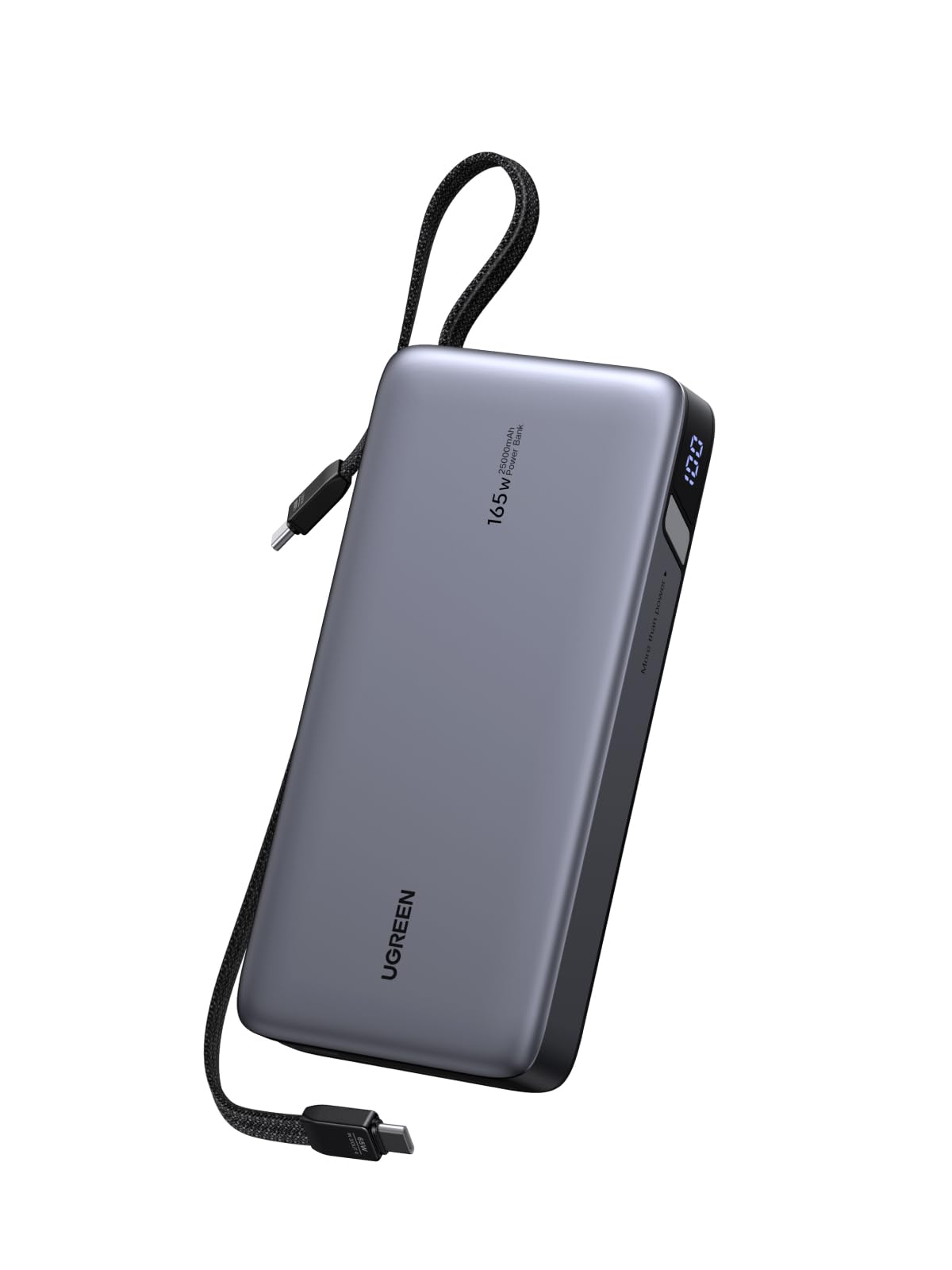
UGREEN Nexode 25K 165W

UGREEN Nexode 25K 165W

Dual-cable fans

Our Score 9.4/10
Check Price

Worth Noting

  • At 1.21 lbs, it's heavier than some 25,000mAh competitors, noticeable in a backpack.
Ports
3 USB-C + 1 USB-A
Weight
1.21 lbs
Capacity (mAh)
25,000
Max Output (W)
165W total, 140W single

The UGREEN Nexode 25K stands out by pairing two built-in cables with 165W total power, a combination that's uncommon at this price point. Unlike the budget-focused 145W option that requires carrying separate cables, this model offers integrated convenience. That added utility does come with a 1.21 lb weight, higher than some 25K rivals like the slimmer options in this set.

This power bank suits users who prefer UGREEN's design and want the ease of dual cables built in, without needing the lightest possible carry. The weight is acceptable for backpack storage but not for pocket carry.

Users report the build quality feels solid, and the 165W total output handles a laptop and phone simultaneously without slowdown. The 90W input allows a full recharge in about two hours, which is competitive for this capacity class.

Tip: The weight is balanced for backpack carry; if you need a pocket-friendly power bank, consider slimmer 20,000mAh models.

Bottom line: A strong mid-range option for buyers who value built-in cables and high wattage, and can accept the extra weight for that convenience.

7

Anker 20K 87W Built-in

Anker 20K 87W Built-in

Ultrabook users

Our Score 9.2/10
Check Price

Worth Noting

  • Carrying the extra weight may be noticeable for those used to lighter packs.
  • Cannot charge itself while powering devices
Ports
Built-in USB-C + 1 USB-C + 1 USB-A
Weight
0.95 lbs
Capacity (mAh)
20,000
Max Output (W)
87W total, 65W single

The built-in USB-C cable eliminates the need for an extra cord while serving as a carrying strap – a convenience appreciated by travelers. With 65W single-port output, it charges ultrabooks and phones quickly, but larger laptops will charge slowly. The 0.95 lb weight is slightly heavier than some competitors, acceptable in a backpack. It lacks pass-through charging, meaning you cannot recharge the bank while it powers devices. For ultrabook users who value the integrated cable, this is a competent companion, though it falls short of higher-wattage models for demanding laptops.

Bottom line: For ultrabook users who want a built-in cable and can handle separate charging, this power bank delivers steady performance in a mid-range price tier.

8

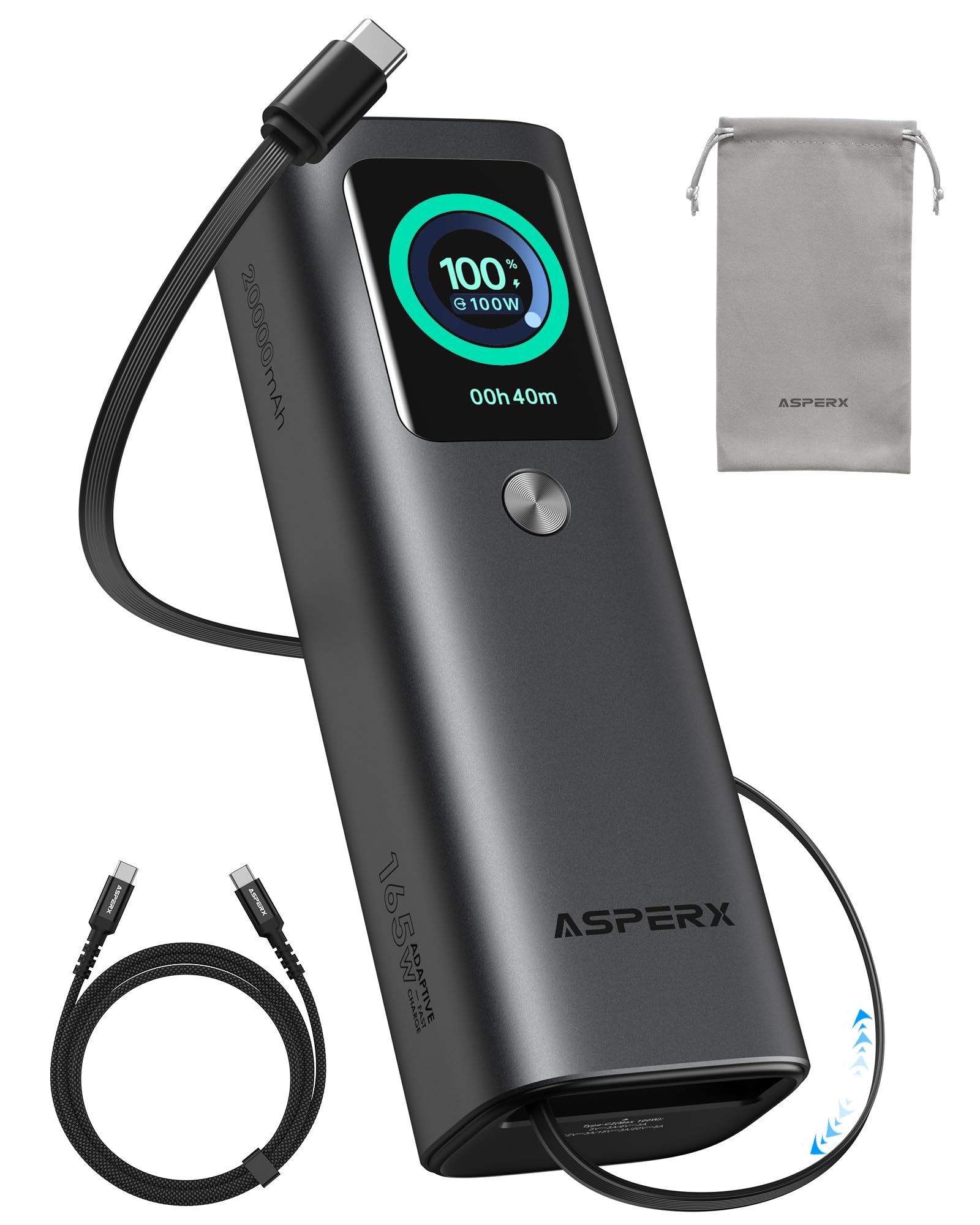
AsperX 20K 165W

AsperX 20K 165W

Premium feel

Our Score 8.8/10
Check Price

Worth Noting

  • At 1.46 lbs, this power bank adds noticeable weight to a travel bag compared to similar-capacity options.
  • Actual battery life can fall short of expectations for users coming from higher-efficiency models.
Ports
1 USB-C 100W, 1 USB-C retractable, 1 USB-A 30W
Weight
1.46 lbs
Capacity (mAh)
20,000
Max Output (W)
165W total, 100W single

AsperX's aluminum unibody and built-in retractable USB-C cable give this power bank a premium feel that stands out among plastic competitors. It delivers 165W total output, enough to charge a laptop and a phone simultaneously. However, the metal construction comes at the cost of power density: the 20,000mAh capacity is packed into a heavier frame than many rivals, making it less efficient for weight-conscious travelers. The capacity-to-weight ratio trails the top picks, and some owners note that runtime can be shorter than expected when compared to higher-efficiency models. The build quality is undeniable, but the tradeoff in portability limits its appeal to those who carry a bag rather than a pocket.

Bottom line: Best suited for users who prioritize build quality and cable convenience over absolute portability and capacity density.

9

INIU 20K 65W Compact

INIU 20K 65W Compact

Minimalist travelers

Our Score 8.8/10
Check Price

Worth Noting

  • Self-charging can be slow, taking several hours to refill the pack.
  • Some units may stop holding charge after several months of use.
Ports
2 USB-C + 1 USB-A
Weight
0.84 lbs
Capacity (mAh)
20,000
Max Output (W)
65W total, 65W single

The INIU 20K 65W Compact stands out for its size: 0.84 pounds and dimensions smaller than most 20,000mAh competitors, making it an easy addition to a sling bag or jacket pocket. Its 65W single-port output charges a MacBook Air or Dell XPS 13 without issue, but falls short for larger laptops needing 100W or more. The self-recharge cycle can take several hours, and some units may stop holding a charge after several months — a trade-off for the price and portability.

Bottom line: A cost-effective emergency power bank for travelers who prioritize ultra-compact size and need only occasional laptop top-offs, provided they accept slower self-charging and possible longevity limits.

10

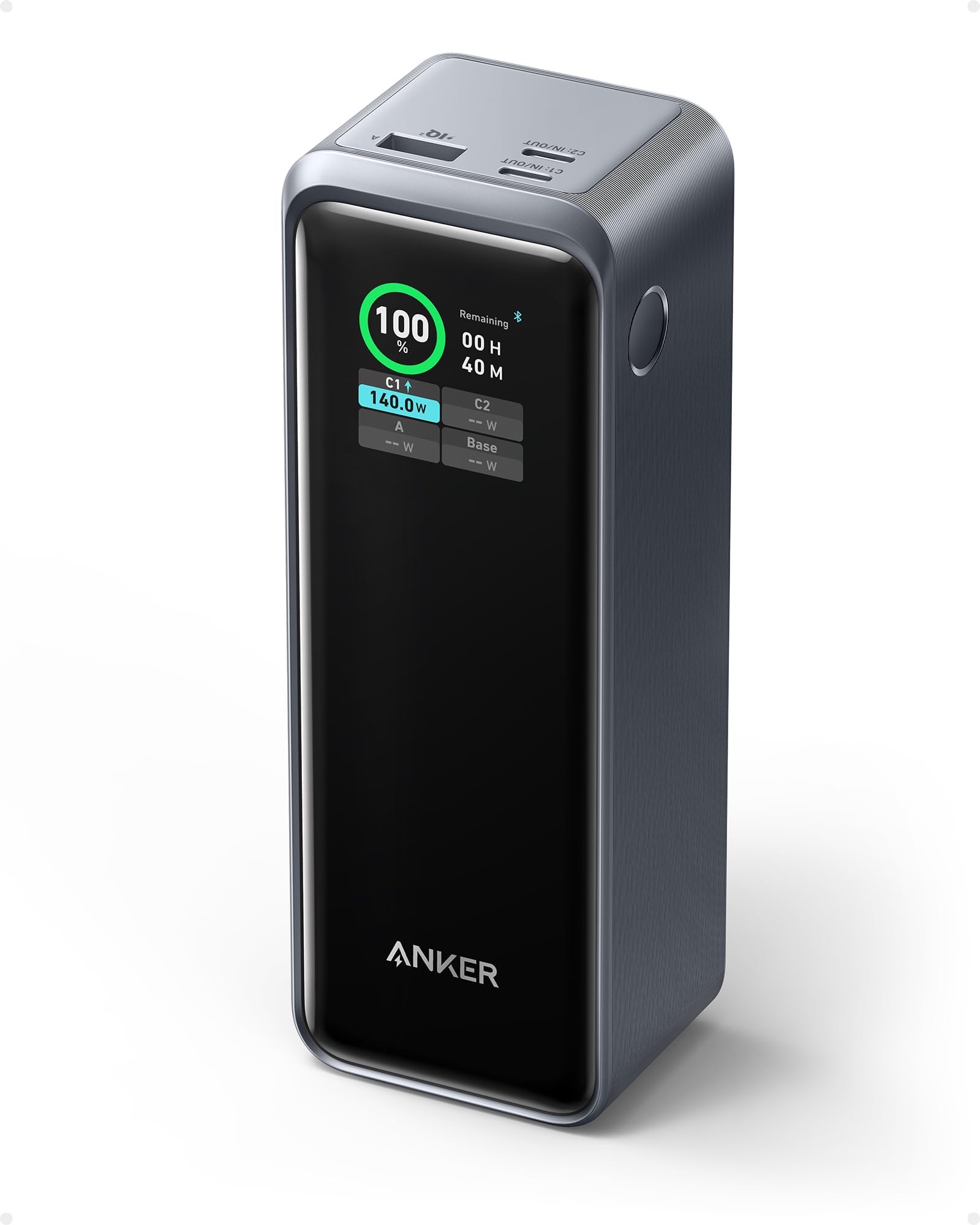
Anker Prime 27K 250W

Anker Prime 27K 250W

Max power users

Our Score 8.6/10
Check Price

Worth Noting

  • At 1.47 lbs, it is the heaviest power bank in the roundup
  • Some units may cease to operate after a few months, a factor to consider for those expecting years of service.
Ports
2 USB-C + 1 USB-A
Weight
1.47 lbs
Capacity (mAh)
27,650
Max Output (W)
250W total, 140W single

Packs the highest capacity (27,650mAh) and total output (250W) of any power bank in this roundup, along with a smart display and app control for monitoring charge levels. However, at 1.47 lbs it is the heaviest – better for a desk or heavy backpack than pocket carry. Some units have been noted to cease operating after a few months of use, so this pick suits buyers who prioritize raw power over portability and long-term certainty. Priced at a premium (retail price not listed at time of review), it competes with lighter options like the Anker 737 that offer faster self-charging and a display without the same mass.

Bottom line: Best for users who need maximum capacity and power for heavy laptop charging or multiple devices, and can accept its weight and the possibility of early unit issues.

11

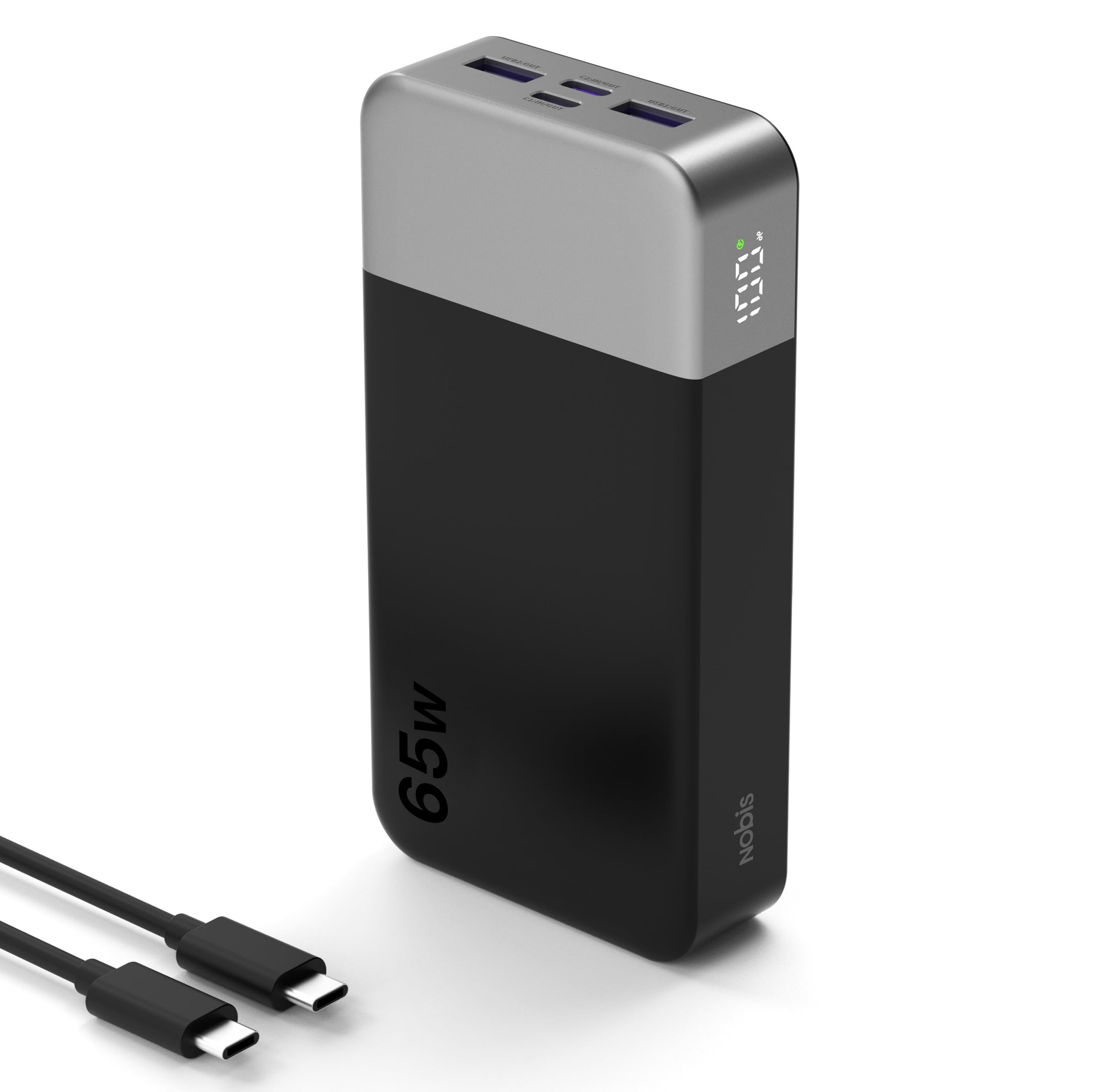
NOBIS 20K 65W

NOBIS 20K 65W

Budget 4-port

Our Score 9.4/10
Check Price

Worth Noting

  • 65W single-port output may charge larger laptops slowly or not at all.
  • Long-term durability under travel conditions is not well-documented, so performance over time is uncertain.
Ports
2 USB-C + 2 USB-A
Weight
0.88 lbs
Capacity (mAh)
20,000
Max Output (W)
65W total, 65W single

This power bank delivers four USB ports (two USB-C, two USB-A) and a digital battery display for under $40, making it one of the cheapest ways to get 20,000mAh with 65W total output. The 0.88-pound weight and 45W self-charge (1.5 hours full) are reasonable for the price. However, the 65W single-port limit means it will trickle-charge a 15-inch laptop at best, and the lack of extensive real-world feedback leaves durability an open question. This is a functional backup for phones and tablets, not a reliable daily driver for demanding laptops.

Bottom line: Only for buyers who need a cheap emergency pack for light devices and accept the gamble on longevity.

How to Choose

Maximum Single-Port Output (Watts)

This spec determines how fast your laptop charges. A 65W output can charge a MacBook Air at full speed but will trickle-charge a 16-inch MacBook Pro under load. For most 13-14 inch ultrabooks, 65-100W is sufficient. For gaming laptops or heavy creative work, 140W ensures you don't lose battery while using the laptop.

The trade-off: higher-wattage power banks are larger and heavier because they need beefier circuitry and larger cells. A 140W unit often weighs 1.3+ pounds, while a 65W version can be under a pound. Choose based on your laptop model and whether you need full-speed charging on the go.

Total Capacity (mAh)

Capacity tells you how many full charges you get. A 20,000mAh power bank provides roughly one full charge for a 13-inch MacBook Pro (about 58Wh) plus some phone top-ups. A 25,000mAh unit extends that to nearly two laptop charges. But doubling capacity also doubles weight.

Buyers often overestimate what 25,000mAh means in practice. Power conversion losses and heat mean you get about 70-80% of the rated capacity delivered to your devices. A 25,000mAh bank at 3.7V converts to roughly 92Wh, of which about 74Wh is usable for a 60Wh laptop – that's just over one charge.

Ports and Power Distribution

The number of ports matters if you charge multiple devices simultaneously. A power bank with three USB-C ports can run a laptop, phone, and earbuds at once – but only if the total output budget is high enough. Many 100W banks split power between ports when multiple are used, dropping each port's speed.

Check the fine print: some banks advertise 100W per port but only deliver that if only one port is active. If you plug in a phone, the laptop port may drop to 60W. For multi-device users, look for banks with dedicated high-wattage ports or separate channels.

Built-in Cables

Built-in cables simplify packing – no need to carry a separate USB-C cord. Retractable cables are especially neat, keeping the cable tidy when not in use. But they are a failure point: if the cable breaks, you cannot easily replace it, and the power bank becomes less functional.

Some models offer two built-in cables (one retractable, one strap-style). This redundancy helps, but it also adds weight and bulk. Travelers who value convenience over long-term repairability will prefer banks with at least one built-in cable. Those who want maximum durability should stick with detachable cables.

Recharge Speed of the Power Bank

The power bank's own charging speed (input wattage) determines how fast you can refill it. A 65W input takes about 2 hours for a 20,000mAh bank. A 140W input can cut that to under an hour. This matters if you have a short layover or only one outlet during a meeting.

But fast recharging requires a compatible high-wattage wall charger. Many buyers use a standard 20W phone charger and wonder why their power bank takes all night. If you want the advertised quick refill, you need to invest in a separate 100W+ GaN charger.

Weight and Dimensions

Weight is the most underappreciated spec. A 20,000mAh power bank can weigh anywhere from 0.84 lbs (INIU 20K 65W) to 1.46 lbs (AsperX 20K 165W). That's nearly a 75% difference for the same capacity. Heavier units typically have higher wattage or premium metal enclosures.

Carrying a 1.3+ pound brick in a laptop bag every day adds up. For daily commuting, target under 1 lb. For occasional travel, 1.2-1.4 lbs is acceptable. Anything above 1.5 lbs is best left for heavy loads where maximum power is non-negotiable.

Frequently Asked Questions