Power & Charging

13 Best Level 2 EV Home Charger 2026: Match Your EV's Actual Speed

Find the best Level 2 EV home charger for your setup - whether you need hardwired or plug-in, J1772 or NACS, and avoid common WiFi and circuit pitfalls.

Many EV owners discover too late that their new charger's WiFi drops during scheduling or that the advertised 48A requires a 60A circuit they don't have. The gap between marketing specs and real-world installation often leads to frustration or surprise costs.

This guide cuts through the confusion by focusing on which chargers actually deliver consistent performance, with attention to connectivity stability and electrical requirements. The best choice depends on your vehicle's maximum charge rate and your garage's existing wiring.

Whether you prioritize rugged build quality or seamless app integration, one factor matters more than the rest: matching the charger's amperage to your home's circuit capacity. Get that right, and the rest falls into place.

1

EMPORIA 48A J1772

Top Pick
EMPORIA 48A J1772

J1772 owners

Our Score 9.4/10
Check Price

Worth Noting

  • In garages with weak 2.4 GHz signal, WiFi may disconnect; no Ethernet port to stabilize the connection
Connector
J1772
Max Output
48A hardwire/40A plug
Cable Length
25 ft
Installation
Both

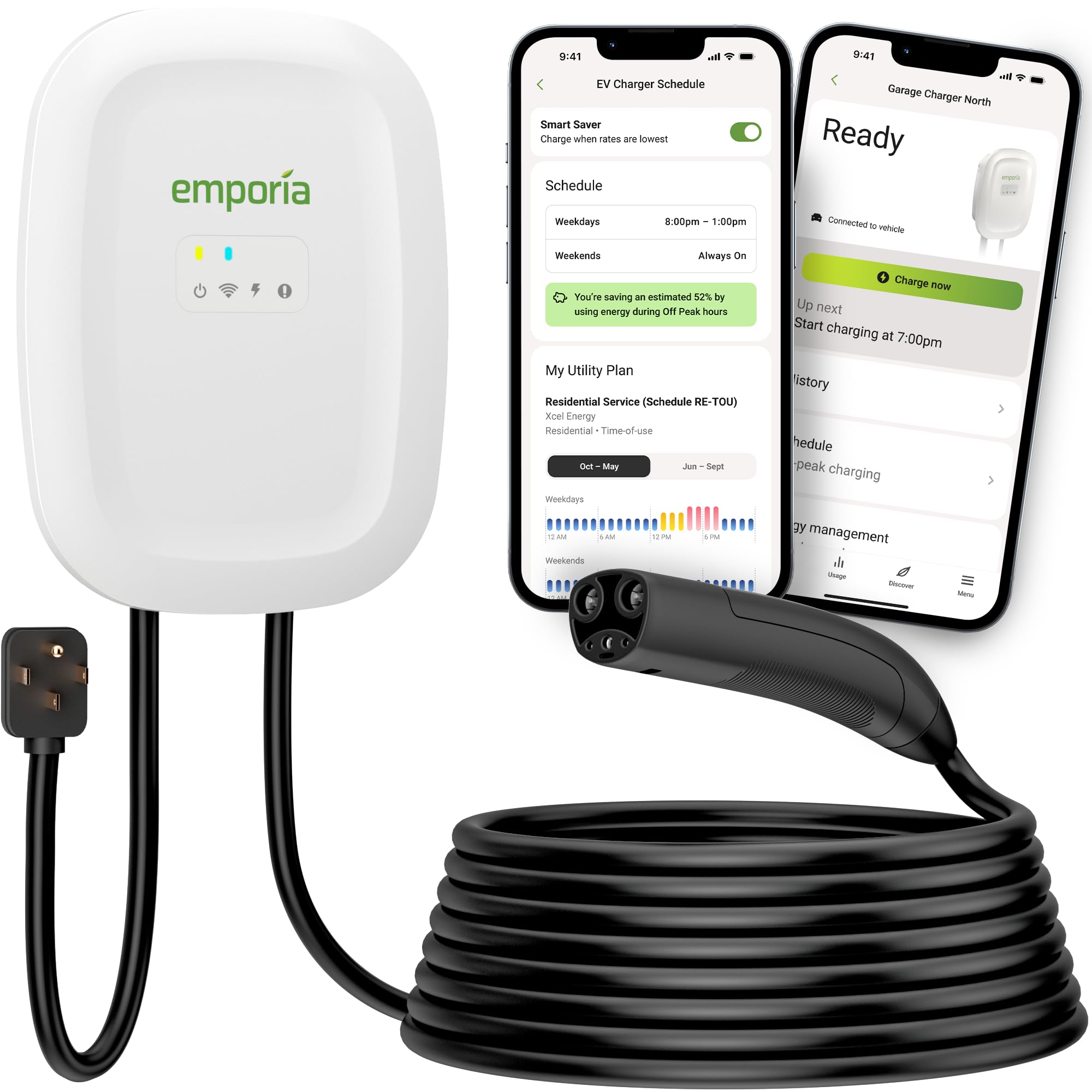
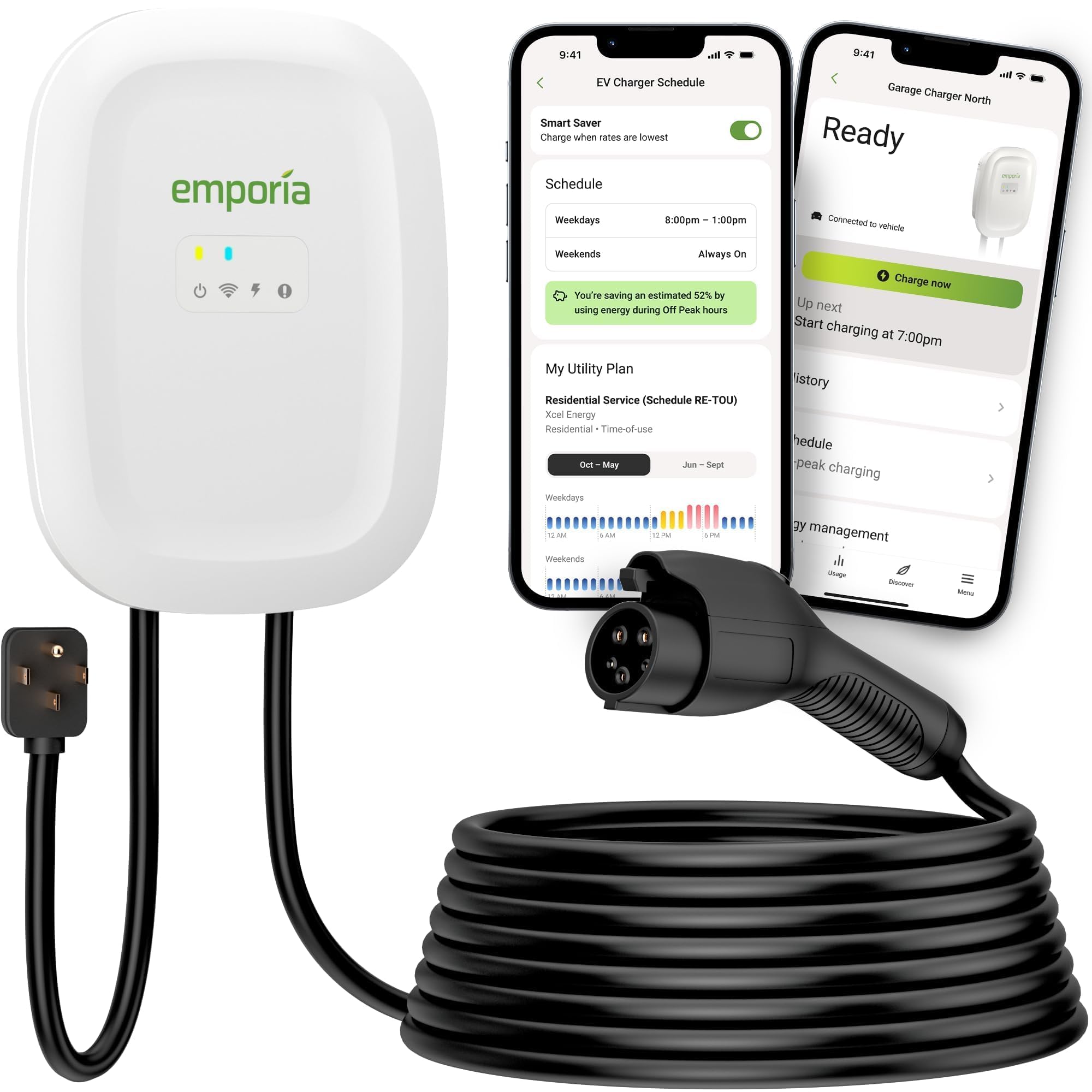
The Emporia delivers the full 48A output consistently, whether hardwired or plugged into a NEMA 14-50. Pairing it with the Emporia energy monitor gives you real-time cost tracking and off-peak scheduling — no separate hub needed.

Setup through the app takes minutes, and the charger holds steady current draw even in cold garages. The 25-foot cable reaches most parking spots, and once WiFi is connected, scheduling works reliably.

This is for J1772 EV owners who want both plug-in and hardwire flexibility — renters can use the included NEMA 14-50 plug, while homeowners can hardwire for full 48A speed. Tesla owners will need an adapter; those after native NACS compatibility should look elsewhere. The WiFi is 2.4 GHz only, so garages with weak signal may see occasional disconnects — there is no Ethernet port to fall back on.

If your garage has weak WiFi, consider adding a mesh extender or placing a hardwired access point near the charger.

Bottom line: For J1772 owners who want consistent charging speeds and actionable energy insights, the Emporia is the most balanced choice at a mid-range price.
2

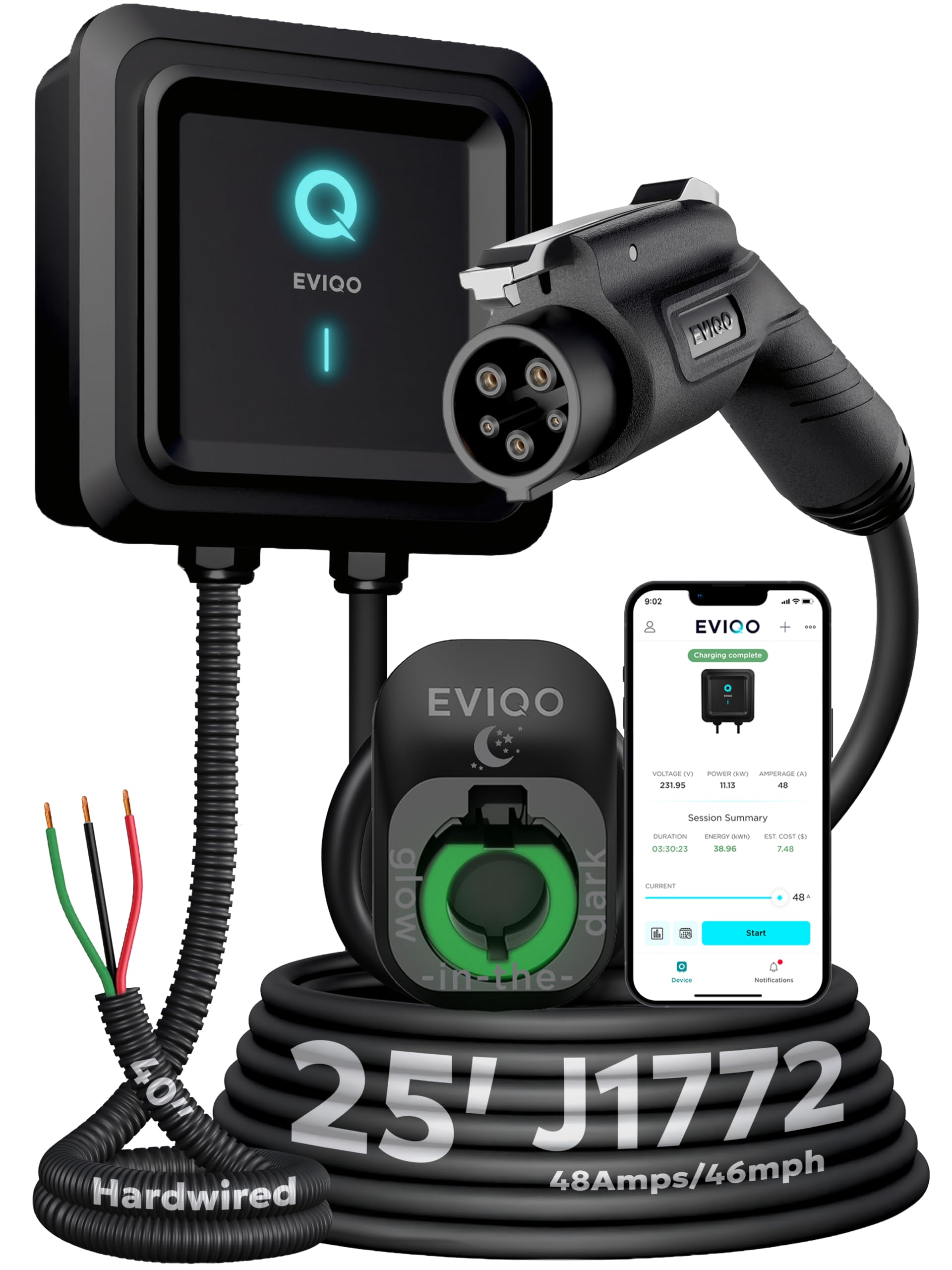
EVIQO 48A J1772

EVIQO 48A J1772

J1772 owners

Our Score 9.4/10
Check Price

Worth Noting

  • Hardwire-only design limits flexibility for renters or those without a dedicated circuit
  • Cannot be easily moved after installation, making it a permanent fixture
Connector
J1772
Max Output
48A hardwired
Cable Length
25 ft
Installation
Hardwired

The EVIQO Level 2 charger delivers consistent 48A output with a heavy-duty cable and metal latch that feels commercial-grade, not consumer plastic. While the Emporia J1772 offers plug-in flexibility, this unit prioritizes a permanent, hardwired installation that many electricians find simpler to set up. At a mid-range price, it undercuts many similarly rated chargers while maintaining higher build quality feedback.

This charger suits homeowners who can commit to a hardwired installation and want a durable unit at a competitive price. It is less ideal for renters or those who may need to move the charger to a new home, since the hardwire-only design requires professional disconnection and reinstallation.

Tip: Have an electrician confirm a 60A circuit is available before purchasing.

Bottom line: For buyers who prefer a hardwired installation and value build quality over plug-in convenience, the EVIQO is a cost-effective choice that delivers on its promises.

3

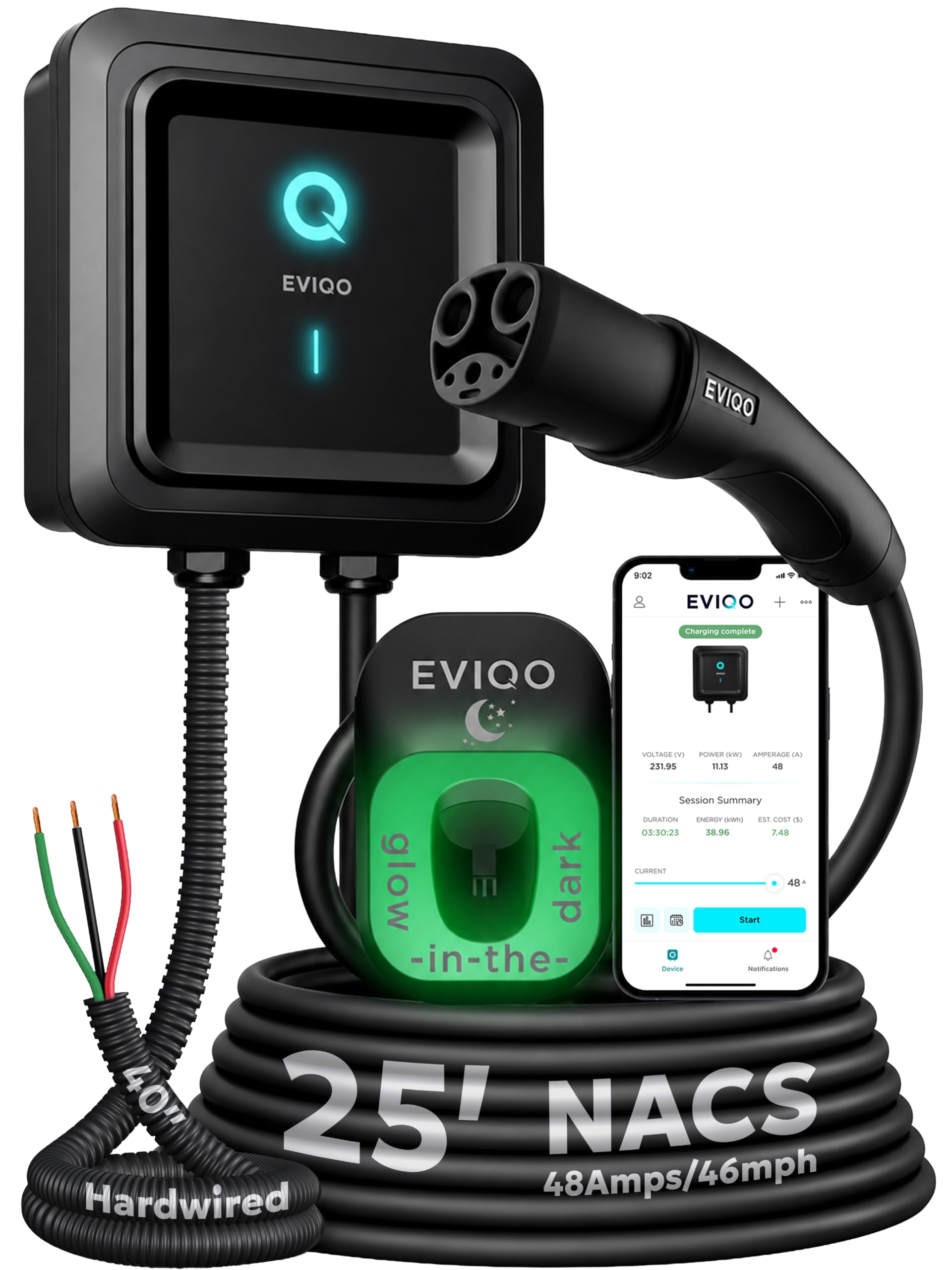
EVIQO 48A NACS

EVIQO 48A NACS

Tesla owners

Our Score 9.4/10
Check Price

Worth Noting

  • App interface is basic compared to polished competitors.
  • WiFi connectivity can drop occasionally, interrupting remote control.
Connector
NACS
Max Output
48A hardwired
Cable Length
25 ft
Installation
Hardwired

The EVIQO NACS charger integrates natively with all Tesla models, supporting the port-open button just like the Tesla Wall Connector. Build quality is a highlight – heavy-duty connectors and a durable 25-foot cable inspire confidence. For Tesla owners who want full 48A speed without the Tesla brand premium, this is a strong alternative to the Emporia NACS charger, provided you are comfortable with hardwire-only installation.

Charging performance is consistent and fast, matching the 48A rating. The smart app provides basic scheduling and energy tracking, but the interface can feel basic and WiFi connectivity may drop occasionally – a minor frustration for those who rely on remote monitoring. This charger suits Tesla owners who prioritize build quality and seamless integration over app sophistication, and who have a dedicated circuit available for hardwiring.

Tip: Hardwire installation is required; ensure you have a 60A circuit for full 48A output. If your garage has weak WiFi, consider a mesh extender to avoid disconnections.

Bottom line: For Tesla owners seeking a native NACS charger without the Tesla markup, the EVIQO delivers robust hardware and reliable daily charging – the app and WiFi quirks are manageable tradeoffs.

4

NexCyber 48A J1772

NexCyber 48A J1772

Budget 48A

Our Score 9.0/10
Check Price

Worth Noting

  • If you need a hardwired installation or plan to move the charger between locations, the plug-only design limits flexibility.
  • Tesla owners will need to purchase a J1772 adapter separately, adding $50–100 to the total cost.
Connector
J1772
Max Output
48A plug-in
Cable Length
25 ft
Installation
Plug-in

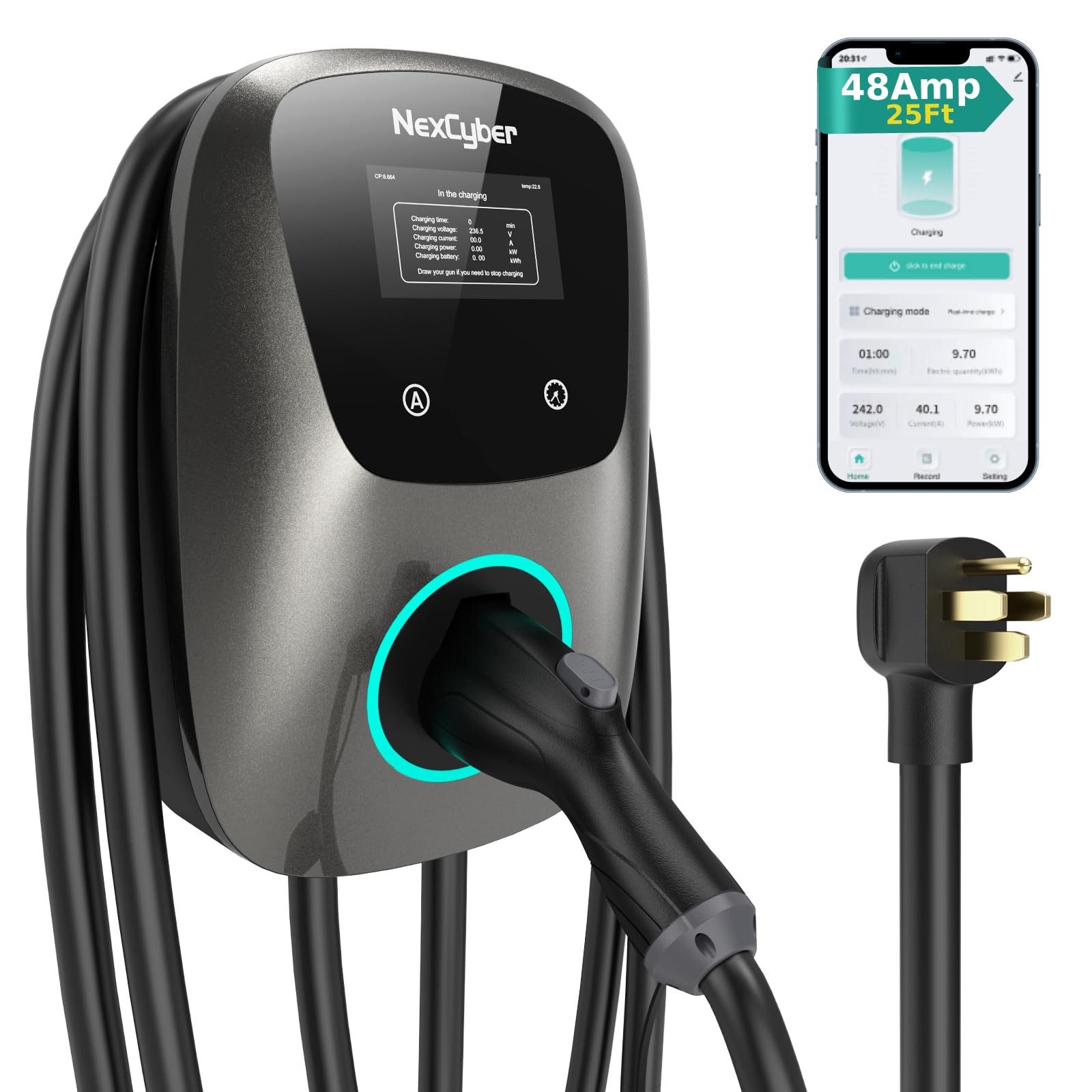
The NexCyber 48A charger provides the fastest home charging speed most EVs can accept—48 amps—along with WiFi app scheduling and monitoring, all for under $260. Its ETL and Energy Star certifications confirm safety and efficiency, and the 25-foot cable offers enough reach for most garage layouts.

This charger suits buyers who already have a NEMA 14-50 outlet and want maximum charging speed without paying a premium. The plug-only design means no hardwire option, so renters or those planning to move may need a more flexible unit. Buyer reports indicate consistent day-to-day performance and a smooth setup process.

Bottom line: A cost-effective way to get full 48A charging with smart controls, provided you have a NEMA 14-50 outlet and a J1772-compatible EV.

5

AIMILER 32A J1772

AIMILER 32A J1772

Budget 32A

Our Score 9.2/10
Check Price

Worth Noting

  • 32A output is slower than 48A chargers; large-battery EVs may need daytime top-ups
  • No hardwire option limits installation flexibility for those wanting a permanent mount
Connector
J1772
Max Output
32A plug-in
Cable Length
25 ft
Installation
Plug-in

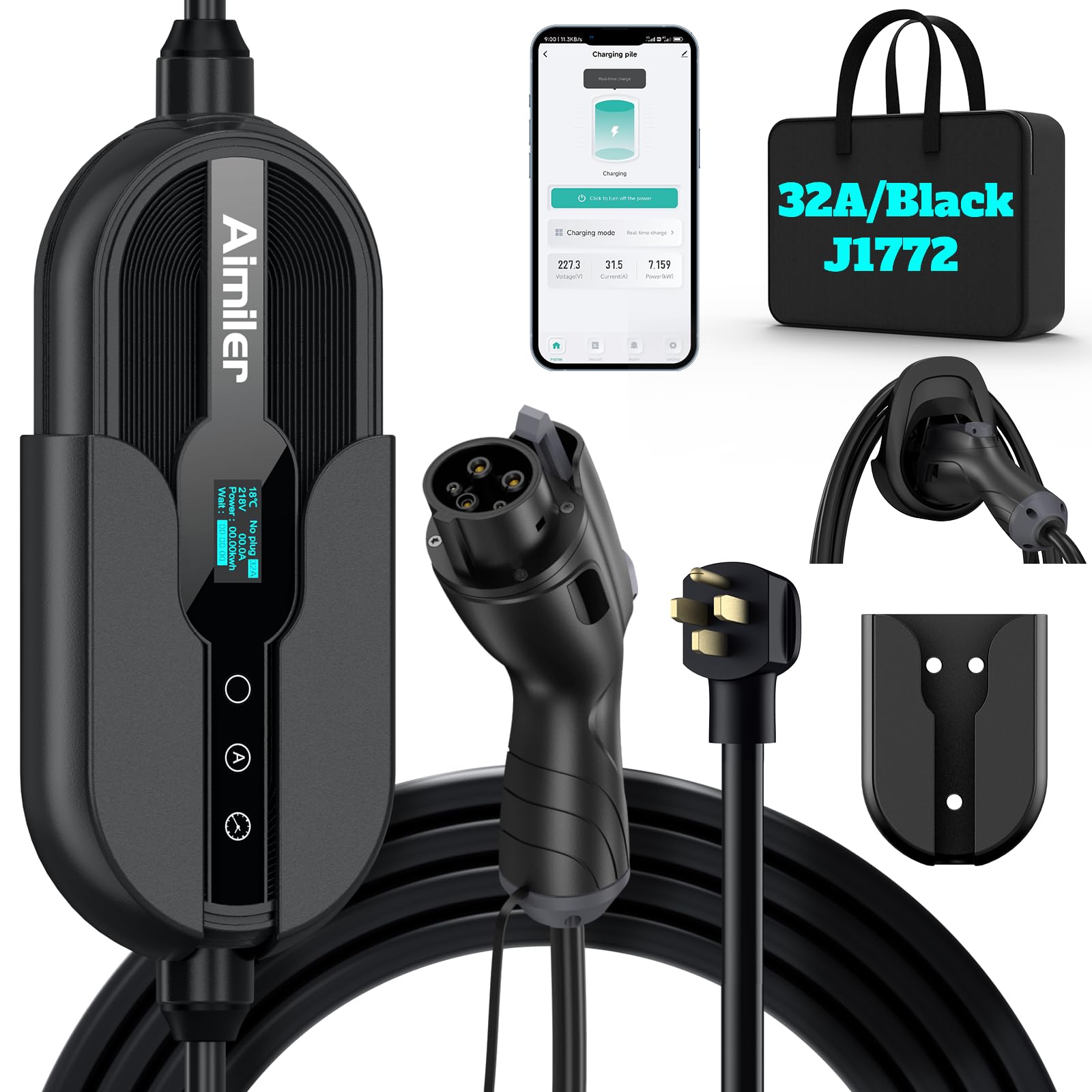
The AIMILER 32A charger delivers steady performance with a generous 25ft cable and a WiFi app that provides scheduling and energy tracking. Its plug-in NEMA 14-50 design makes installation straightforward for anyone with an existing outlet, and the build quality holds up well in daily use.

This charger suits owners of smaller-battery EVs or plug-in hybrids who don't need the extra speed of a 48A unit. For large-battery vehicles like a Ford Lightning, the 32A output may not fully top up overnight — it's better matched to cars that can reach 80% in a single charging session without pushing the limits.

Bottom line: A dependable choice for budget-conscious EV owners with smaller batteries, offering smart features and a long cable without the premium price.

6

Autel 80A J1772

Autel 80A J1772

Large EVs

Our Score 8.8/10
Check Price

Worth Noting

  • Requires a 100A circuit, which may involve an expensive panel upgrade in homes with typical 200A service.
  • Only specific large-battery EVs (Hummer EV, Silverado EV) can use 80A; for any other EV, the speed advantage is inaccessible.
Connector
J1772
Max Output
80A hardwired
Cable Length
25 ft
Installation
Hardwired

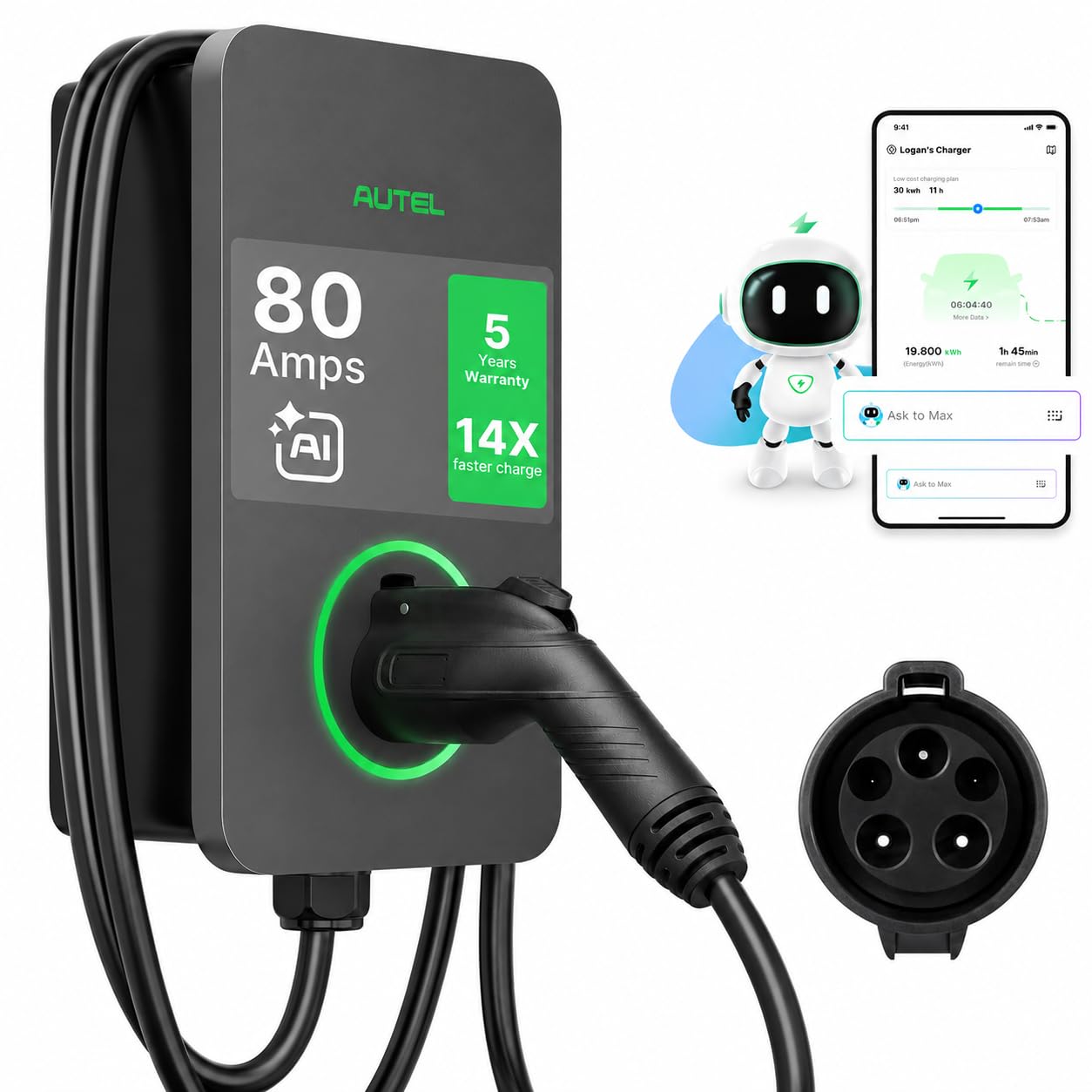
The Autel MaxiCharger 80A stands as the fastest residential Level 2 charger available, adding up to 70 miles of range per hour. That speed fully charges a Hummer EV in roughly four hours — a feat no 48A charger can match. The hardwired installation is straightforward for an electrician, and the unit itself feels solidly built for daily use.

This charger is purpose-built for owners of EVs with onboard chargers that can accept 80A, like the Hummer EV or Silverado EV. It requires a 100A circuit, which may necessitate an electrical panel upgrade. For the large majority of EVs that max out at 48A or 40A, the extra speed is unattainable, making the premium price hard to justify. The top pick Emporia J1772 offers more practical 48A charging for most households.

Tip: The AI scheduling feature can reduce charging costs by automatically running during off-peak utility hours — configure it in the Autel app for best results.

Bottom line: For the select few EV owners whose vehicles can take 80A, the Autel MaxiCharger is the only option that delivers maximum home charging speed. Everyone else will find a 48A charger more cost-effective and practical.

7

EMPORIA 48A NACS

EMPORIA 48A NACS

Tesla owners

Our Score 9.2/10
Check Price

Worth Noting

  • App has fewer features than the J1772 version, offering basic tracking only
Connector
NACS
Max Output
48A hardwired/40A plug
Cable Length
25 ft
Installation
Both

This NACS model uses Emporia's well-built hardware — easy mounting, consistent 48A charging, and native compatibility with Tesla's port-open feature. It's a cost-effective alternative to Tesla's own wall connector. The app, however, offers basic tracking without some advanced scheduling or energy monitoring found on the J1772 version. That tradeoff matters little if you primarily charge via the Tesla app or schedule at the car level.

Bottom line: Best for Tesla owners who want Emporia hardware quality and a lower price than the Tesla Wall Connector, and who don't need advanced app features.

8

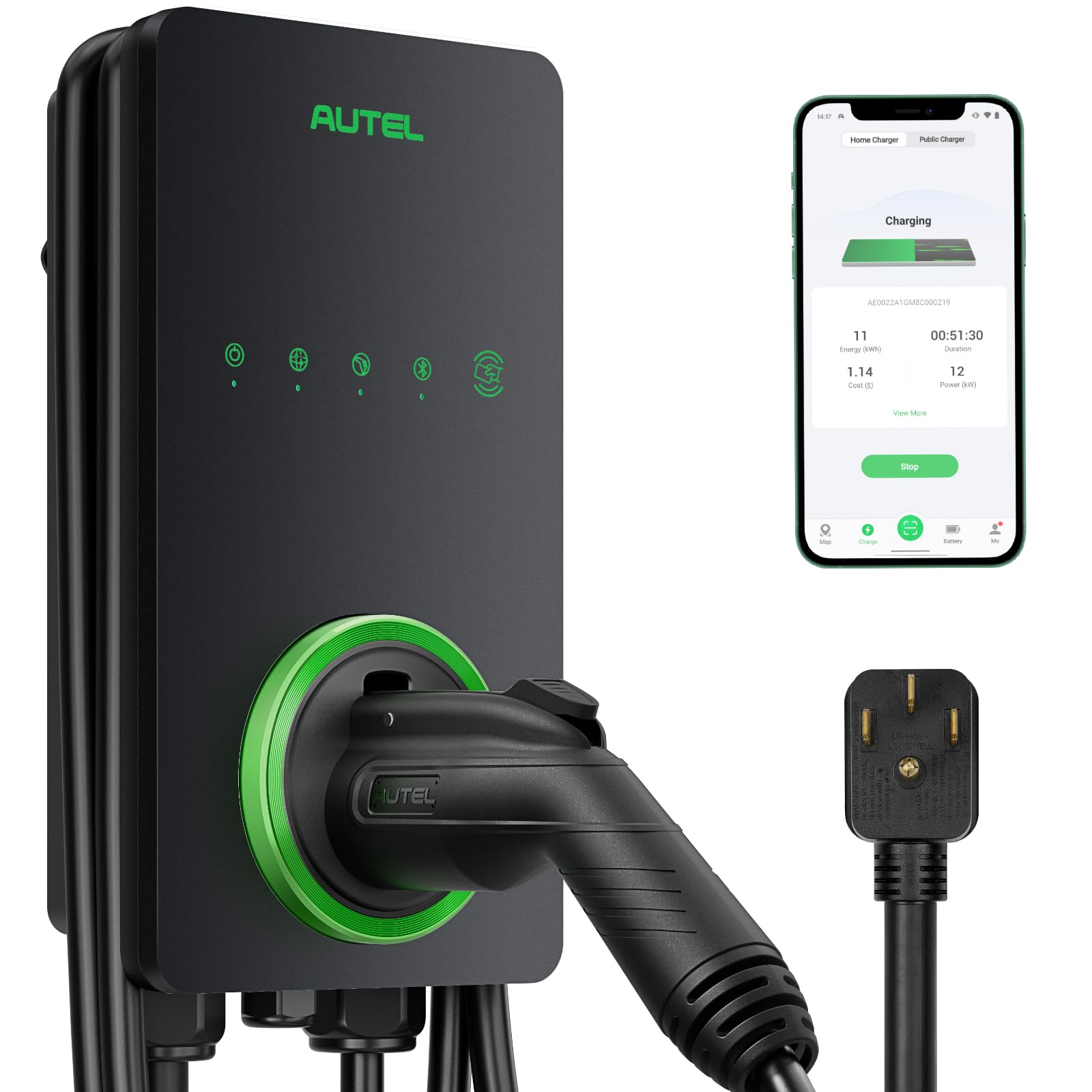
Autel 40A Plug-in

Autel 40A Plug-in

Plug-in users

Our Score 9.0/10
Check Price

Worth Noting

  • WiFi connection may be unreliable in garages with weak signal.
Connector
J1772
Max Output
40A plug-in
Cable Length
25 ft
Installation
Plug-in

The Autel 40A plug-in charger combines a quick installation process with a polished app for energy tracking and scheduling. Its 40A output suits most EVs but falls short for those who need 48A charging, and the WiFi connection can be temperamental, occasionally dropping in garages with weak signal.

Bottom line: Best for buyers with an existing NEMA 14-50 outlet who want a simple smart charger and don’t need 48A speeds.

9

EVDANCE 40A NACS

EVDANCE 40A NACS

Tesla, no app

Our Score 9.6/10
Check Price

Worth Noting

  • No WiFi, scheduling, or remote monitoring
Connector
NACS
Max Output
40A plug-in
Cable Length
25 ft
Installation
Plug-in

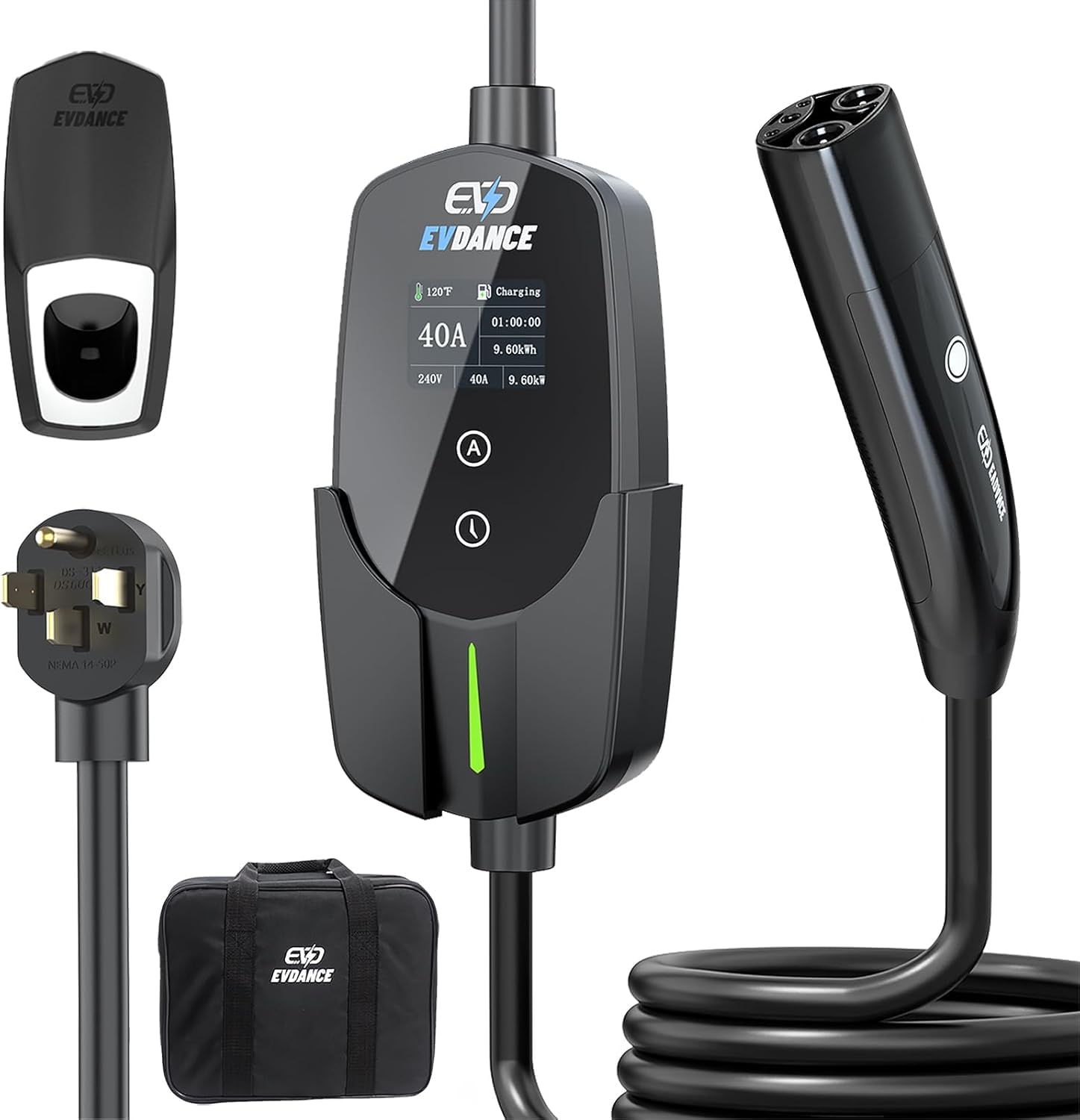
The EVDANCE Level 2 EV Charger brings a native NACS connector and solid build quality to Tesla owners at a competitive price. The 25-foot cable offers flexibility, and the TFT display provides clear charging status without needing a smartphone app. The tradeoff comes in the lack of WiFi or scheduling features, making this a simple no-frills option for those who just want to plug in and charge.

Bottom line: A straightforward pick for Tesla owners who value simplicity and don't need smart features – just plug in and charge.

10

Lectron 40A J1772

Lectron 40A J1772

Short cable

Our Score 9.2/10
Check Price

Worth Noting

  • 16 ft cable restricts placement to close parking situations
  • No WiFi or app; plug and charge only
Connector
J1772
Max Output
40A plug-in
Cable Length
16 ft
Installation
Plug-in

Solid build and ETL certification make this a straightforward plug-and-charge option for close parking setups. However, the 16-foot cable is shorter than most chargers, limiting placement, and there's no app or scheduling. This works well for those who park near their outlet and don't need smart features, but buyers with larger garages or energy-tracking needs should look elsewhere.

Bottom line: This charger fits best when your parking spot is right next to the outlet and you don't need app control — for any other scenario, a longer cable or smart features will serve better.

11

TLE LEVEL 40A J1772

TLE LEVEL 40A J1772

Budget, no app

Our Score 8.6/10
Check Price

Worth Noting

  • Lacks WiFi scheduling and energy tracking
Connector
J1772
Max Output
40A plug-in
Cable Length
25 ft
Installation
Plug-in

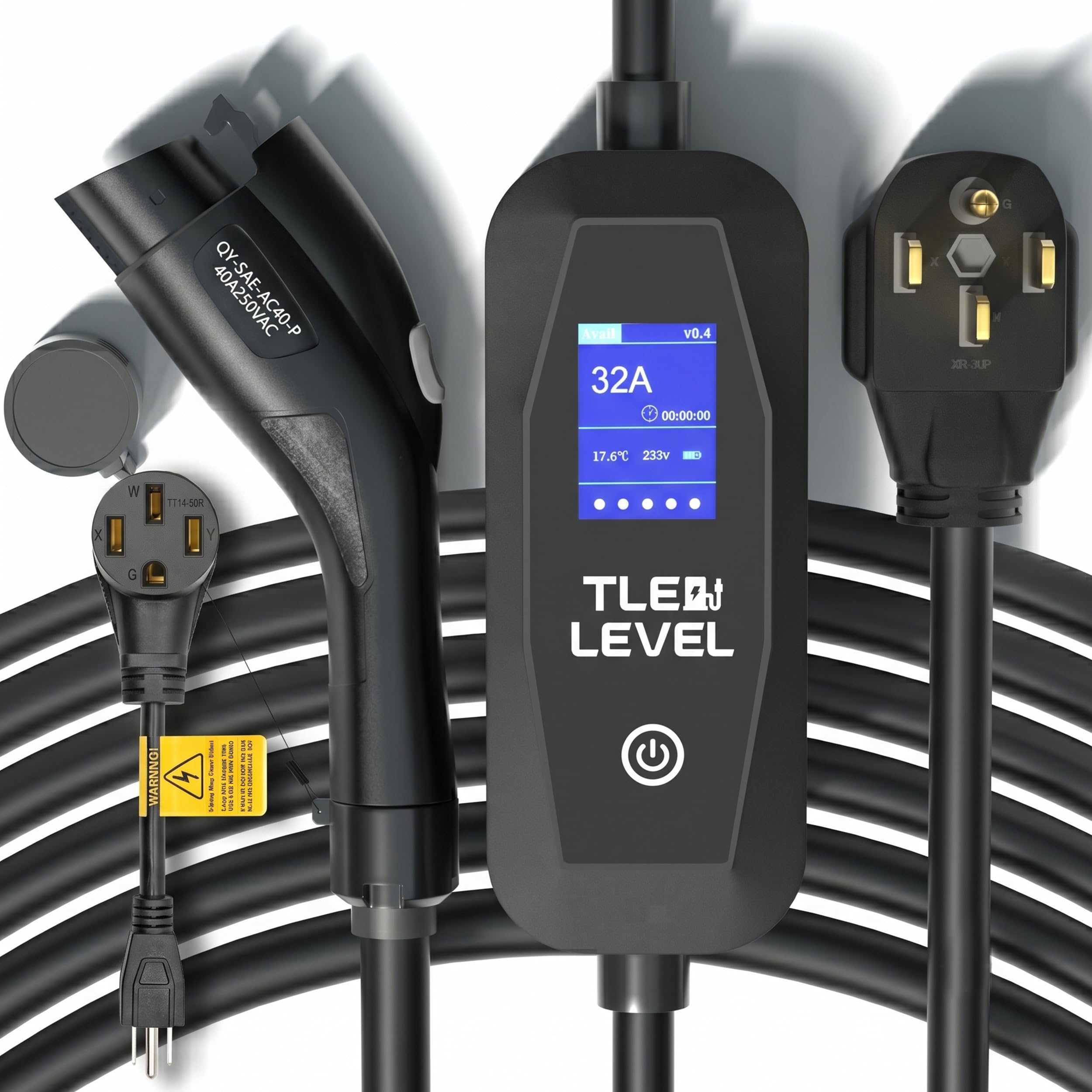
Offers a 40A output at the lowest price among plug-in chargers, ideal for basic use. The LED screen shows charging status, and the 25-foot cable provides decent reach. There is no WiFi or scheduling, so anyone wanting energy tracking or timed charging will need a different unit. Long-term durability remains unclear given the small sample of units in circulation, making it a gamble for those planning years of daily use.

Bottom line: Ideal for buyers who want fast 40A charging on a tight budget and don't need app control or long-term reliability guarantees.

12

ChargePoint HomeFlex J1772

ChargePoint HomeFlex J1772

Smart brand

Our Score 8.6/10
Check Price

Worth Noting

  • Cable may show wear sooner than expected with frequent use.
Connector
J1772
Max Output
50A hardwired
Cable Length
23 ft
Installation
Hardwired

ChargePoint HomeFlex J1772 provides a familiar user experience with a well-regarded app and charging speeds up to 45 miles per hour. Installation is simple, and cost tracking features appeal to budget-conscious owners. WiFi connectivity can drop, especially in garages with weak signals, which can affect app functionality. These reliability issues place it behind more consistent competitors like the Emporia J1772 for buyers seeking long-term dependability.

Bottom line: Best for buyers who prioritize app features and brand familiarity over long-term durability certainty.

13

ChargePoint NACS

ChargePoint NACS

Tesla brand

Our Score 8.4/10
Check Price

Worth Noting

  • WiFi connection can drop, interrupting smart features
  • Some units may have build defects out of the box
Connector
NACS
Max Output
50A hardwired
Cable Length
23 ft
Installation
Hardwired

The ChargePoint HomeFlex delivers full 48A charging speeds and easy hardwire installation for Tesla owners who already use the ChargePoint app. Pairing and smart scheduling are straightforward when the WiFi holds. However, the unit can drop its WiFi connection, and some chargers may arrive with defects or develop issues over extended use. The app interface also has occasional usability quirks. For buyers who prioritize network integration over long-term hassle-free use, this charger serves as a functional option within the ChargePoint ecosystem.

Bottom line: This charger fits Tesla owners who are already committed to the ChargePoint network and accept the possibility of WiFi dropouts and unit variation.

How to Choose

Max Output Amperage

Chargers come in 32A, 40A, 48A, and 80A variants. A 48A charger requires a 60A circuit breaker and 6 AWG wire - many homes have 50A circuits for ranges, which limits continuous charging to 40A by code. If you plug a 48A charger into a NEMA 14-50 outlet, it will automatically cap at 40A.

Your EV's onboard charger determines the maximum it can accept. A Nissan Leaf (6.6 kW) gains nothing from a 48A charger over a 32A unit. Check your vehicle's specs before buying - 48A is only useful for EVs with 11 kW+ onboard chargers.

Connector Type

J1772 is the universal standard for non-Tesla EVs. Tesla owners can use J1772 with an adapter (included with the car), but a native NACS connector offers a cleaner experience and opens the charge port door automatically. If you plan to switch vehicles or have multiple EVs, a J1772 charger with adapters is more flexible.

Installation Type

Hardwired installation connects directly to the breaker panel, allowing the full amperage rating. Plug-in models connect via a NEMA 14-50 outlet and are limited to 40A by electrical code, even if the charger advertises 48A. Hardwiring also eliminates a common failure point - the receptacle - and is safer for outdoor use.

Renters or those without a dedicated circuit may prefer plug-in for easy relocation. However, hardwired chargers often qualify for lower installation costs if you're running new wire anyway.

App Features and Connectivity

WiFi connectivity is a common pain point across many brands. Chargers that rely on a cloud app for scheduling may fail to charge if the signal drops. Some models offer Bluetooth as a backup or allow offline operation - a critical feature if your garage has weak WiFi.

Look for chargers that store schedules locally and can function without internet. Basic models without any app eliminate WiFi issues entirely but lose cost tracking and remote status. Decide whether you need smart features or just a reliable daily charge.

Cable Length

A 25-foot cable is the standard for most installations, giving room to reach either side of the vehicle. A 16-foot cable (like the Lectron) may force you to park awkwardly close to the unit. If your charger outlet is on a far wall, longer cables reduce daily hassle.

Frequently Asked Questions