Tools & DIY

8 Best Outlet Tester 2026: Know Which Features Actually Matter

Looking for the best outlet tester? This guide helps you choose between basic wiring checkers, GFCI testers, and advanced models with voltage readout and trip time.

Many outlet testers leave you squinting at dim LEDs or worse, lack GFCI protection testing entirely. The difference between a basic wiring checker and a full diagnostic tool can mean catching a dangerous outlet or missing it. A tester that cannot handle bright sunlight or does not detect ground faults is not doing its job.

Indicator brightness matters more than most buyers expect, especially when testing outdoors or in bright rooms. Basic neon lights are often too dim, while LCD displays need batteries that add maintenance. Similarly, some testers skip GFCI testing altogether, a critical oversight.

For many homeowners, a simple $10 tester that checks wiring is sufficient. But if you need voltage readout or GFCI trip time, you will step up to a model that uses batteries. That trade-off is central to this guide, and we will help you decide which features actually matter for your situation.

1

Klein RT250

Top Pick
Klein RT250

Detailed diagnostics

Our Score 9.6/10
Check Price

Worth Noting

  • Some units may stop working after minimal use
GFCI Test
Yes
Voltage Readout
Yes
Indicator Readability
LCD display

While most outlet testers rely on a simple pattern of LED lights, the RT250 adds a bright LCD that shows exact voltage and GFCI trip time. That data helps identify intermittent wiring issues or slow breakers that basic pass-fail indicators would miss. The voltage readout alone makes it possible to check if an outlet is delivering proper 120V without grabbing a multimeter.

Plugging it in is all it takes: the LCD clearly labels the detected wiring condition, and the auto-hold feature keeps the last reading displayed after you unplug – useful when testing recessed or behind-furniture outlets. The trip time display lets you verify GFCI response speed, not just whether it trips.

Best suited for homeowners who want more than a pass-fail answer, or electricians who need a quick voltage check and GFCI timing on the job. The tradeoff: it runs on two AAA batteries, and a small portion of units have shown early failure – a quality-control variance rather than a design flaw. If you prefer a tool that never needs batteries, a simpler LED tester like Klein’s RT210 avoids that dependency.

Tip: Install fresh batteries before first use; the LCD backlight draws power when plugged in and auto-hold maintains the reading after removal.

Bottom line: If you want actual voltage numbers and GFCI trip time without hauling out a multimeter, this is the outlet tester to reach for.

2

Klein RT210

Klein RT210

Basic GFCI testing

Our Score 9.6/10
Check Price

Worth Noting

  • No voltage readout or trip time
GFCI Test
Yes
Voltage Readout
No
Indicator Readability
Bright LEDs

The RT210's three bright LEDs clearly indicate correct wiring and GFCI trip status. Unlike the top-pick RT250, it skips digital readouts and battery dependency, keeping the interface simple and the cost low. The 6.6 ft drop rating means it can survive a tumble from a ladder without issue.

This tester suits homeowners and DIYers who need a quick pass/fail check on standard 120V outlets. The lack of voltage display and trip time means it won't satisfy professionals requiring detailed diagnostics, but for routine safety checks it provides everything necessary at a fraction of the cost.

Tip: The LED chart on the tester covers all common wiring faults. For voltage measurement or precise trip time, consider the RT250 instead.

Bottom line: For basic outlet testing and GFCI checks, the RT210 delivers consistent results without extra cost – a practical choice for the home toolbox.

3

Fluke ST120+

Fluke ST120+

Breaker identification

Our Score 9.6/10
Check Price

Worth Noting

  • In noisy environments the beeper tone may not be audible enough
  • Centered prongs can prevent the tester from reaching recessed or outdoor outlet boxes
GFCI Test
Yes
Voltage Readout
No
Indicator Readability
Bright LEDs

The Fluke ST120+ stands out in the outlet tester category with its built-in audible beeper, a feature absent from the top pick. Unlike the RT250's LCD display, this tester uses the beeper and bright LEDs to signal wiring faults and GFCI function, making breaker identification quicker in quiet indoor settings. The tone works well for circuit tracing, though it may not cut through noise on active job sites.

This tester suits electricians and homeowners who work in quiet indoor environments and need to identify breakers efficiently. The beeper's volume is adequate for most home use, but in louder spaces you'll rely on the visual LEDs instead. The centered prongs can also be awkward for recessed outdoor outlets, which limits its fit for some exterior boxes.

Tip: If the centered prongs don't fit a recessed outlet, plug the tester into a short indoor extension cord first.

Bottom line: For electricians who trace circuits in quiet indoor settings, the ST120+'s audible beeper is a genuine time-saver. If you need a louder tone or need to test recessed outdoor outlets, the RT250 is a better match.

4

Sperry GFI6302

Sperry GFI6302

Rugged job site

Our Score 9.4/10
Check Price

Worth Noting

  • Prongs may loosen and the test button can stick after heavy use.
GFCI Test
Yes
Voltage Readout
No
Indicator Readability
Neon lights

The Sperry GFI6302 is built to survive conditions that send other testers to the trash. It's rated for a 10-foot drop and 250-pound crush load, making it a solid choice for jobsite electricians. GFCI testing works as expected, and the color-coded neon lights cover seven wiring patterns.

This tester suits electricians who work under controlled indoor lighting and prioritize toughness over display brightness. The neon indicators are dim — fine in a basement or garage, but frustrating outdoors under direct sun. For those who need bright, easily read results in bright conditions, a model with LCD readout is a better fit.

Bottom line: A rugged workhorse for indoor jobsite use, but buyers who test outdoors should look elsewhere.

5

Southwire 40022S

Southwire 40022S

Budget GFCI testing

Our Score 9.4/10
Check Price

Worth Noting

  • No voltage readout or GFCI trip time measurement limits diagnostic detail.
  • Not weather-resistant or built for outdoor job site conditions
GFCI Test
Yes
Voltage Readout
No
Indicator Readability
LEDs

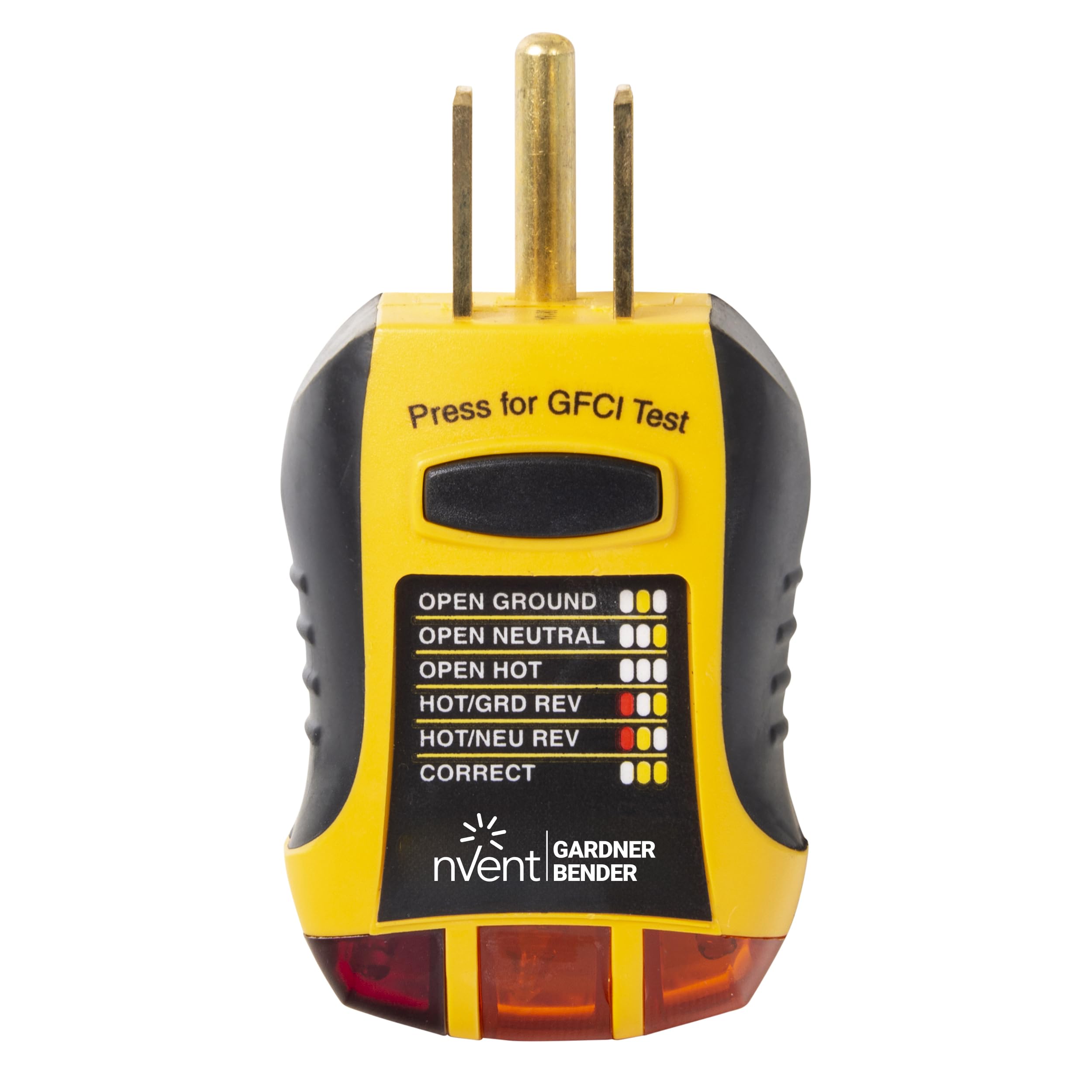
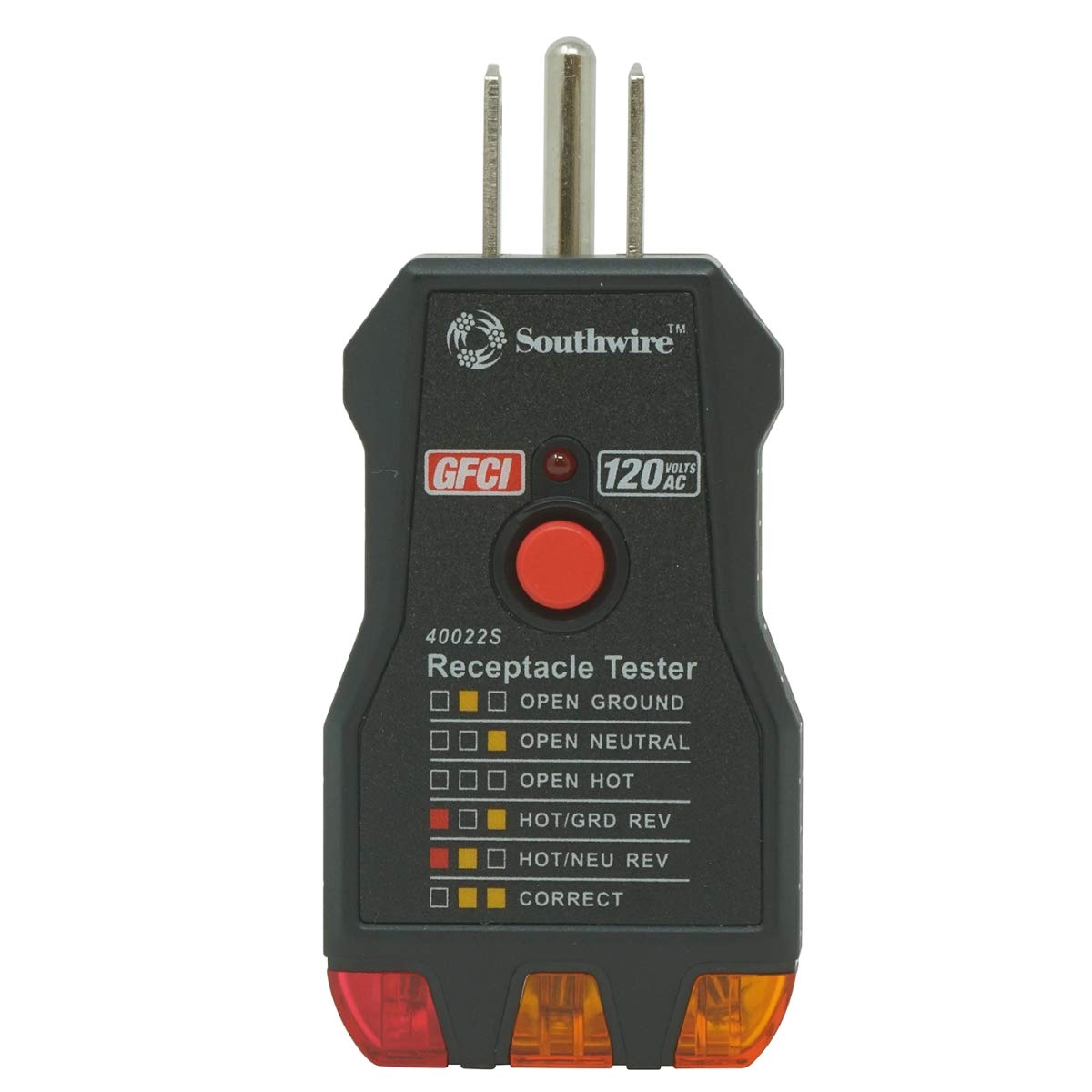
For less than half the price of the Klein RT210, the Southwire tester delivers the same core GFCI and wiring error detection. The tradeoff is that the label printing can be difficult to read in dim light, and the build feels less robust than its pricier counterpart.

This tester suits homeowners and DIYers who need a spare tool for occasional indoor use. It checks for open ground, reversed polarity, and GFCI protection with clear LED indicators. It's not for those requiring voltage readout, trip time diagnostics, or outdoor durability.

The compact housing fits into tight outlet spaces, and the push-button GFCI test is simple to activate. For a budget-priced tester, it covers the essential safety checks without extra features that inflate cost.

Tip: Use a bright work light to read the label easily in dim areas.

Bottom line: For under $8, the Southwire is a dependable GFCI checker for the casual user who doesn't need advanced diagnostics or outdoor durability.

6

Gardner Bender GFI-3501

Gardner Bender GFI-3501

Budget backup tester

Our Score 9.4/10
Check Price

Worth Noting

  • Indicator lights are dim and difficult to read in moderate or bright light conditions.
GFCI Test
Yes
Voltage Readout
No
Indicator Readability
Dim LEDs

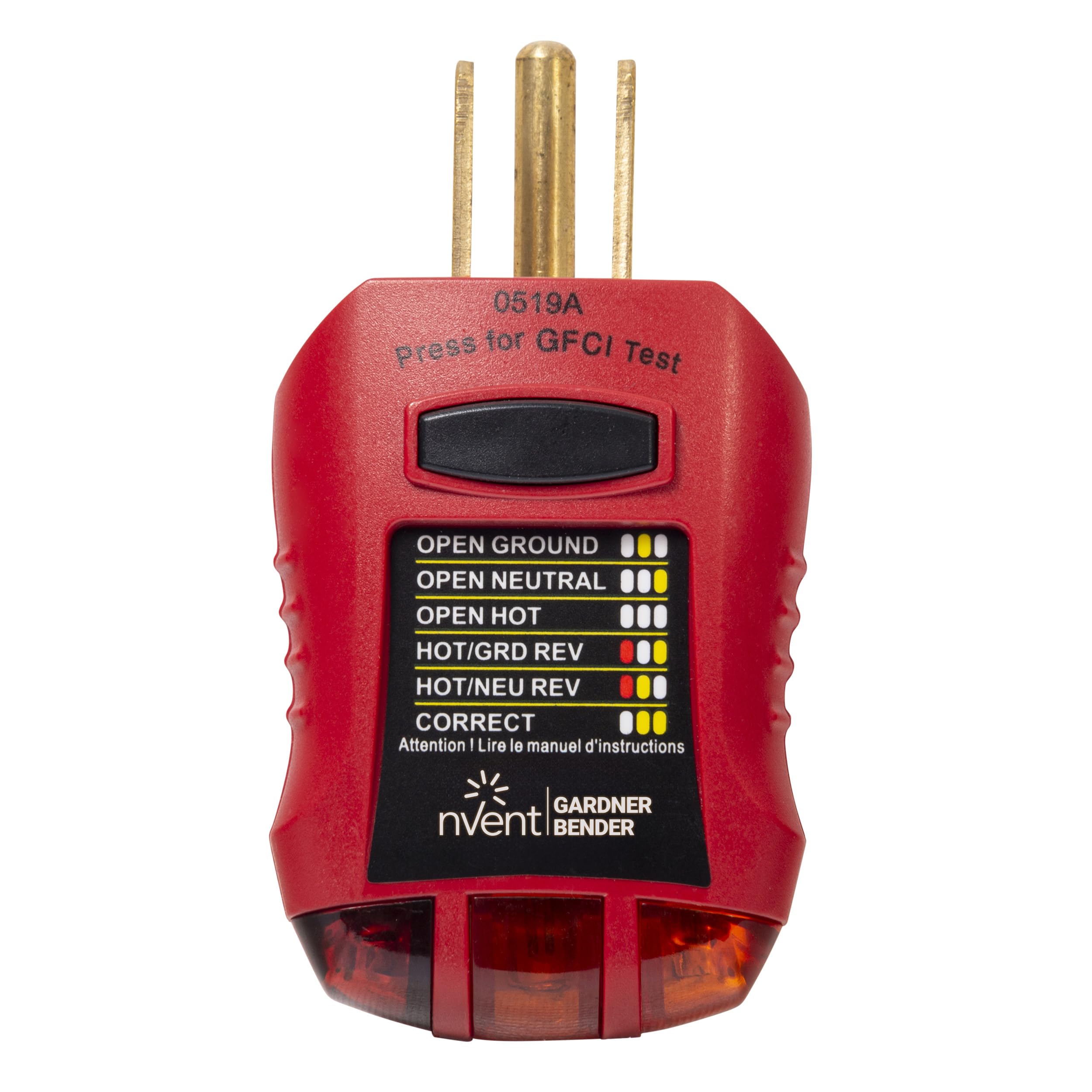
The Gardner Bender GFI-3501 verifies GFCI protection and wiring errors for under $10, making it the lowest-cost option for occasional indoor checks. Its compact size fits easily in a drawer as a backup. However, the yellow and red LEDs are dim and difficult to distinguish in anything but well-lit indoor conditions, and the build feels inexpensive. This limits its usefulness to controlled environments — not for outdoor or quick-glance testing.

Bottom line: Best for buyers who only need occasional GFCI verification in well-lit indoor areas and want the lowest possible price.

7

Klein RT110

Klein RT110

Basic wiring checks

Our Score 9.6/10
Check Price

Worth Noting

  • No GFCI test capability
GFCI Test
No
Voltage Readout
No
Indicator Readability
Basic LEDs

The Klein RT110 handles basic wiring errors like open neutral or reversed polarity with clear LED indicators. Its low price and simple plug-in operation make it a convenient backup. However, the absence of any GFCI test function means it cannot verify safety on protected circuits — a gap that limits it to use as a secondary tool for quick checks where GFCI is already confirmed by another device.

Bottom line: Best as a budget spare for quick wiring checks when you already have a GFCI-capable tester for safety verification.

8

Klein RT310

Klein RT310

AFCI testing

Our Score 9.4/10
Check Price

Worth Noting

  • Button labels may wear off with heavy use, making readings hard to identify.
  • AFCI testing can cease to function in some units over time.
GFCI Test
Yes
Voltage Readout
No
Indicator Readability

This tester brings a unique capability to the outlet tester category: it can verify AFCI protection in modern arc fault breakers. For home inspectors and electricians working with these breakers, that is a useful addition to standard GFCI and wiring checks. However, AFCI functionality may be lost in some units over time, and button labels can wear off with regular use. The premium price reflects this niche feature rather than general-purpose value; if you don't need AFCI testing, simpler models cost a fraction and offer greater consistency.

Bottom line: Best suited for professionals whose work requires arc fault testing and who can accept the higher cost and possible unit variability.

How to Choose

GFCI Test Capability

A GFCI outlet tester includes a button that simulates a ground fault to verify the outlet's protection mechanism works. Without this test, you only know the wiring is correct, not whether the outlet will actually shut off power during a fault. Many basic testers omit this feature, so checking for a GFCI test button is essential.

Indicator Readability

The brightness and type of indicator (neon vs LED vs LCD) determine how easily you can read results in different lighting. Neon lights are often too dim for outdoor or brightly lit rooms, while bright LEDs or LCDs remain legible in sunlight.

If you test outlets in garages, basements, or outdoor areas, prioritize a tester with bright LEDs or an LCD display. Otherwise, you may find yourself unable to read the result at a glance.

Voltage Readout

Voltage readout shows the actual voltage at the outlet, useful for diagnosing undervoltage or overvoltage conditions. This feature typically requires a digital display and battery power. For most homeowners, it is a nice-to-have, but for electricians troubleshooting intermittent issues, it can be invaluable.

Durability and Drop Resistance

Testers that see regular use on job sites need to survive drops and rough handling. Models with rubberized housings or high drop ratings (6 feet or more) are more likely to survive a fall. A cheap tester that breaks after one drop will cost more in the long run.

Extra Features

Some testers add trip time display, which shows how quickly the GFCI trips, useful for assessing outlet health. Others include AFCI testing for arc fault breakers, a requirement in modern homes. These features add cost but are valuable for professionals and home inspectors.

Frequently Asked Questions