Cameras & Photography

9 Best Monopod of 2026: All-In-One Support for Photo and Video

Find the right monopod for your camera - from budget poles to versatile supports with fluid heads and folding feet.

Monopods have evolved beyond simple sticks. The modern market blurs the line between a support pole and a mini tripod, with folding feet and fluid heads becoming common in the mid-range. Many buyers now expect a single device that handles both stills and video without compromise.

The challenge is that each design choice - material, head type, base - shifts the balance between portability, stability, and smooth motion. A carbon fiber travel pole saves weight but lacks the panning control of a video monopod. An aluminum workhorse supports heavy lenses but may feel heavy on a hike.

This guide cuts through the trade-offs by matching specific use-cases to the features that actually matter in practice. Whether you need a compact travel companion, a rugged support for a 150-600mm lens, or a video-ready kit for event shooting, the right monopod hinges on understanding these mechanics - not on star ratings.

1

NEEWER GM76

Top Pick
NEEWER GM76

Photo & video

Our Score 9.2/10
Check Price

Worth Noting

  • At over 3 lb, it is heavier than carbon fiber alternatives
Material
Aluminum
Head Type
Fluid head
Feet / Base
Folding feet + base
Load Capacity
13.2 lb

The NEEWER GM76 arrives ready to shoot out of the box — a fluid head with pan bar, folding feet, and a solid aluminum column that extends to 70.5 inches. The head provides smooth pan and tilt control without the jerky motion common on budget units, and the three folding feet transform it from a monopod into a stable mini-tripod for long exposures or video interviews. At 13.2 lb capacity, it holds standard DSLR/mirrorless kits with telephoto zooms without flexing.

In the field, the flip locks are quick to release and grip firmly, and the fluid head's drag is consistent enough for controlled panning during event coverage. The folding feet add about a pound of weight but give confidence on uneven ground. Users who carry the monopod for extended periods notice the 3+ lb heft — it's a trade-off that comes with the aluminum build and included head, but for studio-to-street hybrid use, the stability is worth the extra ounces.

This setup suits general-purpose photographers and videographers who need one support for photo and video tasks without juggling separate heads and bases. Event shooters on a budget will appreciate having a pan bar and feet included. However, the GM76 is not the right pick for ultralight travel (carbon fiber rivals save a full pound) or for supporting heavy telephoto lenses above 6 kg. If you prioritize minimal carry weight, a headless carbon pole plus a separate head will be lighter, but you'll pay more and lose the integrated convenience.

Compared to the IFOOTAGE Cobra 3's innovative foot-pedal locking, the GM76 uses traditional flip locks — slower to adjust but simpler and less to go wrong. And unlike the Sirui AM-404FL's ball head, the fluid head here is purpose-built for video. For a complete kit at this price, the GM76 undercuts competitors that sell head and base separately, backed by the highest review count among complete photography monopods in its class.

Tip: Consider a shoulder strap or waist holster if you'll carry it for hours; the stability gain offsets the extra weight.

Bottom line: For photographers and videographers who want a complete, capable monopod without spending extra on a head and base, the NEEWER GM76 delivers where it counts.

2

IFOOTAGE Cobra 3

IFOOTAGE Cobra 3

Sports & wildlife

Our Score 9.4/10
Check Price

Worth Noting

  • Pedal mechanism may feel stiff initially until the lock cycles a few times.
  • Premium price places it above budget-friendly alternatives.
Material
Carbon fiber
Head Type
Ball head
Feet / Base
Detachable feet
Load Capacity
17.6 lb

The IFOOTAGE Cobra 3 replaces traditional twist locks with a foot-pedal system that lets you change height and swivel the base 360° without taking your eye off the subject or bending down. The carbon fiber build keeps weight below 3 lb while supporting a 17.6 lb payload, making it a lightweight option for carrying with a telephoto lens. Unlike the top-pick NEEWER GM76, which pairs a fluid head with aluminum legs, the Cobra 3 uses a ball head — better suited for still photography than smooth video panning.

This monopod fits sports and wildlife photographers who work on uneven terrain and need rapid height adjustments without fumbling with locks. The pedal mechanism has a short learning curve — some users note minor stiffness until broken in — and the premium price reflects the specialized design. For shooters who prefer twist-lock simplicity or need a fluid head for video, alternatives like the NEEWER GM76 serve a broader range of uses at a lower cost.

Tip: Cycle the pedal lock through its full range a few times after unboxing to loosen the mechanism and eliminate initial stiffness.

Bottom line: For active field shooters who value hands-free speed over twist-lock tradition, the Cobra 3 offers a distinctive tool — at a cost that matches its specialization.

3

Sirui P-326

Sirui P-326

Travel & hiking

Our Score 9.2/10
Check Price

Worth Noting

  • Six-section twist locks take time to fully extend and retract.
  • No head included; separate purchase required for any pan or tilt movement.
Material
Carbon fiber
Head Type
None included
Feet / Base
Rubber foot
Load Capacity
22 lb

The P-326's folded length of 15 inches and weight under a pound make it the most packable carbon fiber monopod at this price. Unlike the complete kit top pick, this is a bare pole designed for photographers who already own a head and prioritize luggage space over all-in-one convenience. The six-section design fits in a carry-on but requires many twist locks to extend and retract.

This monopod suits hikers and travelers who value minimal weight and packed size above quick deployment. It is not for video shooters needing a fluid head, nor for those who want to set up rapidly in the field. Buyers must supply their own ball head — a separate purchase. The carbon fiber build feels sturdy and professional-grade, but the many twist locks can be tedious if you need to collapse and extend frequently throughout a shoot.

Tip: Extending all six sections takes about 20 seconds — plan ahead for group shots or fast-moving subjects.

Bottom line: For photographers who already own a ball head and need the most compact travel monopod under 1 pound, the P-326 delivers on weight and packability at a fair price — just plan for the extra setup time.

4

Manfrotto Element

Manfrotto Element

Budget heavy load

Our Score 9.2/10
Check Price

Worth Noting

  • Twist-lock collars can become stiff or wear over time, requiring occasional maintenance
Material
Aluminum
Head Type
None included
Feet / Base
Rubber foot
Load Capacity
33.1 lb

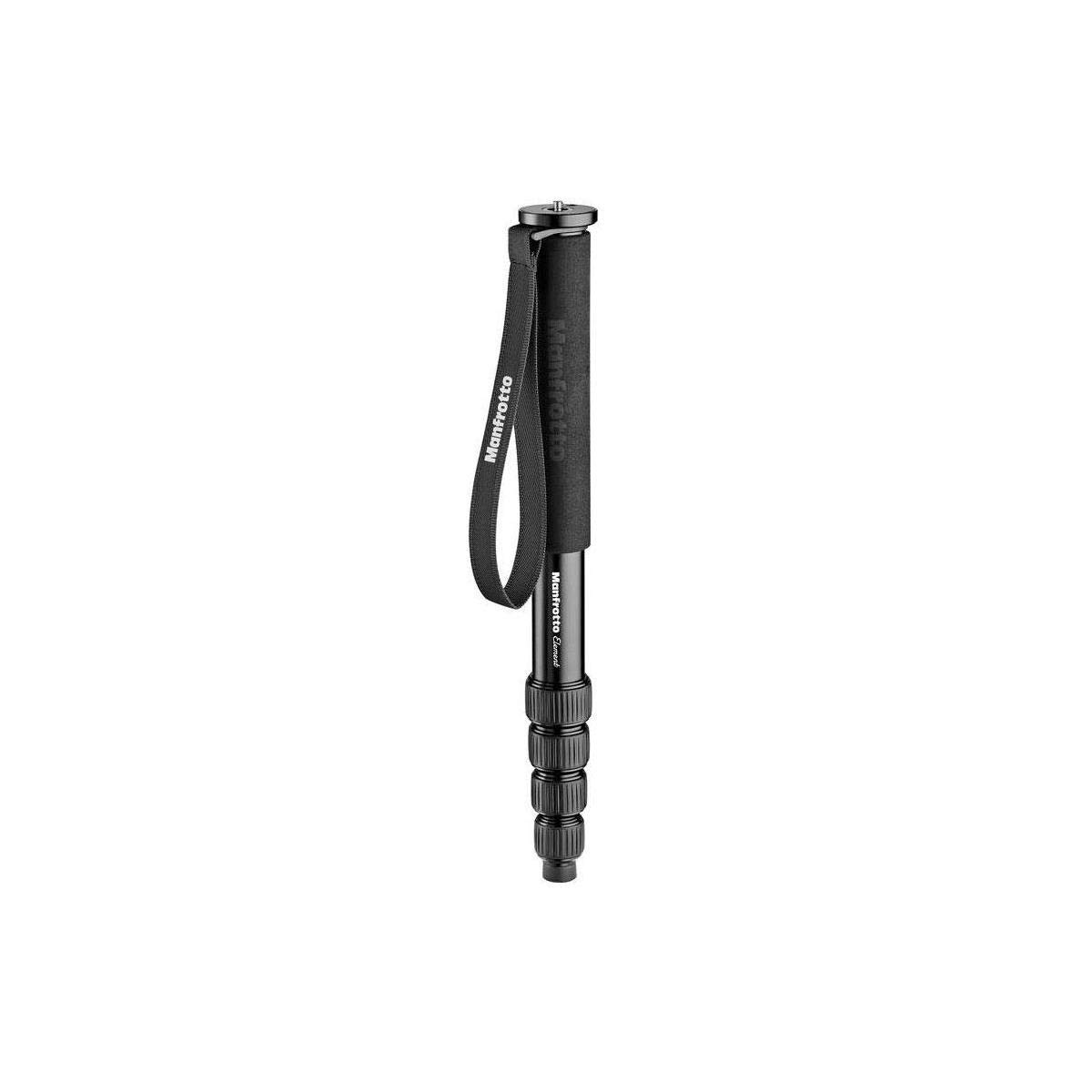
The Manfrotto Element supports up to 33 pounds despite weighing under 2 pounds itself – a load rating that matches or beats carbon fiber poles costing twice as much. Its 5-section aluminum design folds to just 16.3 inches, making it easy to stash in a backpack.

This monopod is headless, so it suits photographers who already own a head or plan to add one. The twist-lock collars may become stiff over extended use, but the overall build is sturdy with no wobble even under heavy loads.

In practice, the Element feels solid – the leg locks hold without slipping, and the rubber foot provides good grip on most surfaces. The aluminum surface can feel cold to the touch in winter, a minor trade-off for the weight savings.

Tip: If twist locks become stiff, apply a small amount of silicone lubricant to the threads.

Bottom line: For photographers who already own a head and want maximum load capacity without paying for carbon fiber, the Manfrotto Element is a smart, durable choice.

5

Sirui AM-404FL

Sirui AM-404FL

Heavy telephoto

Our Score 9.2/10
Check Price

Worth Noting

  • Aluminum body adds weight compared to carbon fiber alternatives
  • Ball head lacks fluid damping for smooth video panning
Material
Aluminum
Head Type
Ball head
Feet / Base
Folding feet + base
Load Capacity
26.4 lb

The Sirui AM-404FL supports up to 26.4 lb of gear on a single aluminum leg, a payload that leaves the compact carbon fiber travel sticks far behind. Its detachable folding feet convert the monopod into a low tripod or extension arm, giving you three setups from one pole.

This monopod suits photographers working with heavy telephoto lenses, event videographers who need a stable base with panning, and anyone who prioritizes load capacity over carrying weight. The included ball head handles stills and casual panning, but it is not a fluid head — smooth video pans require either manual technique or a head swap. At 3.1 lb the aluminum build is heavier than carbon alternatives, so long hikes will remind you it is there.

The quick-release system and 3-in-1 base let you switch between monopod, extension, and tripod modes without tools. The 360-degree pan collar works smoothly for following action at events, though the ball head itself demands a deliberate touch to avoid jarring moves.

Tip: The aluminum construction adds noticeable weight — consider a padded strap for extended handheld carrying.

Bottom line: If you need to support exceptionally heavy lenses and don't mind the extra weight, the Sirui AM-404FL delivers unmatched payload capacity at a reasonable price.

6

Amazon Basics 67"

Amazon Basics 67"

Budget beginner

Our Score 9.2/10
Check Price

Worth Noting

  • No head included
  • Twist lock sections can loosen over extended use, requiring occasional retightening.
Material
Aluminum
Head Type
None included
Feet / Base
Rubber foot
Load Capacity
6.6 lb

This aluminum pole offers surprising rigidity for its weight — under one pound — and secures a DSLR with telephoto lens without wobble. The four-section design collapses to 21 inches, making it easy to pack. For simple photo support, it is a solid choice. However, the lack of a head means you will need to buy one separately for any pan/tilt control, and the twist lock sections can loosen over time, requiring occasional retightening. The 6.6-pound capacity rules out heavy telephoto lenses or video use. If your needs are straightforward still photography on a tight budget, this monopod gets the job done without fuss.

Bottom line: Ideal for photographers who need a lightweight, low-cost pole for static shots and do not require video features or a built-in head.

7

Avella CD324

Avella CD324

Carbon video

Our Score 9.2/10
Check Price

Worth Noting

  • Leg locking mechanism may not hold securely over time, requiring pre-use checks.
Material
Carbon fiber
Head Type
Fluid head
Feet / Base
Removable feet
Load Capacity
13.2 lb

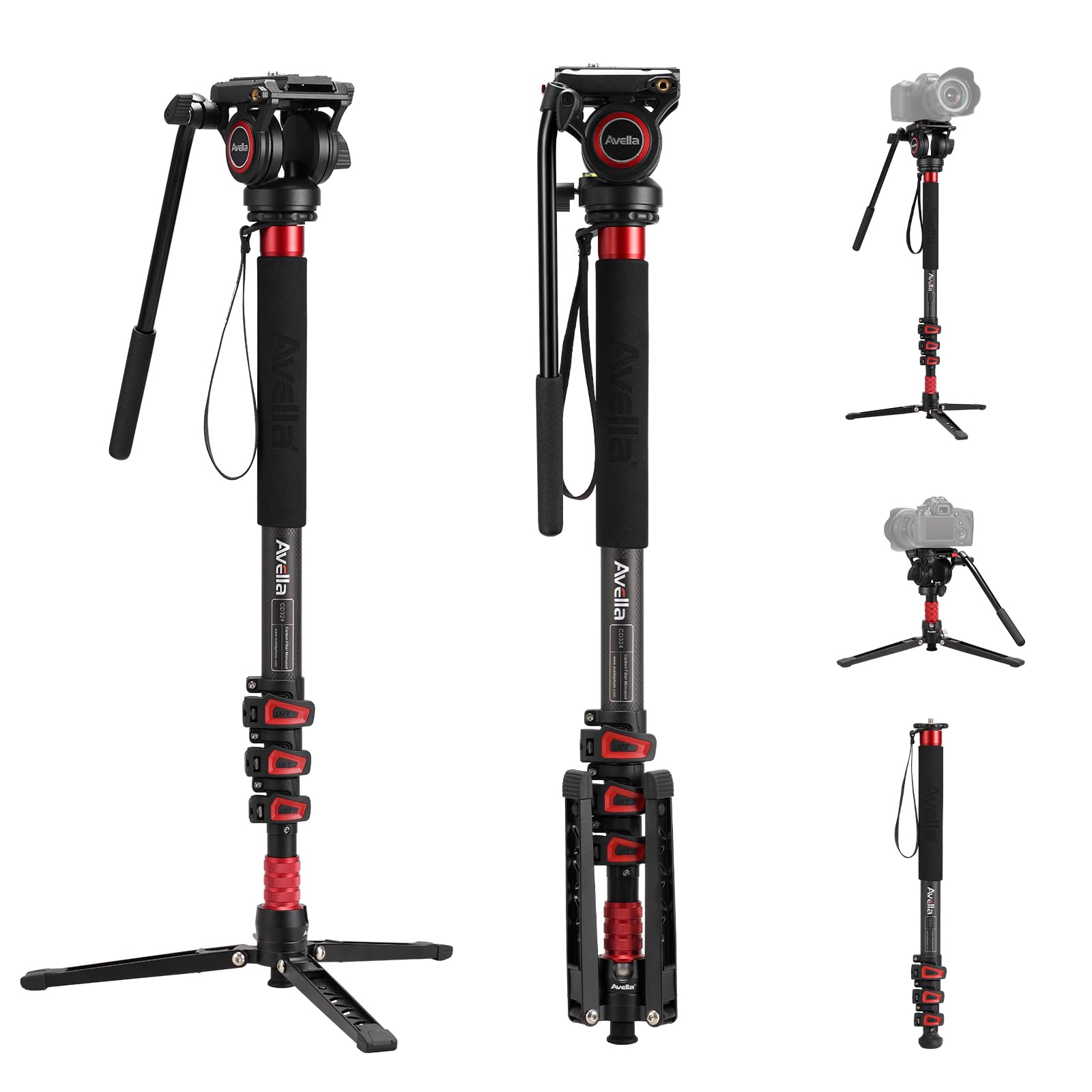
The Avella CD324 combines a lightweight carbon fiber pole with a fluid head and folding feet at a mid-range price, making it an attractive option for videographers seeking a portable support for event or travel work. The fluid head provides smooth pans and tilts, and the overall build feels solid for the weight class. However, the locking mechanism that secures the leg sections has shown durability concerns in some units, meaning buyers should check each lock before relying on the monopod under load. This inconsistency prevents it from being a set-and-forget tool, but for those who don't mind a quick pre-check, it remains a strong value.

Bottom line: Best for videographers who prioritize weight and price over absolute out-of-box reliability, and are comfortable with a quick pre-use check.

8

COMAN KX3232

COMAN KX3232

Hybrid shooting

Our Score 8.8/10
Check Price

Worth Noting

  • At over 3 lb, not a travel-friendly option for backpacking or long walks
Material
Aluminum
Head Type
Q6 fluid head
Feet / Base
Folding feet
Load Capacity
22 lb

The COMAN KX3232Q6 pairs a smooth Q6 fluid head with a robust aluminum build, giving hybrid shooters a complete video-ready support that works directly with DJI RS gimbals. Its 22 lb load capacity handles larger camera setups without flex. The tradeoff is weight: the aluminum construction makes it heavier than carbon fiber poles, so this monopod is best suited for local shoots or studio use rather than packing for long treks.

Tip: If you plan to carry it frequently, consider a carbon fiber alternative; this aluminum monopod is better for studio or local shoots.

Bottom line: Best for hybrid shooters who need a fluid head and gimbal compatibility without the premium price, but not for those seeking a lightweight travel pole.

9

Manfrotto 290 CF

Manfrotto 290 CF

Carbon pole only

Our Score 9.0/10
Check Price

Worth Noting

  • Rubber foot may wear prematurely if the monopod is used as a walking stick.
  • Maximum height of 59 inches may be insufficient for taller photographers.
Material
Carbon fiber
Head Type
None included
Feet / Base
Rubber foot
Load Capacity
22 lb

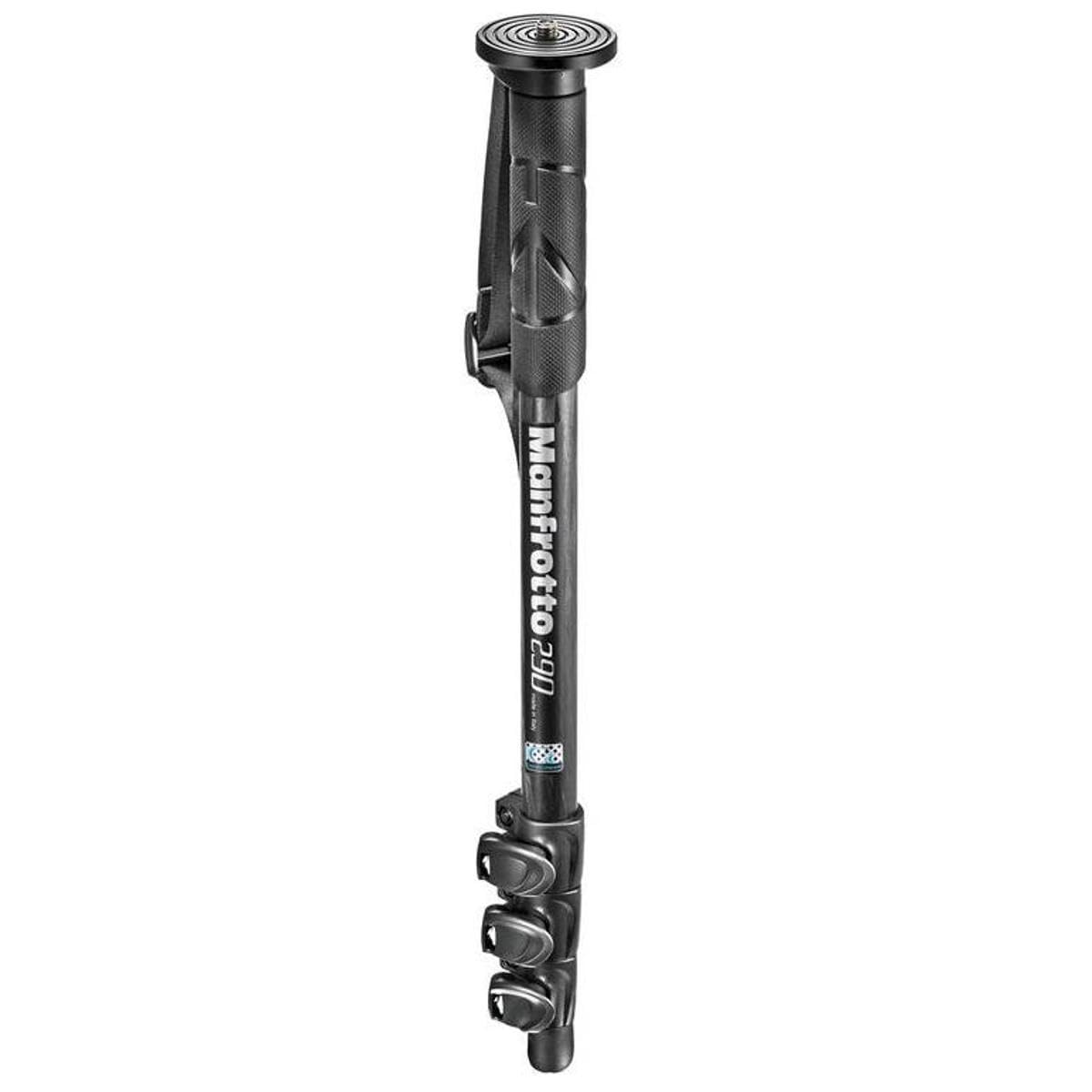
The Manfrotto 290 CF delivers the stiffness of carbon fiber without the weight penalty, and the ability to fine-tune leg lock tension is a welcome detail for those who prefer a specific feel. However, this is a bare pole — no head or feet included — so it suits photographers who already have Manfrotto-compatible hardware. The 59-inch maximum height may leave tall users wanting more extension. Also, the rubber foot can wear quickly if the monopod is used as a walking stick, so avoid that use for longevity.

Tip: Avoid using the rubber foot as a walking stick to prevent accelerated wear.

Bottom line: Best for photographers who already own a compatible head and want a lightweight carbon fiber pole without paying for extras — less ideal as a complete kit or for very tall users.

How to Choose

Material: Carbon Fiber vs. Aluminum

Carbon fiber dampens vibrations better than aluminum and weighs about 30% less for a given stiffness. On a long hike or a day of event shooting, that weight difference reduces fatigue noticeably.

Aluminum is cheaper and nearly as rigid, but it conducts cold and can feel heavier over time. If your primary concern is budget or you rarely carry the monopod far, aluminum offers the same stability at half the price.

Head Type: Fluid, Ball, or None

A fluid head uses internal drag controls to produce smooth, constant-speed pan and tilt - essential for video work where jerky movements ruin a shot. Ball heads lock quickly for stills but lack that controlled damping.

No head at all (just a screw mount) saves weight and cost, but forces you to buy a separate head. This works well if you already own a high-quality ball head, but adds steps before shooting.

Feet and Base: Stability vs. Portability

Folding feet or a removable base turn the monopod into a low-angle support, adding three points of contact for stability on uneven ground. They also allow quick switching between moving shots and stationary ones.

A simple rubber foot is lighter and simpler, but limits you to a single contact point. On slippery or soft surfaces, the monopod can tilt or sink without the spread of folding feet.

Height and Collapsed Length: Reach vs. Portability

Maximum height should at least match your eye level without extending the center column - if you often shoot above crowds, look for 70 inches or more. Collapsed length below 20 inches fits in carry-on luggage, but those compact models usually require more sections and twist locks.

More sections mean more joints to tighten and more potential wobble. A 4-section monopod strikes a good balance between folded size and rigidity. Six-section designs are very packable but take longer to deploy.

Load Capacity: Rated vs. Real-World

The stated load capacity often assumes a centered, static weight. A long telephoto lens creates leverage that can make the monopod tip or wobble below the rated limit.

Look for user reports of specific lens setups rather than trusting the spec sheet. A monopod rated for 22 lb may feel stable with a 5 lb body but shaky with a 3 lb lens extended to full reach.

Frequently Asked Questions