Cameras & Photography

10 Best Telescope of 2026: Which One Actually Shows You the Stars

Traditional vs smart scopes – find the telescope that matches your goals, budget, and patience level without the guesswork.

Every beginner telescope promises crisp views of Saturn's rings and the Moon. The reality is often a wobbly tripod, a mount that won't align, or images that look nothing like the product photos. The gap between marketing and lived experience is the single biggest frustration in this category.

The real choice isn't between brands but between two fundamentally different approaches: traditional visual scopes that reward patience with sharp planetary detail, and smart digital telescopes that trade aperture for instant deep-sky images. One is for staring, the other for sharing.

This guide cuts through the hype to match you with the right tool – whether you want to show your kids the Moon, photograph the Orion Nebula from a city balcony, or build a system that grows with your skills.

1

MEEZAA 90mm Refractor

Top Pick
MEEZAA 90mm Refractor

All-round beginner

Our Score 8.8/10
Check Price

Worth Noting

  • Included 20mm and 10mm eyepieces are basic; upgrading to better eyepieces sharpens views further
Aperture
90mm
Mount Type
Altazimuth
Ease of Setup
15 min, intuitive
Optical Design
Refractor

The MEEZAA 90mm’s stainless steel tripod and altazimuth mount eliminate the wobble that plagues many budget telescopes. At 90mm aperture and 800mm focal length, the fully multi-coated optics resolve Saturn’s rings and Jupiter’s cloud bands at moderate magnification. Set up takes about five minutes, no collimation required.

Moon views are bright and detailed, with sharp craters along the terminator. Planetary observations benefit from the long focal ratio — false color is minimal for a non-ED refractor. The included eyepieces (20mm and 10mm) get you started, but swapping in a 6mm or a decent Barlow pushes magnification high enough for clear ring separation. Below about 50°F, the metal focuser can tighten slightly; a dab of grease resolves it.

This scope targets beginners who want a dependable, no-fuss visual telescope for the Moon and brighter planets. The manual mount is intuitive — no alignment routines, no motorized slewing. Advanced astrophotographers will miss ED glass and a tracking mount, and if your priority is deep-sky fuzzies on a remote field, a reflector with larger aperture makes more sense. For casual evening sessions with family, this package is complete out of the box.

Build quality stands out at this price tier. The tripod uses thick-walled stainless steel tubes, and the mount head has smooth slow-motion controls in altitude and azimuth. Unlike tripods that develop play after a few uses, this one stays rigid. The two-speed focuser is a rare inclusion at this level — fine adjustments are precise enough for high-power planetary work.

Value lands squarely above the price tag. Comparable 90mm refractors often ship with aluminum tripods that drift in a breeze; the MEEZAA’s steel legs hold steady. The only trade-off is that the included eyepieces are basic — a set of plössls or a single 6mm will noticeably sharpen views. That upgrade is inexpensive and transforms the scope’s planetary performance.

Tip: Pick up a 6mm plössl eyepiece or a 2x Barlow — the improved clarity at high power is noticeable and costs under $30.

Bottom line: If you want a manual telescope that actually stays still while you focus, and you plan to spend most of your observing time on the Moon and planets, this is the most reliable package at this aperture and price.

2

Celticbird 80mm Refractor

Celticbird 80mm Refractor

Ultra-budget starter

Our Score 8.8/10
Check Price

Worth Noting

  • Tripod is functional but lacks the rigidity needed for stable high-magnification viewing
  • Focusing can be finicky
Aperture
80mm
Mount Type
Altazimuth
Ease of Setup
Easy, 10 min
Optical Design
Refractor

The Celticbird 80mm packs an 80mm aperture into a sub-$100 price, an inch wider than the best-selling 70mm entry-level scopes. That extra 10mm gathers noticeably more light, giving you brighter lunar craters and sharper views of Jupiter's bands than any other telescope at this price point. It can't quite match the refined package of the top pick (a 90mm with a stainless steel tripod), but it undercuts that scope significantly while still delivering solid planetary performance.

This is a scope for families on a tight budget, kids getting their first taste of astronomy, or anyone who wants to see the Moon and bright planets without spending more than $100. The tradeoff is that the focuser requires a gentle touch and some patience to lock in a crisp image – it can be finicky, especially with nimble fingers. The aluminum tripod is adequate for low-magnification scanning but will wobble if you push magnification past 100x or set it up on a breezy deck. Stick to the included eyepieces (20mm and 10mm) and you'll be rewarded with views that rival scopes costing twice as much.

Tip: Practice focusing on a distant daytime object first to get a feel for the fine adjustment – it helps avoid frustration at night.

Bottom line: For budget-conscious beginners who want the most aperture under $100, the Celticbird delivers where others don't – just be prepared to work with the focuser and accept a basic tripod.

3

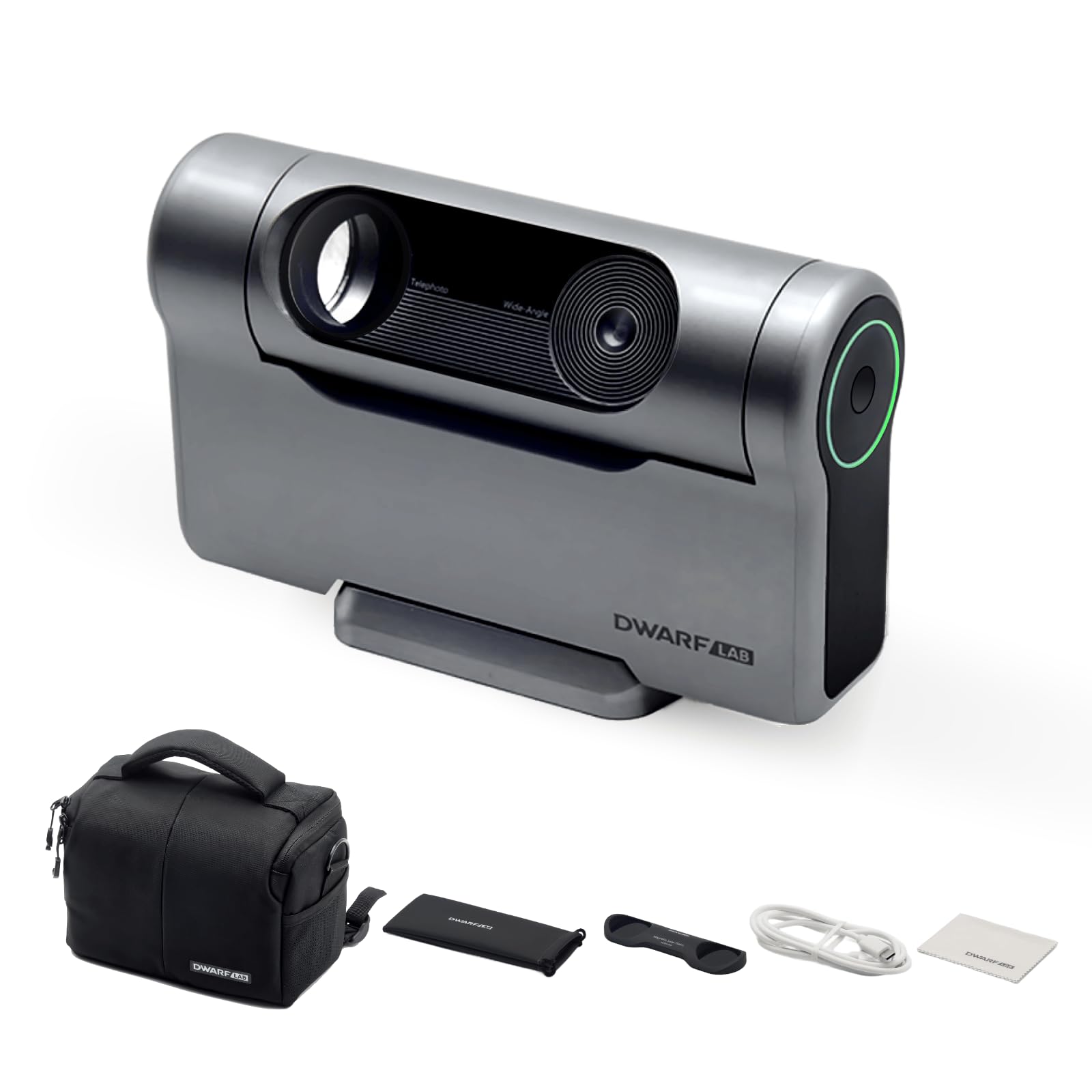
DWARFLAB Dwarf 3

DWARFLAB Dwarf 3

Deep-sky imaging

Our Score 9.2/10
Check Price

Worth Noting

  • Software glitches can interrupt sessions; app connectivity may drop unexpectedly.
  • 35mm aperture limits planetary detail
Aperture
35mm
Mount Type
Altazimuth + EQ
Ease of Setup
Power on, app connect
Optical Design
Dual lens

The Dwarf 3 pairs a 4K dual camera with automatic tracking, turning astrophotography into a point-and-shoot experience. It captures detailed nebulae and galaxies that rival much larger setups, and does so without requiring any knowledge of equatorial mounts or guiding. Where the ultra-portable alternative sacrifices aperture for weight, the Dwarf 3 strikes a more balanced trade-off: still small enough to travel with, but with noticeably more light-gathering power.

This telescope is built for astrophotography beginners, travelers, and urban dwellers who want impressive results from light-polluted backyards. The 35mm aperture means planets will appear small and lack detail – Saturn’s rings are a smudge, not a sharp ring. Occasional software bugs can interrupt a session, though a quick app restart usually resolves them. Anyone expecting a classic visual telescope for planetary observing should look elsewhere; this is a digital imaging tool first.

When aimed at deep-sky objects, the Dwarf 3’s dual-lens system and auto-tracking deliver images that typically require hours of processing. The included carrying bag makes it easy to pack for a camping trip or a weekend at a dark-sky site. The app interface is intuitive enough that someone with no astronomy background can be capturing the Orion Nebula within ten minutes of unboxing.

Tip: Keep the app and firmware updated, and use a stable WiFi connection to minimize occasional connectivity hiccups.

Bottom line: If you want deep-sky astrophotography without the learning curve, the Dwarf 3 delivers outstanding images for the price – just don’t buy it for planetary work.

4

Celestron AstroMaster 70AZ

Celestron AstroMaster 70AZ

Family moon viewing

Our Score 8.8/10
Check Price

Worth Noting

  • Planetary views are small and blurry due to small aperture and chromatic aberration
  • Tripod can wobble at high magnification, making fine focusing difficult in breezy conditions.
Aperture
70mm
Mount Type
Altazimuth
Ease of Setup
Easy, 10 min
Optical Design
Refractor

Celestron's decades of experience and a two-year warranty give the AstroMaster 70AZ credibility that typical budget telescopes lack. The top pick in this guide delivers a larger 90mm aperture and a sturdier tripod, but the AstroMaster is more accessible for first-time users thanks to its simple altazimuth mount and clear instructions. Its fully coated glass optics provide satisfying lunar views immediately.

This scope is for families and beginners who want to explore the Moon's craters and enjoy daytime nature observations – it performs well on those targets. The 70mm aperture and chromatic aberration mean planets appear small and lack detail; Saturn's rings appear as a tiny oval and Jupiter shows only a hint of bands. For anyone hoping to see planetary features clearly, this telescope will be disappointing.

Setup takes minutes, and the adjustable tripod legs accommodate different viewing heights. At low magnification, the Moon shows crisp craters and the Orion Nebula is visible under dark skies. Higher magnifications reveal the tripod's tendency to wobble, especially in light wind – a typical limitation in this price range. Using the supplied 20mm eyepiece helps keep the view steady.

Priced affordably, the AstroMaster 70AZ is a safe bet for those unsure about committing to astronomy. Celestron's customer support and active user community make it easy to get help or resell if upgrading later.

Tip: Use the lowest magnification eyepiece and avoid fully extending the tripod legs to minimize wobble while focusing.

Bottom line: A capable starter telescope for Moon and nature observation, backed by an established brand and strong support – but not the tool for planetary detail.

5

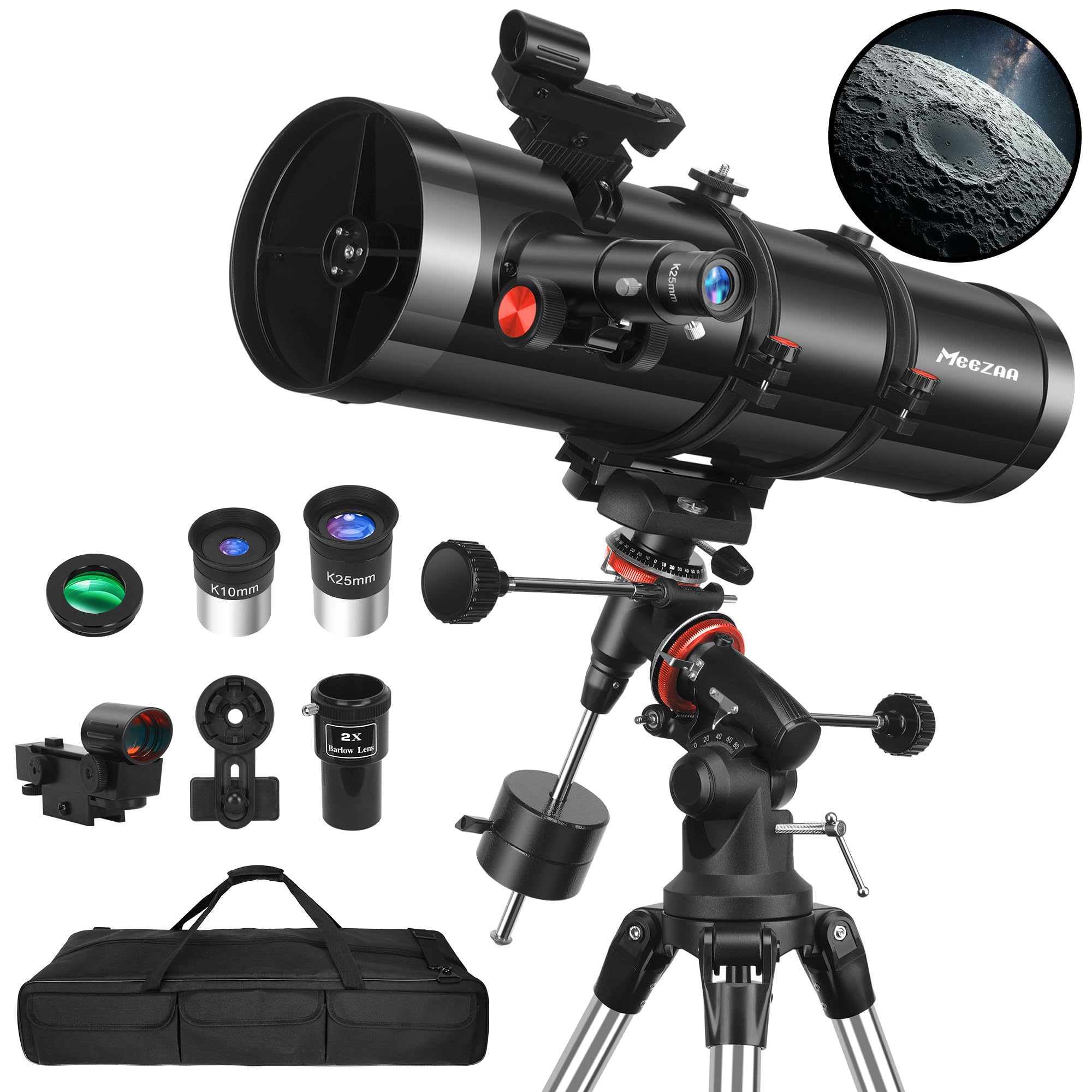
MEEZAA 150EQ Reflector

MEEZAA 150EQ Reflector

Deep-sky on budget

Our Score 8.8/10
Check Price

Worth Noting

  • Build quality can vary
  • Instructions are poorly translated, making initial setup confusing for those new to EQ mounts
  • Navigating the equatorial mount setup requires dedicated study
Aperture
150mm
Mount Type
German equatorial
Ease of Setup
Moderate, 30 min
Optical Design
Newtonian reflector

The 150mm aperture on this Newtonian reflector pulls in enough light to reveal galaxies and nebulas that smaller scopes can only hint at. Where the top pick simplifies with an altazimuth mount, the MEEZAA 150EQ uses a German equatorial mount — less intuitive at first but capable of smooth manual tracking once polar alignment is mastered.

This scope suits hobbyists who enjoy learning mechanical systems and don't mind spending time with setup. The equatorial mount demands a study session before first use, the included instructions are poorly translated, and occasional build inconsistencies — wobbly tripod legs or missing parts — have been noted. Buyers comfortable with collimation and who value aperture over convenience will get the most from this scope.

Tip: Spend an afternoon with a beginner EQ tutorial before first use — the payoff in tracking ability is immediate.

Bottom line: If you're prepared to invest time in polar alignment and collimation, the MEEZAA 150EQ offers aperture that rivals scopes costing twice as much.

6

Dianfan 90mm Refractor

Dianfan 90mm Refractor

Alternative top pick

Our Score 9.0/10
Check Price

Worth Noting

  • Minor chromatic aberration can produce purple fringing on bright objects
Aperture
90mm
Mount Type
Altazimuth
Ease of Setup
Easy, 15 min
Optical Design
Refractor

The Dianfan 90mm delivers crisp lunar and planetary views with a stable stainless steel tripod and straightforward assembly. Its build quality and overall sentiment fall just behind the top pick, and some users may notice slight purple fringing on bright objects – a minor compromise for the price.

Bottom line: This telescope suits beginners who want a straightforward refractor for lunar and planetary observation without overspending, though the slight color fringing may bother picky viewers.

7

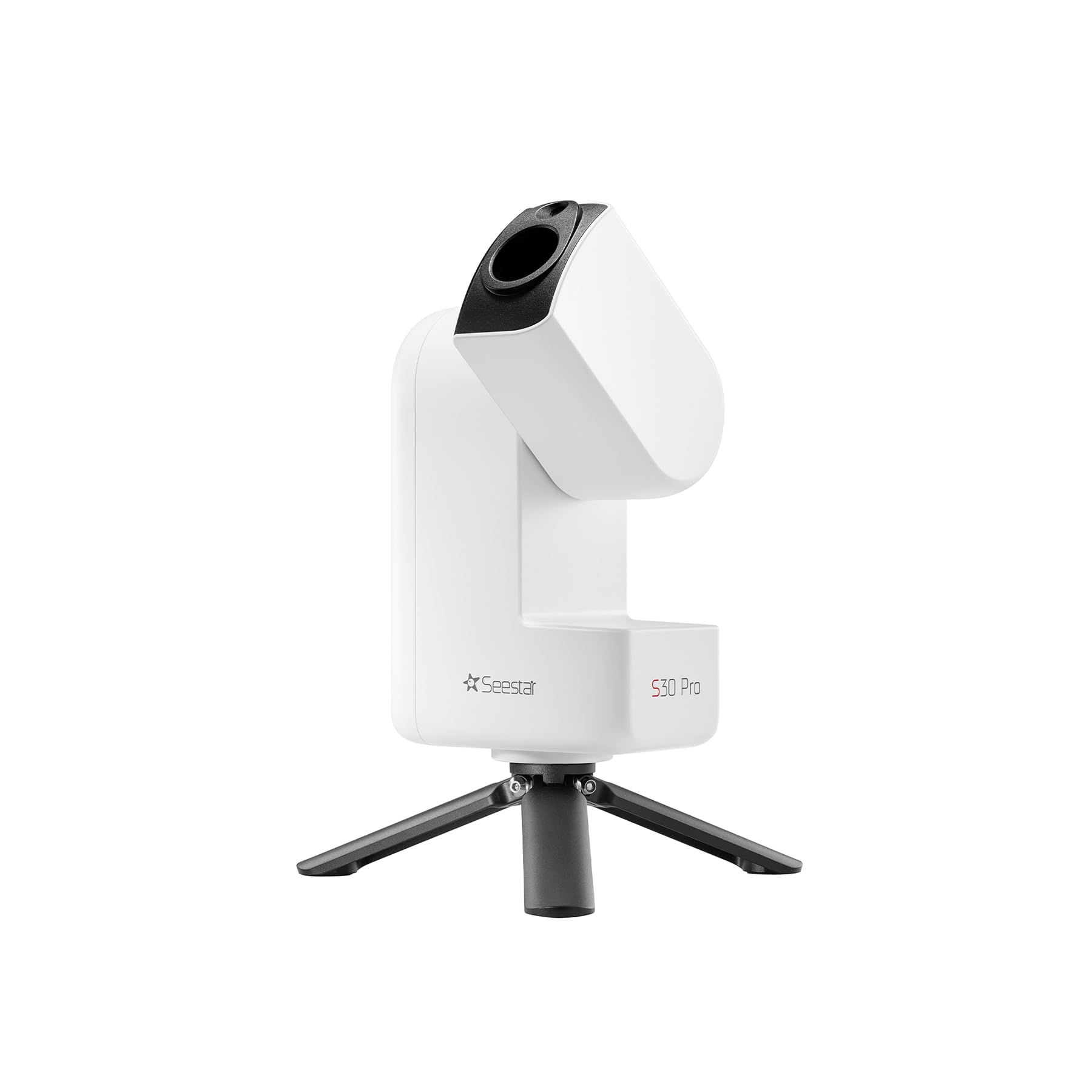
ZWO Seestar S30 Pro

ZWO Seestar S30 Pro

Smart scope alternative

Our Score 9.0/10
Check Price

Worth Noting

  • The 30mm aperture restricts planetary detail to small blurry dots.
  • No carrying case or bag included, requiring a separate purchase for safe transport.
Aperture
30mm
Mount Type
Altazimuth + EQ
Ease of Setup
Power on, app connect
Optical Design
ED apochromat

The ZWO Seestar S30 Pro trades a traditional eyepiece for app-controlled astrophotography, letting users capture nebulas and galaxies minutes after powering on. Its compact refractor and auto-tracking produce sharp deep-sky images even from light-polluted backyards. However, the 30mm aperture restricts planetary detail to small blurry dots, and unlike the newer DWARF 3 (which includes a carrying bag and slightly better image quality), this model ships without a case. For buyers who prioritize deep-sky imaging over planetary and don't mind buying a separate bag, the S30 Pro remains a capable entry point at a mid-range price.

Bottom line: Best for beginners who want to start astrophotography with minimal fuss and are happy focusing on deep-sky objects — but if you value planetary views or a carrying case, consider the DWARF 3 instead.

8

SVBONY SV503 102mm ED OTA

SVBONY SV503 102mm ED OTA

Upgrade OTA

Our Score 9.2/10
Check Price

Worth Noting

  • Requires separate mount, tripod, and eyepieces
  • Some purple fringing may appear on very bright stars, though much less than standard achromats.
Aperture
102mm
Mount Type
None (OTA only)
Ease of Setup
Not applicable
Optical Design
ED doublet refractor

The SV503's ED doublet optics deliver sharp, contrast-rich views with minimal false color, rivaling scopes costing twice as much. This is an optical tube assembly only – buyers must supply a mount, tripod, and eyepieces, which can significantly increase total cost. For intermediate users who already own a quality mount, this offers exceptional value. Some residual chromatic aberration may appear on the brightest stars, but it's far less intrusive than on standard achromats.

Bottom line: Best suited for intermediate astrophotographers or visual observers who already own a capable mount and want premium refractor optics without the premium price tag.

9

Gskyer 70mm Refractor

Gskyer 70mm Refractor

Kids & beginners

Our Score 8.6/10
Check Price

Worth Noting

  • Planetary views lack detail at high magnification; the 70mm aperture cannot resolve fine features on Jupiter or Saturn
Aperture
70mm
Mount Type
Altazimuth
Ease of Setup
Easy, 10 min
Optical Design
Refractor

The Gskyer 70mm refractor stands out for its exceptional ease of assembly and portability, making it the go-to choice for absolute beginners and families. The included carry bag and lightweight design let you take it to darker locations without hassle. However, the 70mm aperture restricts high-magnification views of planets; Jupiter and Saturn appear small and lack surface detail. This scope excels for casual Moon observation and daytime terrestrial viewing, but serious planetary observers will find its performance underwhelming. Its popularity is well-earned for the specific niche of entry-level, low-pressure stargazing.

Bottom line: Buy the Gskyer 70mm if you want a simple, portable telescope for the Moon and daytime scenes — skip it if crisp planetary views are your priority.

10

Celestron Inspire 100AZ

Celestron Inspire 100AZ

Casual low-power

Our Score 8.8/10
Check Price

Worth Noting

  • At high magnification, the mount's lack of fine adjustment makes smooth tracking a challenge
  • Tripod legs can wobble when extended, reducing image stability beyond 100x
Aperture
100mm
Mount Type
Altazimuth
Ease of Setup
Easy, 15 min
Optical Design
Refractor

The 100mm aperture delivers clean views of the Moon and brighter planets, and the built-in smartphone cradle makes snapshotting what you see straightforward. The red LED flashlight is a nice touch for preserving night vision. However, the mount lacks fine-adjustment controls, so tracking objects at higher magnifications becomes frustrating. The tripod legs can also wobble when fully extended, which further limits usable magnification. This scope is best for low-power sweeping of the night sky and terrestrial viewing, not for serious planetary observing.

Bottom line: Works well for casual backyard observing and quick moon shots, but the mount and tripod hold it back from higher-power use.

How to Choose

Aperture: The Light Collector

Aperture is the diameter of the main lens or mirror. Bigger means more light, which reveals fainter objects and finer detail. A 70mm scope shows the Moon and bright planets, but a 150mm reflector pulls in galaxies and nebulas.

But aperture comes with a weight penalty. A 150mm reflector on an equatorial mount can weigh 30 pounds. For occasional use, a lighter 90mm refractor that actually gets used beats a heavy scope that stays in the garage.

Mount Type: The Unsung Hero

The mount is the foundation. A wobbly mount makes every star look like a comet. Altazimuth mounts are simple: just up-down, left-right. They're perfect for quick setup and low-power observation.

Equatorial mounts tilt to align with Earth's axis. Once polar-aligned, you only move one knob to track objects. They're essential for astrophotography but have a steeper learning curve. Computerized GoTo mounts add automation but introduce alignment complexity – many beginners abandon them after repeated failures.

Optical Design: Refractor vs Reflector vs Catadioptric

Refractors use glass lenses. They are maintenance-free, give sharp contrasty views, and are great for planetary observation. The trade-off: chromatic aberration (purple fringing) on bright objects unless you pay for ED glass.

Reflectors use mirrors. They offer more aperture per dollar and no false color. The downside: they need occasional collimation (mirror alignment) and the open tube collects dust. Catadioptric scopes (like the NexStar 8SE) combine lenses and mirrors for compactness but can be complex and expensive.

Portability and Accessories

A telescope you can carry easily gets used more. Look for a sturdy tripod that doesn't flex in a breeze – aluminum legs with center braces are a good sign. Included eyepieces from budget scopes are often basic; upgrading to a good 25mm eyepiece makes a huge difference.

Smart telescopes (Dwarf, Seestar) trade portability for digital functionality. They include everything needed – just add a tablet. For traditional scopes, factor in the cost of a moon filter, a better finder, and a carrying case if not included.

Ease of Setup and Alignment

The number one reason telescopes end up unused: complicated setup. A telescope that takes 30 minutes to assemble and another 20 minutes to align will collect dust. For absolute beginners, a scope that works out of the box – like a simple altazimuth refractor – is worth its weight in clarity.

Computerized GoTo scopes promise ease but deliver frustration. Many users report alignment failures, especially in light-polluted skies. If you are learning astronomy, start with manual controls. If you are a tech-savvy hobbyist, be prepared to troubleshoot.

Frequently Asked Questions