Networking & Wi-Fi

7 Best Travel Router of 2026: Secure VPN on the Go

Find a travel router that handles hotel WiFi, VPN, and multiple devices without disconnections. Covers trade-offs between price, performance, and reliability.

Every traveler knows the frustration: a hotel WiFi login page that refuses to load, a VPN that slows everything to a crawl, or a router that drops the connection every few minutes. The promise of secure, shared internet on the road often collides with the reality of captive portals, weak signals, and finicky hardware.

The real challenge is choosing the right balance. Some travel routers prioritize raw speed and future-proof technology, while others focus on proven stability and broad compatibility. A model that excels in a home test lab can struggle with a cruise ship's login system or overheat after 15 minutes of streaming.

This guide cuts through the specs and marketing claims to match you with a travel router that actually works where you need it — whether that is a hotel room, an Airbnb, or a conference center. The right choice depends on how much you value cutting-edge performance versus years of verified reliability.

1

GL.iNet Beryl AX

Top Pick
GL.iNet Beryl AX

Balanced traveler

Our Score 9.2/10
Check Price

Worth Noting

  • In crowded public WiFi environments, brief disconnections may occur
VPN Speed
WireGuard 300Mbps
Portability
Compact pocket size
Ethernet Speed
2.5G WAN, 1G LAN
Operating System
OpenWrt 21.02

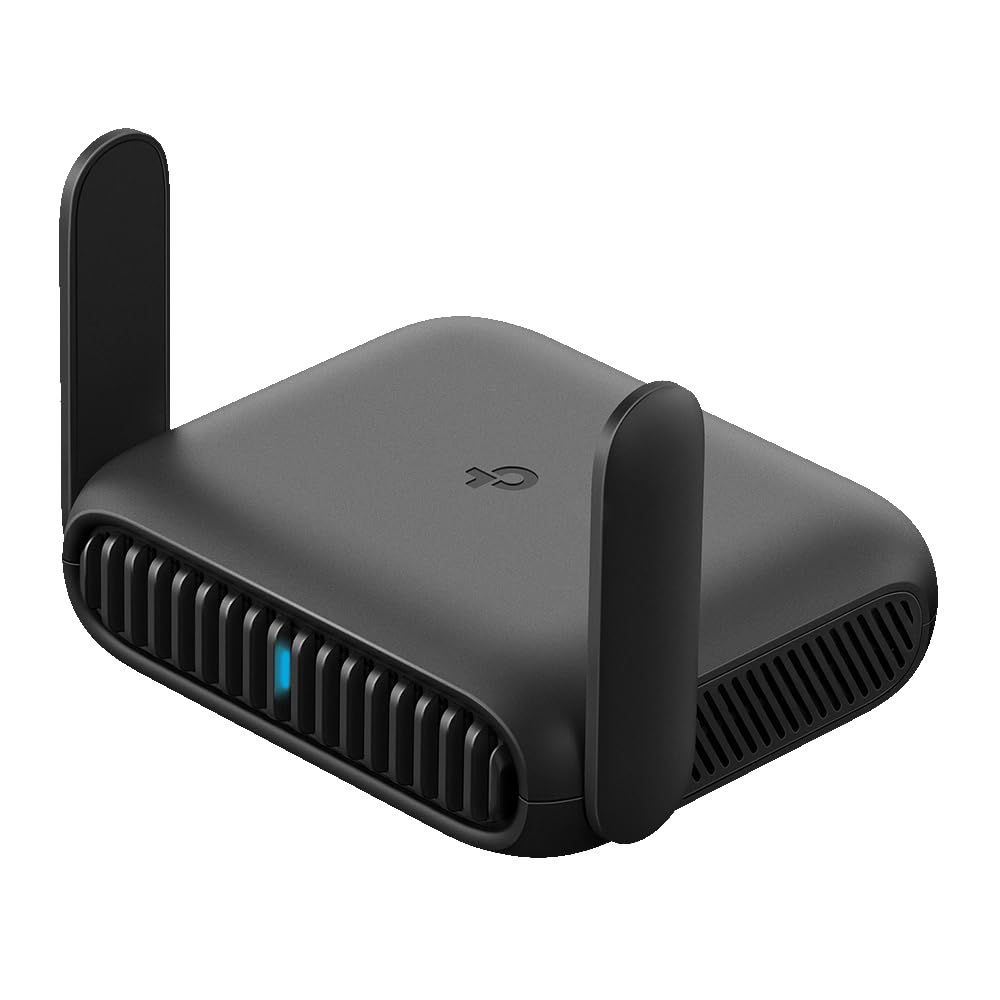
The Beryl AX combines Wi-Fi 6 with WireGuard VPN speeds up to 300Mbps, allowing smooth 4K streaming and secure browsing from a single public WiFi connection. The 2.5G WAN port adds flexibility for faster wired upstream connections when available. Dual-band operation covers both legacy devices and high-speed needs, making it suitable for mixed-device travel setups.

Setup takes about five minutes — the physical toggle activates VPN or AdGuard without needing to open the web interface. At roughly the size of a deck of cards, it slides into any bag pocket. Multi-mode support (repeater, AP, extender) covers common travel scenarios like sharing hotel WiFi or converting an Ethernet port to a private network. Captive portal handling is straightforward: connect the Beryl AX to the public network, log in once, and all devices behind the router gain internet access.

This router suits travelers who want a dedicated device to share a single public WiFi connection across multiple devices while running a VPN. Some units may experience brief disconnections in very congested environments — a limitation that typically does not affect stable hotel or cruise WiFi connections. For those needing absolute zero downtime, a direct Ethernet connection may be more appropriate. The physical toggle and OpenWrt firmware offer customization, but default settings suffice for most users.

The dedicated VPN toggle is a practical addition — switching between encrypted and unencrypted connections takes a second. AdGuard Home integration provides network-level ad blocking without per-device setup. The broad user feedback highlights consistent performance in daily travel use and a single recurring limitation that can often be managed with simple configuration adjustments.

Tip: If you encounter drops, switching to 5GHz or changing the channel can improve stability.

Bottom line: A cost-effective travel router that delivers Wi-Fi 6, strong VPN performance, and portability — a practical choice for most trips.

2

GL.iNet Slate 7

GL.iNet Slate 7

Power users

Our Score 9.2/10
Check Price

Worth Noting

  • Wi-Fi 7’s full speed requires compatible client devices, which are still rare in travel settings.
  • Premium price adds cost that provides no extra benefit when connecting to typical hotel Wi-Fi.
VPN Speed
WireGuard 540Mbps
Portability
Compact with touchscreen
Ethernet Speed
2x 2.5G
Operating System
OpenWrt 23.05

The Slate 7 is the only portable router that combines Wi-Fi 7, a touchscreen, and dual 2.5G Ethernet ports. This gives it the highest VPN speeds in its class – WireGuard at 540Mbps – along with full OpenWrt customization for those who want to tweak firewall rules or install packages.

This router fits frequent travelers who push high-bandwidth data through a VPN, remote workers handling large file transfers, and tech enthusiasts who value a touchscreen interface for quick status checks without a phone app. The premium hardware also means you get dual-band Wi-Fi 7 and WPA3 security out of the box.

For anyone who only needs to share a hotel WiFi connection for email and browsing, the extra cost and advanced features offer no tangible benefit. The lower-priced Beryl AX covers those needs adequately while being more budget-friendly.

Bottom line: If your travel demands the fastest VPN speeds and you want Wi-Fi 7 readiness, the Slate 7 is the best option – just be aware that its premium hardware is overkill for light use.

3

TP-Link Roam 7

TP-Link Roam 7

Wi-Fi 7 early adopter

Our Score 8.8/10
Check Price

Worth Noting

  • Some units may become non-functional after extended use
  • Connectivity may drop intermittently in congested Wi-Fi environments
VPN Speed
OpenVPN & WireGuard
Portability
Compact with USB-C
Ethernet Speed
2.5G WAN, 1G LAN
Operating System
Proprietary Linux

The TP-Link Roam 7 delivers Wi-Fi 7 speeds for a mid-range price, making it one of the more affordable ways to future-proof your travel kit. Setup happens entirely through the Tether app — a straightforward process that avoids hunting for a web interface. Its captive portal auto-auth feature automatically handles hotel Wi-Fi login pages, a convenience that saves time on repeated connections. The router also supports multiple operation modes (AP, repeater, bridge), covering the travel scenarios most users need.

Performance is consistent in ideal conditions, but some users have noted that connectivity can drop intermittently, particularly when using the repeater mode on congested public Wi-Fi. Long-term durability is not yet established; a small number of units have become non-functional after several months of use. These issues appear in a minority of cases but are worth keeping in mind for anyone relying on the router as a primary travel tool.

This router best suits early adopters who want Wi-Fi 7 capabilities without the premium price of flagship models like the Slate 7. It also fits well within the TP-Link ecosystem, leveraging the Tether app for unified management. However, those who need a long track record of reliability or prefer the customizability of OpenWrt should look at alternatives like the Beryl AX, which offers a consistent track record at the cost of Wi-Fi 6 speeds.

Tip: If connectivity drops occur, try switching from repeater mode to AP mode to reduce interference from congested public Wi-Fi.

Bottom line: The Roam 7 is a promising entry into Wi-Fi 7 travel routers, but its limited review history means cautious buyers may want to wait for more data before committing.

4

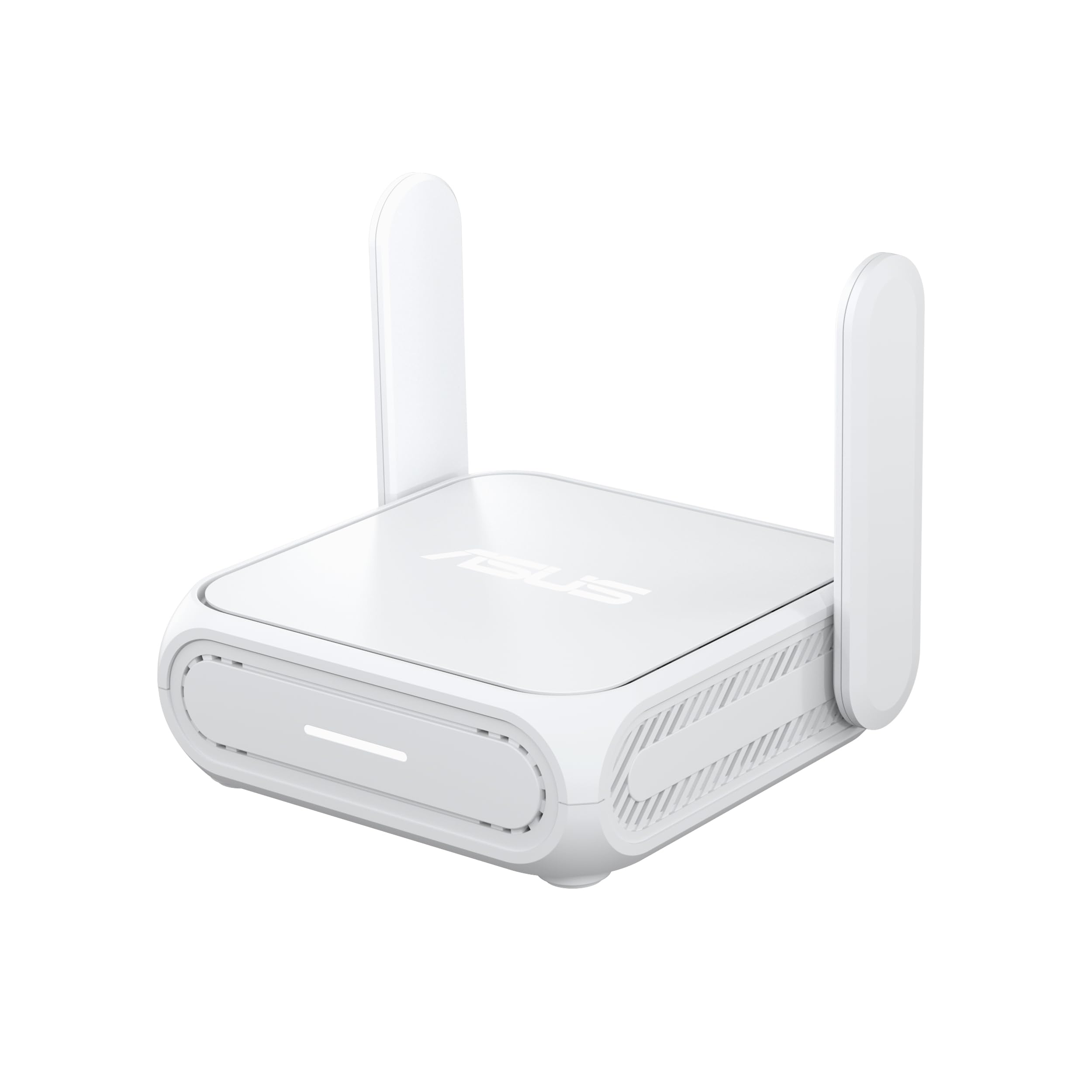
ASUS RT-BE58 Go

ASUS RT-BE58 Go

ASUS ecosystem

Our Score 8.6/10
Check Price

Worth Noting

  • Single Ethernet port restricts wired connections to one device
  • Setup with some modems may require extra configuration steps
VPN Speed
OpenVPN & WireGuard
Portability
Ultraportable
Ethernet Speed
2.5G WAN/LAN
Operating System
ASUSWRT

For travelers invested in ASUS hardware, the RT-BE58 Go extends the AiMesh ecosystem into a compact form that fits in a jacket pocket. It runs the familiar ASUSWRT firmware with OpenVPN and WireGuard support, and powers via USB-C — no bulky power brick required. The 3-year warranty adds peace of mind uncommon in travel routers.

The dual-band Wi-Fi 7 delivers fast enough speeds for hotel streaming and large downloads, and the router maintains steady operation without needing periodic restarts. At home, it doubles as a mesh node, expanding an existing AiMesh network without extra hardware. Its compact size and light weight make it easy to pack alongside a laptop or tablet.

This router suits ASUS home users who want the same administration interface and seamless mesh expansion while traveling. The single Ethernet port limits wired connections to one device, and initial setup with some modems may require specific configuration steps. Those needing multiple wired ports or open-source firmware will find better fits elsewhere.

Tip: When using the RT-BE58 Go with a cable modem, check ASUS support pages for known configuration sequences to avoid initial connection issues.

Bottom line: This is the travel router for ASUS loyalists who want consistent management and future mesh growth — the single Ethernet port and occasional setup quirk are known boundaries, not deal-breakers.

5

TP-Link Roam 6

TP-Link Roam 6

Budget traveler

Our Score 8.8/10
Check Price

Worth Noting

  • No manual transmit power adjustment; advanced settings are limited
VPN Speed
OpenVPN & WireGuard
Portability
Compact
Ethernet Speed
1G WAN/LAN
Operating System
Proprietary Linux

At under $50, the TP-Link Roam 6 delivers solid Wi-Fi 6 performance for hotel WiFi sharing through a simple app-based setup. The Tether app handles configuration in minutes, and the dual-band AX1500 speed handles video streaming and light work without hiccups.

This router suits travelers who want a plug-and-play device without fussing over advanced settings. It supports OpenVPN and WireGuard, but lacks OpenWrt and manual transmit power adjustment – features that power users may miss. For basic hotel WiFi repeating or access point use, the tradeoff is minor.

The compact design slips into a pocket or carry-on pouch, and captive portal authentication works reliably on common hotel networks. USB-C power simplifies charging alongside other modern devices.

Tip: If you require manual transmit power adjustment or OpenWrt, the Beryl AX offers those capabilities at a higher price.

Bottom line: For travelers who need a straightforward, low-cost Wi-Fi 6 router for hotel use, the TP-Link Roam 6 hits the mark without overcomplicating things.

6

TP-Link Roam 6 AX3000

TP-Link Roam 6 AX3000

Tinkerer

Our Score 8.2/10
Check Price

Worth Noting

  • Hotel Wi-Fi login pages may not appear automatically, requiring manual browser intervention.
  • Some units may lose Wi-Fi connection after extended use, needing a restart.
VPN Speed
OpenVPN & WireGuard
Portability
Compact
Ethernet Speed
2.5G WAN/LAN, 1G LAN
Operating System
Proprietary Linux

The TP-Link Roam 6 packs impressive hardware for its price: a 2.5G WAN/LAN port, USB 3.0 for sharing storage, and a microSD slot. Wi-Fi 6 performance handles streaming well, and the feature set includes OpenVPN and WireGuard. However, its captive portal handling can be inconsistent, and the connection may drop during longer sessions. These quirks limit its appeal to buyers who can work around bugs or plan to use it only occasionally as an extender. For a primary travel router that requires minimal fuss, the reliability concerns push it behind more polished options.

Bottom line: Suited for tinkerers or as a backup extender where occasional manual recovery is acceptable; for dependable hotel Wi-Fi sharing, look to the Beryl AX or similar.

7

Cudy TR3000

Cudy TR3000

Budget OpenWRT

Our Score 8.2/10
Check Price

Worth Noting

  • Connectivity can be inconsistent in some environments; not ideal for critical connections.
VPN Speed
OpenVPN & WireGuard
Portability
Pocket-sized
Ethernet Speed
2.5G WAN/LAN, 1G LAN
Operating System
OpenWRT

The Cudy TR3000 brings OpenWRT, a 2.5G Ethernet port, and dual-band Wi-Fi 6 to a compact, metal-bodied design at a budget-friendly price. It's a tempting package for OpenWRT fans who want to experiment with fast wired connections on the go. However, connectivity issues have been noted, and the limited track record means it carries more uncertainty than the top pick — making it better suited to tinkerers who accept occasional troubleshooting rather than travelers who need consistent performance.

Bottom line: Best for OpenWRT enthusiasts on a budget who are willing to work around occasional connectivity glitches.

How to Choose

Wi-Fi Generation

Wi-Fi 6 offers excellent range and multi-device handling for most hotel and public networks. Wi-Fi 7 adds theoretical speed gains but requires compatible clients and is rarely needed for the limited bandwidth of typical travel hotspots.

The real trade-off: Wi-Fi 7 routers tend to cost more and have less proven reliability. Unless you routinely transfer large files on the road, Wi-Fi 6 is the pragmatic choice.

VPN Performance

WireGuard throughput is the key metric – it is 3-5x faster than OpenVPN on the same hardware. A router that claims VPN support but tops out at 50Mbps will bottleneck your connection if you need full hotel bandwidth.

Check the WireGuard speed in the specs. Models like the Beryl AX deliver 300Mbps, enough for 4K streaming. Budget routers often fall below 100Mbps, which is fine for email but frustrating for video calls.

Ethernet Speed

A 2.5G Ethernet port future-proofs your router for tethering to a fast wired connection, but most hotel rooms only offer 100Mbps or slower. A 1G port is sufficient for now.

The hidden cost: routers with only 10/100 ports cap your entire network at 100Mbps, even if the hotel WiFi is faster. Avoid sub-$40 models with 10/100 Ethernet if you need decent speed.

Operating System

OpenWrt gives you full control: custom VPN profiles, ad blocking, and frequent updates. Proprietary OS like ASUSWRT or TP-Link's firmware trades flexibility for simpler setup and captive portal handling.

If you want to tweak firewall rules or route different devices through separate VPNs, OpenWrt is essential. For most travelers, a one-tap Tether app and automatic login are more valuable than terminal access.

Portability

Every travel router is pocketable, but weight and power input matter. USB-C power simplifies packing – you can share a laptop charger. Models with retractable antennas or no external antennas slide into any bag slot.

The trade-off: ultra-compact designs often omit a second Ethernet port or USB port for attaching storage. If you need to share a wired connection to a gaming console, ensure the router has at least one LAN port.

Frequently Asked Questions