Cameras & Photography

12 Best Microscope for Kids of 2026: Which Ones Actually Deliver Clear Views

Find the right microscope for your child's age and curiosity, skipping exaggerated specs and focusing on ease of use.

Many parents see '1000x' on a $30 microscope and think it's a deal. In reality, those numbers are often inflated by 5x to 10x, leaving kids with blurry images and frustration. But that doesn't mean you can't find a great microscope for your child.

The key is to look past the specs and focus on what actually works for your kid's age and skill level. For young explorers, a digital handheld with a clear screen and simple controls offers far more real-world use than a traditional compound scope. This guide cuts through the marketing to recommend microscopes that deliver on their promise.

1

OAEBLLE Digital 2.4"

Top Pick
OAEBLLE Digital 2.4"

Ages 3-12

Our Score 9.2/10
Check Price

Worth Noting

  • Battery lasts about 2 hours of continuous use
  • Effective magnification is around 200x; the 1000x claim is digital zoom that reduces image quality
Build
ABS with silicone
Accessories
Photo storage only
Magnification
1000x digital (200x real)
Display/Eyepiece
2.4-inch IPS

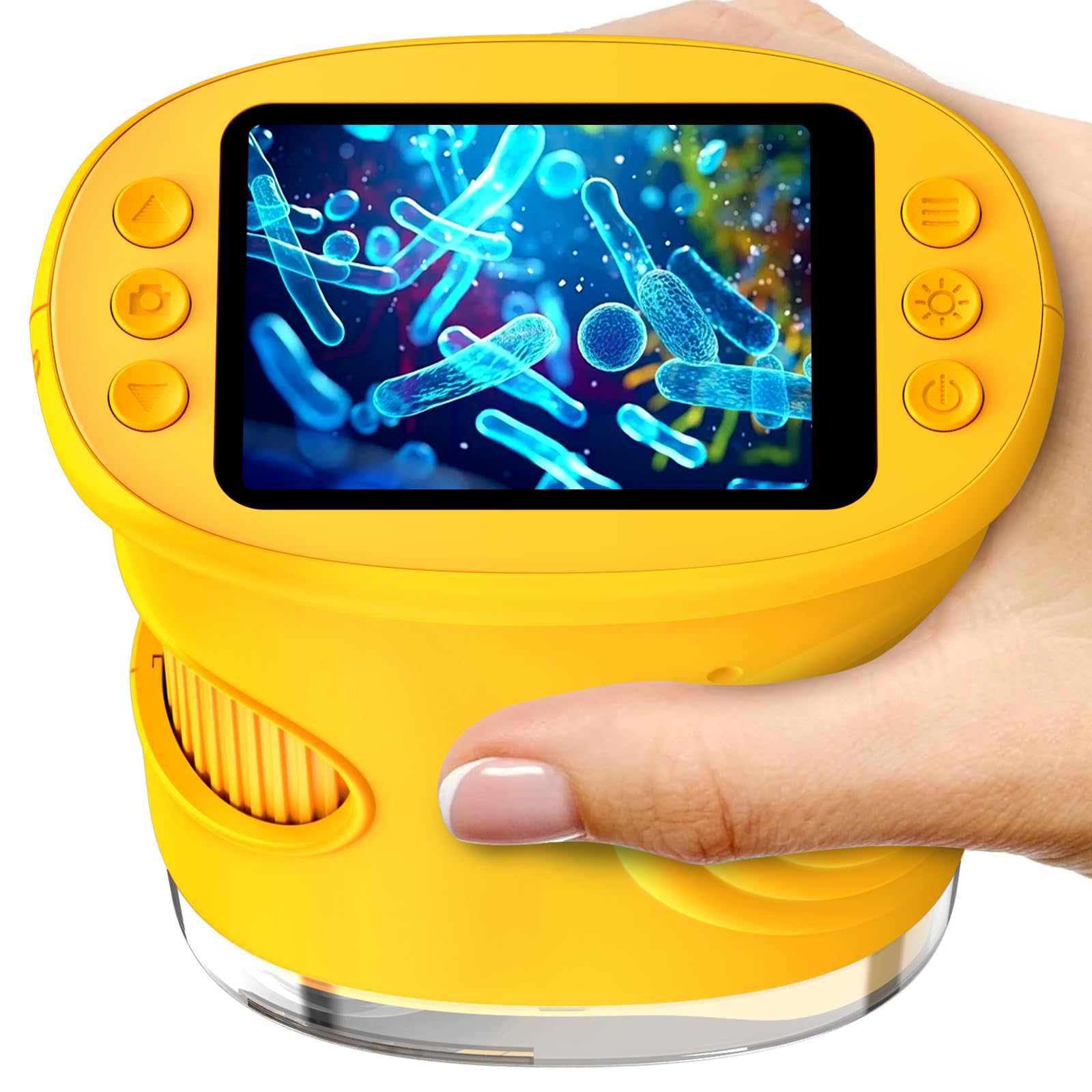
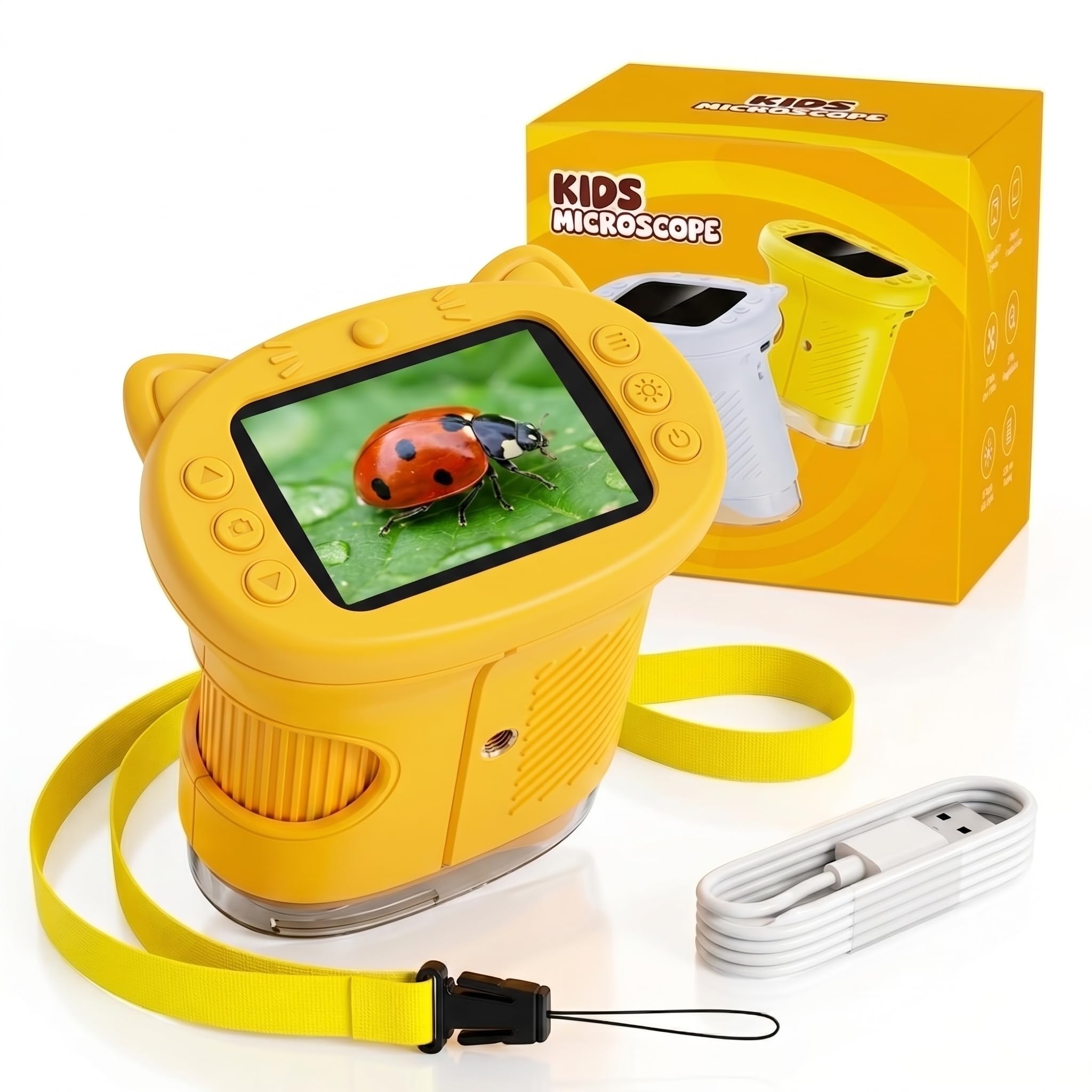
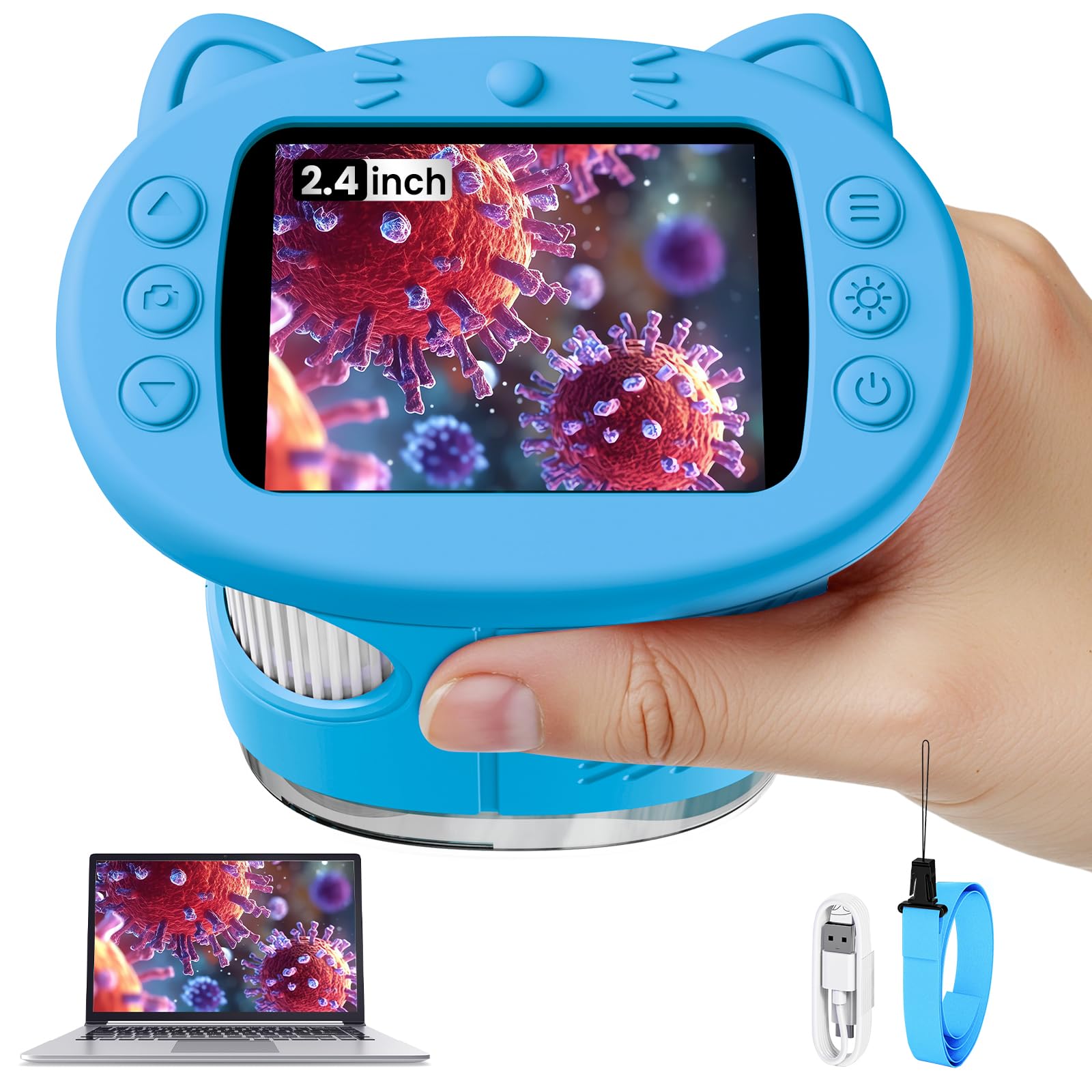
A 2.4-inch IPS screen with 1920x1080 resolution makes this microscope exceptionally easy for young children to use. The single focus wheel and photo capture button let kids as young as three explore independently without adult help. Image quality is sharp and colorful at the lower magnifications where this scope performs best.

The silicone body with lanyard is built for drops and outdoor adventures — leaves, rocks, and insects become instant discoveries. Eight adjustable LED lights provide even illumination in dim conditions, and the built-in storage (200 photos, plus TF card slot for video) lets kids document finds. Portability is a clear strength: the whole unit fits in a small hand or pocket.

This microscope targets children ages 3-12 who need an intuitive introduction to magnification. It is not designed for serious science: the digital zoom reaches a true optical-equivalent of about 200x, and battery life runs roughly two hours per charge. Those limits suit short exploration sessions but not extended lab work. For a first microscope that sparks curiosity without frustration, this fits the bill.

Tip: Charge fully before outdoor trips; the 2-hour battery covers most play sessions.

Bottom line: A well-designed digital microscope that gets the basics right for young explorers — pick it for the ease of use and durable build, not for magnification claims or all-day battery.
2

Nat Geo Dual LED Microscope

Nat Geo Dual LED Microscope

Ages 8-12

Our Score 9.2/10
Check Price

Worth Noting

  • Some units can arrive with damaged parts or show signs of wear after light use
Build
Plastic
Accessories
10 prep slides, 10 blank, tools
Magnification
20x/50x optical
Display/Eyepiece
Eyepiece (compound)

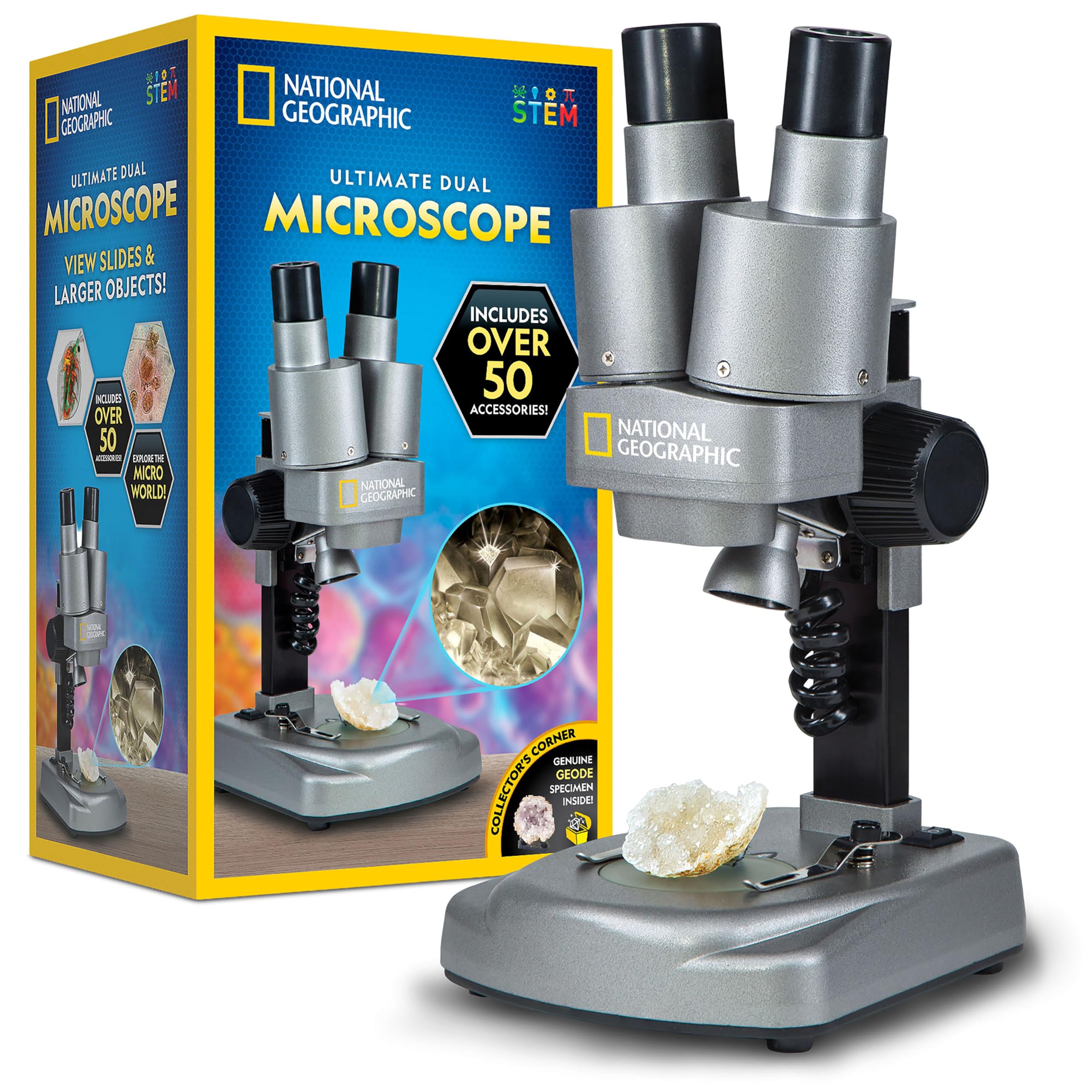
Unlike digital handhelds that rely on screens and software, this National Geographic kit delivers real optical glass at 20x and 50x magnification. The top LED lets you examine coins, leaves, and other solid objects while the bottom light handles slides — a dual system that digital-only models cannot match. For a child who has outgrown the simple point-and-shoot approach, this offers actual microscopy.

It suits children ages 8 to 12 who want a 'real' tool, homeschool families needing prepared slides and blank ones for experiments, and gift-givers looking for a substantial science kit. Quality control, however, has been inconsistent: some units can arrive with damaged components or show issues after light use. This makes it important to inspect the package on delivery — a minor extra step for families who value true optics over convenience.

Tip: Examine the microscope and accessories as soon as it arrives; if anything looks off, return it right away.

Bottom line: This microscope rewards families who value optical quality and a complete learning kit over pure convenience — just check the box promptly.

3

Vorth Digital 2.4"

Vorth Digital 2.4"

Ages 3-12

Our Score 9.0/10
Check Price

Worth Noting

  • Battery lasts around 2 hours, which may require a midday recharge on extended outings
Build
ABS with silicone
Accessories
Photo storage only
Magnification
1000x digital (200x real)
Display/Eyepiece
2.4-inch IPS

The Vorth Digital Microscope features a 2.4-inch IPS display, rechargeable battery, and a food-grade silicone case that makes it comfortable and safe for small hands. While the top pick offers a slightly larger screen and longer battery, the Vorth matches its image clarity and simple focus wheel at a more accessible price.

This microscope is designed for children ages 3 to 12 exploring leaves, coins, or fabric fibers on screen. The advertised 1000x digital zoom is marketing hype; real usable magnification is about 200x, which is plenty for this age group. The two-hour battery works for typical outdoor discoveries, but expect to recharge on longer trips.

Tip: Keep the charging cable handy — battery life suits short discovery sessions, not all-day field trips.

Bottom line: For parents wanting a first microscope that sparks curiosity without a steep learning curve, the Vorth delivers steady performance at a budget-friendly price.

4

BEAVERLAB 4.0" 1600X

BEAVERLAB 4.0" 1600X

Ages 6+

Our Score 9.2/10
Check Price

Worth Noting

  • The printed manual has poorly translated English, making initial setup less clear.
  • Photo capture software can be frustrating to use, slowing down the experience.
Build
Plastic
Accessories
8GB SD card, hotspot
Magnification
100x-1600x digital
Display/Eyepiece
4-inch IPS

The 4.0-inch 1080p screen is the defining feature—large enough for several kids to view a specimen at once without crowding. Setup is simple, and the built-in hotspot lets you share images instantly to a phone or tablet. The included 8GB card and adjustable LEDs add practical value for outdoor or classroom use.

This microscope suits children aged 6 and up who enjoy nature walks or group science projects. Its bulkier frame makes it less suitable for toddlers or very small hands. The manual has poorly translated sections and the photo capture software can be confusing, so a parent’s help during initial use is advisable.

Tip: Have an adult review the settings menu first to avoid confusion with saving and transferring photos.

Bottom line: For families with kids 6+ who want a shared viewing experience, this delivers a big screen and solid features—just be ready to guide the first few sessions.

5

Emarth 52-pcs Compound

Emarth 52-pcs Compound

Ages 8+

Our Score 9.0/10
Check Price

Worth Noting

  • Occasionally, units arrive with missing parts or non-functional lights
  • Plastic components may not hold up if handled roughly by younger children
Build
Metal frame, plastic parts
Accessories
52 pieces incl. slides, tools
Magnification
40x-1000x optical
Display/Eyepiece
Eyepiece (compound)

The Emarth compound microscope pairs a metal frame with dual LED illumination and four objective lenses (40x-1000x), giving older kids an authentic lab feel. The 52-piece accessory set includes prepared slides, blank slides, tools, and color filters — enough to start exploring without extra purchases. Compared to premium options like the top traditional pick, this model uses more plastic components, but it maintains the core functionality needed for systematic observation.

This microscope is best suited for students ages 8 and up, homeschool science lessons, or any young enthusiast who wants a real compound scope without the high price. Some units may arrive with missing parts or non-functional lights, so checking contents immediately is wise. For children under 8 or those needing simpler operation, a digital handheld microscope would be a better fit.

Tip: Unbox and test all parts immediately — if anything is missing or broken, contact Emarth for a replacement.

Bottom line: A capable starter microscope for dedicated young scientists who are ready for real optics and can accept the small risk of a QC hiccup.

6

Carson MicroBrite Plus

Carson MicroBrite Plus

Ages 8+

Our Score 8.4/10
Check Price

Worth Noting

  • Focusing is finicky and requires a steady hand, especially on uneven surfaces
  • The tiny viewfinder can be hard for small children to look through comfortably
Build
Plastic
Accessories
None (microscope only)
Magnification
60x-120x optical
Display/Eyepiece
Eyepiece (pocket)

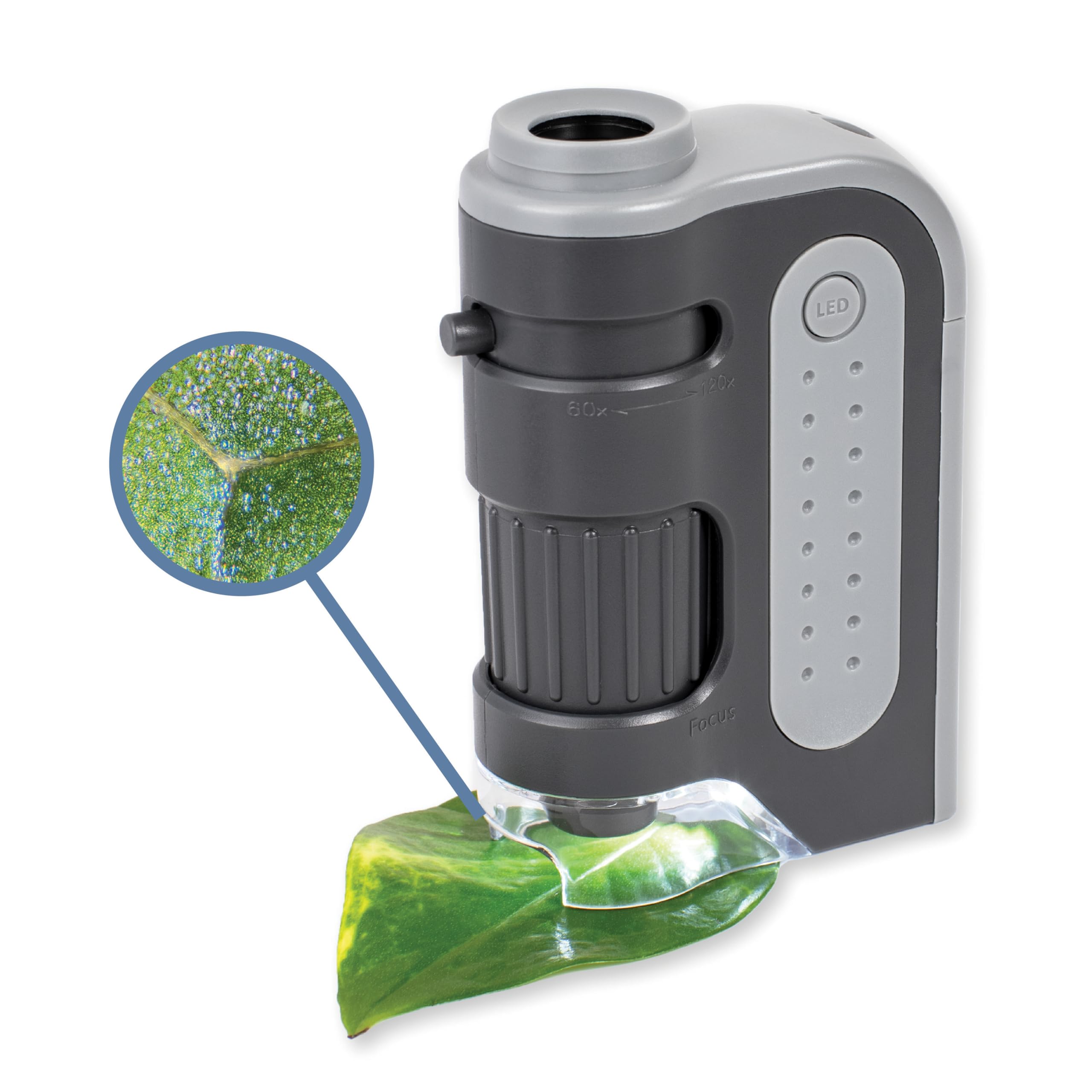
The Carson MicroBrite Plus packs genuine optical magnification into a body small enough to slip into a pocket. At 60x–120x, it delivers details that digital toys advertise but rarely achieve. The LED illumination helps in dim conditions, and the whole scope weighs next to nothing.

This is not a microscope for young children. The focusing mechanism demands a steady hand and a flat specimen — frustrating for ages under 8 who lack fine motor control. It suits older kids (8+) and adults doing field work, quick inspections, or anyone wanting maximum power per dollar in a compact format.

Tip: Use the included LED to light the specimen; resting the scope on a stable surface helps with focusing.

Bottom line: Best for older kids and adults who value portability and true optical power over the instant simplicity of a digital screen.

7

BEBANG 1000X Handheld

BEBANG 1000X Handheld

Ages 5-12

Our Score 9.0/10
Check Price

Worth Noting

  • Advertised 1000x magnification is exaggerated; useful zoom is roughly 100-200x.
  • Image quality can appear blurry at higher zoom levels, especially when viewing fine details.
Build
Plastic
Accessories
Prepared slides, case, SD
Magnification
200x-1000x digital
Display/Eyepiece
2.0-inch LCD

For kids wanting a take-anywhere microscope for leaves and coins, this model works well. It includes prepared slides, a 32GB SD card, and a protective case. The 2-inch screen and simple controls suit ages 5-12. However, the advertised 1000x zoom is not realistic — usable magnification sits around 100-200x, and images soften noticeably at the upper end. That makes it a decent budget option for casual exploration rather than detailed scientific work.

Bottom line: This fits budget-conscious families with kids 5-12 who want a simple digital scope for outdoor walks and casual discovery, not for precise magnification work.

8

Ashfly Portable 1000X

Ashfly Portable 1000X

Ages 3-12

Our Score 9.2/10
Check Price

Worth Noting

  • Advertised 1000x magnification is not accurate; actual maximum is 200x.
Build
ABS with silicone
Accessories
Photo/video, no slides
Magnification
Up to 1000x digital (200x real)
Display/Eyepiece
2.0-inch

The Ashfly 1000X Portable Microscope is easy for kids ages 3-12 to use and delivers clear images at lower zoom, making it a fun tool for outdoor exploration. Image quality at its true 200x maximum is surprisingly good for a budget device. However, the advertised 1000x magnification is inflated — the actual maximum is 200x as per technical specs. This makes it a great value for casual use, but not for serious students or those needing high magnification.

Bottom line: A good choice for parents seeking a low-cost digital microscope for casual backyard exploration, provided you accept the 200x real limit.

9

GeoSafari Talking Microscope

GeoSafari Talking Microscope

Ages 4-8

Our Score 9.2/10
Check Price

Worth Noting

  • Slide storage drawer lacks a secure latch
Build
Plastic
Accessories
60 images on 20 slides
Magnification
No magnification (slide viewer)
Display/Eyepiece
No screen (slide viewer)

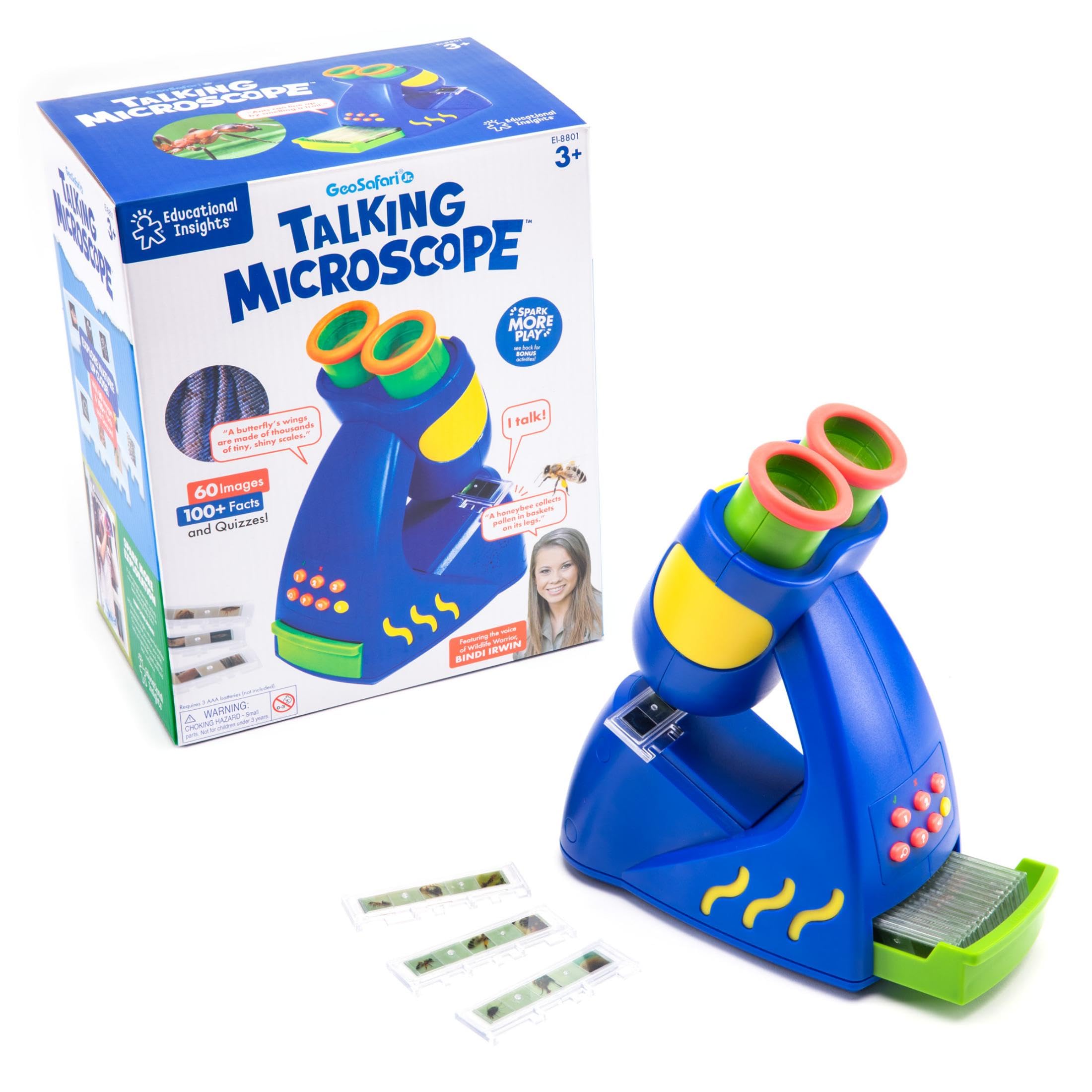
The GeoSafari Talking Microscope engages preschoolers with narrated facts and quiz mode on 60 images across 20 slides — a mess-free science introduction. But it has no optical magnification; it's a pre-recorded slide viewer. The slide storage drawer can let slides fall out. For children over 3-5 who want to examine actual specimens, this won't satisfy. It's a fine choice for parents seeking audio-based learning, but for real microscopy, a digital handheld microscope is more capable.

Bottom line: Best for parents wanting a mess-free, audio-based science activity for preschoolers who already enjoy interactive learning, but not for those seeking actual magnification.

10

Nat Geo 400x Microscope

Nat Geo 400x Microscope

Ages 6+

Our Score 9.0/10
Check Price

Worth Noting

  • Build quality can be inconsistent; some units may have loose parts or feel less sturdy.
Build
Plastic
Accessories
6 prepared slides, specimens
Magnification
Up to 400x optical
Display/Eyepiece
Eyepiece (compound)

This microscope works well as an initial introduction for curious kids, with LED lighting and a selection of prepared slides and specimens. However, build quality can be inconsistent, meaning some units may have loose parts or show signs of wear sooner than expected. It is best for occasional use or as a short-term gift, not for heavy regular handling. Families needing dependable long-term use should consider a more robust model like the premium compound scope in this comparison.

Bottom line: Only suitable if you are comfortable with potential unit variation and plan for light, occasional use.

11

Uarzt 58-Piece Kit

Uarzt 58-Piece Kit

Ages 8+

Our Score 9.0/10
Check Price

Worth Noting

  • Focusing adjustment can be finicky, requiring patience.
  • Some units may arrive with loose or detached components.
Build
Metal and plastic
Accessories
13 prep slides, 31 blank, tools
Magnification
100x-1200x optical
Display/Eyepiece
Eyepiece

The Uarzt kit packs a lot into the box: 13 prepared slides, 31 blank slides, tweezers, a dropper, scalpel, and a carrying case. That makes it a generous starter set for a curious child. However, focusing can be inconsistent, and some units may arrive with detached parts, so it requires patience and occasional reassembly. This makes the kit better suited for kids ages 8 and up who are willing to troubleshoot rather than younger children or anyone wanting a hassle-free experience.

Bottom line: This kit works well for a determined young learner who values a wide variety of slides over convenience — just expect to spend time setting up and adjusting.

12

Ashfly Digital 2.0"

Ashfly Digital 2.0"

Ages 3+

Our Score 9.0/10
Check Price

Worth Noting

  • Some units may develop functionality issues within a few weeks of use
Build
Plastic
Accessories
Lanyard, cable only
Magnification
200x-1000x digital
Display/Eyepiece
2.0-inch LCD

The Ashfly 1000X engages kids with its 2.0-inch screen and simple controls, perfect for occasional discovery sessions. However, build quality varies: some units may stop working after a few weeks, which limits this to casual use or as a low-commitment entry point. For families wanting a more durable option, spending a few dollars more on a brand like OAEBLLE or Vorth adds peace of mind.

Bottom line: Best for families on a tight budget who want a digital microscope for occasional short sessions and are willing to accept the possibility of early replacement.

How to Choose

Magnification Type

Digital microscopes use a camera sensor and screen, while compound microscopes use glass lenses. Digital zoom simply crops the image, so a '1000x' claim often means the sensor is just magnifying pixels, resulting in blur. True optical magnification comes from lens quality, not a number on the box.

For kids under 8, digital microscopes with 100-200x effective magnification are plenty. For older children wanting to see cell structures, a compound model with 400x optical zoom is more useful. Ignore anything above 400x on budget compound scopes — the optics rarely support it.

Ease of Focusing

Focusing a microscope is the biggest pain point for kids. Digital handhelds often use a simple wheel or slider that's easy for small fingers. Compound microscopes have fine and coarse adjustment knobs that require coordination and patience.

If your child is under 8, a digital model with a fixed focus or simple wheel reduces frustration. For older kids willing to practice, a compound scope teaches proper technique but expect a learning curve.

Included Accessories

Prepared slides let kids start exploring right away. Kits with 10-20 slides, blank slides, and tools like tweezers and droppers offer more value than the microscope alone. Some cheap digital models include no slides, forcing you to buy them separately.

Also check for storage cases and extra batteries. A good kit saves money and reduces the need for immediate add-ons.

Screen Size or Eyepiece

Digital microscopes feature a built-in screen that makes sharing easy. A 2.4-inch screen is standard, but 4-inch screens like the BEAVERLAB allow group viewing. Small screens can be hard to see for multiple kids.

Traditional microscopes require looking through an eyepiece, which can be difficult for young children who have trouble keeping one eye closed. Some compound scopes offer a monocular or binocular eyepiece; the latter is more comfortable but rarer in kids' models.

Build Quality and Durability

Children drop things. Digital handhelds with rubberized or silicone exteriors survive falls better than hard plastic. Compound microscopes with metal frames are more stable but heavier. All-plastic compound scopes under $40 often break at the focus knob or stage clips.

Look for models with positive reviews about surviving typical kid use. Warranty or returns policy matters more in this category than most.

Frequently Asked Questions