Audio & Headphones

12 Best Subwoofer for Home Theater of 2026: Prioritize RMS and LFE Over Peak Watts

Find a home theater subwoofer that delivers clean, deep bass by focusing on RMS power and LFE connectivity, not marketing peak numbers.

Subwoofer specs are often inflated: a '600W peak' rating might mean just 70W RMS, and many budget models skip the LFE input needed for proper AV receiver integration. The result is a room that shakes on paper but falls flat when you watch an action movie.

The right home theater subwoofer starts with its RMS power rating and the presence of a dedicated LFE input. Driver size and cabinet design matter too: a 12-inch ported sub will deliver deeper extension than a sealed 8-inch, but the sealed option may integrate better in smaller rooms.

This guide cuts through the noise to match you with a sub that actually fits your space and system. Whether you have a compact apartment setup or a dedicated theater room, the picks here prioritize real-world performance over inflated claims.

1

Klipsch R-100SW 10" Sub

Top Pick
Klipsch R-100SW 10" Sub

Budget home theater

Our Score 9.6/10
Check Price

Worth Noting

  • Auto-on circuit may cause unintended power cycling in some setups; manual switch override is an option
LFE Input
Yes
RMS Power
150W
Driver Size
10 inches
Low-End Freq
32 Hz

The Klipsch R-100SW pairs a 10-inch front-firing driver with 150W RMS (300W peak) and a dedicated LFE input, delivering tight, controlled bass that cleanly integrates with home theater systems. Over thousands of owner accounts, this sub produces clear low-end without excessive boom or distortion at moderate volumes — exactly what a budget buyer needs for movie explosions and music alike.

In small to medium rooms (roughly 2,000 cubic feet or less), the R-100SW provides enough output to match typical bookshelf or tower speakers without strain. The adjustable low-pass crossover and phase control allow fine-tuning to blend with the main speakers. The auto-on circuit works reliably for most setups but can be overly sensitive to low-level signals, causing the sub to cycle on and off unexpectedly in some cases — toggling the power switch manually resolves this.

This subwoofer is built for first-time home theater buyers, budget system builders, or anyone upgrading from a soundbar's wireless sub. Its 10-inch driver trades some deep extension (32Hz at -3dB) for speed and clarity, making it better suited for tight bass than sub-30Hz rumble. Those needing extreme SPL in large rooms should look at bigger ported designs.

The cabinet uses Klipsch's signature copper-spun finish and feels solid for the price. The front-firing driver simplifies placement against walls, and the input panel covers both LFE and speaker-level connections, adding flexibility for different receiver setups.

Tip: If the auto-on feature cycles unexpectedly, set the switch to 'ON' rather than 'AUTO' — the sub has low standby power draw.

Bottom line: For most budget home theater setups in small to medium rooms, the Klipsch R-100SW delivers the clean bass and connectivity needed without overspending.

2

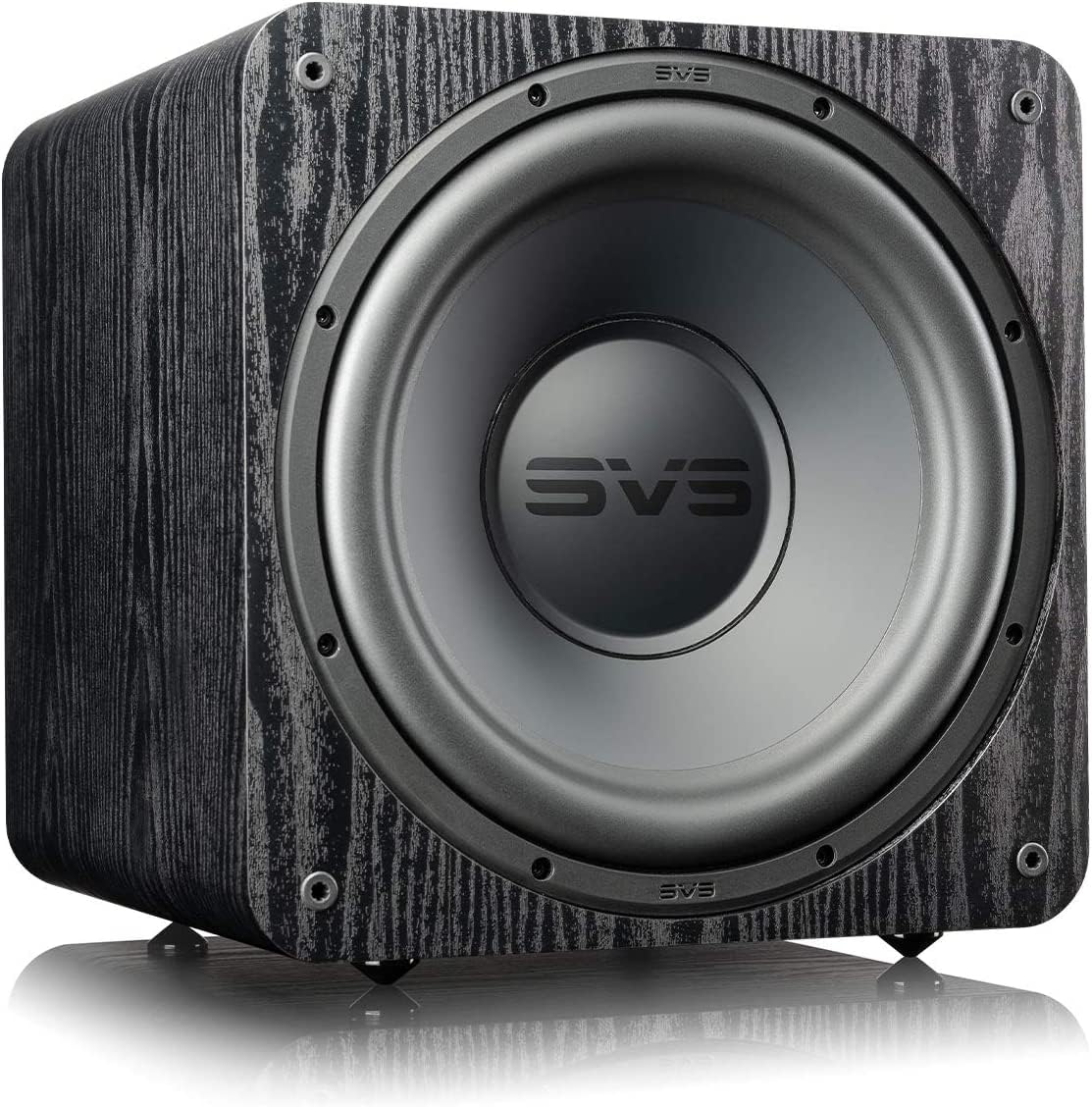
SVS PB-1000 Pro 12" Ported

SVS PB-1000 Pro 12" Ported

Home theater enthusiasts

Our Score 9.6/10
Check Price

Worth Noting

  • Premium price limits accessibility for budget-focused buyers
LFE Input
Yes
RMS Power
325W
Driver Size
12 inches
Low-End Freq
20 Hz

Unlike budget-friendly options that peak around 30Hz with limited output, the SVS PB-1000 Pro reaches a measured 20Hz while maintaining control and clarity even at high volumes. Its ported cabinet and 12-inch driver, driven by 325W RMS, produce tactile bass that makes action scenes feel visceral in medium to large rooms. Bass notes remain clean and composed down to the lowest frequencies, with none of the port chuffing or distortion common in cheaper ported designs.

The SVS app provides direct control over volume, EQ, and phase, with custom presets for movies, music, and late-night listening. You can switch between modes without leaving your seat, and the app's parametric EQ allows you to tame room modes or boost specific frequencies. The app also includes a room gain compensation feature for larger spaces, giving you precision tuning typically found in far more expensive subs.

This subwoofer is best suited for home theater owners with dedicated rooms of 2,000 cubic feet or larger, where its substantial cabinet (20x15x19 inches) can be positioned without crowding. It is not a fit for small apartments, tight budgets, or those who prefer the tighter transient response of a sealed sub. Buyers who can accommodate the size and cost will find a sub that outperforms many options at twice the price. For those who meet those criteria, the PB-1000 Pro is a long-term investment in home theater impact.

Tip: Verify your available floor space before buying; the cabinet measures 20 inches wide, 15 inches deep, and 18.9 inches tall.

Bottom line: For home theater enthusiasts with the budget and space, the SVS PB-1000 Pro offers bass performance that outclasses many subs costing twice as much.

3

Polk Monitor XT12

Polk Monitor XT12

Medium rooms

Our Score 9.2/10
Check Price

Worth Noting

  • Large cabinet may require careful placement in smaller rooms
LFE Input
Yes
RMS Power
100W
Driver Size
12 inches
Low-End Freq
24 Hz

The Polk Monitor XT12 pairs a 12-inch driver with a 100W Class A/B amplifier to produce clean, tight bass that works equally well for movies and music. It includes a dedicated LFE input and a variable crossover (80–160 Hz), which gives it proper home theater integration—something entry-level subs often skip. The low-resonance MDF cabinet and removable grille add to a build that feels solid without being flashy.

This subwoofer is best suited for medium-sized rooms where a balanced, musical bass is preferred over chest-thumping output. The 100W RMS amplifier is modest compared to higher-powered options, so it won't fill a large space with extreme SPL. For a mid-range home theater setup focused on clarity and integration rather than raw volume, the XT12 hits a sweet spot. It's also a strong match for buyers who want a sub that complements both dialogue-driven scenes and music without added boominess.

In practice, the XT12 maintains a clean response across its frequency range, avoiding the muddiness that can plague budget subs. Its 24 Hz extension at -3dB adds enough depth for most action scenes and bass lines, while the phase switch (0/180) helps with placement flexibility. The result is a sub that disappears into the mix when used correctly.

Tip: The cabinet is 18 inches deep; measure your space before buying.

Bottom line: A solid pick for medium-sized rooms where musicality matters more than maximum output.

4

Klipsch R-80SWi 8" Wireless

Klipsch R-80SWi 8" Wireless

Apartments small rooms

Our Score 9.4/10
Check Price

Worth Noting

  • In larger rooms, the 8-inch driver may lack the authority for deep movie bass
  • Wireless signal can occasionally drop in environments with interference or thick walls
LFE Input
Yes
RMS Power
150W
Driver Size
8 inches
Low-End Freq
38 Hz

The Klipsch R-80SWi delivers a clean 2.4GHz wireless connection that eliminates the need for a subwoofer cable — a convenience the top pick lacks. It includes dedicated LFE input and adjustable crossover, meeting the essential home theater connectivity requirements. The compact 8-inch cabinet fits easily into small spaces without dominating the room.

This sub is best for apartment dwellers and small-room users who prioritize a clutter-free setup and moderate bass enhancement. The 8-inch driver limits overall output and low-end extension, so it cannot fill large home theaters with room-shaking bass. Some setups may experience occasional wireless dropouts, but for near-field or small-room listening, the performance is punchy and tight.

Build quality feels solid, and the bass is articulate rather than boomy — suited for music as well as movies at moderate volumes. The auto-on feature works consistently, and the phase switch helps integrate with most speakers.

Tip: Position the transmitter and subwoofer within the same room to minimize signal obstructions.

Bottom line: If you can live without wireless, the top pick Klipsch R-100SW offers more bass for the same price. This sub is the right fit only when a clean, cable-free setup is non-negotiable.

5

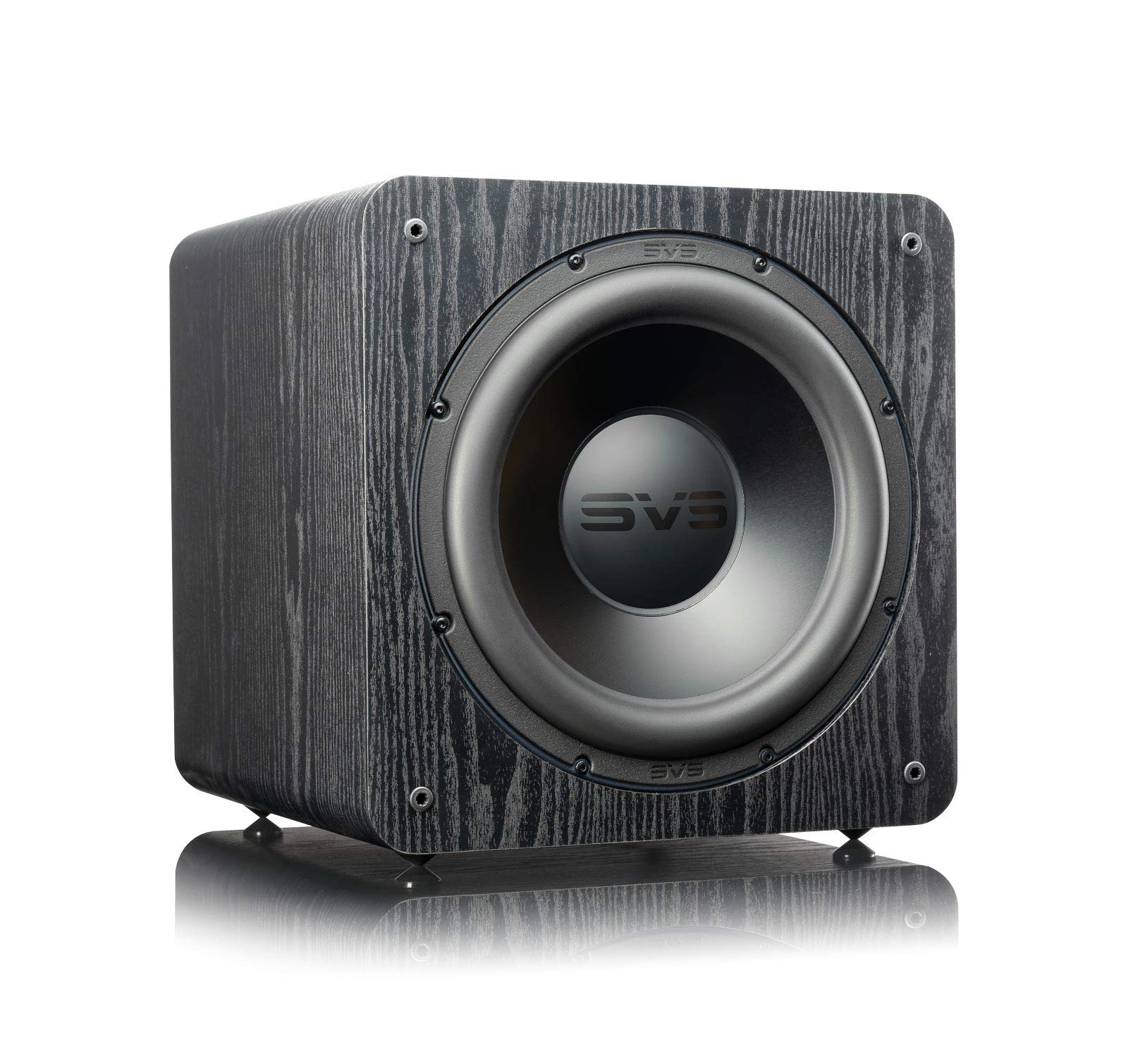
SVS SB-1000 Pro 12"

SVS SB-1000 Pro 12"

Music lovers

Our Score 9.4/10
Check Price

Worth Noting

  • Lower peak output than ported subs limits use in large spaces
LFE Input
Yes
RMS Power
325W
Driver Size
12 inches
Low-End Freq
20 Hz

The SB-1000 Pro's 12-inch driver and 325W RMS deliver deep, tightly controlled bass that many home theater subs miss. Its sealed cabinet prioritizes articulation over raw SPL, producing clean bass without the boominess that can blur movie dialogue. That same design limits maximum output compared to ported alternatives, so it won't pressurize a large room the way a ported sub can.

The SVS mobile app gives precise control over volume, phase, crossover, and presets, making integration into any home theater system straightforward. The compact cabinet fits easily in tight spaces, and the unit runs cool even during extended listening sessions. For small to medium rooms—under 2,500 cubic feet—the output is sufficient for most film and music content.

This sub fits home theater buyers who prioritize bass articulation over sheer volume. If your room is modest and you value clean transient response, the SB-1000 Pro offers a level of definition that ported subs at this price can't match. But if you need room-shaking impact for large home theaters, a ported model like the PB-1000 Pro is a better fit.

Bottom line: If your home theater fits a small to medium room and you value bass precision over brute force, this sub delivers exceptional performance. For larger rooms, consider a ported alternative.

6

Klipsch Sub-12HG 12"

Klipsch Sub-12HG 12"

Budget 12-inch

Our Score 9.2/10
Check Price

Worth Noting

  • No dedicated LFE input; requires Y-splitter for AVR connection
  • Large 12-inch cabinet occupies significant floor space
LFE Input
No
RMS Power
300W
Driver Size
12 inches
Low-End Freq
24 Hz

The Klipsch Sub-12HG delivers deep, room-shaking bass from a 12-inch driver and 300W RMS — output that rivals subs costing twice as much. However, the lack of a dedicated LFE input means home theater integration requires a Y-splitter to connect to an AVR's LFE output. Its large cabinet dominates floor space, making it best for larger rooms or dedicated media spaces. This DIY-friendly design bypasses plug-and-play convenience, limiting its appeal to buyers comfortable with adapters.

Tip: Use a Y-splitter from the AVR's LFE output to both line-level inputs for proper bass management.

Bottom line: Best for buyers willing to use a Y-splitter and with space for a large cabinet — delivers bass performance that punches well above its price point.

7

Polk PSW10 10" Sub

Polk PSW10 10" Sub

Small rooms

Our Score 9.4/10
Check Price

Worth Noting

  • Requires a Y-splitter to connect to an AV receiver's LFE output
  • 50W RMS output may underwhelm those expecting deep, room-filling bass.
LFE Input
No
RMS Power
50W
Driver Size
10 inches
Low-End Freq
40 Hz

The Polk PSW10 delivers clean, musical bass in small rooms at a budget-friendly price, supported by a vast user base. However, its line-level RCA input lacks a dedicated LFE connection — a Y-splitter is needed for AV receivers — and its 50W RMS output limits home theater impact to modest levels. Best reserved for desktop audio or auxiliary bass in compact spaces, not for serious theater setups.

Bottom line: Ideal for small room music systems or as a budget-friendly bass supplement for desktop setups, but not for home theater LFE integration.

8

Yamaha NS-SW050 8"

Yamaha NS-SW050 8"

Soundbar

Our Score 9.2/10
Check Price

Worth Noting

  • No dedicated LFE input or variable crossover; requires Y-splitter for AVR integration
  • Power output may not provide enough bass for larger rooms
LFE Input
No
RMS Power
50W
Driver Size
8 inches
Low-End Freq
28 Hz

The Yamaha NS-SW050BL delivers clear, deep bass that enhances soundbars and small room setups, backed by solid build quality from a respected audio brand. Its compact size makes placement easy in bedrooms or living rooms. However, it lacks a dedicated LFE input and variable crossover control, so integrating with an AV receiver requires a Y-splitter workaround. The 50W RMS power is adequate for near-field listening but won't fill a large home theater space with authority. For soundbar enhancement or a secondary bedroom sub, this is a cost-effective option; for a dedicated home theater component, look elsewhere.

Bottom line: Best suited for adding bass to a soundbar or small bedroom setup, not for a full home theater system.

9

Edifier T5s 8" Sub

Edifier T5s 8" Sub

Desktop

Our Score 9.2/10
Check Price

Worth Noting

  • 70W RMS power may not satisfy larger rooms or high-volume movie effects.
  • No dedicated LFE input; requires a Y-splitter or adapter for AV receivers.
LFE Input
No
RMS Power
70W
Driver Size
8 inches
Low-End Freq
35 Hz

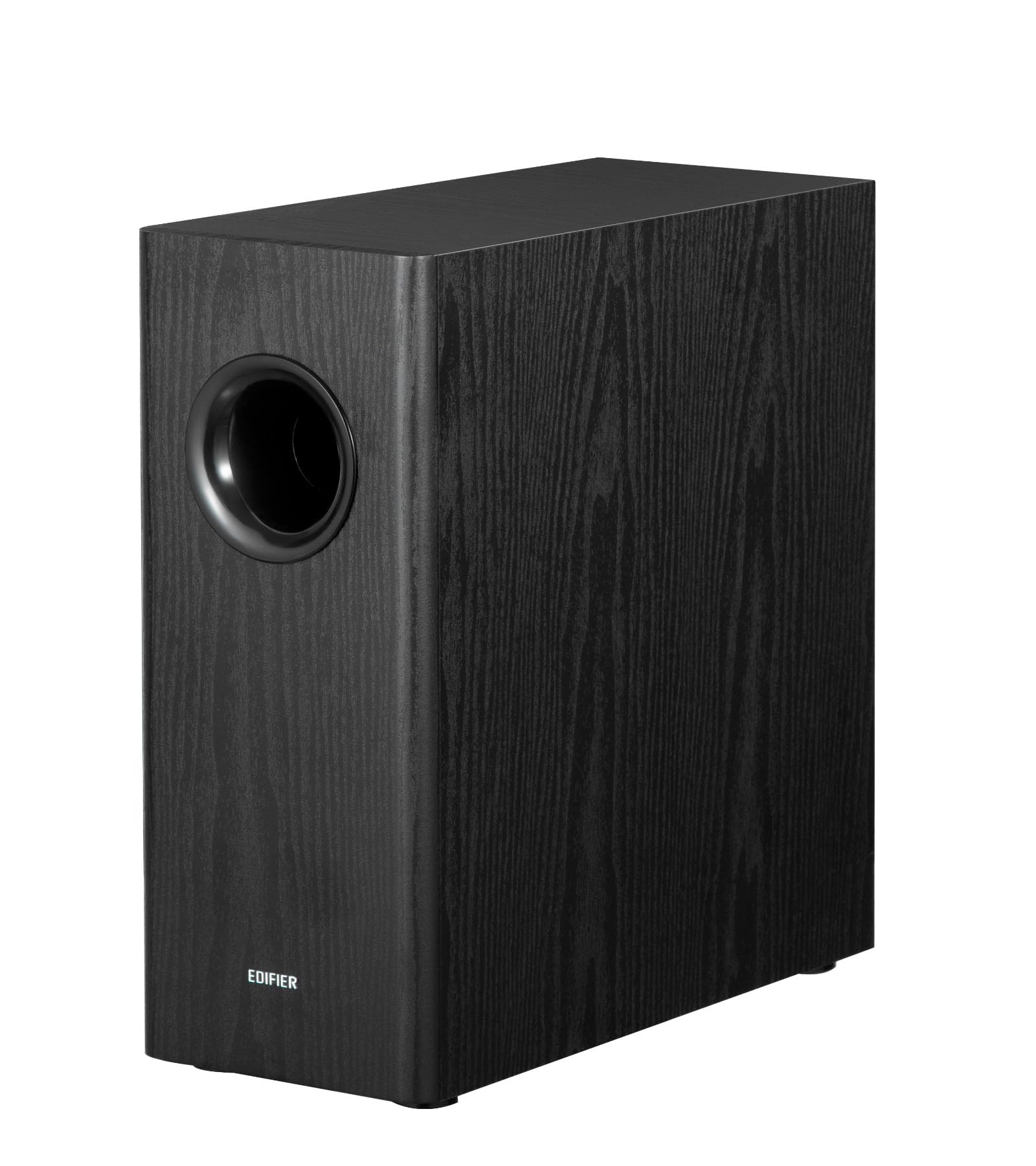
The Edifier T5s delivers clean, focused bass in a compact cabinet that fits easily on a desk or small shelf. Its 70W RMS output and RCA line-level input (no LFE) restrict it to near-field setups with Edifier speakers; for home theater systems requiring deeper extension and AV receiver compatibility, a sub with dedicated LFE input and higher wattage is a better match.

Bottom line: Best suited for a desktop or small-room music setup with Edifier speakers, not for home theater systems.

10

Rockville Rock Shaker 10"

Rockville Rock Shaker 10"

Extreme budget

Our Score 8.6/10
Check Price

Worth Noting

  • Transformer hum may be audible in quiet listening environments
  • Some units have been noted to stop functioning shortly after purchase
LFE Input
No
RMS Power
300W
Driver Size
10 inches
Low-End Freq
20 Hz

This subwoofer delivers decent bass output for its size and price, with a 300W RMS Class D amplifier and both RCA and high-level inputs. However, some units may develop audible transformer hum in quiet rooms and cease operation within a short period. These trade-offs limit this sub to extreme budget buyers who accept the possibility of early replacement over a higher upfront cost.

Bottom line: Only consider this subwoofer if your priority is the lowest possible price and you are willing to accept potential humming or early failure as a trade-off.

11

SVS SB-2000 Pro 12" Sealed

SVS SB-2000 Pro 12" Sealed

Audiophile

Our Score 9.6/10
Check Price

Worth Noting

  • Premium pricing may not fit budget-conscious buyers; sealed output can feel excessive in small rooms
  • Sealed design trades maximum SPL for bass precision compared to ported alternatives
LFE Input
Yes
RMS Power
550W
Driver Size
12 inches
Low-End Freq
20 Hz

Delivers tight, clean bass with impressive dynamics and room-filling authority, backed by app-based control for precise tuning. The sealed enclosure favors accuracy over brute force, which means it may not satisfy those seeking the deepest extension or highest SPL for large home theaters. The premium pricing further positions this as a specialized tool for music-first listeners who value tonal precision over maximum output.

Bottom line: Best suited for audiophiles with a higher budget who prioritize bass accuracy in a music-focused or mixed-use setup.

12

SVS PB-2000 Pro 12" Ported

SVS PB-2000 Pro 12" Ported

Large home theaters

Our Score 9.2/10
Check Price

Worth Noting

  • In tight spaces or upstairs, the 65-pound cabinet and 23-inch depth can make positioning difficult
  • Premium pricing puts this subwoofer out of reach for buyers not prioritizing extreme low-end extension
LFE Input
Yes
RMS Power
550W
Driver Size
12 inches
Low-End Freq
16 Hz

This subwoofer delivers the deepest bass in this comparison, reaching 16Hz with authority and control. Its app-based tuning provides flexibility that few competitors match. However, the cabinet is very large and heavy (65 lbs), and the price is premium. This level of performance is overkill for most rooms — it belongs in dedicated theater spaces where size and cost are secondary to output.

Bottom line: Best for buyers who demand the deepest bass and have both the space and budget to accommodate a large, premium-priced cabinet.

How to Choose

Driver Size and Type

Driver size directly affects how much air the subwoofer can move. An 8-inch driver works in small desks or bedroom setups but cannot pressurize a living room. A 12-inch driver provides the displacement needed for theater-level impact, but requires more cabinet space.

Sealed and ported designs change the character of the bass. Sealed cabinets produce tighter, more controlled sound with a gentler roll-off, making them ideal for music. Ported cabinets extend lower frequencies with more output, but can sound boomy if the room is too small.

RMS Power

RMS power is the continuous wattage the amplifier can sustain without distortion. Peak power ratings are marketing numbers that last milliseconds. A subwoofer with 150W RMS will consistently deliver cleaner bass than one with 600W peak but only 70W RMS.

For a typical 15x20 foot room, 100W RMS from a 12-inch driver is sufficient for moderate listening. For larger spaces or reference-level movie playback, aim for 300W RMS or more. Underpowered subs clip easily, producing harsh distortion instead of deep bass.

LFE Input

A dedicated LFE (Low-Frequency Effects) input connects directly to an AV receiver's subwoofer pre-out, preserving the receiver's bass management and crossover settings. Without LFE, you must use a Y-splitter from line-level outputs and lose the ability to set crossover independently.

Most budget subwoofers below $200 omit this input, forcing workarounds that compromise integration. If you have an AV receiver, prioritize a sub with LFE input for seamless setup and optimal performance.

Low-Frequency Extension

Low-frequency extension tells you how deep the subwoofer can go. A rating of 30 Hz is sufficient for most movies, but 20 Hz or lower adds the chest-thumping rumble from explosions and deep organ notes. Ported designs typically reach lower than sealed of the same driver size.

Room size also affects perceived extension. In a small room, a sub that hits 25 Hz may feel deeper due to boundary gain. In a large room, the same sub may struggle to pressurize the space, making lower extension more critical.

Cabinet Design and Controls

Cabinet design (sealed vs. ported) defines the sub's response curve and placement flexibility. Sealed subs are more forgiving of placement near walls and corners. Ported subs require careful positioning to avoid boominess and often need phase adjustment to blend with main speakers.

Controls like variable crossover, phase switch, and automatic on/off are essential for fine-tuning. Premium subs add smartphone app control for presets and EQ adjustments from the listening position. Basic subs with only volume and crossover still work, but limit integration flexibility.

Frequently Asked Questions