Tools & DIY

13 Best Soldering Iron 2026: Consistent Heat and Long-Term Value

Find soldering irons that deliver steady heat for electronics hobbyists, from budget beginner kits to premium digital stations.

Many soldering iron kits promise dozens of accessories for under $30, but the actual iron often struggles to maintain a steady temperature on anything larger than a small wire. The frustration of a tip that cools mid-joint is a common experience for beginners and hobbyists alike.

A reliable soldering station with digital temperature control solves that, but the price jump from budget to mid-range can feel steep. The real trade-off is between paying for a brand's track record vs. getting comparable specs at a lower price with some risk of QC variation.

This guide focuses on what actually matters for electronics work: heating consistency, tip stability, and build quality that lasts. The right choice depends on how often you solder and how much precision you need for your projects.

1

YIHUA 939D+ Station

Top Pick
YIHUA 939D+ Station

Hobbyists wanting station

Our Score 9.2/10
Check Price

Worth Noting

  • Temperature consistency can vary between individual units
Wattage
120W
Form Factor
Station
Temp Control
Digital
Heating Element

The YIHUA 939D+ brings digital temperature control, ESD safety, and a built-in transformer to a price point that undercuts premium stations by a wide margin. It heats up quickly and holds the set temperature with minimal fluctuation, thanks to its 120W power supply and closed-loop circuit. The LCD display gives direct readout, and the iron itself feels solid enough for daily use on a hobby bench.

This station is aimed at hobbyists who want to move beyond cheap pencil irons without spending over a hundred dollars. It handles through-hole soldering, small SMD work, and light repair tasks with consistent heat. The primary tradeoff is that a small number of units may not reach or maintain the dialed temperature — a unit-to-unit variance that makes it worth checking the iron against a thermometer upon arrival. For most buyers, the station will perform exactly as expected.

Tip: Test the set temperature against a thermometer when you first unbox; calibration can fix minor offsets.

Bottom line: For hobbyists who need steady heat without the premium price, the YIHUA 939D+ delivers where budget pencil irons fall short — as long as you verify the unit's temperature on arrival.

2

Weller WE1010NA

Weller WE1010NA

Hobbyists seeking benchmark

Our Score 9.4/10
Check Price

Worth Noting

  • Some units may develop cracks in the case or heating element failures after months of use.
Wattage
70W
Form Factor
Station
Temp Control
Digital
Heating Element

The Weller WE1010NA delivers stable 70W digital soldering with an LCD display and standby mode, heating quickly and holding temperature within ±2°C. Hobbyists upgrading from basic irons will appreciate the intuitive controls and easy tip changes. However, some units have shown cracking cases or heating element failures after months of use, so this station suits those who prioritize Weller's brand support over absolute long-term durability.

Tip: Handle the station gently and inspect for cracks periodically.

Bottom line: The WE1010NA is a solid choice for hobbyists who value brand reputation and customer support over upfront cost, but be aware of possible long-term build issues.

3

Milwaukee M12 Iron

Milwaukee M12 Iron

Existing M12 users

Our Score 9.4/10
Check Price

Worth Noting

  • Smaller M12 batteries may drain quickly under heavy use, limiting sustained soldering time.
  • Bare tool cost is premium; requires existing M12 battery investment.
Wattage
90W
Form Factor
Iron
Temp Control
Digital
Heating Element

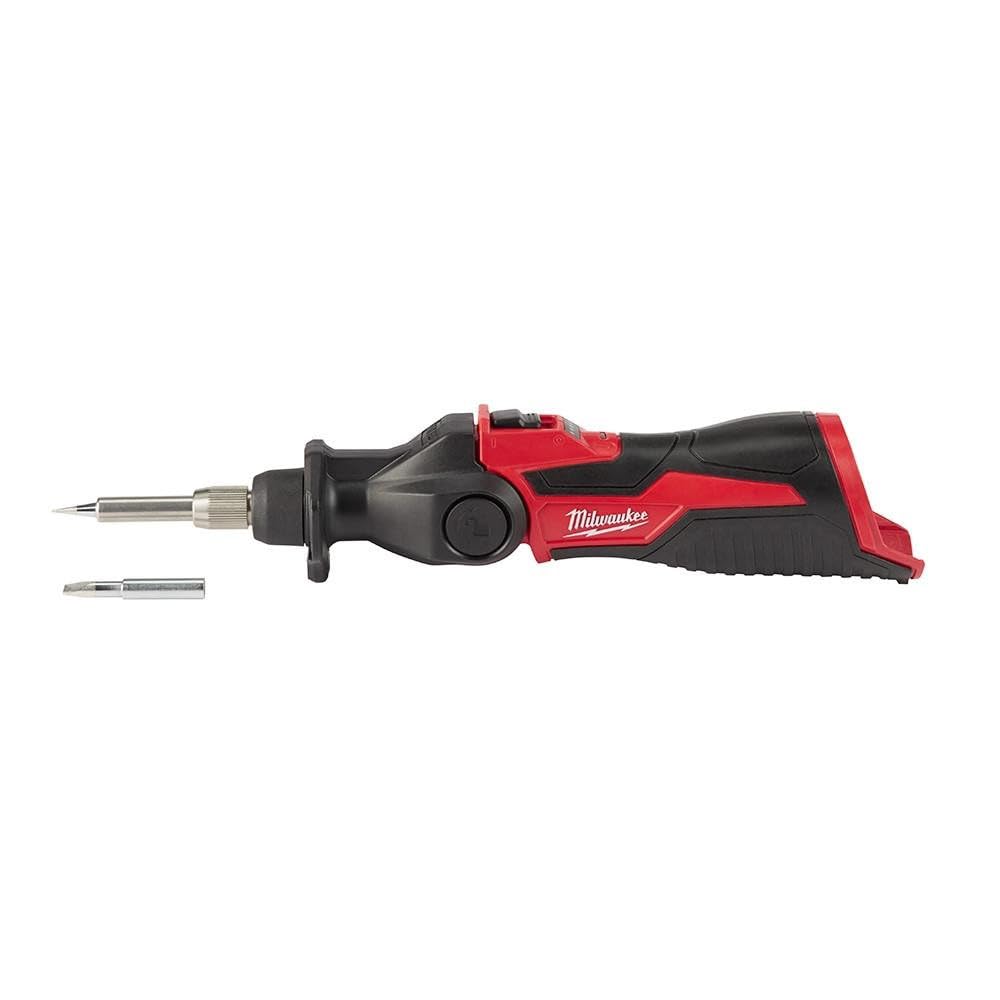
The Milwaukee M12 Soldering Iron heats up in 18 seconds and its pivoting head adjusts to three positions, making it a capable field tool for technicians already invested in Milwaukee’s M12 battery platform. Build quality is solid with a metal barrel and comfortable grip. For mobile work like automotive wiring or small electronics repairs, the cordless convenience outweighs carrying a separate battery. The bare tool does not include a battery; smaller 2.0Ah packs may drain quickly during extended use, so a larger 4.0Ah or higher battery is recommended for longer jobs.

Tip: Using a 4.0Ah or larger M12 battery provides longer runtime for extended soldering sessions.

Bottom line: For M12 users needing a portable soldering iron for field repairs, this is the top option available.

4

Hakko FX601-02

Hakko FX601-02

Stained glass artists

Our Score 9.2/10
Check Price

Worth Noting

  • Cord is heavy and stiff, which can be cumbersome during fine manipulation.
  • Replacement tips are expensive and less widely available compared to standard Hakko tips.
Wattage
67W
Form Factor
Iron
Temp Control
Closed-loop
Heating Element
Ceramic

The Hakko FX601-02 delivers closed-loop temperature control that holds its set point within a narrow range, reaching 540°C in seconds. This precision suits tasks where tip temperature consistency matters — stained glass foil work or small jewelry repairs.

For the electronics hobbyist looking for a do-it-all station, the FX601-02 presents tradeoffs. The cord is heavy and stiff, which can pull on the iron during detailed work. Replacement tips cost more than generic options and require a bit of hunting. This iron shines in specialized applications but feels like a niche investment for general soldering.

Tip: The stiff cord benefits from a hook or strain relief to keep it out of the way.

Bottom line: A precision tool for specific crafts — choose the top pick if you need a general-purpose station.

5

Weller WLC100 Station

Weller WLC100 Station

Light hobby use

Our Score 9.2/10
Check Price

Worth Noting

  • Heating time can be slower than digital stations
  • No digital readout makes temperature setting approximate
Wattage
40W
Form Factor
Station
Temp Control
Analog
Heating Element

Weller's WLC100 delivers the solid construction the brand is known for, with a classic analog dial that will feel familiar to anyone who learned on older stations. The tradeoff is that temperature adjustment is approximate — there's no digital readout to confirm your set point. Some units also take longer to reach operating temperature compared to modern digital competitors. This station fits hobbyists who don't need fine thermal control and prefer a straightforward, no-screen experience for occasional repairs and light electronics work.

Tip: Use a separate tip thermometer to calibrate the dial for repeatable results.

Bottom line: Best for traditionalists who prefer a simple analog station and don't need digital readout — the WLC100 is a capable but dated option for occasional use.

6

Plusivo 30-in-1 Kit

Plusivo 30-in-1 Kit

Complete beginners

Our Score 9.2/10
Check Price

Worth Noting

  • Iron does not always reach sufficient temperature; heating can be inconsistent
Wattage
60W
Form Factor
Iron kit
Temp Control
Variable
Heating Element
Ceramic

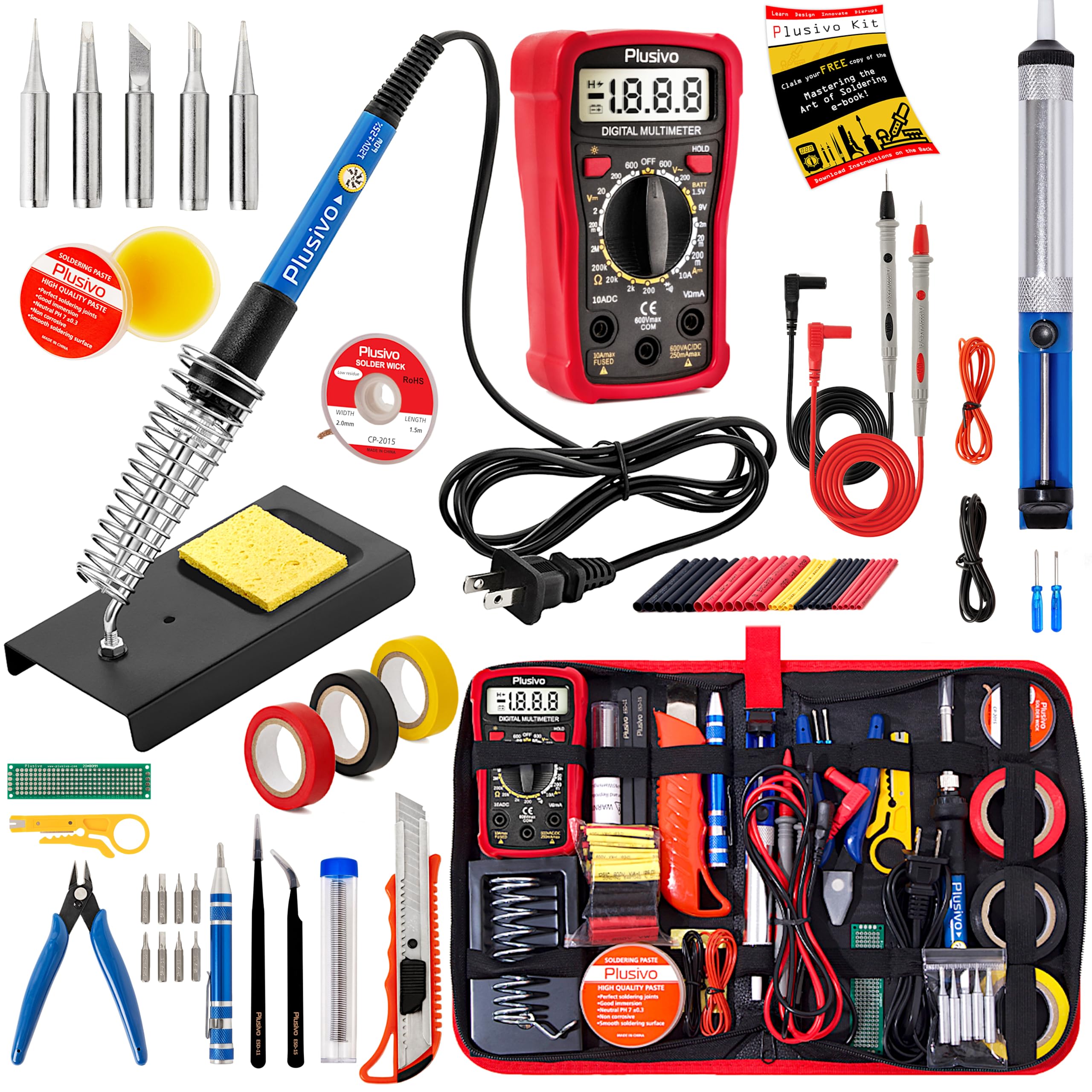
This kit includes a digital multimeter, desoldering pump, wire stripper, five solder tips, and over 30 pieces — everything a beginner needs to start soldering. The iron is adjustable from 200 to 450°C, but its heat recovery is limited on larger joints, making it best suited for small through-hole components and light wire work. It is ideal for complete beginners and occasional hobbyists who want a single purchase without building a separate tool collection. For heavier work, a station-grade iron would be a better fit.

Tip: Let the iron heat fully for 2-3 minutes before use, and apply solder quickly on larger joints to compensate for slower heat recovery.

Bottom line: For learning soldering on small electronics, this kit provides everything needed without a separate station investment.

7

WEP 927-IV Station

WEP 927-IV Station

Hobbyists wanting features

Our Score 9.0/10
Check Price

Worth Noting

  • Magnifying glass is small and the attached light can be weak or fail over time
Wattage
110W
Form Factor
Station
Temp Control
Digital
Heating Element

The WEP 927-IV station packs 110W power, three preset channels, and a built-in magnifier into a space-saving kit. It heats quickly and holds temperature well for hobbyist projects. However, accessory quality varies — the magnifier is small and the light may fail — and some units require checking on arrival.

Bottom line: Ideal for hobbyists who want multiple presets in a compact kit and are prepared to inspect accessories upon arrival.

8

Q-MING 60W Kit

Q-MING 60W Kit

Beginners on budget

Our Score 9.0/10
Check Price

Worth Noting

  • Temperature consistency can vary between units, affecting larger or prolonged soldering tasks
Wattage
60W
Form Factor
Iron kit
Temp Control
Variable
Heating Element
Ceramic

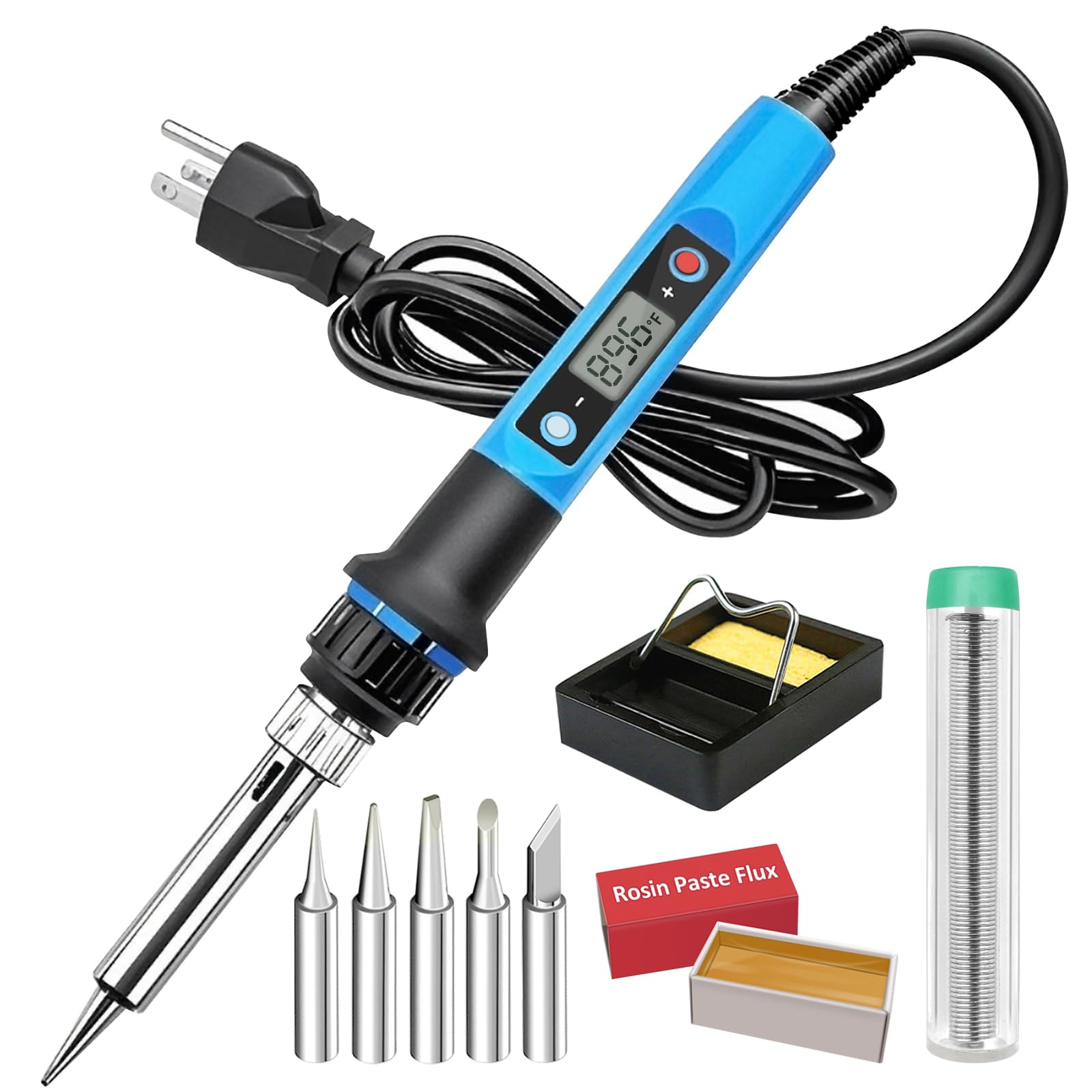
The Q-MING 60W Kit heats up quickly and includes five tips plus flux, making it easy for beginners to get started. Temperature consistency can vary between units, which limits it to occasional use rather than regular projects. For a few dollars more, other options offer steadier heat for frequent soldering.

Bottom line: A reasonable starter kit for occasional hobby use, but consider spending a few dollars more for steadier temperature control if you plan to solder regularly.

9

Q-MING 80W LCD

Q-MING 80W LCD

Cost-conscious hobbyists

Our Score 9.0/10
Check Price

Worth Noting

  • Temperature consistency can vary between units
Wattage
80W
Form Factor
Iron
Temp Control
Digital
Heating Element
Ceramic

This iron heats quickly and handles small electronics and hobby joints well for the price. The LCD temperature readout is a rare find at this budget level. However, the unit is best treated as a backup or second iron — temperature consistency varies between units, and it lacks the precision needed for fine SMD work or heavy-duty connections. Affordable enough to keep in a drawer for occasional use.

Bottom line: A reasonable backup iron for cost-conscious hobbyists who already have a primary station for accurate temperature control.

10

Liouhoum 80W LCD

Liouhoum 80W LCD

Ultra-budget buyers

Our Score 9.2/10
Check Price

Worth Noting

  • Heating consistency can vary, making it less suited for steady work.
Wattage
80W
Form Factor
Iron
Temp Control
Digital
Heating Element
Ceramic

This iron brings digital features to an entry-level price, with an LCD display and auto-sleep convenience. However, heating performance can be inconsistent; some units may heat slowly or lose temperature mid-use. It suits occasional backup tasks rather than daily soldering.

Bottom line: Best reserved as a backup iron or for users who prioritize price over consistent heating.

11

YIHUA 926 III Station

YIHUA 926 III Station

Budget station buyers

Our Score 8.8/10
Check Price

Worth Noting

  • Temperature accuracy can vary between units; some may not display or maintain the set temperature consistently
Wattage
60W
Form Factor
Station
Temp Control
Digital
Heating Element

For hobbyists seeking a complete starter setup without a big investment, this station bundles helping hands, multiple tips, and solder. It heats up quickly and is easy to operate. However, temperature accuracy can vary between units, and some may not heat consistently enough for precision tasks — a tradeoff that suits occasional projects better than daily use.

Bottom line: This kit works well for entry-level hobbyists on a tight budget, provided you are prepared for possible temperature variance.

12

LEXIVON Butane Kit

LEXIVON Butane Kit

Mobile hobbyists

Our Score 9.0/10
Check Price

Worth Noting

  • Igniter or valve problems may develop in some units after extended use
Wattage
Butane
Form Factor
Butane iron
Temp Control
Variable
Heating Element
Butane torch

This butane-powered kit delivers genuine cordless freedom for field repairs and outdoor hobby projects, with a versatile tip set that covers soldering, heat shrink, and light torch work. However, temperature control is less precise than electric stations, and some units may develop igniter or valve issues over time — making it a capable portable tool for occasional mobile use, not a substitute for a temperature-controlled bench station.

Bottom line: This kit suits mobile hobbyists who need a cordless soldering option for occasional outdoor repairs, but it cannot replace a temperature-controlled bench station for daily electronics work.

13

Plusivo 15-in-1 Kit

Plusivo 15-in-1 Kit

First-time buyers

Our Score 9.0/10
Check Price

Worth Noting

  • Heating performance can be inconsistent, so it may not hold temperature for consistent work.
Wattage
60W
Form Factor
Iron kit
Temp Control
Variable
Heating Element
Ceramic

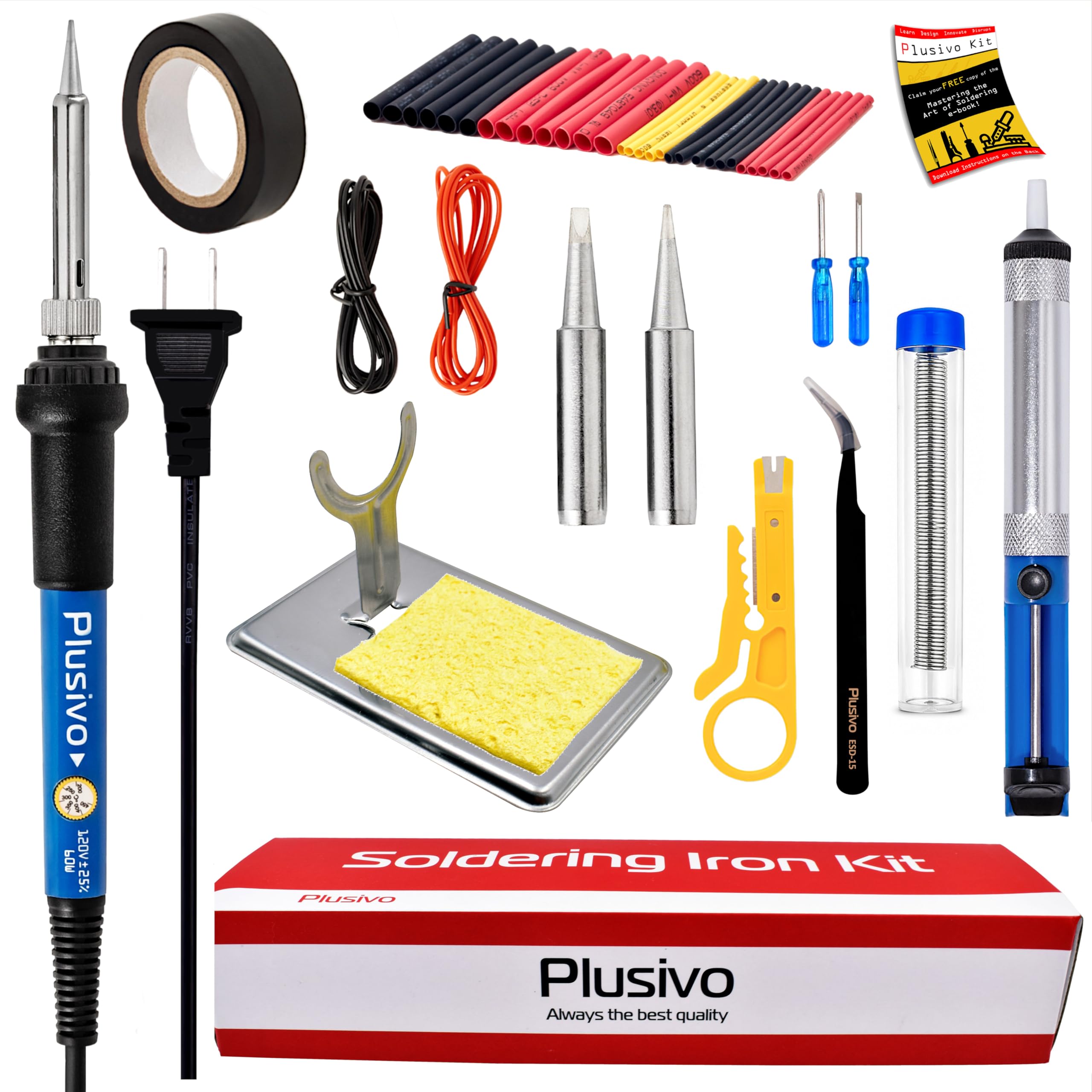
This budget-friendly kit throws in a desoldering pump, wire stripper, and multiple tips for under twelve dollars — a solid starter bundle for occasional repairs or learning the basics. The iron itself is a 60W ceramic model with adjustable temperature, but heating consistency varies between units; some may struggle to reach higher temperatures needed for thicker joints or sustained work. That limits it to light, intermittent tasks rather than regular soldering sessions.

Bottom line: A suitable pick for someone who only needs a soldering iron occasionally and values the extra accessories, but not for regular or temperature-sensitive projects.

How to Choose

Temperature Control: Digital vs Analog

Digital temperature control uses a closed-loop circuit to maintain the tip within a few degrees of your setting. This prevents cold joints and component damage. Analog dials lack feedback, so the actual tip temperature drifts as the iron loses heat to the work.

For regular electronics work, digital control is worth the extra cost. Analog stations work for occasional light tasks, but you'll spend time guessing the right dial position and waiting for recovery.

Wattage and Power Needs

Wattage determines how quickly the iron recovers heat after touching a joint. A 40W iron works for small PCB traces, but larger pads or ground planes will pull the tip temperature down. 60W to 90W is the sweet spot for most hobbyist soldering.

More wattage doesn't mean more heat — it means better heat recovery. An underpowered iron forces you to hold the tip on the joint longer, risking damage to components. Match wattage to the size of your typical solder points.

Heating Element Material

Ceramic heating elements heat faster and last longer than traditional nichrome wire. They also provide more consistent temperature across the tip. Most budget irons now use ceramic, but the quality of the element varies widely.

A ceramic element alone doesn't guarantee performance — the temperature control circuit and tip fit matter just as much. Look for irons that mention 'ceramic' in specs, but check reviews for real-world heating consistency.

Station vs Standalone Iron

Soldering stations include a base unit with a power supply, temperature controls, and a holder. They provide stable voltage and often have standby modes that extend tip life. Standalone irons are simpler and cheaper, but they lack the steady power delivery of a station.

Stations are the better choice for anyone who solders more than once a month. For occasional use, a standalone pencil iron with digital control can suffice, but expect slower recovery and more frequent tip replacement.

Frequently Asked Questions