Tools & DIY

12 Best Rotary Tool of 2026: Prioritize Longevity Over Accessory Count

Stop wasting money on rotary kits that break. Find the models that balance power, durability, and value for your DIY projects.

Many rotary tool buyers are drawn to kits boasting 100+ accessories at a bargain price. But those cheap bits and fragile flex shafts often fail before the tool proves its worth. The real cost isn't the sticker price — it's the time spent replacing a broken part.

A dependable rotary tool starts with a motor that maintains speed under load, a chuck that won't slip, and construction that handles moderate use without overheating. These fundamentals determine whether a tool serves you for years or just a few projects.

1

Dremel 4300-5/40

Top Pick
Dremel 4300-5/40

Woodcarving, DIY

Our Score 9.4/10
Check Price

Worth Noting

  • Motor burnout may occur in a minority of units during sustained heavy use.
  • The universal chuck may not grip very small bits (e.g., 1/32 in.) as securely as a collet.
Max RPM
5,000-35,000 RPM
Durability
Minor early failures
Accessories
40 pieces
Power Source
Corded, 1.8A

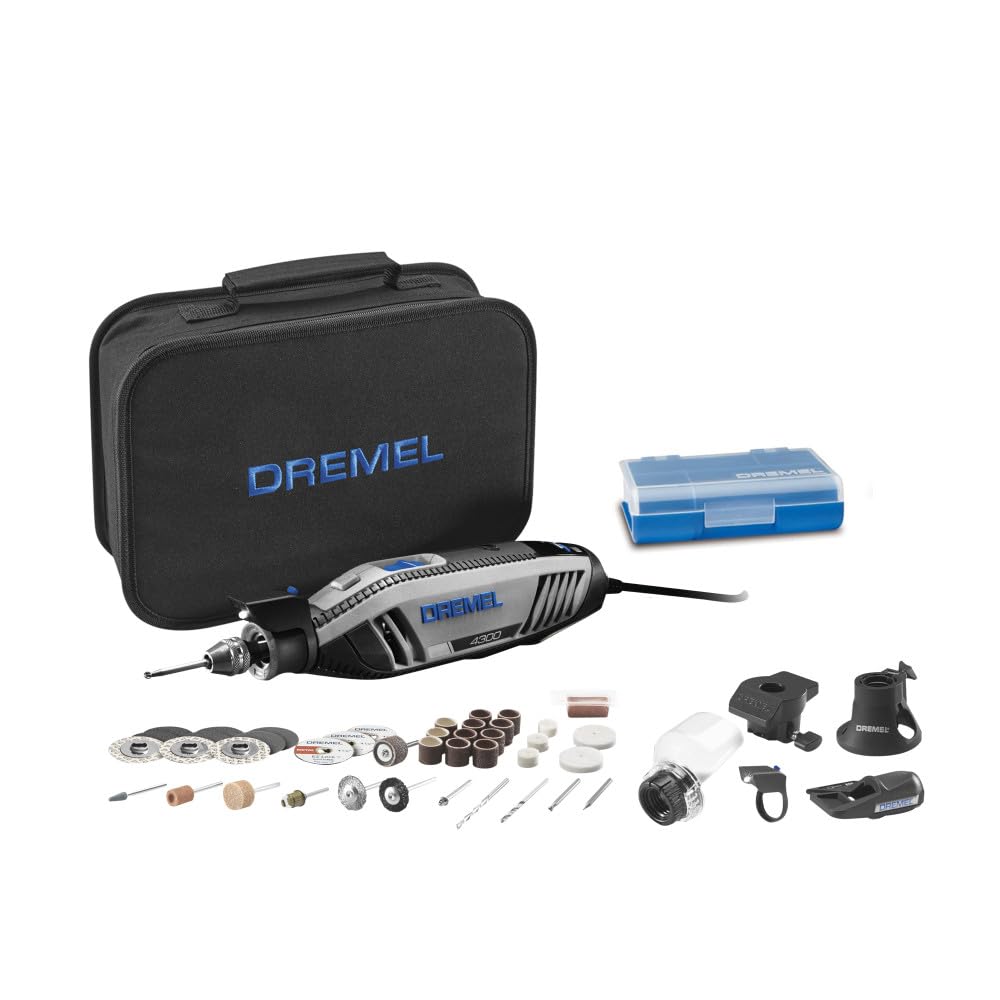
The Dremel 4300's 1.8A motor provides enough torque for tasks like grinding rust off metal or carving detail into oak, and it maintains speed under load better than smaller rotary tools. The universal 3-jaw chuck is a practical upgrade over collet-only systems, allowing quick bit changes without hunting for the right size. Five attachments come in the box: a pivot light for visibility, a shield for debris, a sanding/grinding guide, a cutting guide, and a garden tool sharpener. These cover the most common use cases, so you can start working immediately without buying extras.

This kit targets home DIYers who work with wood, metal, plastic, or ceramics and want a single tool that handles multiple tasks. It is not intended for continuous heavy-duty professional use — a small share of owners have reported motor burnout within weeks under sustained demanding work. For the typical hobbyist or occasional user, the tool typically provides years of trouble-free service, making this a sensible investment for a premium-brand starter kit.

The 40-piece accessory assortment means you have bits for cutting, sanding, grinding, polishing, and engraving without a second trip to the store.

Bottom line: For the home DIYer who wants a single corded tool with broad capability and a complete starter kit, the Dremel 4300 delivers solid performance at a fair price.
2

Dremel 8240-5

Dremel 8240-5

Cordless DIY

Our Score 9.2/10
Check Price

Worth Noting

  • In a workshop setting, the bulkier design feels less agile than slimmer cordless options.
  • Battery runtime can be short during continuous heavy use
Max RPM
5,000-35,000 RPM
Durability
Battery runtime complaints
Accessories
5 attachments
Power Source
Cordless, 12V 2Ah

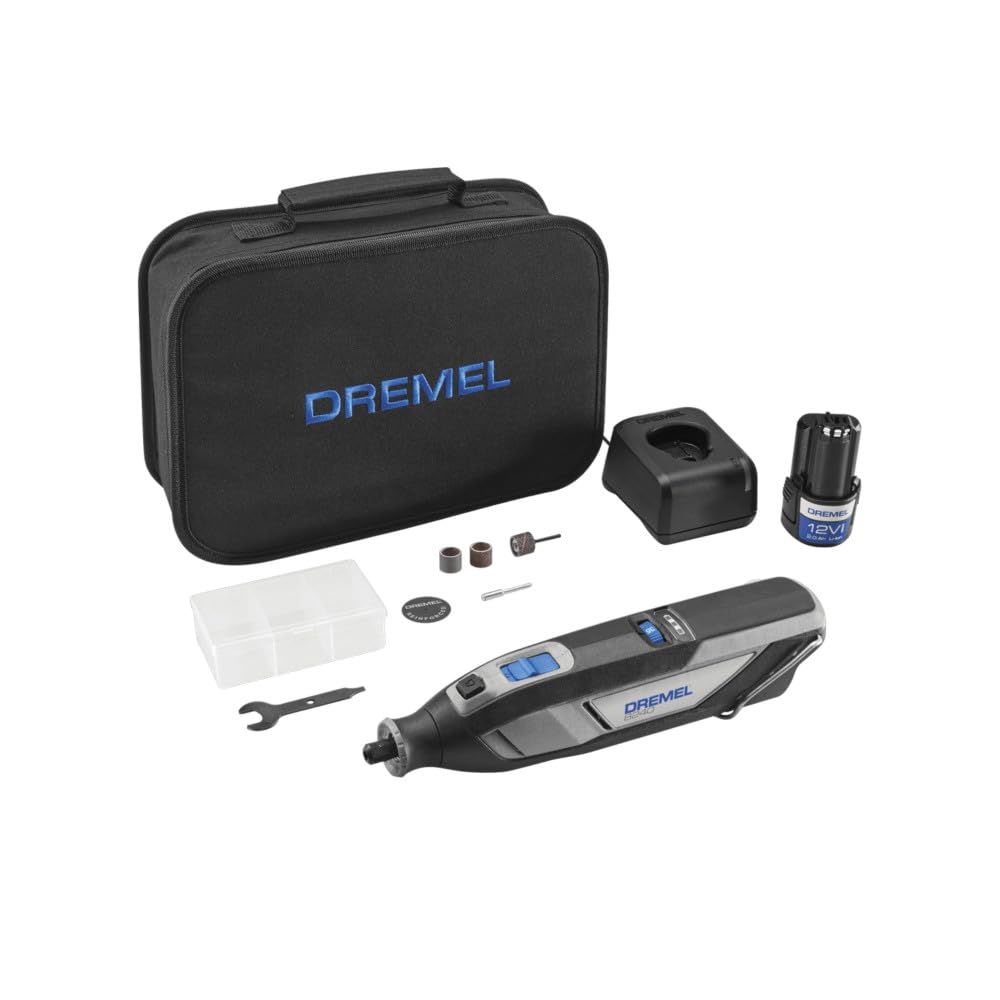
The Dremel 8240-5 delivers 35,000 RPM in a cordless package that works with all Dremel accessories, making it a practical alternative to the corded 4300 when you need to move around the workshop or take the tool to the job. Its brushless-like performance holds up well for sanding, engraving, and light cutting, and the EZ Twist collet system simplifies bit swaps without tools.

This suits DIYers who want cordless convenience without paying a premium for the 8250, but the battery runtime can be short under continuous heavy use — roughly 10–15 minutes — and the tool is bulkier than some competitors. Those planning longer sessions should keep a spare battery handy, while the size tradeoff is less noticeable during seated or benchtop work.

Tip: Keep a spare battery charged for longer sessions.

Bottom line: A solid mid-range cordless option for DIYers who value portability over extended runtime and don't mind a slightly bulkier tool.

3

Milwaukee M12 Rotary

Milwaukee M12 Rotary

M12 users

Our Score 9.4/10
Check Price

Worth Noting

  • Battery and charger may not be included
  • Durability has been inconsistent for some units, with early motor issues reported.
Max RPM
5,000-32,000 RPM
Durability
Some early failures
Accessories
Bare tool
Power Source
Cordless, 12V

The Milwaukee M12 Rotary delivers a level of power under load that matches many corded models, yet it weighs only 1.3 lbs and fits comfortably in tight spaces. Its motor maintains speed during cutting and grinding tasks, a clear advantage for anyone who already owns M12 batteries.

This tool makes sense if you’re an existing Milwaukee user looking for a cordless rotary option – the battery integration eliminates runtime worries. But if you’re starting from scratch, the cost of adding a battery and charger can push the total above corded alternatives. Also, a small number of units have shown early motor issues, so warranty coverage is worth checking.

Tip: Confirm the listing includes a battery and charger before purchasing – bare tool versions are common.

Bottom line: This is the right cordless rotary tool if you already own M12 batteries – otherwise the total cost climbs steeply.

4

DEPSTECH DC08

DEPSTECH DC08

Cordless budget

Our Score 9.0/10
Check Price

Worth Noting

Max RPM
5,000-30,000 RPM
Durability
Overheating after 10 min
Accessories
127 pieces
Power Source
Cordless, 8V 2Ah

The DEPSTECH DC08 packs an 8V motor, 30,000 RPM, and 127 pieces into a cordless kit that undercuts the leading cordless Dremel by more than half. It handles cutting, grinding, and sanding on light materials without tethering to an outlet.

This kit suits DIYers who want cordless versatility without the premium cost, but continuous heavy use beyond 10 minutes can cause overheating, making it ideal for short, varied tasks rather than prolonged work.

Bottom line: The DEPSTECH DC08 is a strong cordless alternative for budget-conscious DIYers who work on short, varied projects and don't need the durability for continuous heavy use.

5

Fanttik F2 Master

Fanttik F2 Master

3D printing

Our Score 9.0/10
Check Price

Worth Noting

  • Collet and bits may loosen during operation, requiring occasional re-tightening.
  • Motor stalls under light pressure, limiting it to polishing and light sanding.
Max RPM
12,000-25,000 RPM
Durability
Bit retention issues
Accessories
35 pieces
Power Source
Cordless, 4V

Weighing just 0.22 lbs and shaped like a pen, the Fanttik F2 Master is one of the quietest cordless rotary tools available — ideal for cleaning up 3D prints, polishing jewelry, and other fine detail work where noise and weight matter. However, its brushless motor stalls easily under even light pressure, and the collet can loosen during use, so this is not a tool for cutting, carving, or heavy grinding. This best suits 3D printer enthusiasts and model builders who need a portable, gentle-touch tool for finishing tasks, not a general-purpose rotary workhorse.

Tip: Tighten the collet securely before each use and check periodically to prevent bits from loosening.

Bottom line: For 3D print cleanup and fine detail work on soft materials, this compact tool is a suitable choice; for anything requiring torque, consider a corded Dremel instead.

6

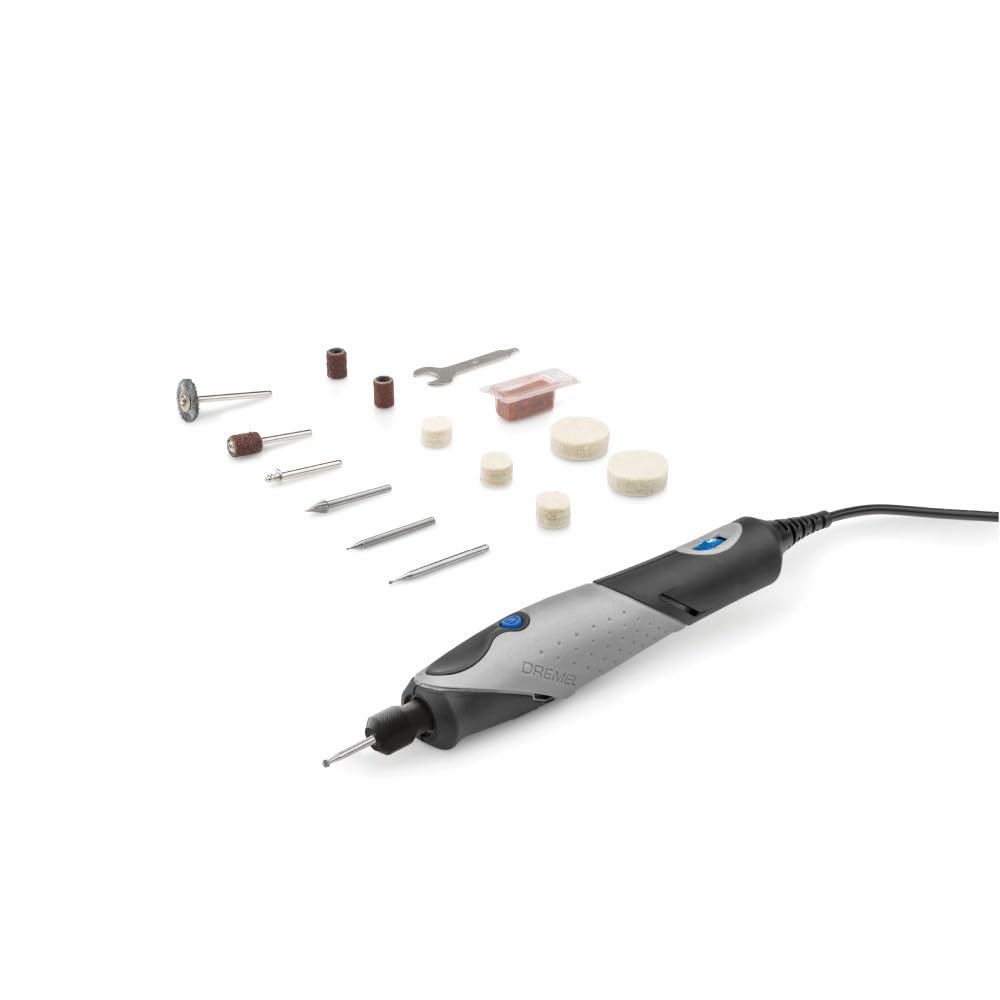
Dremel Stylo+

Dremel Stylo+

Jewelry, etching

Our Score 9.2/10
Check Price

Worth Noting

  • Underpowered for materials harder than plastic
Max RPM
5,000-22,000 RPM
Durability
Underpowered
Accessories
15 pieces
Power Source
Corded, 120V

The Stylo+ excels in delicate tasks like jewelry making and glass etching, where its lightweight pen-like design and quiet operation allow long sessions without fatigue. However, its low torque limits it to soft materials — it's a precision tool, not a general-purpose rotary unit.

Bottom line: Best for crafters focused on jewelry, glass etching, or model building who prioritize precision over cutting power.

7

GOXAWEE G4007

GOXAWEE G4007

Budget hobbyist

Our Score 8.8/10
Check Price

Worth Noting

  • Flex shaft and motor may not hold up to extended use in some cases.
Max RPM
8,000-30,000 RPM
Durability
High failure rate
Accessories
140 pieces
Power Source
Corded, 110V

This 140-piece kit includes a flex shaft and keyless chuck at a very low price, offering good value for the accessory count and covering sanding, cutting, and polishing tasks. However, the flex shaft and motor can become unreliable under regular use, making this a better fit for one-off projects or hobbyists who can accept the possibility of early replacement.

Bottom line: Works for a single project or occasional hobby use, provided you can tolerate the risk of needing a replacement sooner than expected.

8

WEN 23190

WEN 23190

Accessory junkie

Our Score 9.0/10
Check Price

Worth Noting

  • Flex shaft and tool may not hold up under regular or prolonged use.
Max RPM
8,000-35,000 RPM
Durability
Flimsy build
Accessories
190 pieces
Power Source
Corded, 1.3A

The WEN 23190 delivers an impressive 190-piece kit at a budget-friendly price, covering cutting, sanding, grinding, and engraving needs. However, the tool itself and its flex shaft are not built for sustained use; the plastic housing feels lightweight, and the flex shaft may develop issues under regular or heavy projects. This kit suits infrequent DIY tasks and soft materials where the large accessory set is the main draw.

Bottom line: A practical choice for one-off craft projects or as a starter kit with many bits, provided you don't rely on it for daily work.

9

WEN 2305

WEN 2305

Infrequent DIY

Our Score 8.8/10
Check Price

Worth Noting

  • Flex shaft can break after a few uses
Max RPM
8,000-30,000 RPM
Durability
Cheap feel
Accessories
80 pieces
Power Source
Corded, 120V

This kit delivers enough power for light sanding and cutting, and it accepts standard Dremel bits – a real plus at this price. But the flex shaft can break after limited use, and the plastic case and included accessories feel flimsy. Durability is the main tradeoff: fine for a single craft session or testing rotary tools, not for ongoing DIY.

Bottom line: Grab this for a one-time project where cost is the only factor – but plan to replace it if you take on a second task.

10

PHALANX 180W

PHALANX 180W

Budget DIY

Our Score 9.0/10
Check Price

Worth Noting

  • Flex shaft can overheat enough to melt the hose, limiting its use for extended sessions.
Max RPM
8,000-32,000 RPM
Durability
Motor fails short use
Accessories
139 pieces
Power Source
Corded, 180W

This kit delivers solid cutting power for metal and plastics at a low price, backed by a generous set of bits and a storage case. The flex shaft, however, can overheat to the point of melting the hose, and motor consistency varies between units. Skip the flex shaft and use the tool directly for occasional tasks.

Bottom line: Best for budget DIYers who plan to use the tool directly (without the flex shaft) for occasional projects.

11

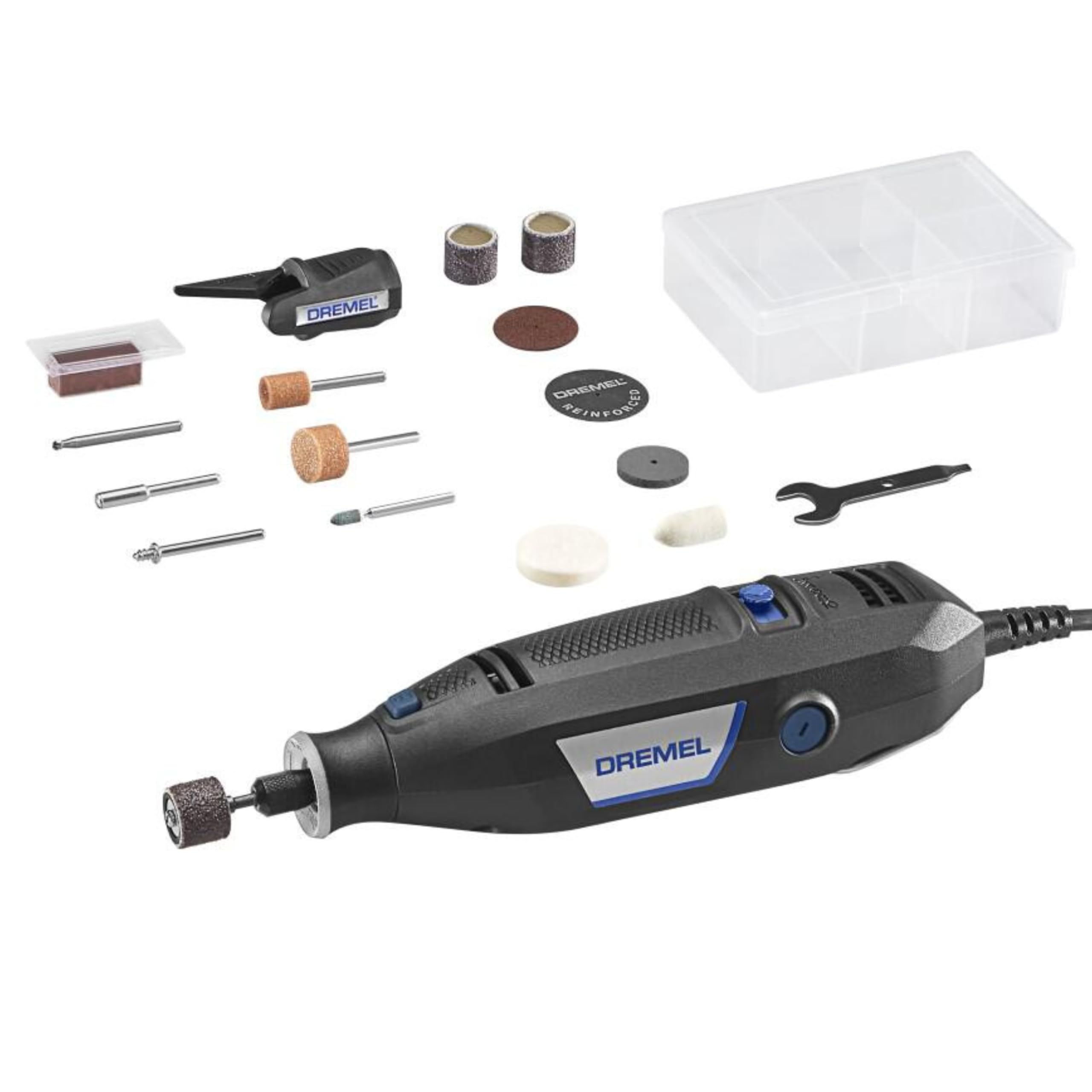
Dremel 3100-1/15

Dremel 3100-1/15

First-timers

Our Score 9.2/10
Check Price

Worth Noting

  • Limited accessories included
Max RPM
5,000-35,000 RPM
Durability
Accessories
15 pieces
Power Source
Corded, 1.2A

The Dremel 3100 offers a 33% power bump over the 200 model and uses recycled materials in its housing, making it an eco-conscious entry point. However, the kit includes only 15 accessories and one attachment — a sparse set that limits the range of tasks you can tackle right away. This suits buyers who already own a collection of Dremel bits and need a reliable corded motor on a budget.

Bottom line: Best for Dremel users who have their own accessories and want a budget-friendly corded motor with eco-friendly materials.

12

HARDELL Mini

HARDELL Mini

Kids crafts

Our Score 8.6/10
Check Price

Worth Noting

  • Stalls under minimal load
Max RPM
5,000-18,000 RPM
Durability
Flimsy, fails often
Accessories
69 pieces
Power Source
Cordless, 3.7V

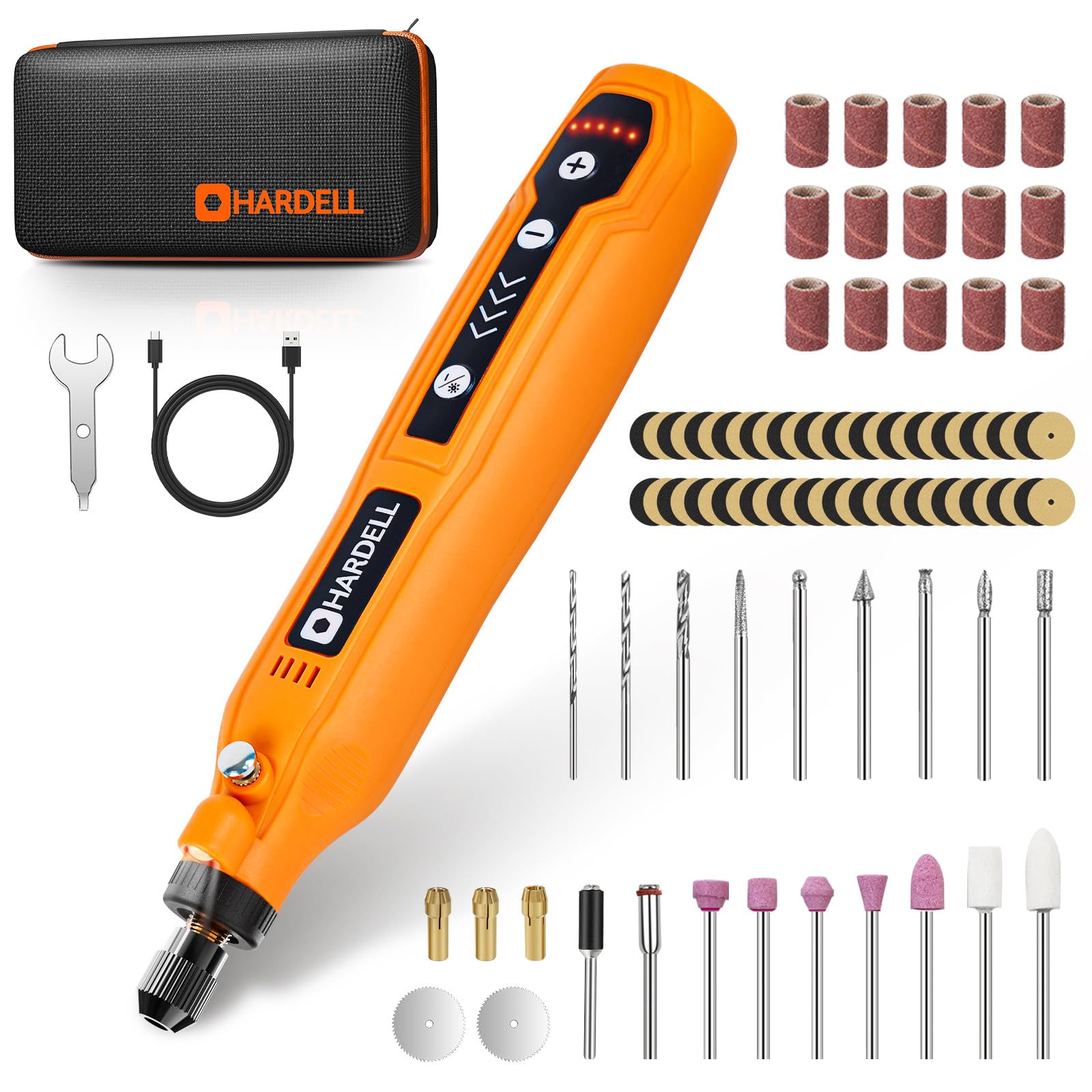
The HARDELL Mini is the cheapest cordless rotary tool on the market, packing 69 accessories and USB-C charging into a tiny package. It runs at up to 18,000 RPM and the battery claims 200 minutes of runtime. But the motor stalls under light pressure — you won’t cut through hardwood or grind anything beyond soft materials. Build quality is flimsy, and the tool may not survive repeated use. That’s fine if you need a one-time helper for sanding resin or letting a child experiment with engraving, but anyone expecting a general-purpose rotary tool should look at the DEPSTECH or Dremel 8240 instead.

Bottom line: Useful only for a child’s craft project or a one-time task like sanding resin where you expect to discard the tool afterward.

How to Choose

Power Source: Corded vs Cordless

Corded rotary tools deliver consistent power and unlimited runtime, making them ideal for extended projects like wood carving or metal grinding. Cordless models offer portability but at the cost of torque and battery life. A 12V cordless tool can handle light to medium work for about 15 to 30 minutes per charge, while a 4V model like the Dremel Lite is limited to very light tasks.

If you work near an outlet, a corded tool is the more powerful and cost-effective choice. Cordless is best for quick touch-ups, pet nail trimming, or jobs where extension cords are a hassle.

Maximum RPM and Torque

Maximum RPM indicates how fast the bit spins, but torque determines whether it can maintain that speed under pressure. A tool with 35,000 RPM but low torque will stall when cutting dense material. For wood carving, a range of 5,000 to 20,000 RPM with good torque is ideal. For cutting metal or grinding, higher speeds are useful, but torque is critical.

Look for tools that list both max RPM and a variable-speed dial. The ability to slow down without losing power is more important than a high top speed alone.

Included Accessories

Many budget kits boast 100+ accessories, but most of those bits are low-quality and wear out within a few uses. The value of a kit is not in the count but in the usefulness of the included attachments. A few high-quality bits from a reputable brand will outperform a pile of cheap ones.

Focus on the tool's chuck compatibility and the types of accessories it accepts. A universal 3-jaw chuck accepts a wider range of bit sizes than a keyed collet system.

Durability and Build Quality

Common failure points in rotary tools are the motor, the collet, and the flex shaft. Motors can overheat and burn out if the tool is used for prolonged heavy cutting without breaks. Plastic gear housings and thin shafts are signs of lower build quality.

Check user feedback for patterns: a tool with many reports of early failure or overheating should be avoided for regular use. Tools with metal internal components and sealed bearings tend to last longer.

Flex Shaft Inclusion and Quality

A flex shaft lets you hold the tool like a pencil for precision work, but it's often the weakest link. Budget flex shafts use thin cables that kink, overheat, or break after limited use. For heavy or frequent use, a tool with a rigid extension or a direct grip is more reliable.

If you need a flex shaft, look for one with a metal core and strain relief. Many users find that a good rotary tool without a flex shaft outperforms a tool with a poor one.

Frequently Asked Questions