Home Appliances & Robots

9 Best Robot Vacuum of 2026: Dock Reliability Over Raw Suction

Find the best robot vacuum for your floors, with real‑world insights on dock reliability, mopping, pet hair, and navigation — no hype.

The jump from 'powerful suction' to 'clean floors every morning' is rarely as smooth as marketing suggests. Robot vacuums now advertise Pa numbers that sound impressive, yet owners routinely discover that mapping accuracy, dock maintenance, and the ability to navigate under dining chairs matter more. Even premium models struggle with cords and rug tassels — realities that spec sheets ignore.

Finding the right robot vacuum is about matching the machine to your home’s layout and your tolerance for daily upkeep. The models below focus on actual pain points like pet hair tangles, accidental carpet wetting, and docks that start failing after a few weeks. Each pick emphasizes reliable autonomous operation, so you can stop babysitting the robot and trust it to handle cleaning.

1

Tikom L8000 Plus

Top Pick
Tikom L8000 Plus

Budget LiDAR Self‑Empty

Our Score 9.0/10
Check Price

Worth Noting

  • No automatic carpet detection
Navigation & Mapping
LiDAR, 5 maps
Self‑Emptying System
90 days bagged
Suction Power & Floors
6000Pa, hard floors & carpet
Mopping & Carpet Detection
2‑in‑1 pad, manual pad remove

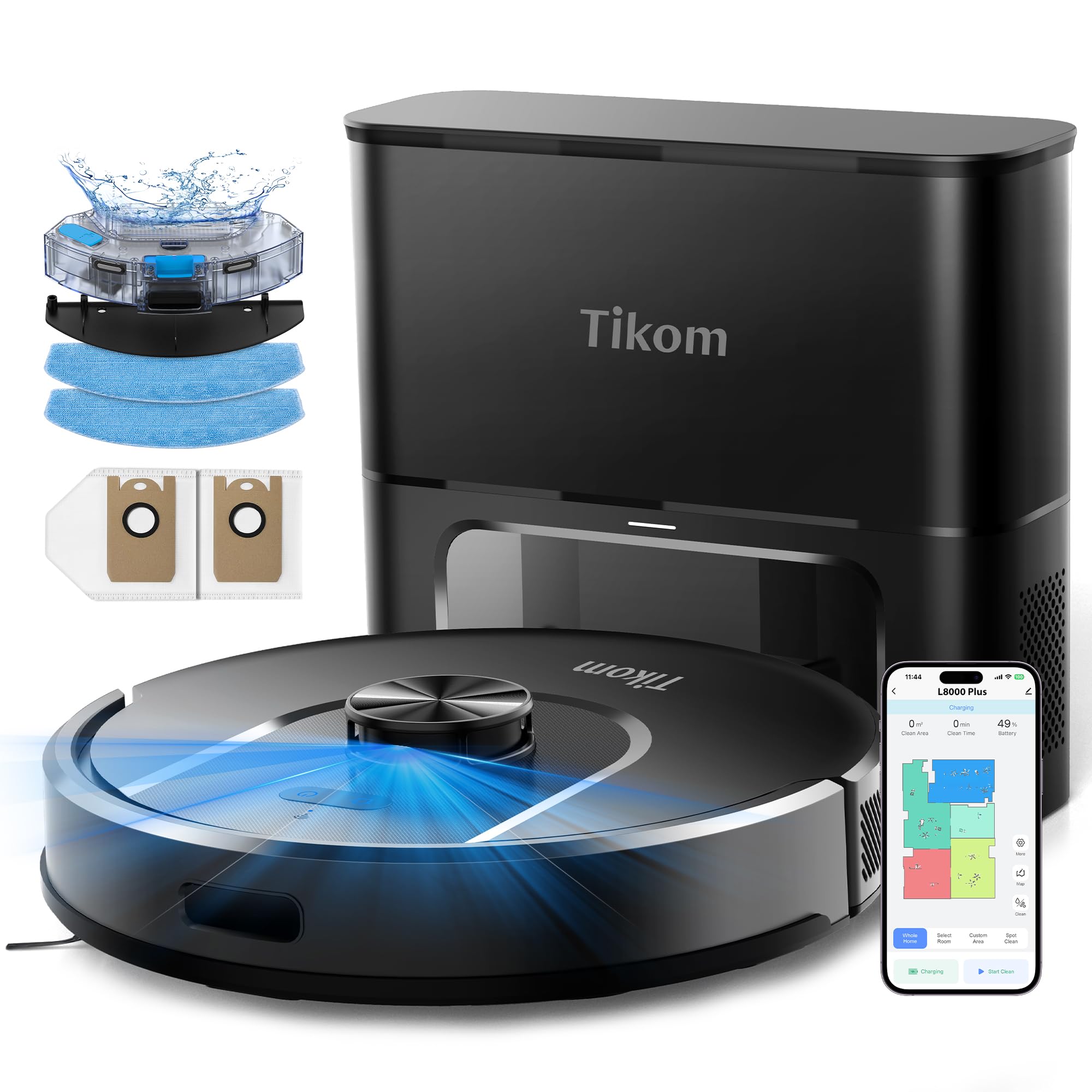
Tikom L8000 Plus combines strong 6000Pa suction, LiDAR navigation, and a self‑emptying base that holds up to 90 days of debris — all at a mid‑range price that undercuts comparable models. The robot builds precise maps quickly and supports up to five floor plans, making it suited to multi‑level homes.

On hard floors, the suction pulls up pet hair and fine dust without scattering, and navigation accuracy keeps it from bumping furniture. Operation noise stays low enough that it's easy to work or watch TV while the unit cleans, a benefit that owners of earlier robots will appreciate.

The self‑emptying dock is a standout convenience — it transfers debris into a sealed bag after each run, minimizing dust clouds and extending maintenance intervals. Through the app, you can schedule specific rooms, adjust water levels for mopping, and set no‑go zones. Setup is straightforward and the interface feels intuitive, not cluttered.

Mopping adds a damp clean with three water levels, but the system lacks automatic carpet detection. The mop pad must be manually removed before running carpet areas to avoid wetting rugs. This makes the L8000 Plus a natural fit for homes with mostly hard flooring and low‑pile rugs that are easy to skip or remove, rather than wall‑to‑wall carpet.

Pet owners and budget‑savvy shoppers who prioritize strong hard‑floor cleaning, LiDAR mapping, and a bagged self‑empty dock will find the L8000 Plus to be an outstanding value. Those who demand camera‑based obstacle avoidance or hands‑off mopping on carpets should look elsewhere, but for its price, the performance rivals pricier alternatives.

Tip: Remove the mop pad before scheduling a carpet clean — the dock won't detect it automatically.

Bottom line: For households with hard floors and a few low‑pile rugs, the L8000 Plus delivers mapping, suction, and self‑emptying that rival models costing significantly more, with minimal sacrifice in convenience.
2

Qrevo S Pro

Qrevo S Pro

Premium All‑in‑One

Our Score 8.4/10
Check Price

Worth Noting

  • Occasionally gets stuck on high thresholds and thick rugs, needing manual intervention.
Navigation & Mapping
LiDAR, reactive obstacle avoidance
Self‑Emptying System
7–9 weeks bagged
Suction Power & Floors
18,500Pa, hard floors & carpet
Mopping & Carpet Detection
Dual spinning mops, auto‑wash/dry

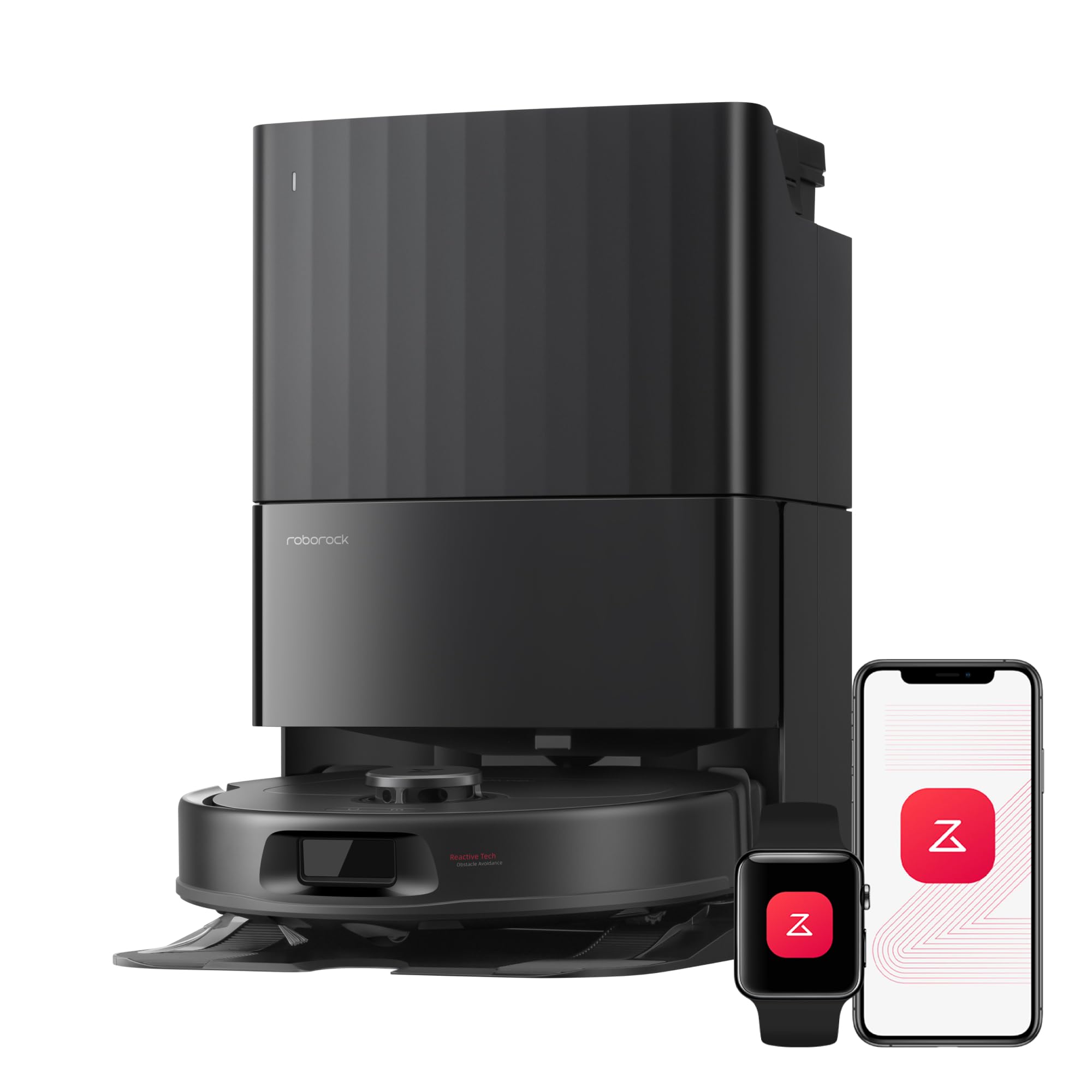
The Roborock Qrevo S Pro differentiates itself with a dock that washes and dries its dual spinning mops using 167°F water, then empties debris into a bag that lasts up to 9 weeks. Unlike the top pick, which requires manual mop removal before cleaning carpets, this robot detects rugs and raises its pads automatically, so floors stay dry without you lifting a finger. The LiDAR navigation builds accurate maps quickly, and 18,500Pa suction pulls up fine dust and pet hair from hard floors and low‑pile carpet.

Cleaning thoroughness is a standout: the spinning mops scrub close to edges, and the vacuum picks up embedded debris in a single pass. The robot operates quietly enough to run during a work call or movie night, and the reactive obstacle avoidance steers clear of most small objects and cables. The self‑emptying bag holds 7–9 weeks of debris, keeping maintenance to a minimum.

Tech enthusiasts and pet owners who want a fully automated cleaning routine will find the Qrevo S Pro’s dock refreshing. The anti‑tangle brush handles long hair without constant untangling, and the strong suction keeps fur under control. The tradeoff: tall room thresholds and especially plush rugs can trap the robot, occasionally requiring a rescue. Homes with predominantly flat transitions and low‑ to medium‑pile carpets will get the most from this system.

Tip: Add virtual boundaries for doorways with tall thresholds in the app to keep the robot from repeating the same stuck spot.

Bottom line: The Qrevo S Pro is the right choice when a self‑cleaning mop dock and automatic carpet avoidance are non‑negotiable — just be prepared for the occasional rescue call if your home has high thresholds or dense rugs.

3

ROPVACNIC S1

ROPVACNIC S1

Budget Hard‑Floor Combo

Our Score 8.8/10
Check Price

Worth Noting

  • Random navigation pattern can miss spots and makes cleaning less efficient
  • Can get caught on rugs or cords, halting the cycle until manually freed
Navigation & Mapping
Sensor‑based, random pattern
Self‑Emptying System
Suction Power & Floors
5200Pa, hard floors only
Mopping & Carpet Detection
Electric water tank, 4 levels

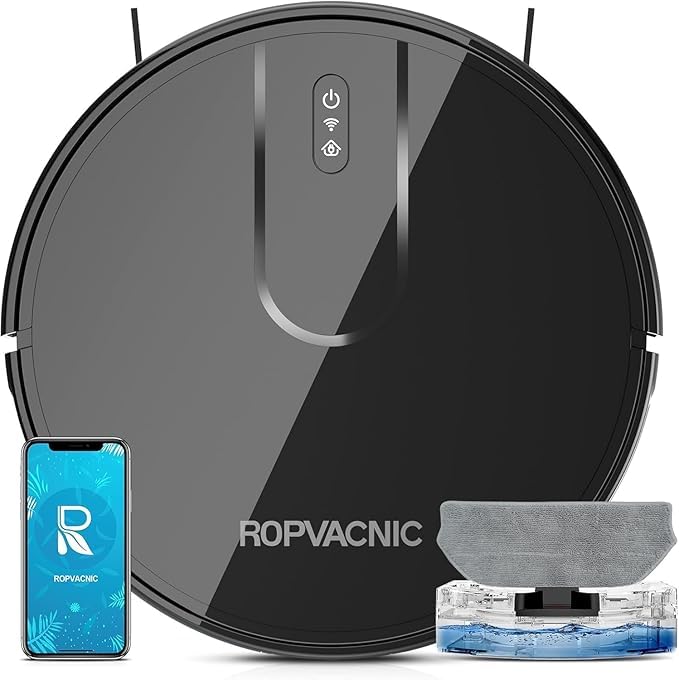
The S1 combines 5200Pa suction with electric-controlled mopping — a pairing absent from most sub-$100 combos. On hard surfaces, it lifts fine dust and pet hair with authority, and the water tank actively regulates flow through four levels, avoiding the puddles common with passive gravity-fed mops. This means light mopping that actually matches the floor type, from a quick dry dusting to a damp wipe.

Navigation relies on infrared sensors and a random bounce pattern, the same cost-saving approach as the slimmer vacuum-only model. Coverage takes longer and can skip corners, but the strong suction compensates when the robot does traverse an area. Setup is painless — remote, app, or voice assistant — and the 120-minute battery covers most hard-floor apartments.

The S1 suits first-time robot owners in all-hard-floor homes ready to clear cords before a run. If your space is exclusively tile, hardwood, or laminate without area rugs, daily debris and light mopping are handled with little oversight. Homes with rugs or carpeted rooms should look elsewhere: the robot's tendency to snag on soft surfaces interrupts cleaning and demands manual rescue.

Tip: Run the S1 only on hard floors with cords picked up; tucking rug fringes under or blocking off carpeted rooms prevents interruptions.

Bottom line: The ROPVACNIC S1 is the right choice for a bare-floor home that wants vacuuming and light mopping without spending much. Accept the random path and keep rugs out of its way, and it delivers a surprising amount of clean for the money.

4

Shark AV2511AE

Shark AV2511AE

Pet Hair Bagless

Our Score 8.0/10
Check Price

Worth Noting

  • Some units may stop working or develop side-brush issues prematurely
Navigation & Mapping
LiDAR, matrix clean
Self‑Emptying System
60 days bagless
Suction Power & Floors
—, hard floors & carpet
Mopping & Carpet Detection

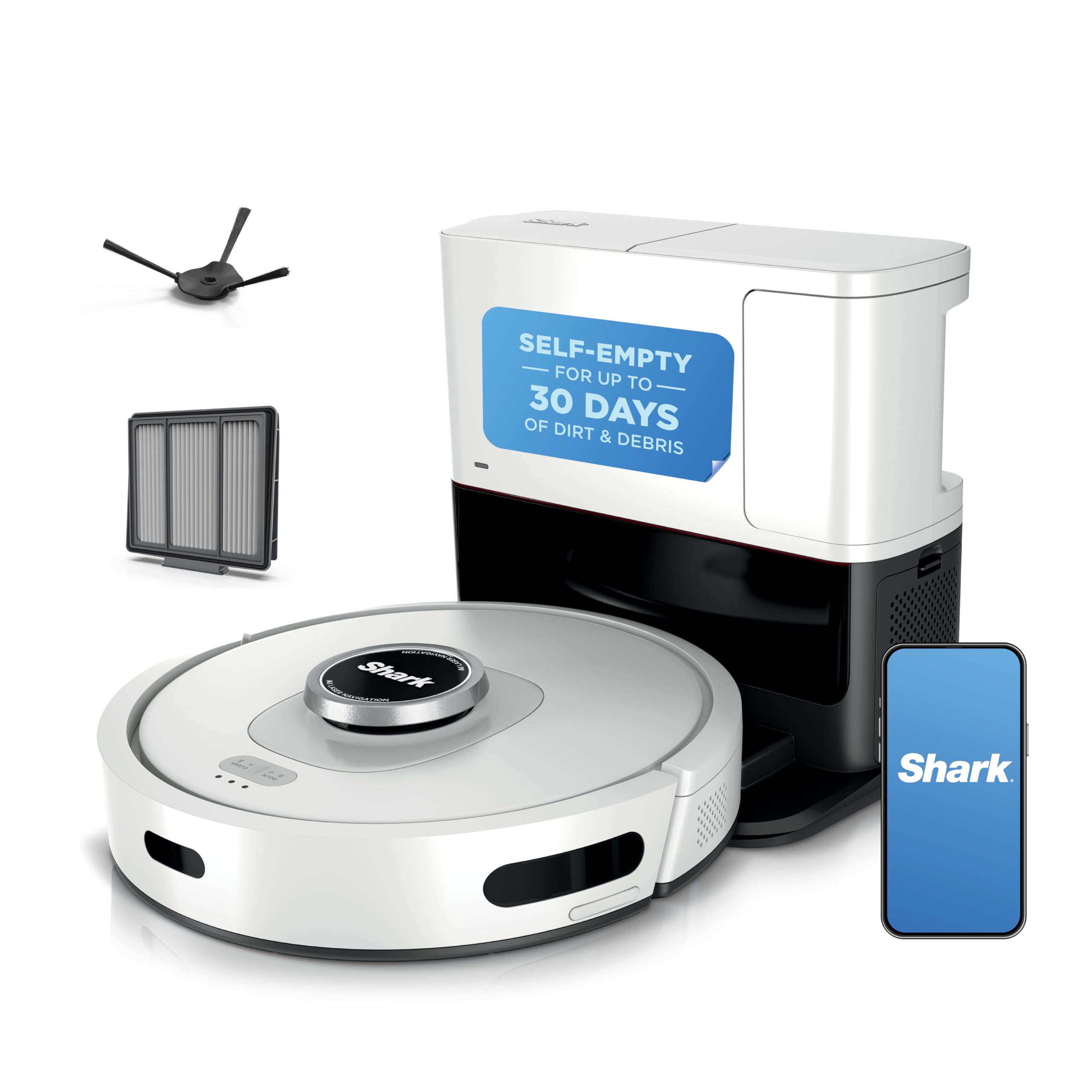
The Shark AV2511AE takes a focused approach: a bagless self-emptying vacuum with a self-cleaning brushroll that excels at pet hair without recurring bag costs. Unlike the top pick's bagged dock and mopping combo, this robot is exclusively a vacuum, but the bagless bin means zero ongoing bag purchases.

On carpets and hard floors, the Shark lifts embedded pet fur and debris effectively. LiDAR mapping and the matrix clean pattern guide it in neat rows, minimizing missed areas. The bagless bin empties into the dock's dust cup automatically, holding up to 60 days of material. When it's full, simply remove the cup, dump the contents, and rinse — no need for consumables.

This robot fits pet owners with mostly open floor plans who want a straightforward vacuum-only solution and prefer to avoid bag subscriptions. However, don't expect mopping, advanced obstacle avoidance, or bulletproof longevity. Reliability is a known concern; some units may stop working or suffer side-brush failures earlier than expected. An extended warranty is a wise safety net.

Tip: An extended warranty can mitigate the risk of early failure and side-brush malfunctions.

Bottom line: The Shark AV2511AE is a compelling vacuum-only robot for pet homes that want to avoid bag costs, but its patchy reliability means an extended warranty is a smart investment.

5

L40 Ultra Gen2

L40 Ultra Gen2

Edge‑to‑Edge Clean

Our Score 8.4/10
Check Price

Worth Noting

Navigation & Mapping
LiDAR, 3DAdapt avoidance
Self‑Emptying System
Hot drying dock
Suction Power & Floors
25,000Pa, hard floors & carpet
Mopping & Carpet Detection
DuoScrub spinning, extendable mop

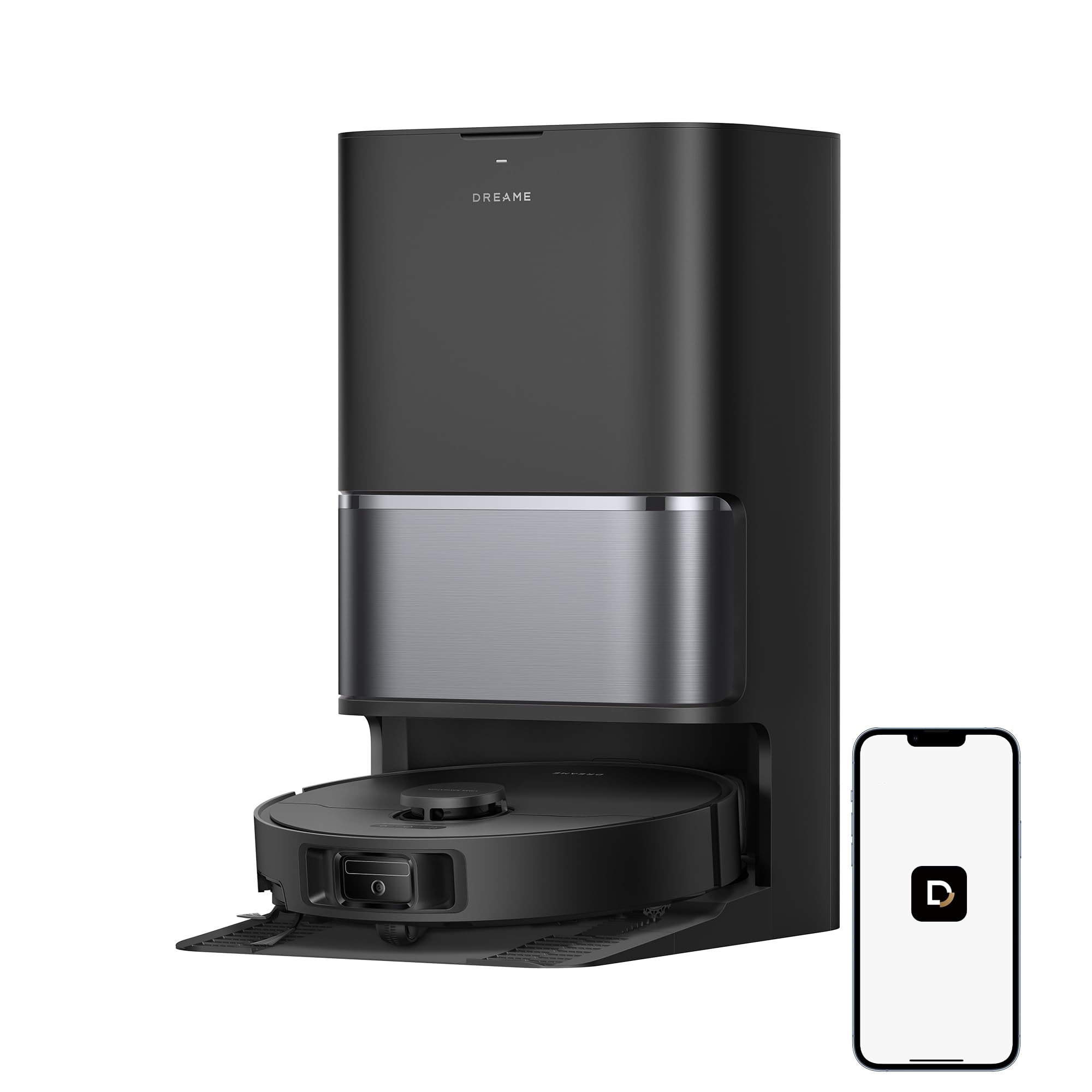
The extendable mop pad and side brush on the DREAME L40 Ultra Gen 2 reach where most robots leave a fingerprint of dust along baseboards and in corners. Where the ultra‑thin contender in this set chases raw suction figures, this Dreame applies 25,000Pa through a physical edge‑cleaning mechanism, scrubbing grime right up to the wall.

LiDAR mapping builds a room‑by‑room floorplan that the robot follows methodically, rarely missing patches. The all‑in‑one dock empties the bin, washes the mops, and dries them with warm air, so you only need to refill water and replace the disposable bag once every few weeks.

Detail‑oriented homeowners with hardwood or tile will see the biggest payoff — the extendable mop erases that grey strip of debris that settles where floor meets wall. A 231‑minute battery covers large spaces without mid‑cycle recharges, and the mapping system handles multi‑room homes confidently. Budget‑strict buyers may find more value in less expensive combos, and those requiring automatic mop lifting over carpet should consider a different design; this model keeps its mopping pads engaged to clean right to the edge, so it’s best in homes where rugs can be scheduled around in the app.

Bottom line: The DREAME L40 Ultra Gen 2 sidesteps the suction arms race with an edge‑cleaning design that detail‑focused users will appreciate, backed by a dock that does the dirty work. It’s a mid‑range option that trades maximum numbers for the more practical benefit of reaching where others don’t.

6

eufy 11S MAX

eufy 11S MAX

Ultra‑Slim Quiet

Our Score 8.6/10
Check Price

Worth Noting

  • No Wi-Fi connectivity; all control is via the included remote, without app scheduling or voice assistant integration.
  • Suction and brush design struggle on medium-to-deep carpet; best results are on hard floors and low-pile rugs.
Navigation & Mapping
Random bounce, no mapping
Self‑Emptying System
Suction Power & Floors
BoostIQ adaptive, hard floors
Mopping & Carpet Detection

At just 2.85 inches tall and emitting 55 decibels, the eufy 11S MAX slides under sofas and beds where other robots can't reach, all while staying quiet enough to run during a conversation. BoostIQ adaptive suction increases power on carpets, but the vacuum truly excels on hard floors, picking up dust and debris without the roar of higher-end models. A 100-minute battery covers small apartments in a single pass, and the included remote provides straightforward start, stop, and mode controls without needing a phone. This is a vacuum that removes the friction of daily cleaning, not the burden of planning a cleaning route.

Who it's for: someone in a compact apartment with mostly hard floors and low furniture who wants a set-it-and-forget-it cleaner minus the app complexity and noise. The random bounce navigation means it takes longer to cover a room and may miss a stray corner on a given pass, but for a small, obstacle-light space, that trade-off fades. If you demand room-by-room scheduling, mopping, or self-emptying, look to the top pick; if you prize sheer under-furniture access and near-silent operation, the 11S MAX delivers.

Tip: Pre-clear loose cables and socks from the floor; the 11S MAX lacks obstacle avoidance and can tangle.

Bottom line: For a quiet, low-profile cleaner that handles daily dust on hard floors without a smartphone, the 11S MAX is the clear budget pick — just reserve it for smaller, furnitured spaces where every inch counts.

7

Roomba 105 Combo

Roomba 105 Combo

Carpet‑Safe Mopping

Our Score 8.8/10
Check Price

Worth Noting

  • Operation noise is noticeably loud, potentially disrupting quiet activities or TV watching
  • Some units may experience unexpected stoppages or require rebooting
Navigation & Mapping
LiDAR
Self‑Emptying System
75 days bagged
Suction Power & Floors
70× Roomba 600 suction
Mopping & Carpet Detection
Pad, carpet detection/avoidance

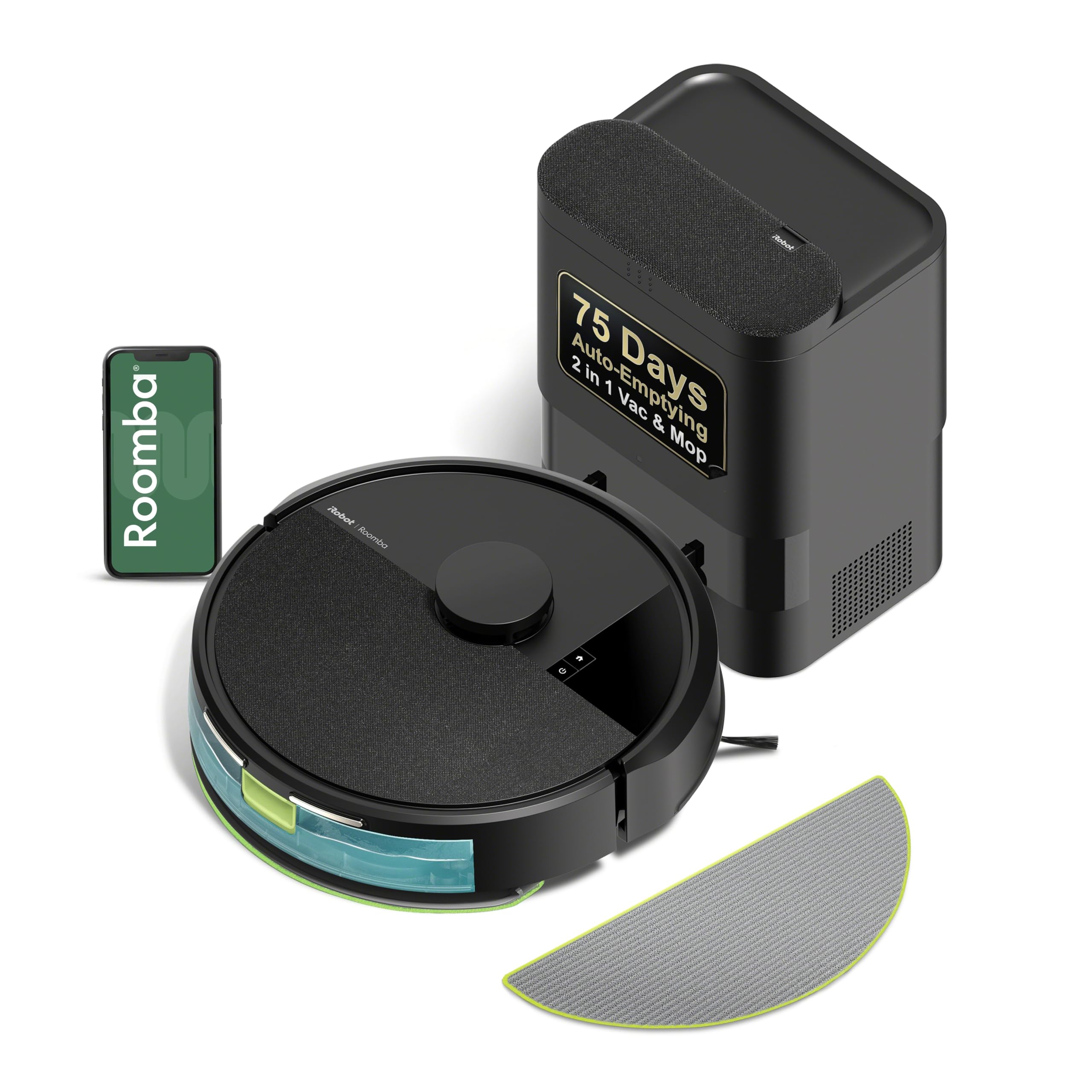
The Roomba 105 Combo excels at pet hair removal and is one of the few mid-range combos that consistently keeps the mop pad off carpets, preventing damp rugs. LiDAR navigation maps rooms methodically, and the self-emptying dock holds up to 75 days of debris. However, its operation is noticeably loud — audible from adjacent rooms — and some units may unexpectedly stop or need a reset. These noise and occasional operation quirks keep it a step behind quieter, more dependable alternatives.

Tip: Schedule cleanings while away from home to minimize disruption from the audible vacuum noise.

Bottom line: For pet owners in mixed-floor homes who value automatic carpet-avoiding mopping and can schedule cleanings when household noise isn't a concern, the Roomba 105 Combo offers strong hair pickup and a large self-emptying dock. Those seeking whisper-quiet operation or ironclad long-term consistency will find better options elsewhere.

8

Q20 Ultra

Q20 Ultra

Budget LiDAR Auto‑Empty

Our Score 10.0/10
Check Price

Worth Noting

  • The mop pad does not automatically lift over carpets, so manual removal is needed before cleaning rugs.
Navigation & Mapping
LiDAR, 5 maps
Self‑Emptying System
45 days bagless cup
Suction Power & Floors
6000Pa, hard floors & carpet
Mopping & Carpet Detection
Simultaneous vac & mop

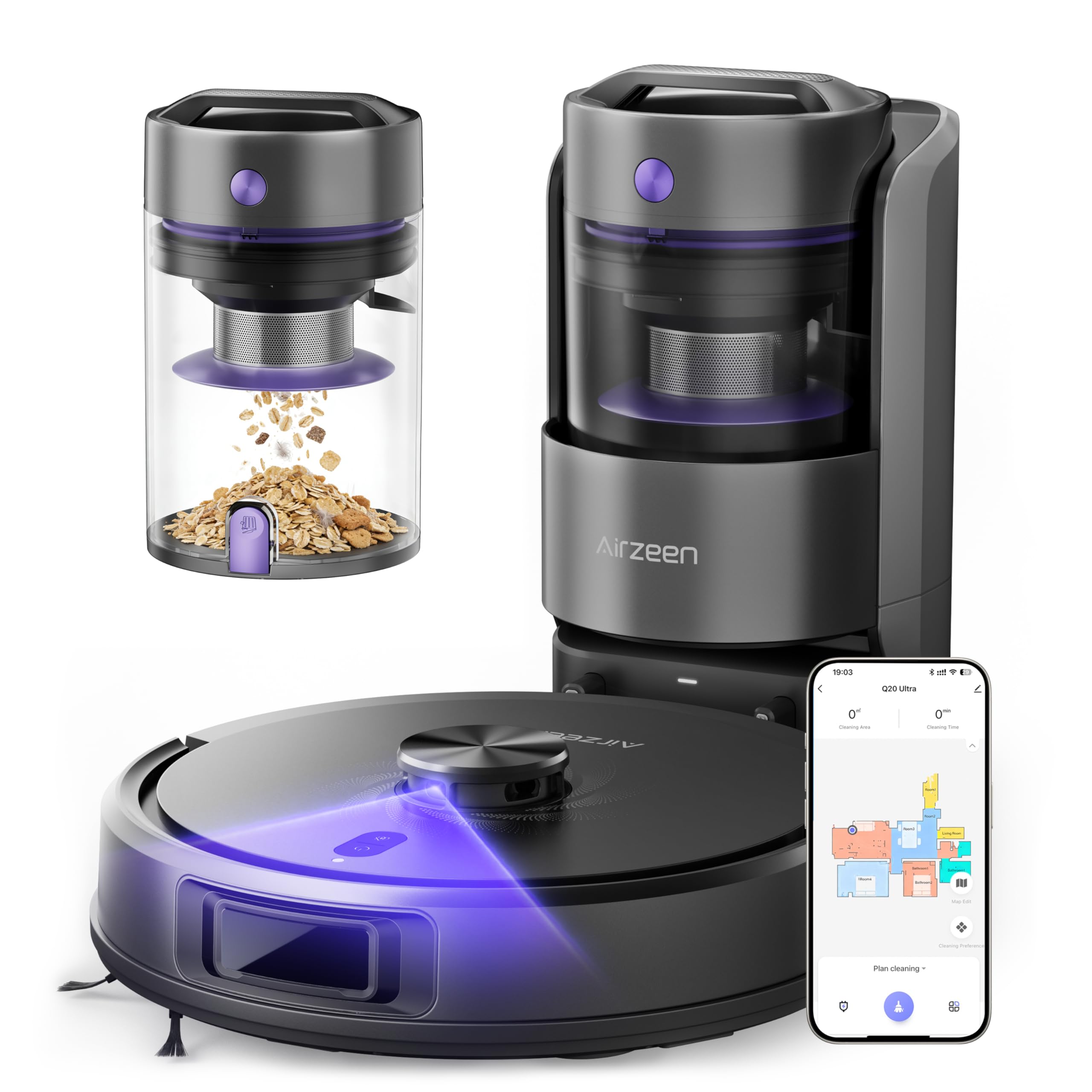
The Airzeen Q20 Ultra brings 6000Pa suction, LiDAR mapping with support for up to five maps, and a bagless 45-day self-emptying system at a mid-range price. Simultaneous vacuum and mop cleaning works well on hard floors, but the mop pad does not lift over carpets — you’ll need to remove it manually before cleaning rugs. Long-term durability hasn’t been established yet, which makes this a sensible option for budget-minded buyers who prioritize LiDAR and self-emptying features and can accept some uncertainty in exchange for the lower cost.

Tip: Remove the mop pad before cleaning carpets to avoid damp rugs.

Bottom line: Best for hard-floor households that want LiDAR navigation and bagless self-emptying at a modest price, provided they're comfortable with a shorter track record.

9

X60 Max Ultra

X60 Max Ultra

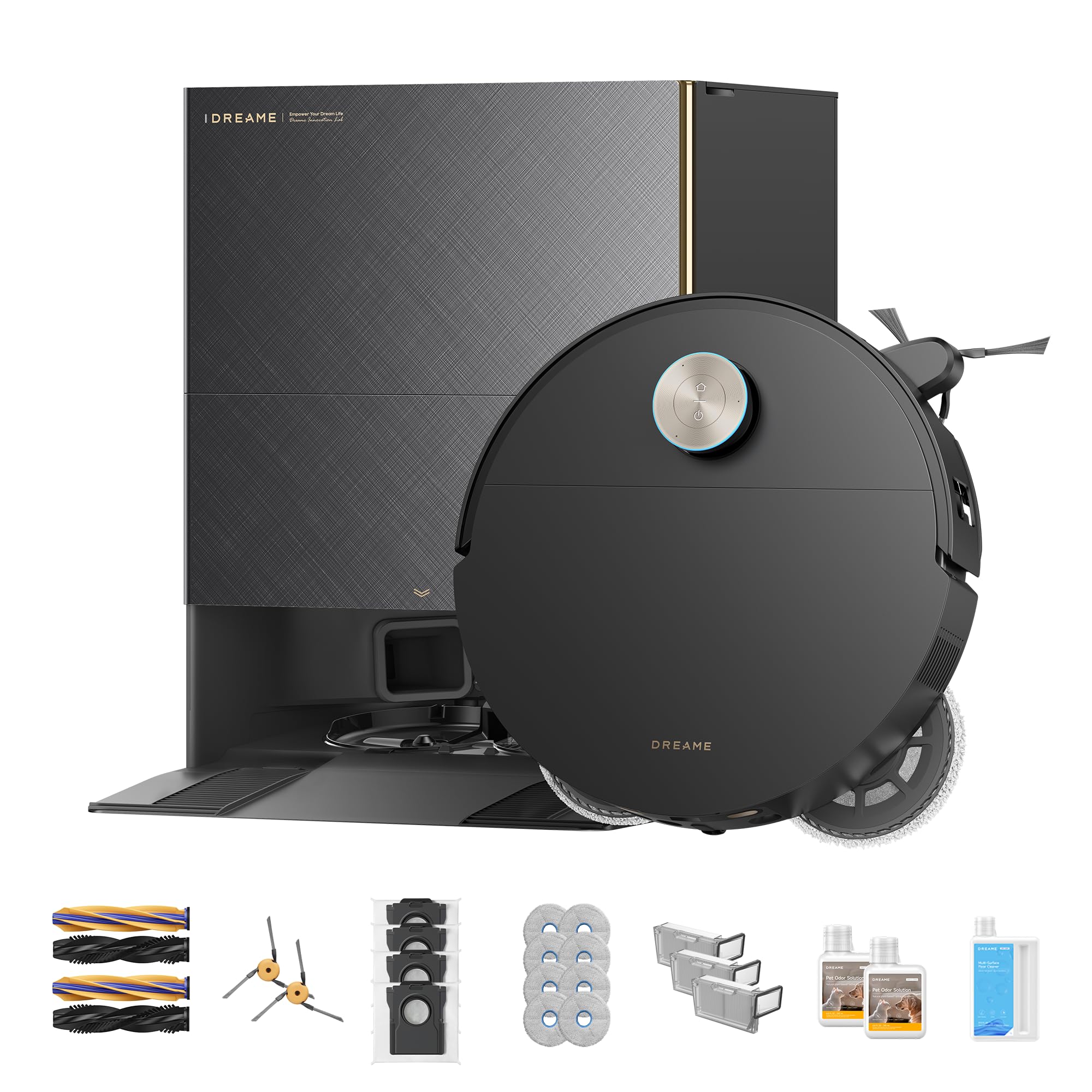
Ultra‑Thin Luxury

Our Score 8.6/10
Check Price

Worth Noting

  • Premium price puts it well above most competitors
  • Height of 3.13 inches may still not clear uneven furniture gaps under 3.5 inches
Navigation & Mapping
Dual AI cameras, illumination
Self‑Emptying System
100‑day dust disposal
Suction Power & Floors
35,000Pa, hard floors & carpet
Mopping & Carpet Detection
Dual omni‑scrub, hot water wash

The DREAME X60 Max Ultra pairs class-leading 35,000Pa suction with dual AI cameras in a body only 3.13 inches high, making it one of the few robots that can glide under couches and beds with minimal clearance. Its obstacle avoidance and self-maintenance dock contribute to a largely hands-off experience. The premium price and early-adopter status, however, mean there's no long-term track record yet — a consideration for a purchase at this cost. For homes where ultra-low furniture is the rule and cutting-edge specs are non-negotiable, this model offers a unique proposition.

Bottom line: If you have furniture with a low clearance that stops every other robot, and you're willing to invest early, the X60 Max Ultra is the thinnest high-suction option available.

How to Choose

Suction Power & Floor Performance

Manufacturers tout Pa numbers as a proxy for cleaning ability, but airflow design and brush agitation do the heavy lifting on carpets. A 10,000Pa robot with a poorly sealed brushroll will leave behind embedded hair, while a well‑engineered 6,000Pa model can outperform it.

Hard floors require gentle enough vacuuming to avoid scattering debris, but strong enough to pull dust from grout lines. If you have mostly hard floors, prioritize a model with adjustable suction and a floating brush deck that adapts to surface changes.

Navigation & Mapping

LiDAR creates precise, editable room maps and permits zoned cleaning via app, while camera‑based systems rely on visual landmarks that can fail in low light. Random‑bounce robots miss spots and waste battery — acceptable only for budget single‑room use.

A robot that forgets its map after a power cycle or gets lost under furniture adds frustration. Look for multi‑floor map support and reliable repositioning after being manually moved.

Self‑Emptying System

Bagged auto‑empty bins seal dust and allergens for weeks; bagless designs save on replacement bag costs but require frequent filter cleaning and can release dust when emptying. The trade‑off is ongoing expense versus a slightly more hands‑on maintenance routine.

The dock’s evacuation motor can be startlingly loud — 70–80 dB — so consider placement far from bedrooms if you schedule cleaning at night.

Mopping Method & Carpet Detection

Spinning pads scrub stubborn stains but can drag dirt across floors if not cleaned regularly, while vibrating plates are gentler and better for daily maintenance. Roller mops offer continuous self‑cleaning and deeper scrubbing but add cost and potential long‑term reliability concerns.

Automatic carpet detection lifts the mop when transitioning onto rugs; without it, you must manually remove the pad before each vacuum‑only run. Models without this feature are best used exclusively on hard surfaces to avoid wet carpet.

Obstacle Avoidance & Pet Hair

AI‑powered front cameras can identify and bypass cords, socks, and pet waste, but they add cost and complexity. Simple IR sensors stop the robot from tumbling down stairs but won’t prevent it from ingesting a phone charger.

For pet hair, anti‑tangle brushrolls — often with rubber fins or a comb‑like design — prevent constant manual cleaning. High suction alone isn’t enough; a straight airflow path and a properly sealed dustbin keep hair from clogging the system.

Frequently Asked Questions