Home Appliances & Robots

8 Best Robot Vacuum and Mop Combo 2026: Smart Navigation Without the Hype

Tired of robots that get stuck or fail? Find the combo that balances suction, mapping, and reliability for your home.

Most robot vacuum and mop combos advertise sky-high suction numbers, but the real struggle is getting through a cleaning cycle without getting stuck on a rug or dying after a few months. The difference between a frustrating gadget and a genuinely helpful tool often comes down to navigation and real-world dependability.

No perfect robot exists at any price; every model forces a trade-off between advanced features and long-term reliability. The right choice depends on your floor plan, furniture layout, and how much tinkering you’re willing to do. Some robots handle daily life smoothly, while others demand constant rescue runs.

The models that earn their keep share two non-negotiable traits: reliable LiDAR mapping and a mopping system that actually avoids wet carpets. Suction power matters less than consistent obstacle avoidance and a dock that keeps itself clean. This guide helps you prioritize what works in practice, not on paper.

1

eufy X10 Pro Omni

Top Pick
eufy X10 Pro Omni

Hard floor homes

Our Score 8.6/10
Check Price

Worth Noting

  • Some units may stop working after several months of use, so a warranty check is advisable.
  • Can get stuck under low-clearance furniture or on thick rug edges despite AI navigation.
Navigation
iPath Laser Navigation
Mopping Type
Dual spinning mops, 12mm lift
Self-Emptying
~60 days
Suction Power
8,000 Pa

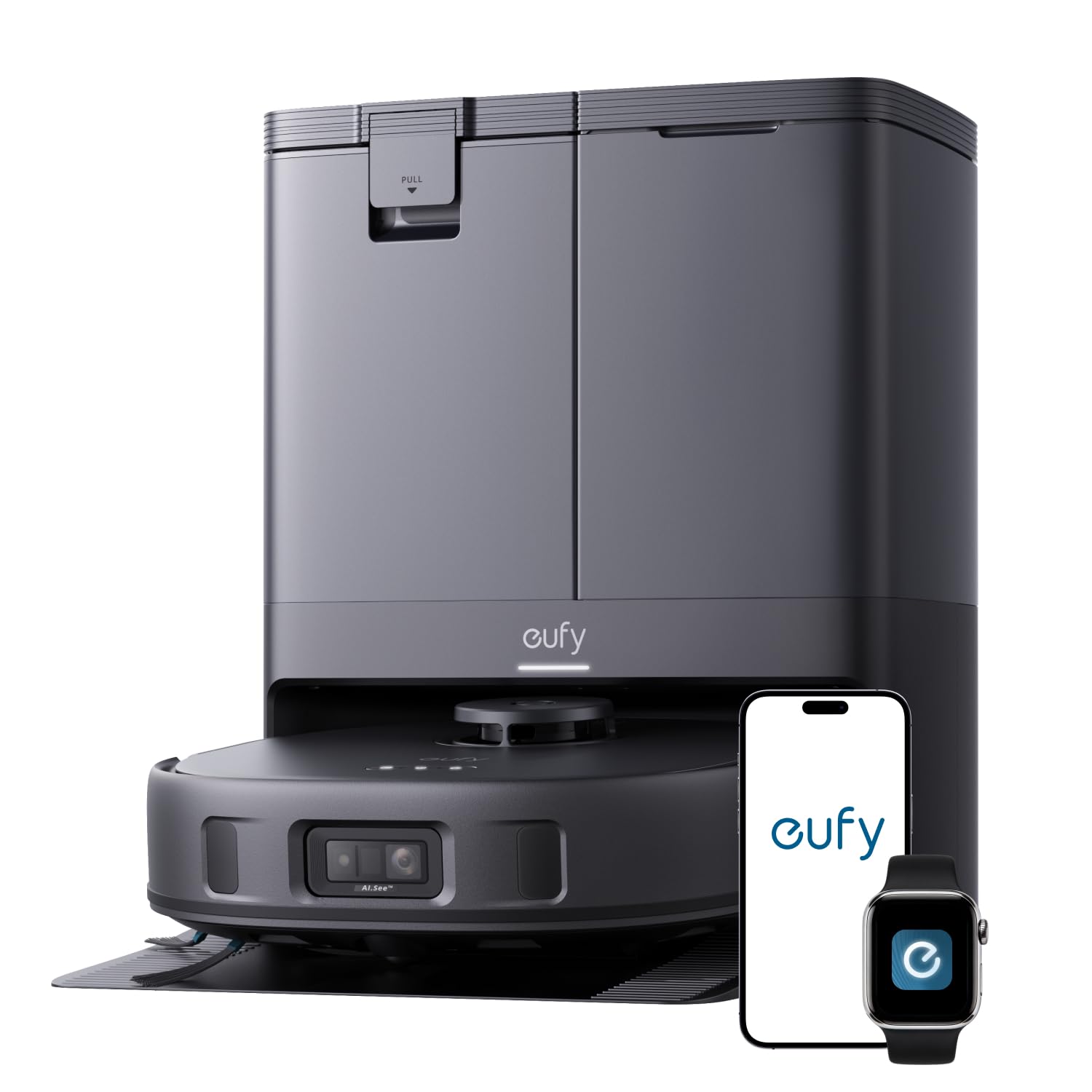
The X10 Pro Omni’s AI obstacle avoidance reliably steers clear of cables, shoe racks, and furniture legs, so daily cleaning runs rarely need a manual assist. On hard floors and low-pile carpets, the 8,000 Pa suction pulls up embedded pet hair and fine dust without leaving streaks. Dual spinning mops lift 12 mm when carpets are detected, then resume scrubbing tile or wood, while the dock washes and dries them at 45°C to prevent mildew.

The self-emptying bin holds debris for up to 60 days, and the auto-refill tank keeps the mop water topped off, meaning you can go weeks without touching the unit. Noise levels are low enough to run during a work call or overnight. That said, the robot can get trapped under low-clearance sofas or on thick rug tassels despite its navigation system. A smaller number of owners have experienced the unit ceasing to function after several months, so a warranty check is sensible before purchase.

This combo suits homes with mostly hard floors and modest carpeting where pet hair and daily dust are the main concerns. Buyers who value quiet operation and a fully automated cleaning schedule will find the X10 Pro Omni a strong fit. Homes with many low-clearance furniture pieces (under 3.5 inches) may need to use no-go zones or accept occasional rescues, and those seeking a decade-long investment should weigh the durability reports against the cost-saving feature set.

Tip: Create no-go zones for low-clearance furniture in the app to reduce manual rescues.

Bottom line: For homes with hard floors and moderate furniture clearance, the eufy X10 Pro Omni delivers thorough daily cleaning with minimal input—just keep the warranty details handy.

2

roborock Saros 10R

roborock Saros 10R

Tech enthusiasts

Our Score 8.0/10
Check Price

Worth Noting

  • Internal error messages can appear after a few months of use, requiring a replacement unit.
Navigation
StarSight 2.0 (3D sensing)
Mopping Type
Dual spinning mops, FlexiArm
Self-Emptying
60 days
Suction Power
22,000 Pa

With the highest suction in its class and a slimmer body than most competitors, the Saros 10R targets homes with low-clearance furniture. Where the top pick offers consistent daily reliability, the Saros 10R delivers extreme cleaning power for those who prioritize deep cleans over set-and-forget use.

On carpets and hard floors, the dual spinning mops and 22,000 Pa suction remove embedded dirt effectively. Fast mapping with 3D sensing handles typical household obstacles well.

This robot suits tech enthusiasts who enjoy experimenting with features and have low-clearance furniture. However, a significant minority of units may show internal errors after a few months, and the robot can get stuck on thresholds, making it better suited for those willing to monitor and occasionally rescue it rather than expecting fully autonomous operation.

Tip: If your home has thick rugs or high thresholds, setting no-go zones can reduce the chances of the robot getting stuck.

Bottom line: The Saros 10R is for buyers who want the highest suction and a slim profile and are comfortable with potential reliability hiccups. If you need a worry-free daily runner, the top pick is a safer bet.

3

ROPVACNIC S1

ROPVACNIC S1

Small apartments

Our Score 8.8/10
Check Price

Worth Noting

  • Random cleaning pattern may miss areas or repeat coverage inefficiently.
Navigation
Basic obstacle avoidance (no LiDAR)
Mopping Type
Electronic water tank
Self-Emptying
No (manual bin)
Suction Power
5,200 Pa

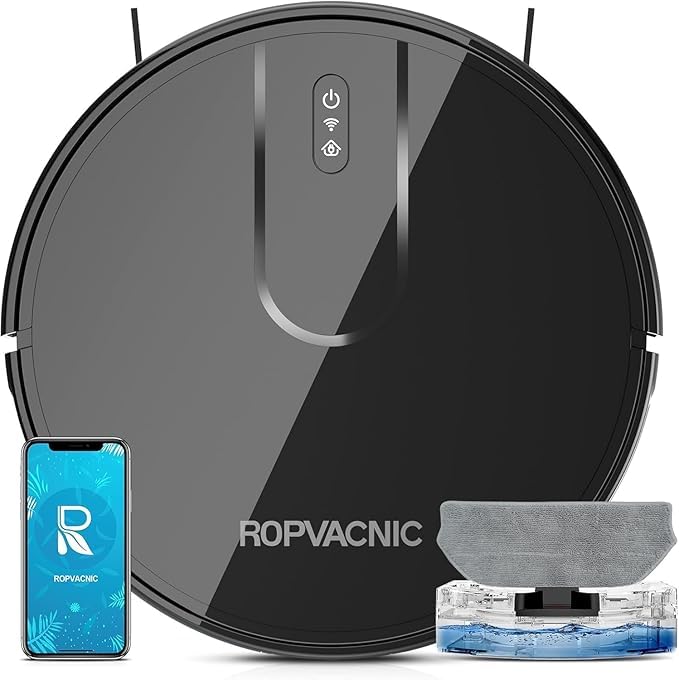
5,200 Pa suction and a straightforward app make this one of the most accessible robot vacuum-mop combos under $100. It picks up everyday debris and pet hair from hard floors and low-pile carpets without fuss, and setup takes minutes. The tradeoff for the low price is a random navigation pattern: instead of mapping your home, it bounces around until the battery runs low, so coverage is uneven and some areas may be missed entirely.

This vacuum is best suited to small apartments, dorms, or first-time buyers who want an affordable entry point and don’t mind emptying the bin manually after each run. Because it lacks smart mapping, it’s not a set-and-forget solution for larger homes or anyone who expects systematic room-by-room cleaning. The random pattern means longer cleaning times and occasional missed spots, but in a confined space it usually gets the job done.

Cleaning results on hard surfaces and low-pile carpet are solid for the price. The mop function uses an electronic water tank with four levels of adjustment — useful for light damp mopping on sealed floors. Battery life of 120 minutes covers a typical small space, and the vacuum returns to its dock to recharge automatically. Obstacle avoidance is basic, so small cords or clutter can stall it, but nothing unexpected at this price point.

Tip: Place the vacuum in a small room and let it run — its random pattern works best in confined areas.

Bottom line: For small spaces on a tight budget, the ROPVACNIC S1 delivers impressive cleaning at an entry-level price, accepting its random navigation.

4

roborock Q7 M5+

roborock Q7 M5+

Pet owners budget

Our Score 8.0/10
Check Price

Worth Noting

  • The robot can get stuck on rug fringes, loose cords, and low furniture
  • Some units may develop charging or motor issues within a few months, so consider an extended warranty.
Navigation
PreciSense LiDAR
Mopping Type
Sonic mopping, 8mm lift
Self-Emptying
7–9 weeks
Suction Power
10,000 Pa

The roborock Q7 M5+ delivers strong cleaning with 10,000 Pa suction and fast LiDAR mapping at a price that undercuts many competitors. Unlike the top pick's AI obstacle avoidance, this model relies on manual no-go zones to avoid getting stuck on rugs and furniture.

This robot suits pet owners on a budget who have open floor plans and are willing to tinker with no-go zones. The mapping is accurate and handles multi-floor homes, but the robot can get stuck on rugs, cords, and low furniture — setting up no-go zones in the app is essential. Some units may experience charging or motor issues within months, so buying from a retailer with a good return policy is wise.

The mopping with VibraRise 2.0 lifts the mop pad 8mm when on carpet, preventing wet carpets. Battery life at 150 minutes covers large areas, and the self-emptying bag holds weeks of debris — ideal for pet hair. Keep in mind that obstacle avoidance is basic; the robot may push cables or bump into furniture legs.

Tip: Place magnetic strips or set no-go zones in the app for areas with rugs and low furniture to minimize stuck incidents.

Bottom line: For pet owners on a budget who don't mind setting up no-go zones, this roborock delivers strong cleaning at the price — just be ready for occasional rescues and consider a warranty.

5

roborock Q10 S5+

roborock Q10 S5+

Budget pet owners

Our Score 8.0/10
Check Price

Worth Noting

  • Can get stuck on rugs, cords, and under low furniture, requiring occasional manual rescue.
  • Some units may experience reduced suction or stop working after months of use, making long-term durability uncertain.
Navigation
PreciSense LiDAR + ReactiveTech
Mopping Type
Sonic mopping, 8mm lift
Self-Emptying
70 days
Suction Power
10,000 Pa

The Q10 S5+ packs 10,000 Pa suction, PreciSense LiDAR mapping, and a self-emptying dock that holds up to 70 days of debris – all at a price that undercuts many competitors with similar specs. Its VibraRise sonic mopping lifts the mop pad 8mm to avoid wetting carpets. While the top pick's AI obstacle avoidance handles clutter more consistently, the roborock's ReactiveTech system works adequately in cleaner spaces.

This robot suits budget-minded pet owners with mostly open floor plans. The strong suction and dual anti-tangle design pick up dog and cat hair effectively on hard floors and low-pile carpets. However, it can get stuck on thicker rugs, cords, and furniture legs, so setting up no-go zones is almost required. Some units may experience reduced performance or stop working after months of use – a risk worth considering against the upfront savings.

The VibraRise 2.0 sonic mopping applies 3,000 scrubs per minute and lifts when crossing carpets – a feature usually found on pricier models. For daily light mopping on hard floors, it leaves a consistent clean without streaks.

Tip: Place no-go zones around thick rugs and furniture legs to reduce stuck incidents.

Bottom line: For budget-conscious pet owners who can accept occasional navigation hiccups and some unit variance, the Q10 S5+ delivers capable cleaning and useful features for less.

6

roborock QV 35A

roborock QV 35A

Noise-sensitive homes

Our Score 8.4/10
Check Price

Worth Noting

  • May get stuck on area rugs or under low furniture, occasionally needing manual rescue
Navigation
PreciSense LiDAR + Reactive Tech
Mopping Type
Dual spinning mops 200 RPM
Self-Emptying
7–9 weeks
Suction Power
8,000 Pa

The roborock QV 35A maps rooms with unusual speed and accuracy, and its 8,000Pa suction keeps hard floors clean with noticeably less noise than most competitors. The PreciSense LiDAR and obstacle avoidance system work together to navigate tight spaces without frequent bump-and-turn patterns.

This robot is a strong fit for households where low noise is a priority and floors are primarily tile, wood, or laminate. Budget-conscious buyers get LiDAR-guided navigation, auto-emptying, and dual spinning mops. The occasional stuck incident on rugs or low furniture means it benefits from clear floor space, and homes with multiple area rugs may require manual intervention now and then.

The dock holds debris for up to nine weeks, and the 180-minute battery covers typical single-level layouts. Obstacle avoidance handles cables and small objects well, though users report it can still graze furniture edges from time to time. For homes with hard floors and minimal rugs, the overall cleaning reliability is solid.

Tip: Set no-go zones over area rugs and clear low-hanging furniture to reduce the chance of the robot getting stuck.

Bottom line: For noise-sensitive homes with hard floors, the QV 35A delivers quiet, accurate cleaning at a fair price — just plan for the occasional manual rescue on rugs.

7

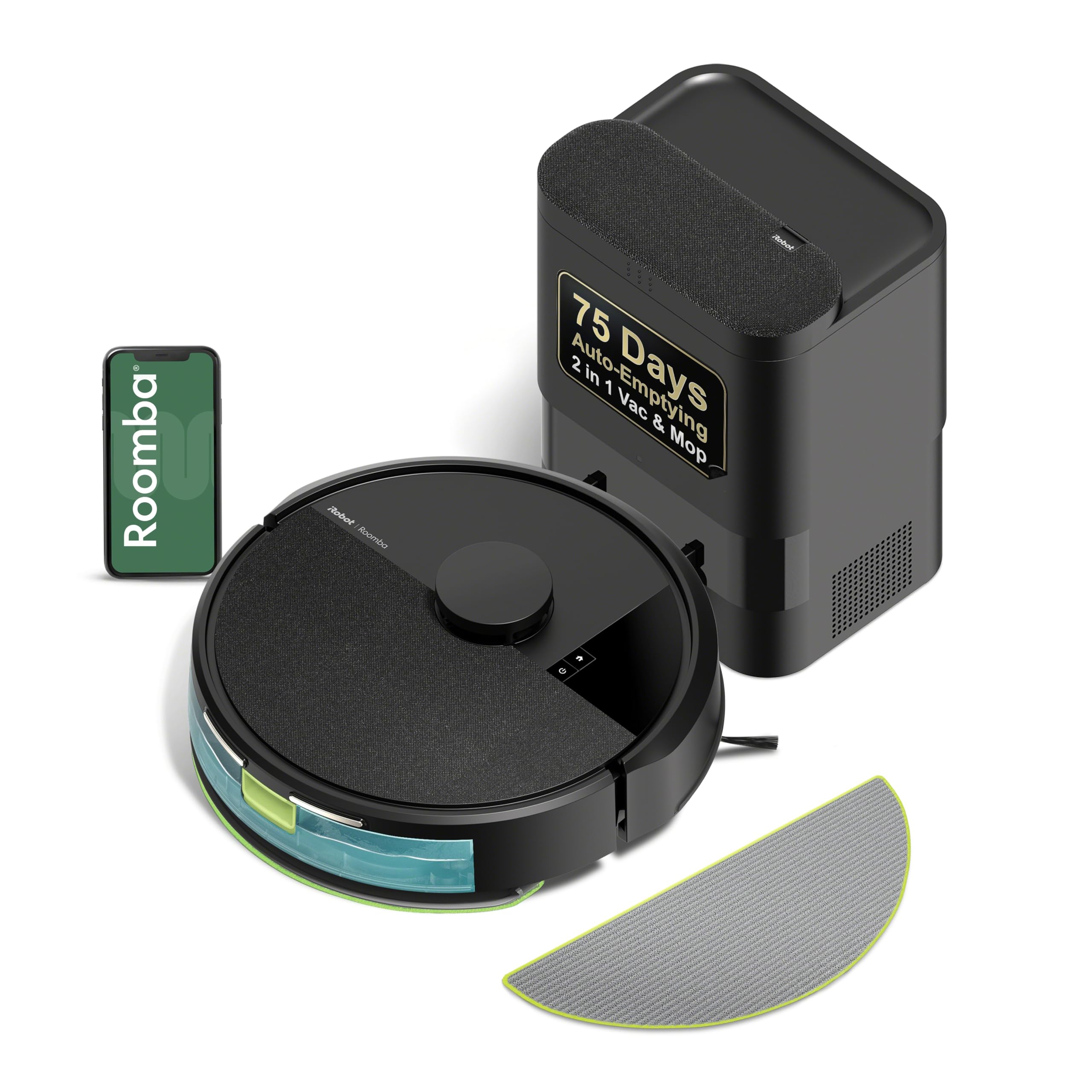
iRobot Roomba 105 Combo

iRobot Roomba 105 Combo

First-time buyers

Our Score 8.8/10
Check Price

Worth Noting

  • Mopping uses a microfiber pad rather than spinning pads, which may be less effective on dried-on stains.
  • Obstacle avoidance may not prevent contact with furniture legs or cables in cluttered spaces.
Navigation
ClearView LiDAR
Mopping Type
Microfiber pad, SmartScrub
Self-Emptying
75 days
Suction Power

It brings a 75-day self-emptying dock and ClearView LiDAR at a budget-friendly price, making it an attractive entry-level option from iRobot. However, the absence of detailed customer feedback means buyers must rely on brand reputation rather than verified performance data. The microfiber pad mopping may be less effective on dried stains compared to spinning pads, and the LiDAR navigation may need occasional help in rooms with low furniture or thresholds. For first-time buyers in small apartments with simple layouts, the self-emptying convenience and mapping are appealing, but those seeking confirmed reliability or strong obstacle avoidance should consider alternatives with proven track records.

Bottom line: Suitable for first-time buyers in small apartments who value the self-emptying convenience and iRobot brand, provided they are comfortable relying on brand reputation over verified user feedback.

8

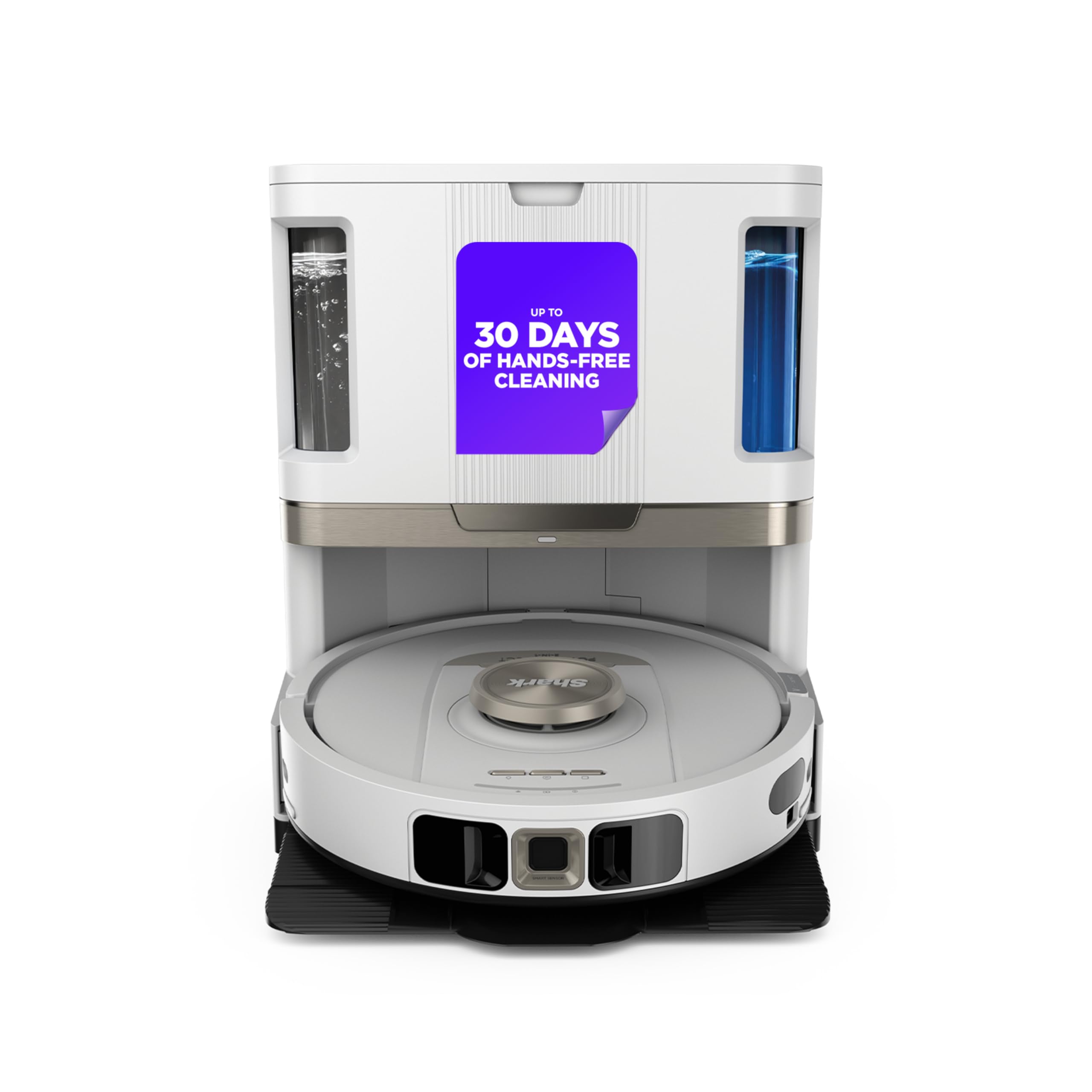
Shark Stratos

Shark Stratos

Also Great

Our Score 8.0/10
Check Price

Worth Noting

  • Some units may stop working within months of use.
  • Mapping accuracy can be inconsistent, leading to missed areas or repeated cleaning.

The NeverTouch base washes and dries the mop pad automatically, reducing maintenance to near zero for owners who prefer a set-it-and-forget-it mopping routine. Cleaning performance on pet hair and everyday dirt is effective, with the robot covering both carpets and hard floors. However, mapping accuracy can be inconsistent, and some units may experience operational issues within months of use. These reliability concerns make the Stratos a riskier purchase compared to the eufy X10 Pro Omni, which offers a more dependable daily experience. The self-cleaning dock is a genuine convenience, but it comes with trade-offs in long-term dependability.

Bottom line: Consider the Shark Stratos if the self-washing mop base is a must-have convenience and you are prepared for possible early unit issues. Otherwise, the eufy X10 Pro Omni offers a more predictable daily experience.

How to Choose

Suction Power

Higher Pa numbers matter for deep carpet cleaning, but for hard floors and low-pile rugs, 5,000 to 8,000 Pa is sufficient. Beyond that, gains in cleaning are marginal while noise and battery drain increase. Marketing benchmarks like '70x more suction' compare to decades-old entry models and don't reflect real-world performance.

Navigation System

LiDAR navigation is the gold standard. It creates accurate maps, works in complete darkness, and supports multi-floor plans. Camera-based systems are slower and require light. The hidden trade-off: LiDAR can have blind spots near furniture legs and may struggle with very low thresholds or dark floors that absorb the laser.

Self-Emptying Capacity

Longer self-emptying cycles (60-90 days) mean less manual dust bag changes, but they require larger base stations that take up floor space. Check bag cost and availability: proprietary bags can run $5-10 each. Some bases also auto-refill water for mopping, reducing another chore.

Mopping Type

Spinning mop pads scrub grout lines and corners more effectively than sonic or roller mops. But the key feature is mop lifting: a robot that lifts pads at least 10mm avoids wetting carpets. Roller mops self-clean but can leave residue on dark floors; sonic mopping is gentler and quieter.

Obstacle Avoidance

AI-powered obstacle avoidance using cameras or 3D sensors drastically reduces stuck incidents on cables, shoes, and pet bowls. Basic bump-and-turn sensors are cheaper but lead to frequent rescues. The trade-off: AI systems cost more and may occasionally miss small objects like charging cables.

Frequently Asked Questions