Home Appliances & Robots

10 Best Cordless Pool Vacuum of 2026: Real Runtime, Honest Suction

Which cordless pool vacuums deliver actual runtime and suction for your specific pool size and cleaning style, from handhelds to autonomous robots.

Cordless pool vacuums promise the freedom to clean without hoses or cables, but too many fall short where it counts — runtime drops off a cliff after a few uses, the pole can't reach the deep end, or suction fades just when you need it most.

The choice often comes down to a trade-off: a well-balanced handheld that handles routine debris reliably, or a speed-focused wide-head model that covers large pools faster but may sacrifice battery consistency. Both have strengths, and the right one depends on your pool’s size and your patience for recharging.

This guide cuts through inflated specifications to focus on what you'll actually experience — how long the battery lasts under real load, how well fine filters capture silt without clogging every five minutes, and which vacuums avoid getting stuck on drains or steps. It helps you match the vacuum to your specific pool, not the one in the marketing photos.

1

Teguy V40

Top Pick
Teguy V40

Daily Spot Cleaning

Our Score 8.8/10
Check Price

Worth Noting

  • The included 7-ft telescopic pole may feel short for deep ends in larger inground pools.
  • Battery runtime can dip to 20–30 minutes under heavy suction load, falling short of the 60-minute claim.
Pole Length
7 ft telescopic
Battery Runtime
60 min
Suction Strength
18.5 GPM
Weight & Maneuverability
6 lbs

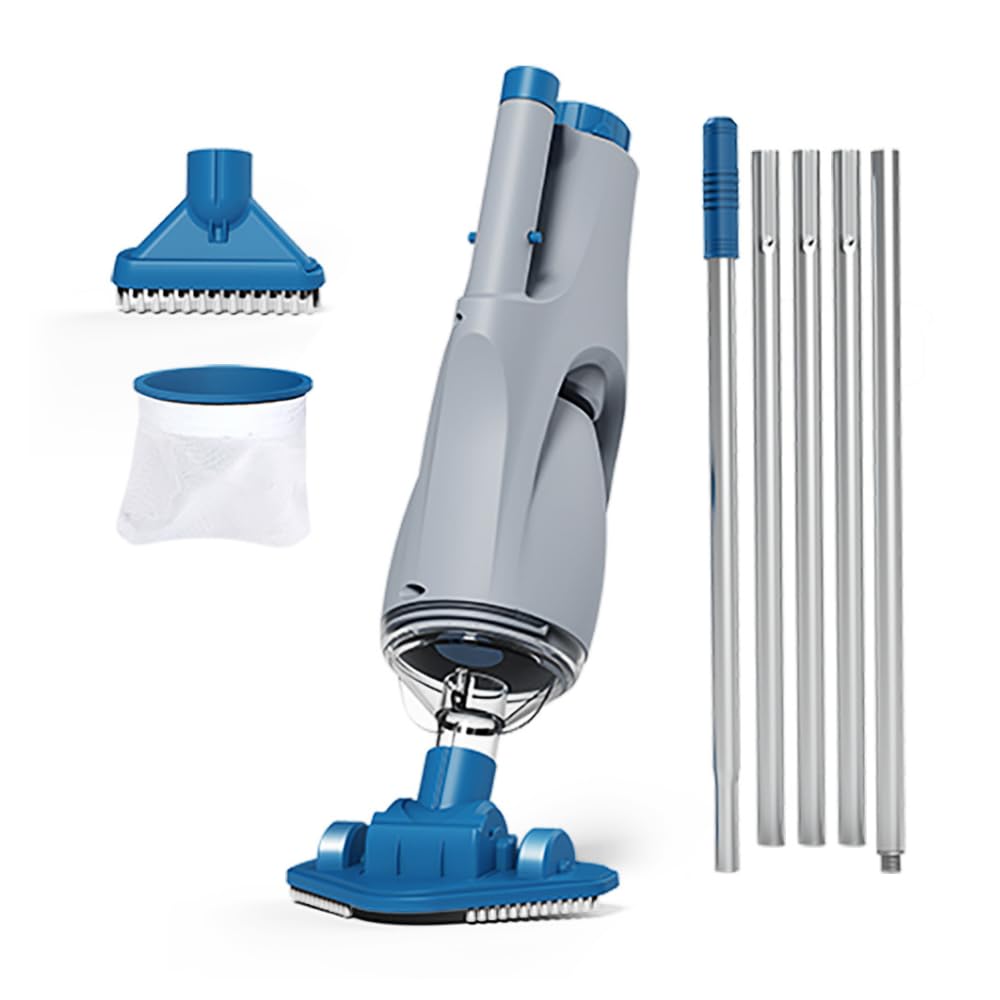
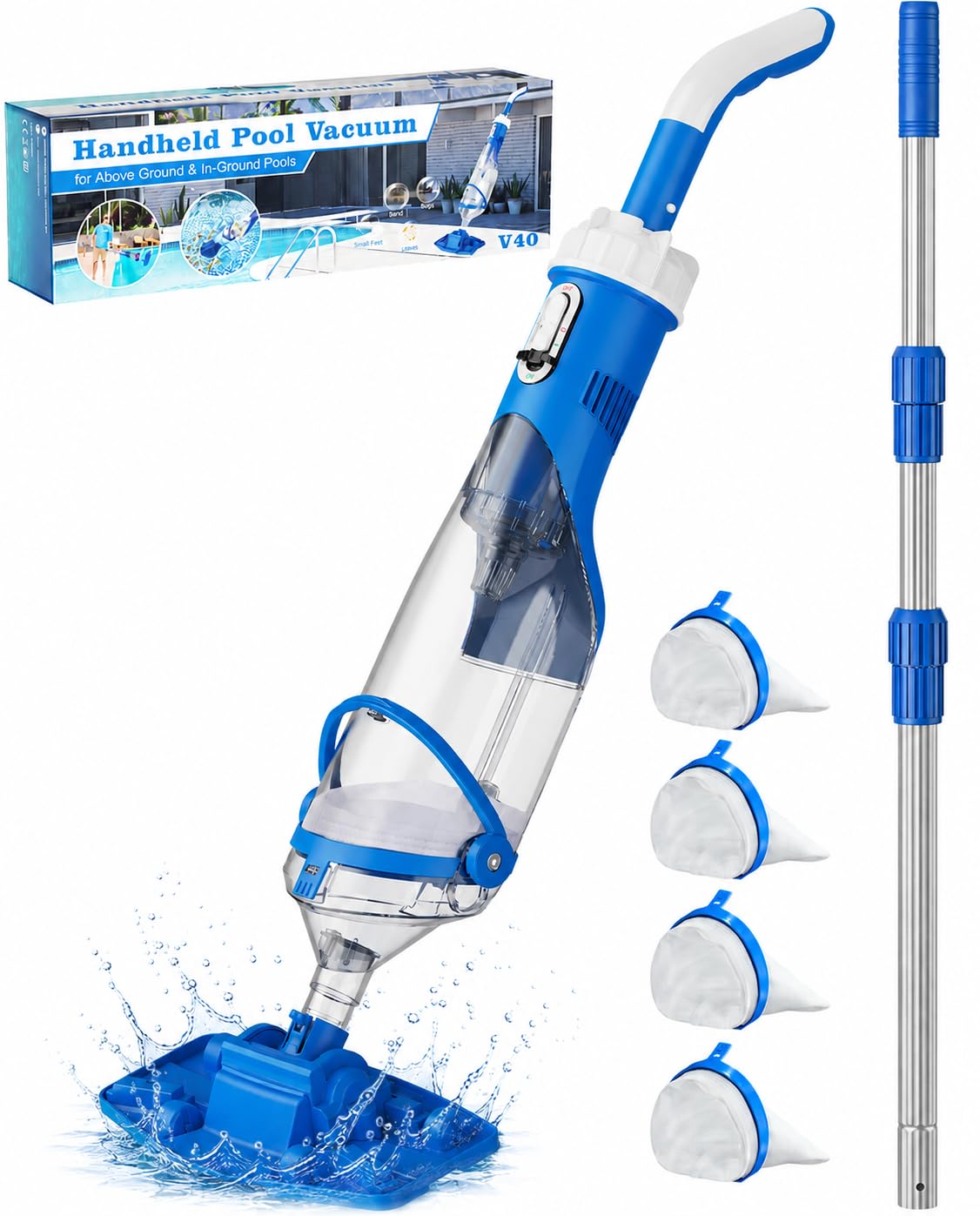
The 18.5 GPM suction paired with fine-mesh bags lifts sand, plaster dust, and small debris that many automatic cleaners miss. Unlike bulkier bots, this handheld vacuum lets you target problem spots around ladders and steps with surgical precision.

The battery handles quick touch-ups without issue. Running the vacuum at full suction across an entire pool shortens the runtime noticeably — plan for a session closer to half an hour rather than a full 60 minutes. The 7-foot pole reaches comfortably in most above-ground pools, but deeper inground setups will benefit from an aftermarket extension.

Four reusable 500-mesh filter bags capture fine silt without clogging quickly. The bag system rinses easily, and the IPX8 waterproof housing means you can clean the unit under a hose after use, keeping maintenance fast and fuss-free.

This vacuum fits owners of above-ground and small inground pools who want a cordless spot cleaner between deep robotic cycles. It replaces the hose-dependent hassle for debris removal, provided you work within its runtime boundaries and are willing to extend the pole if your pool floor sits below 8 feet.

Tip: For deep inground pools, swap the included pole for a standard 12-ft extension to keep the vacuum head firmly on the floor and avoid back strain.

Bottom line: A cordless vacuum that delivers strong suction and simple upkeep for pool owners who clean in quick bursts. Plan to add an extension pole for deeper water.
2

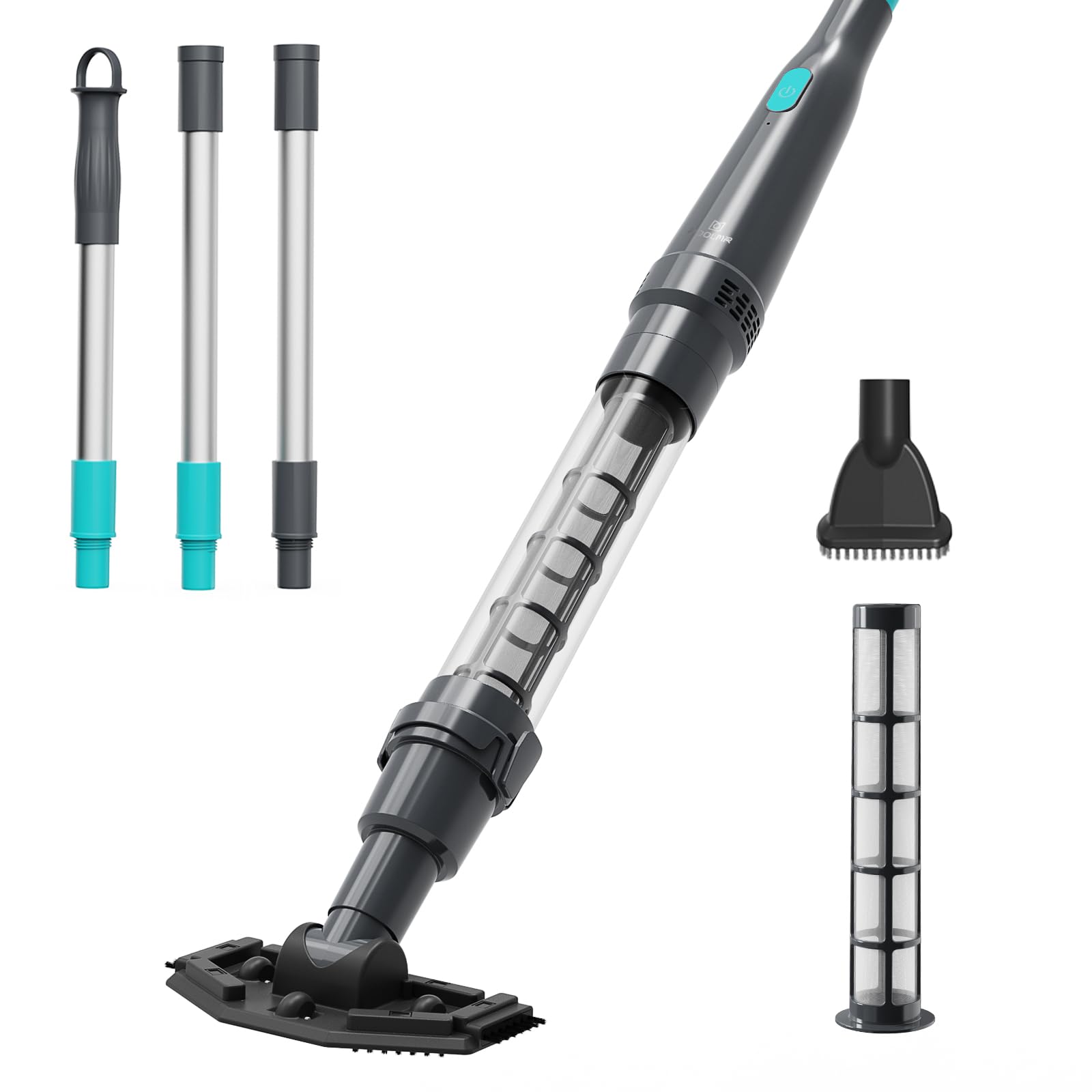
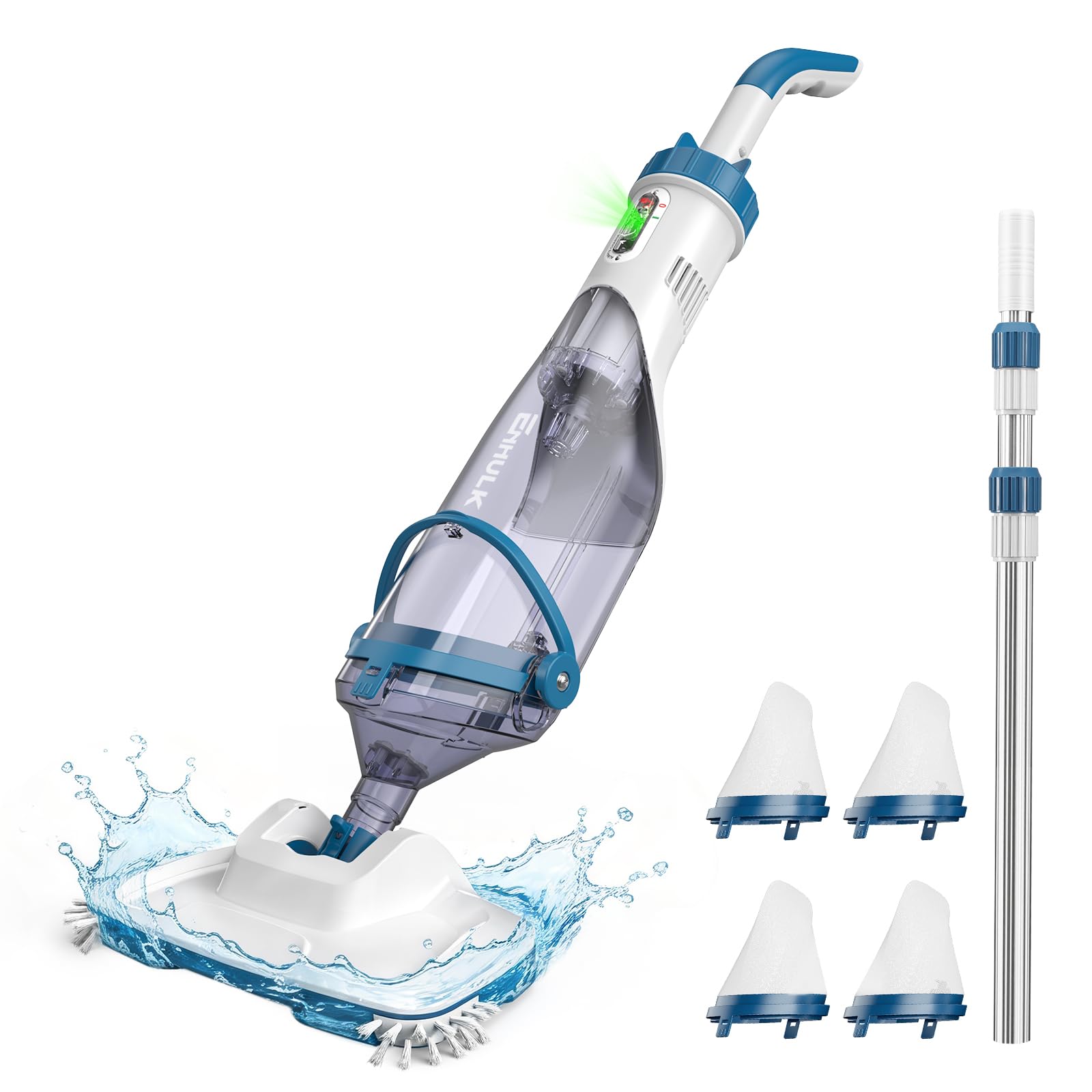
Enhulk PC15

Enhulk PC15

Large Pools

Our Score 8.4/10
Check Price

Worth Noting

  • In pools with thick debris accumulation, the 18.5 GPM suction can require extra passes to achieve a clean floor.
  • Battery charge retention can degrade over time; some units see a steep drop in runtime after only a few charging cycles.
Pole Length
35.8–87.5 in
Battery Runtime
60 min
Suction Strength
18.5 GPM
Weight & Maneuverability
8.4 lbs

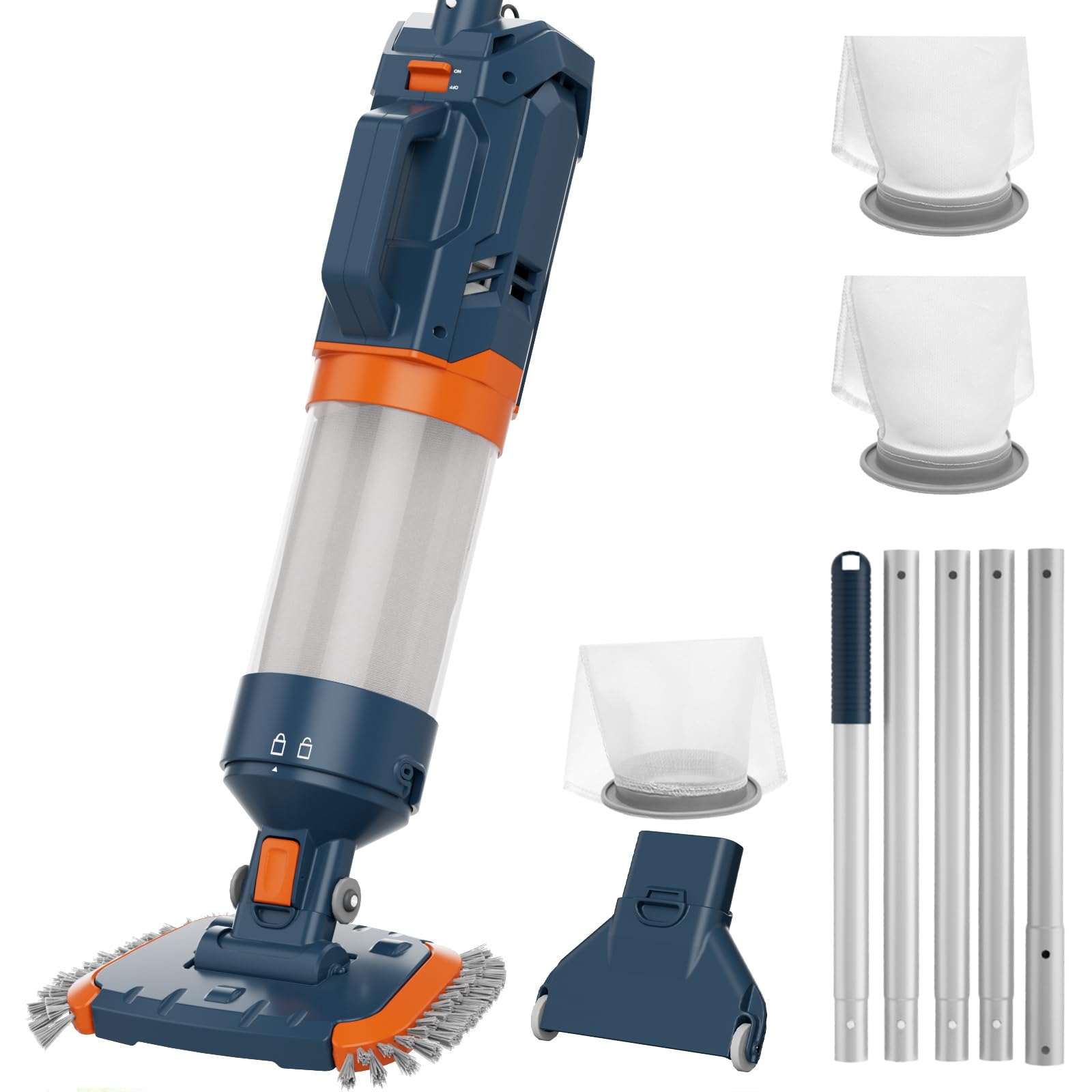
The 13.4-inch cleaning head and 87.5-inch telescopic pole set the Enhulk PC15 apart — covering large above-ground and inground pool floors with fewer passes than cordless vacuums that rely on standard-width heads. Where other handhelds require repeated repositioning to span the same area, this model’s broader path cuts cleaning time noticeably, especially on expansive surfaces.

Sand, leaves, and fine sediment are picked up effectively during routine maintenance, and the 8.4-pound build remains easy to push and steer despite the wider footprint. In pools where debris collects in thick layers, the 18.5 GPM suction can feel modest, and you may need an extra pass or two to fully clear the floor — a manageable tradeoff for the speed it offers on lighter loads.

This vacuum suits owners of larger pools who want to finish cleaning quickly without wrestling with a cord. The long pole is a genuine advantage for deep inground pools, eliminating the need for an extension. However, the battery’s real-world performance demands realistic expectations — routine maintenance is where it shines, not all-afternoon deep cleanings.

Tip: To maximize battery lifespan, avoid storing the vacuum in direct sunlight or high heat, and always recharge after each use — deep discharges can accelerate capacity loss.

Bottom line: For owners of large pools who prize speed and reach, the wide head and long pole deliver a genuinely faster cleaning experience. Accept that battery consistency may slip, making this a better fit for quick maintenance sessions than all-day deep cleanings.

3

Nepturox SAT25

Nepturox SAT25

Hands-Free Daily

Our Score 9.0/10
Check Price

Worth Noting

  • No smartphone app or Wi-Fi
Pole Length
Battery Runtime
150 min
Suction Strength
Weight & Maneuverability
14.5 lbs

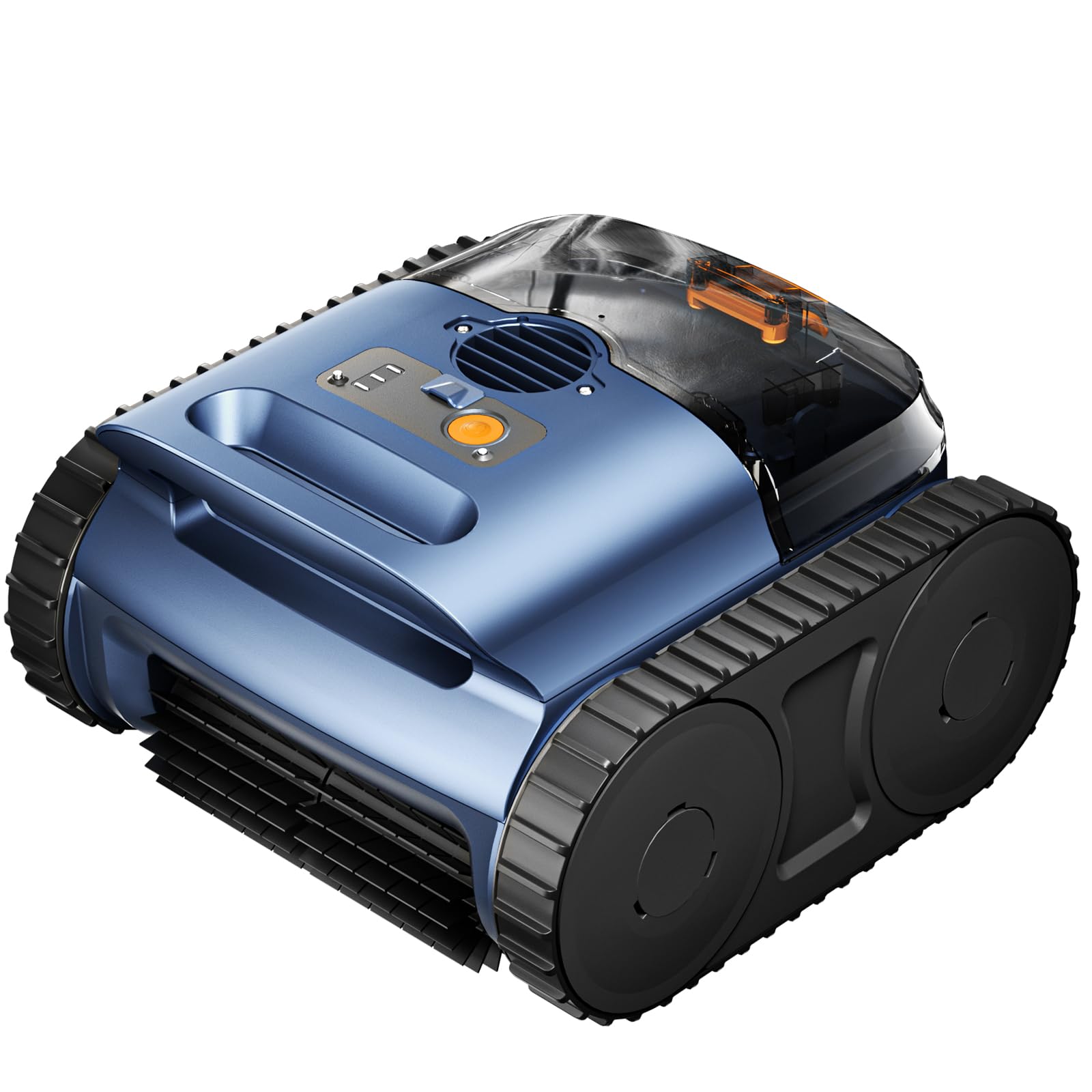
Dual 180W brushless motors and a 150-minute battery drive a systematic cleaning pattern across floors, walls, and the waterline without the hassle of a power cord or hose. Smart scanning path planning — rather than camera-based mapping — keeps costs in check while still covering pools up to 2,150 square feet. The track drive system provides confident grip on vertical surfaces, lifting debris from the waterline with each pass.

The dual motors produce enough suction to capture fine silt, small leaves, and acorns, depositing them into a sizable filter basket that rarely needs mid-cycle emptying. A full recharge takes about 2.5 hours, so the robot can run daily with minimal downtime. IP68 waterproofing and a 14.5-pound build make lifting the unit out of the water quick and hassle-free.

The SAT25 suits pool owners who want hands-off daily cleaning and wall scrubbing without Wi-Fi complexity. All control happens at the power button, which suits those who prefer simplicity over app scheduling. The main physical boundary: large main drains and complex step contours can occasionally trap the robot, requiring you to pull it free. For pools with flat drain covers and straightforward steps, these interruptions are rare, and the cordless wall-scrubbing capability makes the tradeoff easy to accept.

Tip: If your pool has large main drains, attach a drain cover mat or add foam bumpers to prevent the robot from hanging — a simple tweak that saves rescues.

Bottom line: For pool owners wanting hands-free wall and waterline cleaning without a cord or a four-figure price, the SAT25 delivers solid autonomy. Just check your drain and step layout before buying.

4

Kokido XTROVAC 110

Kokido XTROVAC 110

Small Pools, Spas

Our Score 8.2/10
Check Price

Worth Noting

  • Narrow cleaning head makes covering pools larger than 15 feet a slow, multi-pass chore
  • Suction is calibrated for fine silt
Pole Length
6 ft fixed
Battery Runtime
60 min
Suction Strength
10 GPM
Weight & Maneuverability
3.23 lbs

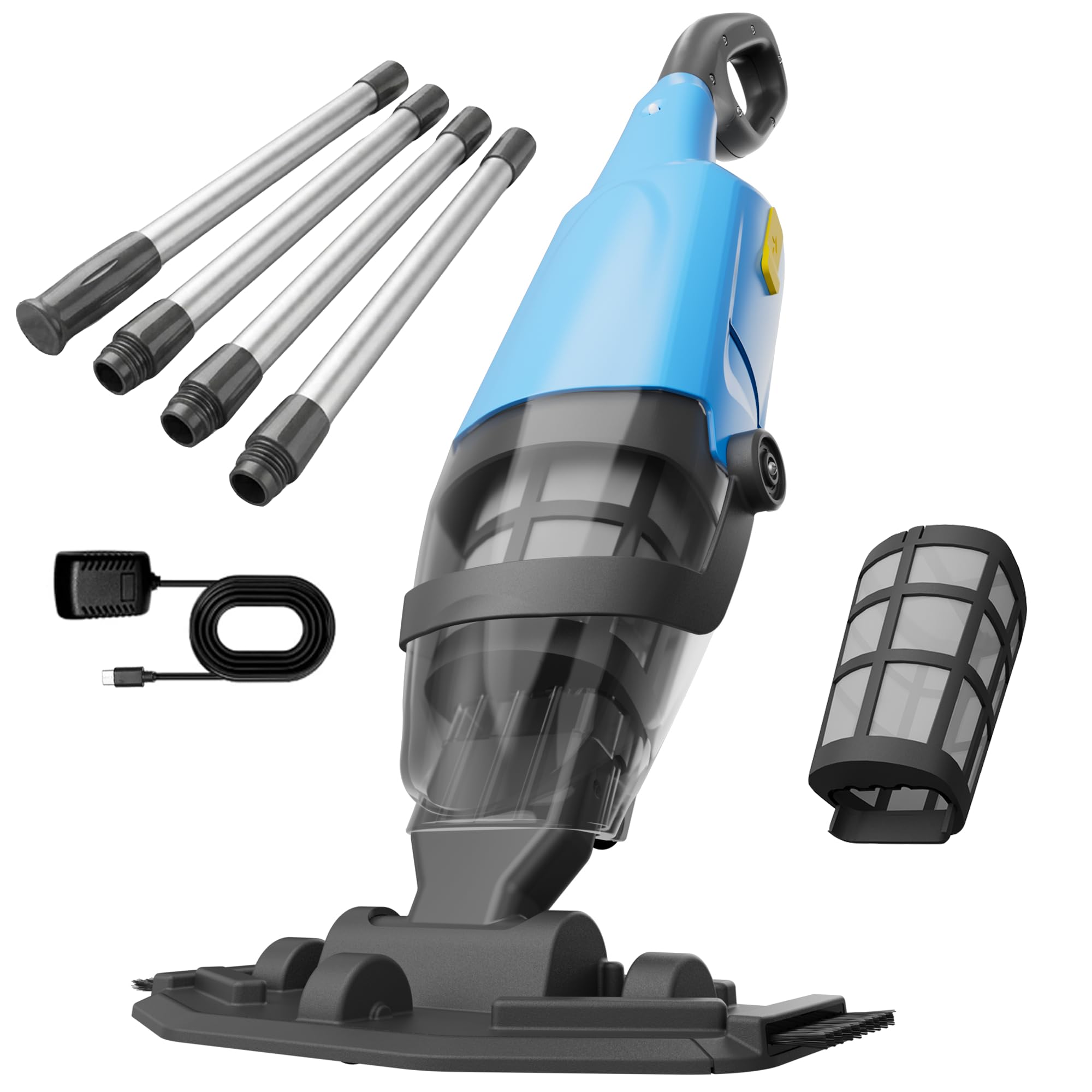
At just 3.2 pounds and with a simple drop-in basket filter, the XTROVAC 110 is ready the moment you open the storage bin — no bags to install, no separate pole to hunt down. The 6-foot aluminum pole clicks together in seconds, making it a natural secondary vacuum for corners and steps that robots skip. While the top pick leans on a longer pole and higher flow rate for above-ground pools, this ultralight unit excels as a low-commitment tool that lives in a corner until a quick spa touch-up is needed.

Fine silt, sand, and tiny bugs get pulled in quickly on flat spa floors, and the reusable basket filter rinses clean under a garden hose without replacement costs. The 60-minute runtime easily covers several spot-cleaning sessions, though the 10 GPM flow rate is tuned for lightweight debris. Heavy leaves above 3 inches can stall at the narrow head, requiring a manual scoop to finish the job — this is a vacuum designed for fine particulate, not autumn leaf loads.

This vacuum is built for inflatable ring pools, kiddie pools, hot tubs, and above-ground basins under 15 feet across. The compact head reaches into tight curves and around steps with ease, but attempting to cover a 20-foot surface becomes an exercise in patience, requiring dozens of overlapping passes. Suction pressure is gentle by design, prioritizing battery life and quiet operation; anyone dealing with large debris or a full-size pool will want a wider, more powerful handheld.

Tip: Use short, deliberate passes and let the head settle on the floor between movements; this prevents fine silt from swirling and keeps the narrow suction concentrated.

Bottom line: If your pool is a spa, inflatable ring, or above-ground basin under 15 feet, the XTROVAC 110 is the lightest, lowest-fuss way to clear sand and silt — just don't expect it to replace a wider vacuum for anything bigger.

5

AQUAFYSH AQ70

AQUAFYSH AQ70

Crystal-Clear Water

Our Score 8.4/10
Check Price

Worth Noting

  • The 25-micron filter can clog rapidly during heavy silt or algae removal, necessitating frequent rinse breaks mid-job.
Pole Length
up to 98 in
Battery Runtime
60 min
Suction Strength
18.9 GPM
Weight & Maneuverability
4 lbs

The AQ70 sets itself apart with a 25-micron ultra-fine filter that captures the barely-there sand and dead algae that cloud water. While the top pick balances suction and runtime for general duty, this vacuum targets one priority: brilliant clarity. A 98-inch pole reaches the deep end without stooping, and 18.9 GPM of suction pulls fine particles into that dense filter media, leaving the pool with a polished look that lighter filtration can miss.

That filtration precision comes with a hands-on tradeoff. The ultra-fine fluff bag can load up quickly when wrestling heavy silt or algae blooms, necessitating a rinse mid-session. This isn't a set-it-and-forget-it device — it rewards patience. Switch to the included 120-micron nylon bag first for coarse debris, then finish with the fine filter to reduce interruptions. Three interchangeable head types (a wide floor head, a brush head for walls, and a crevice tool) make corner cleaning easy without adding weight; the vacuum itself stays under four pounds.

This vacuum fits the pool owner who prioritizes water feel over cleaning speed. If you regularly battle fine sand, silt, or suspended algae that turns water hazy, the AQ70 is designed for you. It's also well-suited to medium-sized above-ground and inground pools where a 60-minute cordless runtime pulls full shifts. The tradeoff: heavy leaf loads will choke the fine filter, so yards with lots of foliage should look elsewhere.

Tip: For visibly murky water, switch to the included 120-micron nylon bag first to pull out coarse debris before switching to the ultra-fine filter to reduce clogging.

Bottom line: Pool owners who obsess over silky-smooth, particle-free water will find the AQ70's filtration unmatched at this price, provided they accept the hands-on filter maintenance it demands.

6

Poolease X1

Poolease X1

Flat-Bottom Pools

Our Score 9.4/10
Check Price

Worth Noting

Pole Length
Battery Runtime
100 min
Suction Strength
Weight & Maneuverability

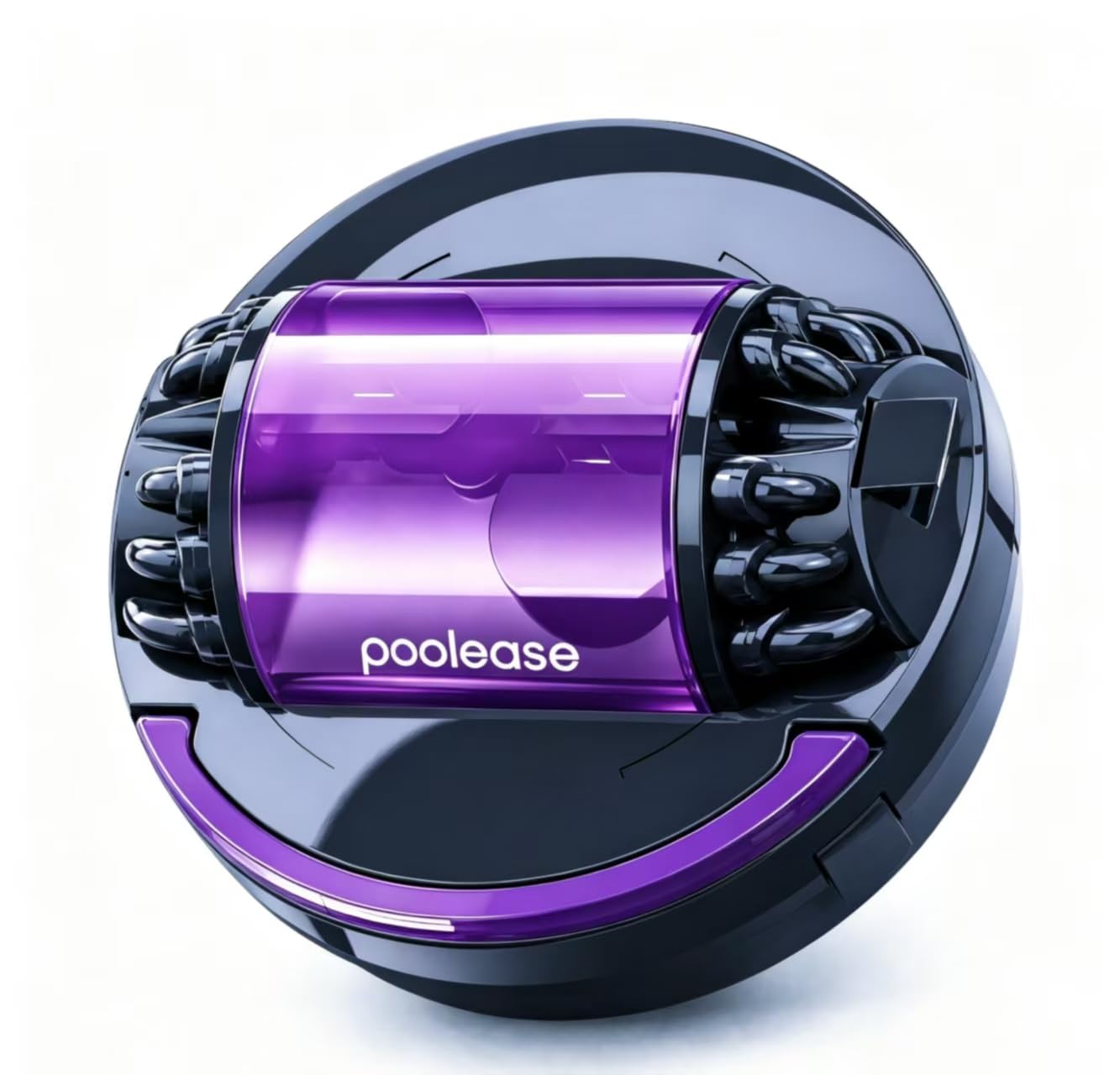
The Poolease X1 focuses on what many pool owners actually need: cordless, autonomous floor cleaning at a fraction of the cost of full-featured robots. Dual-motor suction and a 100-minute battery let it methodically cover flat pool bottoms, while self-parking nudges it to the edge when the charge runs low. Where heavier robots climb walls and navigate contours, the X1 stays on the floor, which keeps it lightweight and easy to handle.

On flat surfaces, it picks up fine sediment, sand, and small leaves efficiently, even in freeform or kidney-shaped pools. The motor pulls debris through dual suction ports into a tray that rinses clean in seconds. Battery life holds close to the rated 100 minutes in typical conditions, completing a full floor pass before the self-parking activates. Cord-free operation and a top handle mean you just lift it out when it’s done — no hoses to untangle or heavy units to wrestle.

Pool owners with deep ends, sloped transitions, or pools larger than 960 sq. ft. need a robot that climbs walls — the X1 stays strictly on the flat bottom. This robot is a match for someone with a small above-ground or flat-bottom inground pool who wants to drop it in, walk away, and return to a clean floor without spending hundreds on a full-featured model. The self-parking convenience and grab-and-go retrieval make it a practical floor-only helper.

Bottom line: For owners of small above-ground or flat inground pools, the Poolease X1 delivers floor-only robotic cleaning without the cord or the cost that usually comes with it.

7

aaculpet EDHV01

aaculpet EDHV01

Long-Reach Cleaning

Our Score 9.6/10
Check Price

Worth Noting

  • Long-term battery and motor durability under heavy use is unverified.
Pole Length
87 in telescopic
Battery Runtime
60 min
Suction Strength
18 GPM
Weight & Maneuverability
6.9 lbs

The EDHV01 vacuum clears dirt, moss, and heavy wet debris with 18 GPM of suction and an 87-inch telescopic pole — a combination that makes short work of spot cleaning in medium above-ground and inground pools. Its 60-minute battery and 6.9-pound build support extended sessions without frequent recharges. The tradeoff: battery and motor longevity over multiple seasons is still unknown, which makes this a better fit for buyers comfortable adopting a newer brand rather than those seeking a battle-tested track record.

Bottom line: A budget-friendly spot vacuum for pool owners willing to trade long-term brand history for strong suction and an extra-long pole today.

8

PoolMr YM-P3-01

PoolMr YM-P3-01

Hot Tubs & Spas

Our Score 8.4/10
Check Price

Worth Noting

  • In pools with leaves or twigs, the 13.2 GPM suction may leave some debris behind.
  • The battery may stop holding a charge after a few weeks of use, limiting it to a season's worth of light cleaning.
Pole Length
6.3 ft aluminum
Battery Runtime
90 min
Suction Strength
13.2 GPM
Weight & Maneuverability
<4 lbs

The PoolMr YM-P3-01 combines a 90-minute runtime with simple, lightweight handling that makes quick work of sand and silt in hot tubs and micro pools. It tops out at fine debris and may not hold up beyond a season of regular use. As a secondary spot cleaner for daily maintenance, it fills a narrow but real need at a budget price.

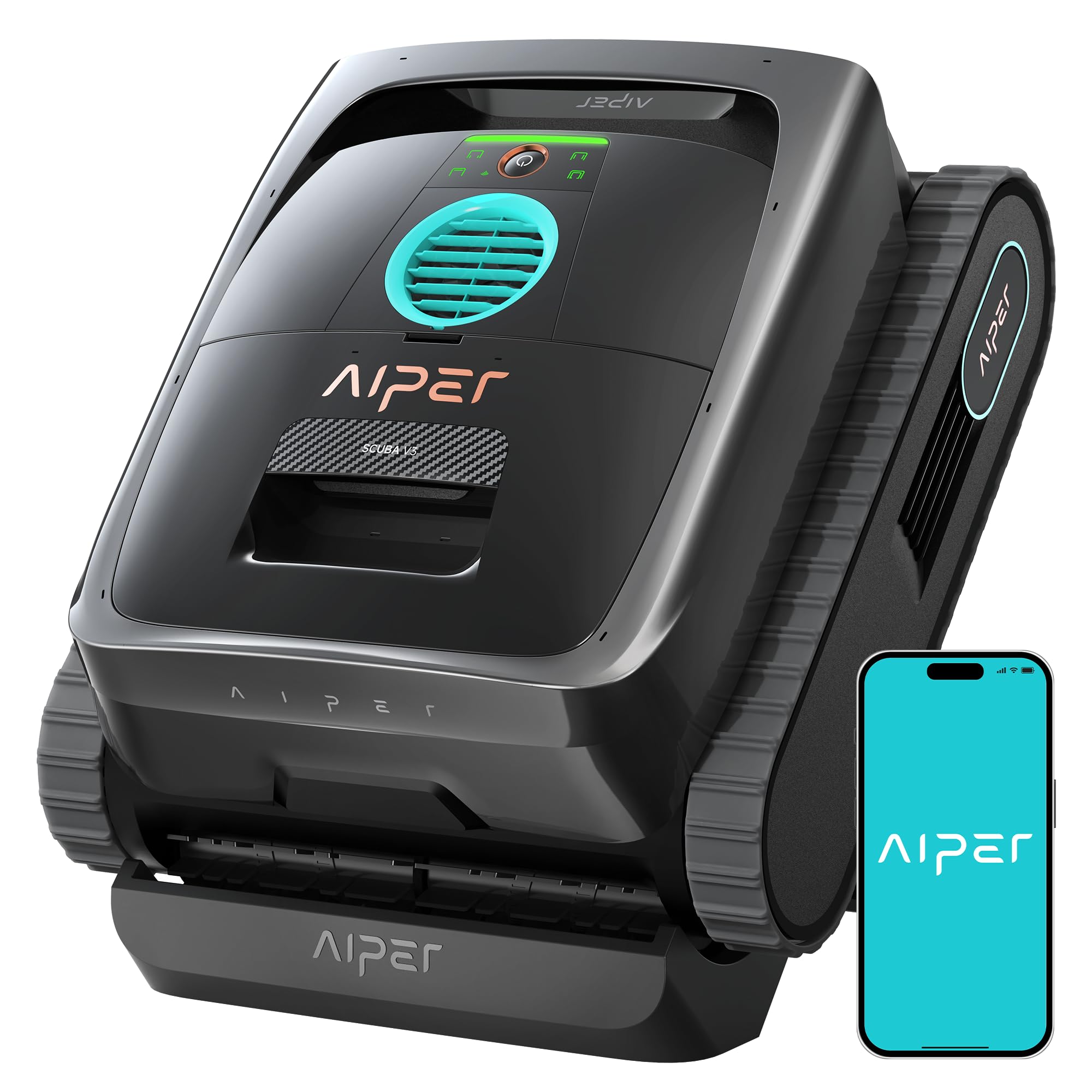
Bottom line: For hot tub and micro-pool owners who need an inexpensive, long-running spot cleaner for fine debris, this vacuum does the job—just don't expect it to handle leaves or last many seasons.

9

Aiper Scuba V3

Aiper Scuba V3

Luxury AI Robot

Our Score 8.8/10
Check Price

Worth Noting

  • Battery runtime can dip below full coverage in wall-climb mode on pools over 40 feet.
  • The robot may hang up on large main drains or complex steps, needing occasional manual freeing.
Pole Length
Battery Runtime
3.5 hr
Suction Strength
Weight & Maneuverability
18.1 lbs

The Aiper Scuba V3’s camera-based navigation and 3-micron dual-layer filtration provide next-gen autonomous cleaning for fine debris and clarity. The wireless charging dock and waterline self-parking let you retrieve it without entering the pool, while app scheduling adds convenience. The steep price and a tendency to catch on complex main drains or steps limit its universal appeal. Battery runtime also may fall short in wall-climb mode for very large pools, though floor-only cleaning usually completes. This robot is best for medium-to-large pools with simple drain profiles, where the AI and dock convenience outweigh the occasional manual intervention.

Tip: On pools over 40 feet, stick to floor-only mode or run a second wall-climb cycle to avoid incomplete coverage.

Bottom line: If you want AI-driven mapping, ultra-fine filtration, and a wireless dock for hands-free operation, and your pool’s drains won’t trap wheeled robots, the Scuba V3 is a capable luxury choice.

10

Gosvor LiteVac G1

Gosvor LiteVac G1

Mid-Size Pools

Our Score 9.0/10
Check Price

Worth Noting

  • Battery runtime in ECO mode may not reach the claimed 200 minutes, requiring a recharge after cleaning larger pools.
Pole Length
Battery Runtime
200 min ECO
Suction Strength
3,960 GPH
Weight & Maneuverability
15.2 lbs

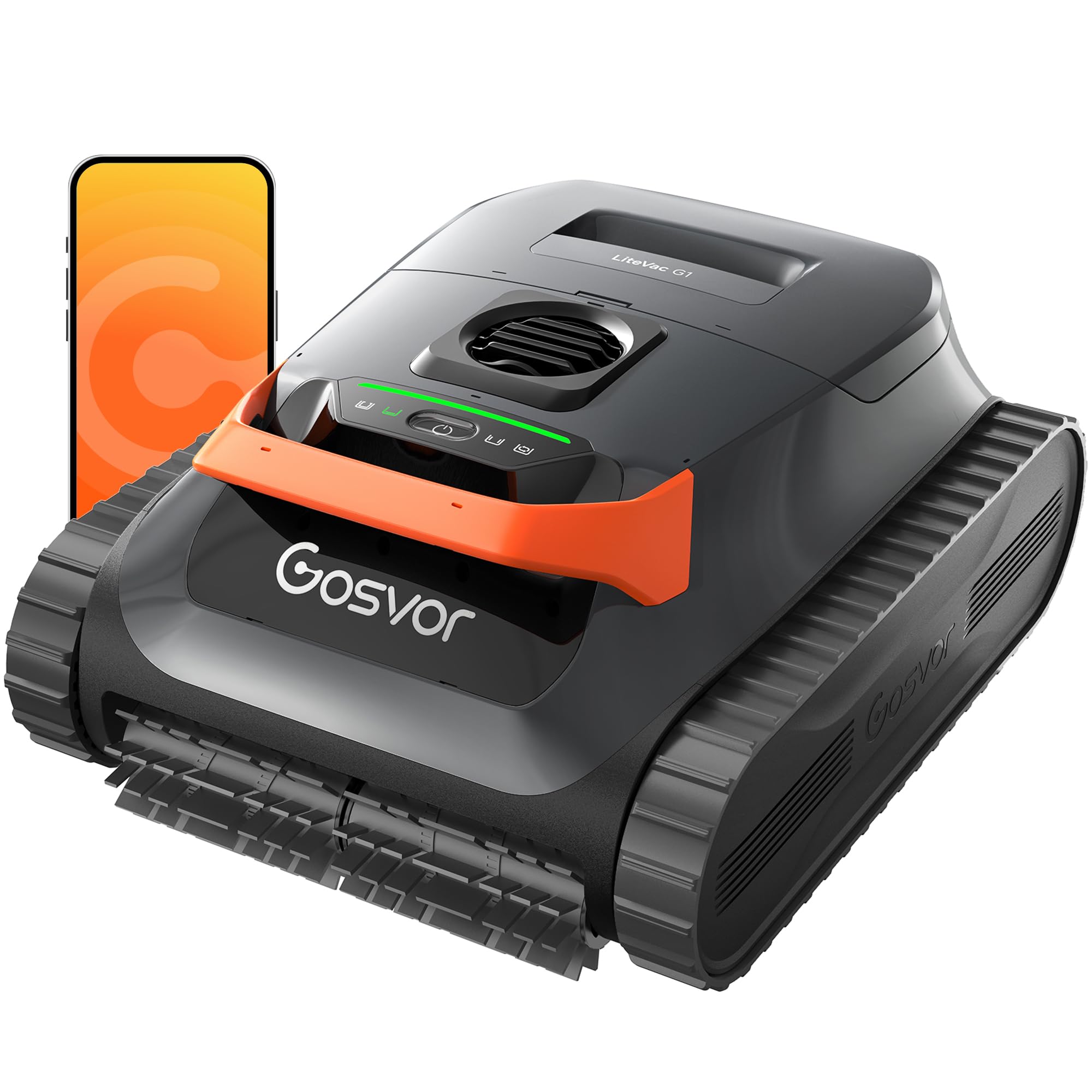
The LiteVac G1 pairs a light 15.2-pound body with a 200-minute ECO runtime claim and 3,960 GPH suction, bringing hands-free floor, wall, and waterline cleaning to pools up to 2,153 sq. ft. Unlike a robot that prioritizes dual 180W motors for raw suction, this model leans into longer runtime and easier lifting. App control and a multi-fine filter system add convenience. However, real-world battery endurance may fall short of the 200-minute mark on larger pools, meaning a recharge is sometimes needed between sessions. This robot makes sense for mid-size pools where the extended ECO mode can comfortably cover a full cycle, and for those who value a lightweight unit over absolute runtime guarantees.

Tip: For pools near the coverage limit, run the robot on ECO mode and plan to top up the charge before the next session to avoid mid-cycle stops.

Bottom line: Mid-size pool owners who want a lightweight wall-climbing robot with app control and can tolerate recharging between sessions will find the LiteVac G1 a practical option, but those with larger pools or fixed cleaning schedules may want a robot with more predictable runtime.

How to Choose

Battery Runtime: Real-World Expectations

Handheld vacuums typically use 5×2000mAh lithium-ion packs, which in practice deliver 30–40 minutes of usable suction, not the full hour. High-power modes, thick debris, and deeper water increase amp draw, cutting runtime to 20 minutes or less.

Robotic cleaners with 10,000mAh batteries can push 150–200 minutes in ECO mode, but wall-climbing and max suction drop that significantly. Always consider that the runtime at true cleaning power is roughly two-thirds of the claim.

Suction Strength: GPM and Debris Pickup

Suction is measured in gallons per minute (GPM) or per hour (GPH). For handhelds, 18+ GPM motors pick up sand and fine silt effectively; below 14 GPM, larger leaves and acorns often stay put. Airflow design matters as much as the number — some 18.5 GPM models outperform others thanks to tighter nozzle seals.

Robots frequently omit GPM ratings, relying instead on brushless motor specs. Look for dual-motor designs and user confirmation that they handle fine debris, because a high wattage alone doesn't guarantee a clean floor.

Filter Mesh: Clarity vs. Clogging

Standard filter bags at 180–500 mesh catch sand but let microscopic silt pass. Ultra-fine filters down to 25 microns trap algae floc and plaster dust for brilliant water, but they clog quickly, demanding a rinse every few minutes during heavy cleaning.

Carrying spare bags or using a pre-filter basket reduces downtime. If your pool stays clear with a 500-mesh bag, a 25-micron bonus filter may be more hassle than it's worth.

Pole Length and Deep-End Reach

For an inground pool deeper than 5 feet, a pole must extend to at least 7 feet. Many included poles max out at 6 feet, leaving the deep end untouched. Telescopic designs reaching 87–98 inches are ideal; verify compatibility with standard extension poles if the stock one falls short.

Robots sidestep pole issues entirely, but their coverage is limited to their programmed path. A handheld with an insufficient pole will force hunching or blind sweeping.

Weight and Maneuverability

Handheld vacuums under 6 pounds are comfortable to guide across the pool floor for 30 minutes. Every additional pound adds fatigue, especially when the pole is fully extended and leverage works against you. Wide cleaning heads increase drag, making lightweight design more critical.

Robotic cleaners weigh 14–19 pounds and you never hold them, so weight mainly affects retrieval. A built-in self-parking feature or waterline parking eliminates the need to lift a heavy unit out of the deep end manually.

Robotic Navigation and Automation

Entry-level robots (like the Poolease X1) clean flats only; they lack wall-climbing and can't handle slopes. Mid-tier models add waterline scrubbing and gyroscope path planning to avoid redundant passes. Premium units with AI cameras map the pool in real time but still stumble on large main drains and unusual step geometry.

A robot's debris bin capacity (typically 1–4 liters) dictates how often you must empty it. For a heavily leaf-covered pool, a 2-liter bin may fill after a single pass, requiring frequent stops. Choose bin size based on your typical debris load.

Frequently Asked Questions