TVs & Video

9 Best Outdoor TV Antenna of 2026: Real-World Range You Can Trust

Cut the cord without frustration: find an outdoor TV antenna that actually picks up channels based on your location, not inflated range claims.

Many outdoor TV antennas boast ranges of 150-200 miles, but real-world performance depends on terrain, height, and obstructions. The result: thousands of cord-cutters end up with an antenna that underdelivers. This guide focuses on antennas that perform reliably at their actual effective range — typically 40-70 miles — and highlights which features are worth paying for.

Motorized rotation is a popular feature, but reliability varies widely. We've separated the antennas that offer dependable remote aiming from those where the motor is a gamble. Whether you need a fixed multi-directional, a budget Yagi, or a premium build, the picks here match specific use cases.

1

GE Outdoor HD Antenna 29884

Top Pick
GE Outdoor HD Antenna 29884

Budget cord-cutters

Our Score 8.8/10
Check Price

Worth Noting

  • Assembly can be tedious and the instructions are small and confusing
Build
Weather resistant
Range
70 miles
Outputs
1 TV
Amplifier
Passive

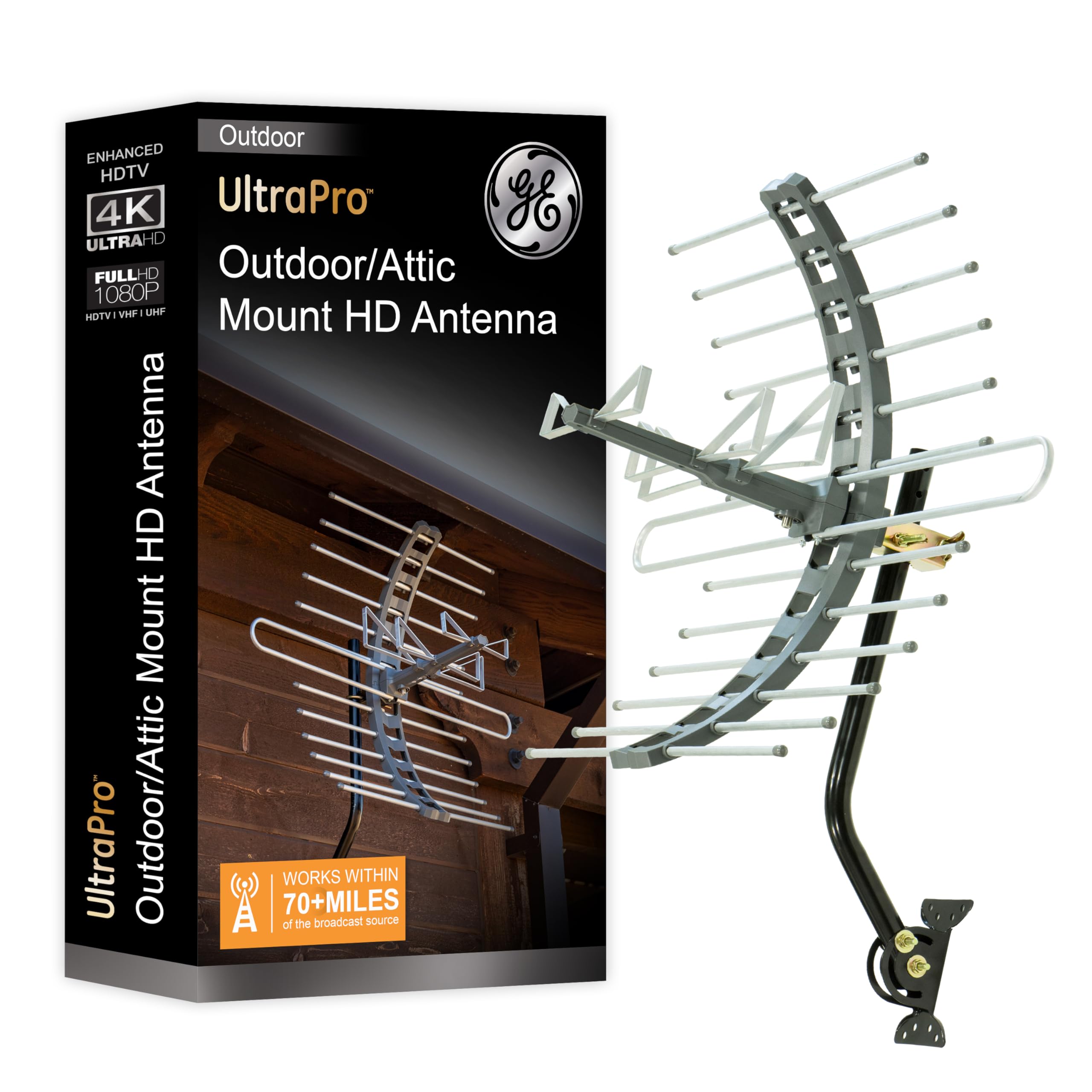
The GE 29884 picks up local channels with clarity that rivals cable, making it a strong performer for suburban homes within range of broadcast towers. Its loop design handles both VHF and UHF signals well, so you get access to a wide variety of networks without monthly fees.

Rated for a 70-mile range, the antenna works best in areas where towers are not too distant or obstructed. The weather-resistant build holds up outdoors, and it is ATSC 3.0 ready for future broadcast standards. Most installations yield 50 to 100 channels depending on location.

This antenna suits budget-conscious cord-cutters in suburban or urban settings who want a straightforward way to drop cable bills. It is not ideal for rural users far from towers or anyone needing motorized rotation to aim at multiple directions. The included J-mount makes outdoor or attic mounting possible with basic tools.

The main tradeoff is in setup: assembly can be fiddly and the printed instructions are small and unclear. Many users turn to YouTube guides for a smoother experience. Once mounted, the performance is consistent, and the savings compared to cable quickly outweigh the initial hassle.

Tip: Watch a YouTube assembly guide before starting — the included instructions are minimal.

Bottom line: For suburban cord-cutters willing to invest a bit of time in setup, the GE 29884 offers the strongest performance per dollar in this category.

2

PBD Motorized Antenna WA-2608

PBD Motorized Antenna WA-2608

Multiple towers

Our Score 8.6/10
Check Price

Worth Noting

  • Motorized rotation may stop responding after weeks of use
  • Actual reception range is typically 40-70 miles, well short of the advertised 150-mile claim.
Build
Plastic housing
Range
150 mi (claimed)
Outputs
2 TVs
Amplifier
Built-in

While the top pick nails reception at a budget price, the PBD WA-2608 adds a motorized rotation you control from the remote — ideal for households with broadcast towers in different directions. The included 40-foot RG6 cable and dual TV outputs simplify multi-room setup.

This antenna suits cord-cutters who want to fine-tune direction from the sofa rather than adjusting a fixed mount. Picture quality and channel count perform well for suburban to mild fringe areas. However, the motor mechanism can become unresponsive over time — some owners note the rotation stops responding after weeks or months. It's a convenience feature that may require patience if you need constant re-aiming.

The claimed 150-mile range is optimistic for most settings; expect solid reception in the 40-to-70-mile range depending on terrain and local towers. The amplifier helps pull in weaker stations but can overload if you're close to broadcast sources. Assembly is straightforward with the included mounting pole and instructions.

Tip: If the rotation stops responding, unplug the antenna for 30 seconds and plug it back in — this can restore motor function in some cases.

Bottom line: For cord-cutters who prioritize direction flexibility over absolute motor longevity, the PBD WA-2608 delivers a useful motorized feature at a budget-friendly price — just keep expectations for the motor's lifespan in check.

3

ClearStream 2V 60mi

ClearStream 2V 60mi

Premium reliability

Our Score 8.8/10
Check Price

Worth Noting

  • Assembly instructions are minimal and may require extra effort to follow.
  • Price is higher than some comparable fixed antennas.
Build
Rugged plastic/metal
Range
60+ miles
Outputs
1 TV
Amplifier
Passive

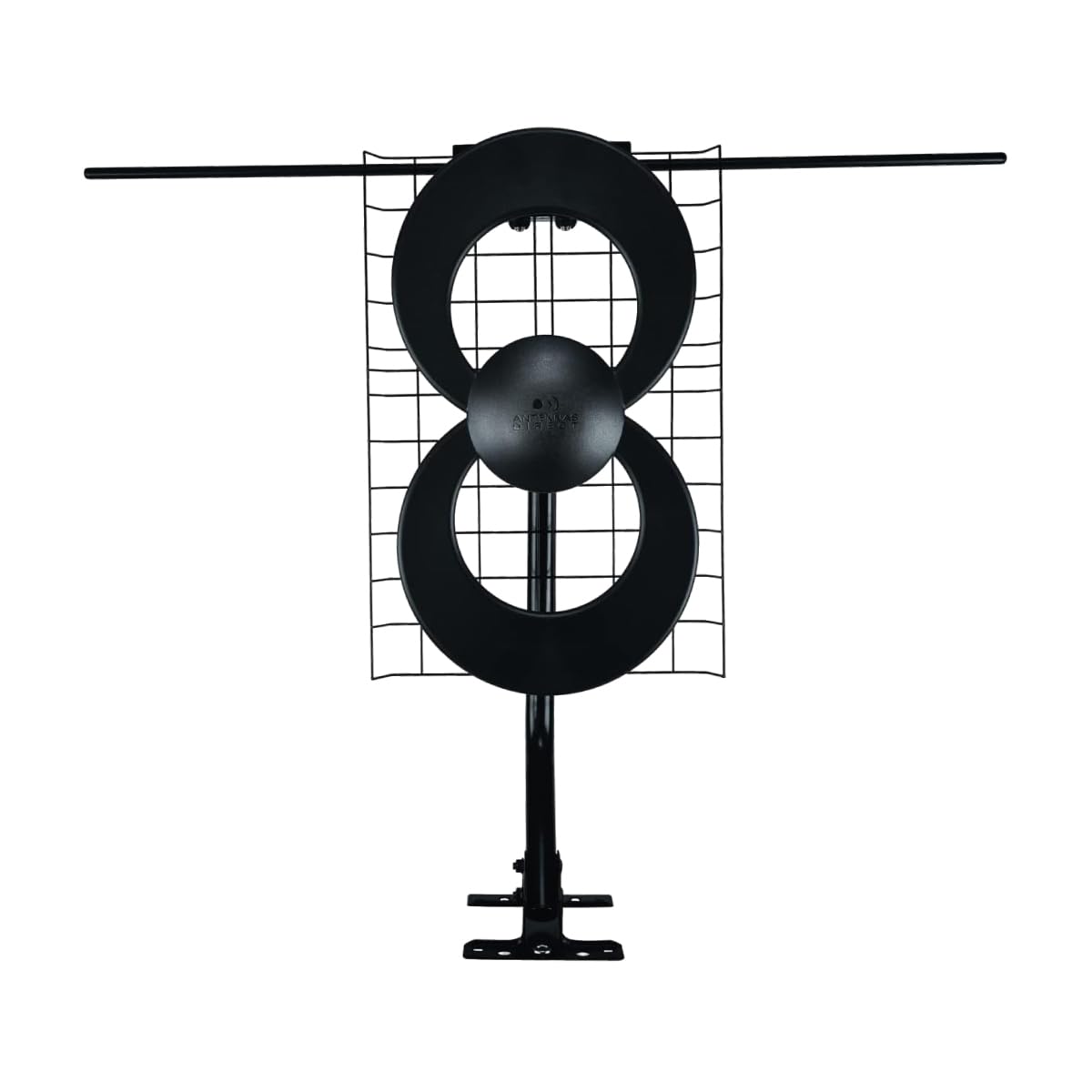
The ClearStream 2V stands out for its ability to pull in both UHF and VHF channels effectively, solving a common trade-off among outdoor antennas. The double loop and reflector design supports multi-directional reception without a motor, making it a dependable choice for fixed setups.

In suburban installations, this antenna can pull in channels from up to 60 miles away, depending on terrain and tower placement. The ATSC 3.0 readiness ensures compatibility with next-gen broadcasts, and the included 20-inch mast offers flexible mounting options for roof or attic use.

This antenna suits urban and suburban users who want a durable, no-motor setup and are willing to spend a bit more than entry-level options. The assembly instructions are sparse, so referencing an online guide can save time. For those with towers in varying directions, the multi-directional pattern eliminates the need for aiming.

Tip: Before starting assembly, look up a video walkthrough—the manual is minimal and some steps are unclear.

Bottom line: For buyers who want balanced VHF/UHF performance and a durable build without motorized rotation, the ClearStream 2V delivers a strong signal at a fair price.

4

AD DB8e Bowtie 70mi

AD DB8e Bowtie 70mi

Fringe UHF

Our Score 8.6/10
Check Price

Worth Noting

  • In tight attic or multi-person installations, the antenna's size can make positioning and mounting a challenge
  • Viewers relying on VHF channels (2-13) will find reception limited or non-existent
Build
All-weather metal
Range
70+ miles
Outputs
1 TV
Amplifier
Passive

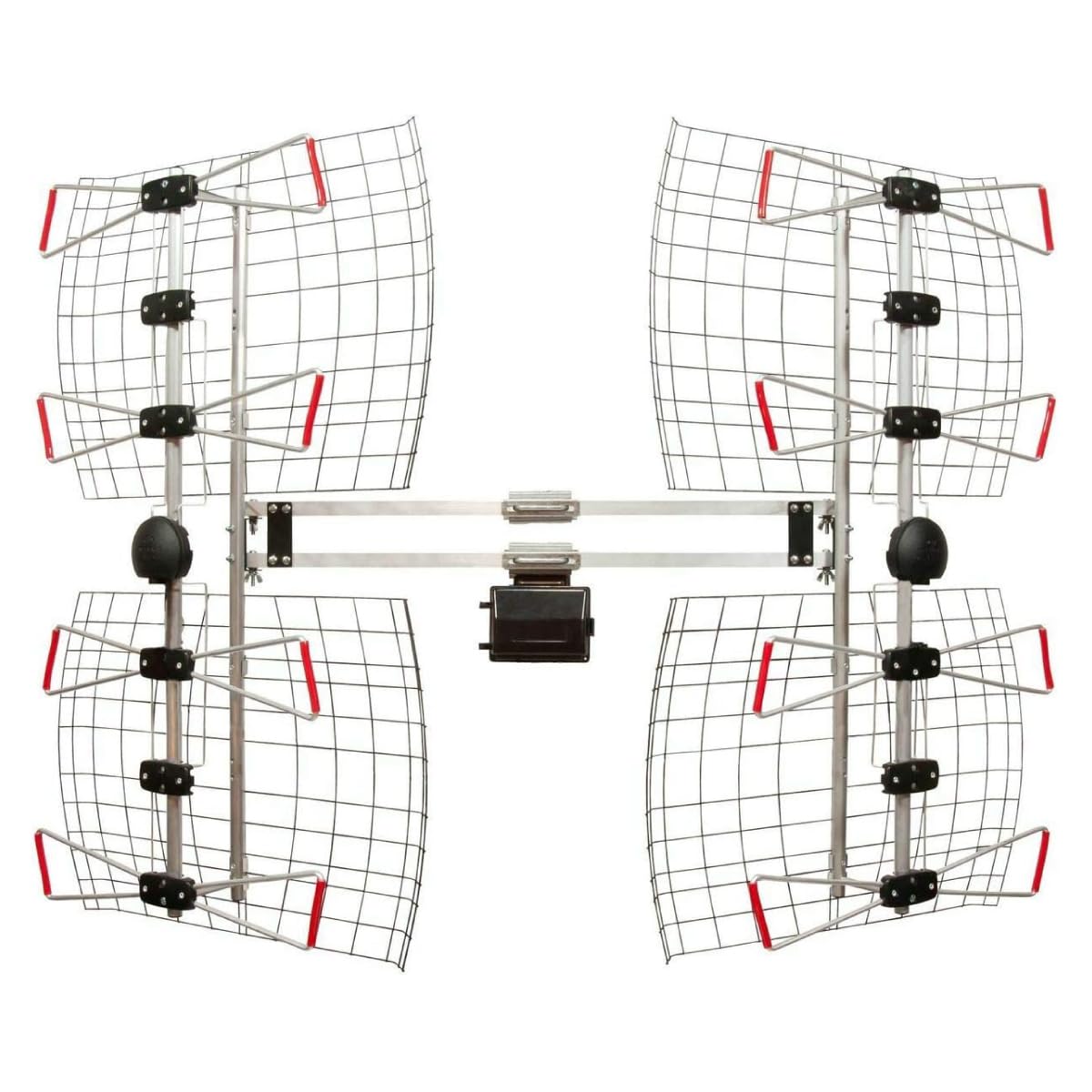
The DB8e's eight bowtie elements deliver a meaningful advantage when pulling in weak UHF signals from distant towers beyond 70 miles. Where the top pick in this set offers balanced VHF and UHF performance, this antenna prioritizes UHF gain, making it a specialist tool for fringe-area reception. Its all-weather mounting hardware and robust build — corrosion-resistant components and stainless steel fasteners — ensure it holds up in exposed rooftop conditions.

This antenna is best suited for viewers in UHF-only broadcast areas who need maximum sensitivity to reach stations 70+ miles away. Keep in mind that it will not receive VHF channels (2-13), so check your local broadcast frequencies before purchasing. The large 8-element array is not compact; plan for a roof or mast with enough space, and consider having a second person help during mounting to manage the size safely.

Build quality is a strong point: the antenna uses corrosion-resistant metals and includes stainless steel mounting hardware that stands up to coastal weather. In areas with strong UHF signals, it delivers clean 1080i and 4K picture quality comparable to smaller antennas — the extra size only matters when you need that additional range. For cord-cutters with a clear UHF line of sight to distant towers, this antenna offers the gain to pull in channels that other designs miss.

Tip: Measure your mounting area and have a second person assist with lifting — the DB8e's eight elements are heavy and wide.

Bottom line: For cord-cutters targeting distant UHF stations, this antenna delivers the gain needed — just verify your local channels are UHF-only and your installation space can accommodate its size.

5

GE Yagi 33685 80mi

GE Yagi 33685 80mi

Budget directional

Our Score 8.8/10
Check Price

Worth Noting

  • Build materials feel lightweight and less robust than premium alternatives
  • Actual range may fall short of the advertised 80 miles, especially with obstructions
Build
Plastic/metal
Range
80 miles
Outputs
1 TV
Amplifier
Passive

The GE Yagi 33685 delivers strong channel reception for its price, with users reporting 100+ channels in favorable conditions. While the top pick GE loop offers a more adaptable design for mixed directions, this Yagi focuses its directional gain to pull in signals from a single direction, making it a cost-effective choice for those with known tower locations.

This antenna fits buyers who know where their broadcast towers are located and want a no-frills, budget-friendly option. The build quality is light and may feel flimsy, and the advertised 80-mile range is optimistic; actual reception is best within 40-60 miles with clear line-of-sight.

Assembly is straightforward with the included J-mount, and the HD picture clarity is crisp on compatible TVs. The combination of easy setup and solid picture quality adds to the value proposition for cord-cutters looking to minimize upfront costs.

Tip: For maximum channel count, point the antenna toward the nearest broadcast tower and mount it as high as possible with a clear view.

Bottom line: The GE Yagi is a sensible choice for buyers who need focused directional reception at a low cost and can accept a lighter build and realistic range expectations.

6

1byone Omni Antenna 100mi

1byone Omni Antenna 100mi

Urban omni

Our Score 8.0/10
Check Price

Worth Noting

  • VHF reception can be weak - may miss lower-frequency channels.
  • Omni design is less effective in fringe areas compared to a directional antenna.
Build
Weather resistant
Range
100 mi (claimed)
Outputs
1 TV
Amplifier
Built-in w/ LTE filter

Setting up the 1byone Omni Antenna is straightforward - mount it, plug it in, and scan for channels without any aiming. The built-in amplifier and LTE filter help reject cell interference, and the 39ft RG6 cable gives flexibility for placement. However, reception can vary noticeably by location; VHF performance is a known weakness, and this omni design trades reach for convenience. In areas with strong UHF signals from multiple directions, it pulls in a solid number of channels. For fringe situations or users needing VHF, a directional model would be more effective.

Bottom line: Worth considering if you live in a suburban or urban area with towers in multiple directions and don't rely on VHF stations.

7

PBD Antenna WA-2608+18M

PBD Antenna WA-2608+18M

Long cable

Our Score 8.6/10
Check Price

Worth Noting

  • Motorized rotation can stop working, turning the antenna into a fixed-direction unit
Build
Plastic housing
Range
150 mi (claimed)
Outputs
2 TVs
Amplifier
Built-in

The 59ft RG6 cable gives you considerable flexibility in where you mount the antenna, often eliminating the need for an extension. Initial assembly is straightforward, and picture quality on received channels is clear for local broadcasts. However, the rotating mechanism that lets you aim at different towers is a point of caution: the motor can cease responding over time, making the rotation a one-time setup rather than an ongoing convenience. This model shares its motor assembly with more popular PBD antennas, so the tradeoff is consistent across the line. At a budget-friendly price, the value lies in the cable length and basic reception; for those who prioritize a rotation that works reliably over years, a fixed multi-directional antenna may be a safer bet.

Bottom line: Worth considering if the extra cable length saves you from buying an extension and you are okay with the possibility of the motor failing, effectively using it as a fixed antenna after initial aiming.

8

Five Star 200mi Yagi

Five Star 200mi Yagi

Budget Yagi alt

Our Score 8.6/10
Check Price

Worth Noting

  • Claimed 200-mile range is not achievable; effective range is 40-60 miles.
  • Directional design requires precise aiming and won't pick up signals from multiple directions.
Build
Weather resistant
Range
200 mi (claimed)
Outputs
4 TVs
Amplifier
Built-in

This Yagi antenna comes with a J-pole and splitter for connecting multiple televisions, and assembly takes about 20 minutes. In suburban areas with towers in one direction, it pulls in 40–60 over-the-air channels with clear picture quality.

The advertised 200-mile range is overstated — expect 40-60 miles, which suits buyers who live within that distance and only need one direction. Not ideal for rural fringe locations or areas where towers are scattered; for those cases, consider a multi-directional or motorized model like the GE Yagi.

Bottom line: A budget-friendly pick for suburban cord-cutters who know their towers are within 60 miles in one direction and want to feed multiple TVs without a motor.

9

PIBIDI Motorized 200mi

PIBIDI Motorized 200mi

Check price

Our Score 8.8/10
Check Price

Worth Noting

  • Claimed 200-mile range has no customer feedback to confirm actual performance.
  • Motor rotation long-term dependability cannot be assessed without verified user reports.
Build
Weather resistant
Range
200 mi (claimed)
Outputs
Amplifier
Smart chip

The PIBIDI antenna brings motorized rotation, a 40ft RG6 cable, weather-resistant build, and a 200-mile range claim to the outdoor antenna market. These specs look attractive on paper, especially for cord-cutters who want to aim at multiple broadcast towers without climbing onto the roof. The included mounting pole and smart chip amplifier add to the convenience.

Here is the issue: no customer reviews are available to confirm how the antenna performs in real-world conditions. The 200-mile range is a manufacturer claim that cannot be independently verified. Motor rotation reliability and actual channel reception remain unknowns. Without user feedback, it is impossible to recommend this antenna with confidence, especially for buyers who need dependable long-range reception.

Bottom line: This antenna may suit buyers who value motorized convenience and are willing to test an unverified product, ideally with a return option if range or rotation falls short.

How to Choose

Real-World Range vs. Claimed Range

Manufacturers quote optimistic ranges based on perfect line-of-sight conditions. In practice, hills, trees, and buildings cut that by 30-50%. A 150-mile antenna typically pulls in channels from towers 40-70 miles away in suburban terrain.

Check your local broadcast towers on sites like FCC DTV Reception Maps before buying. If towers are within 40 miles and unobstructed, a 60-mile antenna often works as well as a 150-mile one.

Directional vs. Omni-Directional vs. Motorized

Directional antennas focus on one direction, capturing weaker signals from that specific tower but missing stations elsewhere. Omni-directional models pick up signals from all sides but with lower gain, making them best for urban areas where towers surround you.

Motorized rotation combines convenience with focus: you can aim remotely at different towers. However, the rotation mechanism is a common failure point. Fixed multi-directional designs (like the ClearStream series) avoid this trade-off entirely.

Amplifier Type and LTE Filtering

Amplifiers boost weak signals but can overload strong signals, causing pixelation or channel drop. If you live within 30 miles of towers, a passive (unamplified) antenna often works better. Amplified models with LTE filters are useful for fringe areas with cellular interference.

Look for a built-in 4G/5G filter if you're near cell towers. Without it, the amplifier can amplify interference, making reception worse.

Build Quality and Weather Resistance

Plastic housings are light and cheap but can crack under UV or wind over time. Metal elements and sealed joints hold up better in rain and snow. Check user reports for long-term durability specific to your climate.

If you mount in an attic, weather resistance matters less; if outdoors, prioritize antennas with UV-stabilized plastic or powder-coated metal.

Number of TV Outputs Supported

Most antennas connect to one TV directly. To feed multiple TVs, you need an antenna with dual outputs or add a separate splitter. Splitters reduce signal strength, so an amplified model may be necessary for multiple rooms.

If you plan to connect 3+ TVs, consider antennas with built-in splitters (like the Five Star 200mi Yagi) to minimize signal loss.

Frequently Asked Questions