TVs & Video

8 Best Indoor TV Antenna of 2026: Choose Honest Range, Not Hype

Cut through fake 500-mile claims and find an indoor TV antenna that delivers real channels in your area.

Indoor TV antennas often promise hundreds of miles of range. In reality, even under ideal conditions, 30 to 50 miles is the ceiling. Buyers who chase those numbers end up frustrated with few channels and pixelated feeds.

The solution isn't a bigger amplifier or a more expensive model. It's matching the antenna to your actual tower distance and building layout. This guide focuses on realistic range, VHF/UHF support, and placement realities so you get the channels you pay for.

Whether you need a classic rabbit ears or a discreet flat mount, the right choice depends on one thing: where you live and what you're willing to trade for a clean setup.

1

Channel Master FLATenna

Top Pick
Channel Master FLATenna

Urban/suburban cord-cutters

Our Score 8.4/10
Check Price

Worth Noting

  • Thin flat material may feel fragile during handling and might not hold up to frequent repositioning.
  • Range is limited to around 35 miles; not suitable for fringe or deep-rural signal areas.
Design
Flat, reversible
Cable Length
12ft
Amplifier Type
None
Realistic Range
35 miles

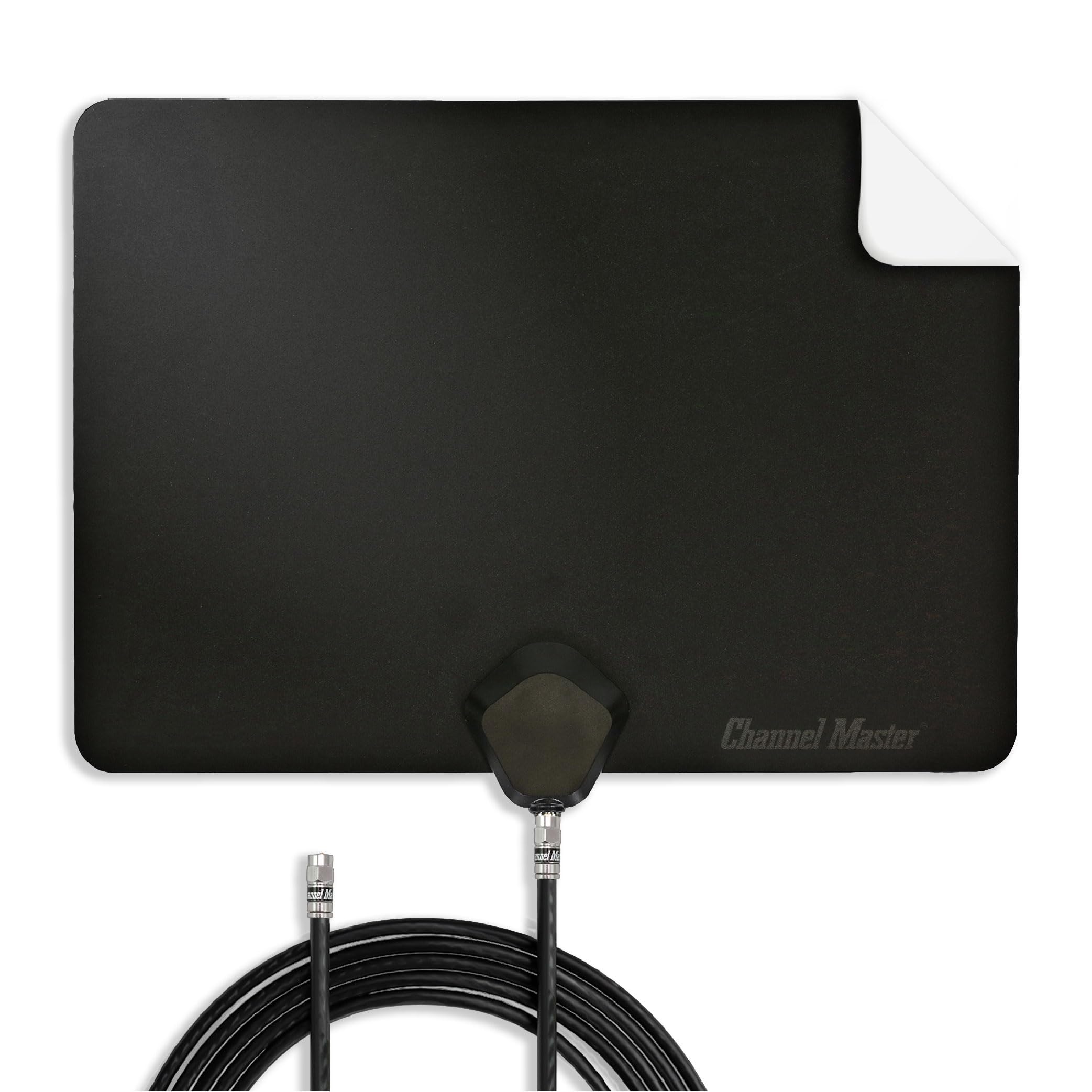
Channel Master FLATenna sidesteps the industry habit of inflating range numbers and instead offers a realistic 35-mile reach — enough for most urban and suburban locations where broadcast towers are within that distance. This flat, reversible design picks up UHF and VHF signals cleanly in strong-signal areas, and the included 12-foot cable gives flexibility to place it high on a wall or window. The ATSC 3.0 (NextGen TV) compatibility separates it from nearly every similarly priced indoor antenna, letting you access the newer broadcast standard without buying a separate converter.

Signal reception holds steady in open rooms with a direct line to the tower, though performance decreases predictably behind thick walls or in basement-level spaces — that is typical for any non-amplified flat antenna. Setup takes a couple of minutes: peel the backing, stick it to a wall or window, plug the cable into the TV, and scan for channels. No power source or amplifier is needed, which also means no risk of overloading in strong signal zones.

This antenna suits urban and suburban cord-cutters who live within 35 miles of broadcast towers and want a low-hassle, future-proof solution without paying for exaggerated range or extra electronics. The thin flat material can feel flimsy during handling — it flexes easily and may not survive repeated repositioning in a rough household. That tradeoff is manageable for a fixed placement; just handle with care when mounting.

Tip: Mount the antenna on a window or high on an interior wall for best reception; avoid placing it behind large metal objects or in basements.

Bottom line: For urban and suburban cord-cutters who prioritize honest range ratings and ATSC 3.0 readiness over gimmicks, the FLATenna delivers exactly what it promises — just handle it gently during installation.
2

FGOTV Indoor Antenna

FGOTV Indoor Antenna

Budget urban/suburban

Our Score 8.4/10
Check Price

Worth Noting

  • Advertised 250-mile range is unrealistic; actual usable range is closer to 30-50 miles.
  • May struggle to pick up VHF channels in some locations.
Design
Cylindrical
Cable Length
16ft
Amplifier Type
Built-in
Realistic Range
30-50 miles

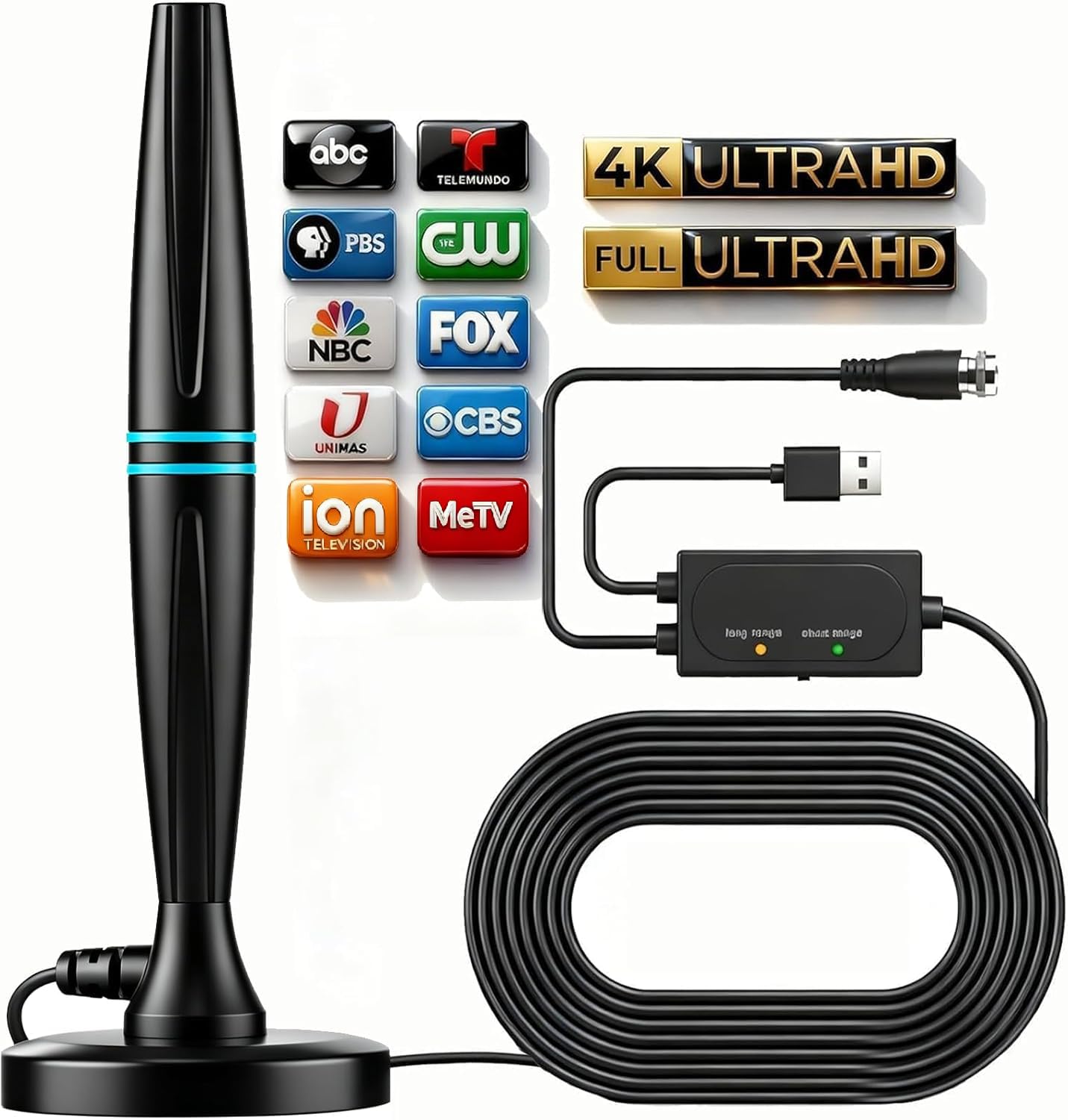
Setting up the FGOTV Indoor Antenna takes minutes and delivers crisp, clear channels for urban viewers. The 16-foot cable and built-in amplifier make it easy to place near a window for best reception. While thousands of buyers confirm its performance for suburban and city use, the advertised 250-mile range is unrealistic; actual usable range is closer to 30-50 miles. This antenna also lacks ATSC 3.0 support, a feature the top pick offers for future-proofing. For buyers who prioritize a realistic range and next-gen compatibility, the Channel Master FLATenna is a more honest choice.

This antenna suits budget-conscious cord-cutters living within 30-50 miles of broadcast towers, especially in urban or suburban settings. It works well for major networks but may struggle with VHF channels in some cases. If you are close to towers and don't need the latest broadcast standard, the FGOTV offers strong value. However, those in rural areas or expecting to pull channels from far away should consider a different option.

At its budget-friendly price, the FGOTV delivers reliable reception for everyday channels without added complexity. The trade-off is accepting a limited range and occasional channel gaps, but for its intended use case, the value is clear.

Tip: Mount the antenna near a window and experiment with height to improve VHF reception.

Bottom line: For urban cord-cutters on a tight budget who can work within a 30-50 mile range, this antenna provides reliable reception without unnecessary cost.

3

Philips Rabbit Ears

Philips Rabbit Ears

30-mile range viewers

Our Score 8.4/10
Check Price

Worth Noting

  • Signal strength drops off beyond 30 miles from broadcast towers; best for nearby urban or suburban use.
Design
Rabbit ears with loop
Cable Length
5ft
Amplifier Type
None
Realistic Range
30 miles

The Philips Rabbit Ears sticks to the traditional dipole-and-loop design that has been a staple for over-the-air TV reception for decades. Its extendable rods and circular loop work together to capture both VHF and UHF channels, an area where many modern flat antennas fall short. This straightforward approach delivers consistent signal pickup at a price that undercuts most competitors.

This antenna is best suited for viewers living within 30 miles of broadcast towers. The included 5-foot coaxial cable may require an extension for optimal placement, but within those boundaries it provides dependable reception. It is not intended for rural or fringe areas where signals are weak, nor for setups that demand long cable runs out of the box.

Setup involves adjusting the rods and loop until the picture locks in. Once positioned correctly, the signal is stable and clear. There is no amplifier to tinker with or power adapter to plug in, which simplifies the process for those who prefer a no-fuss installation. For the price, this antenna delivers channel reception that matches or exceeds many flat antennas costing two to three times as much.

Bottom line: For cord-cutters within 30 miles of towers who want effective VHF and UHF reception without spending extra, this classic antenna design delivers.

4

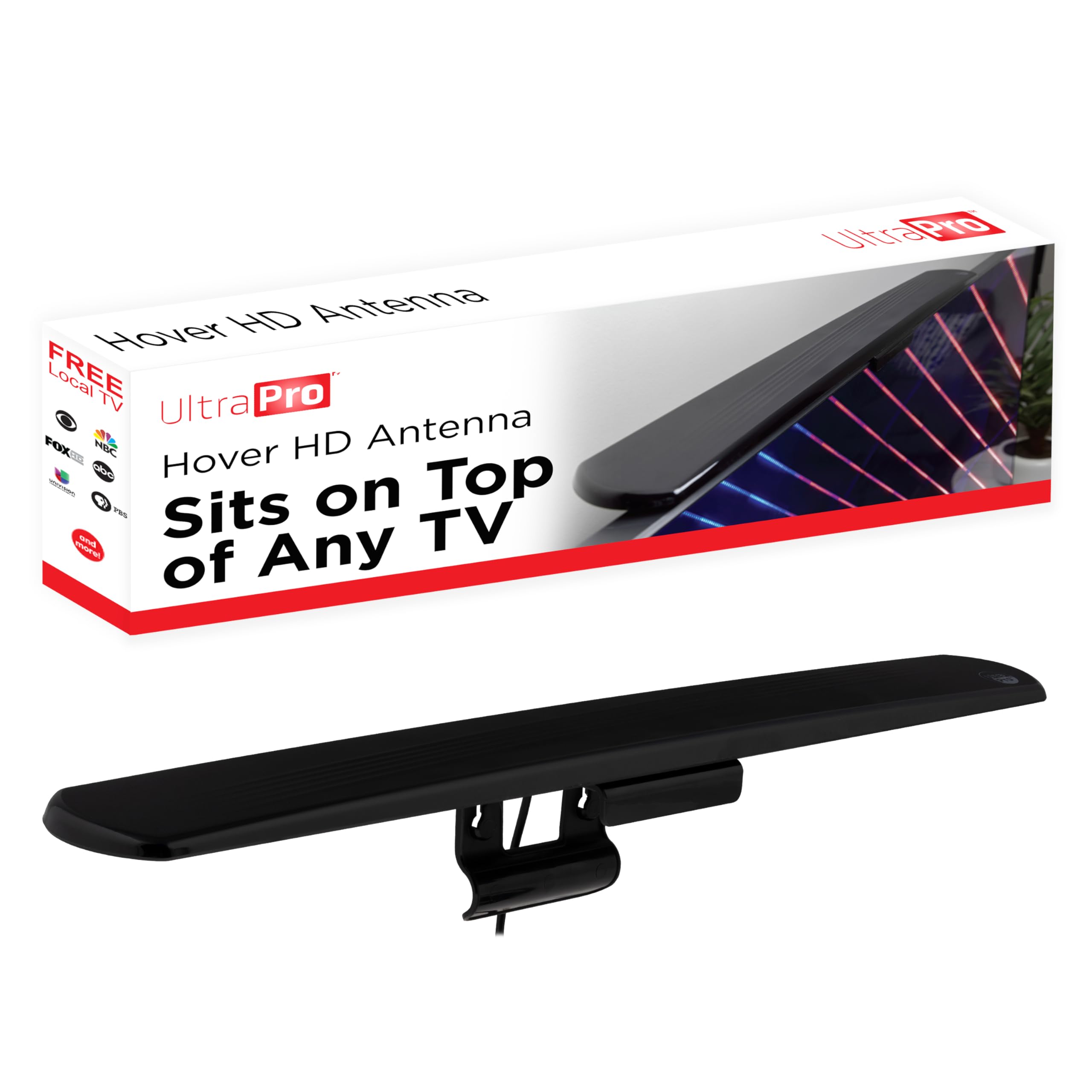
UltraPro Hover Antenna

UltraPro Hover Antenna

Aesthetics-minded users

Our Score 8.2/10
Check Price

Worth Noting

  • Signal reception can be inconsistent in some locations, particularly further from broadcast towers
Design
Hover mount on TV
Cable Length
Amplifier Type
None
Realistic Range
40 miles

The UltraPro Hover Antenna stands out with its unique design that sits flush on top of most TVs, keeping the cord out of sight. This approach prioritizes aesthetics over raw range, making it a clean alternative to standard flat antennas or rabbit ears. While traditional rabbit ears offer better VHF/UHF reception, the Hover's form factor appeals to those who dislike visible cables.

This antenna is best for urban users who live within 40 miles of broadcast towers and want a tidy setup. Signal reception can vary depending on building materials and exact location, so it isn't recommended for rural areas or basements.

Setup is tool-free: the pre-attached connector plugs directly into the TV's coax port, and the antenna's weight stays put without adhesive or stands. The included cable is long enough for most TV placements, and the entire process takes under a minute.

Tip: Start with the antenna centered on top of your TV, then experiment with orientation before finalizing placement if reception is marginal.

Bottom line: For urban cord-cutters who value a clean setup and have strong local signals, the UltraPro Hover Antenna delivers a wire-free look without sacrificing easy setup.

5

GE Portable Antenna

GE Portable Antenna

Travel & RV use

Our Score 8.4/10
Check Price

Worth Noting

  • Real-world range is about 20 miles, limiting use to very close towers
  • Advertised range is highly inflated; may mislead buyers expecting long-distance reception
Design
Magnetic base, compact
Cable Length
Amplifier Type
None
Realistic Range
20 miles

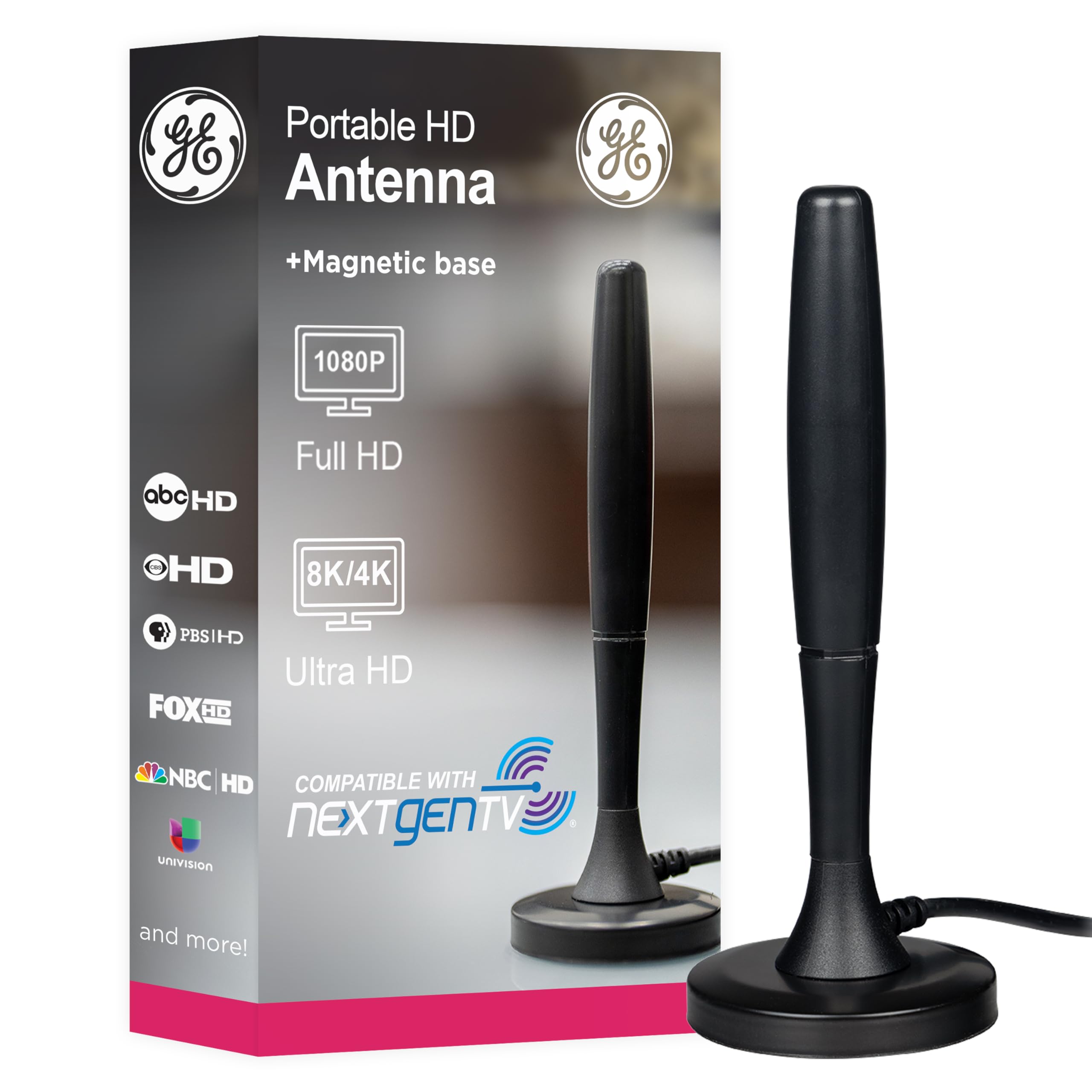
The GE Portable Antenna earns its popularity with a compact, magnetic-base design that sets up in seconds and pulls in clear HD channels when you are within a few miles of broadcast towers. It is the most affordable option in this roundup, and the sheer volume of positive feedback reflects how well it works for close-range use in RVs, camping, or as a quick backup in an urban apartment.

The advertised 250-mile range is not realistic — expect a usable range closer to 20 miles under typical indoor conditions. Signal quality can degrade or pixelate at the edge of that zone, especially if walls or obstructions are present. For anyone living more than a short drive from local towers, this antenna will likely disappoint as a primary home solution.

This antenna suits travelers and temporary setups where close tower proximity is guaranteed. It is not a fit for suburban or rural homes relying on distant stations — the limited range and lack of VHF support (the flat design favors UHF) make it a specific-use tool rather than a universal cord-cutting answer.

Tip: Place the antenna high on a wall near a window facing the towers for the best chance at consistent reception.

Bottom line: Pick this if you need a dirt-cheap antenna for an RV, camping, or a short-range backup — and you understand the 20-mile limit. For permanent home use with towers farther away, spend a few dollars more on a realistic-range model.

6

Vansky Amplified Antenna

Vansky Amplified Antenna

Experimenters with placement

Our Score 8.0/10
Check Price

Worth Noting

  • Reception and channel count can be unpredictable, especially when the amplifier is turned on in areas with strong signals.
  • Adhesive mounting tabs may not hold securely over time, requiring alternative mounting solutions.
Design
Flat
Cable Length
16.5ft
Amplifier Type
Detachable
Realistic Range
30-50 miles

The Vansky Amplified Antenna offers a detachable amplifier that can help pull in stations from further away, though the improvement depends heavily on your specific location and broadcast tower positions. Picture quality is solid when the signal locks in, but reception and channel availability may shift with the amplifier toggled on or off, particularly in areas with strong nearby signals.

The adhesive mounting tabs are best considered temporary; a more secure mount is recommended for longer-term placement. This antenna is suited for viewers who are comfortable experimenting with window placement and amplifier settings to find what works.

Bottom line: This antenna fits buyers within 30 miles of broadcast towers willing to experiment with placement and amplifier settings—it is not a set-and-forget solution.

7

intelbras Antenna

intelbras Antenna

Also Great

Our Score 8.0/10
Check Price

Worth Noting

  • Channel count can fluctuate depending on placement and signal strength.
  • Not suitable for areas with weak over-the-air signals.

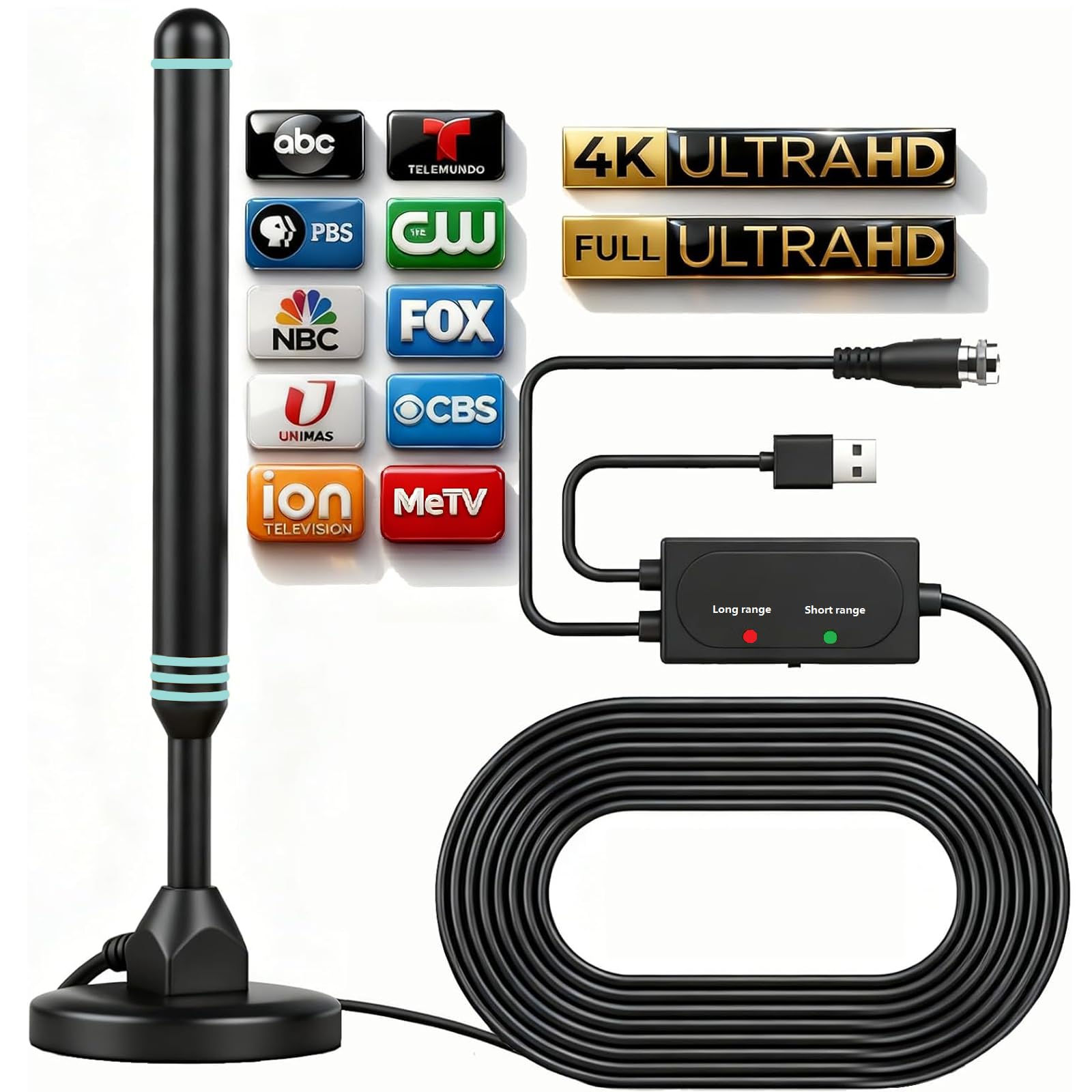
The intelbras Antenna offers a strong magnet that secures to metal surfaces, making placement simple on window frames or appliances. This design suits users with nearby broadcast towers who want a low-cost, no-fuss setup.

Reception varies widely with placement and signal environment, and channel count can fluctuate day to day. The antenna is not consistent in weak signal zones, so it works best where towers are close. For those with strong local signals, it delivers decent value, while the slimmer hover-style option prioritizes wire management over magnetic convenience.

Tip: Experiment with placement on different metal surfaces and near windows facing towers to improve reception.

Bottom line: This antenna works well for users with strong local signals who need an inexpensive magnetic mount; skip it if you require consistent channel count or live far from broadcast towers.

8

ApexWaveTV Antenna

ApexWaveTV Antenna

Near tower budget

Our Score 8.0/10
Check Price

Worth Noting

  • In areas beyond a few miles from towers, channel count can fall short.
  • Pixelation and signal dropouts can occur even in moderately close locations.
Design
Compact with magnetic base
Cable Length
16.5ft
Amplifier Type
Realistic Range

This antenna's compact size and magnetic base let it stick almost invisibly to metal surfaces, and its entry-level price is appealing. However, reception is situational: users very close to towers can expect a handful of clear channels, while anyone farther may see pixelation and a sparse lineup. The advertised 170-mile range is optimistic; real-world performance caps well under 30 miles. For the budget buyer who lives directly under a strong signal, it's a low-risk option. For suburban or moderate-signal households, the inconsistency makes it a miss.

Bottom line: Best suited for renters or secondary rooms in homes directly under strong broadcast signals. For anyone else, the risk of inconsistent reception is too high.

How to Choose

Realistic Range

Ignore any claim above 50 miles. The physics of indoor reception limits even the best antennas to about 30-50 miles under ideal conditions. A claim of 250 or 5000 miles is marketing, not engineering.

In practice, your usable range depends on obstacles like walls, windows, and building materials. A window-facing placement can add 10-15 miles over a location behind a TV or in a basement.

VHF/UHF Support

Most local channels broadcast on UHF, but some, especially major network affiliates, still use VHF. Flat antennas often struggle with VHF, while rabbit ears or hybrid designs handle both bands.

If your target towers include VHF signals, a dipole (rabbit ears) or a loop element is essential. Check your local channel list at dtv.gov/maps before choosing a flat-only design.

Amplifier Type

Amplifiers boost signal in weak areas but can overload a strong signal, causing pixelation. A detachable amplifier lets you start without it and add it only if needed.

In urban settings within 5-10 miles of towers, an amplifier often hurts more than it helps. For fringe areas 30+ miles out, a quality built-in amplifier may pull in stations a passive antenna misses.

Design

Form factor affects placement flexibility. Flat antennas are easy to hide behind a picture frame but have inherently lower gain. Rabbit ears protrude but offer better VHF reception and adjustable orientation.

Hover or magnetic-base models are convenient for metal surfaces or TV tops but may have smaller active elements, reducing range. Choose a design that fits your setup and signal environment.

Cable Length

A short cable (5ft) restricts placement options, forcing the antenna to stay near the TV. That spot is often behind the TV, where signal is weakest. A 12-16ft cable allows window placement.

If your TV is inside a cabinet or far from a window, budget for a longer cable or a separate coaxial extension. The extra few feet can be the difference between 5 channels and 15.

Frequently Asked Questions