Cameras & Photography

13 Best Monocular of 2026: Which Actually Deliver Clear, Stable Views

Confused by inflated specs and shaky high-power optics? This guide cuts through the noise to find monoculars that balance magnification, portability, and real-world usability.

Shopping for a monocular often means wading through specs like '80x100' that sound impressive but are physically impossible in a handheld device. The market is full of exaggerated claims, and many buyers end up with a shaky, blurry view that ruins their outdoor experience.

The real trade-off isn't magnification alone — it's how that magnification interacts with your stability, the lens quality, and the environment you'll use it in. A 12x monocular without a tripod can be more frustrating than a steady 8x with good glass.

This guide focuses on optics that deliver on their promises, with clear priorities: glass coating, build durability, and a focus mechanism you can trust in the field. No hype, just the specs that matter.

1

Bushnell Legend 10x42

Top Pick
Bushnell Legend 10x42

Wildlife, Hunting

Our Score 9.2/10
Check Price

Worth Noting

  • Price may be high compared to competitors with similar specifications.
  • At 13.2 oz, heavier than compact monoculars; ultralight backpackers may prefer a lighter option.
focus
Manual
weight
13.2 oz
lens_prism
ED Prime, fully multi-coated
waterproof
Yes

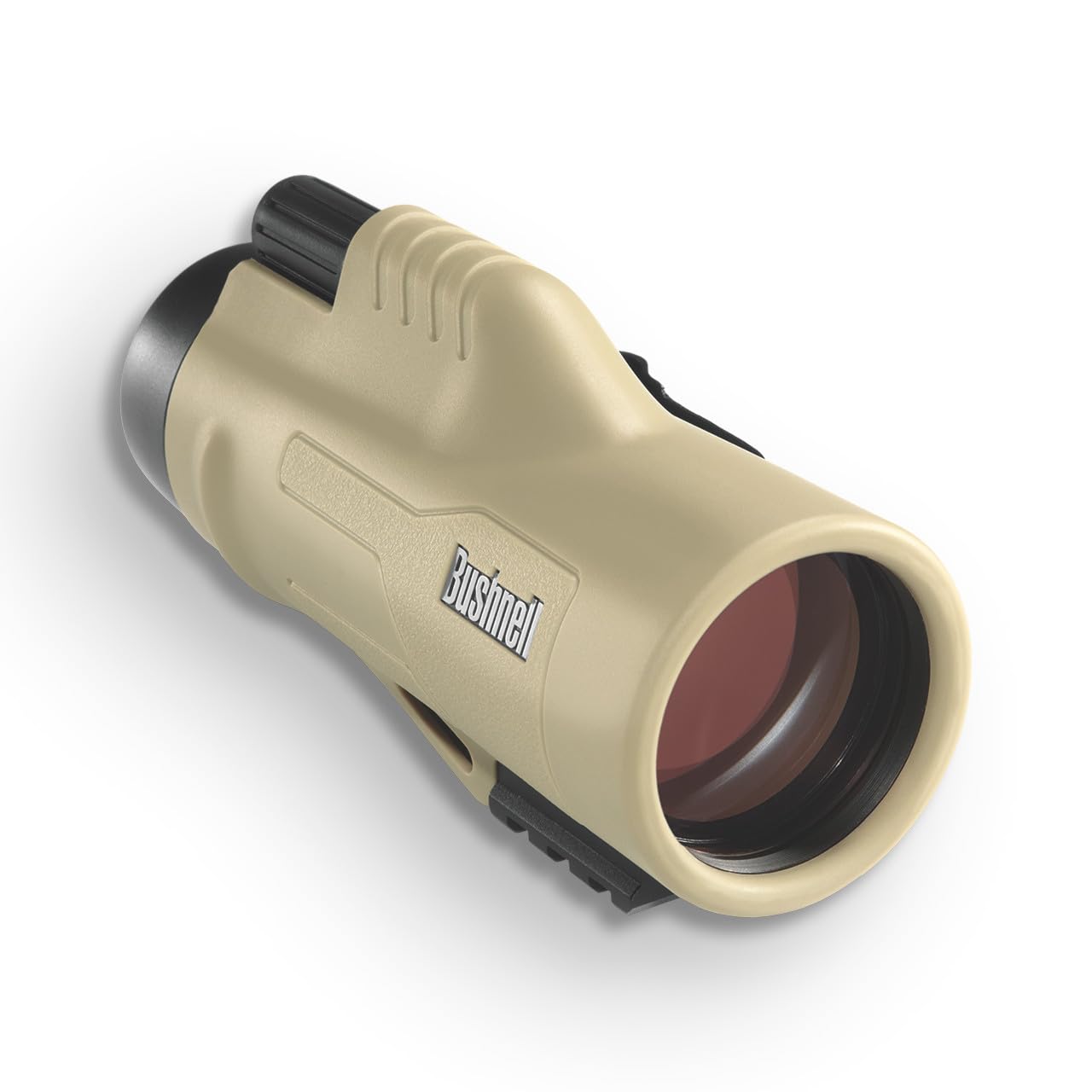
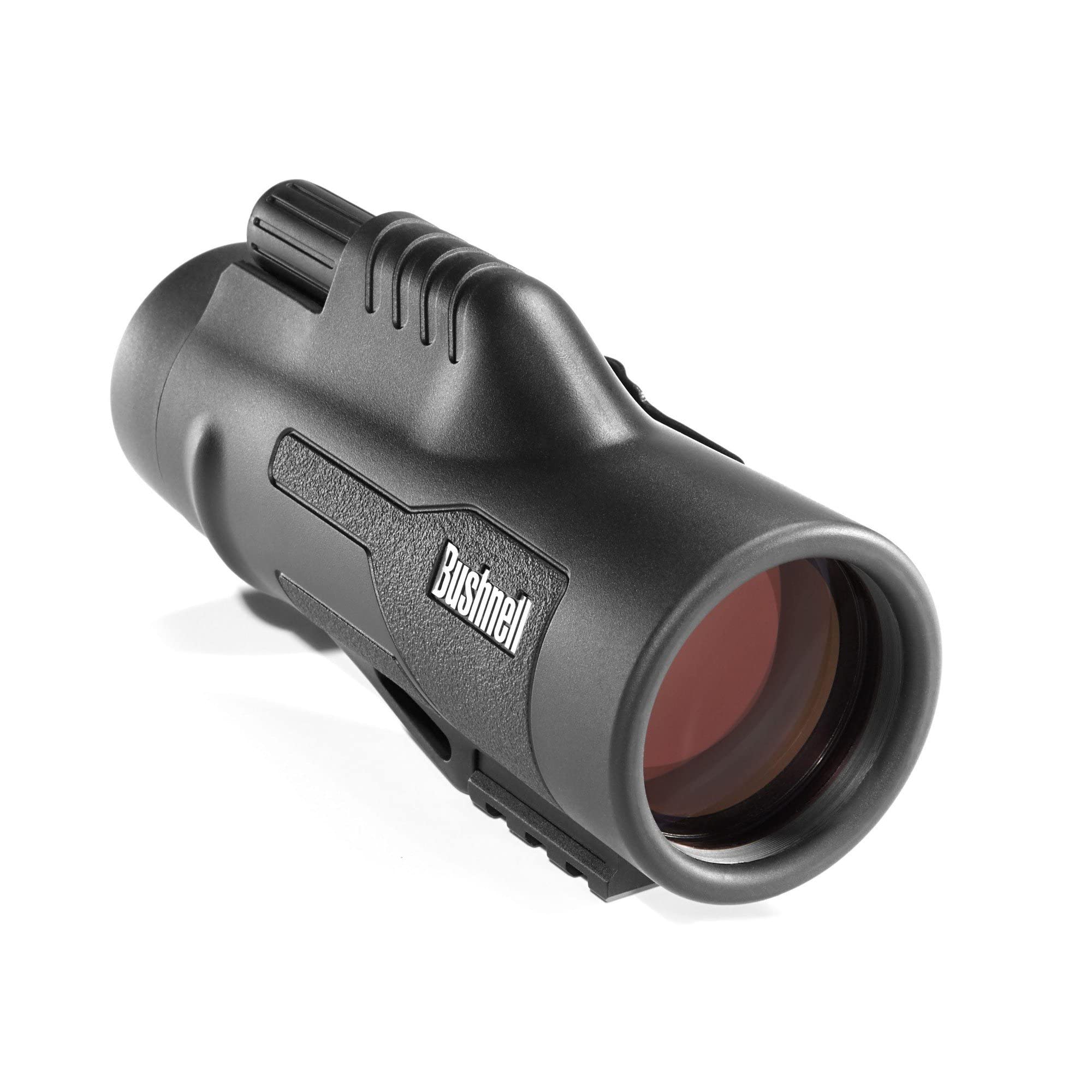
The Bushnell Legend 10x42 uses extra-low dispersion (ED) glass to control chromatic aberration, delivering a wide 340-foot field of view at 1,000 yards. It maintains brightness and contrast in low-light conditions, such as dawn and dusk, where many monoculars lose detail. This optical foundation sets it apart from budget models that cut corners on glass coatings.

The focus wheel is smooth and responsive, allowing one-handed adjustments while tracking moving wildlife. The rubber-armored body provides a secure grip even in damp conditions. At 13.2 ounces, it feels substantial but not heavy for a 42mm objective, fitting well on a chest strap or in a daypack. Ultralight backpackers will find it too large for pocket carry, but for most outdoor activities the weight is manageable.

Hunters and wildlife observers benefit from the edge-to-edge sharpness that resolves fine details like bird feather patterns. Birdwatchers will appreciate the wide field for scanning treetops and following flight paths. Hikers who carry a daypack will find the monocular easy to stow and deploy. Those who need a pocket-sized tool or are counting every gram should consider compact 8x or 10x25 models instead.

For shooters who want a reticle, Bushnell offers a tactical Legend variant with the same ED optics and a Mil-Hash reticle. The standard version reviewed here is optimized for pure observation, making it the better pick for birding, hunting, and general wildlife viewing. The tactical version trades some simplicity for ranging capability.

Tip: For extended hikes, attach a neck strap or chest harness to distribute the weight comfortably and keep hands free.

Bottom line: This Bushnell delivers the optical quality that justifies its mid-range price for dedicated outdoor enthusiasts who prioritize image clarity and low-light performance over absolute minimal weight.

2

Gosky 12x55 HD

Gosky 12x55 HD

Budget birding

Our Score 8.8/10
Check Price

Worth Noting

  • At 1.5 lb and 12x magnification, handheld shake is noticeable; a tripod is needed for steady viewing
  • Smartphone adapter alignment may not work with all phone cases, and setup can be finicky
focus
Manual
weight
1.54 lb
lens_prism
BAK4, FMC
waterproof
IPX7

The Gosky 12x55 HD delivers a full package at a budget price: a large 55mm objective, BAK4 prism, and included smartphone adapter and tripod. That combination is rare under $100, and the optics produce sharp, bright images even in low light — a clear step above entry-level monoculars. The 12x magnification pulls in distant subjects, but the 1.5 lb body and high magnification make handheld use shaky; steady views require the included tripod.

This kit suits travelers and budget birders who want high magnification and phone-capture capability without spending for premium glass. The adapter works with most phones, though alignment can be finicky and may not fit thick cases. Those who prioritize ultralight carry or quick one-hand use at close distances should look at compact models instead — this monocular rewards patience and a tripod.

Tip: Attach the tripod for any prolonged viewing; handheld use is best for quick scans only.

Bottom line: A cost-effective choice for anyone wanting high magnification and phone compatibility — just be prepared to use the included tripod.

3

Nocs Zoom Tube 8x32

Nocs Zoom Tube 8x32

Day hiking

Our Score 9.4/10
Check Price

Worth Noting

  • When watching distant wildlife, the 8x magnification may leave you wanting more reach - fine for moderate distances.
  • In heavy rain or wet environments, the splash-resistant body can fog up; not for submersion or prolonged downpours.
focus
Manual
weight
8 oz
lens_prism
BAK4
waterproof
IPX4

The Nocs Zoom Tube 8x32 delivers crisp, color-accurate views in a package that slips easily into a jacket pocket. The focus ring moves smoothly with one hand, and the wide field of view makes tracking moving subjects straightforward. At 8 oz, it disappears into a daypack or cargo pocket without a second thought.

Where the Bushnell Legend 10x42 offers superior low-light performance and full waterproofing, the Nocs is built for weight-conscious users who value portability over weather resilience. The 8x magnification keeps the optics compact but means distant birds or animals appear smaller than with a 10x or 12x monocular - a deliberate trade-off for the size savings.

This monocular suits day hikers, urban nature watchers, and concert-goers who want a stylish, lightweight tool for fair-weather observation. The IPX4 splash resistance handles light drizzle but not heavy rain or submersion; in wet conditions the body can fog up. For all-weather use, consider the fully waterproof Field Tube sibling.

Tip: Keep it in a dry pocket or case when rain is likely - the IPX4 rating handles brief sprinkles only.

Bottom line: If you prioritize a lightweight, stylish everyday carry and rarely venture out in downpours, the Nocs Zoom Tube delivers impressive optics for the price.

4

Vortex Solo R/T 8x36

Vortex Solo R/T 8x36

Tactical, hunting

Our Score 9.2/10
Check Price

Worth Noting

  • Focus ring can be stiff, making fine adjustments slower than smoother alternatives.
  • Slightly heavier than ultralight monoculars, noticeable during long hikes or pocket carry.
focus
Manual
weight
12.8 oz
lens_prism
Multi-coated
waterproof
Yes

The Solo R/T stands apart from general-purpose monoculars by integrating a usable MRAD reticle for distance estimation without jumping to premium price brackets. Optics deliver crisp, bright views even in low light, and the armor-clad body feels ready for field abuse. For the price, it offers capabilities that overlap with higher-priced options like the Japanese HD models, but at a fraction of the cost.

Optical clarity is strong across the field, and the reticle holds its value for ranging tasks. The focus mechanism, however, can be stiff — fine-tuning for sharp focus takes more effort than smoother competitors, which may slow you down in fast-moving field scenarios. Weight sits at 12.8 oz, heavier than ultralight alternatives but still manageable for most daypacks.

This monocular suits tactical shooters, hunters who rely on ranging, and outdoor enthusiasts who prioritize durability over minimal weight. The stiff focus ring is a tradeoff you accept for the reticle and build. Pure bird watchers and anyone wanting a sub-10 oz carry will find better options elsewhere — no reticle, but lighter and with smoother focus.

Tip: If the focus ring feels stiff out of the box, cycling it back and forth often improves smoothness; Vortex's unconditional warranty covers any persistent issues.

Bottom line: For shooters and hunters who need a ranging reticle without the premium price, the Solo R/T delivers clear optics and ruggedness. Birders and ultralight packers should consider lighter, non-reticle alternatives.

5

Adasion 12x56

Adasion 12x56

Birding, hiking

Our Score 8.8/10
Check Price

Worth Noting

  • Phone adapter alignment may require several adjustments to get centered
  • At 12x, the field of view is narrow (325 ft at 1000 yards), making it harder to locate and track fast-moving objects
focus
Manual
weight
15.8 oz
lens_prism
BAK4
waterproof
IPX7

The Adasion 12x56 bundles IPX7 waterproofing, a 56mm objective, and a full accessory kit including a tripod and smartphone adapter — a more weather-ready package than budget high-power alternatives that often skip sealing. The 12x magnification pulls in distant detail with good low-light brightness, and the build feels sturdy.

This monocular suits observers who plan to use the phone adapter for digiscoping and can manage the 15.8 oz weight. The narrow field of view at 12x makes tracking fast-moving birds or wildlife difficult; it favors stationary targets. The phone adapter also requires patient alignment to center the phone camera over the monocular lens — expect a short learning curve.

Tip: Practice aligning the phone adapter at home before field use — once centered, the image quality is very good.

Bottom line: A well-rounded 12x56 kit for stationary digiscoping and low-light observation, provided you accept the narrow view and adapter setup time.

6

Vortex Recce Pro HD 8x32

Vortex Recce Pro HD 8x32

Premium outdoor

Our Score 9.2/10
Check Price

Worth Noting

  • Focus ring stiffness can make adjustments deliberate, especially in cold conditions.
  • Premium price may be a barrier for buyers comparing against standard 32mm monoculars.
focus
Manual
weight
8.09 oz
lens_prism
HD, MRAD reticle
waterproof
Yes

The Vortex Recce Pro HD 8x32 delivers the clearest image in its size class, thanks to Japanese-made HD glass that resolves fine detail with minimal chromatic aberration. The 8x magnification pairs with a wide 400-foot field of view, making it effective for scanning open terrain while staying compact enough for pocket carry.

This monocular suits hunters and tactical users who need the ranging reticle for quick distance estimation. The build is solid and waterproof, backed by Vortex's lifetime warranty. However, the focus ring requires deliberate effort to turn — in cold conditions, the stiffness can slow adjustments. That tradeoff keeps the focus mechanism durable but less suited for fast-moving scenarios or users with limited hand strength.

The MRAD reticle includes silhouettes for rapid ranging, a feature usually found on dedicated tactical optics. At just over 8 ounces, you get professional-range glass and reticle in a package that won't weigh down a day pack. The tradeoff for this precision is a premium price — about twice what comparable 32mm monoculars cost.

Tip: In cold weather, wear gloves or use a rubber focus ring wrap to improve grip on the stiff wheel.

Bottom line: For buyers who prize optical clarity and a ranging reticle in a compact monocular, the Recce Pro delivers — as long as the stiff focus ring and premium price don't rule it out.

7

FEEMIC 8x42

FEEMIC 8x42

Budget beginner

Our Score 8.8/10
Check Price

Worth Noting

  • Focus ring requires occasional fine-tuning to stay sharp
  • Plastic body feels less robust than rubber-armored alternatives
focus
Manual
weight
10 oz
lens_prism
waterproof
Nitrogen-filled

Offers decent image clarity and waterproofing at an entry-level price. The plastic body and average focus mechanism reflect the low cost — a tradeoff for the budget-friendly tag. Not a tool for demanding field use, but fine for casual observation or as a backup. The 42mm objective provides decent light gathering for its size.

Bottom line: A fine choice for kids, beginners, or as an emergency monocular where budget is the top priority and performance expectations are modest.

8

Pankoo 16x52

Pankoo 16x52

Gift/novelty

Our Score 8.6/10
Check Price

Worth Noting

  • Focus mechanism feels cheap and may degrade over time
  • 16x magnification is very hard to hold steady by hand
focus
Manual
weight
10 oz
lens_prism
waterproof
Nitrogen-filled

The Pankoo 16x52 delivers surprisingly clear images for its rock-bottom price, making it an affordable way to explore high magnification. However, the focus mechanism feels plasticky and may loosen over time, and holding 16x steady by hand is nearly impossible without a rest or tripod. This is best suited as a novelty for kids or beginners, an emergency backup, or a cheap replacement for a lost monocular.

Tip: Use a tripod or brace the monocular against a solid surface to reduce hand shake at 16x.

Bottom line: A good fit for someone who wants a high-power monocular on a tight budget for occasional fun or as a backup, but not for regular outdoor observation where steady focus and image stability matter.

9

Nocs Field Tube 10x32

Nocs Field Tube 10x32

Hiking

Our Score 9.4/10
Check Price

Worth Noting

  • Edge sharpness may be slightly less refined than the center
  • Lens caps may not stay attached during carry and are easy to lose.
focus
Manual
weight
8.09 oz
lens_prism
BAK4
waterproof
IPX7

The Nocs Field Tube delivers bright, sharp optics and a smooth oversized focus wheel in a truly waterproof (IPX7) body that weighs just 8 oz – a rare combination for hikers who need consistent performance in wet conditions. Clarity at the image edges may be slightly less sharp than the center, a minor compromise for most wildlife viewing. The primary drawback is the poorly designed lens caps that do not stay attached and are easy to lose, a frustration for those who prefer a secure cap solution. That limitation, along with edge sharpness that doesn't match premium ED glass, keeps it from being the top pick despite its excellent IPX7 sealing and compact form.

Tip: Attach a tether or replace the lens caps with aftermarket versions to avoid losing them on the trail.

Bottom line: Best suited for hikers who prioritize IPX7 waterproofing and compact size over edge sharpness and a reliable lens cap system.

10

Bushnell Legend Tactical 10x42

Bushnell Legend Tactical 10x42

Tactical

Our Score 9.2/10
Check Price

Worth Noting

  • Some units have a canted reticle, affecting vertical alignment
  • Mil-Hash reticle can feel busy for casual observation
focus
Manual
weight
13 oz
lens_prism
Ultra HD, Mil-Hash
waterproof
Yes

The Bushnell Legend Tactical 10x42 delivers the same bright, sharp glass as the standard Legend, now with a Mil-Hash reticle for manual ranging and an FDE finish. For shooters who need a compact monocular for target acquisition and range estimation, this is a cost-effective option. However, the reticle can feel busy for general wildlife viewing, and occasional quality control issues mean some units arrive with a canted reticle. Its lower review volume and niche feature set make it a specialized choice rather than a versatile outdoor companion.

Bottom line: Best suited for shooters who need a compact ranging monocular in FDE, provided they accept occasional QC variance.

11

Vortex Solo 10x25

Vortex Solo 10x25

Travel

Our Score 9.2/10
Check Price

Worth Noting

  • Fixed-focus design means objects under ~15 feet appear blurry
focus
Fixed
weight
5.6 oz
lens_prism
Multi-coated
waterproof
Yes

Sharp optics and a 5.6 oz body make the Solo 10x25 ideal for pocket carry during hikes or quick looks. The rubber armor and lifetime warranty add confidence. However, the fixed-focus design means objects closer than about 15 feet will appear blurry. This limits its usefulness for birding at short distances or adjusting focus between near and far targets. For travelers and casual observers who stay at medium distances, the Solo offers impressive clarity and portability, but those needing focus flexibility should look at adjustable models.

Bottom line: For casual outdoor use where close focus isn't needed, the Solo delivers impressive clarity in a carry-anywhere package.

12

OXK 12x56

OXK 12x56

Budget high power

Our Score 8.8/10
Check Price

Worth Noting

  • Phone adapter alignment requires patience; it can be tricky to line up.
  • 12x magnification requires a tripod for steady viewing; shaky when handheld.
focus
Manual
weight
1 lb
lens_prism
waterproof

The OXK 12x56 provides sharp, clear images for a budget monocular, and the included tripod and phone adapter make it a ready-to-use kit for beginners. The 56mm objective gathers enough light for twilight viewing. However, the phone adapter can be fussy to align, and the overall build feels less solid than the top budget kit in this category. The high 12x magnification demands a tripod for steady views, which is included, but limits handheld use. For casual outdoor observation on a tight budget, this is a functional starting point.

Bottom line: A practical entry-level option for budget-conscious beginners who want a high-power monocular kit and are willing to work with a basic phone adapter.

13

Vortex Recon R/T 15x50

Vortex Recon R/T 15x50

Long-range tripod

Our Score 9.2/10
Check Price

Worth Noting

  • Hand shake makes handheld use blurry; a tripod is essential.
  • Narrow 215-ft field of view limits tracking moving targets.
focus
Manual
weight
15.2 oz
lens_prism
waterproof
Yes

The Vortex Recon R/T delivers exceptional image clarity and ruggedness for a 15x monocular, with a built-in MRAD reticle for precise ranging. However, the 15x magnification is nearly impossible to handhold steady — a tripod is mandatory for usable views — and the 215-foot field of view is narrow, making it ill-suited for scanning or tracking moving wildlife. This is a niche tool for long-range shooters and tripod-bound spotters, not a general-purpose outdoor monocular.

Bottom line: Best suited for stationary long-range observation on a tripod — overkill for general hiking or handheld wildlife viewing.

How to Choose

Magnification and Objective Size

Magnification (8x, 10x, 12x, etc.) determines how close objects appear, but higher numbers amplify hand shake. Objective lens diameter (the second number, e.g., 32, 42, 55mm) affects how much light enters. A 10x42 monocular offers a sweet spot: enough reach for most wildlife and good low-light performance, while staying manageable handheld.

For dawn/dusk viewing, a 42mm or larger objective collects significantly more light than a 25mm. But a larger objective adds weight — a 55mm monocular may require a tripod for steady viewing. The trade-off is portability versus low-light capability.

Lens Coating and Prism Type

Fully multi-coated lenses reduce reflections and improve brightness. ED (Extra-low Dispersion) glass corrects chromatic aberration — the color fringing around edges — especially noticeable in high-contrast scenes. BAK-4 prisms produce a round exit pupil and brighter image compared to BK-7 prisms.

For birding and wildlife photography, ED glass is a tangible upgrade. In budget models, fully multi-coated and BAK-4 are the minimum for decent clarity. Without these coatings, images look dull and washed out.

Waterproof and Fogproof Rating

Waterproofing is critical for outdoor use in rain or near water. IPX7 rating means the monocular can be submerged up to 1 meter for 30 minutes. IPX4 only protects against splashes. Fogproof (nitrogen or argon filling) prevents internal lens fogging during temperature swings.

A fully weather-sealed monocular costs more but extends its life in humid or wet conditions. For casual use under a clear sky, splash resistance is sufficient. For hunting or boating, IPX7 is a must.

Weight and Portability

Weight directly affects how likely you are to carry the monocular. A 5.6 oz model fits in a shirt pocket, while a 1.5 lb monocular feels like a small binocular. For day hikes, 8-12 oz is comfortable. For extended backpacking, under 10 oz is ideal.

Heavier monoculars with large objectives (55mm+) require a strap or tripod for steady use. The trade-off is that lighter monoculars often have smaller objectives, reducing low-light performance. Choose based on your primary activity: weight for travel, light gathering for stationary observation.

Focus Mechanism

Focus type determines how quickly you can adjust to different distances. Manual focus knobs allow precise control but vary in smoothness — stiff wheels hinder quick adjustments in cold weather. Fixed-focus monoculars (like the Vortex Solo 10x25) simplify use but cannot focus on objects closer than about 15 feet.

For birding or tracking moving animals, a smooth, fast-focus mechanism is essential. For casual spotting or emergency use, fixed focus can be a convenience. Always test the focus feel before committing, especially if you wear gloves.

Frequently Asked Questions