Creator & Streaming

11 Best Microphone Boom Arms of 2026: The Ones That Won't Sag

Which microphone boom arms actually stay put after months of use – and which ones slowly droop when you need them.

A microphone boom arm looks straightforward: clamp, arm, spring, mic. But after a few months, many arms start drifting. The spring fatigues, the clamp loosens, and suddenly your perfect mic position is pointing at your keyboard. That frustration is the single biggest complaint across thousands of buyers.

Some manufacturers have started using gear-lock mechanisms instead of relying on spring tension alone. Others stick with traditional scissors but add dampened springs and better materials. The result is a market where you can either pay a premium for proven durability or gamble on a cheaper arm that may sag within weeks.

This guide cuts through the options by matching each arm to its ideal use case. Whether you have a heavy Shure SM7B or a lightweight USB mic, the right choice comes down to how you trade off capacity, adjustability, and build longevity.

1

RØDE PSA1+

Top Pick
RØDE PSA1+

Heavy mics

Our Score 9.4/10
Check Price

Worth Noting

  • On non-flat or thin desktops, the clamp may not grip evenly, causing subtle wobble during use.
  • No tension adjustment
Anti-Sag
Damped spring
Cable Mgmt
Integrated channels
Max Capacity
2.65 lbs
Arm Type & Reach
Parallelogram scissor, 21 in

The RØDE PSA1+ uses damped springs to deliver silent, friction-free movement — a noticeable upgrade from typical spring-loaded arms that squeak or drift. The parallelogram scissor mechanism glides smoothly across its full 21-inch reach, and integrated cable channels keep desk clutter low without external clips.

This arm holds heavy microphones like the Shure SM7B or Blue Yeti without sagging, and the clamp stays planted on standard flat desktops. On non-flat or very thin surfaces, the clamp may not grip evenly, which can introduce slight wobble during movement — a limitation worth checking against your desk setup.

The PSA1+ is built for streamers, podcasters, and voice-over professionals who use a microphone over 200g and want a long-term solution. For lightweight mics such as the RØDE NT-USB Mini, the spring tension is too strong: the arm may spring up when released, and there is no adjustment to dial it down.

Tip: If your microphone is under 200g, consider a different arm; adding counterweights is not an option here.

Bottom line: For anyone running a Shure SM7B, RØDE PodMic, or similarly weighty microphone, the PSA1+ is the arm to buy — it simply works without fuss or noise.
2

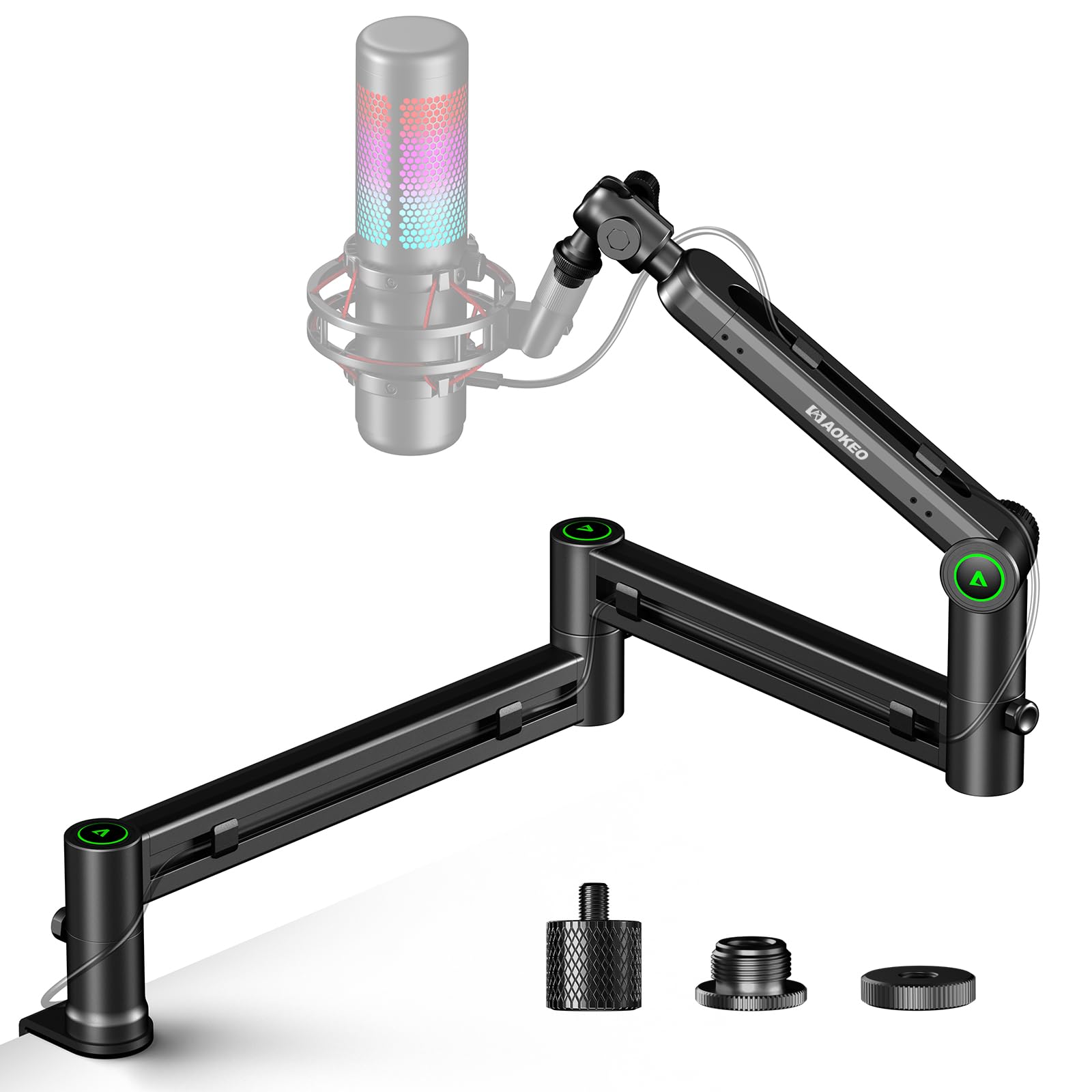
AA AUDIO ABA01

AA AUDIO ABA01

Heavy mics

Our Score 9.0/10
Check Price

Worth Noting

  • The gear lock may not hold correctly on a small number of units, requiring inspection and possible exchange.
  • External finish relies on some plastic parts, so it looks less polished than higher-priced arms.
Anti-Sag
Gear-lock
Cable Mgmt
Deep internal channels
Max Capacity
6.6 lbs
Arm Type & Reach
Low profile, gear-lock, 31 in

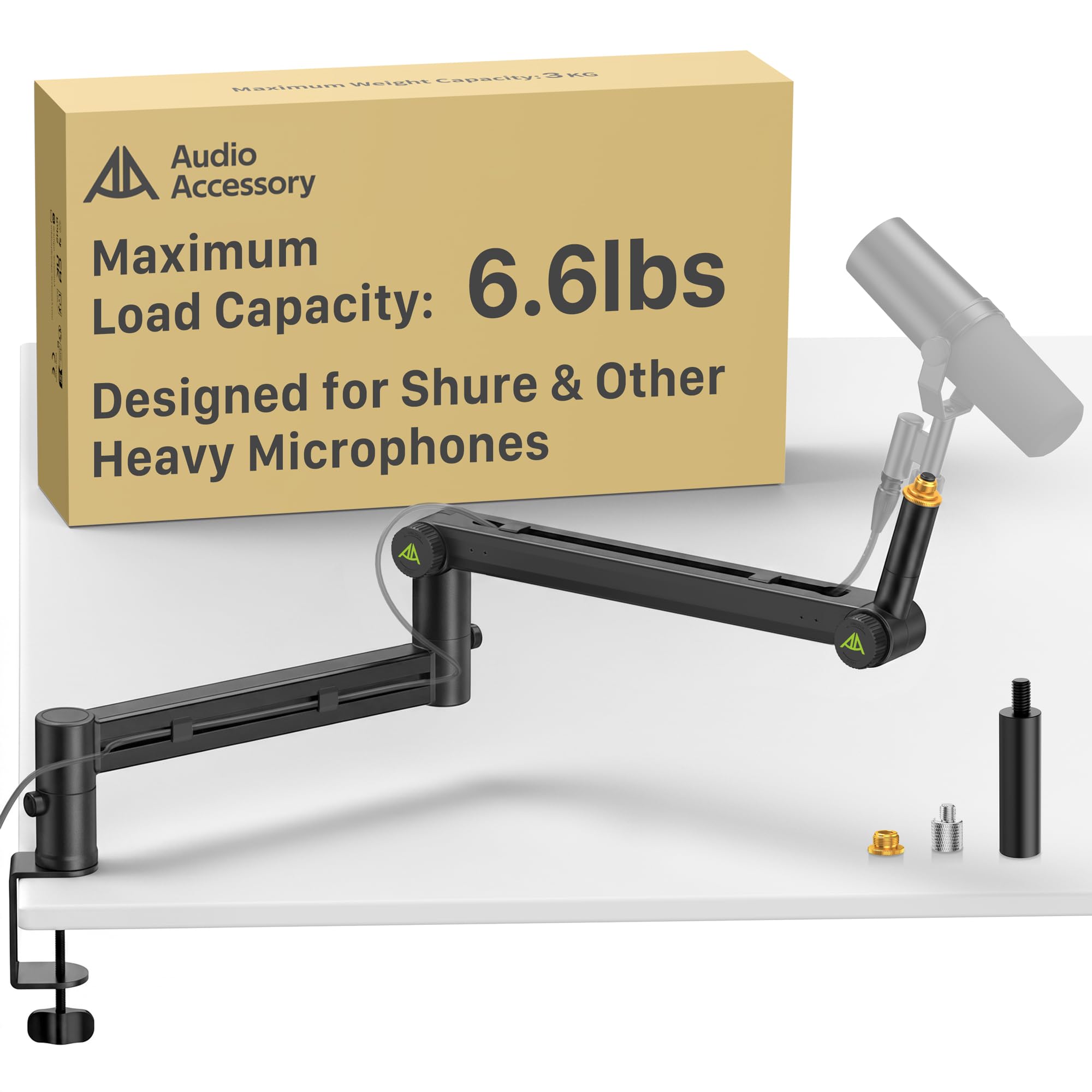
The gear-lock mechanism is the defining feature here—it replaces the springs found on most arms with a toothed joint that stays put as long as the knob is tightened. That means a Shure SM7B or Blue Yeti won't drift down over a recording session, something spring-based arms struggle with after months of use. The 6.6-pound capacity covers nearly every heavy broadcast mic on the market, and the low-profile design keeps the arm out of your line of sight.

This arm fits buyers who own a heavy microphone and want the anti-sag guarantee of a gear lock without paying $100+. It's also a good match if you're building a setup on a mid-range budget and value function over brand logo. Do keep in mind that a small number of units arrive with the gear lock not holding perfectly out of the box—check it right away. The cosmetic finish is also less refined than premium arms, with some visible plastic parts, but that doesn't affect performance.

Tip: Test the gear lock immediately upon arrival; if sag appears, exchange for a replacement unit.

Bottom line: For anyone running a heavy broadcast mic who prioritizes no-sag performance over brand prestige, this arm delivers the core function at a compelling price.

3

Elgato Wave Mic Arm LP

Elgato Wave Mic Arm LP

Clean look

Our Score 9.2/10
Check Price

Worth Noting

  • Arm may develop sag after several weeks despite the weight rating, especially with heavier mics
  • Magnetic cable covers can pop off or pinch thicker cables during movement
Anti-Sag
Spring
Cable Mgmt
Magnetic channels
Max Capacity
4.4 lbs
Arm Type & Reach
Low profile, 29 in

The Elgato Wave Mic Arm LP trades the scissor-jointed reach of arms like the RØDE PSA1+ for a low-slung profile that keeps the mic boom below the shoulder line and out of frame. Its all-metal build and magnetic cable channels give a polished, cable-free look that streamers prioritizing camera composition will appreciate.

This arm suits streamers with moderately weighted mics who want a clean visual aesthetic and don't move the arm constantly. The low-profile design sits neatly behind a monitor or webcam, but the arm may sag over time with heavier setups, and the magnetic cable covers can pop off when using thicker cables. Buyers should pair it with a lightweight mic and accept that some periodic adjustment may be needed.

Tip: Route thin, flexible cables through the magnetic channels and check the arm tension monthly to catch sag early.

Bottom line: For streamers who value a clean, low-profile look over scissor-arm range and are willing to use a lightweight mic, the Elgato delivers on design but requires monitoring for sag.

4

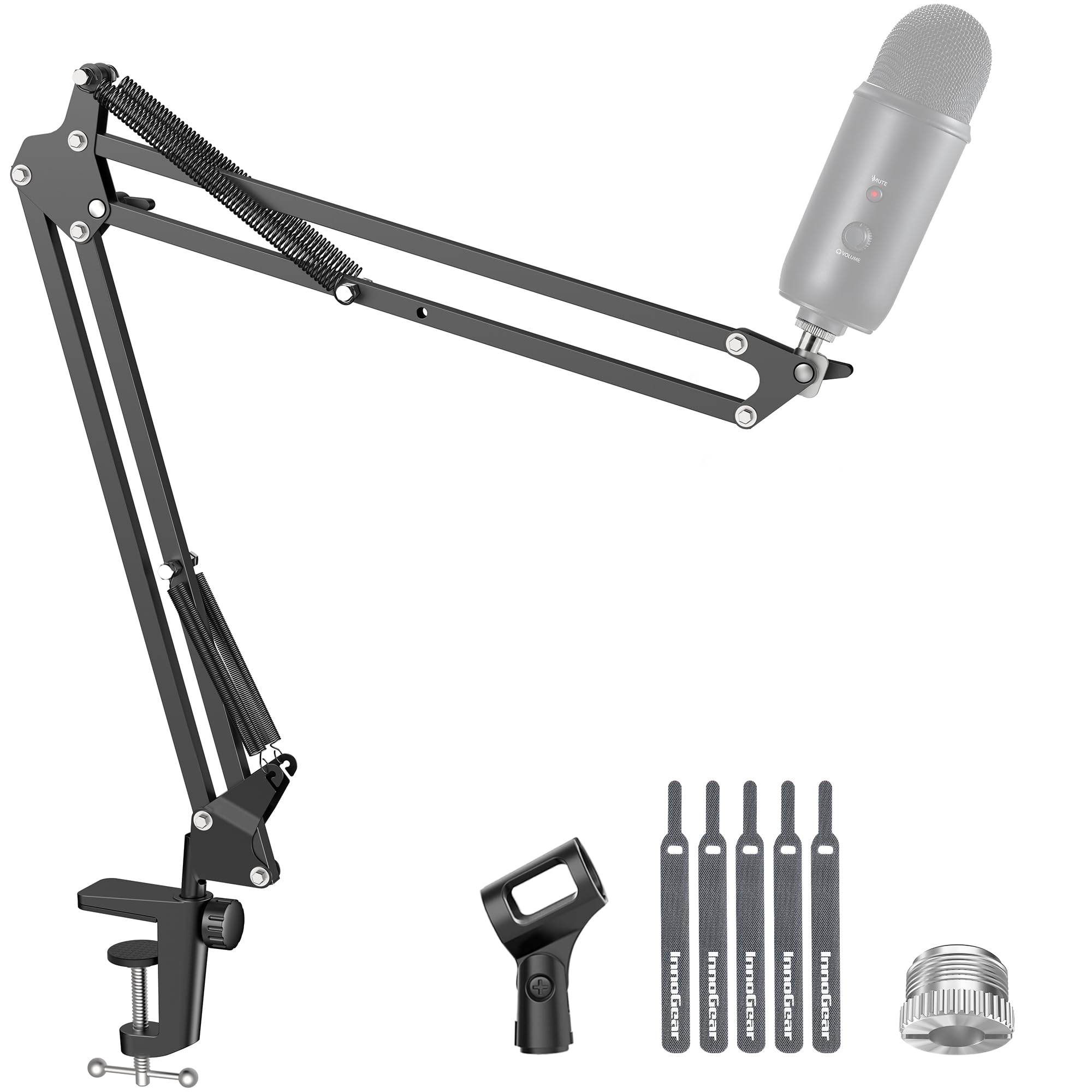
TONOR T20

TONOR T20

Budget starter

Our Score 9.2/10
Check Price

Worth Noting

Anti-Sag
Spring
Cable Mgmt
External ties
Max Capacity
4.0 lbs
Arm Type & Reach
Scissor arm, 28 in each

The TONOR T20 includes a pop filter and mic clip out of the box – accessories the classic budget arm omits, saving around $15. Its clamp grips securely on desks up to 2 inches thick, and the 4-pound weight capacity supports larger USB mics like the Blue Yeti without drooping.

This is the right choice for beginners with standard desks under 30 inches deep. The 27.6-inch reach covers most desk setups, but larger desks will feel cramped. The springs and joints may weaken over months of daily repositioning, making this more of a starter package than a long-term investment.

Tip: Mount the arm as close as possible to where the mic needs to be – the 27.6-inch reach works best when the clamp is near the edge of the desk.

Bottom line: A complete starter package that delivers strong value for first-time streamers with standard desks – not for those who need long reach or plan to reposition the mic daily for years.

5

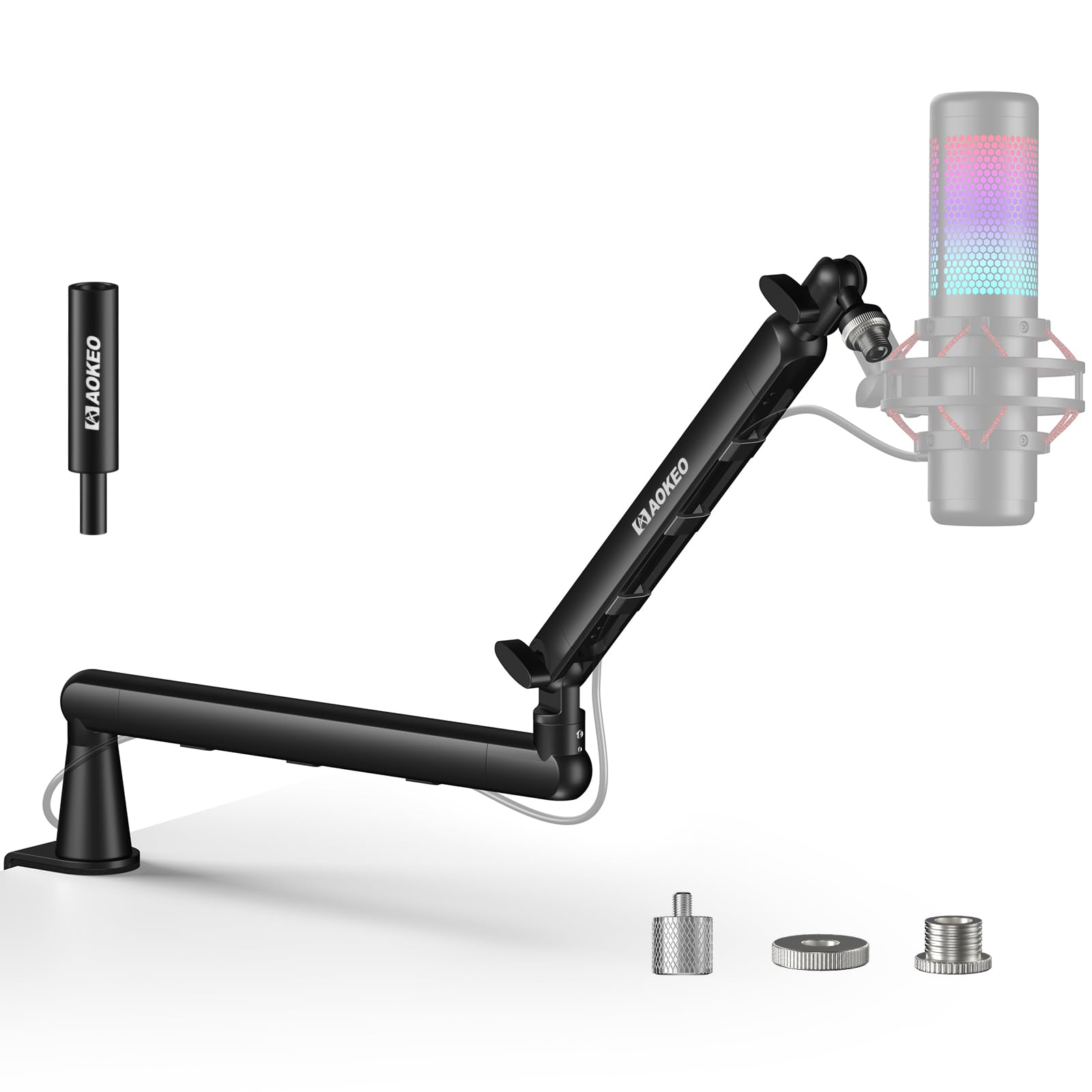
Aokeo AK-55

Aokeo AK-55

Budget low-profile

Our Score 9.2/10
Check Price

Worth Noting

  • If you need a rock-solid mic mount out of the box, some units may require additional tightening or a shim.
  • For setups where you frequently reposition the mic across the desk, the single-joint arm offers less reach range than a scissor arm.
Anti-Sag
Spring
Cable Mgmt
Internal channels
Max Capacity
4.4 lbs
Arm Type & Reach
Low profile, 2-joint, 35 in

The AK-55 holds a heavy mic like the Yeti or SM7B with zero wobble — something usually reserved for arms twice its price. Its low-profile design keeps the desk clean, with internal cable channels and a 2 kg capacity that rivals many scissor arms in this budget range.

This arm is best for budget streamers who want a clean low-profile setup and don't need to frequently reposition the mic. The mic mount can have inconsistent tightening on some units, which may cause instability at the mount point. Also, the single-joint horizontal movement offers less flexibility than scissor arms — fine for fixed positions but less ideal if you swing the mic across the desk.

Tip: If the mount feels loose, a small rubber washer or thread tape can help secure it.

Bottom line: For budget-conscious streamers who value sturdiness and a clean low profile over flexible positioning, the AK-55 delivers impressive capacity and build quality.

6

FIFINE BM88

FIFINE BM88

Light-to-medium mics

Our Score 9.2/10
Check Price

Worth Noting

  • Allen key joints can strip over time, making adjustments looser.
  • Arm may lose tension after a few months, leading to gradual sagging.
Anti-Sag
Spring
Cable Mgmt
Internal channels
Max Capacity
3.3 lbs
Arm Type & Reach
Low profile stick, 29 in

The FIFINE BM88 stands out in the low-profile category with its all-metal construction and built-in cable channels at a mid-range price. The stick arm offers a 29-inch reach and adapts to common thread sizes, making it straightforward to pair with light to medium microphones. When first assembled and tightened properly, the arm stays where you put it and the desk clamp holds firmly.

This arm suits budget-conscious streamers who prefer a low-profile look and don't need to reposition their mic often. The tradeoff: after a few months of use, the spring tension can weaken, causing the arm to sag, and the Allen key adjustment joints may strip, making fine-tuning unreliable. Those with heavier mics or who frequently adjust the boom should consider alternatives with gear-lock mechanisms or more robust tension systems.

Tip: Tighten the Allen key joints firmly at setup and avoid frequent readjustment to delay stripping.

Bottom line: Good value for a low-profile metal arm if you set it once and leave it, but the tension and joint durability make it a short-term solution for most setups.

7

Elgato Wave High Rise

Elgato Wave High Rise

Light mics

Our Score 9.4/10
Check Price

Worth Noting

  • Base may creak when repositioning
Anti-Sag
Spring
Cable Mgmt
Integrated channels
Max Capacity
2.2 lbs
Arm Type & Reach
Tall broadcast, 30 in vert

This arm's 750mm vertical reach keeps the mic above monitor height, clearing screen space. It moves smoothly thanks to internal springs, and integrated cable channels keep things tidy. However, the weight capacity caps at 2.2 lbs, so it's limited to lightweight mics such as the AT2020 or Rode NT-USB. Heavier models like Yeti or SM7B are not compatible.

Bottom line: Best for streamers using lightweight mics under 2.2 lbs who need vertical clearance for large monitors. Not suitable for heavy broadcast mics.

8

InnoGear MU-PSA28

InnoGear MU-PSA28

Long reach

Our Score 9.2/10
Check Price

Worth Noting

  • Movement can be stiff, making fine adjustments more effort than expected
  • Spring tension is too strong for lightweight microphones, causing the arm to spring up uncontrollably
Anti-Sag
Spring
Cable Mgmt
Internal rubber channels
Max Capacity
3.5 lbs
Arm Type & Reach
Scissor w/ riser, 32 in

With a 32-inch reach, included extension riser, and internal rubber cable channels, this InnoGear arm offers solid value for users running heavier microphones like the Blue Yeti or SM7B. The spring tension is set too strong for lightweight mics — anyone with a lighter model may find the arm springing upward. Movement can be stiff, requiring more force to reposition. Those with heavy mics who need extra height and cable routing will find the setup practical, but lighter setups should look elsewhere.

Bottom line: Best suited for owners of heavier USB microphones who need the extra height from a riser and appreciate integrated cable routing — not for light mics or anyone needing smooth, low-effort positioning.

9

FIFINE CS1

FIFINE CS1

Ultra-budget

Our Score 9.0/10
Check Price

Worth Noting

  • Clamp can loosen over time, causing the arm to wiggle.
  • Clamp or mic holder may become non-functional within days for some units.
Anti-Sag
Spring
Cable Mgmt
None
Max Capacity
Arm Type & Reach
Scissor arm, 13 in arms

The FIFINE CS1 delivers on its promise of a rock-bottom price and simple setup, making it an accessible entry point for a desk-mounted mic arm. However, the clamp can loosen over time and the arm may wiggle, while the clamp or mic holder can develop structural issues shortly after setup for some units. This limits its suitability to extreme-budget buyers using light microphones in temporary or secondary streaming rigs.

Bottom line: This arm fits extreme-budget temporary setups with lightweight microphones, but it is not suited for daily long-term use.

10

Aokeo AK-58i

Aokeo AK-58i

Slightly polished

Our Score 9.4/10
Check Price

Worth Noting

Anti-Sag
Spring
Cable Mgmt
Internal channels
Max Capacity
4.4 lbs
Arm Type & Reach
Low profile stick, 35 in

The AK-58i improves on the AK-55 with a marginally better build, offering the same low-profile form and 2 kg weight capacity. It comes at a small price increase while retaining the single-joint horizontal arm that limits repositioning flexibility, and it cannot be mounted upside down. This makes it a fit for users who want a sturdy set-and-forget arm for heavy mics and don't need frequent angle changes.

Bottom line: Best suited for those who prioritize build quality and stability over multi-joint flexibility, and who are comfortable with the slight price premium over the nearly identical AK-55.

11

InnoGear MU01

InnoGear MU01

Classic budget

Our Score 9.0/10
Check Price

Worth Noting

  • Desk clamp may not hold securely on thicker surfaces and can loosen over time
  • Springs and plastic parts can wear out within a few months of regular use
Anti-Sag
Spring
Cable Mgmt
None
Max Capacity
3.3 lbs
Arm Type & Reach
Scissor arm, 135°/180°

This arm offers a very low entry price and broad compatibility with popular USB microphones like the Blue Yeti, making it an easy choice for first-time buyers on a tight budget who only need a temporary setup. The clamp may loosen over time and the springs can wear out within months — the TONOR T20 offers more durable construction at a similar cost.

Bottom line: For a lightweight mic on a temporary desk setup where saving money is the main goal, this arm handles basic needs — but expect to replace it sooner than pricier alternatives.

How to Choose

Weight Capacity vs. Real-World Load

Manufacturers list a maximum weight, but that number assumes a bare mic. Add a shock mount, pop filter, and cable weight, and the effective load can be 30-50% higher. A Blue Yeti with a shock mount already hits 1.2 kg—most budget arms rated at 1.5 kg will struggle to stay up.

The real test is whether the arm can hold that load at a 45-degree angle for months. Arms with heavier springs or gear-locks handle it far better than those with thin wire springs.

Arm Type & Reach

Scissor arms offer multi-joint flexibility and can tuck the mic close to the face, but they take up more vertical space. Low-profile (stick) arms sit below the monitor line, giving a cleaner camera view, but their movement is limited to a single pivot point.

Reach matters: a 21-inch arm may not clear a 27-inch monitor. Measure your desk depth and monitor height before choosing a low-profile arm—many only extend 29 inches, which works for shallow desks.

Clamp Compatibility

Most clamps fit desks up to 2 inches thick, but some budget clamps use plastic screws that strip or fail to grip. Heavy arms need a metal clamp with a rubber pad to avoid slipping. If you have a glass desk, look for a C-clamp with a wide contact area or use a weighted base mount.

Cable Management

Internal cable channels prevent wires from drooping into your keyboard, but they can be tight for thicker XLR cables. Magnetic channels (like on Elgato’s arm) look clean but may pop off when adjusting. The most durable solution is a removable plastic channel that screws closed—it stays put and accommodates any cable thickness.

Anti-Sag Mechanism

Springs are the default, but they all lose tension over time—some in months, others in years. Damped springs (like Rode’s) slow the descent but don’t eliminate it. Gear-lock mechanisms use interlocking teeth to hold position indefinitely; they’re heavier and more expensive, but they never sag. If you plan to use a heavy mic for years, the gear-lock is worth the premium.

Frequently Asked Questions