Computers & Accessories

14 Best Mechanical Keyboard of 2026: Which Actually Last Past the Hype

Find a mechanical keyboard that sounds and feels great without failing after months. We cut through the QC lottery to match your use case.

The mechanical keyboard market is flooded with budget boards that sound like $200 customs out of the box — creamy thock, gasket flex, hot-swap sockets. But open the reviews of almost any model under $100 and you'll find a recurring pattern: keys that stop working after a few weeks, connections that drop mid-game, batteries that die faster than promised. The best-feeling keyboard does you no good when it's sitting in a drawer waiting for a replacement.

This guide is built around that reality. Instead of chasing the cheapest creamy sound or the most features per dollar, we focus on the boards that deliver a premium typing experience while giving you the best odds of getting a unit that actually works. The trade-off is simple: you can have incredible sound and feel for under $70, but you need to buy from a retailer with a hassle-free return policy or consider a warranty. No board in this category is universally reliable, but some are far less of a gamble than others.

1

AULA F75 (White)

Top Pick
AULA F75 (White)

General use

Our Score 9.4/10
Check Price

Worth Noting

  • In a quiet office, the battery drains noticeably faster with RGB enabled
  • Some units arrive with a non-responsive key or knob that may need replacement
Layout
75% (81 keys)
Keycaps
Side-printed PBT
Switch Type
Linear (Reaper)
Connectivity
Tri-mode wireless

The AULA F75 (White) brings a creamy, gasket-mounted typing feel and smooth LEOBOG Reaper linear switches to a compact 75% layout, all while staying under $70. The multifunction knob adds practical volume or scrolling control, and the tri-mode wireless (2.4GHz, Bluetooth, USB-C) covers most desk setups. This is the board that consistently sounds and feels good enough to make budget-conscious enthusiasts take notice.

Out of the box, the pre-lubed switches and decent factory stabs deliver a soft, creamy sound with minimal ping or rattle. The 4000mAh battery lasts through a workday with RGB turned down, though running full brightness will cut that time noticeably. The white-and-blue color scheme and vibrant per-key RGB give it a clean look on any desk without being garish.

This board suits buyers who want an entry-level gasket-mounted keyboard with wireless flexibility and don’t mind a compact layout that omits the numpad. It works well for gaming (low-latency 2.4GHz) and daily typing alike. However, some units have been noted with non-functional keys or a knob that stops responding, and battery life can be short with RGB on. A retailer with free returns is a sensible precaution.

Tip: Keep the RGB at medium brightness or plug in during extended sessions — the 4000mAh battery is fine for a workday at lower light levels.

Bottom line: If you want a creamy-sounding wireless 75% on a tight budget, the F75 delivers — just buy from a retailer that covers the occasional QC hiccup.

2

EPOMAKER x Aula F75

EPOMAKER x Aula F75

Enthusiasts on budget

Our Score 9.2/10
Check Price

Worth Noting

  • Some units may experience key issues or stop working within weeks
  • Software may not function as expected and lacks warranty support
Layout
75% (80 keys)
Keycaps
Cherry PBT
Switch Type
Linear (Reaper)
Connectivity
Tri-mode wireless

The EPOMAKER x Aula F75 delivers the richest acoustic profile in the budget segment — a deep, creamy thock that typically requires twice the investment. Its five-layer dampening and gasket mount produce a sound and feel that enthusiasts will immediately recognize as custom-grade. Compared to the more consistent top pick in this category, this board leans further into acoustic indulgence, making it the first choice for those who prioritize typing sound above all else.

This keyboard is best for enthusiasts and gamers who care deeply about sound and feel and are willing to accept some uncertainty around long-term reliability. Some units may develop key issues within weeks, and the software can sometimes refuse to cooperate. For buyers who want a guaranteed trouble-free experience out of the box, the top pick offers better odds. But for anyone comfortable with the possibility of a return process in exchange for extraordinary acoustics, the F75 is unmatched at this price.

The build quality feels substantial: a heavy frame, PBT keycaps, and a satisfying knob contribute to a premium impression. The tri-mode wireless (Bluetooth, 2.4GHz, USB-C) covers all common usage scenarios, and the 4000mAh battery provides days of use between charges. These features are typically found on boards costing twice as much, reinforcing the value proposition despite the QC gamble.

Tip: The software may fail to detect the keyboard; updating firmware via wired mode often resolves this.

Bottom line: If you can accept the possibility of a defective unit, the EPOMAKER x Aula F75 offers an acoustic experience that competes with boards costing three times as much.

3

AULA F99

AULA F99

Numpad users

Our Score 9.0/10
Check Price

Worth Noting

  • Bluetooth pairing can be inconsistent, requiring occasional reconnection.
  • Some units may develop key issues after extended use.
Layout
96% (99 keys)
Keycaps
PBT double-shot
Switch Type
Linear (Graywood)
Connectivity
Tri-mode wireless

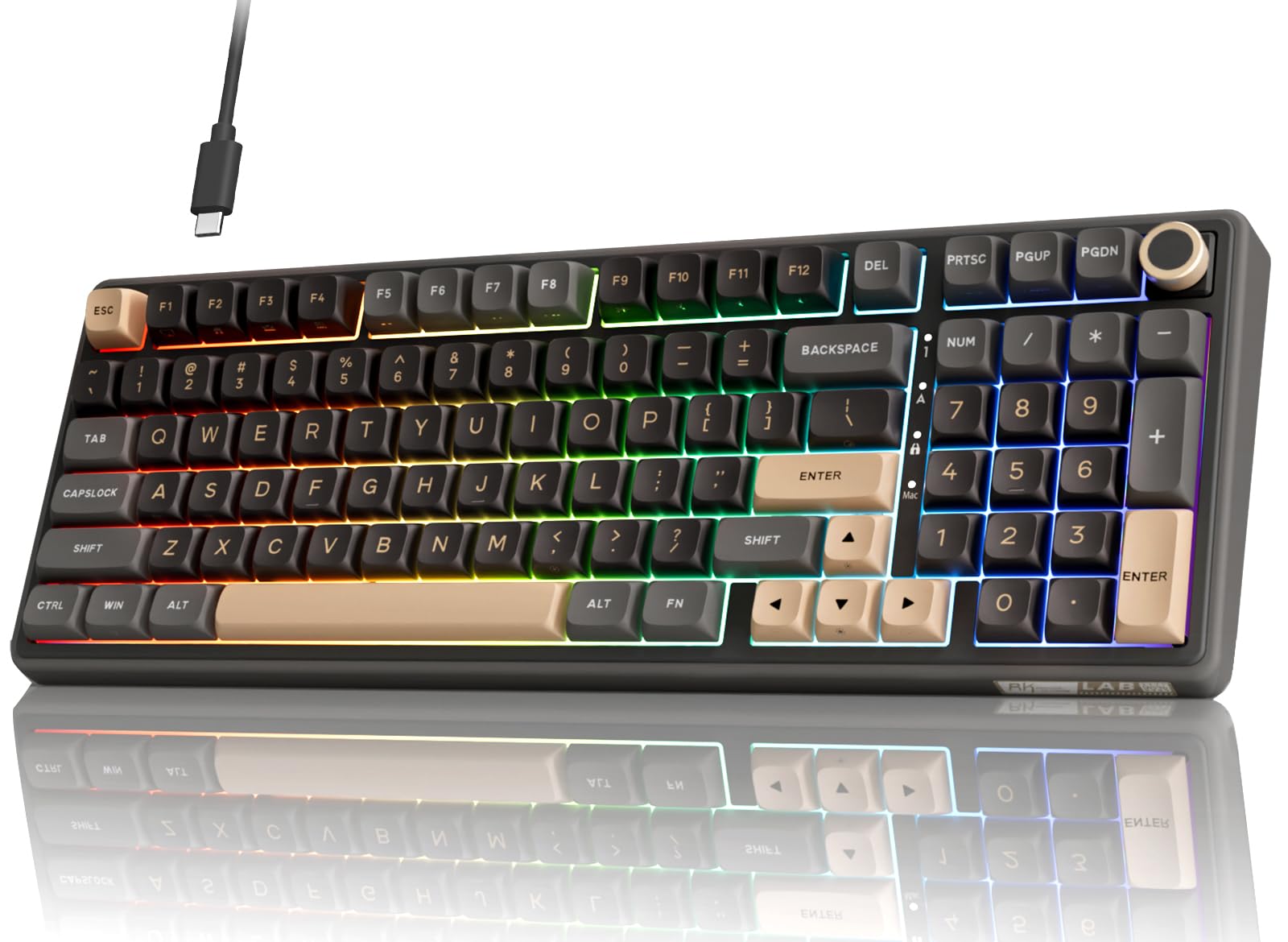
The AULA F99 offers the largest battery capacity in its class and a full numpad layout, making it the practical pick for users who need extended wireless use and a dedicated number pad. While the top pick (AULA F75) sounds slightly creamier and has a higher consistency rating, the F99 trades some acoustic refinement for battery longevity and extra keys.

In real use, the 8000mAh battery can last weeks with moderate usage, and the pre-lubed linear switches feel smooth and creamy. The RGB backlight is vibrant. Bluetooth pairing can be inconsistent — occasional dropouts and pairing hiccups may occur, especially in environments with interference.

This keyboard suits value-conscious typists and gamers who prioritize battery life and a full numpad over absolute acoustic perfection. The build quality is solid for the price, though some units may develop key issues over time; buying from a retailer with a flexible return policy is advisable.

Tip: Use the 2.4GHz dongle for gaming or critical tasks; Bluetooth is best for casual typing.

Bottom line: For those who need a numpad and marathon battery life, the AULA F99 delivers excellent value — just plan for potential Bluetooth quirks and unit variance.

4

AULA S98 Pro

AULA S98 Pro

Screen+ knob fans

Our Score 9.2/10
Check Price

Worth Noting

  • Keys may become unresponsive after a few months of use
  • Screen customization software can be buggy and limited in functionality
Layout
96% (96 keys)
Keycaps
Side-printed PBT
Switch Type
Linear (Star Vector)
Connectivity
Tri-mode wireless

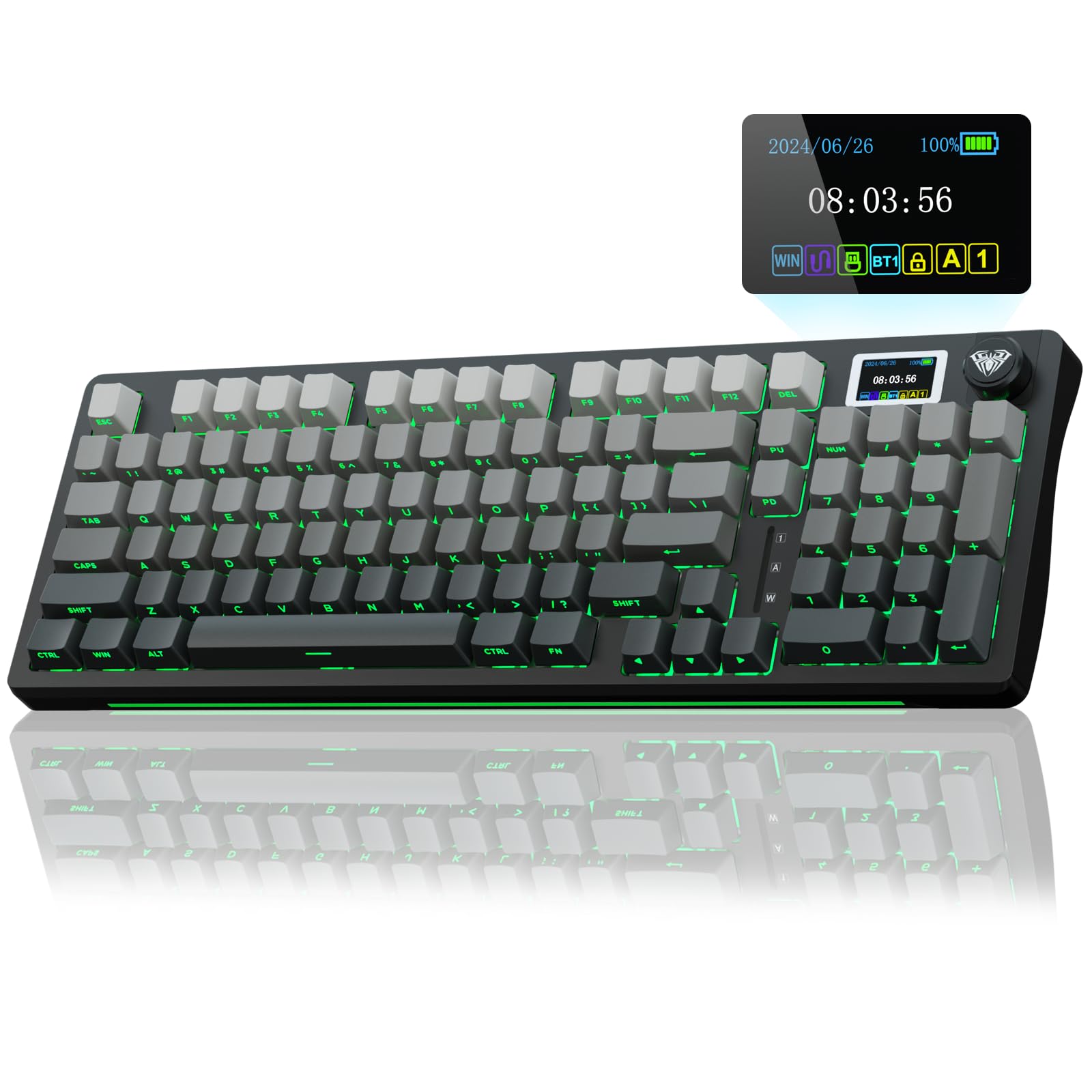
The AULA S98 Pro adds a LCD screen and multifunction knob to a 96% wireless layout, delivering the creamy, thocky sound that has made AULA a popular budget choice. Its tri-mode connectivity (BT5.0, 2.4GHz, USB-C) and 5000mAh battery support extended cord-free use.

This keyboard suits enthusiasts who want a compact board with a numpad and a screen for GIFs or time display. However, the screen customization software can be unreliable, and keys may become unresponsive after several months of use — a consideration for those needing long-term performance without hiccups.

Side-printed PBT keycaps keep the top surface clean while legends stay visible, and the hot-swap socket allows switch changes without soldering. For the price, the S98 Pro bundles unusual features, acoustic character, and wireless flexibility into one package.

Tip: Stick with the default screen presets unless you need custom GIFs — the customization software may not work reliably.

Bottom line: Right for enthusiasts who want a screen and numpad in a compact wireless board, provided they accept potential software and longevity quirks.

5

Keychron K10 HE

Keychron K10 HE

Competitive gaming

Our Score 8.6/10
Check Price

Worth Noting

  • Bluetooth connectivity can drop or jitter during wireless use.
  • Some units may have keys that fail to register or have dead spots out of the box.
Layout
Full-size (104 keys)
Keycaps
PBT non-shine-through
Switch Type
Linear (Hall Effect)
Connectivity
Tri-mode wireless

The Keychron K10 HE brings Hall Effect magnetic switches to a full-size layout with rapid trigger and adjustable actuation from 0.2 to 3.8mm, paired with an aluminum and wood frame that feels solid and classy. While the top pick focuses on creamy acoustics at a lower price, this board targets gamers who want per-key customization of actuation point and the low latency of magnetic switches.

The Gateron double-rail Nebula switches are smooth and quiet, producing a satisfying thock without the clatter of traditional mechanicals. The PBT keycaps have a pleasant texture and the wood side panels add a warm aesthetic touch that stands out in a desk setup.

This board suits competitive gamers who want the latest switch technology in a full-size form factor, as well as enthusiasts who appreciate premium materials and adjustable actuation. However, Bluetooth connectivity can be inconsistent — dropouts occur — and some units may have keys that don't register out of the box. The premium price does not guarantee a flawless unit, so buying from a retailer with a good return policy is advised.

Tip: For competitive play, connect via USB-C to avoid Bluetooth instability; the 2.4GHz dongle may also improve reliability.

Bottom line: A full-size Hall Effect keyboard with rapid trigger and premium build, best for gamers who want adjustable actuation and are willing to accept occasional wireless hiccups or potential unit variation.

6

Logitech MX Mechanical

Logitech MX Mechanical

Office multi-device

Our Score 8.4/10
Check Price

Worth Noting

  • Key noise is noticeable in quiet office spaces despite the 'Quiet' branding
  • Backlight auto-off timer may turn off keys too quickly for those who prefer constant illumination
  • Some units may encounter key responsiveness or Bluetooth connectivity issues after several months
Layout
Full-size (104 keys)
Keycaps
ABS
Switch Type
Tactile Quiet (Romer-G)
Connectivity
BT + Logi Bolt

The Logitech MX Mechanical enables near-instant switching between three devices via Bluetooth or the included Logi Bolt receiver. Its low-profile Romer-G Tactile Quiet switches provide a crisp bump without excessive travel, and the metal top plate gives it a solid, premium feel. Logitech Flow support lets you move your cursor across screens seamlessly — a tool for anyone juggling a Mac, a PC, and a tablet.

Typing feels accurate and responsive, though the 'Quiet' switches still produce a noticeable click-clack in a quiet room — not silent, but not as loud as traditional clicky switches. The white backlight uses a smart sensor that dims quickly to save battery; some users may find the auto-off time too short for their workflow. The behavior can be customized in Logi Options+, but the default may frustrate those who prefer the keys lit constantly.

This keyboard is best suited for professionals who need reliable multi-device switching and enjoy a low-profile mechanical feel for extended typing sessions. The bundled USB-C cable and long battery life reduce the need for frequent charging, but some units may develop key responsiveness or Bluetooth connectivity drops after a few months of use — a consideration when investing at this price point.

Tip: The backlight timer can be extended via Logi Options+ software — check for updates if the auto-off feels too fast.

Bottom line: A capable multi-device keyboard for office productivity, but reliability concerns and backlight quirks keep it from being a straightforward recommendation for everyone.

7

Keychron K2 HE

Keychron K2 HE

Compact Hall Effect

Our Score 8.8/10
Check Price

Worth Noting

  • Bluetooth connection can be inconsistent, especially at longer ranges
  • Some units may stop responding shortly after initial setup
Layout
75% (84 keys)
Keycaps
PBT non-shine-through
Switch Type
Linear (Hall Effect)
Connectivity
Tri-mode wireless

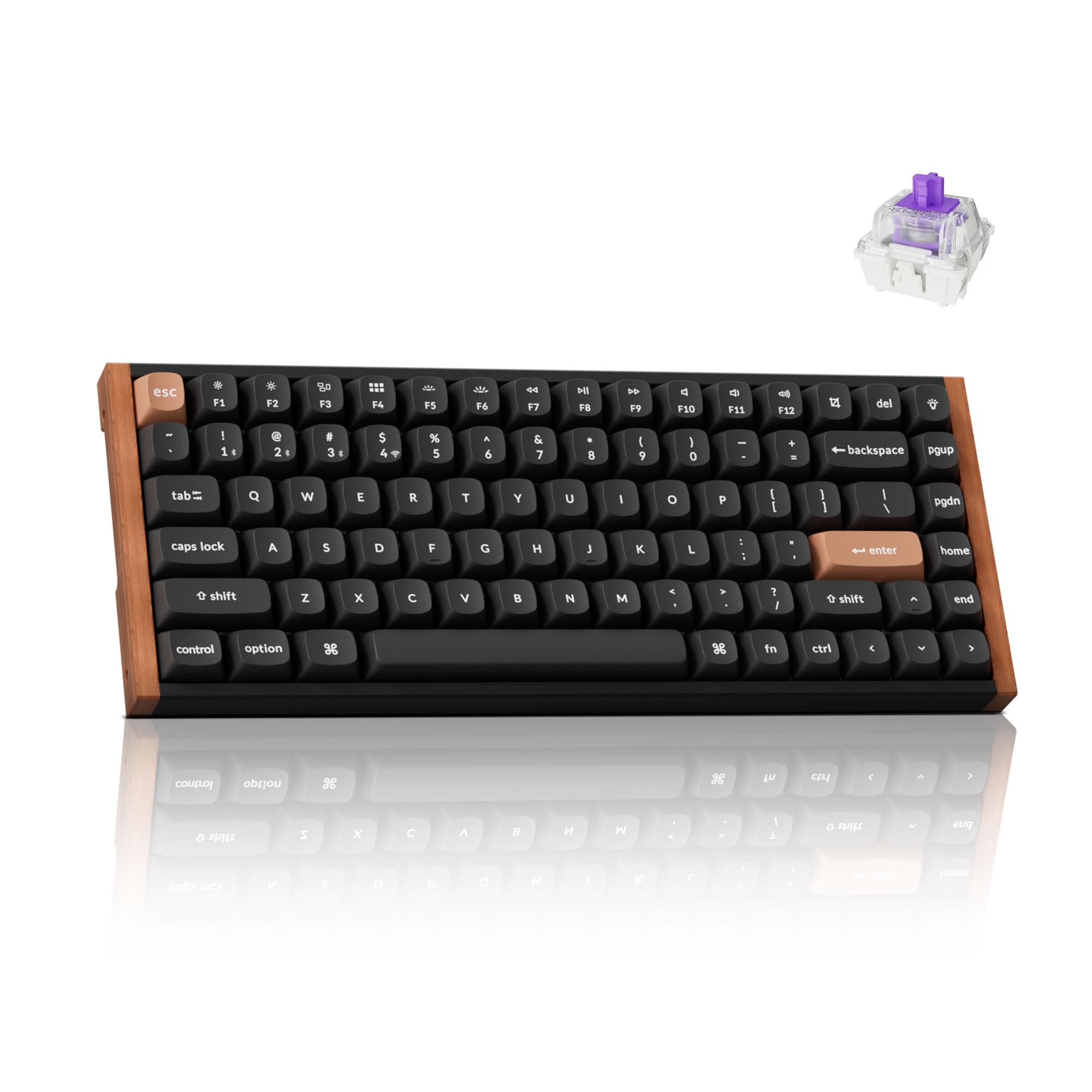
The Keychron K2 HE brings Hall Effect magnetic switches and rapid trigger to a compact 75% layout, wrapped in a build that combines aluminum with rosewood side panels. The typing feel is smooth and responsive, with a quiet, pleasant sound that suits shared spaces. QMK support adds full programmability, and the tri-mode wireless (2.4GHz, Bluetooth, USB-C) covers most setups.

This board targets gamers or typists who want adjustable actuation and rapid trigger in a space-saving design. The lack of shine-through keycaps means RGB lighting is more ambient than functional in the dark. Bluetooth connectivity can be inconsistent, especially at longer ranges, and a small percentage of units may stop responding shortly after initial setup. Those who need flawless wireless or absolute reliability out of the box should consider a wired alternative.

Tip: For latency-sensitive gaming, connect via the included 2.4GHz dongle instead of Bluetooth.

Bottom line: For mobile gamers who value the latest magnetic switch tech and don't mind occasional wireless quirks, the K2 HE delivers where it matters most.

8

AULA F75 MAX

AULA F75 MAX

Screen+ knob compact

Our Score 9.4/10
Check Price

Worth Noting

  • Knob may be overly sensitive
  • Some units may arrive with keys that do not respond
Layout
75% (80 keys)
Keycaps
PBT
Switch Type
Linear (Reaper)
Connectivity
Tri-mode wireless

The EPOMAKER x Aula F75 MAX builds on the well-regarded F75 platform by adding a TFT screen and a multifunction knob, all while staying in the budget-friendly price range. The creamy linear switches and gasket mount deliver a typing feel that rivals more expensive boards. However, the screen introduces software complexity that may not appeal to everyone, and the same quality-control variability present in other AULA models continues here – some units may have keys that don't respond. This makes it a secondary option compared to the simpler, more consistent top-pick F75 variant, especially for buyers who don't need the display.

Bottom line: Best suited for buyers who want a TFT screen in a 75% layout and are comfortable with potential QC variability; the standard F75 without a screen is a safer bet for reliability.

9

Logitech G413 SE

Logitech G413 SE

Budget wired full-size

Our Score 9.0/10
Check Price

Worth Noting

  • The typing noise is loud enough to be noticeable in quiet rooms or shared workspaces.
  • Individual switches may stop registering input after months of use, with the 'Z' key cited in some cases.
Layout
Full-size (108 keys)
Keycaps
PBT
Switch Type
Tactile
Connectivity
Wired USB

Logitech's G413 SE delivers a solid aluminum-magnesium top case and PBT keycaps at a budget-friendly price, offering a satisfying tactile feel that suits typing and gaming. However, the typing noise is considerable — noticeable in quiet environments — and some units may develop individual key registration issues over time. It lacks wireless connectivity and hot-swap options, and reliability concerns prevent it from competing with more feature-rich boards in the same price tier.

Bottom line: Best for users who want a wired, durable full-size board without extra frills and can accept louder operation and a slight risk of long-term key issues.

10

RK S98

RK S98

Smart display + knob

Our Score 8.8/10
Check Price

Worth Noting

  • Battery may stop charging after several weeks, requiring frequent USB-C connection
  • Wireless connection can drop during active use, especially in gaming
Layout
96% (98 keys)
Keycaps
PBT double-shot
Switch Type
Linear (RK)
Connectivity
Tri-mode wireless

The RK S98 packs a tiny LCD screen and a volume knob into a compact 96% wireless board, giving it a feature set that rivals pricier options. The typing feel is smooth and creamy, with a soft thocky sound that stays pleasant during long sessions. Build quality is solid for the mid-range price, and the tri-mode connectivity (Bluetooth, 2.4GHz, USB-C) covers most setups. However, battery life can be unpredictable — some units stop holding a charge after a few weeks — and wireless disconnects during gameplay have been noted. These issues are more pronounced than on AULA alternatives like the F75 or S99, making the S98 better suited for desk-bound use where you can keep it plugged in and don't need rock-solid wireless for gaming.

Bottom line: Best suited for desk-bound use where you can keep it plugged in and don't rely on wireless stability for gaming.

11

RK R98 Pro

RK R98 Pro

Wired creamy numpad

Our Score 9.2/10
Check Price

Worth Noting

  • Limited to wired-only connectivity; no wireless option
  • Dim backlighting that cycles through effects and can't easily lock a static color
  • Some units may have non-functional keys out of the box
Layout
96% (98 keys)
Keycaps
MDA PBT
Switch Type
Linear (Cream)
Connectivity
Wired USB-C

The RK R98 Pro delivers a creamy, thocky typing experience with its gasket mount and MDA profile PBT keycaps — a rare combo at this price point. The 96% layout keeps the numpad while saving desk space, and build quality feels solid for a budget board. However, the RGB backlighting is dim and cycles through effects with no easy way to lock a static color, limiting its use for those wanting bright customizable lighting. Additionally, some units can arrive with non-functional keys, which is a QC concern worth checking upon arrival. For typists who prioritize keycap feel over lighting and don't need wireless, this wired board delivers good value.

Bottom line: Best for budget-conscious typists who want MDA keycaps and a numpad in a wired board and can accept dim lighting and the need to inspect the unit on arrival.

12

Logitech Alto Keys K98M

Logitech Alto Keys K98M

Compact Logitech

Our Score 8.6/10
Check Price

Worth Noting

  • Function keys may not register correctly when used with macOS - a PC-first design.
  • Battery life drains quickly with the white backlight turned on - expect frequent charging if you need illumination.
Layout
98-key compact
Keycaps
ABS
Switch Type
Clicky (Marble)
Connectivity
BT + Logi Bolt

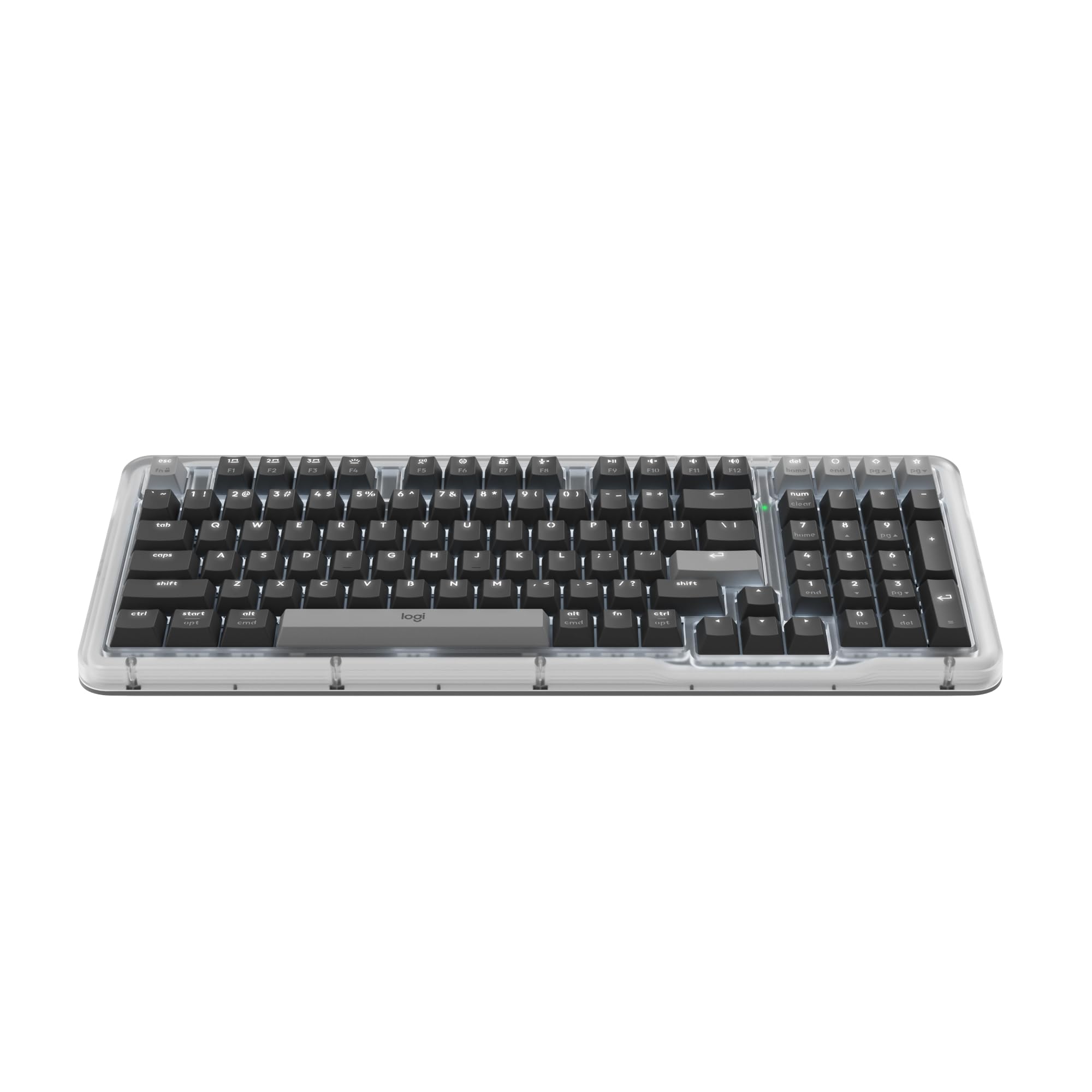
A satisfying gasket-mounted clicky feel in a compact 98-key layout. The typing experience is smooth and the sound is controlled, making it office-friendly. However, the backlight drains battery quickly, and Mac function key support is uncertain. This keyboard suits Windows-based Logitech ecosystem users who want a compact mechanical and can keep the backlight off. Its mid-range cost and these limitations make it a niche alternative to more rounded options like the top pick AULA F75.

Bottom line: Best suited for Logitech loyalists who want a gasket-mounted compact mechanical and are okay with limited battery life and Windows-only function keys.

13

SteelSeries Apex 5

SteelSeries Apex 5

OLED + clicky gamer

Our Score 9.2/10
Check Price

Worth Noting

  • Typing sound is loud and may disturb others in shared or quiet spaces.
  • Key reliability may be inconsistent; some units can develop non-responsive keys over time.
Layout
Full-size (104 keys)
Keycaps
ABS
Switch Type
Hybrid Blue (clicky)
Connectivity
Wired USB

The SteelSeries Apex 5 combines a crisp OLED smart display with per-key RGB and a hybrid Blue switch that delivers a distinct tactile, clicky feel. The aircraft-grade aluminum frame gives it a rigid, premium build that holds up well during intense gaming. However, the typing sound is loud enough to be intrusive in shared or quiet rooms, and key reliability can vary — some units may develop unresponsive keys over time. It is wired only, which limits placement flexibility. This keyboard suits gamers who specifically want the OLED screen and enjoy audible clicky feedback, but it falls short as a general-purpose recommendation due to noise and potential durability concerns.

Bottom line: Best for gamers who prioritize the OLED screen and clicky feel over quiet operation and don't mind the possibility of key issues — a niche pick rather than a general recommendation.

14

AULA F75 Pro

AULA F75 Pro

Side-printed 75%

Our Score 9.4/10
Check Price

Worth Noting

  • Key function can stop working on some units
  • Software for customizing lighting and keybindings is clunky and may not meet enthusiast expectations
Layout
75% (81 keys)
Keycaps
Side-printed PBT
Switch Type
Linear (Reaper)
Connectivity
Tri-mode wireless

The AULA F75 Pro delivers the same creamy typing feel and solid gasket-mount build as the standard F75, with side-printed legends that keep the keytops clean. Unit consistency is a known gamble – some boards have keys that stop responding, so buying from a retailer with easy returns is worth considering. This is essentially the same board as the top pick; choose this only if you prefer the side-printed look over standard top-printed keycaps.

Bottom line: Best for buyers who prefer the look of side-printed legends and want the same AULA F75 experience, as long as they accept the possibility of QC variance.

How to Choose

Switch Type and Lubrication

Linear switches offer a smooth, uninterrupted press ideal for gaming. Tactile switches provide a bump for typing feedback, and clicky switches add an audible click. Factory lubrication (pre-lubed) reduces scratchiness and improves sound — it's a sign a manufacturer invested in quality, but it can wear off after months of use, leaving a dry, scratchy feel that requires re-lubing.

If you want to change the switch feel later without soldering, hot-swappable sockets let you pull out the old switches and clip in new ones. This is the single most future-proof feature for anyone unsure of their preferred switch type.

Hot-Swappable PCB

A hot-swappable PCB means you can replace individual switches without any soldering. This is critical because the switch is the part most likely to fail on budget keyboards — a key stops registering, you pop it out and put in a fresh one. Without hot-swap, a single dead key can render the whole board unusable unless you're handy with a soldering iron.

Connectivity

Wired keyboards have zero latency and no battery to manage. Wireless adds convenience but introduces two failure points: battery degradation over time and connection dropouts. Tri-mode (Bluetooth, 2.4GHz, USB-C) is the gold standard — 2.4GHz gives near-wired latency for gaming, Bluetooth handles multiple devices, and USB-C charges or bypasses wireless entirely.

But more radios mean more potential for interference. Many budget wireless boards suffer from Bluetooth disconnects or 2.4GHz hiccups, especially when the battery is low. If you absolutely cannot tolerate a dropped keystroke, stick to wired.

Keycap Material and Profile

PBT double-shot keycaps resist shine and last years longer than ABS, which becomes glossy and slippery within months. Side-printed legends (on the front edge) keep the top surface clean but can be harder to read in low light. Profile (Cherry, OEM, MDA) affects typing angle — MDA is flatter and wider, preferred by some for ergonomics, but takes getting used to. Double-shot means the legend is molded through the plastic, so it never wears off.

Form Factor and Layout Features

Full-size (104 keys) includes a numpad, but takes up a lot of desk space. 96% packs a numpad into a compact frame — ideal for data entry without sacrificing space. 75% drops the numpad and some navigation keys for a smaller footprint. A knob adds quick volume control; a display shows stats or GIFs but often requires buggy software to customize. Decide your must-have layout before considering price or sound.

Frequently Asked Questions