Power & Charging

10 Best Rechargeable Battery Charger 2026: Picks That Actually Last

Find a battery charger that won’t fail in months. We break down the real trade-offs between price, features, and durability for every use case.

Many battery chargers under $20 promise convenience but stop working within months. A blinking light that never turns green, batteries that won't charge, or a charger that simply dies – these frustrations are common with budget models. The problem isn't just the price; it's matching the right charger to your actual usage pattern.

This guide focuses on the features that separate a reliable charger from a disposable one: independent slot charging, consistent indicator behavior, and build quality that survives regular use. Whether you need a simple starter kit or a heavy-duty multi-bay unit, the trade-off between upfront cost and long-term reliability is the central decision. We've broken down the most important specs and real-world performance patterns to help you avoid the common pitfalls.

1

Panasonic BQ-CC65

Top Pick
Panasonic BQ-CC65

Enthusiasts

Our Score 9.4/10
Check Price

Worth Noting

  • AAA batteries can require extra effort to seat properly in the slots.
  • Premium price
Bays
4
Rating
4.7 ★
Display
LCD
Best For
Enthusiasts

The Panasonic BQ-CC65 stands apart from budget chargers by treating each battery slot as its own smart circuit. Instead of charging in pairs, it independently monitors voltage, capacity, and charge time for every AA or AAA cell. The LCD panel shows exactly how many milliamp-hours each battery accepted, which matters when you want to match cells for high-drain devices like flashes or drones. This granular control is what makes it a charger for people who treat batteries as an investment, not a consumable.

In practice, the BQ-CC65 charges a pair of AA eneloop pro cells in about two hours — faster than most independent-slot chargers at this price point. The refresh function can restore older NiMH batteries that have developed voltage depression, a feature that extends the usable life of cells you might otherwise toss. That said, seating AAA batteries requires a deliberate push into the slot; the spring tension is firm and the contact points are narrow, so smaller cells may need an extra wiggle to register. Once seated, charging proceeds without issue.

This charger is best suited for enthusiasts who rotate through a stable of eneloop or eneloop pro batteries and want detailed charge data. It also fits users who maintain a collection of older NiMH cells and want to try reviving them. The premium price and the occasional fussiness with AAA seating make it a poor fit for budget shoppers or anyone who just needs a simple charger for occasional use. If you rarely charge batteries or prefer a set-it-and-forget-it approach, a lower-cost option like the Energizer Recharge Pro charges faster but lacks the independent slots and long-term build quality.

Tip: When inserting AAA batteries, press them firmly into the slot and check the LCD for a confirmation icon — a slight tilt can prevent contact.

Bottom line: For anyone who regularly charges high-capacity NiMH cells and wants real data on battery health, this charger justifies its cost with independent control and a built-in rejuvenation feature.
2

EBL 4-Bay + 4 AA

EBL 4-Bay + 4 AA

Budget buyers

Our Score 9.2/10
Check Price

Worth Noting

  • Batteries must be inserted in pairs (slot 1-2 and 3-4)
  • AAA batteries can require careful alignment to make proper contact in the bay.
Bays
4
Rating
4.6 ★
Display
LED
Best For
Budget buyers

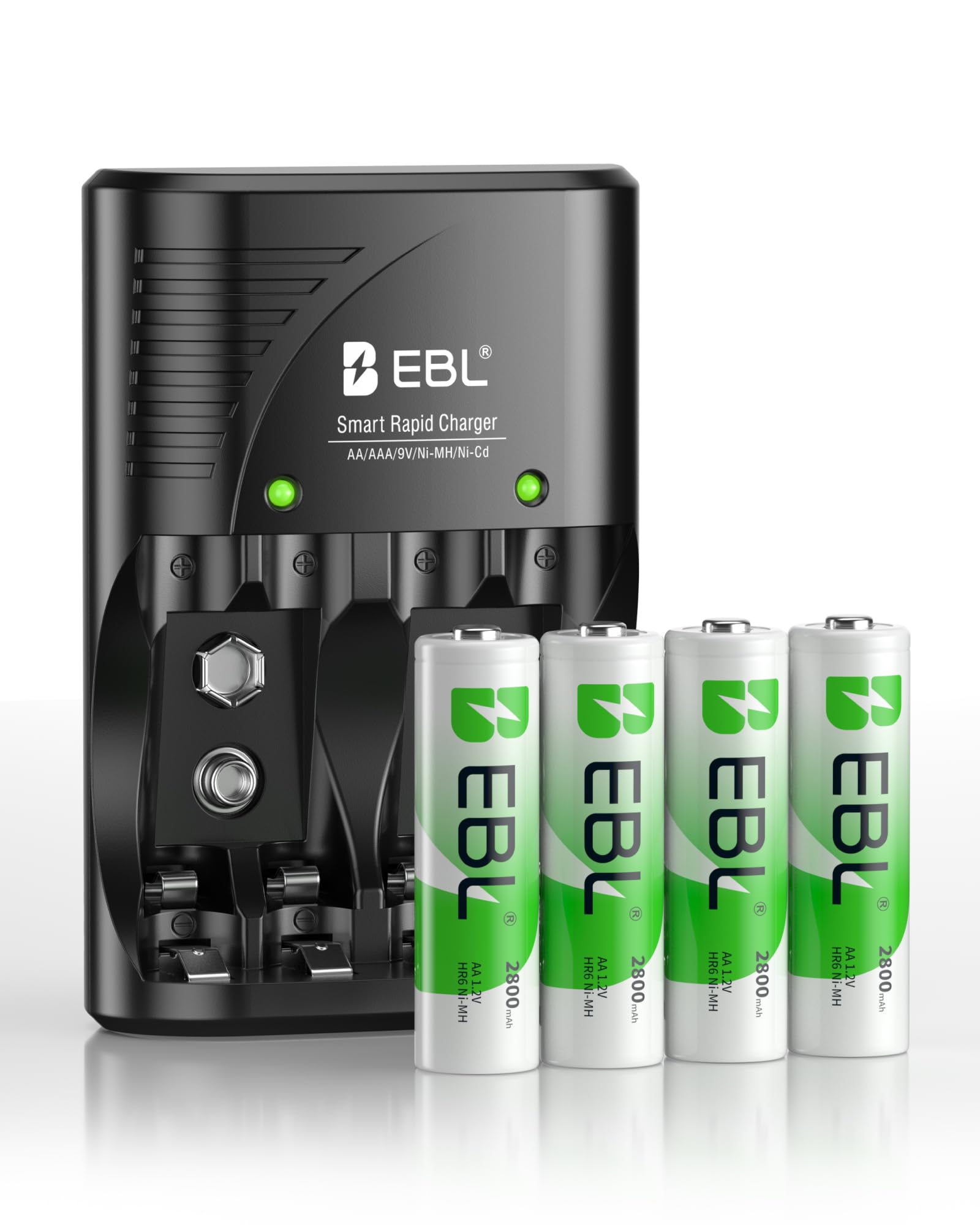
Where premium chargers focus on independent slot control and LCD readouts, the EBL 4-Bay keeps things simple: four slots, clear red/green LEDs, and a foldable plug. The real draw is what comes in the box — four 2800mAh AA batteries that hold charge well and last through repeated cycles. For someone new to rechargeables, this bundle removes the guesswork of buying batteries separately.

The charger itself handles AA, AAA, and 9V cells, though AAA batteries can require a bit of extra care to seat properly — a minor quibble for the price. A more meaningful limitation is that batteries must be charged in pairs (slots 1-2 and 3-4 work together). That means you cannot top off a single battery without a partner, which is typical for this class of charger but worth noting if you often need to charge odd numbers.

Paired-bay charging aside, the kit is straightforward: plug in, insert batteries, and the LED glows red during charging then green when done. The ABS shell and built-in protections (overcharge, overcurrent, overheating) add peace of mind for daily use. This setup suits households that cycle through matched battery pairs in remotes, toys, or flashlights — not those who need to charge a mixed batch of singles.

Tip: Keep batteries in labeled pairs to avoid mixing partially charged cells when charging in tandem.

Bottom line: If you need a no-fuss charger for everyday AA/AAA use and don‘t mind charging in pairs, this kit delivers better battery life than most budget options at a lower upfront cost.

3

Tenergy TN480U 8-Bay

Tenergy TN480U 8-Bay

Heavy use

Our Score 9.0/10
Check Price

Worth Noting

  • No batteries included in the package
  • 4-5 hour charge time is slower than some alternatives
Bays
8
Rating
4.5 ★
Display
LCD
Best For
Heavy use

The Tenergy TN480U gives you eight independent charging slots that handle any combination of AA and AAA batteries without needing to pair them. Each slot has its own LCD segment that shows charging progress in real time, so you can see exactly which batteries are finished and which still need time.

Charge times run around 4-5 hours at 500mA per slot, which is moderate compared to faster options in this set. The speed is consistent across all bays, and the LCD display stays accurate throughout the cycle. This isn’t a charger for someone who needs a full set in under three hours, but the trade-off is that you get clear per-cell information and no guesswork.

This charger fits best for tech-savvy users who already have a stash of NiMH batteries and want to monitor each cell individually. It works well for households with mixed battery types — you can top up a single AAA without pulling out a full set. Just keep in mind that the charger doesn’t come with batteries, and the actual run time you get from charged cells depends heavily on the age and quality of the batteries you put in.

Tip: Charging at 500mA per slot takes 4-5 hours for a full eight-bay cycle; plan to charge overnight or while you're away.

Bottom line: For buyers who already own NiMH batteries and want clear per-cell visibility over raw speed, the Tenergy TN480U delivers on its core features without overpromising.

4

HiQuick 8-Bay + 8 Bats

HiQuick 8-Bay + 8 Bats

Complete kit

Our Score 9.0/10
Check Price

Worth Noting

  • For devices needing long standby power, included batteries may lose charge overnight.
  • A small number of charger units may stop functioning after limited use.
Bays
8
Rating
4.5 ★
Display
LED
Best For
Complete kit

The HiQuick 8-Bay Smart Charger comes with a full set of high-capacity AA and AAA batteries, making it a complete rechargeable solution out of the box. The 4 AA cells at 2800mAh and 4 AAA cells at 1100mAh are above average for included batteries, and the charger fills them in 4.5 hours for AA and 2 hours for AAA using a Type-C input. This kit stands apart from chargers that require a separate battery purchase.

This setup works well for families who rotate batteries through toys, remotes, and cameras on a regular basis. The included batteries may not hold their charge as long as premium cells over time, which matters for devices like smoke detectors or emergency lights that need standby power. For frequent swapping in moderate-drain devices, the performance is sufficient.

The charger itself handles independent slots and provides clear red/green status indicators. Charging speed is consistent for both sizes, and the built-in safety protections cover overcharge, overcurrent, and overheating. A small number of units have been noted to stop working after limited use, so early verification is wise, but most owners find the charger works without issue.

Tip: Test the charger with a known good set of batteries soon after purchase to catch any early issues.

Bottom line: This kit delivers immediate value for households that need both AA and AAA batteries for everyday devices, though the included cells are best suited for frequent use rather than long-term storage.

5

Energizer Recharge Pro

Energizer Recharge Pro

Fast charging

Our Score 9.2/10
Check Price

Worth Noting

  • Included AA batteries may lose capacity sooner than premium alternatives, reducing long-term value.
  • Charger may not charge every battery reliably, requiring swapping batteries between slots.
  • Some units can cease operation within a few months of purchase, affecting long-term dependability.
Bays
4
Rating
4.6 ★
Display
LED + beeps
Best For
Fast charging

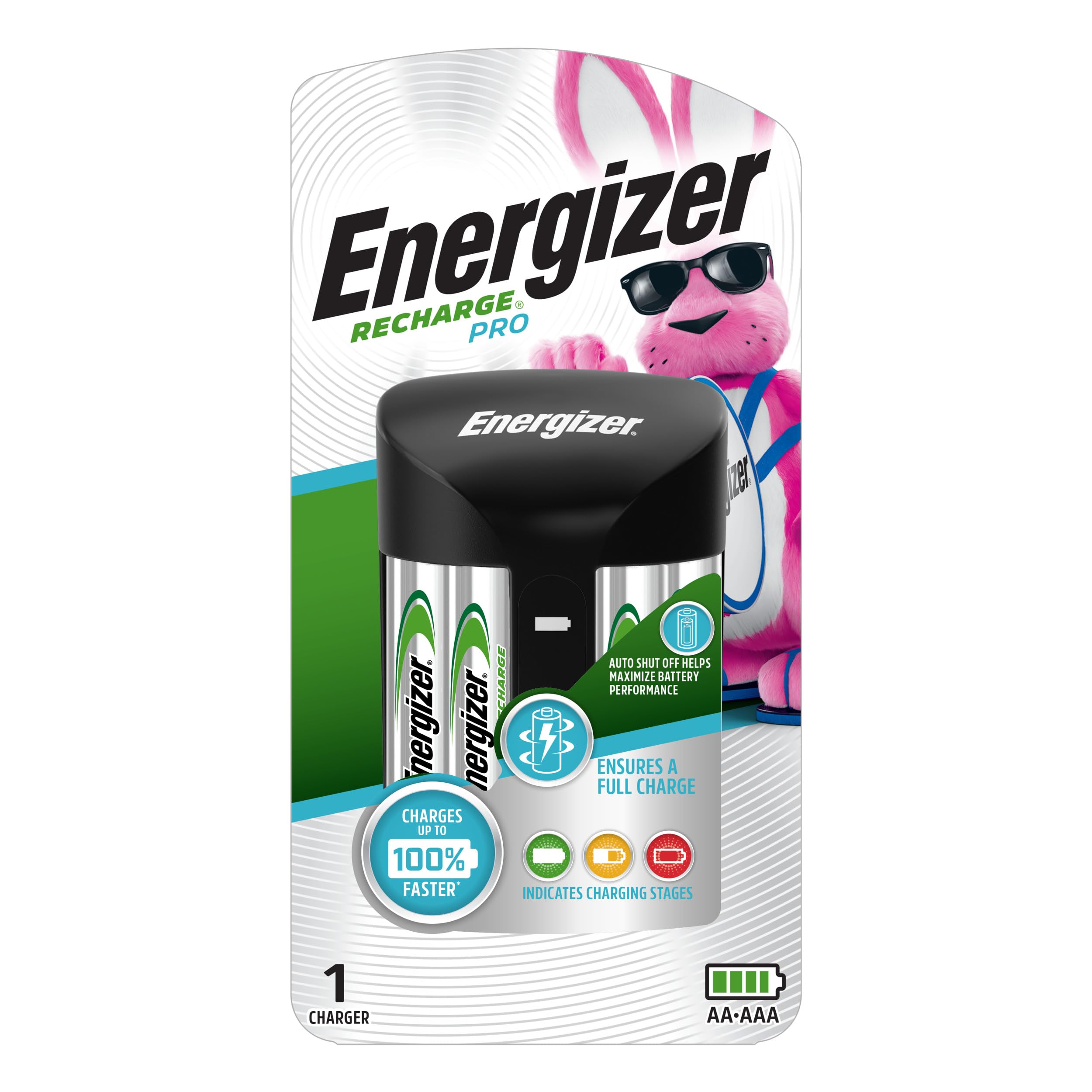
Three hours to a full charge puts the Energizer Recharge Pro ahead of most budget chargers, and the red/yellow/green LEDs with beeps give clear feedback without guesswork. The included four AA batteries add immediate value for households that go through cells quickly.

Where the Panasonic top pick focuses on per-cell data and independent slot control, the Energizer charges in pairs and lacks individual monitoring. For low-drain devices like remote controls or clocks, the straightforward operation is a strength, but the charger may not suit users who need to mix partially charged batteries.

This charger fits buyers who want fast turnaround and a low entry price. Buyers should be aware that some units can stop working after a few months, and the included AA batteries may lose capacity faster than premium cells. It works best for households where consistent long-term reliability is not the top priority.

Tip: Test the charger and included batteries within the return period to confirm the unit works as expected.

Bottom line: A fast, affordable charger that works well for light household use, as long as you accept the chance of unit variance and modest battery longevity.

6

Amazon Basics 4-Hour USB

Amazon Basics 4-Hour USB

Travel friendly

Our Score 9.0/10
Check Price

Worth Noting

  • Red blinking indicator may show error even with good batteries, leaving charge status unclear.
  • For daily use at home, some units stop charging after a few months
Bays
4
Rating
4.5 ★
Display
LED
Best For
Travel friendly

This budget-friendly charger combines a flip-down global-voltage plug with a USB port for topping off a phone, all in a travel-friendly size. When it works, it charges AA and AAA Ni-MH cells in about four hours with clear instructions. However, some units stop charging after a few months of use, and the red blinking indicator light can appear even with good batteries, making charge status ambiguous. The design also requires batteries in pairs. For a frequent daily charger, consider a more durable option; this suits occasional travel or backup use instead.

Bottom line: Fits as a compact travel charger for infrequent use where you need a USB port – not for daily home charging.

7

Duracell Ion Speed 1000

Duracell Ion Speed 1000

Household use

Our Score 9.2/10
Check Price

Worth Noting

  • In some cases, batteries may not reach full charge during a cycle.
  • Included cells can lose their charge quicker than expected over time.
Bays
4
Rating
4.6 ★
Display
LED
Best For
Household use

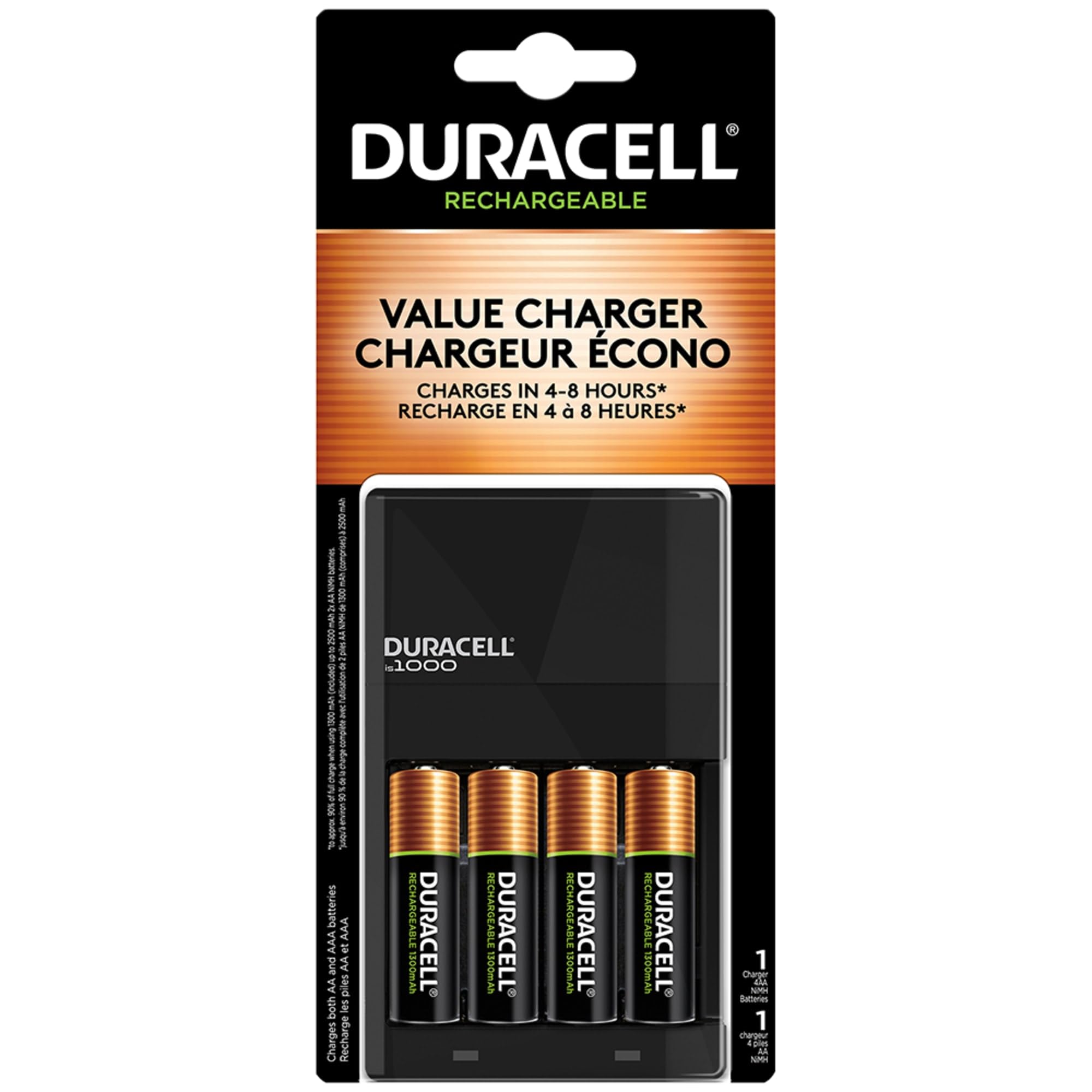
The Duracell Ion Speed 1000 offers a straightforward charging experience with LED indicators and auto shut-off, suited for households with medium-drain devices like game controllers. However, the included AA cells can lose charge faster than expected, and the 4-8 hour charging time is average rather than quick. Some batteries may not reach full charge, and occasional fit issues have been noted with certain devices. For buyers who value a well-known name and minimal fuss over top-tier battery consistency or fast charging, this charger fills the role adequately.

Bottom line: A straightforward charger for someone who prioritizes brand familiarity and simple operation over raw charging speed and battery consistency.

8

BONAI 16-Bay Charger

BONAI 16-Bay Charger

High capacity

Our Score 9.2/10
Check Price

Worth Noting

  • Charging speed drops significantly when all 16 bays are used.
  • Some units may stop working early or have trouble with AAA batteries.
Bays
16
Rating
4.6 ★
Display
LED
Best For
High capacity

The BONAI 16-bay charger handles up to 16 AA or AAA batteries independently, making it a practical choice for households with many devices like game controllers or toys. The red/green LED per slot gives clear charge status, and the AC cord plug means no USB adapter required. Where it falls short is charging speed: with all bays filled, the process can stretch well beyond typical times. Additionally, some units show reliability issues — chargers may stop working after a few months, and AAA batteries can be less consistent than AA. This charger prioritizes capacity over convenience, so it works best when you can leave batteries overnight and have a backup plan for occasional hiccups.

Bottom line: Best for households that need to charge a large number of batteries overnight and can tolerate occasional unit quirks.

9

BEVIGOR 8-Bay USB-C

BEVIGOR 8-Bay USB-C

Ultra budget

Our Score 9.0/10
Check Price

Worth Noting

  • Charged batteries may hold less capacity over time compared to higher-end chargers
  • Long-term reliability can be inconsistent
Bays
8
Rating
4.5 ★
Display
LED
Best For
Ultra budget

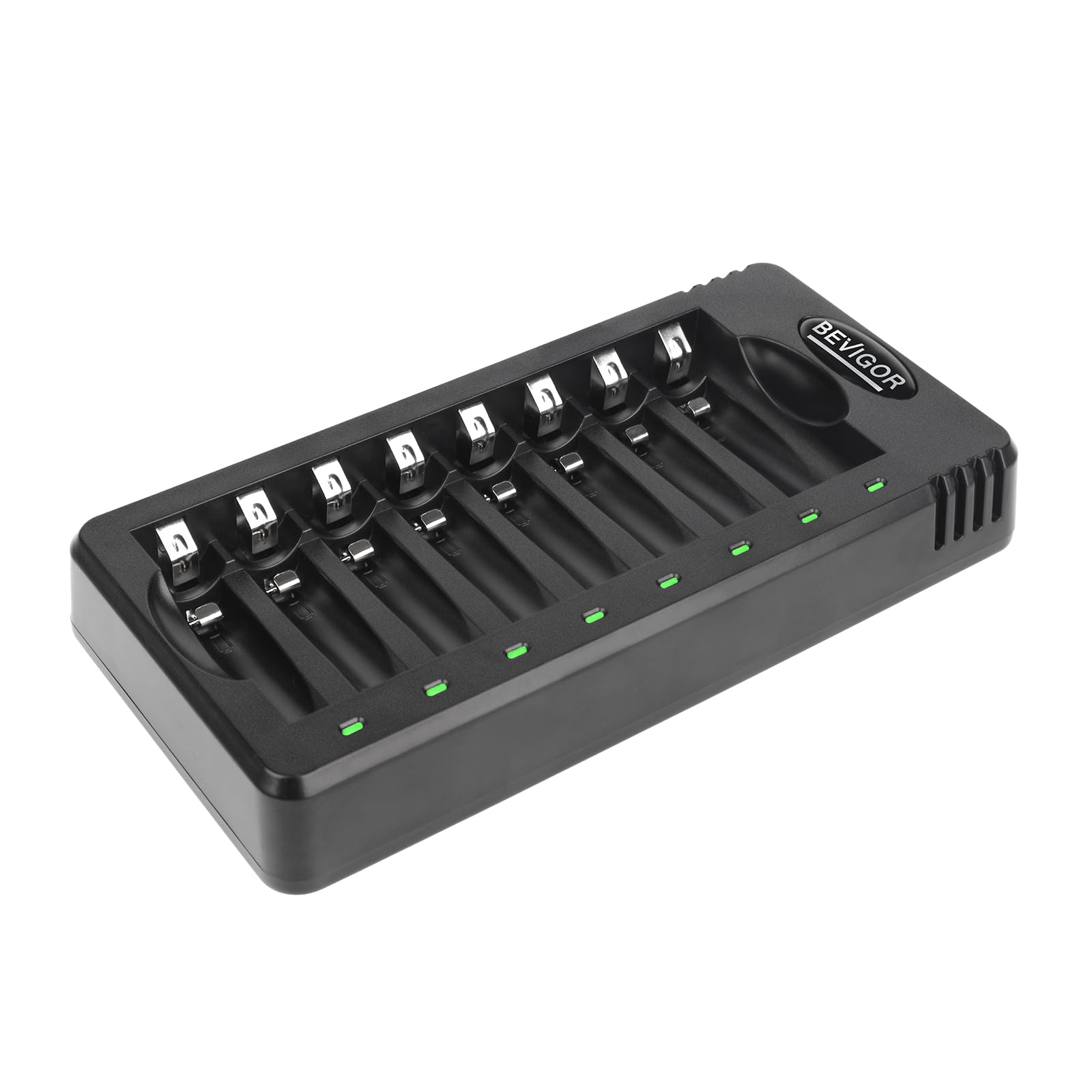
BEVIGOR's charger delivers eight independent slots and Type-C fast charging at a price that undercuts most competitors — a clear value for budget-conscious users who already own a USB adapter. However, the low cost brings compromises: some units may stop functioning after limited use, and the charged batteries can lose capacity faster than with more established brands. For a daily driver, the tradeoffs likely outweigh the savings; this makes more sense as a backup or for light, occasional use. Requires a separate USB power adapter (5V/2A recommended).

Tip: You'll need a USB power adapter (5V/2A recommended) as none is included – most phone chargers work.

Bottom line: Best suited for light or occasional use where the low price outweighs the risk of early failure or reduced battery capacity. For daily dependability, a more robust model from the set is a better fit.

10

EBL 906 Multi-Size

EBL 906 Multi-Size

Multi-size

Our Score 9.2/10
Check Price

Worth Noting

  • Included C batteries may not hold charge reliably; consider buying separate cells.
  • Some units may cease to charge batteries after a few months of use.
Bays
4+2
Rating
4.6 ★
Display
LCD
Best For
Multi-size

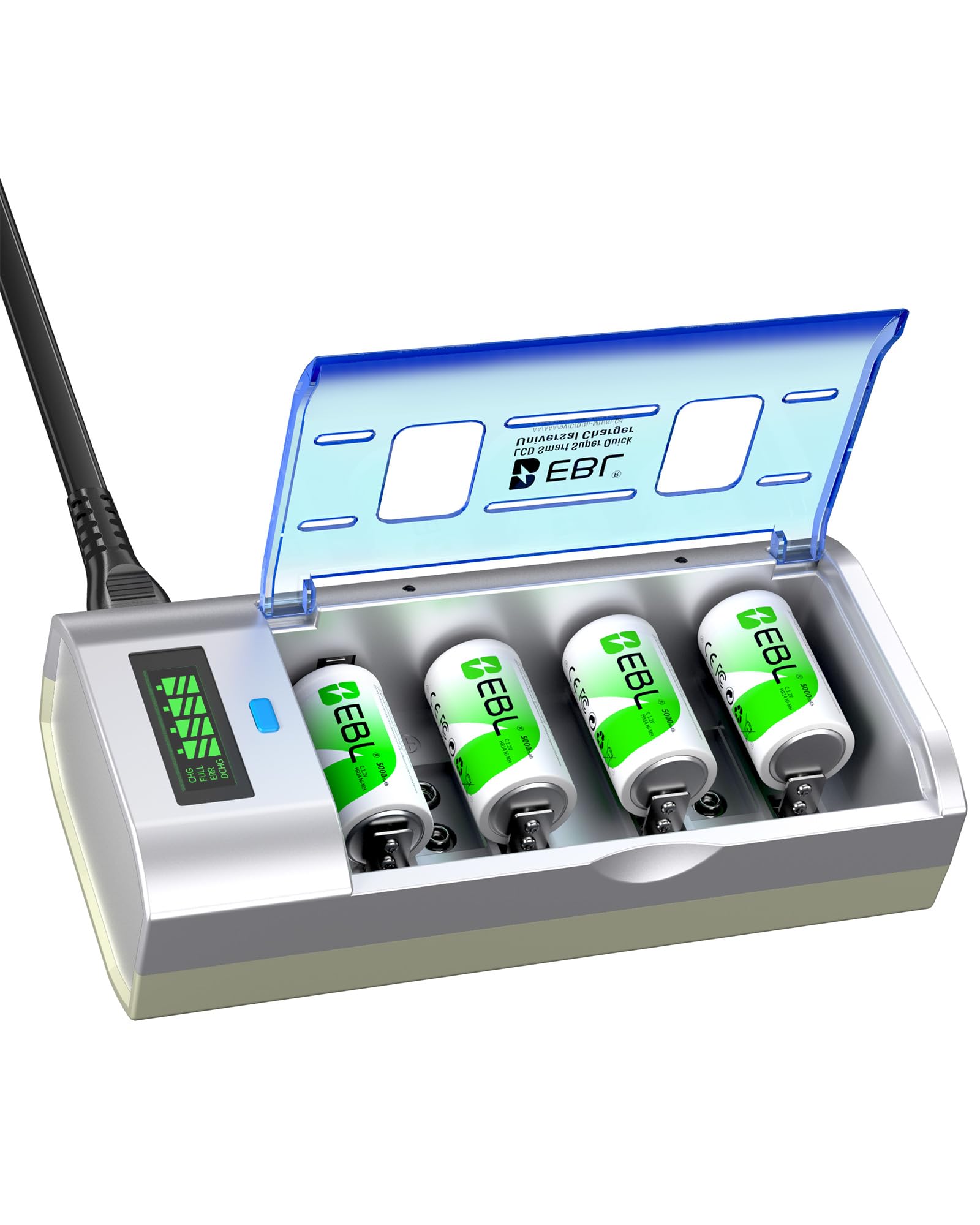
The EBL 906 handles five battery sizes and includes a discharge function that helps maximize usable capacity. The LCD display shows charge status per slot, making it simple to monitor. However, the four included C cells may not hold charge reliably, and some chargers have been noted to stop charging after several months. This is a reasonable option for households that need occasional C/D/9V charging and value the LCD feedback, but buyers who prioritize long-term charger reliability may want to look elsewhere.

Bottom line: Best suited for households that occasionally need C, D, or 9V charging and value the discharge function, but be prepared to replace the included C cells and monitor the charger's performance early on.

How to Choose

Number of Bays

A 4-bay charger is enough for most households that cycle through 4 to 8 batteries. 8-bay chargers are handy if you have many devices, but they often share current across slots, slowing charge times when all bays are full.

If you regularly charge more than 8 batteries at once, a 16-bay unit saves time, but expect slower per-cell charging and a larger footprint on your counter.

Independent vs. Pair Charging

Pair charging forces you to insert batteries in matched pairs. This means you cannot charge a single battery alone, and if one battery in a pair is defective, the other may not charge fully.

Independent slots let you charge any number of batteries in any combination. This flexibility matters if you use odd numbers (e.g., 3 AA for a camera grip) or mix AA and AAA batteries.

Included Batteries

Many chargers come with NiMH batteries, and their capacity (mAh) directly affects runtime. However, included batteries are often lower quality than premium brands like eneloop – they may lose capacity after a few dozen cycles.

Treat included batteries as a bonus for getting started, but plan to replace them with higher-grade cells if you need consistent long-term performance.

Charging Speed

Fast charging (under 4 hours) is convenient but generates more heat, which can shorten battery lifespan over time. Standard 4–7 hour charges are gentler on cells.

If you need batteries ready quickly, prioritize a charger with independent cooling or a lower current setting to balance speed and battery health.

Safety Features

Overcharge protection and auto shut-off are standard on all modern chargers. Some add polarity protection (prevents damage if batteries are inserted backwards) and bad cell detection (stops charging defective batteries).

Bad cell detection is especially useful – it saves you from wasting time on a battery that won't hold a charge and prevents potential overheating.

Display Type

LED indicators show basic charge status (red = charging, green = done, blinking = error). LCD displays add voltage, capacity (mAh), and charge time – useful for tracking battery health.

LCD chargers cost more but are worth it if you want to monitor individual cell performance or spot aging batteries before they fail.

Frequently Asked Questions