Office Electronics

8 Best Home Printer of 2026: Save Money on Ink Over Time

Find the right home printer without getting burned by hidden ink costs - whether you need color, speed, or low running costs.

Every home printer buyer faces the same dilemma: pay less now and more later, or invest upfront for lower running costs. Add in the universal headache of Wi-Fi dropouts, and the choice becomes about tolerating trade-offs rather than finding a perfect device. But the wrong choice can turn a $60 printer into a $200 expense within a year.

Inkjet cartridges cost $30 to $50 a set and last only a few hundred pages. Ink tank systems like Epson's EcoTank cut that cost to pennies per page but demand a higher initial outlay. Laser printers offer the lowest per-page cost for monochrome text and are nearly bulletproof, but they skip color entirely. For households that print less than 50 pages a month, standard inkjets can still be the cheapest upfront option - as long as you accept higher ink costs.

This guide focuses on the specs that affect your wallet and your sanity: automatic duplexing, print speed, paper capacity, and long-term cost per page. It also addresses the connectivity pitfalls that plague nearly every brand, so you know what to expect before you unbox. No hype, just a clear path to the right printer for your desk.

1

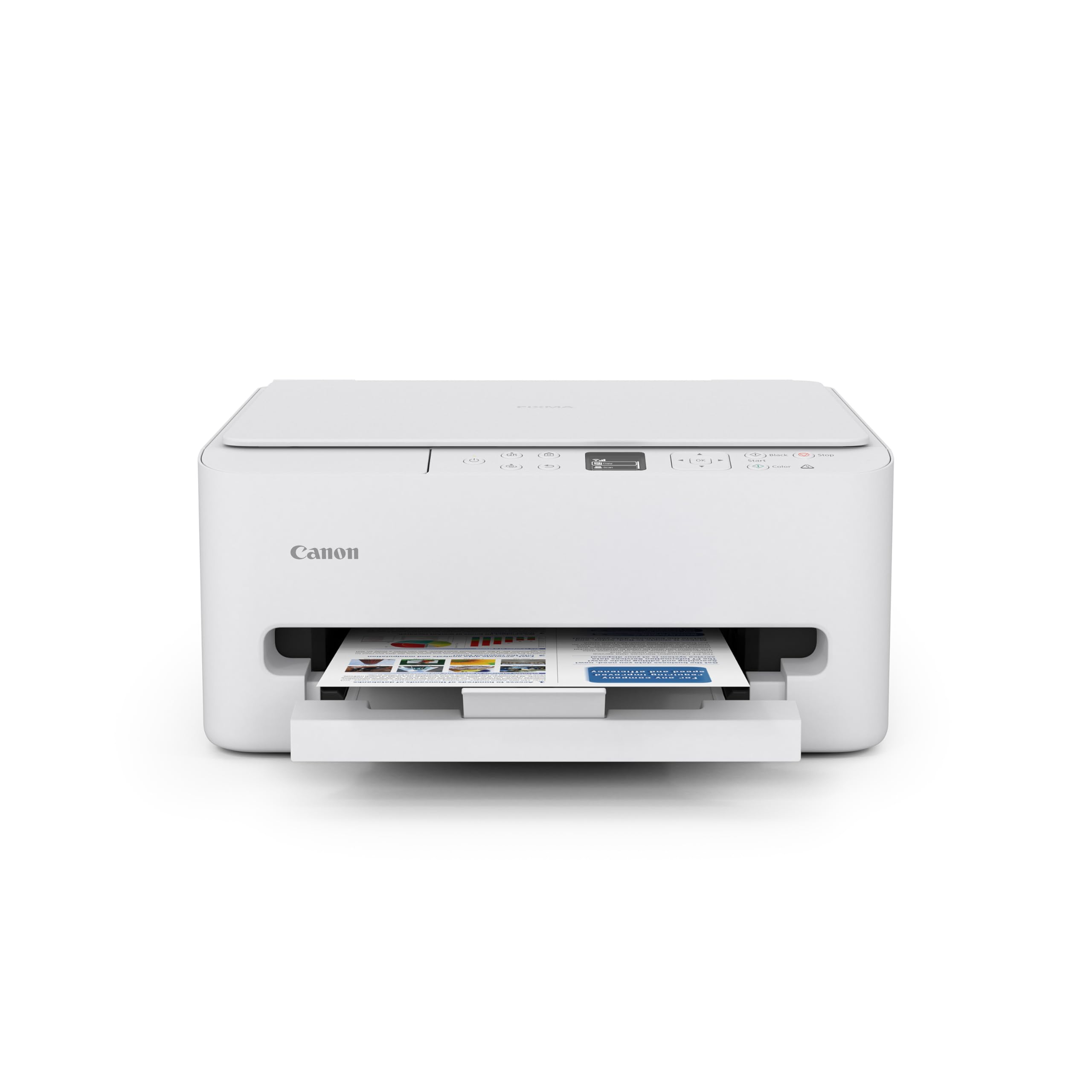
Canon PIXMA TS6520

Top Pick
Canon PIXMA TS6520

General home printing

Our Score 8.8/10
Check Price

Worth Noting

  • Color accuracy may appear dull on certain paper types, noticeable when printing high-quality photos
  • Wireless connectivity can drop during use, requiring a power cycle or reconnection
Duplex
Auto
Scanner
Flatbed
Ink System
Cartridge
Print Speed
14/9 ppm

The TS6520 combines automatic duplexing with print speeds that keep pace with home demands — 14 pages per minute in black and 9 in color. Setup involves loading paper and installing two cartridges, with the included CD or online driver guiding the process. Output quality is consistent for text documents and suitable for photo projects when using Canon’s photo paper.

Printing a 10-page school report takes under a minute, and color graphics render without banding. The flatbed scanner handles documents and photos up to letter size. Wireless connectivity may require patience during initial configuration; some units lose the Wi-Fi connection and need a power cycle. This behavior is not unusual among budget inkjets and is manageable for users comfortable with basic troubleshooting.

This printer is a strong match for households that need occasional color prints, homework assignments, and scanned copies. It isn’t suited for high-volume offices — the standard-capacity cartridges run out quickly under heavy use. If you print photos often, the color accuracy may not satisfy critical eyes, but for casual snapshots it’s fine.

Compared to a monochrome laser like the Brother DCP-L2640DW, the TS6520 sacrifices speed and per-page cost for color capability and a more intuitive interface. For homes that need color, the tradeoff is worthwhile, but those printing only text should consider a laser.

Tip: Keeping the printer close to the router and using the latest drivers can minimize wireless reconnection issues.

Bottom line: For households that print a mix of documents and occasional photos without needing a document feeder or fax, the TS6520 offers a balanced set of features at a reasonable price.

2

Brother DCP-L2640DW

Brother DCP-L2640DW

Home office text

Our Score 8.6/10
Check Price

Worth Noting

  • Wireless connectivity can drop in certain network setups
  • Print quality for halftones and images is average; text remains sharp.
Duplex
Auto
Scanner
Flatbed + ADF
Ink System
Toner
Print Speed
36 ppm

The DCP-L2640DW delivers 36 pages per minute for black-and-white documents, and its toner (standard TN830 or high-yield TN830XL) keeps per-page costs among the lowest in its category.

This model is built for a specific buyer: a home office or household that prints mostly text – forms, homework, receipts – and doesn't need color. The flatbed scanner and 50-sheet ADF make multi-page copying and scanning efficient. However, halftones and images come out grainy, so photo-heavy projects or presentations with charts will look flat. If your household prints the occasional color page, a color inkjet or an EcoTank would suit better.

Wireless setup is usually quick, but some environments – especially those with mesh Wi-Fi or network congestion – may require manually assigning a static IP to prevent dropouts. Once connected, the printer runs without interruption, handling moderate daily print volumes with ease.

Tip: Assign a static IP address in your router settings if you experience intermittent Wi-Fi drops – this usually resolves the issue.

Bottom line: The DCP-L2640DW is the right fit if your household prints primarily black-and-white documents and you value low running costs – but it can't replace a color printer for general family use.

3

Canon PIXMA TS4320

Canon PIXMA TS4320

Budget families

Our Score 8.2/10
Check Price

Worth Noting

  • Ink cartridges run out quickly when printing more than occasional pages
  • Some units may develop print quality issues or mechanical problems within months of use
Duplex
Auto
Scanner
Flatbed
Ink System
Cartridge
Print Speed
14/9 ppm

The Canon PIXMA TS4320 undercuts nearly every other color all-in-one on upfront price while still including automatic duplex printing and a flatbed scanner. Setting it up takes minutes, and the small footprint fits comfortably on a narrow desk. Where the top pick in this category offers more consistent wireless performance, the TS4320 keeps the initial cash outlay to a minimum.

This printer targets households that print a few pages per week — homework assignments, coupons, the occasional sign. The wireless connection can drop during longer print jobs, and the per-page ink cost climbs quickly if you print more than a handful of pages. For very light, infrequent use the TS4320 delivers color output without a big upfront investment.

The two-cartridge system (PG-295 / CL-286) produces decent text and color for basic documents, though photo quality is typical of budget inkjets. Print speed of 14 ppm black and 9 ppm color is adequate for short runs but slow for any multi-page job. The 100-sheet input tray limits unattended printing of longer documents.

Tip: If the printer drops its Wi-Fi connection, power-cycling both the printer and the router often restores it without a full re-setup.

Bottom line: If you print only a few pages a week and want to spend as little as possible upfront, the TS4320 works well enough — just budget for replacement ink and keep expectations modest on wireless reliability.

4

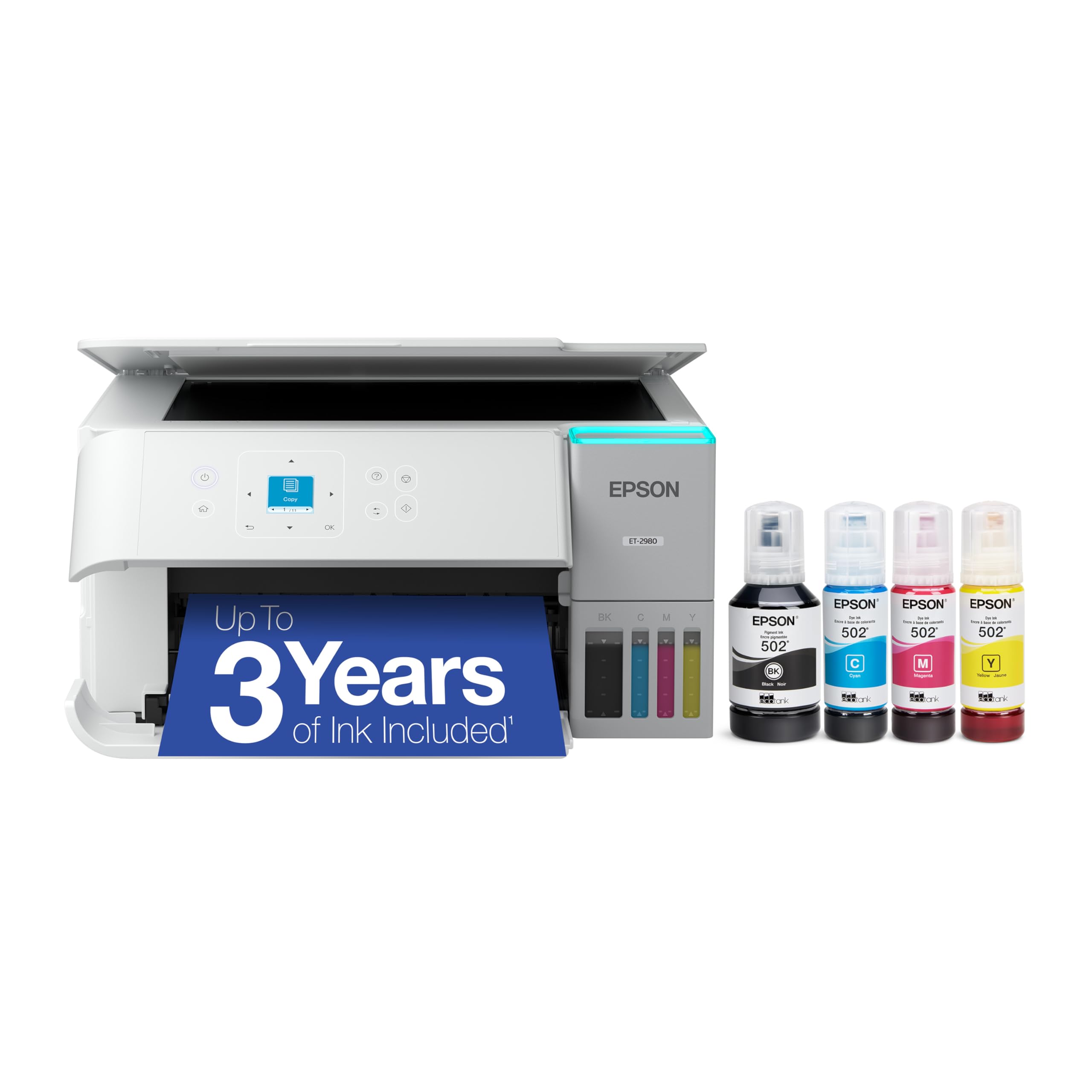
Epson EcoTank ET-2980

Epson EcoTank ET-2980

High-volume home

Our Score 8.2/10
Check Price

Worth Noting

  • In dim lighting, the small display is hard to read and the control layout is unintuitive.
  • In homes with thick walls or distant router, the Wi-Fi connection may drop during long print jobs.
  • When feeding mixed paper types or cardstock, jams can occur
Duplex
Auto
Scanner
Flatbed
Ink System
Ink tank
Print Speed
15/8 ppm

The ET-2980 delivers the lowest ongoing ink costs among home printers with automatic duplexing, thanks to the included ink bottles that yield up to 6,600 pages. It undercuts the EcoTank ET-2800, which lacks auto-duplex, without a significant price jump.

Print speeds are adequate for home use at 15 pages per minute in black; color prints are slower but acceptable for occasional documents. Wireless setup is straightforward, though the connection can be inconsistent in homes with thick walls or distant router placement.

This printer suits households that print enough volume to recoup the higher upfront cost of the ink tanks — typically a few hundred pages per month. However, paper jams can occur when feeding mixed paper types, and the small display makes menu navigation slow. Those who need a simple, walk-up experience may find the interface frustrating.

Tip: Use the Epson Smart Panel app to control settings from your phone — the built-in display is best reserved for basic tasks.

Bottom line: If ink savings are your top priority and you can tolerate occasional paper jam possibilities, the ET-2980 delivers unmatched value for a home printer with auto-duplex.

5

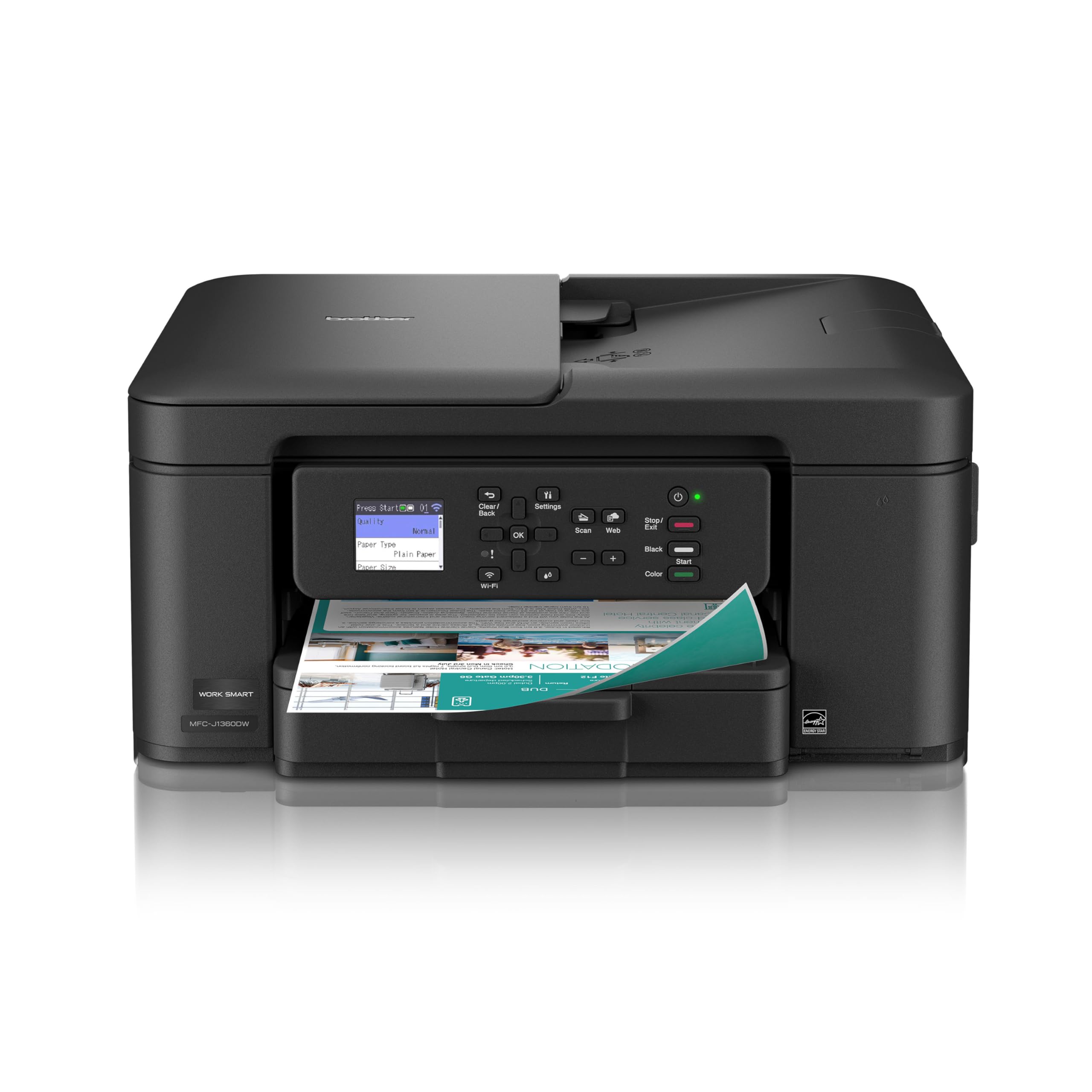
Brother Work Smart 1360

Brother Work Smart 1360

Budget ADF users

Our Score 8.0/10
Check Price

Worth Noting

  • Wireless connection can drop, requiring manual reconnection to maintain network access.
  • Print quality and functionality can vary between units; some may develop issues within weeks.
  • Ink cartridges run out after a few dozen pages, making per-page costs high for regular use.
Duplex
Auto
Scanner
Flatbed + ADF
Ink System
Cartridge
Print Speed
16/9 ppm

Under $110, the Brother Work Smart 1360 includes both a 20-sheet automatic document feeder and automatic duplex printing — a rare combination at this budget level. Setup is quick, and the compact footprint fits small desks.

This printer suits households that need occasional scanning or copying of multi-page documents without spending extra for an ADF. However, the high ink consumption means it's not for anyone printing more than a few dozen pages per month. The wireless connection may require occasional reconnection, and some units show variability in long-term reliability — tradeoffs worth considering for light use only.

Compared to EcoTank models that offer lower ink cost per page, this Brother trades long-term savings for a lower initial price and the convenience of an ADF. For a user who values up-front affordability and the ability to feed multiple originals, it fills a specific gap.

Tip: Using draft mode and monochrome for document prints can stretch ink further.

Bottom line: If you need an ADF and duplex on a strict budget and print only occasionally, this Brother covers the essentials — just keep extra ink cartridges on hand.

6

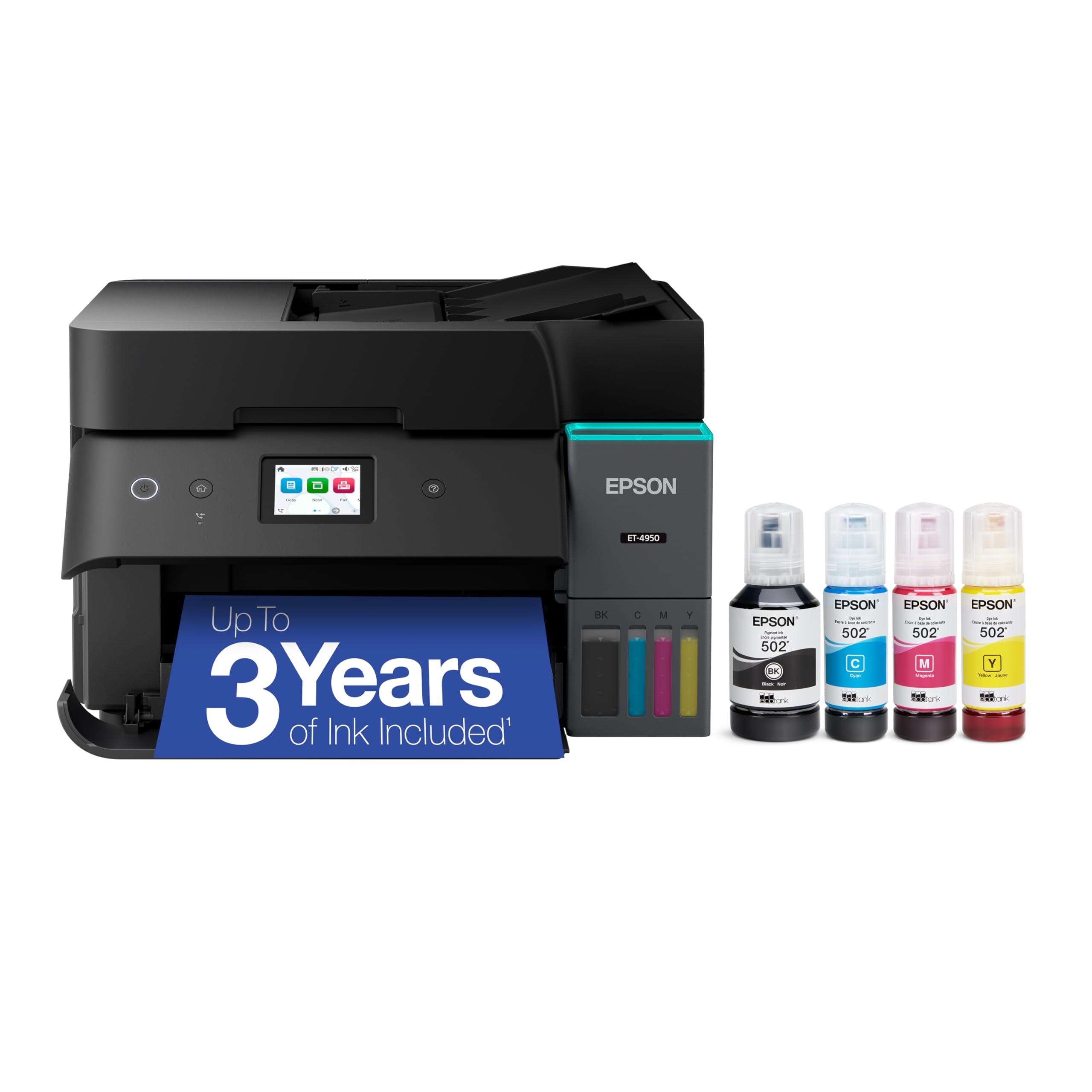
Epson EcoTank ET-4950

Epson EcoTank ET-4950

Heavy color printing

Our Score 8.6/10
Check Price

Worth Noting

  • Wireless connection can drop from the network or fail to reconnect in some cases.
  • Print speed is slower than other premium models, and occasional paper jams may occur.
Duplex
Auto
Scanner
Flatbed + ADF
Ink System
Ink tank
Print Speed
18/9 ppm

For households printing thousands of color pages each year, the ET-4950's ink bottle system delivers dramatically lower per-page costs than cartridge printers. Print quality is strong for both documents and photos, and setup is straightforward. However, the premium price is a barrier for casual use, and the wireless connection can drop from the network or fail to reconnect. Occasional paper jams and slower print speeds (18 ppm black, 9 ppm color) mean this printer suits volume rather than speed. It is best matched to home offices with heavy color needs.

Bottom line: For heavy color printing, the low long-term costs outweigh the initial price and connectivity issues — but only if your monthly volume justifies it.

7

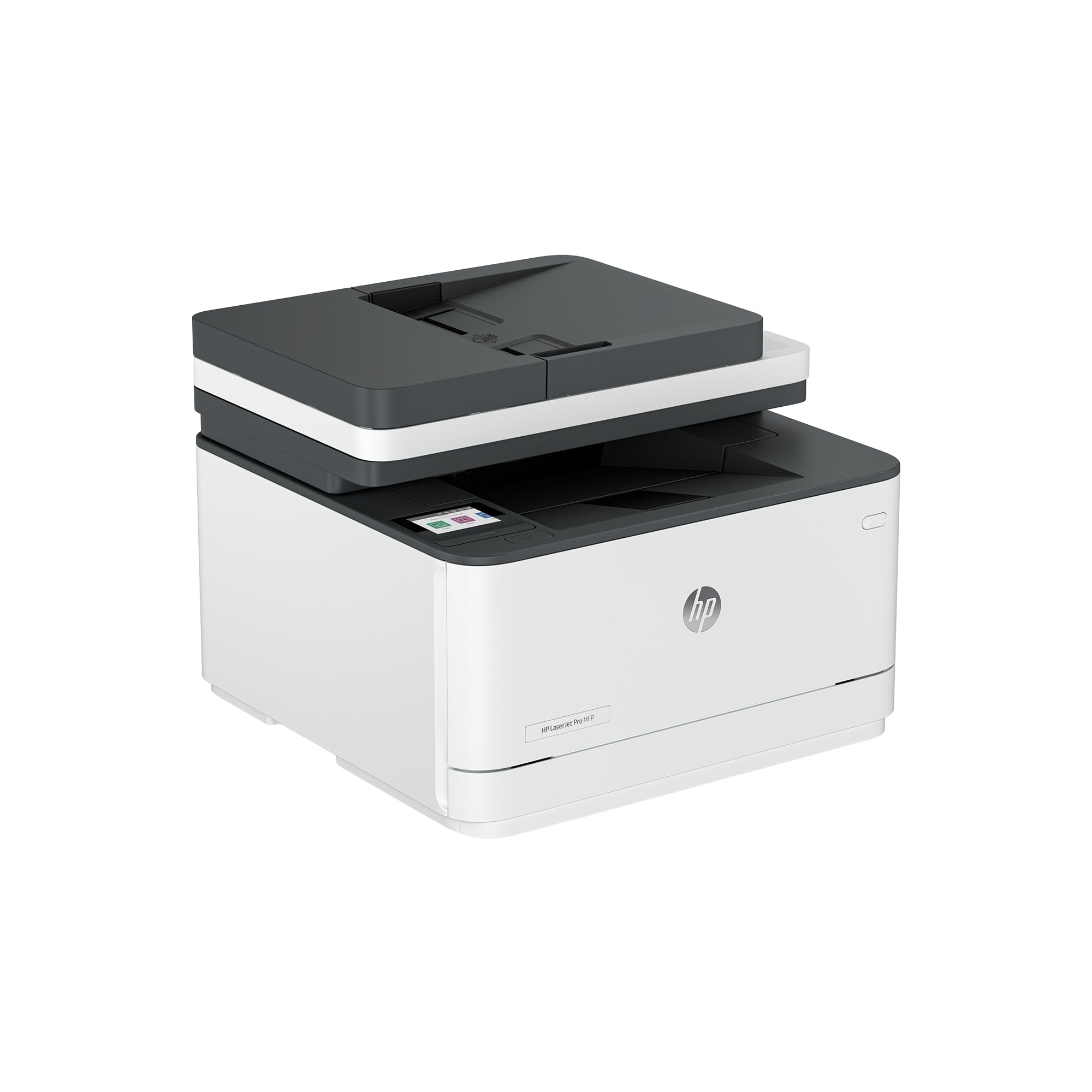
HP LaserJet Pro 3101sdw

HP LaserJet Pro 3101sdw

High-volume text

Our Score 9.0/10
Check Price

Worth Noting

  • Purchase price is higher than typical home inkjet printers
  • Monochrome only
Duplex
Auto
Scanner
Flatbed + ADF
Ink System
Toner
Print Speed
35 ppm

The HP LaserJet Pro 3101sdw prints text at 35 pages per minute with sharp clarity, and its wireless setup remains stable across sessions. For a home office or a household that prints only black-and-white documents, this is a capable performer. However, it lacks any color capability, making it unsuitable for photos or color documents that general household use often requires. The upfront cost is also higher than most home inkjet all-in-ones, though per-page toner costs are lower over time. This printer is better directed at a small office or a home with heavy monochrome needs rather than a typical family looking for a versatile home printer.

Bottom line: This HP works well for dedicated monochrome printing in a small office, but most home users should look for a color model from our top picks.

8

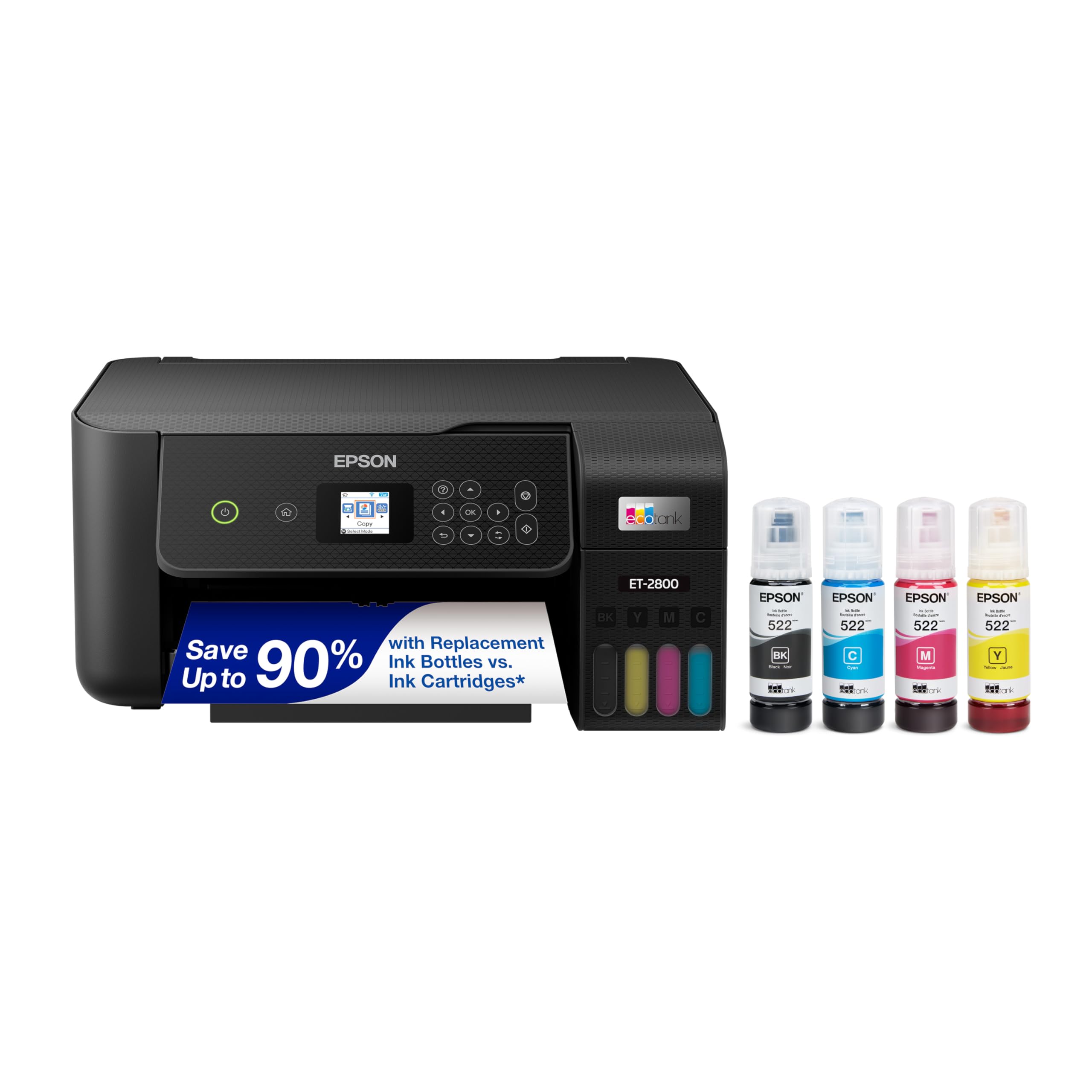
Epson EcoTank ET-2800

Epson EcoTank ET-2800

High-volume home

Our Score 8.2/10
Check Price

Worth Noting

  • For double-sided printing, manual flipping is required
  • The 1.44-inch non-touch display makes menu navigation less intuitive than modern touchscreens.
Duplex
Manual
Scanner
Flatbed
Ink System
Ink tank
Print Speed
10/5 ppm

The ET-2800 delivers on its promise of drastically reduced ink costs with refillable tanks and included bottles that handle up to two years of typical home use. Its 100-sheet paper tray and 10 ppm black speed manage moderate volumes. However, the manual-only duplex means each two-sided page requires flipping sheets by hand, and the small 1.44-inch non-touch display relies on arrow-key navigation — acceptable for straightforward tasks but less convenient for frequent changes. This printer fits households that prioritize low long-term ink spending over automated double-sided printing and a modern interface.

Bottom line: Works well for households that print single-sided documents and want the lowest possible ink costs; choose a different model if automatic duplexing or a touchscreen interface matters.

How to Choose

Print Speed: Pages Per Minute

Print speed matters if you often print multi-page documents. Inkjet printers generally deliver 10-15 ppm for black text and slower for color. Laser printers can hit 30+ ppm for monochrome, making them far more efficient for text-heavy workloads. However, advertised speeds are measured on simple text drafts - real-world speed with graphics or duplex printing is often half that.

Auto-Duplex Printing

Automatic two-sided printing saves paper and makes multi-page documents feel professional. Many budget models omit it, requiring you to manually flip pages - a tedious process for any document over a few sheets. If you print school projects, reports, or double-sided flyers, auto-duplex is worth the small price premium.

Paper Input Capacity

Standard home printers hold 100 sheets in a single tray. If you print more than 20 pages a week, you'll be refilling constantly. Models with 250-sheet cassettes reduce that chore significantly. For high-volume users, a 250-sheet tray plus an ADF for scanning makes a real difference in daily convenience.

Cost Per Page: Cartridge vs Tank vs Laser

The per-page cost is the hidden variable that determines your total ownership expense. Standard inkjet cartridges cost 10-20 cents per black page. Ink tank systems like Epson's EcoTank drop that to under a cent. Monochrome lasers land around 2-3 cents per page. The trade-off: tank and laser printers cost more upfront, but you recoup the savings within the first few hundred pages if you print regularly.

Scanner: Flatbed vs ADF

A flatbed scanner works for single pages or books. An automatic document feeder (ADF) lets you scan or copy a stack of pages without manually placing each one. If you frequently scan multi-page documents - receipts, contracts, school assignments - an ADF is a major time-saver. Budget inkjets rarely include one, while many laser all-in-ones do.

Frequently Asked Questions