Cameras & Photography

10 Best Camera for Vlogging of 2026: Real 4K Without the 8K Hype

Struggling to choose a vlogging camera? Avoid misleading 8K claims and short battery life. This guide picks the best for your style and budget.

Vlogging cameras often promise specs that sound impressive on paper—8K resolution, long battery life, compact designs—but quickly reveal trade-offs once you start filming. Many under-$200 cameras quote 8K at 15 frames per second, which produces unusably choppy video, and even mid-range models can overheat after 20 minutes of recording. The challenge is finding a camera that delivers on its real-world performance without hidden compromises.

The key differentiator is often stabilization type versus autofocus speed. A camera with a mechanical gimbal produces smooth walking shots but may lack the wide-angle lens needed for selfies. Another with lightning-fast eye-tracking autofocus might rely on digital stabilization that falls short during active filming. This guide focuses on those core decisions—screen type, battery expectations, and real resolution—so you pick a camera that matches how you actually vlog.

1

DJI Osmo Pocket 3

Top Pick

DJI Osmo Pocket 3

Professional vlogging

Our Score 9.2/10
Check Price

Worth Noting

  • Some units may experience gimbal lock or overheating during extended use in warm conditions.
  • Premium pricing puts it out of reach for budget-conscious buyers.
Autofocus
Face/Object tracking
Screen Type
2-inch rotating touchscreen
Video & FPS
4K 120fps
Battery Life
166 min

The 3-axis mechanical gimbal delivers smooth footage even during active walking or dancing, while the 1-inch sensor captures clean 4K video up to 120fps. This combination of stabilization and sensor size is unmatched in a body that slips into a jacket pocket. The rotating 2-inch touchscreen makes self-framing effortless, and ActiveTrack 6.0 keeps subjects centered without manual intervention.

In practice, the tracking is responsive enough to follow a face moving around a room, and the quick setup means you can start recording seconds after pulling it out. The body stays cool during typical 20-minute clips, though some units may experience gimbal lock or thermal shutdown if used continuously in hot environments. These hiccups are not universal, but they are worth being aware of for long outdoor shoots.

This camera is best suited for serious vloggers who prioritize steady, high-bitrate footage over ruggedness or extended battery life. Travel creators who value pocketability and solo content creators who rely on autofocus and object tracking will find it a natural fit. The price is premium, and the lack of waterproofing means it stays on the trail or indoors, not on a wet kayak. Buyers on a tight budget or those needing a go-anywhere action cam should look elsewhere.

Tip: Keep firmware updated and avoid prolonged direct sunlight exposure to reduce the chance of gimbal errors.

Bottom line: If you need pro-grade stabilization and 4K slow-motion in a truly pocket-friendly form, this is the vlogging camera to get — its occasional thermal quirks are manageable for most indoor and outdoor shoots.

2

DJI Osmo Action 5 Pro

DJI Osmo Action 5 Pro

Action vlogging

Our Score 9.4/10
Check Price

Worth Noting

  • Front screen is less convenient for precise selfie framing than a flip-out display
  • Some units may exhibit gimbal errors or dead pixels upon arrival
Autofocus
Subject tracking
Screen Type
Dual OLED touchscreens
Video & FPS
4K 120fps
Battery Life
4 hrs

The DJI Osmo Action 5 Pro delivers 4K/120fps video with HorizonSteady stabilization that keeps horizons level even during fast spins, and a 4-hour battery life that exceeds typical action camera endurance. While the top pick's mechanical gimbal provides smoother panning for static vlogs, this camera's electronic stabilization is more forgiving when you're bouncing down a trail or wiping water off the lens.

This camera suits vloggers who shoot in wet, dusty, or high-motion environments — kayakers, mountain bikers, or anyone who needs a camera that can handle drops and submersion up to 20 meters. The front screen helps with selfie framing, but it lacks the articulation of a flip-out display, so precise composition requires some adjustment. For daily sit-down vlogging, a dedicated vlogging camera with a rotating screen is easier to use.

When working correctly, the footage is sharp and vibrant even in dim light, and the dual OLED touchscreens make menu navigation intuitive. Some units may arrive with gimbal errors or dead pixels, so testing right away and using the warranty is worthwhile. The real-world battery holds up well across a day of intermittent recording, though continuous 4K at 120fps will cut that time roughly in half.

Tip: Use the front screen for rough framing, then rely on the rear touchscreen for fine adjustments; a wide-angle lens helps keep yourself in frame.

Bottom line: A rugged action camera with exceptional stabilization and battery life — a smart choice for vloggers who prioritize durability and endurance over selfie-screen flexibility.

3

Sony ZV-1F

Sony ZV-1F

Social media vlogging

Our Score 9.0/10
Check Price

Worth Noting

  • Digital stabilization only; active movement can introduce noticeable camera shake.
  • Cold shoe only limits direct flash or accessory mounting without an adapter.
Autofocus
Real-time Eye AF
Screen Type
3-inch side-articulating
Video & FPS
4K 30fps, FHD 120fps
Battery Life

The ZV-1F produces sharp 4K video with natural colors straight out of camera, and its 20mm ultra-wide F2.0 lens makes it easy to fit both subject and background into a selfie frame. Unlike the top pick's gimbal-based stabilization, this camera relies on digital stabilization, so active handheld shots may show some shakiness.

This camera is best for social media vloggers who shoot short clips, beginners wanting reliable autofocus without fiddling, and anyone comfortable with frequent battery swaps. Battery life is short; expect to carry extra batteries for a full day of shooting. The digital stabilization handles minor movement but is not a replacement for a gimbal, making it less suited for walking or on-the-move vlogging.

Setup is quick thanks to a responsive touchscreen and clear menu layout, and the side-articulating screen helps with self-framing. The tradeoff is a cold shoe instead of a hot shoe, limiting direct flash or accessory mounting without an adapter.

Tip: Carry at least two spare batteries for a full day of on-the-go recording.

Bottom line: For vloggers who prioritize autofocus and a wide field of view over built-in stabilization, the ZV-1F delivers on its core promise, but be prepared to manage battery life and shooting technique.

4

ZYDIIE 4K Camcorder

ZYDIIE 4K Camcorder

Budget beginners

Our Score 8.8/10
Check Price

Worth Noting

  • Autofocus may hesitate when tracking fast-moving subjects.
  • Digital stabilization provides limited shake reduction; walking shots appear noticeably bouncy.
  • Low-light video quality drops with visible noise, making evening shoots less usable.
Autofocus
Autofocus
Screen Type
3-inch 270° rotatable touchscreen
Video & FPS
4K 30fps
Battery Life
2 bat incl

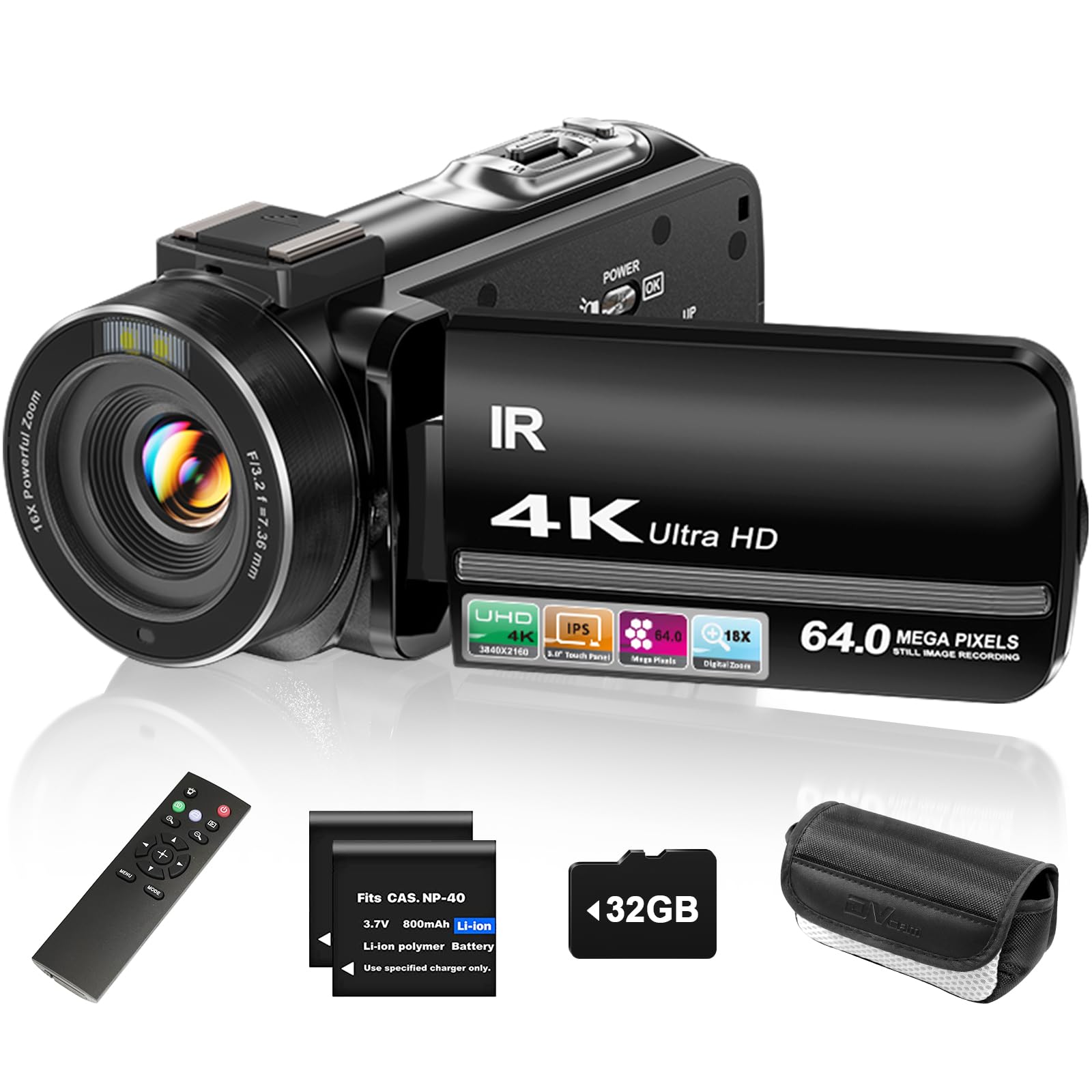
The ZYDIIE 4K Camcorder records true 4K at 30fps and comes with a 32GB card, two batteries, and a remote control - an uncommon level of completeness at this price point. Its 270-degree rotating touchscreen makes self-framing straightforward, a feature often missing from budget options.

The lightweight build and touchscreen interface make it easy to pick up and start recording without diving into menus. In low-light settings, image noise becomes more apparent, which limits its use to well-lit environments. The digital stabilization helps reduce minor hand shake but walking shots will show noticeable bounce. Some users have noticed occasional autofocus hesitation when subjects move quickly.

This camcorder is a natural fit for first-time vloggers, families, and travel enthusiasts who want an all-in-one solution without investing in separate accessories. It performs well for daytime outdoor vlogs, indoor shoots with good lighting, and casual recording. If you frequently shoot at night or need smooth walking footage, a gimbal-equipped camera like the top pick would be a better match.

Tip: Bring an external LED light for indoor vlogs to counteract the low-light noise.

Bottom line: For budget-conscious vloggers who shoot in good light, this camcorder offers a complete starter kit with solid 4K video just be prepared to work around its stabilization and low-light limits.

5

DJI Osmo Action 4

DJI Osmo Action 4

Value action

Our Score 9.2/10
Check Price

Worth Noting

  • In hot environments the camera may overheat and shut down as a safety measure
  • 4K recording yields 60-90 minutes of actual use, far less than the advertised 160 minutes
  • Some units can develop water ingress or gimbal lock issues after drops or pressure
Autofocus
Contrast AF
Screen Type
Dual color touchscreens
Video & FPS
4K 120fps
Battery Life
160 min (claimed)

The Osmo Action 4 stands out with its 1/1.3-inch sensor and 10-bit D-Log M color profile, producing noticeably cleaner footage in dim settings than most action cameras in its price range. The RockSteady stabilization keeps handheld walking shots smooth, and the dual touchscreens make framing easy. This is a clear step up in low-light performance compared to the top pick’s smaller sensor, though you lose the mechanical gimbal’s extra-sharp pans.

That image advantage comes with real-world tradeoffs. In direct sun or hot climates, the camera can overheat and shut down to protect itself — a limitation for summer beach days or long outdoor recording sessions. Battery life in 4K mode runs about 60-90 minutes instead of the 160-minute claim, which means spare batteries are essential for more than short clips. Some units have also shown water ingress or gimbal lock after drops, so this isn’t a set-and-forget tool for rugged use.

This action camera fits best for travel vloggers and outdoor shooters who prioritize low-light image quality and don’t mind carrying extra batteries or avoiding extreme heat. It’s also a smart entry into the DJI ecosystem for those already using their gimbals or drones. If you need a daily-carry vlog camera with gimbal stability, the top pick’s rotating screen and longer battery in a pocketable body will serve you better.

Tip: Carry spare batteries and shoot at 1080p or 30fps if you need longer run times — the 160-minute claim assumes ideal conditions and lower resolutions.

Bottom line: A capable action camera with impressive low-light performance, but best chosen for temperate conditions and short recording sessions where you can manage battery and heat.

6

TESFOT 4K Flip Screen

TESFOT 4K Flip Screen

Ultra-budget beginners

Our Score 8.8/10
Check Price

Worth Noting

  • When smooth motion video is needed, the 4K mode's 10fps creates a stuttering effect
  • WiFi pairing can be finicky in crowded signal environments
Autofocus
Autofocus
Screen Type
2.8-inch 180° flip screen
Video & FPS
4K 10fps, 2.7K 30fps
Battery Life
2 bat incl

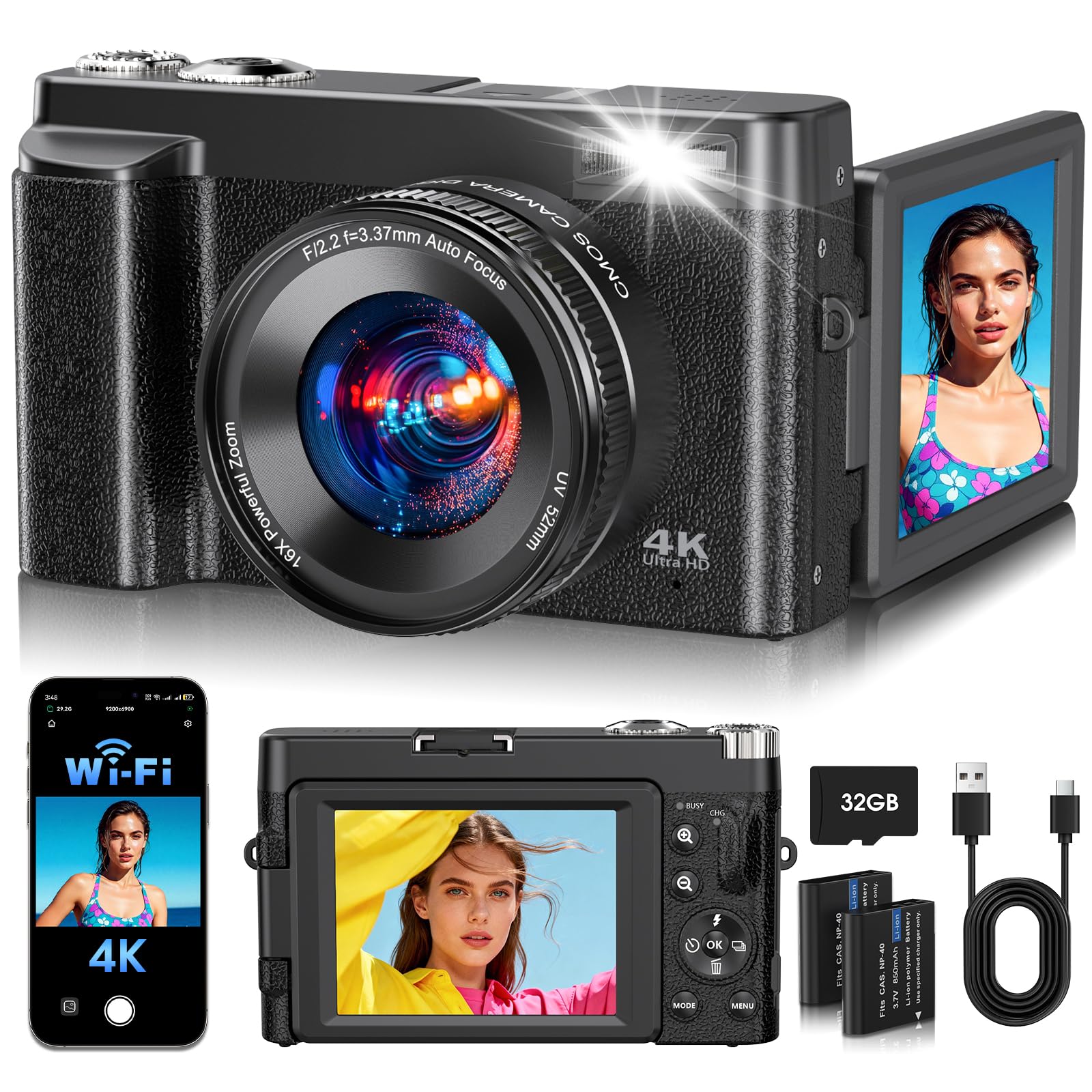
A 180-degree flip screen and two batteries plus a memory card for under $60 makes this the most accessible entry point for someone wanting to film themselves. The lightweight body and simple controls mean no learning curve — just point, flip the screen, and record.

This camera targets kids, travel diarists, or anyone buying a first vlogging camera on a tight budget. The tradeoff is that true 4K runs at only 10 frames per second — not usable for smooth video. Switch to 2.7K at 30fps for normal-looking footage; the camera still delivers vibrant colors and acceptable sharpness for casual clips.

The included 32GB card and spare battery remove the usual extra costs, but the WiFi feature can be inconsistent when connecting to a phone — using the included card reader is a more dependable way to transfer files. For the price, the kit covers the basics without hidden upgrades.

Tip: Set video mode to 2.7K at 30fps for smooth playback — the 4K setting is best for still scenes or frame grabs.

Bottom line: A budget-friendly starter camera for kids and casual users who value the flip screen and included kit over video frame rate; plan to shoot in 2.7K for smooth clips.

7

FlyFrost 8K Camcorder

FlyFrost 8K Camcorder

Beginner kits

Our Score 8.8/10
Check Price

Worth Noting

  • 8K mode at 15fps creates choppy video; 4K is the practical maximum
  • Night vision is grainy and monochrome, not suitable for usable footage
Autofocus
Autofocus
Screen Type
3-inch 270° rotatable touchscreen
Video & FPS
8K 15fps, 4K 30fps
Battery Life
2 bat incl

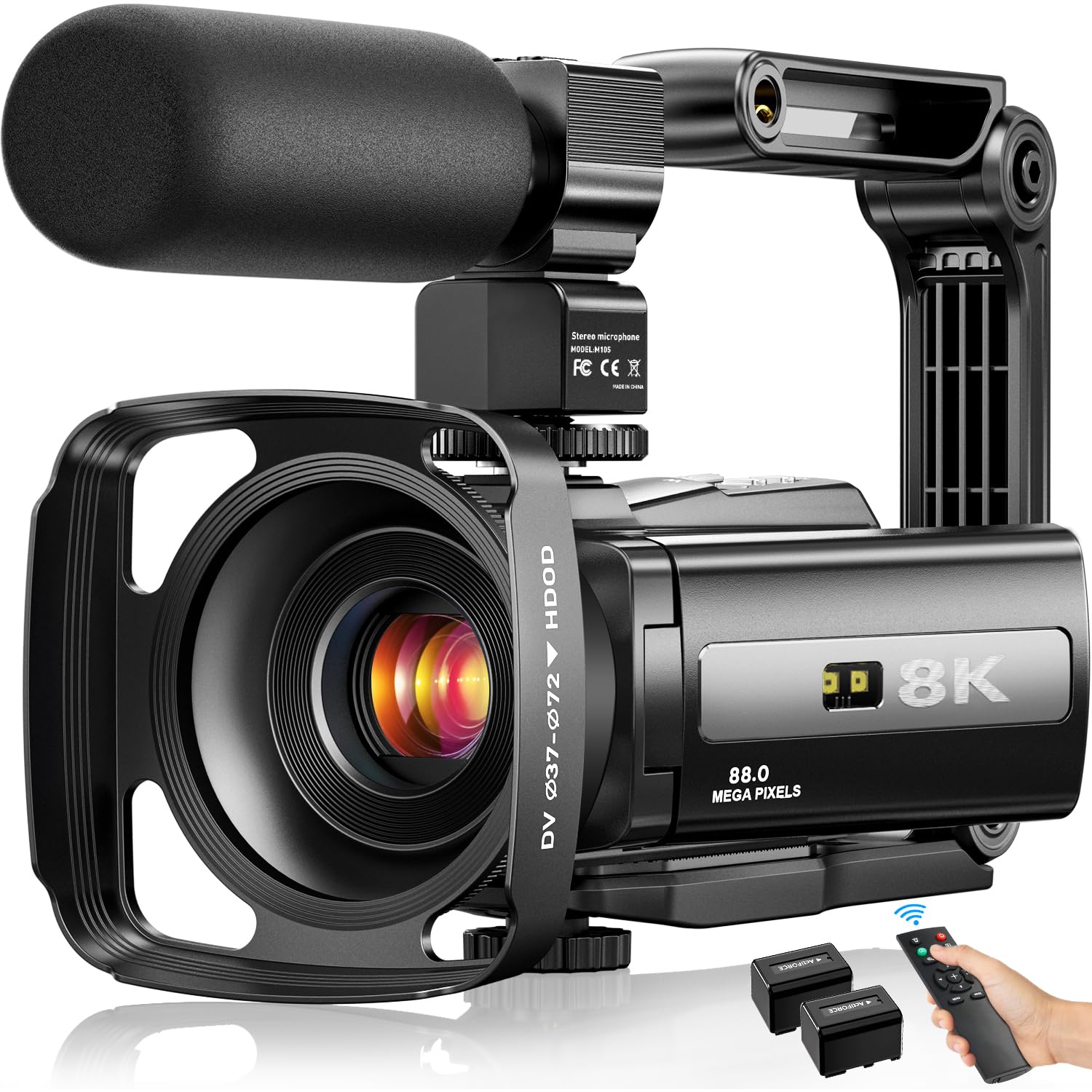
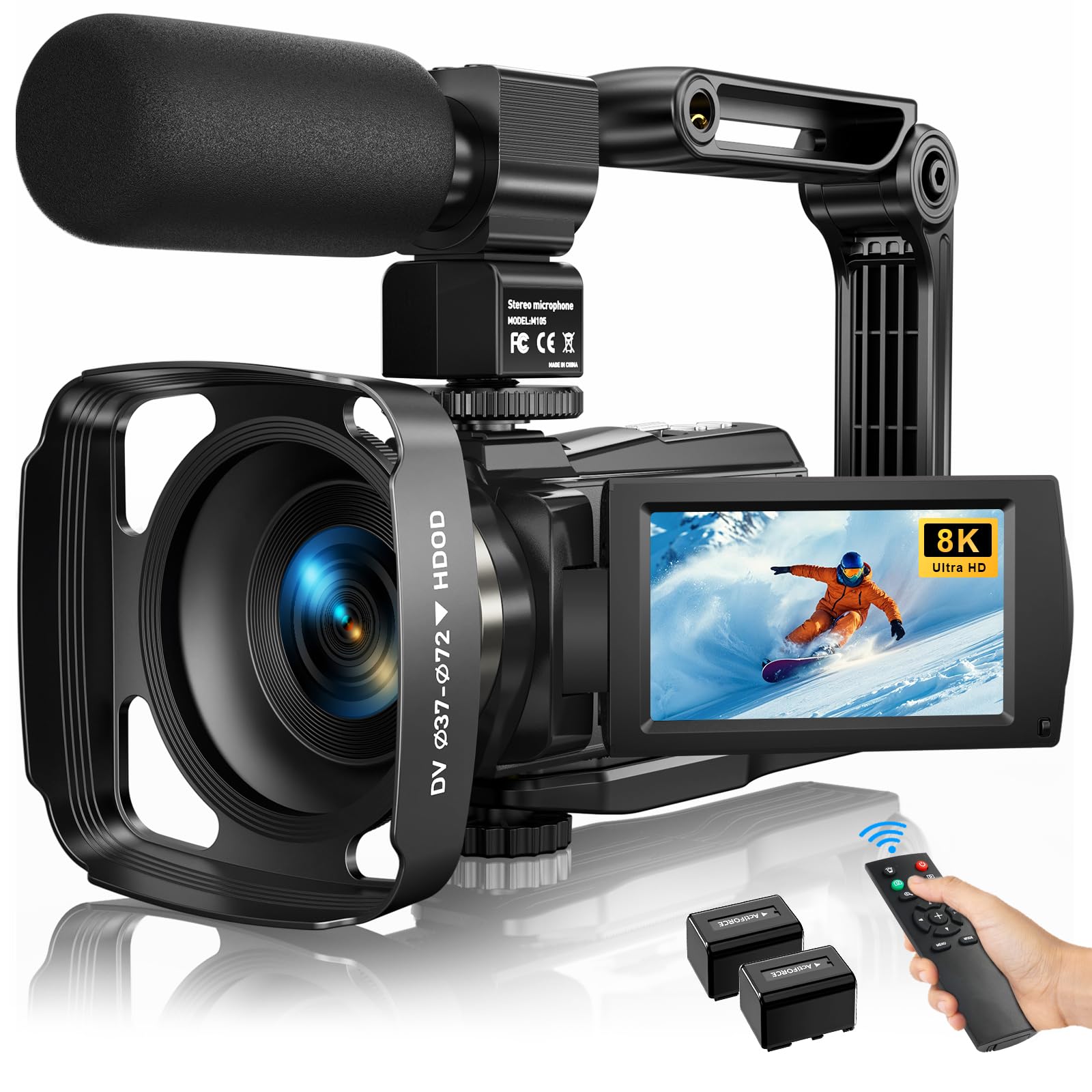
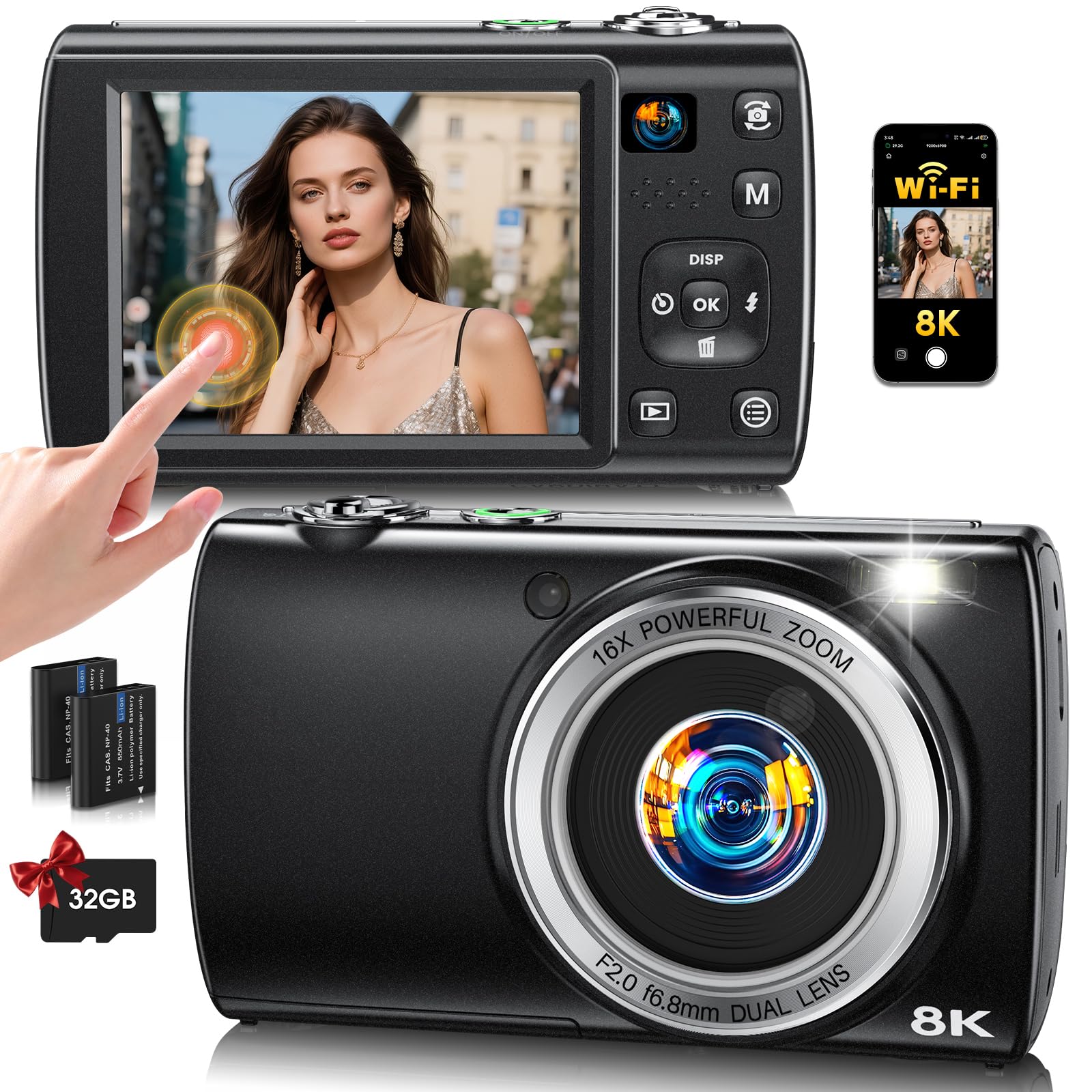
The FlyFrost 8K Camcorder packs a generous bundle: two batteries, microphone, lens hood, remote, and stabilizer — everything a new vlogger needs to start recording right away. In good lighting, the 4K mode (30fps) delivers sharp, clear footage that suits travel and talking-head content. However, the headline 8K mode runs at only 15fps, producing choppy motion; for smooth video, stick to 4K. Night vision is black-and-white and grainy, limiting its use to dim environments where image quality isn't critical. The digital stabilization helps reduce minor shake but won't match a gimbal for active recording.

Bottom line: This kit works well for beginners who shoot in good light and want a complete setup at a low cost, but those needing smooth 8K or reliable low-light performance should consider a different camera.

8

MWIRB 8K Camcorder

MWIRB 8K Camcorder

Budget kits

Our Score 8.2/10
Check Price

Worth Noting

  • 8K mode is limited to 15fps, making it impractical for smooth video
  • Image quality drops noticeably in low light; even night vision is black-and-white only.
Autofocus
Autofocus
Screen Type
3-inch 270° rotatable touchscreen
Video & FPS
8K 15fps, 4K 30fps
Battery Life
2 bat incl

This MWIRB kit delivers solid 4K footage at 30fps, a rotating touchscreen, and enough extras to start vlogging right away. The 8K mode, however, runs at only 15fps — best treated as a still frame capture rather than usable video. Image quality in low light falls short, though the included IR night vision works in black-and-white for dim environments. For beginners who want a ready-to-go setup without a big budget, this camcorder covers the basics well; it’s the misleading 8K spec and low-light limits that keep it from competing with more polished options.

Tip: Stick to 4K mode for all video; the 8K setting is best for grabbing still frames.

Bottom line: Best for budget-conscious beginners who want a complete vlogging kit and can work within its 4K sweet spot and well-lit environments.

9

LOUM 8K Dual Lens

LOUM 8K Dual Lens

Budget stills

Our Score 8.4/10
Check Price

Worth Noting

  • 8K video is capped at 15fps, so smooth motion requires dropping to 4K or lower.
  • In low-light scenes, both photos and video can appear grainy
Autofocus
Autofocus
Screen Type
2.8-inch IPS touchscreen
Video & FPS
8K 15fps, 4K
Battery Life
2 bat incl

This LOUM camera produces sharp, vibrant photos and offers a responsive touchscreen that simplifies settings adjustments — a strong combo for entry-level photographers. The compact body and included 32GB card plus two batteries make it a ready-for-travel kit. However, the 8K video mode records at only 15fps, making it impractical for smooth motion; 4K at 30fps is the realistic ceiling. Low-light performance also falls short, with grain appearing in dim conditions. These tradeoffs steer it away from dedicated vlogging but keep it viable as a photography-first camera with video backup.

Bottom line: This camera fits beginners who prioritize photography over vlogging, or need a compact travel camera with decent video as a secondary feature.

10

Insta360 Luna Ultra

Insta360 Luna Ultra

Premium vlogging

Our Score 8.6/10
Check Price

Worth Noting

  • Panning smoothness trails the top competitor (DJI Pocket 3), which may matter for sweeping shots.
  • Gimbal errors and screen glitches can occur at this price point, demanding occasional restarts.
Autofocus
Triple AI subject tracking
Screen Type
Detachable 2-inch OLED
Video & FPS
8K 30fps Dolby Vision
Battery Life
4 hrs

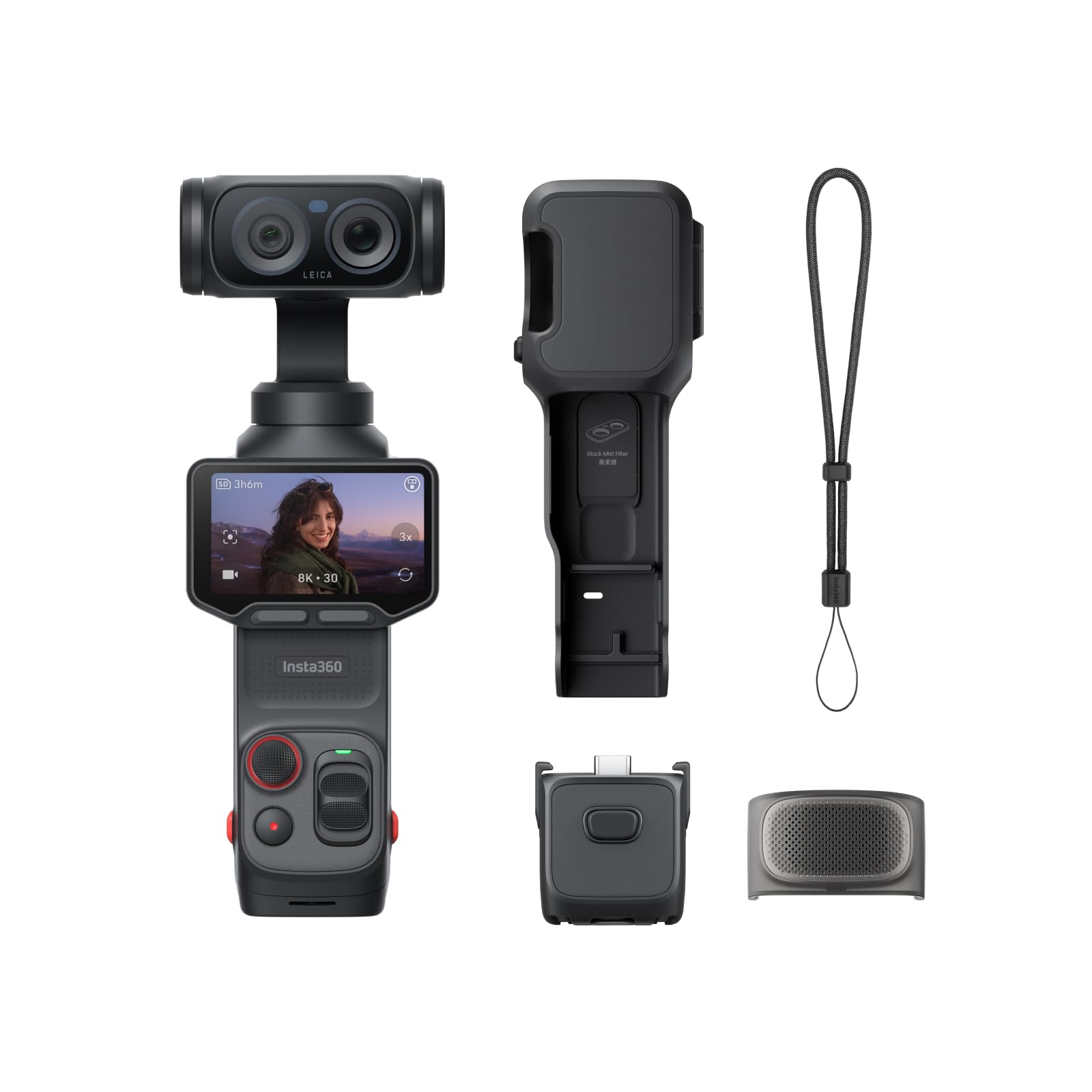
The Insta360 Luna Ultra's detachable touchscreen and Leica color science create a compelling package for solo vloggers who want remote framing without a separate monitor. 8K footage is sharp and colors are natural, while the 1-inch sensor handles low light respectably. However, the camera's premium price and occasional gimbal errors or screen glitches mean it doesn't match the polished reliability of the top pick (DJI Pocket 3). Panning smoothness also lags behind that competitor, and long-term durability under heavy use is not yet established given the smaller user base. For tech enthusiasts who value the detachable screen and Leica signature over absolute stability, this is an interesting option.

Tip: For smoother pans, reduce rotation speed or use manual panning mode.

Bottom line: Fits vloggers who prioritize a detachable screen and Leica color over panning smoothness and proven reliability, and who are comfortable with a premium investment in cutting-edge features.

How to Choose

Video Resolution and Frame Rate

4K at 30 or 60 frames per second is the practical sweet spot for YouTube and social media. Cameras claiming 8K often deliver only 15fps, which produces stuttery footage unsuitable for vlogging. Always check the actual frame rate at your target resolution rather than relying on marketing numbers.

Higher frame rates like 120fps allow smooth slow-motion playback but demand more light and storage. For everyday vlogging, 4K 30fps is sufficient; prioritize stabilization and autofocus over raw resolution if you have to choose.

Stabilization Type

Mechanical gimbals (3-axis) physically counter movements, producing cinema-like smooth footage even while walking or running. Digital stabilization crops the image and can introduce jitter during fast motion. For active vloggers, mechanical stabilization is worth the extra cost.

Action cameras use a combination of electronic image stabilization and gyro data. Brands like DJI offer HorizonSteady that keeps the horizon level even during 360-degree rolls. This comes at the cost of a smaller sensor compared to pocket gimbal cameras.

Flip or Articulating Screen

A flip-up or side-articulating screen lets you see yourself while recording, which is essential for solo vloggers. Cameras with rotating lenses or dual screens serve the same purpose but may be less precise. The screen size and brightness affect how easily you can frame shots in daylight.

Action cameras often have front-facing screens, but they are smaller and don't adjust angles. For selfie vlogs, a dedicated flip screen or a 180-degree rotating lens offers the most flexibility.

Autofocus System

Phase-detection autofocus with eye tracking is ideal for vlogging because it locks onto your face and stays sharp even as you move. Contrast-detection autofocus is slower and may hunt in low light. Sony's Real-Time Eye AF is a benchmark, but many budget cameras use basic contrast AF.

Face and object tracking are helpful for keeping subjects centered in the frame, especially if you move around. Some cameras combine this with gimbal movement for automated tracking, which is useful for solo creators.

Battery Life and Charging

Manufacturer battery ratings are often based on ideal conditions with Wi-Fi and stabilization off. In real 4K recording, expect 40-60% of the claimed time. Budget cameras may overheat and shut down after 20-30 minutes of continuous recording.

Always carry a spare battery or two, especially for cameras without fast charging. USB-C charging allows topping up from a power bank, but built-in batteries that cannot be swapped mean longer downtime.

Common Mistake

Many buyers assume a higher resolution number means better video, but 8K at 15fps is unusable. Always check the frame rate at the resolution you will actually use.

Frequently Asked Questions