Cameras & Photography

10 Best Binoculars for Bird Watching 2026: Match Magnification to Your Needs

Which birding binoculars deliver clear views without breaking the bank or your neck? We help you choose between 8x and 12x, ED glass, and build quality.

Many birding binoculars claim high magnification and low-light performance, but the real world is less forgiving. A 12x pair that looks great on paper can be too shaky to hold steady, and a cheap 25mm objective turns twilight viewing into a guessing game.

The sweet spot for most birders is an 8x42: wide enough to track fast-moving birds, bright enough for dawn and dusk, and stable enough for handheld use. The trade-off is that you give up raw reach, but what you gain in clarity and comfort matters more in the field.

This guide focuses on the specs that actually affect your daily experience: magnification, objective size, glass coatings, and field of view. We will show you which combinations work for your style of birding and which ones promise more than they deliver.

1

Celestron Nature DX 8x42

Top Pick
Celestron Nature DX 8x42

Everyday birders

Our Score 9.2/10
Check Price

Worth Noting

  • Over time, the rubber armoring and lens caps may loosen or detach with heavy use
Coatings
Fully Multi-Coated
Objective
42mm
Field of View
388 ft/1000yds
Magnification
8x

The Celestron Nature DX 8x42 delivers a notably wide 388-foot field of view at 1,000 yards, making it easier to track fast-moving birds without losing them in the glass. The BaK-4 prisms and fully multi-coated optics produce bright images with accurate color across the field, reducing the need to adjust focus as you scan.

At 23.6 ounces, this binocular is noticeably lighter than many 42mm options, so it doesn't weigh down a day pack. The waterproof and fogproof construction means it can handle light rain or humid forest mornings without internal fogging, and the included neck strap and carry case add convenience for outdoor trips.

Everyday birders and hikers who don't wear glasses will find this an easy fit. The 17.5mm eye relief is adequate for most users, but those with thicker eyeglass frames may need to press the eyecups down or risk blackouts. This tradeoff is worth noting if you rely on prescription lenses, though many glasses wearers still get along fine after adjusting.

Backed by Celestron's lifetime warranty, the Nature DX offers a compelling value for budget-conscious enthusiasts. The optical performance rivals binoculars costing significantly more, making it a strong contender for anyone seeking a dependable all-arounder without the premium price tag.

Bottom line: The Celestron Nature DX 8x42 gives birders a wide, bright view in a lightweight, weatherproof body — without demanding a premium budget. It is the practical choice for anyone who wants dependable optics for everyday use.

2

Athlon Midas UHD 8x42

Athlon Midas UHD 8x42

Serious birders

Our Score 9.6/10
Check Price

Worth Noting

  • Edge sharpness fades beyond roughly 75% of the field, noticeable when scanning open areas
  • Focus wheel may feel over-greased on some units, requiring extra effort to turn
Coatings
Fully Multi-Coated + Dielectric
Objective
42mm ED
Field of View
425 ft/1000yds
Magnification
8x

The Athlon Midas UHD 8x42 delivers noticeably better color correction and contrast than the Celestron Nature DX, thanks to its ED glass and dielectric coatings. Brightness and color rendition are impressive for a mid-range binocular, making it a strong choice when optical purity takes priority over field width.

Birders who wear glasses will appreciate the 17.2mm eye relief, which provides a full field of view without blackouts. This binocular suits those who seek vibrant, true-to-life images and are willing to accept a slightly narrower field of view than the top pick. The focus wheel can feel stiff on some units, and edge sharpness drops off beyond about 75% of the field — neither issue bothers most users, but flat-field enthusiasts may want to look elsewhere.

Tip: Focus wheel break-in may improve over time; if it remains stiff, consider exchanging the unit.

Bottom line: For birders who prioritize color fidelity and wear glasses, the Midas UHD offers a clear optical upgrade over the standard Nature DX at a reasonable price.

3

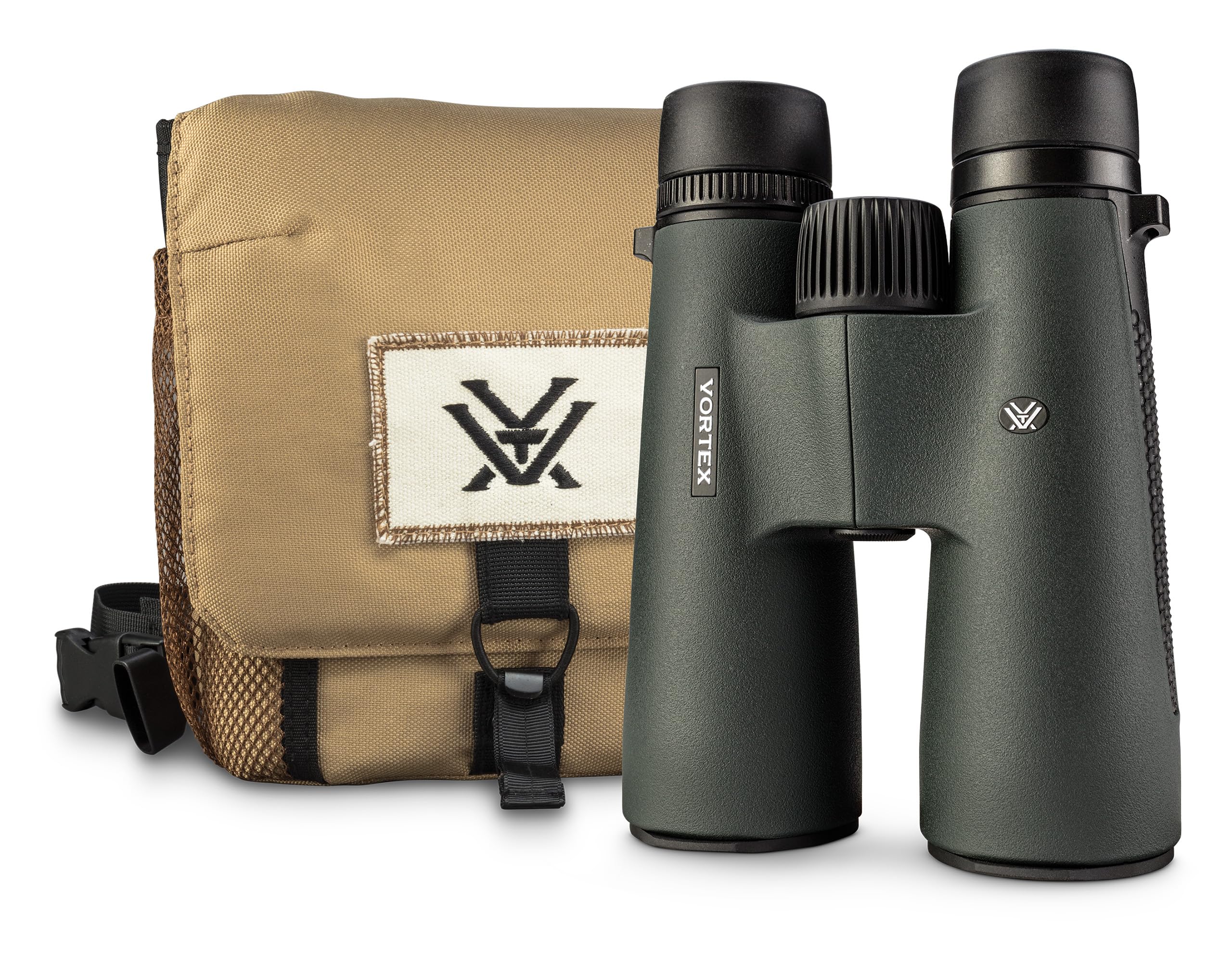
Vortex Triumph HD 12x50

Vortex Triumph HD 12x50

High mag users

Our Score 9.6/10
Check Price

Worth Noting

  • Chromatic aberration may be visible in high-contrast, bright sunlight conditions
  • 16mm eye relief can be tight for eyeglass wearers, particularly with thick frames
Coatings
Fully Multi-Coated
Objective
50mm
Field of View
Magnification
12x

Compared to image-stabilized binoculars, the Vortex drops the electronic complexity in favor of a simpler, lighter design and a no-questions-asked warranty that covers any damage. The 12x magnification brings distant subjects close without the shake typical of high-power handheld optics, provided you steady the view against a solid support.

This binocular suits birders and hunters who glass from a fixed position — a tripod or car window mount makes the 12x magnification truly usable. In bright sunlight, some chromatic aberration appears along high-contrast edges, and the 16mm eye relief may not accommodate eyeglass wearers with thicker frames. For those who can accept these boundaries, the image clarity and build quality deliver surprising value at this price.

At 25 ounces, the Triumph HD is lighter than many 12x50 models, and the included Glasspak harness distributes weight comfortably across the shoulders during extended sessions. The fully multi-coated optics produce a bright, sharp image in good light, and the rubber armor absorbs minor bumps without fuss.

Tip: Twist the eyecups down if you wear glasses — the 16mm eye relief is workable with thin frames, but thicker lenses may still cause blackouts.

Bottom line: If you need high magnification and value a no-questions-asked warranty, the Triumph HD is a sensible choice — just plan to mount it on a tripod for best results and avoid bright sidelight for critical viewing.

4

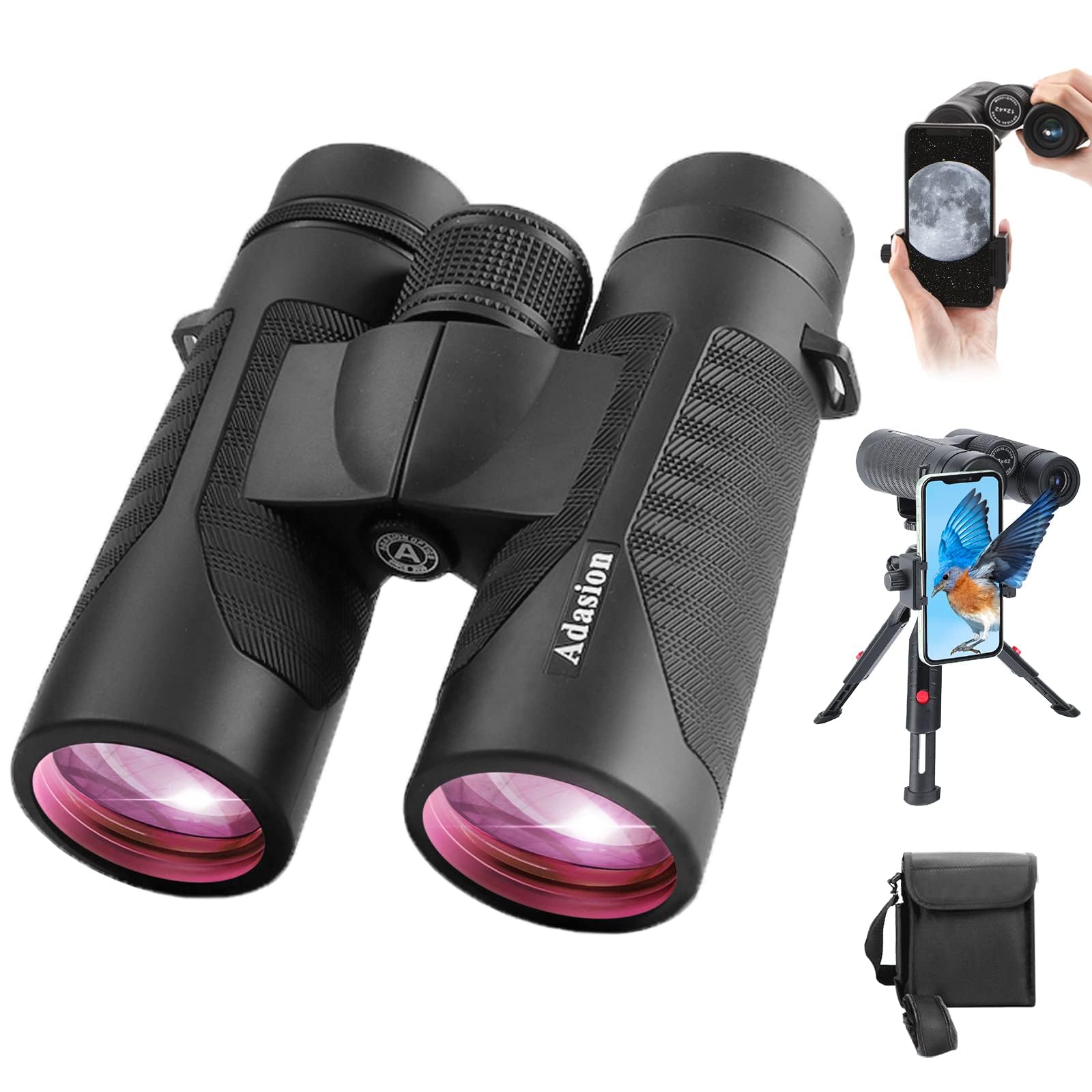
Adasion 12x42 HD

Adasion 12x42 HD

Budget beginners

Our Score 9.2/10
Check Price

Worth Noting

  • Included phone adapter can be finicky to attach and may not hold all phones securely.
  • Short eye relief (13.6mm) makes comfortable viewing difficult for eyeglass wearers.
Coatings
Fully Multi-Coated
Objective
42mm
Field of View
367 ft/1000yds
Magnification
12x

The Adasion 12x42 provides optical performance that comfortably exceeds expectations for its price, with BAK4 prisms and fully multi-coated lenses producing sharp, color-true images in daylight conditions. The included phone adapter and lightweight tripod add convenience for capturing or sharing wildlife views without extra purchases.

This bundle is a practical entry point for birding beginners and casual observers who want a capable binocular without a high investment. The 13.6mm eye relief can make comfortable viewing difficult for eyeglass wearers, and the phone adapter may require patience to align correctly with different phone sizes.

The 12x magnification provides reach, though the 367-foot field of view is tighter than typical 8x models, so tracking moving birds takes more practice. The waterproof construction and lightweight frame (under 24 ounces) suit day hikes and backyard birding well.

Tip: Adjust the phone adapter's clip tension carefully to avoid scratching your phone case; a rubber shim can improve grip.

Bottom line: For birding beginners on a budget, the Adasion 12x42 delivers impressive clarity and a useful bundle, as long as you don't wear glasses or need low-light capability.

5

Celestron Nature DX ED 8x42

Celestron Nature DX ED 8x42

ED budget seekers

Our Score 9.0/10
Check Price

Worth Noting

  • Eye cups may loosen over time, potentially affecting eye placement.
  • Heavier than comparable 8x42 models at 950g, noticeable during extended use.
Coatings
Fully Multi-Coated
Objective
42mm ED
Field of View
393 ft/1000yds
Magnification
8x

The ED glass in these binoculars noticeably reduces chromatic aberration, giving you cleaner color separation than the standard Nature DX — a meaningful upgrade if you spend time identifying birds in high-contrast lighting. The extra-low dispersion objective lenses also deliver good brightness in dim conditions. However, at 950g, these are heavier than the non-ED version, and some units have shown eye cup instability that may require periodic tightening. For the price, you get ED-level color correction without jumping to premium price points, but the added weight and potential build quirk mean they are best suited for stationary or shorter sessions rather than all-day hikes.

Bottom line: For birders who prioritize color correction over portability and want ED glass without the premium price, the Nature DX ED is a fitting choice — but only if you are comfortable with its weight and occasional eye cup maintenance.

6

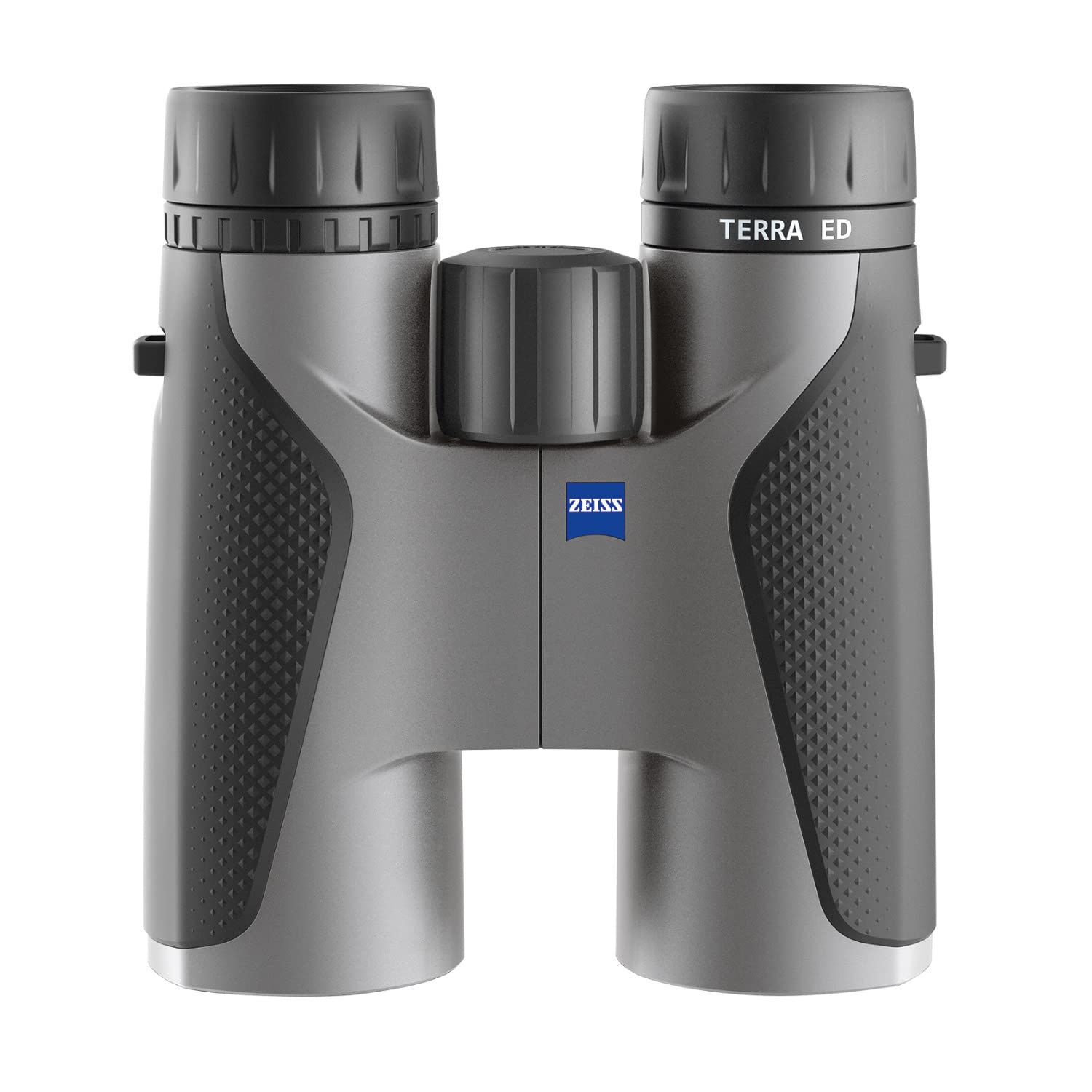
Zeiss Terra ED 10x42

Zeiss Terra ED 10x42

Premium optics fans

Our Score 9.4/10
Check Price

Worth Noting

  • Eye relief may cause blackouts for glasses wearers with thick frames
  • Field of view is narrower than some alternatives, limiting tracking of moving birds
Coatings
Multi-Coated + hydrophobic
Objective
42mm ED
Field of View
330 ft/1000yds
Magnification
10x

The Zeiss Terra ED 10x42 offers image quality that punches above its price tier, with crisp detail and bright views even in overcast conditions. The lightweight magnesium body and fast focus make it easy to carry and quick to adjust.

This binocular suits birders who prioritize optical purity over a sweeping field of view. The 330-foot field at 1000 yards is narrower than some competitors, which means tracking fast-moving birds in dense foliage requires more deliberate scanning. It is also a lightweight option for those who want Zeiss glass without the flagship weight or cost.

Bottom line: For birders who value image quality above all else and can accept a narrower sweep, the Zeiss Terra ED delivers a taste of premium optics without the flagship price.

7

Adorrgon 12x42 HD

Adorrgon 12x42 HD

Non-glasses users

Our Score 9.0/10
Check Price

Worth Noting

  • 10mm eye relief forces eyeglass wearers to remove glasses to see the full view, limiting usability for that group.
  • Build consistency can vary; some units have arrived with loose strap attachments or stiff focus mechanisms.
Coatings
Fully Multi-Coated
Objective
42mm
Field of View
367 ft/1000yds
Magnification
12x

The Adorrgon 12x42 HD pairs a full accessory set — phone adapter, tripod, and carrying case — with clear daytime images at 12x magnification. This kit is well-suited for casual bird watching and travel, where portability and convenience matter more than edge-to-edge clarity. However, the 10mm eye relief makes this a non-starter for anyone who wears glasses; you will need to remove them to see the full field of view. Build quality can also vary between units: occasional reports of loose strap attachments or stiff focus wheels suggest some batch-to-batch inconsistency. For non-glasses users on a tight budget, the Adorrgon delivers solid value without major optical compromises.

Bottom line: Best suited for casual birders and travelers who do not wear glasses and want a complete, budget-friendly kit — just be prepared for possible build quirks.

8

Gigapenguin 15x52

Gigapenguin 15x52

Tripod users

Our Score 8.8/10
Check Price

Worth Noting

  • Low-light scenes appear dim due to the small exit pupil
  • Handheld use produces a very shaky image without a tripod
Coatings
Fully Multi-Coated
Objective
52mm
Field of View
5.8°
Magnification
15x

The Gigapenguin 15x52 delivers high magnification and decent daytime clarity at a budget-friendly price, and the included phone adapter makes sharing images straightforward. However, the 15x power is too shaky for handheld use — a tripod is essential. Its 52mm objective and fully multi-coated optics provide acceptable brightness in full daylight, but the small exit pupil (3.47mm) limits low-light performance. This binocular suits budget-conscious users who need reach from a stable rest, not general-purpose birding.

Bottom line: This binocular fits buyers who will mount it on a tripod for daytime long-distance viewing, such as from a car or observation deck.

9

Occer 12x25 Compact

Occer 12x25 Compact

Ultra-compact travel

Our Score 8.8/10
Check Price

Worth Noting

  • 12x magnification makes handheld viewing shaky without a steady surface or tripod.
  • 25mm objective gathers limited light, so the image dims noticeably in overcast or twilight conditions.
Coatings
Fully Multi-Coated
Objective
25mm
Field of View
273 ft/1000yds
Magnification
12x

The Occer 12x25 Compact lives up to its promise of extreme portability: it fits in a pocket and costs very little. The 25mm objective and 12x magnification mean this binocular works best in bright daylight and benefits from a stable rest. It is a practical option for travelers, kids, or as a backup pair, but its small aperture and high power limit its usefulness for serious birding or low-light conditions.

Bottom line: A sensible choice for a lightweight backup binocular or for kids on sunny days – not the tool for twilight birding or distant detail.

10

Canon 12x36 IS III

Canon 12x36 IS III

Image stabilization

Our Score 9.0/10
Check Price

Worth Noting

  • Close focus of 17 feet means you cannot focus on birds at typical feeder distances.
  • Image stabilization only works with power; batteries need replacement or spare sets on longer outings.
Coatings
Objective
36mm
Field of View
55.3° apparent
Magnification
12x

The Canon 12x36 IS III delivers a genuinely steady 12x handheld view thanks to its Vari-Angle prism image stabilization. That makes it the only binocular in this lineup that cancels out hand shake at high magnification — useful for scanning far-off raptors or subjects across a lake. However, the 36mm objective limits low-light performance compared to 42-50mm models, and you'll need to manage AA batteries to keep the stabilizer active. The close focus of about 17 feet rules out feeder or near-distance birding, and the body is water resistant but not fully waterproof. This is a specialized tool for birders who prioritize steadiness over versatility, not a general-purpose companion.

Tip: Carry spare AA batteries; the stabilizer drains them faster than expected, especially in cold weather.

Bottom line: If your birding is primarily at distance and you struggle to hold 12x steady, the Canon 12x36 IS III is the only option that solves that problem — but accept the trade-offs in close focus, weather sealing, and battery dependency.

How to Choose

Magnification

8x and 10x are the standard for birding. Higher magnification like 12x or 15x magnifies hand shake and narrows the field of view, making it harder to find and track moving birds. For most handheld use, 8x offers the best balance of steadiness and reach.

If you need more reach for distant birds over open water or fields, consider a tripod or image stabilization. Without support, 12x is usable only for brief looks in good light.

Objective Lens Diameter

A 42mm objective is the sweet spot: it collects enough light for dawn and dusk without adding excessive weight. Smaller 25mm or 32mm lenses are more portable but significantly dimmer in low light, making them suitable only for daytime use.

50mm objectives gather the most light and work well for twilight, but they add weight and bulk. For all-day birding, a 42mm pair is easier to carry and handle.

Lens and Prism Coatings

Coatings reduce reflections and improve light transmission. Fully multi-coated optics are the minimum for clear, bright images. Dielectric coatings on the prisms further boost contrast and color fidelity, especially in mid-range and premium models.

ED (Extra-low Dispersion) glass reduces chromatic aberration – the color fringing you see around high-contrast edges. It makes a visible difference when looking at white birds against a bright sky.

Field of View

A wider field of view helps you locate birds quickly and track them in flight. Look for at least 370 ft at 1000 yards in an 8x42 binocular. Narrower fields (under 330 ft) can feel like looking through a straw and make scanning frustrating.

At higher magnifications, field of view naturally shrinks. A 12x binocular may have a field of only 280-330 ft, which is one reason 8x is preferred for general birding.

Close Focus Distance

If you watch birds at feeders or in dense shrubs, a close focus of 6-8 feet lets you see fine detail without backing up. Binoculars with a close focus of 15 feet or more are fine for open landscapes but will miss nearby action.

Compact or stabilized models often have longer close focus distances – a trade-off for their portability or steady image.

Frequently Asked Questions