Tools & DIY

9 Best Wire Strippers of 2026: No-Nick Stripping That Lasts

Wire strippers that actually cut cleanly and last - whether you're a pro electrician or a weekend DIYer. Skip the hype and find your perfect match.

Picking a wire stripper sounds simple: you squeeze, it strips. But anyone who has used a budget model knows the frustration of blades that bend, stoppers that loosen mid-job, or a self-adjusting mechanism that simply won't grip. Many products claim 'heavy duty' or 'professional grade' but deliver inconsistent results on the wire gauges you actually work with.

This guide cuts through the marketing noise to highlight what actually matters: consistent stripping without nicking copper, a mechanism that stays reliable over hundreds of uses, and the right balance of speed and precision for your specific work. Whether you wire houses, repair electronics, or just fix a lamp, the right tool saves time and frustration.

1

Klein 11063W Katapult

Top Pick
Klein 11063W Katapult

Pro electricians

Our Score 9.6/10
Check Price

Worth Noting

  • Wire cutter sits at the tip, making mid-span cuts less convenient than with traditional side-cutters
Wire Gauge
8-20 AWG solid, 10-22 stranded
Build & Weight
Cast alloy, 12 oz
Stripping Style
Compound action
Ergonomics & Grip

This tool handles 8-20 AWG solid and 10-22 AWG stranded wire with a compound-action mechanism that adjusts automatically to each gauge. The result is a clean strip every squeeze — no nicked copper, no torn insulation, no rework. For electricians wiring an entire house, that consistency translates directly into saved time.

The cast-alloy body and Ecoat finish hold up to being tossed into a toolbox and dropped off ladders. The cutter at the tip works fine for trimming ends, but if you need to cut wire mid-span — say, pulling a length through a stud bay — you'll find yourself reaching for a separate pair of side-cutters. It's a design tradeoff that matters mainly when your workflow demands quick mid-run cuts.

This is the right choice for professional electricians and serious DIYers who strip dozens or hundreds of wires per day and want a tool that doesn't require gauge selection or guesswork. If you rarely strip wires or prefer a single multi-tool with a crimper, a manual stripper may suit you better. The tip-located cutter is worth noting — it's a usability tradeoff, not a flaw.

Tip: Keep a compact side-cutter handy for mid-span cuts; the Katapult excels at end-strip and cutting tasks.

Bottom line: For anyone stripping wire all day, this tool eliminates guesswork and rework — the cutter tradeoff is easily managed with a separate pair of dikes in the pouch.

2

IRWIN 2078309 Multi-Tool

IRWIN 2078309 Multi-Tool

Home DIYers

Our Score 9.4/10
Check Price

Worth Noting

  • For high-volume stripping, the lack of a return spring adds extra hand motion each cycle.
  • When used for heavy-duty work daily, cutting edges may wear faster than those on premium strippers.
Wire Gauge
10-22 AWG
Build & Weight
Stripping Style
Manual
Ergonomics & Grip
ProTouch rubber

Three essential functions in one tool at a budget-friendly price, with solid construction that feels sturdy in the hand. Unlike self-adjusting models that prioritize high-volume speed, this IRWIN focuses on dependable function for occasional use.

Home DIYers and those doing occasional electrical repairs or automotive wiring will appreciate the sharp cutting edges that stay effective over time. The lack of a return spring means repetitive stripping requires an extra hand motion each time, which slows down work but is manageable for short sessions. For users who strip wires all day, the absence of a spring and potential for faster blade wear under heavy use make this a better fit for casual tasks.

Tip: To speed up repetitive work, hold the tool with handles open and use wrist motion; consider a self-adjusting model if you strip many wires daily.

Bottom line: For DIYers who strip wires only occasionally and want a single tool without spending extra, this IRWIN delivers dependable performance at a budget-friendly price.

3

IRWIN 2078300 Self-Adjusting

IRWIN 2078300 Self-Adjusting

Varied gauge DIYers

Our Score 9.2/10
Check Price

Worth Noting

  • Durability can vary; internal mechanism may develop issues after months of use.
  • Self-adjusting grip may not strip corroded or very fine wires cleanly.
Wire Gauge
10-24 AWG
Build & Weight
Stripping Style
Self-adjusting
Ergonomics & Grip

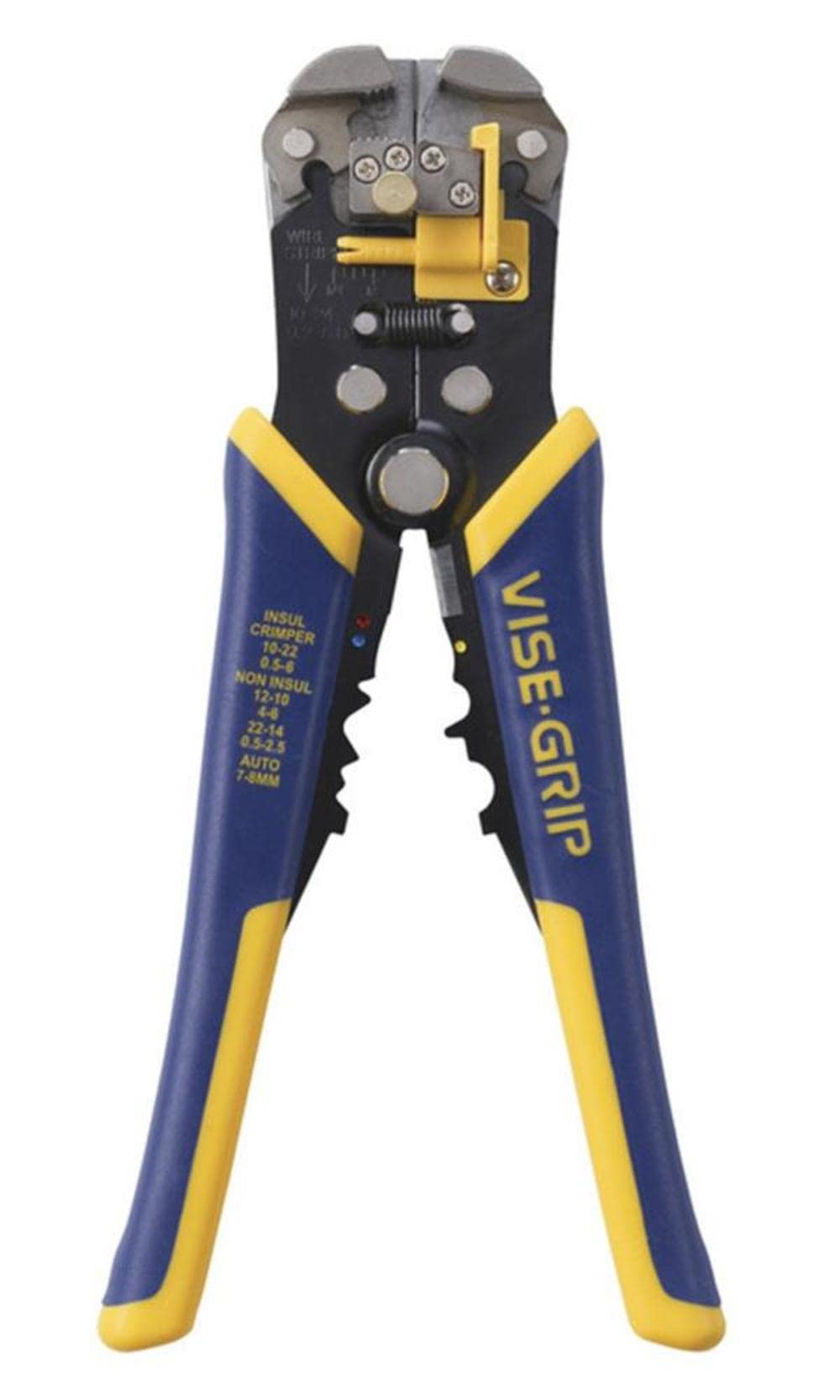
The IRWIN Vise-Grip Wire Stripper's self-adjusting jaws snap onto any wire from 10 to 24 AWG without fumbling for the right hole. This eliminates the back-and-forth of manual strippers — you insert and squeeze, and the insulation comes off cleanly on most wires. The result is noticeably faster repetitive stripping, especially when switching gauges frequently.

This tool suits DIYers who strip a mix of gauges and prioritize speed over millimeter-perfect precision. The self-adjusting mechanism works reliably on clean, modern wire, but may struggle with corroded or very fine stranded wire. Additionally, some units have shown jaw or mechanism wear after several months of regular use — something to consider if you plan heavy daily work.

Tip: For best results, use on clean, modern wire; for fine or corroded wire, a manual stripper may be more reliable.

Bottom line: A time-saving self-adjusting stripper that's ideal for DIY wire work — as long as you can accept the occasional durability variance and stick to clean wires.

4

KNIPEX 13 72 8 Forged

KNIPEX 13 72 8 Forged

Industrial pros

Our Score 9.6/10
Check Price

Worth Noting

  • The investment required only makes sense for those who strip wire daily
  • The central pivot screw may loosen over time and needs occasional retightening
Wire Gauge
10-20 AWG solid/stranded
Build & Weight
Forged stainless steel
Stripping Style
Manual
Ergonomics & Grip

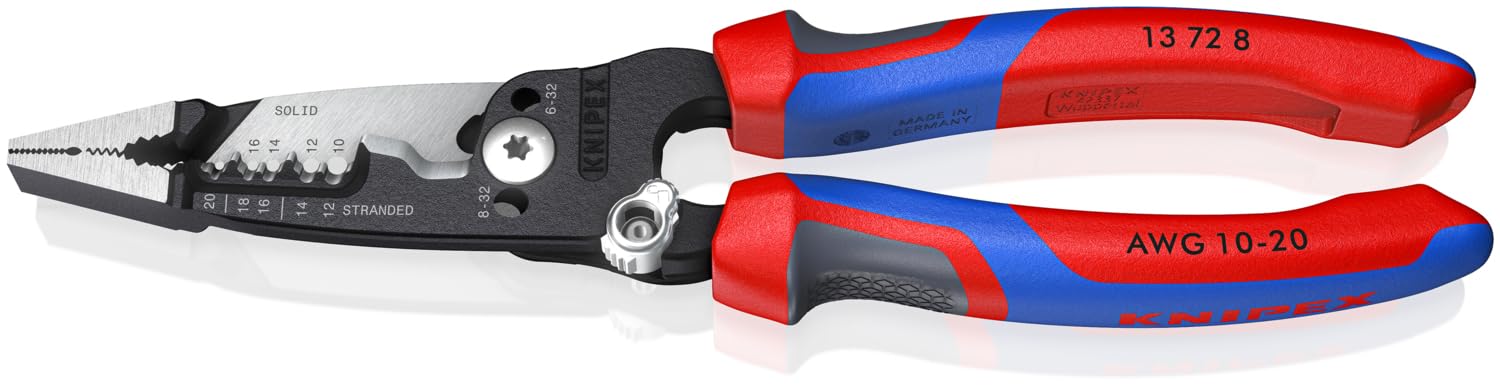
Forged stainless steel shear blades cut through wire with noticeably less effort than conventional strippers. The precision-ground holes handle 10-20 AWG solid and stranded wire cleanly, and the integrated screw cutter saves time on 6-32 and 8-32 screws without threading. While self-adjusting strippers like the Katapult offer faster gauge changes, this manual tool delivers unmatched consistency for repetitive cutting and stripping.

This tool targets industrial electricians who strip wire daily and need absolute reliability. The premium-priced build and heavy-duty feel are overkill for weekend projects. One tradeoff: the central pivot screw may loosen during sustained use and requires periodic retightening.

Tip: Use a hex key to check and tighten the central screw if you notice any play while stripping.

Bottom line: For electricians who cut and strip all day, the KNIPEX Forged Wire Stripper justifies its premium with superior build and cutting performance. Occasional users should stick with a more affordable self-adjusting model.

5

Klein K1412 Romex

Klein K1412 Romex

Resi electricians

Our Score 9.6/10
Check Price

Worth Noting

  • Yellow handle may separate from the tool body over extended use.
  • Only works with 12/14 AWG solid copper; no use for stranded or other gauges.
Wire Gauge
12-14 AWG solid
Build & Weight
Stripping Style
Manual
Ergonomics & Grip

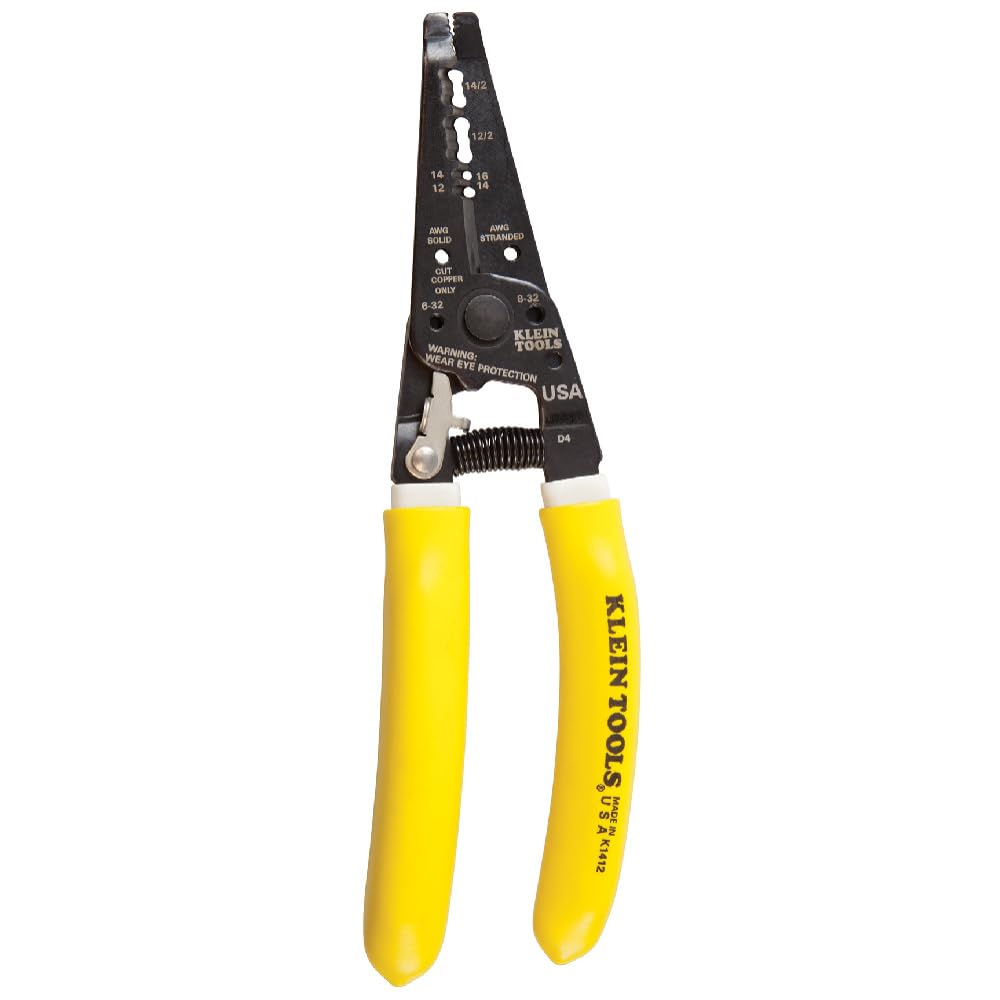
The Klein K1412 strips the outer jacket of 12/2 and 14/2 NM cable and then the individual conductors in one motion, leaving the copper untouched. That speed advantage sets it apart from general-purpose strippers like the top-pick Katapult, which handles a wide gauge range but requires separate steps for outer jacket removal. The serrated nose and screw cutter add utility for cutting and looping.

This tool is for electricians wiring new construction or rewiring with Romex – the dual-slotted head cuts prep time noticeably. However, it only accepts 12 and 14 AWG solid copper. Stranded wire, smaller or larger gauges, and other cable types require a different tool. Precise cutting edges and US-made construction support repeated use, but the yellow handle can separate from the steel body over time, though reports are limited.

Bottom line: Best for electricians who strip Romex all day, but keep a general-purpose stripper nearby for other wire sizes.

6

haisstronica Self-Adj.

haisstronica Self-Adj.

Budget DIYers

Our Score 9.2/10
Check Price

Worth Noting

  • Strip length and tension settings may drift during use
  • Inconsistent stripping on some wire gauges and types
Wire Gauge
10-24 AWG
Build & Weight
Alloy steel, rubber
Stripping Style
Self-adjusting
Ergonomics & Grip
Rubber handle

The haisstronica brings self-adjusting wire stripping, cutting, and crimping at a budget-friendly price, making it appealing for occasional home electrical work. However, the strip length and tension adjustments can slip out of place during use, and the stripping action may not always cleanly remove insulation on certain wire types. This makes it best suited for DIYers who prioritize low cost over professional-grade consistency and don't mind verifying settings before each job.

Bottom line: A fit for budget-conscious DIYers who want self-adjusting convenience for light home projects, provided you are comfortable occasionally rechecking your settings.

7

KAIWEETS Self-Adj.

KAIWEETS Self-Adj.

Budget self-adj.

Our Score 9.0/10
Check Price

Worth Noting

  • Cutter can nick conductors on some wire types.
  • Jaws can slip on certain wire types, leading to incomplete strips.
Wire Gauge
10-24 AWG
Build & Weight
Stripping Style
Self-adjusting
Ergonomics & Grip
TPR rubber

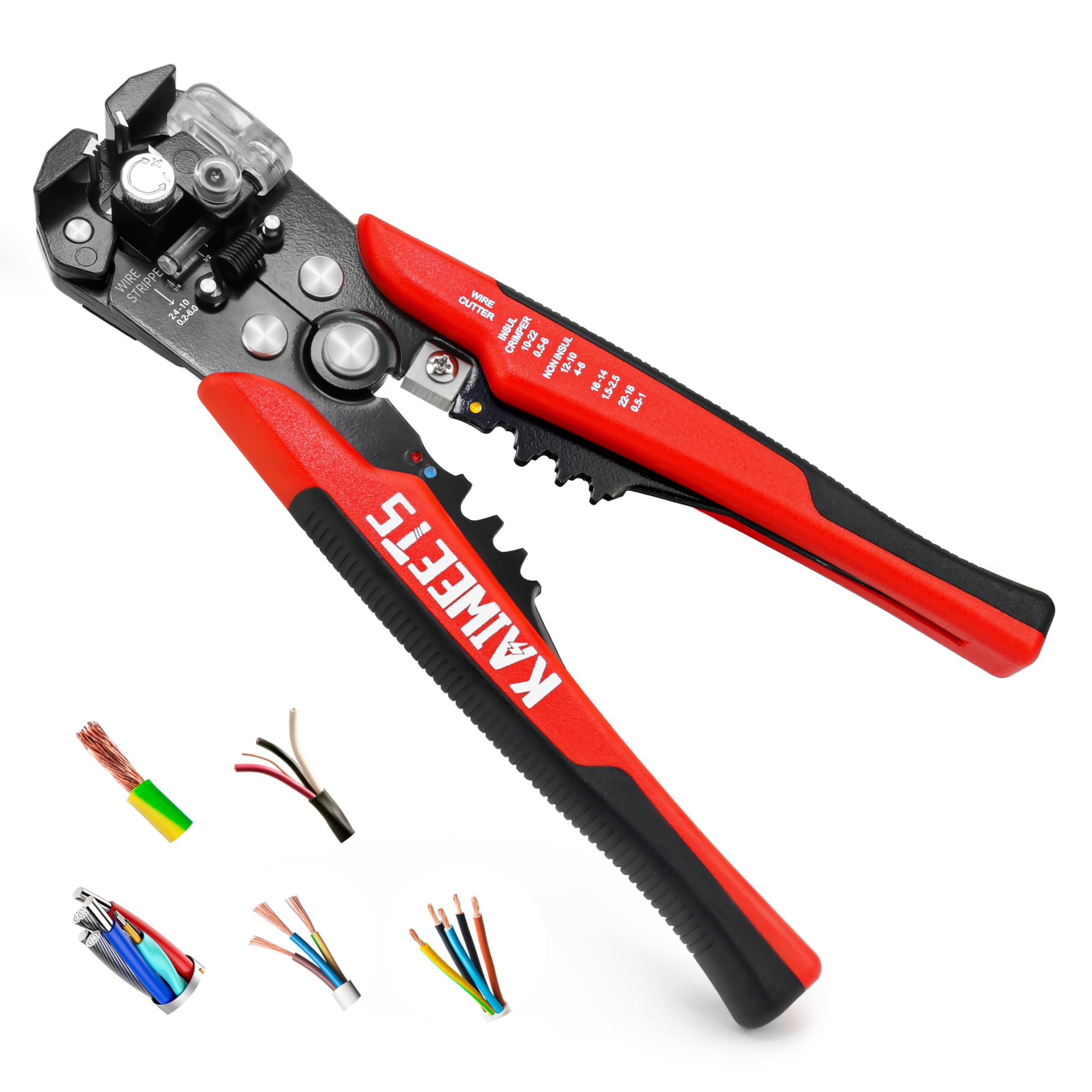
This self-adjusting wire stripper covers 10-24 AWG at a budget-friendly price and works with one hand. Some users have noted that the jaws can slip on certain wire types, causing incomplete strips, and the cutter may occasionally nick conductors. For low-stakes DIY tasks where cost is the top concern, it can get the job done, but for consistent results on critical wiring, a tool with better grip is worth the extra spend.

Bottom line: This stripper suits one-off projects where budget outweighs consistency; for regular electrical work, consider a model with more consistent grip.

8

WGGE WG-015 Multi-Tool

WGGE WG-015 Multi-Tool

Emergency backup

Our Score 9.2/10
Check Price

Worth Noting

  • Cutting blades can bend under moderate use, limiting long-term durability
  • Inconsistent cutting performance on tougher insulation
Wire Gauge
10-22 AWG
Build & Weight
High carbon steel
Stripping Style
Manual
Ergonomics & Grip
Non-slip rubber

The WGGE WG-015 combines stripping, cutting, and crimping at a budget-friendly price. For basic DIY tasks like stripping 10-22 AWG wire, it gets the job done with comfortable handles. However, the build quality is not designed for repeated use - the cutting blades can bend under moderate pressure and the tool may not withstand more than a few uses. This makes it a sensible option for a single project or emergency backup where cost is the only concern, but not for regular electrical work or anyone who needs a tool to last.

Bottom line: Suited for a single weekend project or emergency kit where budget is the only factor and the tool can be discarded afterward.

9

DOWELL 10-22 AWG

DOWELL 10-22 AWG

One-time use

Our Score 9.2/10
Check Price

Worth Noting

  • Cutting performance can be inconsistent
  • Build feels flimsy; the tool may bend under light use
Wire Gauge
10-22 AWG
Build & Weight
Stainless steel, TPE
Stripping Style
Manual
Ergonomics & Grip
TPE handle

At a budget-friendly price, this tool strips and cuts light household wire without fuss. Cutting consistency can vary between units and the build may not hold up beyond a single project – it's best kept as a spare for emergencies.

Bottom line: Ideal as an inexpensive backup tool for a single wiring task where cutting precision isn't critical.

How to Choose

Wire Gauge Range

The gauge range determines what wires the tool can strip. Most strippers cover 10-22 AWG, but the way they handle the extremes varies. A wider range often means the mechanism has to adapt, which can reduce precision on very fine or very thick wires. For example, a self-adjusting tool that claims 10-24 AWG might struggle to grip 24 AWG stranded wire cleanly.

If you primarily work with household 12-14 AWG solid wire, a specialized manual stripper with dedicated holes gives the most reliable result. For electronics or automotive work with fine stranded wires, look for precision-ground holes on a manual tool rather than a one-size-fits-all mechanism.

Stripping Style

Manual strippers use individual notches for each gauge. They require selecting the correct hole but give consistent, repeatable cuts. Self-adjusting models sense the wire diameter and adjust automatically. This saves time on repetitive work but introduces a failure point: the gripping mechanism can slip or fail on certain wire conditions, like corroded insulation or very small gauges.

Compound-action (automatic) strippers like the Klein 11063W use a cam to clamp and strip in one squeeze. They combine speed with reliable grip, but the cutting blade is fixed at the tip, making mid-span cuts less convenient. The best choice depends on whether you value speed and convenience over absolute control.

Additional Functions

Many wire strippers add cutting, crimping, and even screw-cutting capabilities. A built-in crimper is convenient for light terminal work, but on budget models the crimping dies often produce inconsistent connections. For frequent crimping, a dedicated ratcheting crimper is more reliable. Screw cutters on Klein tools are a genuine time-saver for 6-32 and 8-32 screws.

The trade-off is that multi-function tools tend to be bulkier and may compromise ergonomics for the sake of cramming in extra features. If you only need to strip wire, a dedicated stripper will be lighter and more comfortable for extended use.

Build Material and Weight

Cast alloy and forged steel strippers are significantly more durable than stamped steel or plastic models. A heavier tool (12-16 oz) provides stability and stays put on the workbench, but it can cause fatigue when used all day overhead or in tight panels. Lighter tools (under 8 oz) are easier to carry but may flex under heavy cutting force.

Corrosion resistance matters if you work in humid or marine environments. Forged stainless steel (like Knipex) or tools with an Ecoat finish (like Klein 11063W) resist rust much longer than plain carbon steel. For occasional indoor use, a high-carbon steel tool with a rubber grip is adequate.

Ergonomics and Grip

Ergonomics directly affect fatigue and control. Rubberized grips like ProTouch or TPE reduce hand strain during repetitive stripping, but they can wear or separate from the tool over time. A handle that is too thick or too thin for your hand will cause discomfort. Serrated or contoured handles provide better grip when hands are oily or sweaty.

The presence of a return spring reduces finger effort by automatically opening the jaws after each squeeze. Manual strippers without a spring require two-handed operation or a flick of the wrist, which slows down high-volume work. If you strip dozens of wires per day, a spring-loaded or self-opening design is worth the extra cost.

Frequently Asked Questions