Home Appliances & Robots

9 Best Water Leak Detectors of 2026: Smart Sensors That Stay Connected

Which water leak detectors actually alert you in time and don't drop off WiFi? Find the best standalone and smart sensors for your home.

Water leak detectors promise peace of mind, but many fail at the most basic task: alerting you reliably. Smart sensors drop off WiFi networks, standalone alarms are too quiet for distant basements, and false alarms waste time. The frustration is real, but the right pick avoids these pitfalls.

The real choice is between convenience and consistency. Smart systems with app alerts are great for remote monitoring, but they demand a stable 2.4GHz connection and careful placement. Standalone alarms are simpler and more predictable, but they cannot reach you when you are away. This guide focuses on products that actually deliver on their core promise: catching leaks fast and making sure you know about it.

For those who want the ultimate protection, automatic shut-off systems exist, but they come with a higher price and hub requirement. The picks below balance real-world connectivity, loud alerts, and ease of use for most homes.

1

X-Sense SWS54

Top Pick
X-Sense SWS54

Reliable smart system

Our Score 9.2/10
Check Price

Worth Noting

  • Pairing can be finicky on routers with combined 2.4/5 GHz bands
  • In very large basements, the base station alarm may not be loud enough to hear from a distance
Range
1,700 ft open air
Alert Type
110 dB base + app/email
Sensitivity
Water probes, IP66
Battery Life
3 sensors: replaceable

Setting up the X-Sense SWS54 takes minutes: pair each sensor with the base station via the app, place them where water might appear, and you get both a local 110 dB siren and push notifications. The sensors carry an IP66 rating, so they handle damp basements and bathroom floors without issue.

The system's WiFi pairing works smoothly with 2.4GHz networks, but routers that combine 2.4 and 5 GHz bands under one SSID can cause connection hiccups. For homes that require separate bands, this is a quick fix; otherwise, the sensors stay connected consistently once linked.

This three-sensor kit suits homeowners who want smart leak detection without spending for automatic shut-off valves. It delivers remote alerts and a loud alarm, but cannot stop a leak when you are away. Best for users with a 2.4GHz network who need a cost-effective system that covers kitchens, basements, and bathrooms.

Tip: For large basements, position the base station centrally or use app notifications as a complement to the alarm.

Bottom line: The X-Sense SWS54 offers a solid balance of smart features, local alarm, and affordability for typical homes; just make sure your router can separate the 2.4GHz band or is easy to split.

2

YoLink Shut-Off Kit

YoLink Shut-Off Kit

Auto shut-off protection

Our Score 9.6/10
Check Price

Worth Noting

  • Upfront cost is higher than basic alarms or smart-only detectors.
  • Occasional pairing difficulties with certain routers may require extra setup steps.
Range
1/4 mile open air
Alert Type
App/SMS/email + auto shut-off
Sensitivity
Water probes
Battery Life
Sensors up to 5 years

The YoLink kit’s valve operator clips onto your existing shut-off valve with no tools or pipe work. Pair that with LoRa range (quarter-mile) and offline D2D mesh, and the system can close the valve even when the hub loses internet — a capability that simpler smart detectors lack.

This makes it a strong fit for vacation homes or any place where you can’t respond to an alert right away. The premium price and hub requirement limit its appeal for small apartments or strict budgets — the top-pick X-Sense offers smart alerts at a lower cost but stops at detection only.

Bottom line: For homeowners who want to stop a leak when they’re away — not just get an alert — this kit delivers that capability with minimal installation effort. If prevention is the priority, it’s the clear choice.

3

Basement Watchdog BWD-HWA

Basement Watchdog BWD-HWA

Budget backup alarm

Our Score 9.4/10
Check Price

Worth Noting

  • Alarm volume may not be loud enough for large or distant spaces.
  • Some units may stop working after months of use.
Range
N/A (local only)
Alert Type
Local 110 dB siren
Sensitivity
1/32 inch water
Battery Life
9V battery (replaceable)

The Basement Watchdog BWD-HWA detects water at 1/32 inch depth – thinner than a dime – and triggers a 110 dB alarm that is among the loudest in the standalone category. Its detachable sensor on a wire lets you place the alarm unit on a shelf while the sensor sits inside a sump pit or behind a washing machine, solving placement challenges that fixed-sensor alarms cannot.

This alarm is best for budget-conscious homeowners who want a straightforward backup alarm without smart features. The wired sensor makes it ideal for hard-to-reach spots. However, some units may stop working after months of use, and the 110 dB siren may not be loud enough to reach distant corners of a large basement or second floor. If you need remote notifications or whole-home coverage, a smart system is a better fit.

Tip: Place the alarm unit in a central hallway or near sleeping areas if the basement is large; the detachable sensor still reaches sump pits.

Bottom line: A capable standalone alarm for tight budgets and tight spaces, but its inconsistent long-term reliability and volume limits make it a secondary option for those who can accept occasional checks.

4

GoveeLife Premium 6-Pack

GoveeLife Premium 6-Pack

Large homes coverage

Our Score 9.0/10
Check Price

Worth Noting

  • WiFi connectivity can be inconsistent; some sensors may drop offline or fail to pair on mixed-band routers.
  • Leak detection sensitivity varies
Range
1,968 ft (LoRa)
Alert Type
SMS/email/app + 100 dB local
Sensitivity
Water probes
Battery Life
5 years (sensors)

The GoveeLife Premium Smart Water Leak Detector 2 stands out with its 1,968-foot LoRa range, making it the only smart water sensor capable of reaching detached garages and deep basements without a hub. The six-pack includes SMS, email, and app alerts, with a 5-year battery life. However, WiFi connectivity is more finicky than competing systems — some sensors may drop offline or fail to pair without a dedicated 2.4GHz network. Leak sensitivity can also be inconsistent, with occasional false alarms or missed drips.

This system works best for homeowners with large properties who need to monitor multiple distant zones and are comfortable with occasional network troubleshooting. The long range is a real advantage over the top pick X-Sense, but those who prioritize straightforward setup over maximum coverage will find a simpler option in the X-Sense system.

Bottom line: Best for large properties where range is critical, but expect to work through WiFi setup and sensor placement for consistent leak detection.

5

SwitchBot Water Sensor

SwitchBot Water Sensor

No-hub smart sensor

Our Score 9.0/10
Check Price

Worth Noting

  • Alarm volume at 100 dB may not be loud enough for distant basements or behind closed doors
  • WiFi connectivity can be intermittent
Range
WiFi range (depends on router)
Alert Type
100 dB adjustable + app/email
Sensitivity
Water probes
Battery Life
Up to 2 years (AAA)

The SwitchBot Water Sensor skips the hub entirely, connecting straight to your home WiFi and sending alerts to your phone, email, or voice assistant. Its 100 dB adjustable alarm provides local sound, and the IP67 waterproof design lets you place it directly on wet floors.

This makes it a natural fit for someone who wants a single smart sensor without investing in a hub system. However, each sensor is a separate WiFi device, so covering multiple rooms means adding network load — and some units have been noted to drop offline periodically. The alarm volume may not carry through walls, so placement matters.

Tip: Position the sensor where you can hear the alarm, as the 100 dB tone may not carry through walls or floors.

Bottom line: For a single-point smart sensor without hub commitment, the SwitchBot is a cost-effective way to get app alerts — just keep it within earshot and on a stable 2.4 GHz network.

6

METAK 5-Pack

METAK 5-Pack

Multiple rooms coverage

Our Score 9.2/10
Check Price

Worth Noting

  • Alarm may not be loud enough for large basements or distant areas
  • Detection can be inconsistent
Range
N/A (local only)
Alert Type
Local 100 dB
Sensitivity
Water probes, IP66
Battery Life
2 AAA (replaceable)

The METAK 5-pack delivers five IP66-rated sensors at a per-unit price that undercuts most rivals, making whole-home coverage affordable. Installation takes seconds – drop in the included AAA batteries and place them near sinks, toilets, or basement floors. The 100 dB alarm sounds reliably when water touches the contacts, but the volume may be insufficient for large spaces or distant rooms, and occasional missed leaks or false alarms have been noted. For buyers who can accept these tradeoffs and do not need remote alerts, this is a cost-effective way to protect multiple zones. The lack of any app or Wi-Fi connectivity is the main reason it falls behind smart systems.

Bottom line: Best for budget-conscious homeowners who need multiple standalone sensors and can check in person; skip if you require remote notifications or very loud alarms.

7

Flood Buzz 6-Pack

Flood Buzz 6-Pack

Compact no-setup

Our Score 9.0/10
Check Price

Worth Noting

  • 95 dB alarm may not be loud enough for distant rooms or enclosed cabinets
  • Sealed battery cannot be replaced
Range
N/A (local only)
Alert Type
Local 95 dB
Sensitivity
Contact probes
Battery Life
3 years sealed (non-replaceable)

The Flood Buzz 6-Pack packs six ultra-compact sensors that fit into tight spots behind appliances or under sinks with zero setup. Each unit measures just 1.75 inches and activates immediately when water is detected. However, the 95 dB alarm may not carry through walls or across a basement, and the non-replaceable sealed battery means each sensor becomes e-waste after three years. This makes the Flood Buzz a practical choice for renters or temporary setups where you’ll be nearby to hear the alert, but less suited for critical protection in distant or unsupervised areas.

Bottom line: Best suited for close-quarters monitoring where you’ll hear the alarm, like under a sink or behind a toilet – not for basements or unattended areas.

8

Zircon Leak Alert 2-Pack

Zircon Leak Alert 2-Pack

Sump pit sensor

Our Score 9.4/10
Check Price

Worth Noting

  • Detection sensitivity can be inconsistent between units, potentially missing small leaks
  • 90 dB alarm may not be loud enough for basements or areas with background noise
Range
N/A (local only)
Alert Type
Local 90 dB
Sensitivity
Water probes, float design
Battery Life
9V battery (replaceable, not incl)

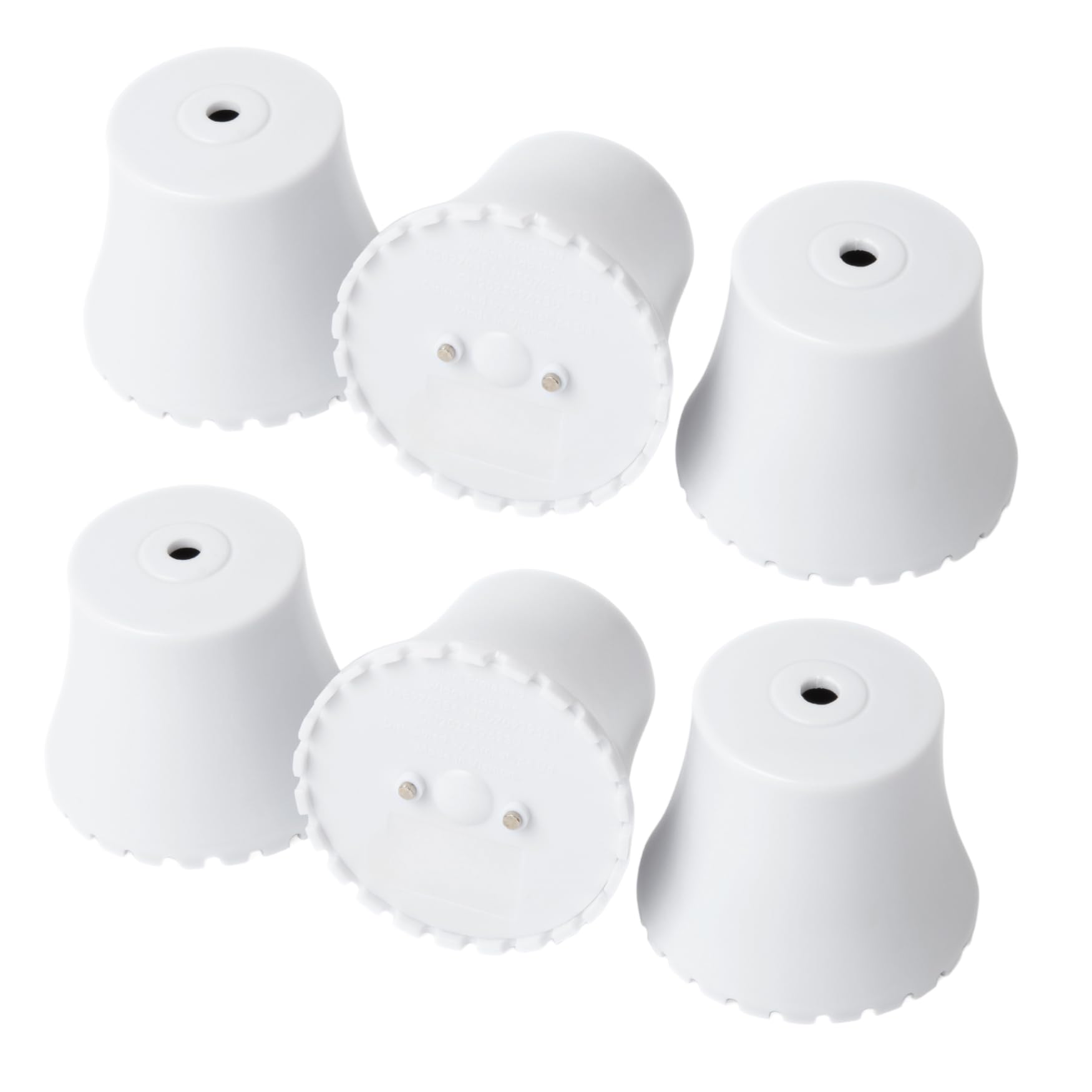
The Zircon Leak Alert is designed to float on rising water, making it a practical choice for sump pits where other sensors might be submerged and fail. The two-pack offers decent value for covering multiple areas, and setup is as simple as installing a 9V battery. However, detection sensitivity can vary between units, and the 90 dB alarm is quiet enough that it may not be heard in distant rooms or behind closed doors. Battery life is also shorter than some alternatives. These limitations make it best suited as a localized alert for spaces where you are likely to hear it, rather than a whole-home solution.

Bottom line: Fits best in sump pit or utility sink areas where you need a float-capable alarm and can hear the 90 dB tone directly.

9

X-Sense SWS0A41

X-Sense SWS0A41

Ultra-slim smart

Our Score 9.2/10
Check Price

Worth Noting

  • Detection may miss leaks in some cases
  • WiFi connectivity can be unstable on some networks
Range
1,700 ft open air
Alert Type
100 dB base + app alerts
Sensitivity
Water probes, ultra-slim
Battery Life
replaceable (CR123A)

The X-Sense SWS0A41 kit’s 0.67-inch-thick sensors slide under tight spaces like dishwashers and refrigerators, and the app setup is quick. It covers four locations with IP66 protection and a loud 100 dB base station for a mid-range price. However, detection can be inconsistent — some users note missed leaks or delayed alerts — and WiFi connectivity may be unstable on mixed-band networks. For those prioritizing fit over perfect detection, it works, but the top pick X-Sense SWS54 offers more consistent performance for a similar investment.

Bottom line: Best for users who need extremely thin sensors for cramped spots and can accept occasional detection lapses as a tradeoff for the slim form factor.

How to Choose

Alert Type: Local Siren vs. Smart Notifications

A simple standalone alarm emits a loud siren when water touches its probes. It works every time as long as the battery is fresh, but you must be within earshot. If the leak happens while you are out, you may not know until you return.

Smart systems send app, email, or SMS alerts so you can act remotely. However, they need a reliable WiFi or hub connection. A network drop during a leak means no alert. For critical areas like basements, combine a smart sensor with a local siren for redundancy.

Connectivity: WiFi, Hub, or Standalone

Standalone alarms are the simplest: no pairing, no network. Just place and listen. Their limitation is that you only hear them locally.

Hub-based systems (e.g., YoLink, X-Sense) use a dedicated bridge that communicates with sensors over long-range radio (LoRa) or sub-1GHz. This gives better range and avoids WiFi congestion, but adds a hub cost. Direct-WiFi sensors (like SwitchBot) skip the hub but rely entirely on your router's stability and often require 2.4GHz-only networks.

Range: How Far Can Sensors Reach?

For standalone alarms, range is irrelevant — they only work in the room they are placed. For smart systems, range determines where you can place sensors relative to the hub or router. WiFi signals struggle through concrete floors and metal appliances in basements.

Long-range wireless protocols like LoRa (used by YoLink and some GoveeLife models) can reach over 1,000 feet open air, easily covering detached garages or deep basements. Check if the system claims range in open air vs. through walls — expect 30-50% less in real homes.

Battery Life and Replaceability

Replaceable batteries (9V, AAA, CR123A) let you keep sensors running for years with simple swaps. Sealed batteries (like Flood Buzz) force you to discard the entire sensor when the battery dies — typically after 3 years.

Long-life sensors (5 years) reduce maintenance, but confirm that the battery is user-replaceable if you plan to keep the system beyond that span. A dead sensor while you are away is the same as no sensor at all.

Sensitivity and Detection Method

Most detectors use two metal probes that complete a circuit when water bridges them. They detect water as thin as 1/32 inch. Rope-style sensors (YoLink Sensor 2) can be wrapped around a water heater or laid in a perimeter for broad coverage, but they can be less sensitive to small puddles.

IP66 or IP67 ratings mean the sensor is waterproof and can survive a flood, but not all models are sealed. For sump pits or areas prone to standing water, choose a float-style sensor (like Zircon) that continues to alarm even if submerged.

Frequently Asked Questions