Home Appliances & Robots

10 Best Smart Thermostats of 2026: Reliable Models That Actually Last

The best smart thermostats for reliability-first buyers: C-wire-free options, simple apps, and proven longevity over flashy extras.

A smart thermostat promises comfort and savings, but too many models leave owners frustrated by Wi-Fi dropouts, dead screens, or temperature readings that are 5°F off from reality. The gap between sleek marketing and long-term dependability is wider than most buyers expect.

This guide cuts through the noise to spotlight the thermostats that earn consistent praise for reliability, simple installation, and day-to-day usability. Whether you lack a C-wire, rely on Apple HomeKit, or just want a straightforward schedule, the picks ahead match your home's actual wiring and your daily habits — not a spec sheet fantasy.

From multi-room sensor systems that actually maintain comfort to budget models that outlast premium flagships, the selections reflect what real homeowners experience month after month — because a thermostat that stops working in January is more than an inconvenience.

1

Sensi ST55

Top Pick
Sensi ST55

No C-Wire Universal

Our Score 8.8/10
Check Price

Worth Noting

  • In homes with marginal Wi‑Fi coverage, the thermostat may occasionally drop offline and require a router or device reset.
Display
5-in LED, buttons
C-Wire Requirement
Not required
Smart Home Support
Alexa, HomeKit, Google, SmartThings

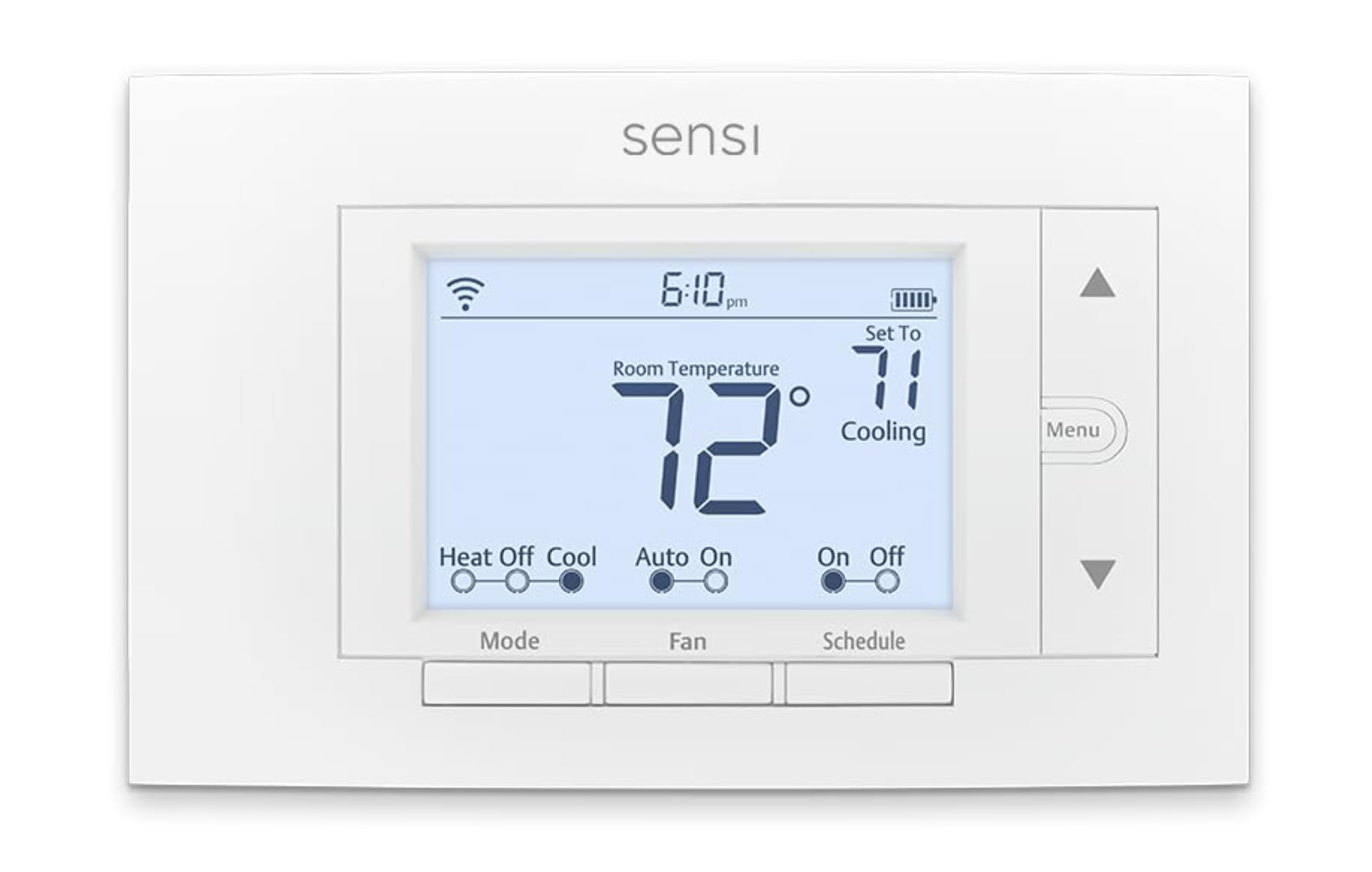
Painless DIY installation without a C‑wire and universal support for Alexa, Google Assistant, and HomeKit make the Sensi ST55 an exceptionally accessible budget thermostat. The step‑by‑step app guides wiring for most central heating and cooling systems—including gas, electric, oil, and heat pump setups—and the bright LED display with physical buttons sidesteps glare and lag common on low‑cost touchscreens.

Day‑to‑day control is simple: fixed schedules are easy to program through the app, and remote temperature adjustments respond promptly via voice or the Sensi mobile app. The thermostat holds the set temperature within a tight band, and manual overrides from the unit or app apply immediately. Long‑term hardware endurance holds up with very few reports of functional failures, a rare trait at this price—many budget competitors develop hardware issues within the first year.

The ST55 fits buyers who want basic, dependable climate control without paying for learning algorithms, color touchscreens, or room sensors. Its three‑year warranty provides more confidence than most budget alternatives. Occasional Wi‑Fi dropouts—typically fixed by a quick router or thermostat reset—make it less suitable for homes with borderline wireless coverage or users who demand zero‑interruption connectivity. For everyone else, it’s a zero‑drama way to get app and voice control over a central HVAC system.

Tip: If your thermostat drops offline occasionally, a quick power‑cycle of the router or thermostat usually restores the connection.

Bottom line: For a budget smart thermostat that installs without a C‑wire and covers Alexa, Google, and HomeKit, the Sensi ST55 is the least risky, most hassle‑free choice—provided your home Wi‑Fi can keep it connected.

2

ecobee Voice Control

ecobee Voice Control

Voice Hub Sensor

Our Score 9.2/10
Check Price

Worth Noting

  • Wi-Fi connectivity can drop, disabling remote app and voice control temporarily.
  • Temperature readings may be off by 3–5°F, requiring manual offset adjustment.
Display
4.3-in LCD touch
C-Wire Requirement
C-wire or PEK
Smart Home Support
Alexa built-in, HomeKit, Google

Unlike simpler Wi-Fi thermostats, this ecobee has Alexa built right in, letting you set temperatures, play music, and ask questions without a separate smart speaker. While the newer ecobee Enhanced swaps the speaker for radar occupancy sensing, this model keeps the voice assistant and includes a physical SmartSensor to address hot/cold spots. Temperature readings can drift 3–5°F off actual, and occasional Wi-Fi drops interrupt remote control — buyers willing to calibrate offsets and manage network dips will find it a capable smart hub. Best for Apple HomeKit and Alexa users with multi-room comfort needs, who value voice control over radar-based routines.

Tip: Assign a static IP or reposition your router to minimize intermittent Wi-Fi disconnections.

Bottom line: The ecobee SmartThermostat with Voice Control suits homes with uneven temperatures and an Alexa-first smart setup, as long as you're comfortable calibrating sensor readings and managing occasional Wi-Fi hiccups.

3

Nest Learning 4th Gen

Nest Learning 4th Gen

Premium Design

Our Score 8.8/10
Check Price

Worth Noting

  • Temperature consistency can be uneven; scheduled settings may not always hold as intended
  • Early production units have shown occasional reliability hiccups, with a risk of the device becoming unresponsive within weeks
Display
Large LCD touch
C-Wire Requirement
Not required
Smart Home Support
Alexa, Siri, Google, Matter

What sets this Nest apart from lower-cost Google thermostats is its 60% larger display, polished aluminum finish, and broad smart home support including Matter and Apple HomeKit. Adaptive Eco and permission-based schedule changes quietly fine-tune your routine.

It fits design-conscious households embedded in the Google ecosystem who will value Dynamic Farsight and the adaptive scheduling. The required shift to the Google Home app from the classic Nest app may frustrate long-time Nest users, and early production units have shown occasional reliability hiccups that can interrupt heating or cooling.

Bottom line: Design-forward smart home owners who desire the latest connectivity and Nest’s premium aesthetic will find it compelling, provided they’re comfortable with the Google Home app and accept the early reliability variable.

4

Sensi Touch ST75S

Sensi Touch ST75S

Large Touchscreen

Our Score 9.0/10
Check Price

Worth Noting

  • In some homes, Wi-Fi can drop sporadically, briefly interrupting app control.
Display
5-in color touch
C-Wire Requirement
Required
Smart Home Support
Alexa, HomeKit, Google

Where the top pick strips away touchscreen frills for universal C-wire-free compatibility, the ST75S leans into a crisp 5-inch color display and an app experience that makes programming schedules genuinely simple. Illuminated wiring terminals guide a swift DIY install, but only if your home already has a C-wire. It’s the right choice for homeowners who want a large, modern touchscreen and don’t mind the C-wire requirement — and the wrong one for older 2-wire systems unless you budget for an electrician visit.

Tip: If app control occasionally drops due to Wi-Fi hiccups, repositioning your router or assigning a static IP to the thermostat often stabilizes the connection.

Bottom line: For homes with a C-wire, the ST75S offers a more polished touchscreen experience than many pricier thermostats, with no compromise on basic comfort control.

5

Honeywell 9000

Honeywell 9000

Reliable Touchscreen

Our Score 8.8/10
Check Price

Worth Noting

  • In rare cases, mid‑term reliability glitches have been noted.
Display
3.8-in color touch
C-Wire Requirement
Required
Smart Home Support
Alexa, Google, SmartThings

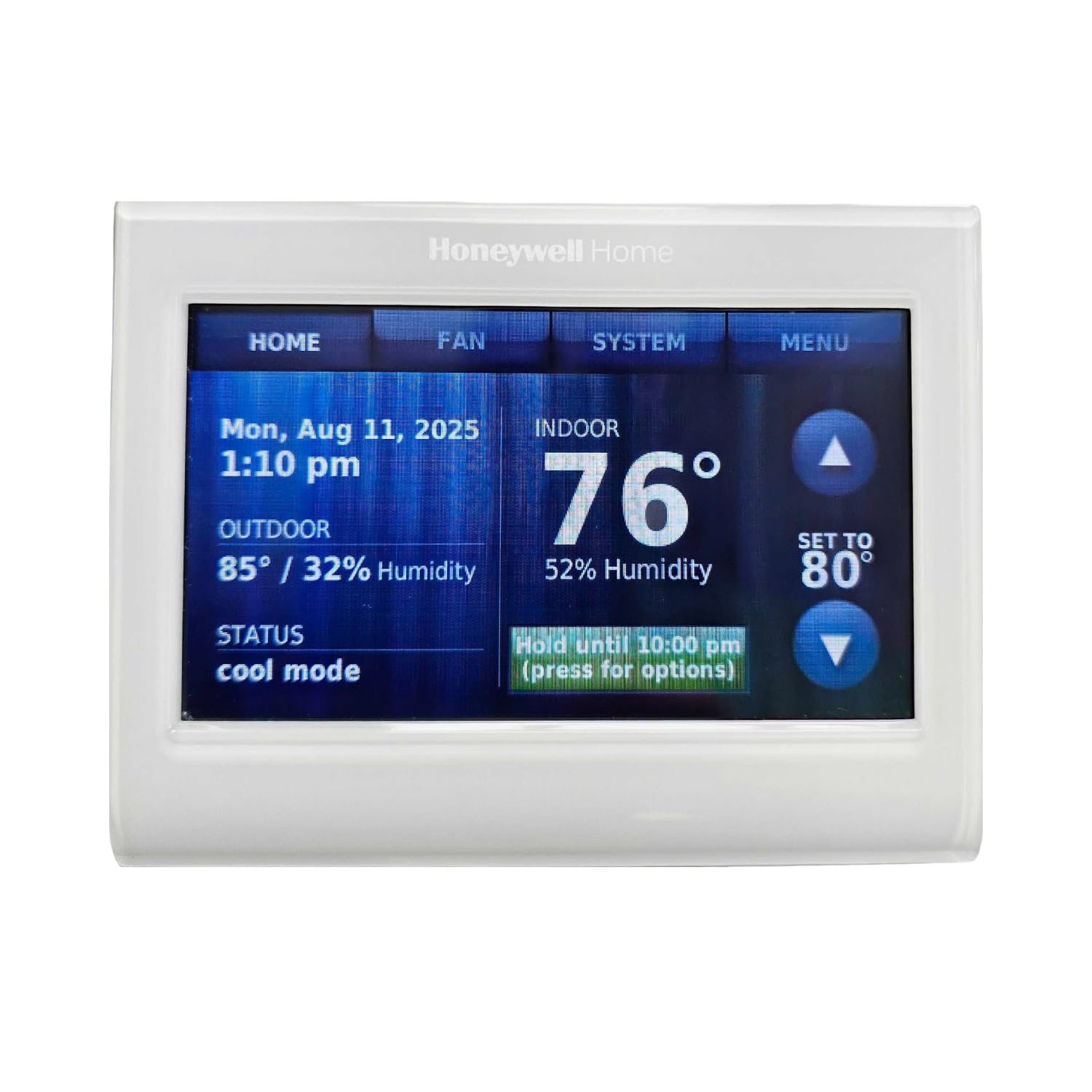
The Honeywell Wi‑Fi 9000 puts a 3.75-inch customizable color touchscreen front and center, with Wi‑Fi that holds its connection without the learning algorithms or room sensors found in pricier models. That makes it a smart choice for someone who wants hassle‑free, app‑controlled heating and cooling without extra complexity. Homes with a C‑wire are required. While most run without issues for years, a small minority have hit mid‑term glitches — so it's not the pick for sensor‑driven multi‑room balancing, but for basic, dependable control, it delivers.

Bottom line: If you have a C‑wire and want a no‑nonsense touchscreen thermostat that nails the basics without the complexity of room sensors, the Honeywell 9000 is an easy pick — just know that a very small number may need a reset down the line.

6

ecobee Enhanced

ecobee Enhanced

Radar Occupancy

Our Score 8.8/10
Check Price

Worth Noting

  • Wi-Fi may occasionally drop or the unit may reboot spontaneously, interrupting remote control.
  • Temperature readings can drift 4–5°F from actual, leading to uneven comfort.
Display
4-in LCD
C-Wire Requirement
C-wire or PEK
Smart Home Support
All major

Built-in radar occupancy sensing lets the ecobee Enhanced pre-heat or cool before you walk into a room, bringing intelligence usually found in more expensive thermostats. It lacks the speaker of the voice-control ecobee but packs a power extender kit for C-wire-free installs and works smoothly with Apple HomeKit. Homeowners who want presence-driven comfort and the option to add room sensors later will find the tradeoff sensible. Some units can experience Wi-Fi dropouts or temperature drift of 4–5°F, so those with finicky HVAC systems or a need for pinpoint accuracy should look toward the top pick.

Bottom line: The ecobee Enhanced delivers radar occupancy smarts at a sensible price, but inconsistent temperature accuracy and occasional connection hiccups mean it is best for those willing to trade absolute precision for presence-based convenience.

7

Nest Thermostat

Nest Thermostat

Budget Nest

Our Score 8.4/10
Check Price

Worth Noting

  • Some units may arrive non-functional or stop responding within weeks of installation.
Display
2-in LCD mirrored
C-Wire Requirement
Not required
Smart Home Support
Alexa, Google, Matter

The Nest Thermostat provides Energy Star savings tracking and HVAC health monitoring at an entry-level price, adding app and voice control to basic systems. However, temperature consistency can be less precise than expected, and a minority of units may exhibit operational issues that require replacement. This makes it a good fit for budget-conscious buyers with straightforward HVAC setups who can tolerate an occasional gamble on hardware dependability.

Bottom line: This Nest suits budget-minded homes with basic HVAC that value energy insights and are prepared for a possible return if the unit stumbles early.

8

Nest Thermostat E

Nest Thermostat E

Entry Nest Learn

Our Score 8.8/10
Check Price

Worth Noting

  • The frosted display has lower contrast, making it harder to read from across the room.
Display
Frosted display
C-Wire Requirement
Not required
Smart Home Support
Alexa, Google

The Nest Thermostat E learns your schedule and fades into the wall with a frosted display, installing easily without a C-wire. Because real-world performance is largely unverified, this is a buy based on brand trust. Existing Nest users adding a second unit will accept that; those needing independently confirmed reliability should consider the top pick instead.

Bottom line: If you already trust the Nest ecosystem and want auto-schedule at a lower price, this fits as a secondary unit. Buyers who prioritize independently vetted performance will find the top pick a more reassuring choice.

9

Amazon Smart Thermostat

Amazon Smart Thermostat

Alexa Only

Our Score 8.0/10
Check Price

Worth Noting

  • Thermostat may stop working entirely within months, leaving the HVAC system inoperable.
Display
C-Wire Requirement
Required
Smart Home Support
Alexa, Ring

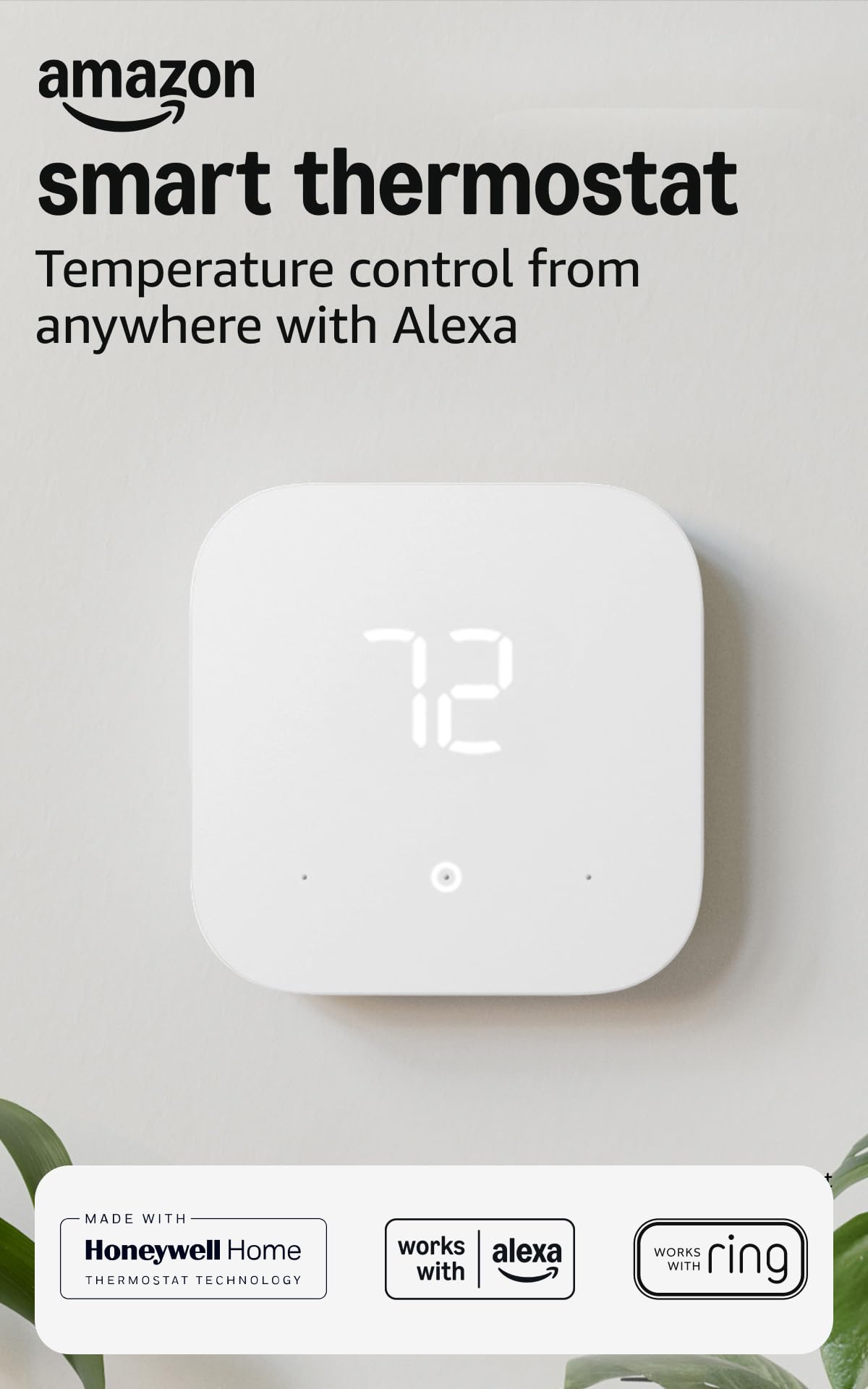
Deep Alexa integration and Energy Star savings at a rock-bottom price make the Amazon Smart Thermostat tempting. However, units may stop functioning entirely within months, cutting off heating or cooling. That risk makes it unsuitable for a primary residence — it's only viable for short-term or experimental use where a failure is acceptable.

Bottom line: This thermostat fits only if you need a temporary, dirt-cheap Alexa gadget for a secondary space where a sudden failure won't disrupt your household.

10

Honeywell T9

Honeywell T9

Sensor Zoning

Our Score 8.6/10
Check Price

Worth Noting

  • Heating function can cut out, leaving the home without warmth when it is needed most.
Display
C-Wire Requirement
C-wire required (adapter)
Smart Home Support
All major

The included room sensor noticeably balances temperatures across large or multi-story homes, directing heating or cooling to where people are. This sensor-driven comfort, however, is accompanied by durability concerns that make it less suitable for a primary heating system. For a vacation property or a supplemental zone, the precision outweighs the risk.

Bottom line: For a secondary residence where temperature precision matters more than absolute heating dependability, the sensor-based balancing delivers clear benefits.

How to Choose

C-Wire and Power Extender Kits

A C-wire provides continuous 24V power, letting the thermostat run Wi-Fi and bright displays without stealing power from the heating or cooling circuit. In many older homes, this wire is missing. Some thermostats can operate without one by cycling power briefly, but that can cause clicking noises or, in rare cases, damage sensitive HVAC components.

If you lack a C-wire, prioritize models that include a Power Extender Kit (PEK) or are explicitly designed for 2-wire systems. The PEK taps into existing connections at the furnace to create a phantom C-wire, avoiding the need for an electrician.

Smart Home Ecosystem Compatibility

Basic voice commands like 'set temperature to 72' work on most platforms, but deeper integration matters. Check whether the thermostat supports scenes or routines in your ecosystem of choice — Apple HomeKit users, for example, need the thermostat to trigger automations like lowering the heat when the door locks. Matter support future-proofs the device, ensuring it will work across platforms if you switch ecosystems later.

If you already have multiple voice assistants, look for models that list Alexa, Google Assistant, and HomeKit in the specs rather than just one. Some thermostats lock you into a single assistant's features.

Display Type and Size

A color touchscreen delivers at-a-glance information and feels modern, but it draws more power and can be harder to read in direct sunlight. Button-controlled LED or e-ink displays use less energy and often have a longer lifespan, but programming them from the wall can be slower. Screen size matters most for multi-user households: a 5-inch display is easier for children or older adults to operate than a 2-inch one.

If the thermostat is in a hallway you rarely activate manually, a simple display may suffice. For a kitchen or living area where family members tweak the schedule frequently, a large touchscreen that shows the full weekly schedule at once saves repeated button presses.

Room Sensors and Occupancy Sensing

Single-zone homes with even airflow rarely need remote sensors, but multi-story houses or rooms with large windows can experience temperature swings. A remote sensor placed in a hot or cold room tells the thermostat to average readings, evening out comfort. Radar occupancy sensors go further by detecting whether a room is occupied and pre-conditioning it before you arrive.

Placement is critical: a sensor perched on a sunny windowsill will report false warmth, causing the cooling to run excessively. Ensure the thermostat’s sensor range matches the distance between floors. For occupancy sensing, the response needs to be quick enough that you feel the difference within minutes.

Energy Savings and Real-World Reliability

ENERGY STAR certification confirms the thermostat meets efficiency benchmarks, but it doesn't guarantee long-term reliability. User reports of units failing within the first year, temperature readings drifting 4°F off, or Wi-Fi disconnects that render the thermostat a manual dial are far more telling. A model with a 3-year warranty and few failure reports is worth far more than one claiming an extra 3% annual savings.

Look for thermostats with a track record of stable operation over multiple heating and cooling seasons, not just initial praise. The real cost of a dead thermostat in January includes frozen pipes or an emergency service call.

Frequently Asked Questions