Phone & Tablet Accessories

9 Best USB-C Car Chargers of 2026: Which Actually Deliver Full Laptop Power

Cut through wattage hype to find USB-C car chargers that deliver real laptop power and keep your devices charged on the road.

USB-C car charger wattage numbers look impressive on the box, but getting a laptop to actually charge at full speed while driving takes more than a big number. Many chargers share power across ports or throttle under heat, leaving your MacBook trickling instead of fast charging.

The trade-off often comes down to thermal design. Traditional chargers can run hot when pushing 100W for long stretches, while GaN models handle heat better but cost more. Features like retractable cables add convenience but introduce moving parts that can wear out. Matching the charger’s real single-port output to your primary device – phone, tablet, or laptop – is what separates a daily workhorse from a frustrating accessory.

1

JOYROOM 175W GaN

Top Pick
JOYROOM 175W GaN

MacBook & laptop

Our Score 9.4/10
Check Price

Worth Noting

Build & Heat
Plastic+GaN
Ports & Types
2 USB-C, 1 USB-A
Total Wattage
175W
Included Cable
100W USB-C cable

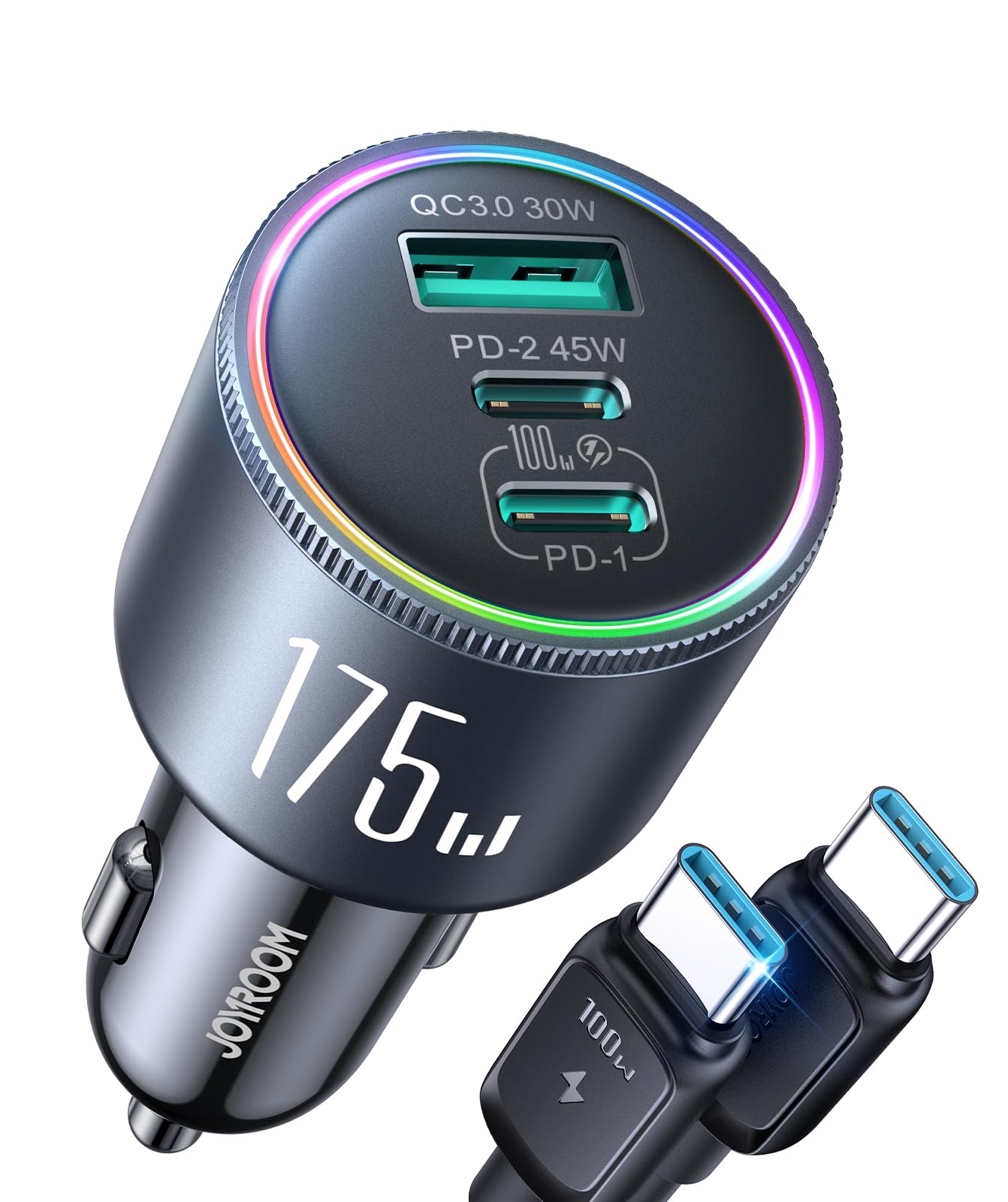
The JOYROOM 175W car charger puts out a genuine 100W through its primary USB-C port, enough to sustain a MacBook Pro's full charging speed. The second USB-C port supplies 45W, while the USB-A port handles legacy devices, giving three simultaneous charging paths without power-sharing compromises.

Charging multiple devices at once — a phone on the 100W port, a tablet on the 45W, and a second phone on USB-A — the charger maintains consistent speeds without thermal throttling. The Gallium Nitride (GaN) internal design keeps heat in check even during sustained high-load use, a clear advantage over older silicon-based chargers that often drop wattage when they get warm.

The build quality is solid: a polycarbonate body with a metallic spray finish that resists scratches, a soft LED that won't distract at night, and a 100W USB-C cable included in the box. Early owners report the charger fits securely in most cigarette lighter sockets and stays put even on bumpy roads.

This charger fits anyone who needs to top up a laptop alongside phones or tablets during a road trip — families with multiple high-power devices, tech enthusiasts who value GaN efficiency, and professionals who rely on a MacBook on the go. JOYROOM is a newer name in car chargers compared to Anker or UGREEN, so the long-term reliability track record is shorter. Early signs are strong, but buyers who plan to keep a charger for years may want to weigh that against the slightly higher price of the equivalent Anker model.

For a mid-range price, you get 175W total across three ports and a cable that would cost $15 separately — solid value for multi-device charging. The charger's performance matches or beats many more expensive options, and its thermal management is a genuine differentiator.

Bottom line: If you need a car charger that can handle a laptop and two phones at full speed without overheating, the JOYROOM 175W GaN delivers — just keep in mind the brand's newer status if long-term reliability is your top concern.

2

Anker 167.5W 3-Port

Anker 167.5W 3-Port

Laptop charging

Our Score 9.6/10
Check Price

Worth Noting

  • May run warm under sustained high-load charging; isolated overheating reports have been noted.
Build & Heat
Plastic shell
Ports & Types
2 USB-C, 1 USB-A
Total Wattage
167.5W
Included Cable
3.3 ft USB-C cable

The Anker 167.5W car charger delivers the highest total wattage in its lineup, with two USB-C ports providing 100W and 45W simultaneously – enough to power a MacBook Pro and an iPhone 17 at the same time. Its compact plastic shell houses the components efficiently, and the included 3.3-foot USB-C cable adds everyday convenience. Charging times for a 14-inch MacBook Pro reach full speed, and simultaneous laptop-and-phone charging is seamless.

This charger is built for road warriors and families who need to charge multiple devices, including laptops, during long drives. MacBook users will appreciate the consistent 100W delivery on the primary port. However, sustained high-load charging can cause the unit to run warm – noticeable heat has been reported in some cases, making it better suited for well-ventilated vehicles. For short trips or phone-only use, the heat is rarely a concern.

Compared to GaN-based alternatives, Anker's charger prioritizes raw power output over thermal efficiency. While it maintains high sustained wattage and benefits from a long brand history, buyers who prefer cooler operation under extended loads may want to look at GaN models. Given its total output and included cable, the premium price is justified for those who will regularly push the charger to its limits.

Tip: For sustained high-load charging, ensure the charger is in a well-ventilated area to minimize heat buildup.

Bottom line: The Anker charger is for buyers who need maximum total wattage and value brand consistency, but should accept the thermal tradeoff – GaN models like JOYROOM run cooler with similar single-port output.

3

KENHAO 67W Metal 3-Port

KENHAO 67W Metal 3-Port

Budget phone charging

Our Score 9.4/10
Check Price

Worth Noting

  • Some units may stop working within months of purchase
Build & Heat
Metal housing
Ports & Types
2 USB-C, 1 USB-A
Total Wattage
67W
Included Cable

The KENHAO 67W charger offers three ports — two USB-C and one USB-A — in a metal shell at a budget-friendly price. Charging speeds are fast, especially for Samsung phones, with up to 37W per USB-C port when used alone.

This charger is best suited for households with multiple phones and tablets that need top-ups during commutes. It cannot charge a laptop — the 37W per port is enough for rapid phone charging but not for high-power devices. A small number of units have been noted to stop working within months, so checking the warranty terms before purchasing is a sensible step.

The metal construction holds up well to daily insertion and removal, and the ports are spaced to accommodate larger plugs. For a family car or a second car where everyone needs a charge, this is a straightforward way to get three devices powered without spending much.

Tip: Consider purchasing with a warranty or as a secondary charger given the possibility of early issues.

Bottom line: For phone charging on a budget, this metal three-port charger delivers good speed and build. Be mindful of the potential for early failure, making it a low-risk choice for those who can handle a quick replacement.

4

LISEN 84W Retractable

LISEN 84W Retractable

Families & rideshare

Our Score 9.2/10
Check Price

Worth Noting

  • Retractable mechanism can become less reliable after months of frequent use.
  • Cable durability may vary between units; some may see slower charging over time.
Build & Heat
Metal
Ports & Types
2 retractable, 2 USB
Total Wattage
84W
Included Cable
Retractable built-in

The LISEN 84W Retractable stands out by integrating two retractable cables directly into the charger — a USB-C and a Lightning cable that tuck away when not in use. This design eliminates dangling cords and makes it easy to keep the car interior tidy. The charger adds two additional USB ports for a total of four outputs, so everyone in the car can plug in without fighting for a single cable.

In practice, the retractable cables are genuinely convenient for quick top-ups, and the 45W max per port handles phones and tablets with ease. However, the retractable mechanism and the cables themselves are a mechanical compromise — under daily use, the retracting spring or the cable insulation can become less reliable over a period of months. Some units have shown a decline in charging consistency, so this is best treated as a convenience feature rather than a set-and-forget component.

This charger fits families who need to keep multiple phones charged without cable clutter, and rideshare drivers who value a clean dashboard. The tradeoff is durability: the retractable assembly may not hold up as long as a fixed-cable charger. If you prioritize long-term single-charger reliability over cable management, a simpler model without moving parts would be a better bet.

Tip: Gently guide the cables back in when retracting to reduce strain on the spring mechanism.

Bottom line: For families or rideshare drivers who hate cable tangles, the retractable design is a real convenience — just be aware it’s a comfort feature, not a lifetime investment.

5

JUNVANG 130W Display

JUNVANG 130W Display

Voltage monitor

Our Score 9.6/10
Check Price

Worth Noting

Build & Heat
Metal
Ports & Types
2 USB-C, 1 USB-A
Total Wattage
130W
Included Cable
240W USB-C cable

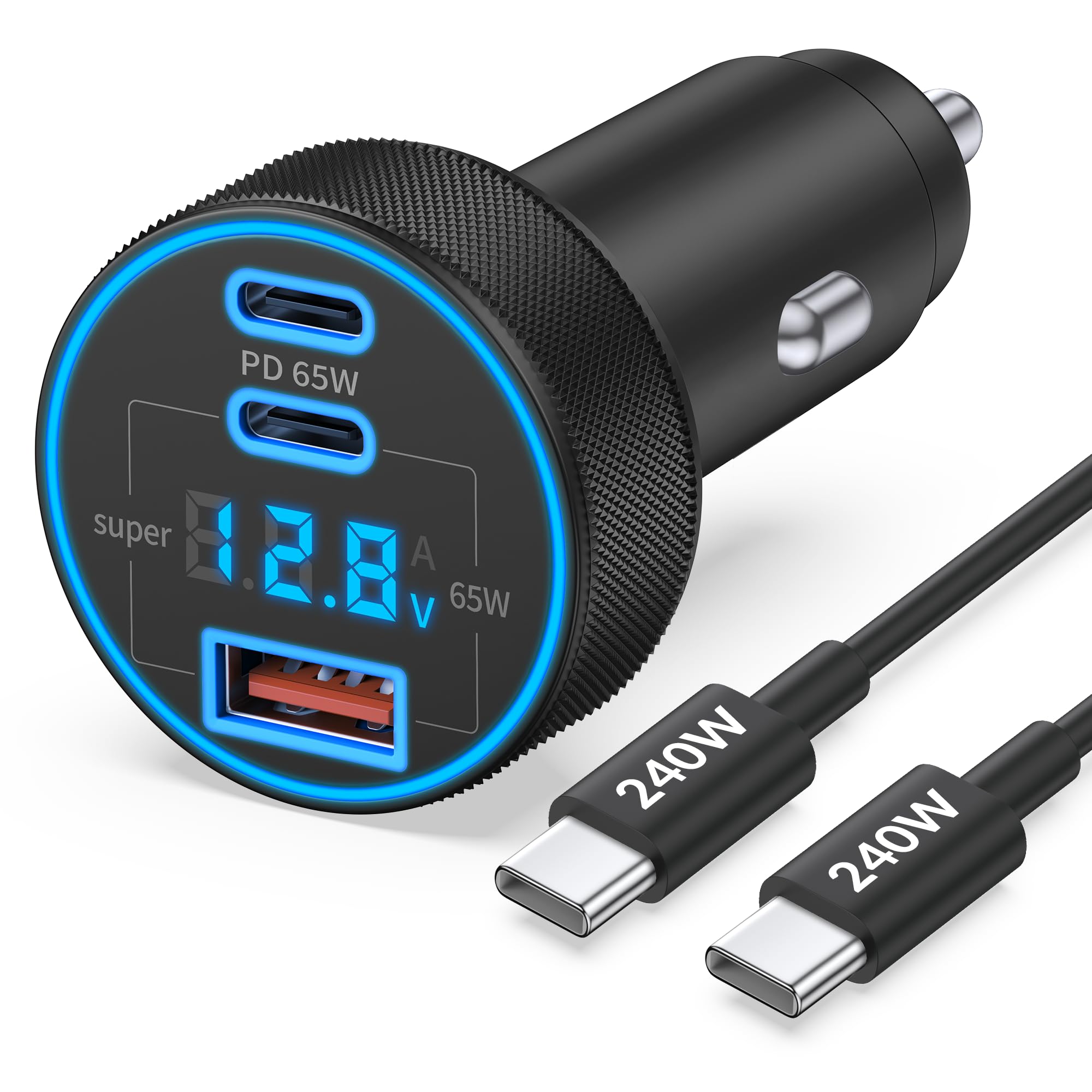
The JUNVANG 130W car charger stands out by including a real-time voltage display that shows your car battery's health directly on the unit. This is a feature you won't find on most high-power chargers, appealing to DIY mechanics or anyone who wants to keep an eye on their electrical system. Beyond that, it delivers 100W PD from one USB-C port and a combined 130W across three ports, enough to fast-charge a Samsung Galaxy S24 or tablet while also powering a second device.

This charger suits Samsung users looking for super-fast charging — it supports Samsung's adaptive fast charging protocols — and who also value monitoring their car's battery voltage. The metal body feels premium and the included 240W USB-C cable saves an extra purchase. Because the voltage display runs continuously, it's a handy tool for older vehicles or those with aftermarket electrical accessories.

Early adopters confirm the charger lives up to its speed claims, charging phones quickly even when multiple ports are in use. The build quality is consistently praised, with the metal shell providing a solid, durable feel. The compact design fits most cigarette lighter sockets without protruding too far.

Bottom line: If you want fast Samsung charging plus the ability to monitor your car's battery, this charger delivers both without compromise.

6

LISEN 69W 2-Pack

LISEN 69W 2-Pack

Multi-car value

Our Score 9.2/10
Check Price

Worth Noting

  • Fit can loosen in some vehicles, causing the charger to pull out when disconnecting a cable.
  • USB-C limited to 36W
Build & Heat
Aluminum
Ports & Types
1 USB-C, 1 USB-A per unit
Total Wattage
69W per unit
Included Cable

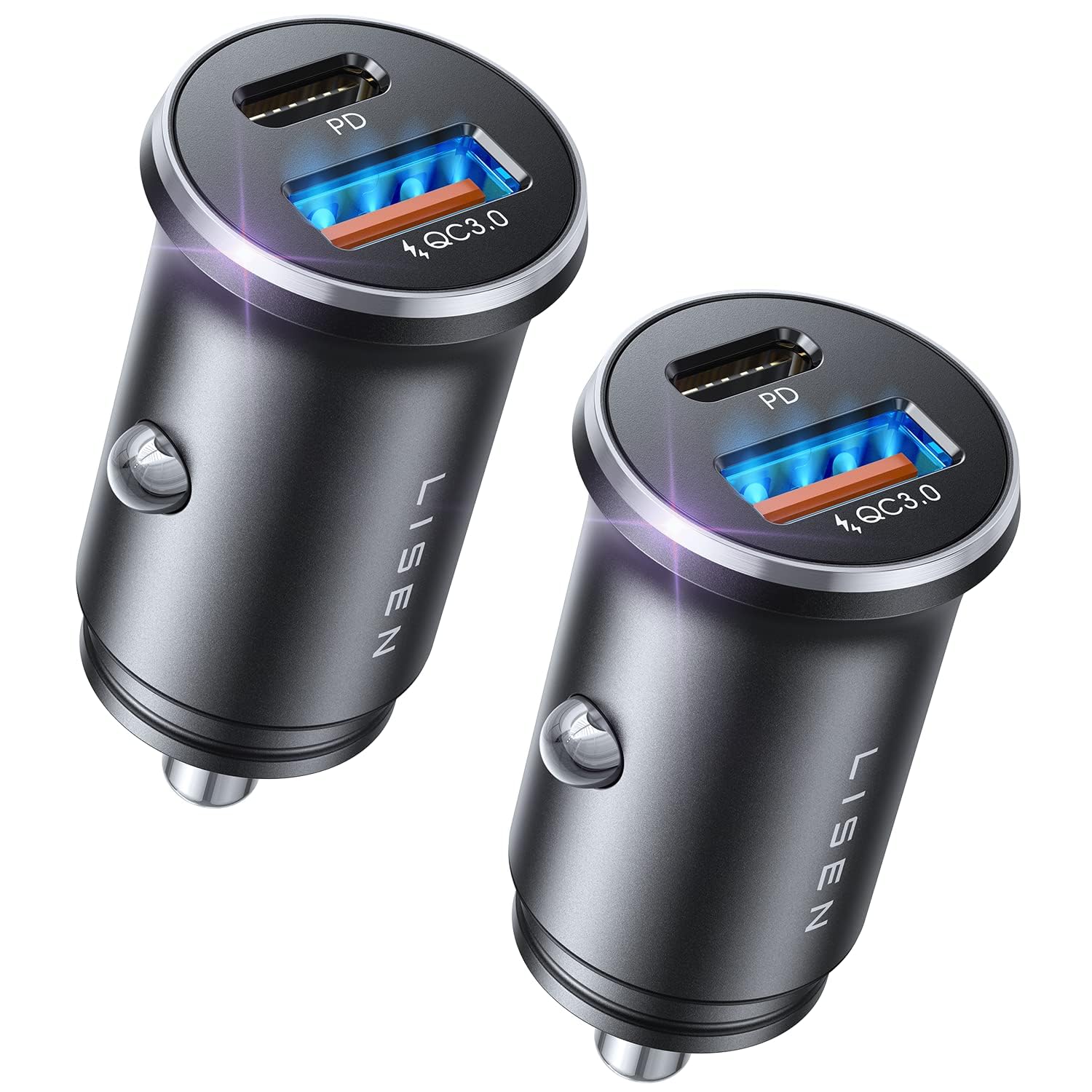
The LISEN two-pack delivers an aluminum-bodied charger for each car at a price that undercuts most single units. Each 69W unit provides 36W USB-C PD and a USB-A port — enough to fast-charge phones and tablets consistently. The aluminum shell feels substantial, and the flush-fit design sits nearly flush in 12V outlets, keeping the dashboard tidy. Charging speed remains steady across both ports, and the compact profile won't block adjacent outlets. The two-pack format eliminates the need to swap chargers between vehicles, a practical convenience for multi-car households.

This set suits drivers who prioritize value and phone-level charging. Laptop charging is not supported — each USB-C port maxes out at 36W, a clear boundary. In some vehicles the fit can loosen over time; the charger may pull out when disconnecting a cable, though pressing it in fully helps. For budget-conscious buyers who want a second unit at no extra cost, this is a straightforward, no-frills solution.

Tip: If the charger feels loose, try rotating it or using a different orientation in the 12V socket to improve grip.

Bottom line: For phone-first drivers in multi-car households, this two-pack offers unbeatable value and solid build — as long as you don't need laptop charging and your vehicle's outlet provides a snug fit.

7

Anker 323 52.5W

Anker 323 52.5W

Smartphone charging

Our Score 9.4/10
Check Price

Worth Noting

  • Blue LED is excessively bright and can be distracting during nighttime driving
  • Some units may develop loose connections or stop charging after months of use
Build & Heat
Plastic
Ports & Types
1 USB-C, 1 USB-A
Total Wattage
52.5W
Included Cable
USB-C cable

The Anker 323 handles phone charging without fuss, with a USB-C and USB-A port offering flexibility for modern smartphones. The included cable saves a separate purchase. However, the total 52.5W output is not enough for laptops, and the blue LED is too bright for nighttime driving. A minority of units may develop loose connections over months of use. If you need a simple phone charger for daytime use and value Anker's support, this works.

Bottom line: Best for daytime use or drivers who can cover the LED; not for laptop charging.

8

UGREEN 130W 3-Port

UGREEN 130W 3-Port

Laptop on budget

Our Score 9.2/10
Check Price

Worth Noting

  • Overheating under sustained high load can be uncomfortable
  • Some units may smoke or stop working unexpectedly
Build & Heat
PC material
Ports & Types
2 USB-C, 1 USB-A
Total Wattage
130W
Included Cable
100W USB-C cable

The UGREEN 130W car charger delivers a genuine 100W PD via USB-C, enough to charge a MacBook Pro while also powering a phone from the second 30W port. The budget price and included 100W cable add appeal, but sustained high-load use can trigger excessive heat and, in some cases, unit failure. This makes it a solid choice for occasional laptop top-ups or phone charging in well-ventilated cars, not for daily heavy use.

Bottom line: A budget-friendly option for occasional laptop charging in a well-ventilated car, if you can accept the possibility of overheating or unit failure.

9

LISEN 90W Coiled Cable

LISEN 90W Coiled Cable

Built-in cable

Our Score 9.2/10
Check Price

Worth Noting

  • Coiled cord may not reach phone mounts mounted high or far from the port
  • Advertised 90W is misleading; real output is far lower, so laptops won't charge
Build & Heat
Plastic/PVC
Ports & Types
2 USB-C, 1 USB-A
Total Wattage
90W
Included Cable
Built-in coiled

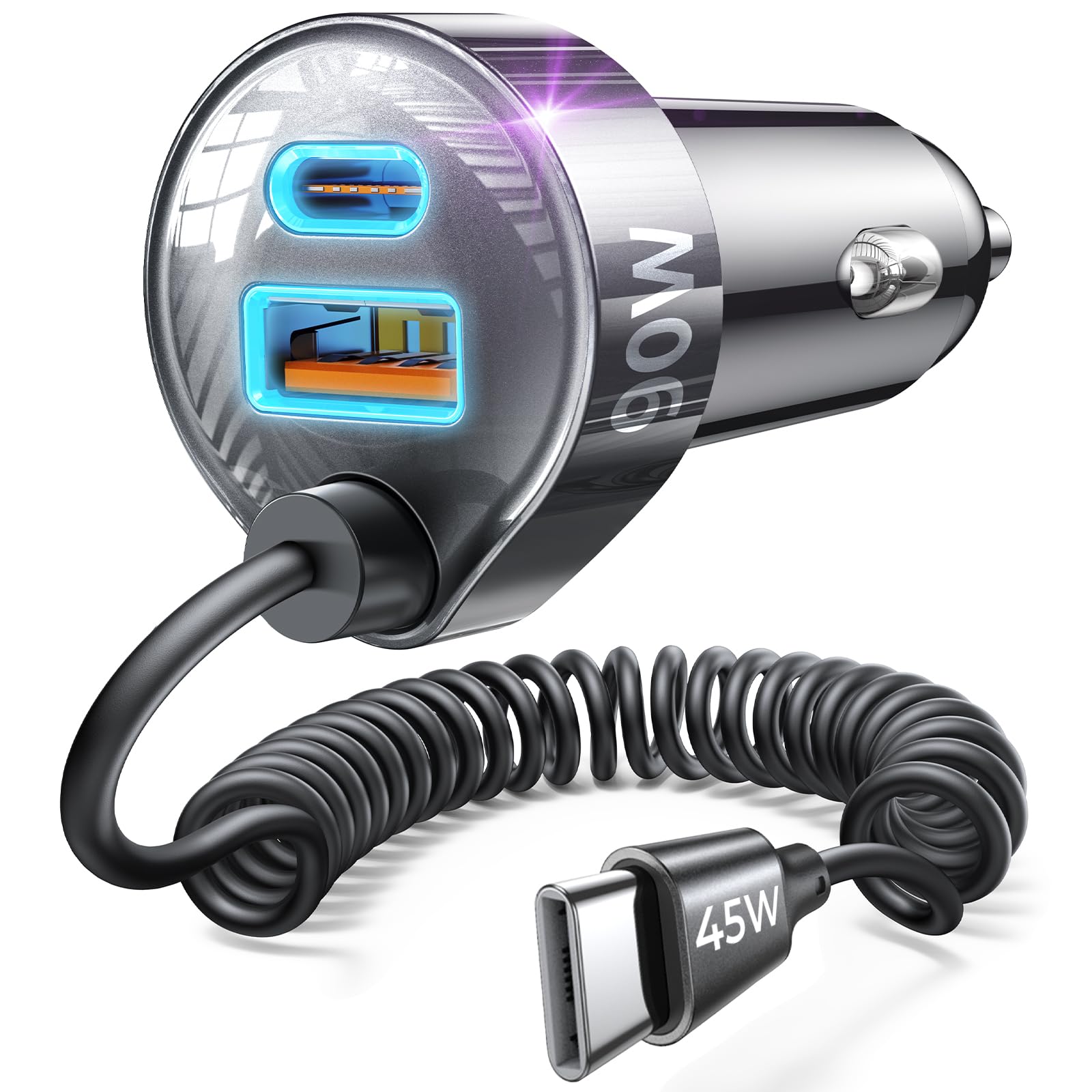
The LISEN car charger keeps a tidy dashboard with its built-in coiled USB-C cable, and it charges iPhones and Android phones quickly. Build quality holds up well, and the compact design fits most vehicles. However, the cable is too short when coiled to reach many phone mounts, and the advertised 90W output is not real — actual power delivery is closer to 45W, making it unsuitable for laptops or tablets that need more than phone-level charging. This is a decent dedicated phone charger if you value cable management and don't need high wattage, but for multi-device or laptop charging, look elsewhere.

Bottom line: Best suited for iPhone or Android users who want a tidy coiled cable and only need phone charging, and who can work around the short reach.

How to Choose

Total Wattage

Total wattage represents the sum of all ports combined, but it’s rarely achievable simultaneously. Most chargers share power dynamically, so a 100W charger may only deliver 60W to one port if another is active.

If you plan to charge two high-power devices at once, look for a charger with at least 130W total to ensure each port gets enough. For single-device use, total wattage matters less than the port’s max output.

Max Power per Port

This is the number that determines whether your device charges at full speed. A phone typically needs 20–30W for fast charging, while a 13-inch MacBook Air requires 30W and a 14-inch MacBook Pro needs 60–70W. If you plug a laptop into a 30W port, it will charge slowly or lose battery under load.

Check the USB-C port’s Power Delivery (PD) rating. Many chargers advertise 100W but only on one port; the second port may be limited to 20W. Always verify the single-port max for your primary device.

Ports and Types

More ports don’t always mean faster charging. A charger with two USB-C ports and one USB-A gives you flexibility, but if two users plug in laptops, power gets split. USB-A ports top out at 12W typically.

If you only charge phones, a 2-port charger with USB-C and USB-A is sufficient. For laptops, you want at least two USB-C ports with separate high-wattage paths.

Build and Heat Dissipation

Heat is the enemy of sustained performance. Plastic chargers dissipate heat slower than metal ones, which can lead to throttling and reduced charging speed after 15–20 minutes of use. GaN (gallium nitride) chargers run cooler and maintain output longer.

If you frequently take long road trips or charge a laptop while navigating, a GaN model or a well-ventilated metal charger will save you from slow charging and potential overheating.

Included Cable

The cable quality directly affects charging speed. A cheap cable may not support the full wattage or can get damaged over time. Look for cables rated for at least 60W for phone charging or 100W for laptops.

Cables included with the charger are usually adequate, but longer or braided cables offer better durability. If you need a specific length, factor that into your budget.

Frequently Asked Questions