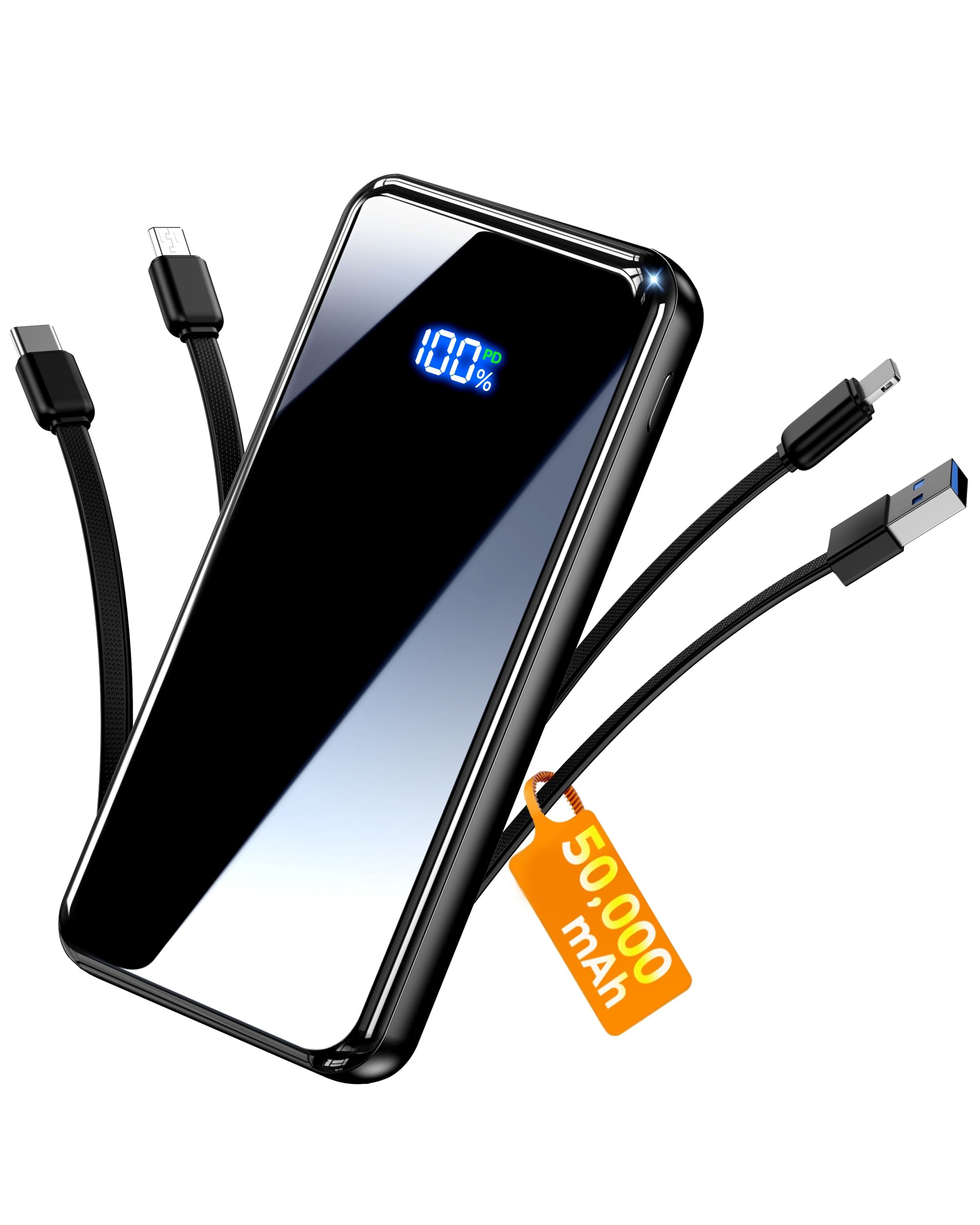
Phone & Tablet Accessories

13 Best High Capacity Power Bank of 2026: Laptop-Ready Picks for Real Travelers

Find the high capacity power bank that truly charges your laptop and fits airline rules, without the marketing fluff.

Most power banks with huge capacity numbers fall short where it counts: they can't charge a laptop, or they're too big for carry-on luggage. A 22.5W output won't keep a MacBook alive, and a 50,000mAh pack often gets confiscated at security. The real-world challenge is matching wattage, size, and airline limits.

The sweet spot lands around 25,000mAh with at least 100W per port. That combination handles phones, tablets, and laptops while staying under the 100Wh carry-on limit. The trade-off is weight: heavier banks deliver more power, so you choose between pocket portability and full laptop capability.

This guide focuses on power banks that deliver on their promises — honest capacity, fast charging for laptops, and flight-safe design. You'll find picks for travel, camping, and professional use, with no inflated specs.

1

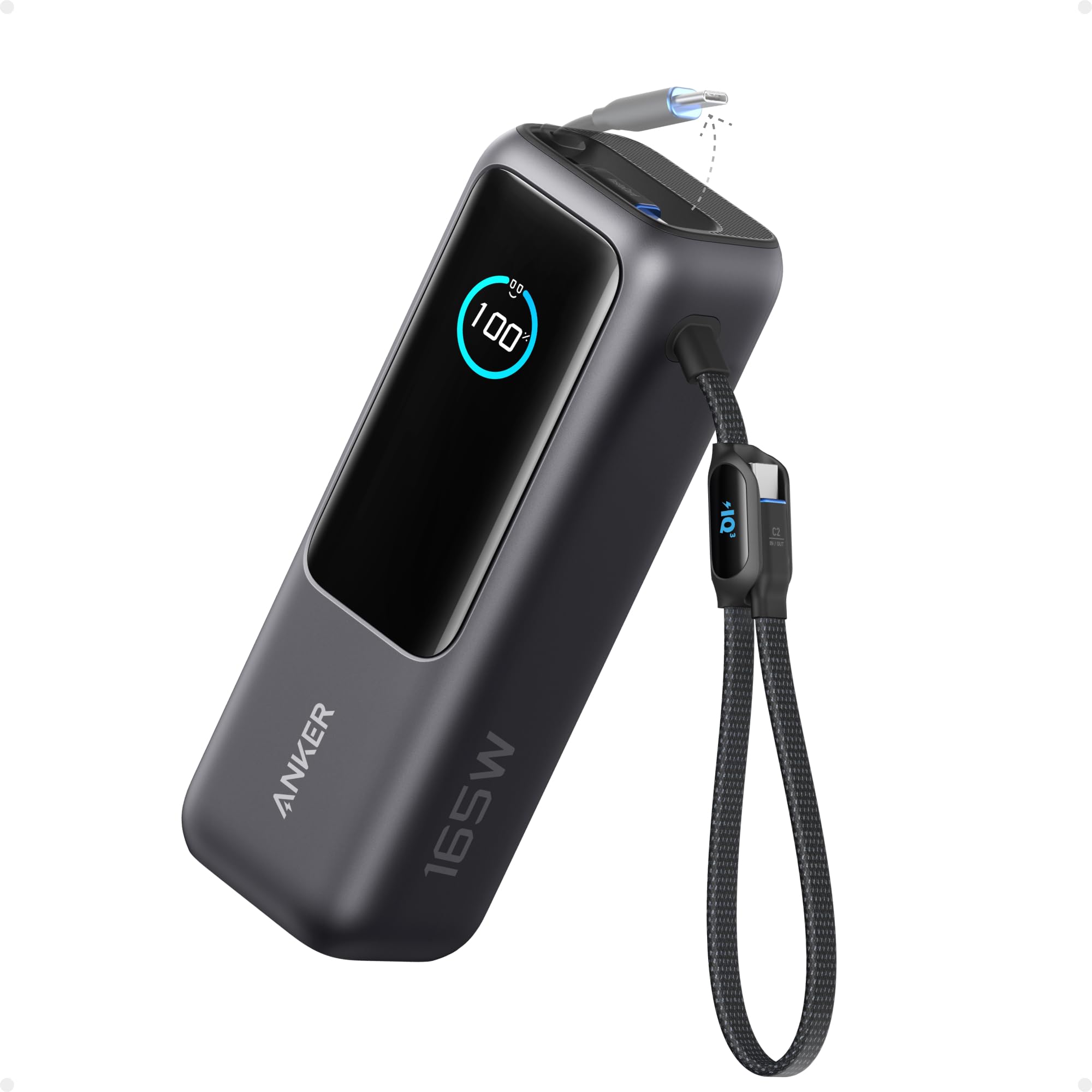
Anker 25K 165W

Top Pick
Anker 25K 165W

Laptop travel

Our Score 9.0/10
Check Price

Worth Noting

  • Heavy at 1.31 lbs
  • Some units can stop charging or fail after months of use.
Ports
3 USB-C, 1 USB-A, 2 cables
Airline Safe
Yes
Capacity & Wh
25,000mAh, 90Wh
Size & Weight
6.18x2.12x1.92 in, 1.31 lbs

The built-in retractable USB-C cable and strap cable mean you can charge a laptop and phone without digging for cords. Three USB-C ports each push up to 100W, so a MacBook Pro, Steam Deck, and smartphone can all charge at full speed simultaneously from the 165W total output. No other power bank in this price range offers that level of port flexibility with integrated cables.

When multiple devices are plugged in, the power distribution stays stable – a 14-inch MacBook Pro pulls around 60W while a phone takes 20W, leaving headroom for a tablet. The bank itself recharges from empty to full in roughly two hours, which is fast for a 25,000mAh pack. The retractable cables are sturdy enough for daily use, though their fixed length (about 12 inches) may feel short if the bank sits at the bottom of a bag.

This Anker is designed for remote workers and digital nomads who need a single power source for a laptop, phone, and tablet on a long flight or coffee-shop work session. At 1.31 lbs, it belongs in a backpack or laptop bag, not a pants pocket – the weight is a clear tradeoff for the high capacity and built-in cables. Occasional units have been noted to stop charging after several months of use, a possibility worth considering, but the 10,000+ reviews indicate consistent performance for most owners.

Despite its heft, the 25,000mAh capacity stays under 100Wh, so it meets carry-on regulations for most airlines. The rectangular profile (roughly phone-size but thicker) slides into a bag’s side pocket without hogging space. For travelers who value convenience over pocketability, the built-in cables and 165W output make this the most hassle-free laptop power bank at its price point.

Tip: Keep it in your laptop bag rather than a pocket – the weight is noticeable when carried loosely.

Bottom line: For laptop users who want a single power bank with built-in cables and enough power for a full workday, this Anker delivers without unnecessary bulk – if you can tolerate the weight in your bag.
2

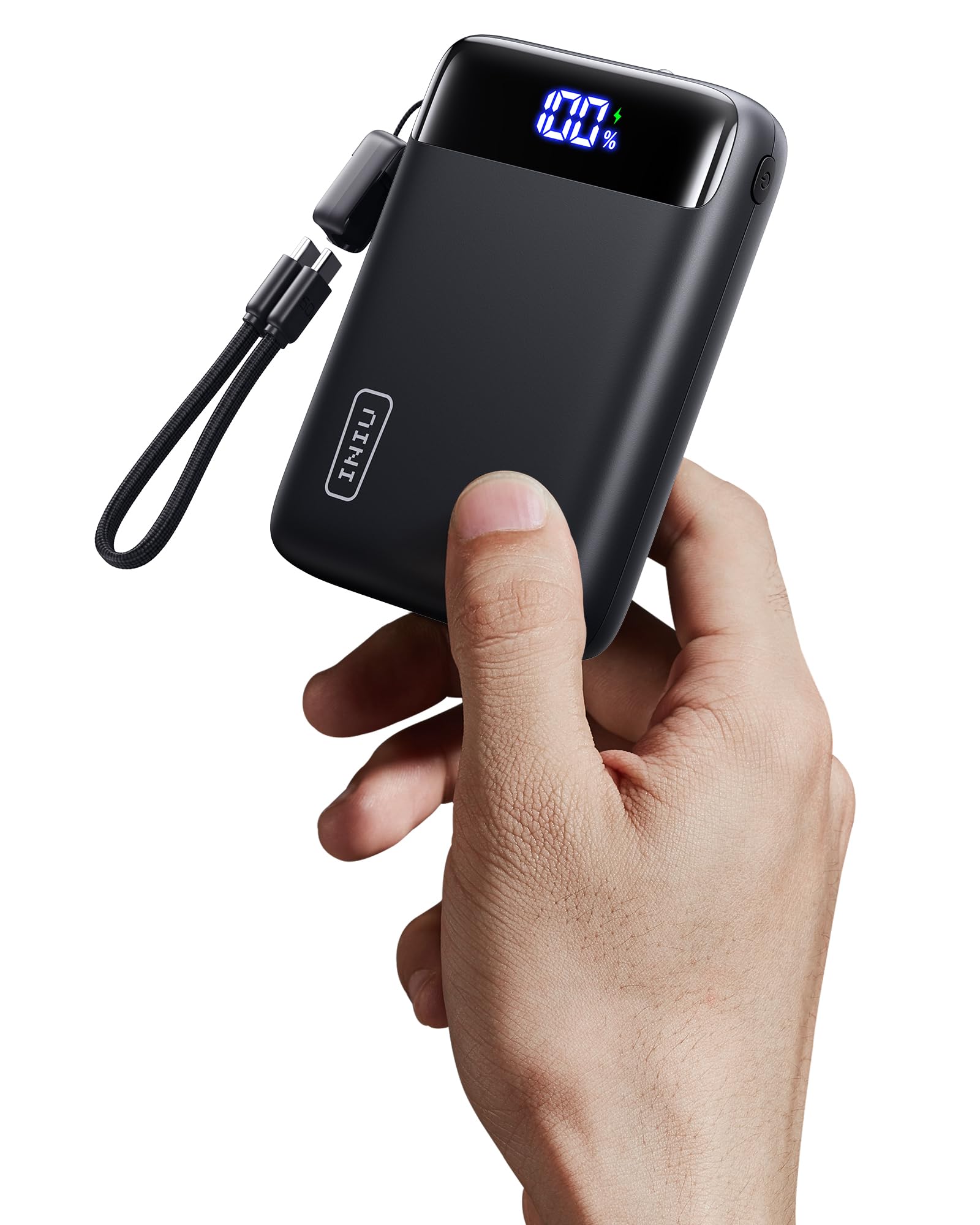
INIU 20K 22.5W

INIU 20K 22.5W

Budget travel

Our Score 9.2/10
Check Price

Worth Noting

  • Some units may develop intermittent charging faults after a few months
  • Heavier than its small size suggests
Ports
2 USB-A, 1 USB-C
Airline Safe
Yes
Capacity & Wh
20,000mAh
Size & Weight
4.1x2.8x1.1 in, 11.3 oz

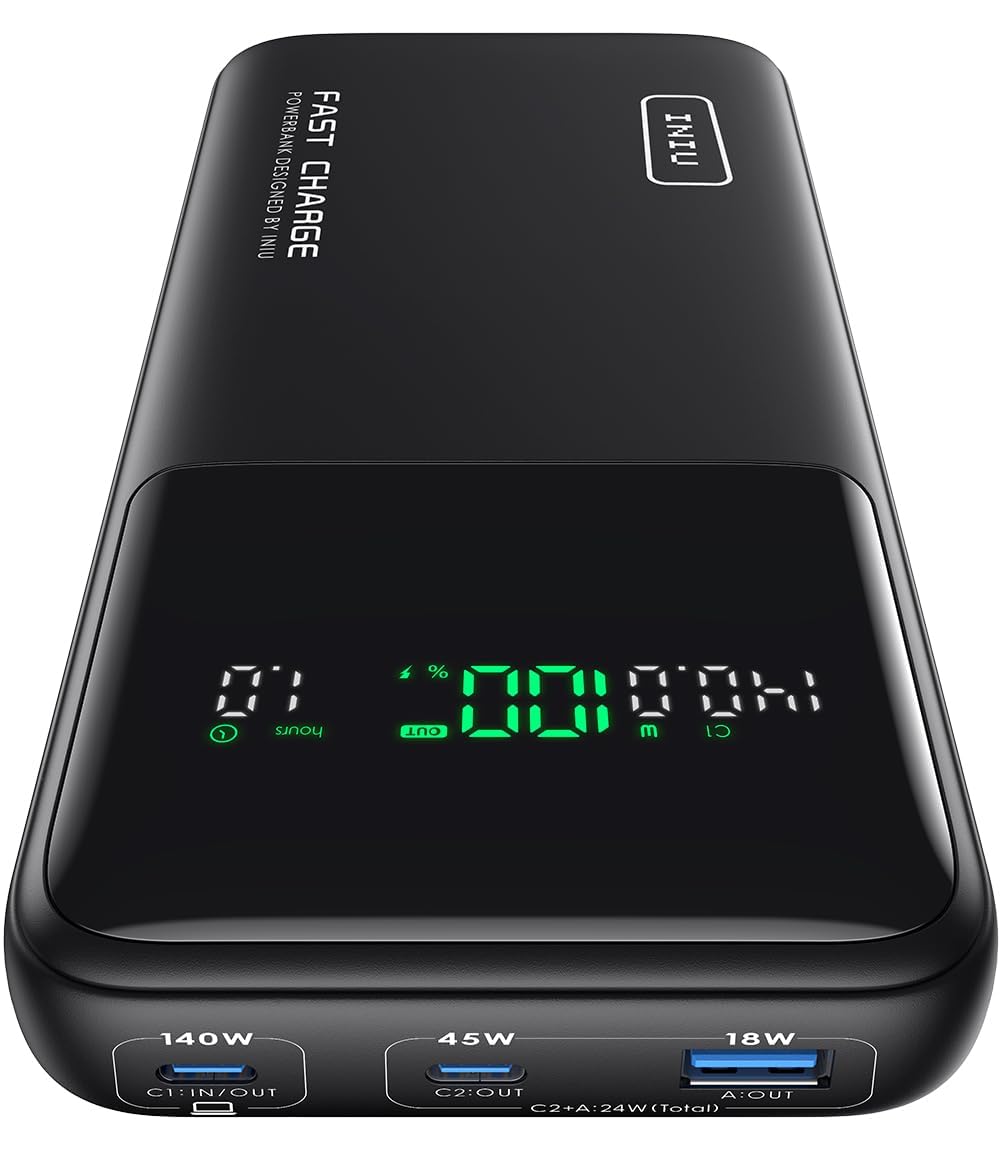
The INIU 20K is noticeably smaller and lighter than most 20,000mAh power banks, fitting into a jeans pocket with room to spare. Its 4.1 x 2.8 x 1.1 inch frame and 11.3 oz weight make it one of the most portable options in this capacity class, and it passes TSA carry-on rules without issue. For travelers who want a large backup battery that doesn't demand a separate bag, this form factor is a clear advantage.

This power bank suits phone and tablet users who need a compact, flight-safe daily charger. The 22.5W USB-C PD output charges an iPhone to full in under two hours and handles tablets at their supported speed — but it cannot power a laptop, so laptop users should look at higher-wattage options. The battery holds its charge for weeks during standby, meaning it's ready to go even if you haven't used it in a while.

The tradeoff for this portability is a weight that feels denser than expected — 11.3 oz is noticeable in a pocket, especially if you are wearing lightweight trousers. Additionally, some units have shown intermittent charging behavior after a few months of use, where the power bank may stop delivering power mid-session. While this does not affect all units, it is worth checking the return policy if long-term consistency is a priority.

Tip: The weight is more noticeable in shallow pockets; consider using a bag or jacket pocket for all-day carry.

Bottom line: For travelers who want the most portable 20K bank available at a low price, the INIU delivers — just be aware that long-term charging consistency can be hit-or-miss on some units.

3

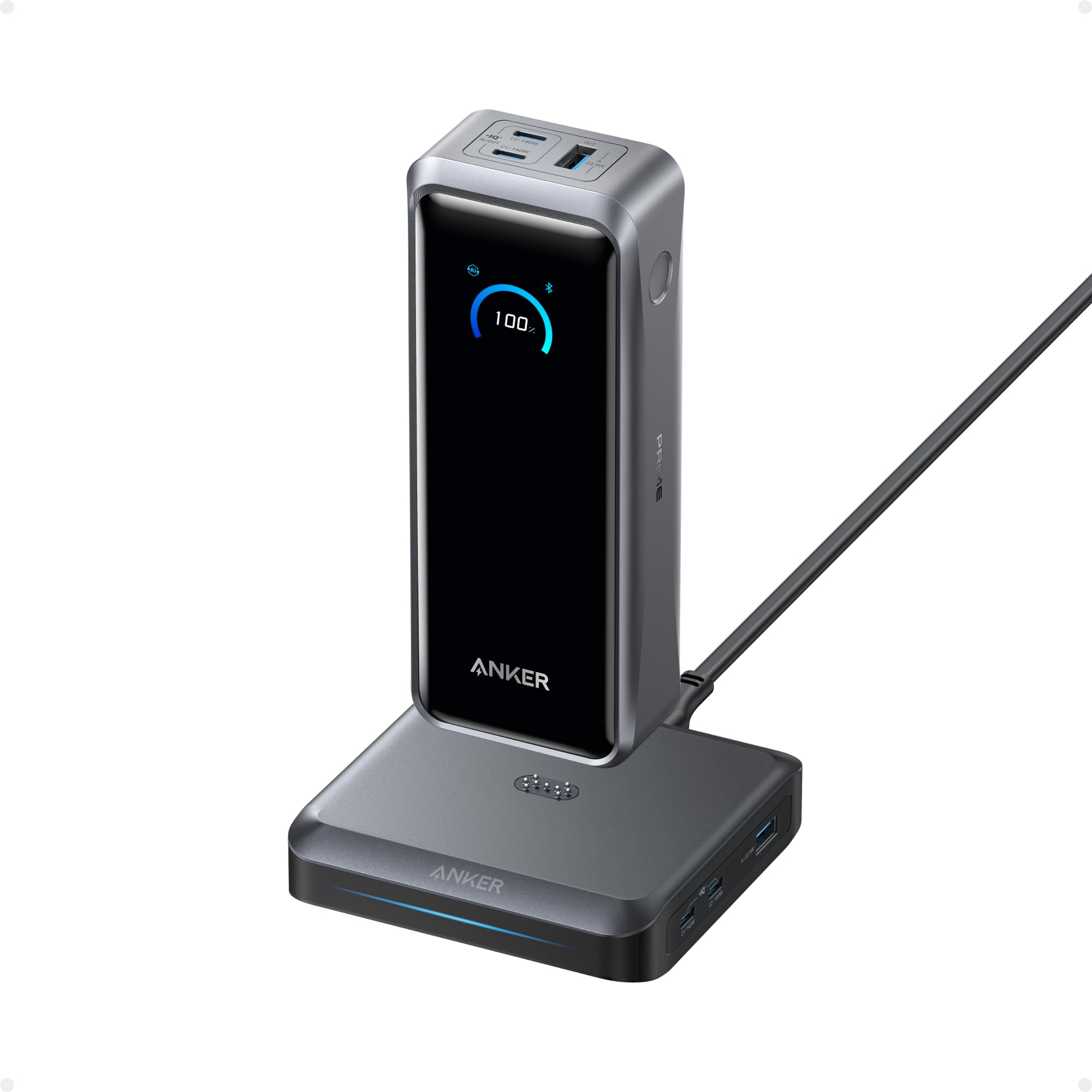
Anker Prime 26K 300W

Anker Prime 26K 300W

Professional creators

Our Score 9.4/10
Check Price

Worth Noting

  • At 1.3 lbs without the base, it's too heavy for pocket carry
  • Premium-priced at $260
Ports
2 USB-C, 1 USB-A, base
Airline Safe
Yes
Capacity & Wh
26,250mAh, 99.75Wh
Size & Weight
6.3x2.5x1.5 in, 1.3 lbs

300W total output and two 140W USB-C ports mean you can charge two MacBook Pros at full speed at the same time — a capability no other portable bank in this roundup offers. The optional charging base turns the unit into a desktop dock that keeps the bank topped up and provides additional ports for peripherals, making it less of a travel accessory and more of a hybrid workstation component.

The Anker app adds real-time power monitoring, firmware updates, and charge scheduling — small touches that matter for users who track energy usage across multiple devices. Build quality is on par with the brand's premium line: a solid, matte-finish shell that doesn't flex or creak under pressure.

This is a tool for professional creators — photographers, videographers, or tech power users who regularly run two high-power laptops and a camera rig from a single battery pack. At $260 and 1.3 lbs (without base) it's a luxury buy that demands both budget and backpack space. Casual phone-and-tablet users will find it overkill; the weight and cost make sense only when 300W output is a daily necessity.

Bottom line: The Anker Prime 26K delivers desktop-grade power in a portable package — but only the right fit for professionals who can put its 300W output and weight to daily use.

4

Anker Zolo 20K 45W

Anker Zolo 20K 45W

Samsung users

Our Score 9.2/10
Check Price

Worth Noting

  • Heavier than some 20K competitors at 0.78 lbs
  • Occasional USB-C port faults have been noted, so verifying function early is wise
Ports
Built-in USB-C, 1 USB-C, 1 USB-A
Airline Safe
Yes
Capacity & Wh
20,000mAh
Size & Weight
4.72x2.89x1.24 in, 0.78 lbs

The Anker Zolo 20K is built around 45W USB-C Power Delivery with support for Samsung’s Super Fast Charging 2.0, giving Galaxy S24 and Note users a quick top-up. Unlike the top pick with retractable cables and 100W per port, this bank keeps things simpler and lighter, though it only offers one high-speed output – the second USB-C and USB-A ports cap at lower speeds.

This is best for travelers who want a flight-safe 20,000mAh bank with reliable performance for a phone and maybe a low-power laptop. The built-in USB-C cable reduces clutter, and the compact dimensions slide into a bag easily. However, if you need to charge multiple devices at full speed simultaneously, the single 45W port is a constraint – this is a single-device fast charger with slower secondary ports.

The unit weighs 0.78 lbs, heavier than some comparable 20K banks, so it’s not ideal for pocket carry – but in a backpack it’s fine. Build quality feels solid, and the matte finish resists scratches. Some units have exhibited USB-C port issues; checking the port’s function upon delivery is a reasonable precaution.

Bottom line: A focused 45W power bank that excels for Samsung users and travelers who prioritize single-device fast charging over multi-port versatility.

5

YBYP 50K 22.5W

YBYP 50K 22.5W

Camping trips

Our Score 9.2/10
Check Price

Worth Noting

  • 22.5W output cannot charge laptops and charges phones slower than 45W+ alternatives.
  • Exceeds 100Wh airline limit
  • 22.5W input means recharging the bank itself takes many hours, often overnight.
Ports
3 ports, 4 built-in cables
Airline Safe
No
Capacity & Wh
50,000mAh, 192.5Wh
Size & Weight
4.8x3.1x1.1 in, 0.75 lb

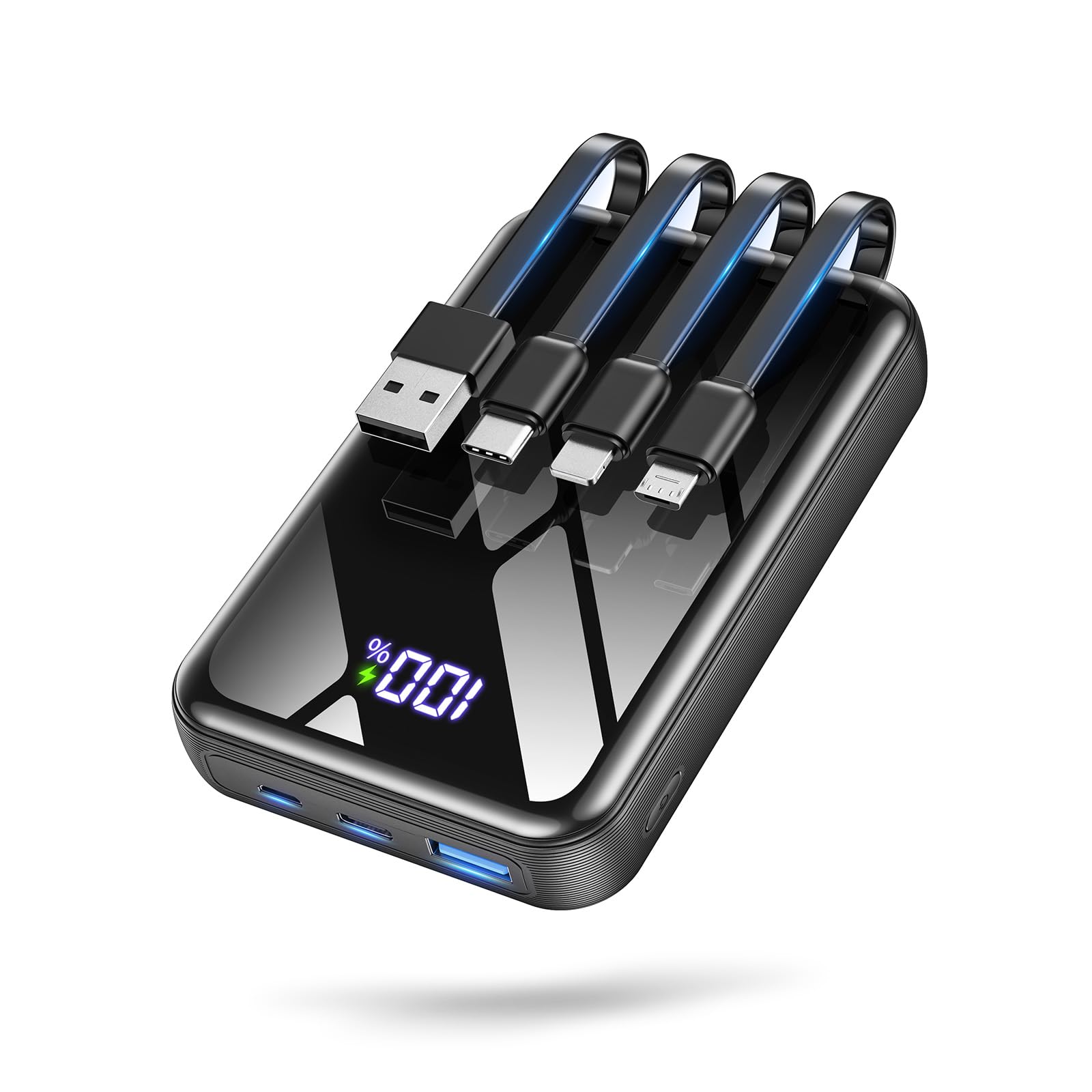
The YBYP 50000mAh power bank packs an exceptionally large capacity into a 4.8 x 3.1 x 1.1 inch frame, making it one of the highest-capacity portable batteries that can still slide into a backpack side pocket. Four built-in cables (Lightning, USB-C, Micro-USB, and a second USB-C) cover nearly every device you’d carry on a camping trip or during a power outage, eliminating the need to rummage for loose cords.

At 192.5Wh, this bank exceeds the 100Wh limit for airline carry-on baggage — it cannot be taken on planes. The 22.5W output is sufficient for phones and tablets but falls short of what laptops require; the bank itself also recharges slowly via 22.5W input, often taking a full day to refill from empty. These tradeoffs make the YBYP a poor fit for travelers who fly or need laptop support.

This power bank is a strong match for campers, RV enthusiasts, and households that lose power frequently. The massive 50,000mAh capacity can top off a phone seven to ten times or keep a tablet running for days. The compact size relative to its capacity means it won’t dominate your gear bag, and the built-in cables reduce the chance of forgetting a charger at the campsite.

Tip: Keep in mind the 22.5W input means it can take a full day to recharge from empty — plan accordingly.

Bottom line: For those who never fly with their power bank and need massive backup capacity for camping or emergencies, the YBYP delivers unmatched mAh-per-dollar with convenient built-in cables.

6

UGREEN 25K 200W

UGREEN 25K 200W

Tech enthusiasts

Our Score 8.8/10
Check Price

Worth Noting

  • At 1.12 pounds, it's bulky for everyday pocket carry
  • Some units may stop charging after a few months, introducing uncertainty about long-term performance
Ports
2 USB-C, 1 USB-A
Airline Safe
Yes
Capacity & Wh
25,000mAh, 90Wh
Size & Weight
6.1x2.13x1.97 in, 1.12 lbs

The UGREEN Nexode 25K 200W stands out with its vivid TFT screen that displays live power draw, remaining time, and per-device charge rates — a feature rarely found on power banks. Its 200W total output (140W via USB-C1) can charge two laptops at once or a laptop plus multiple smaller devices. For buyers who value on-screen data and high wattage over a compact profile, this is a strong option, though it doesn't match the top pick's balance of weight and consistency.

Bottom line: Best for data enthusiasts who want a visual charging display and high output, as long as they accept the bulk and possible unit variance.

7

INIU 27K 140W

INIU 27K 140W

Frequent flyers

Our Score 8.8/10
Check Price

Worth Noting

  • At 1.38 lb, it's one of the heaviest power banks in its class
  • Some units can develop charging problems after a few months of use.
Ports
2 USB-C, 1 USB-A
Airline Safe
Yes
Capacity & Wh
27,000mAh, 99.6Wh
Size & Weight
7.77x4.02x1.22 in, 1.38 lbs

The INIU 27K 140W meets TSA carry-on restrictions with 99.6Wh capacity while providing 140W PD 3.1 over USB-C — enough to charge a 14-inch MacBook Pro at full speed. Frequent flyers who prioritize airline compliance above all else will appreciate this combination. The tradeoff is weight: at 1.38 lb, it's among the heaviest portable banks in its class, more suited to a backpack than a pocket. Additionally, some units have been noted to develop charging issues after a few months, so individual longevity can vary. For most laptop travelers, the Anker 165W offers similar flight-safe capacity with better portability and more consistent performance at a comparable price.

Bottom line: Best for flyers who absolutely need a legal 140W laptop bank and can accept the weight and possible unit variance; otherwise, the Anker 165W is a more dependable all-around choice.

8

NOBIS 20K 45W

NOBIS 20K 45W

Budget shoppers

Our Score 8.8/10
Check Price

Worth Noting

  • Advertised 20,000mAh capacity may not be delivered by every unit
  • At 0.83 lbs, it feels heavier than many similar-capacity banks, less pocket-friendly.
Ports
2 USB-A, 2 USB-C
Airline Safe
Yes
Capacity & Wh
20,000mAh
Size & Weight
5.4x2.75x1.04 in, 0.83 lbs

45W PD fast charging at this price point is a rare find – it can top off phones and tablets quickly and even charge some low-power ultrabooks. However, the 20,000mAh rating is not always reliable; some units output closer to 10,000mAh, meaning you might get half the expected run time for multiple device charges. If you need guaranteed stamina for a weekend away or heavy laptop use, the gamble on capacity may not be worth it. For light daily charging of one or two devices, the speed and price remain appealing.

Bottom line: Best for budget shoppers who need occasional 45W fast charging for phones and low-power laptops and can accept potential capacity variance.

9

ZZI 60K 22.5W

ZZI 60K 22.5W

Long camping

Our Score 9.0/10
Check Price

Worth Noting

  • At 0.96 lb and exceeding airline limits, this bank is too heavy for daily carry and cannot be taken on flights
  • Recharging the bank itself is slow; expect to leave it plugged in for days to fill the 60,000mAh capacity.
Ports
3-in-1 cable, 2 USB-A, 1 USB-C
Airline Safe
No
Capacity & Wh
60,000mAh
Size & Weight
5.8x2.9x1.1 in, 0.96 lb

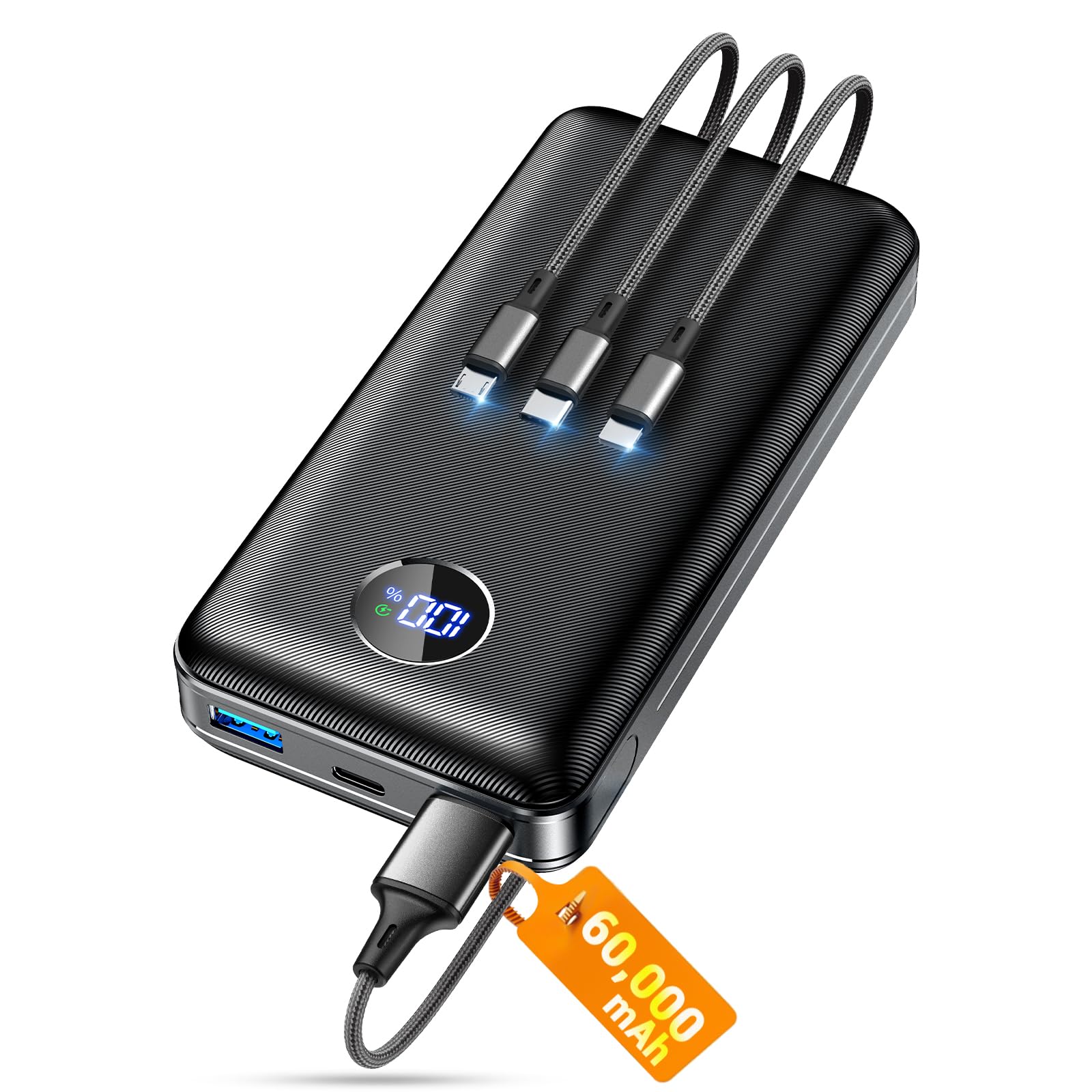
This 60,000mAh battery pack offers extreme capacity at a budget-friendly price, ideal for power outages or camping where you leave it in one spot. However, the 22.5W input means recharging the bank itself takes days, and at nearly a pound, it is not something you would want to carry around. Plus, its capacity exceeds airline limits, so it cannot be taken on flights. For stationary backup where weight and charging speed are not priorities, the value is hard to beat.

Bottom line: For stationary backup during power outages or multi-day camping trips where weight and charging speed are secondary, this bank offers unrivaled capacity per dollar.

10

OHOVIV 50K 22.5W

OHOVIV 50K 22.5W

Camping backup

Our Score 8.8/10
Check Price

Worth Noting

  • Weighs 1.07 lbs
  • Some units may stop working after a few weeks, making reliability a gamble for critical use.
Ports
4 built-in cables, 3 ports
Airline Safe
No
Capacity & Wh
50,000mAh
Size & Weight
5.82x2.83x1.18 in, 1.07 lbs

The OHOVIV 50K delivers a massive 50,000mAh capacity and four built-in cables for under $35 — an attractive combination for anyone needing a stationary backup battery during power outages or camping trips. The built-in USB-C and Lightning cables are sturdy and eliminate the need to carry separate cords, and the three additional ports mean you can charge up to six devices at once. However, this bank is not meant to be carried around: at over a pound, it is too heavy for a pocket or even a small bag, and the 22.5W output is too slow for laptops. More critically, some units may stop working after a few weeks of use, which introduces risk for a device intended to be a reliable emergency resource. It also exceeds the 100Wh limit for air travel, so it stays grounded. For the same budget, another 50K option (the YBYP model) offers better reported dependability, making the OHOVIV a secondary choice for those who prioritize raw capacity over consistency.

Bottom line: Best for emergency backup at home or camping where weight and the risk of early failure are acceptable trade-offs for the low cost per mAh.

11

IGGPBB 50K 22.5W

IGGPBB 50K 22.5W

Camping backup

Our Score 8.8/10
Check Price

Worth Noting

  • 22.5W output can't charge laptops
  • Capacity exceeds 100Wh, so it's not allowed on flights
Ports
Built-in USB-C, Lightning, USB-A
Airline Safe
No
Capacity & Wh
50,000mAh
Size & Weight
4.02x2.8x1.14 in, 0.74 lb

At just 0.74 lb, this power bank achieves a remarkable weight-to-capacity ratio, making it easy to toss into a backpack for camping or home backup. The built-in USB-C and Lightning cables simplify device charging without extra accessories. However, the 22.5W maximum output supports only phones and tablets – laptops are out of reach. With a capacity well over 100Wh, this bank cannot be carried on flights.

Bottom line: Best used as a stationary backup power source for camping or emergency home use where weight and capacity matter more than flight compliance or laptop charging.

12

IAPOS 60K 22.5W

IAPOS 60K 22.5W

Emergency backup

Our Score 8.8/10
Check Price

Worth Noting

  • Unit-to-unit consistency can vary
  • 60,000mAh capacity exceeds 100Wh airline limit, so it's not allowed on flights.
Ports
2 USB-A, 1 USB-C, 3-in-1 cable
Airline Safe
No
Capacity & Wh
60,000mAh
Size & Weight
5.9x2.8x0.97 in, 0.82 lb

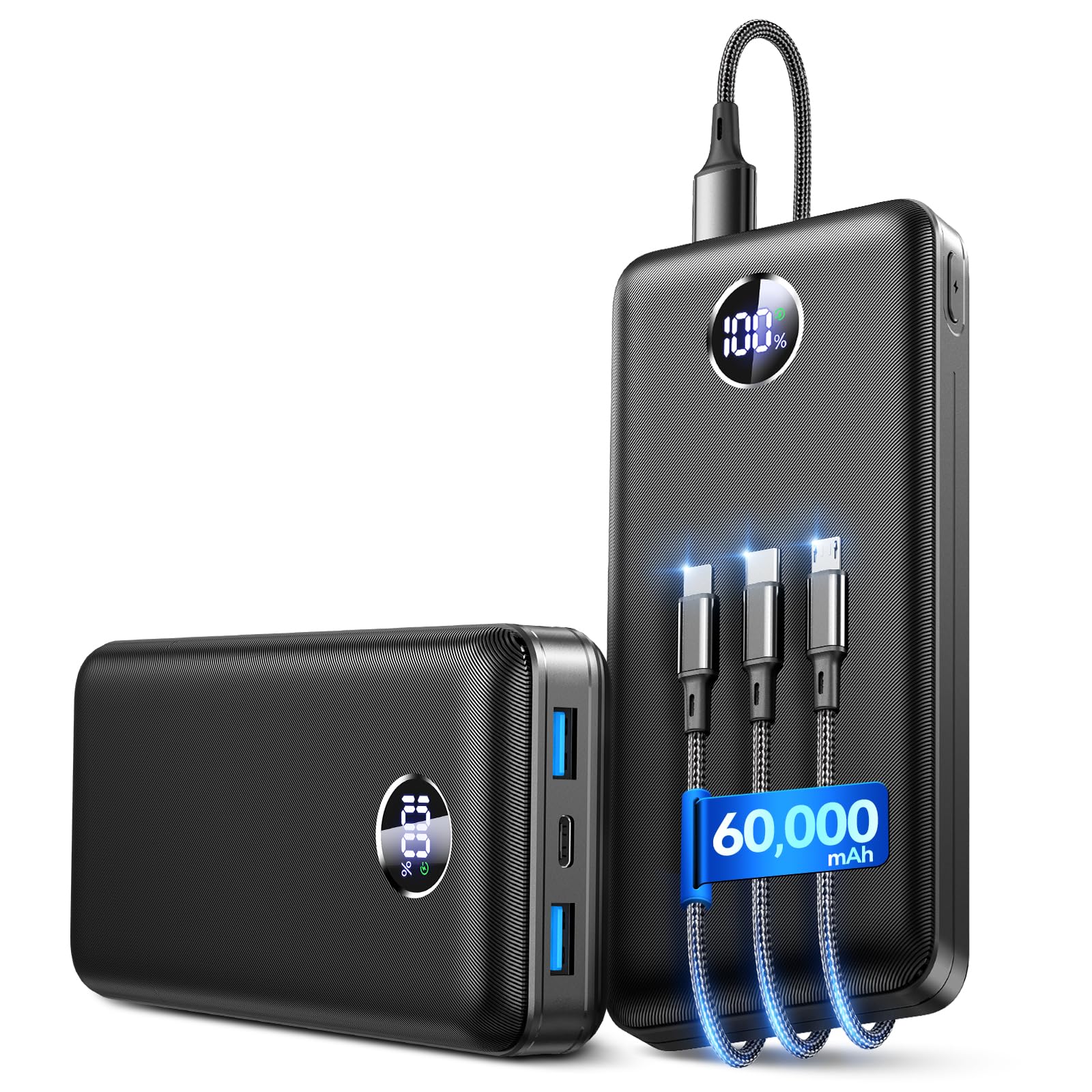
For under $32, the IAPOS 60K delivers the highest capacity-per-dollar among power banks in this test, with a slim 0.97-inch profile and a built-in three-in-one cable. The tradeoff is that unit consistency can vary — some units may not hold a charge after initial use, and the 60,000mAh capacity exceeds airline limits, so it's best left for stationary emergency backup or camping where you don't need flight compliance. If you're willing to accept possible quality variance in exchange for extreme capacity at an entry-level price, this bank serves that niche.

Bottom line: This bank works best as a cheap, high-capacity reserve for camping, road trips, or desk use where you can accept possible unit variance and don't need to fly with it.

13

YILANS 50K 22.5W

YILANS 50K 22.5W

Camping trips

Our Score 9.2/10
Check Price

Worth Noting

  • Not allowed on airplanes due to capacity exceeding 100Wh
Ports
4 built-in cables, 3 extra ports
Airline Safe
No
Capacity & Wh
50,000mAh
Size & Weight
5.6x2.9x1.1 in, 1.1 lbs

This YILANS bank delivers 50,000mAh of raw capacity at a price that undercuts nearly everything else in its class. Built-in cables and extra ports allow charging up to six devices simultaneously — a practical feature for camping trips where multiple phones, tablets, and accessories need topping off. However, the absence of verified buyer feedback means claims about real-world performance, efficiency, and durability cannot be confirmed. The product's own warning states it is not allowed on airplanes, limiting its use to ground travel or stationary backup. For the same money, a more reviewed power bank from an established brand offers known trade-offs rather than an unknown gamble.

Tip: Keep this bank in your camping gear; it's not an option for air travel.

Bottom line: This is a cheap backup for stationary camping or emergency use where airline rules don't apply, but only if you're willing to buy without verified performance or reliability data.

How to Choose

Capacity and Watt-Hours

Milliamp-hour (mAh) ratings are only half the story. The watt-hour (Wh) rating determines whether a power bank is flight-safe (under 100Wh for carry-on) and reflects the actual energy stored. A 50,000mAh bank at 3.7V equals 185Wh — over the airline limit — while a 25,000mAh bank at 3.7V is 92.5Wh, perfectly legal.

Real-world usable capacity is also lower due to conversion losses. Expect about 60-70% of advertised mAh to reach your devices. For example, a 20,000mAh bank typically delivers enough for one full phone charge plus a partial tablet charge, not the three phone charges marketing suggests.

Output Power Per Port

Output wattage dictates what you can charge. A 22.5W port handles phones and tablets but will trickle-charge a laptop or not charge it at all. For a MacBook Pro, you need at least 45W; 100W or more ensures full-speed charging even while using the laptop.

If you plan to charge multiple laptops simultaneously, look for a bank with multiple high-wattage ports. A 165W total output can split power across two 100W ports, but a 145W total output with three ports may only deliver 45W each when all are active.

Port Types and Quantity

USB-C Power Delivery is the standard for laptop charging. Avoid banks with only USB-A output — they max out at 12-18W and won't power a laptop. Built-in cables are convenient but often short and non-replaceable; detachable cables are easier to swap if a cable frays.

Consider the number of devices you'll charge simultaneously. A bank with three USB-C ports can charge a laptop, phone, and earbuds at once, but the power may be shared. Check the output specs for each port configuration.

Size and Weight Trade-offs

Heavier power banks (over 1 lb) are not pocket-friendly — they belong in a backpack. A 20,000mAh bank at 0.7-0.8 lb is the sweet spot for everyday carry, while 25,000-30,000mAh banks at 1.1-1.4 lb are better for laptop users who already carry a bag.

Dimensions matter for fitting into tight spaces like laptop pockets. Look at the length and width relative to a typical 13-inch laptop sleeve. Some 'slim' 50,000mAh banks are surprisingly small, but they often sacrifice output speed or airline compliance.

Airline Compliance

The FAA and EASA limit carry-on power banks to 100 watt-hours (Wh). Banks between 100Wh and 160Wh require airline approval. Anything over 160Wh is banned. A 20,000mAh bank at 3.7V is ~74Wh; 27,000mAh is ~100Wh. Most 50,000mAh+ banks exceed 100Wh and will be confiscated.

Always check the Wh rating printed on the bank, not just the mAh. Some budget brands inflate mAh numbers but don't list Wh — a red flag. If you fly regularly, stick to banks with explicitly stated Wh under 100.

Frequently Asked Questions