Creator & Streaming

11 Best Shotgun Microphone 2026: One Mic for Camera, Phone, and Desktop

Which shotgun mic works with your camera, phone, and computer without sacrificing sound quality – and which ones lock you into one setup.

A shotgun microphone’s job is simple: capture clear dialogue while rejecting everything else. The hard part is finding one that actually fits your recording setup – and your workflow. Many promise directionality but deliver noisy, fragile mounts or compatibility headaches.

The real divide isn’t budget versus premium. It’s whether the mic can move between your camera, phone, and computer without extra adapters or dead batteries. Hybrid mics with USB-C and 3.5mm outputs solve this, but they trade a bit of wind rejection for that flexibility.

This guide picks the models that balance sound quality, connectivity, and everyday durability – so you don’t end up with a mic that only works half the time.

1

Rode VideoMic NTG

Top Pick
Rode VideoMic NTG

Versatile hybrid mic

Our Score 8.8/10
Check Price

Worth Noting

  • In untreated rooms, the supercardioid pattern can pick up room echo and background noise
  • Gain staging requires attention in loud environments to avoid distortion
Weight
94g
Shock Mount
Built-in Rycote Lyre
Connectivity
3.5mm TRS + USB-C
Power Source
Rechargeable (USB-C)

The VideoMic NTG delivers broadcast-quality audio with a natural, uncolored tone that rivals mics costing significantly more. Its dual 3.5mm and USB-C outputs auto-sense the connected device, making it a single tool for cameras, smartphones, and computers. The digital switching for high-pass filter, pad, and safety channel gives precise control over the recording.

A standout feature is the safety channel, which records a simultaneous track at -10dB – a practical safeguard for unpredictable audio levels. Combined with the high-pass filter and adjustable gain, the NTG offers a level of control typically found on standalone recorders.

In real-world use, the mic handles a range of scenarios: booming on a stand, mounting on a camera, or plugging into a smartphone. The internal rechargeable battery provides extended run time, and USB-C charging eliminates the need for spare batteries. The 94g weight keeps it comfortable on camera shoes.

This mic suits filmmakers and content creators who need one device for on-camera, tabletop, and mobile recordings, with advanced controls. Those who require flawless unit consistency should purchase from a retailer with a solid return policy, as some units have exhibited USB disconnections or failure after a few months.

Bottom line: For creators who want one high-quality mic to cover camera, phone, and desktop work with pro controls, the VideoMic NTG is a strong choice – just verify the unit early due to unit variance.

2

Sennheiser MKE 400

Sennheiser MKE 400

Durable on-camera

Our Score 9.0/10
Check Price

Worth Noting

  • The cold-shoe mount’s plastic tightening ring may crack under frequent adjustment or heavy handling.
Weight
344g (with battery)
Shock Mount
Built-in cage + windscreen
Connectivity
3.5mm TRS/TRRS
Power Source
1x AAA battery

Interchangeable cables for 3.5mm TRS and TRRS connections let the MKE 400 work with DSLRs, mirrorless cameras, and smartphones — a rare flexibility at this price. Its supercardioid pattern isolates dialogue effectively in noisy environments, while the built-in suspension mount and foam windscreen reduce handling noise and light breezes. Unlike the top pick’s USB-C versatility, the MKE 400 sticks to analog connections, but it delivers Sennheiser’s signature clarity without the bulk of a full boom setup.

This mic fits solo content creators who want dependable audio from a well-known brand and the ability to switch between camera and smartphone recording without adapters. The plastic tightening ring on the cold-shoe mount can crack after a few months of use, so careful handling is advised. If you frequently adjust the mic position or swap cameras, a metal replacement clamp is worth considering — the audio quality itself is not the limitation.

Tip: To avoid cracking the plastic ring, tighten it only enough to hold the mic in place, and consider using a metal shoe adapter for frequent repositioning.

Bottom line: If you value Sennheiser clarity and need one mic that works on-camera and with a smartphone, the MKE 400 is a strong choice — just treat the mount with care or budget for a metal clamp.

3

Audio-Technica AT875R

Audio-Technica AT875R

XLR boom mic

Our Score 9.2/10
Check Price

Worth Noting

  • Requires 48V phantom power and XLR input
Weight
82g
Shock Mount
Not included
Connectivity
XLR
Power Source
48V phantom power

Under seven inches long and barely 82g, the AT875R is a short shotgun that disappears on a boom pole while capturing crisp dialogue with impressively low self-noise. Its narrow polar pattern rejects off-axis sound effectively, which means less room echo and cleaner takes in controlled indoor setups.

This mic is built for filmmakers who already own an external recorder (like a Zoom H4n) or a camera with XLR input and 48V phantom power. Without those, it won't work – no 3.5mm output, no battery power. That makes it a poor fit for anyone wanting a simple on-camera mic for a DSLR or mirrorless camera without extra gear.

For its price range, the audio quality competes with mics costing more. The metal body feels sturdy enough for mobile use, though the lack of a shock mount or windscreen in the box means you'll need to budget for those. The real strength is value: a professional XLR shotgun at a mid-range price.

Tip: Pair it with a portable XLR recorder like the Zoom H4n – the compact size makes it easy to boom in tight spaces.

Bottom line: If you already have an XLR recorder and phantom power, the AT875R gives you professional dialogue capture at a mid-range price – just budget for a shock mount and wind protection.

4

COMICA VM20

COMICA VM20

Budget long battery

Our Score 9.2/10
Check Price

Worth Noting

  • Occasional units may not power on or charge
  • Background hiss can be noticeable in quiet indoor recordings, though wind handling is solid.
Weight
84g
Shock Mount
Included metal shock mount
Connectivity
3.5mm TRS/TRRS
Power Source
Rechargeable Li-ion (60h)

When on-camera battery life is your top concern, the VM20 stands out with a built-in rechargeable Li-ion cell that runs up to 60 hours on a single charge. It can even record while plugged into USB power, effectively removing the need to swap batteries during an all-day shoot. The metal body and included accessories like foam and furry windscreens add durability that many budget mics skip.

Sound quality shows a clear improvement in voice clarity and ambient noise reduction for the money, with a super-cardioid pattern that helps isolate dialogue in outdoor or crowded settings. The OLED display gives real-time battery and gain status, and stepless gain control plus 75/150Hz low-cut filters let you fine-tune on the fly.

This mic suits vloggers, event videographers, and content creators who prioritize runtime over absolute noise-floor purity. In quiet studio spaces, a slight background hiss may be audible compared to premium shotguns like Sennheiser MKE 400 – the wind reduction is effective outdoors, but the noise floor sits higher. More critically, a small number of units have arrived unable to power on or charge, so buying from a seller with a straightforward return policy is advisable.

Tip: Enable the 150Hz low-cut filter when recording indoors to reduce room rumble and minimize perceived hiss.

Bottom line: If you need a long-lasting, metal-bodied shotgun for run-and-gun video work and can accept a slightly higher noise floor, the VM20 delivers exceptional value without the premium price.

5

Sony ECM-M1

Sony ECM-M1

Sony only

Our Score 9.4/10
Check Price

Worth Noting

  • Only works with Sony cameras that have a Multi Interface Shoe
  • At a premium price, the sound quality doesn't always match dedicated pro microphones in the same bracket.
Weight
65g
Shock Mount
Integrated
Connectivity
MI Shoe (digital)
Power Source
Corded electric (camera shoe)

The ECM-M1 skips cables entirely by drawing power and sending digital audio through Sony's Multi Interface Shoe. That means no battery checks, no dangling wires, and instant recognition when you mount it on an A7 IV, ZV-E1, or FX30. The rear dial lets you cycle through eight pickup patterns – from narrow shotgun for dialogue to stereo for ambience – without touching any menu.

This mic is built for Sony camera owners who want a clean, fast setup and frequently switch between vlogging, interviews, and noise-free scene recording. If you shoot on Canon, Nikon, or Panasonic, the MI shoe is a hard barrier – special adapters exist but may not pass all features, and compatibility is far from guaranteed.

The digital connection delivers crisp voice capture with low self-noise, and the ability to record four channels simultaneously opens up post-production flexibility. At a premium price, some buyers will find the sound quality comparable to the top pick's analog output – the real advantage here is the convenience and pattern versatility, not necessarily a leap in absolute clarity.

Tip: Keep the firmware updated via Sony's software to ensure all eight modes and 4-channel recording work reliably with your camera body.

Bottom line: For Sony shooters who value a wireless-free workflow and need multiple polar patterns on the fly, the ECM-M1 is a clever fit – just accept that it locks you into the MI shoe ecosystem.

6

Rode VideoMicro II

Rode VideoMicro II

Ultra-light travel

Our Score 8.6/10
Check Price

Worth Noting

  • Lightweight plastic body may feel less sturdy than metal, and static noise can appear on some units.
  • Some units may not function out of the box, with no audio or very low output.
Weight
39g
Shock Mount
Helix isolation mount
Connectivity
3.5mm TRS
Power Source
Plug-in power

At 39 grams and requiring no batteries, the VideoMicro II is the lightest on-camera shotgun we've tested. It clips onto a camera shoe with the included Helix isolation mount and just works — no switches, no charging, no menus. This simplicity comes at the cost of advanced features like a safety channel or USB connectivity, which the top-pick Rode VideoMic NTG offers alongside dual 3.5mm and USB-C outputs.

This mic is designed for travel vloggers and beginner content creators who want better audio than their camera's internal mic without adding bulk or complexity. The super-cardioid pattern focuses on sound in front of the lens and rejects some ambient noise, though in challenging acoustic environments (e.g., reflective rooms) it may pick up more room reverberation than a longer interference-tube mic. A small number of units may produce no audio or very low output upon first use, and occasional static noise has been noted on some units — testing immediately after purchase is wise.

When it works, the sound quality is a clear step up from built-in mics, with focused dialogue capture that makes voice-overs and vlog narration noticeably cleaner. The included foam and furry windscreens handle light wind, and the mount does a decent job of isolating handling noise. For the price, this is a cost-effective entry point into directional audio, especially for those who value portability above all else.

Tip: Test the mic in a quiet room as soon as you receive it to catch any dead unit or static noise within the return window.

Bottom line: The VideoMicro II is the right choice if absolute portability and plug-and-play simplicity matter more than extra features or bulletproof build quality.

7

Movo VXR10

Movo VXR10

Barebones budget

Our Score 8.6/10
Check Price

Worth Noting

  • Some units produce a noticeable hiss or static
  • Shock mount's red plastic clips can snap after weeks of use
Weight
51g
Shock Mount
Included plastic shock mount
Connectivity
3.5mm TRS/TRRS
Power Source
Plug-in power

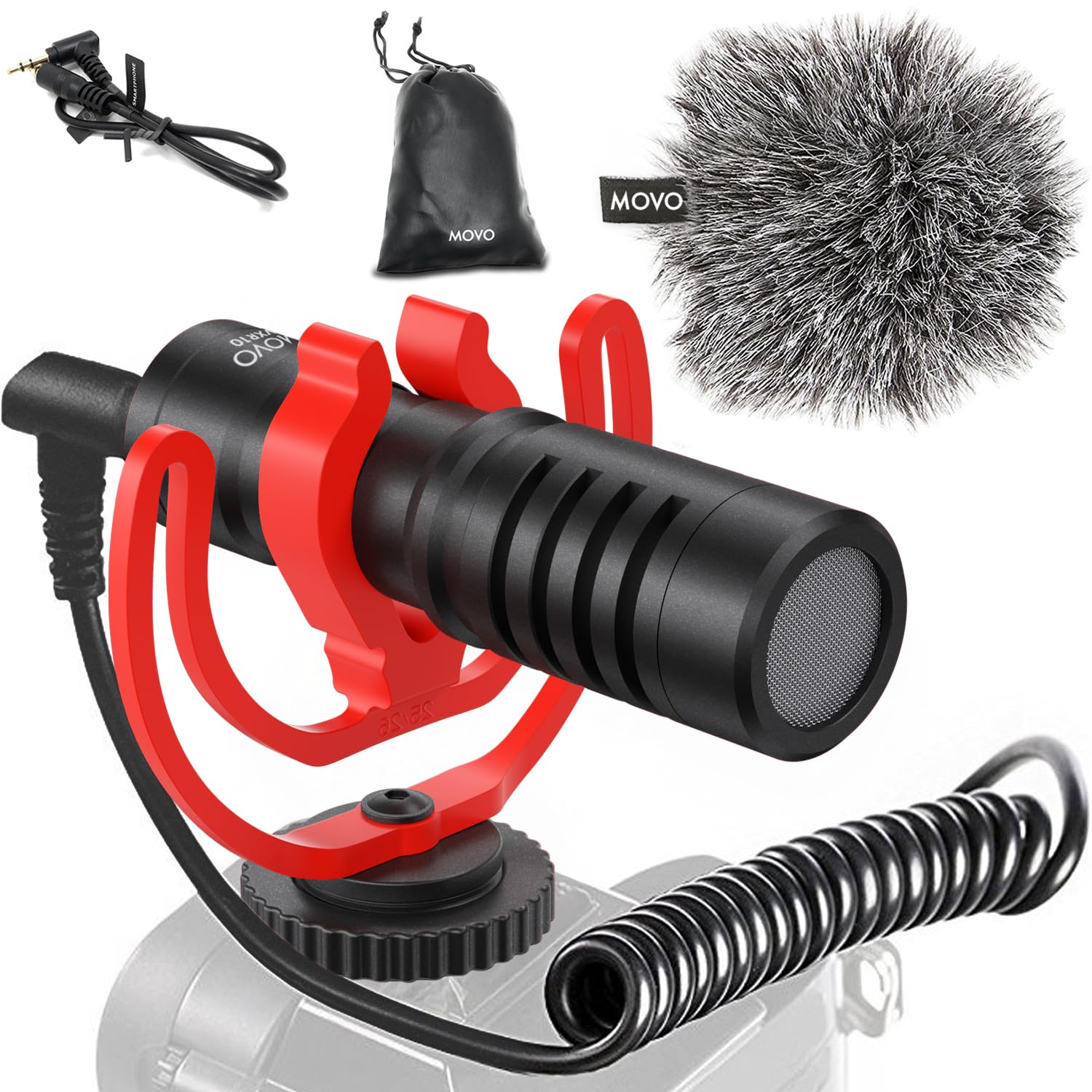
The Movo VXR10 delivers decent directional audio at a fraction of the cost of competitors and works with most 3.5mm devices using the included cables. Its lightweight aluminum body and carrying case make it easy to take anywhere. However, the shock mount's red plastic clips can snap after weeks of use, and some units arrive with hiss or static — a possible quality control variance. This mic suits beginners on a tight budget who don't mind a DIY mount fix or can tolerate the occasional noise floor.

Bottom line: Grab this if you need the lowest-cost directional mic for occasional vlogging or hobby use and are okay with possibly replacing the mount or working around static.

8

COMICA VM40

COMICA VM40

Wireless + recording

Our Score 9.0/10
Check Price

Worth Noting

  • Self-noise is audible in quiet recording spaces
  • Receiver charging port can stop working after extended use.
Weight
Shock Mount
Included shock mount
Connectivity
3.5mm + USB-C + 2.4GHz
Power Source
Rechargeable Li-ion

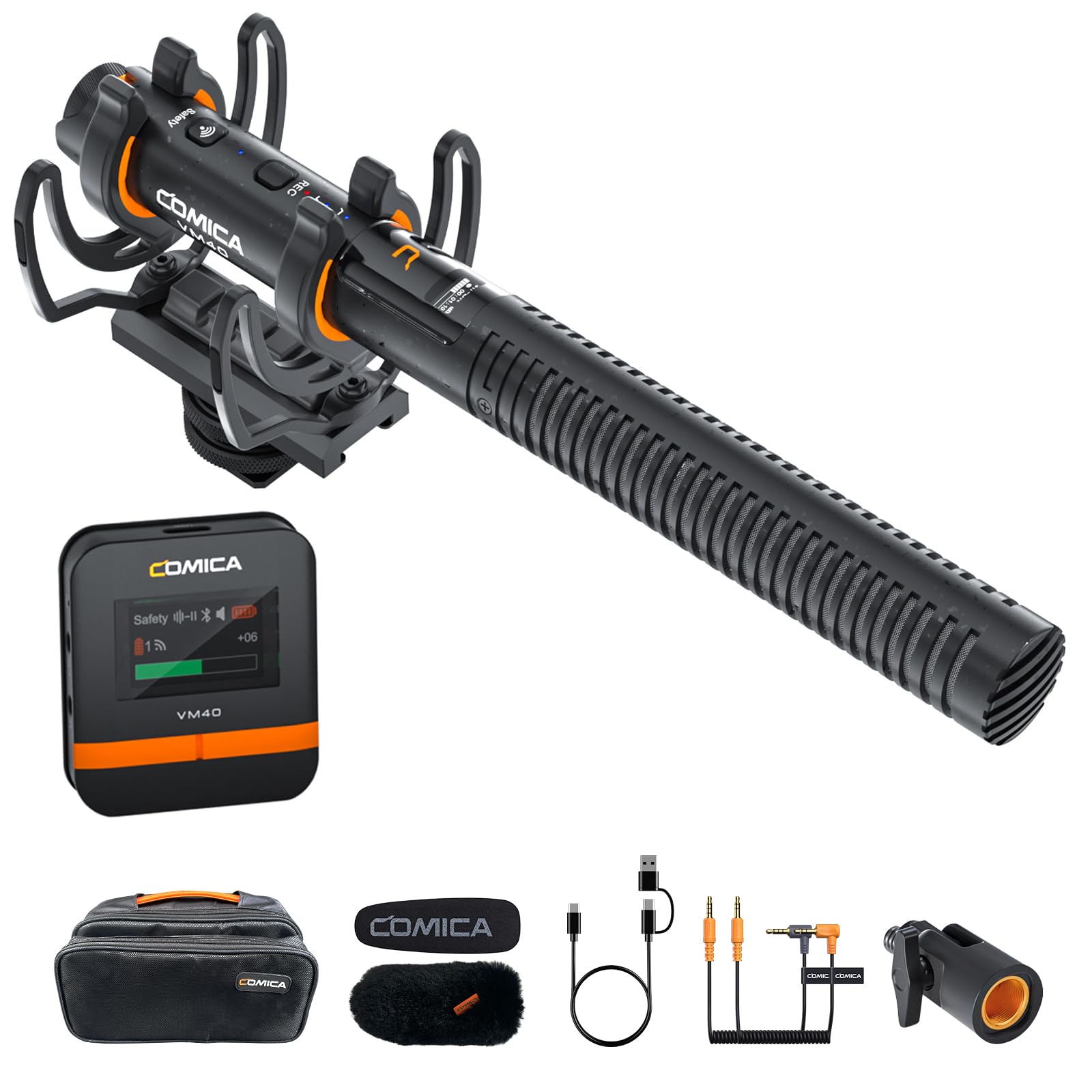
The COMICA VM40 combines dual wired and wireless modes with 32-bit float recording to a 32GB internal drive, making it a self-contained audio solution for creators who move fast. It works on-camera, as a wireless boom, or as a standalone recorder – all with the included shock mount, wind protection, and carry case. The tradeoff: the noise floor sits higher than premium mics, so in quiet indoor settings you may hear self-noise, and the receiver’s charging port has shown occasional failure in some units. This mic suits run-and-gun shooters who prioritize flexibility and a safety track over pristine silence. For those who need low self-noise for dialogue or studio work, a dedicated wired shotgun like the Rode VideoMic NTG is a better fit.

Bottom line: Best for run-and-gun creators who want wireless flexibility and internal backup recording in one mic – accept the average noise floor as a tradeoff for that all-in-one convenience.

9

Sennheiser MKE 600

Sennheiser MKE 600

Pro-grade XLR

Our Score 9.4/10
Check Price

Worth Noting

  • Requires XLR input
  • Windshield can be inadequate in strong wind
Weight
128g
Shock Mount
Included Auray shock mount
Connectivity
XLR
Power Source
Phantom or AA battery

The MKE 600 delivers professional-grade sound clarity and low noise that serious indie filmmakers will appreciate. Its metal body feels built to handle location shoots, and the dual power option (phantom or AA) adds flexibility in the field. However, the XLR-only output means it’s not a plug-and-play solution for standard consumer cameras – you’ll need a recorder or preamp with XLR input. The included windshield can be inadequate in strong wind, and its higher price point makes it a specialized tool rather than a universal all-rounder. Compared to the top pick’s versatility across cameras and computers, the MKE 600 is better suited as a dedicated boompole mic for semi-pro setups.

Bottom line: This mic suits filmmakers who already have XLR recorders and need a durable, high-quality shotgun for boompole work – but budget-conscious users or those with consumer cameras should look at the top pick or the MKE 400.

10

Rode VideoMic GO II

Rode VideoMic GO II

Lightweight USB-C

Our Score 9.0/10
Check Price

Worth Noting

  • Compatibility may require specific adapters for older iPhones (Lightning) and some cameras.
  • Plastic enclosure feels less durable than metal-bodied alternatives.
Weight
57g
Shock Mount
Helix isolation mount
Connectivity
3.5mm + USB-C
Power Source
Plug-in power

The VideoMic GO II Helix packs surprisingly clear voice pickup in a 57-gram body that slips in any bag – no battery, no controls, just plug and record via 3.5mm or USB-C. For vloggers shooting with a USB-C iPhone or Android, or anyone upgrading from a camera's built-in mic, this is a cost-effective step up. However, its plastic housing feels less substantial than metal competitors, and some older iPhones (Lightning) or cameras need specific adapters that aren't included. That limits its fit to those already on USB-C devices or willing to sort out cables – not a universal on-camera mic, but a targeted tool for mobile-first creators.

Bottom line: A solid pick for budget-conscious mobile creators with USB-C devices who value portability over rugged build – just check compatibility with your gear before buying.

11

Rode NTG-2

Rode NTG-2

Classic boom mic

Our Score 9.2/10
Check Price

Worth Noting

  • No on/off switch when using battery power
  • Self-noise may be audible in very quiet indoor recordings
Weight
163g
Shock Mount
Not included
Connectivity
XLR
Power Source
Phantom or AA battery

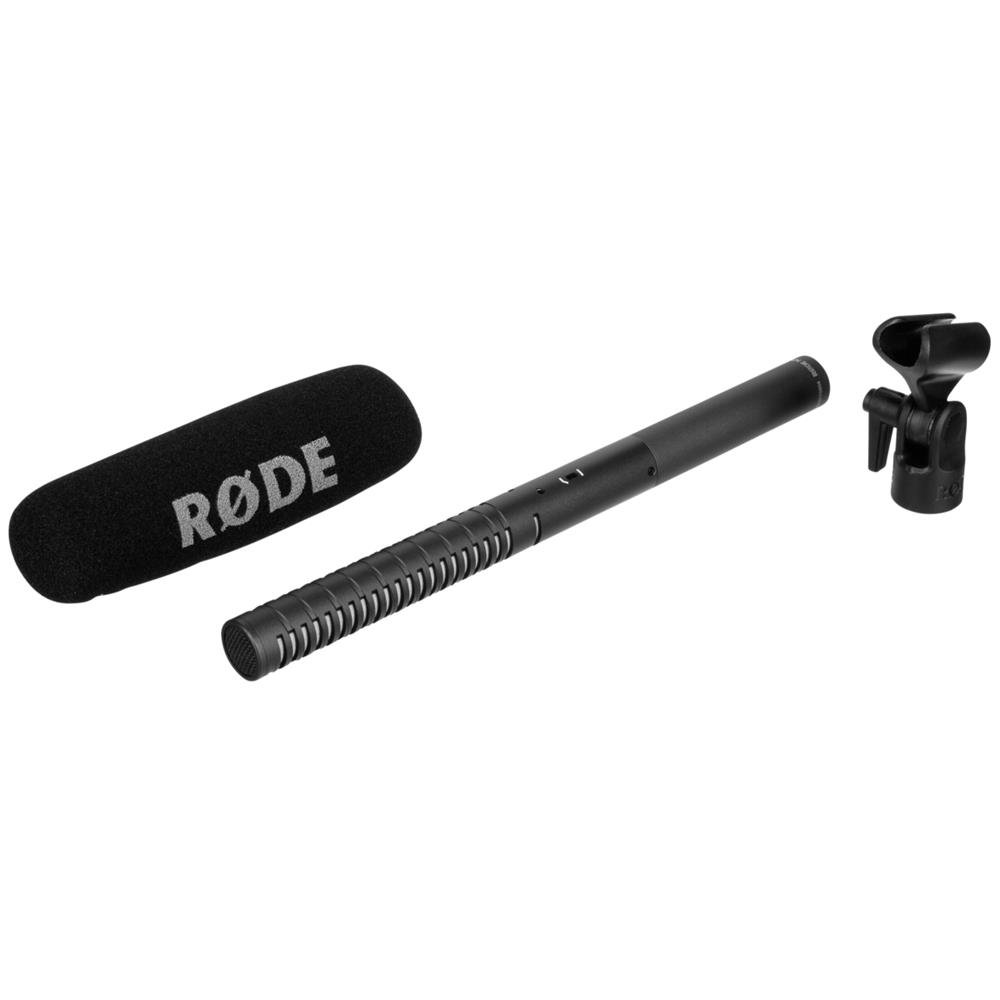
The Rode NTG-2 delivers clear dialogue capture with its super-cardioid pickup and interference tube, powered by either phantom or a single AA battery. Its metal build feels durable on a boompole, and the sound quality is crisp-adequate for indie film and interview work. The lack of an on/off switch when running on battery means you must remove the AA to stop power drain, which is manageable for booming but awkward. Also, a slight noise floor may be audible in very quiet interiors, though it’s less noticeable in exterior or moderate-location use. The NTG-2 is outclassed by the shorter, lighter AT875R in length and price, making this a secondary option for those who specifically need dual power or already have an XLR recorder.

Tip: When using battery power, remember to remove the AA after each session to avoid draining it.

Bottom line: The NTG-2 suits filmmakers who prioritize dual power and a metal build for booming, and who don't mind the lack of an on/off switch or a slight noise floor in quiet rooms.

How to Choose

Polar Pattern

Most shotgun mics use a supercardioid or hypercardioid pattern. Supercardioid offers a tight pickup angle with good side rejection, while hypercardioid (like the Sennheiser MKH 416) narrows further but picks up more rear sound.

In practice, the narrower the pattern, the more precise you must aim the mic – ideal for controlled studio or boom work but punishing for run-and-gun vlogging where the subject moves unpredictably. A wider unidirectional pattern gives you some forgiveness.

Connectivity

3.5mm TRS is standard for DSLR and mirrorless cameras. TRRS adds smartphone support with a separate cable. USB-C allows direct recording to computers and modern phones without an audio interface.

XLR mics require an external recorder or mixer with phantom power. They offer the highest sound quality but add bulk and complexity. Hybrid mics like the Rode VideoMic NTG combine 3.5mm and USB-C in one body, giving you the flexibility to switch setups.

Power Source

Plug-in power mics draw from the camera or recorder – simple, no batteries, but can drain your camera’s battery faster. Battery-powered mics (AAA or rechargeable) keep your camera’s power for shooting but add weight and a failure point.

Phantom-powered XLR mics need 48V from a mixer or recorder, which is reliable but locks you into that ecosystem. Rechargeable internal batteries (like the VideoMic NTG) are convenient but can degrade over time or fail to charge.

Shock Mount and Wind Protection

The shock mount is often the first part to break. Plastic clips and rubber bands wear out after months of use. Look for a Rycote Lyre or similar suspension system that holds the mic without sagging or snapping.

Wind protection matters more than most buyers realize. Foam windscreens handle light breezes; fuzzy ‘dead cat’ covers are needed for outdoor shoots. Many budget mics include a useless foam cap that you will quickly replace.

Weight and Form Factor

On-camera mics should weigh under 150g to avoid stressing the camera’s hotshoe. 39g mics like the VideoMicro II are barely noticeable but can feel fragile. Heavier mics (300g+) provide better build but may tilt your gimbal or lens mount.

Boom-pole users prioritize light weight and length. A short mic (under 7 inches) like the AT875R is easier to maneuver in tight spaces and less fatiguing over long shoots.

Frequently Asked Questions