Car & GPS

9 Best Shortwave Radio of 2026: Find SSB and Real Sensitivity

Pick the shortwave radio that fits your listening style, from budget SSB to travel-friendly multi-band receivers.

Shortwave radio shopping often means navigating a sea of radios that promise worldband reception but deliver static. Many emergency models include shortwave as a checkbox feature, leaving listeners disappointed when they try to pull in distant stations. The real distinction comes down to one spec: SSB support, which unlocks the ham and utility bands that make shortwave listening rewarding.

Digital tuning and a good external antenna jack also separate the useful receivers from the toys. This guide helps you match the right receiver to your listening goals, whether you are a beginner or a seasoned DXer. The right radio puts you inside the signal, not just on the surface of the dial.

1

Tecsun PL880

Top Pick
Tecsun PL880

Value SSB SWL

Our Score 8.8/10
Check Price

Worth Noting

  • Reception can be variable indoors without an external antenna; weak stations may not come in clearly
  • In a small number of units, the kickstand can detach or become loose over time
SSB
Yes
Tuning
Digital PLL
Antenna
Yes
Battery
Li-ion, weeks standby

The Tecsun PL880 delivers strong sensitivity on AM, FM, longwave, and shortwave, with clear SSB decoding that pulls in ham and utility signals without the price jump of flagship models. The audio is clean and punchy through the 3W speaker, making voice and music alike easy to enjoy. Build quality feels substantial, with a metal front and well-damped controls that give it a premium heft.

Indoor reception without an external antenna can be hit or miss — weak stations may drop out, especially in buildings with steel construction or interference. This is a known behavior of portable receivers, not a defect. Pairing the PL880 with a simple wire antenna resolves the issue reliably, and the radio's sensitivity outdoors or near a window is impressive even without it.

This radio suits intermediate and advanced shortwave listeners who want SSB capability without spending premium money. Travelers will appreciate the compact size and long battery life — the included Li-ion pack easily lasts weeks on standby. Ham radio beginners will find the fine-tuning steps (10Hz on SSB) and multiple bandwidth filters (4 on AM, 5 on SSB) give them room to grow. However, absolute beginners who prefer one-knob simplicity or need built-in NOAA weather alerts should look elsewhere.

Tip: Attach a wire antenna to the external jack for best indoor reception; the radio performs notably better outdoors or near a window even without it.

Bottom line: For anyone who wants SSB and strong shortwave performance in a portable package without paying flagship prices, the PL880 is a well-rounded choice that has earned its reputation through consistent delivery.

2

Tecsun PL330

Tecsun PL330

Budget SSB SWL

Our Score 8.8/10
Check Price

Worth Noting

  • Complex menu system and small buttons make daily operation a learning process
  • Compact size can feel awkward for those with larger hands, especially during extended listening sessions
SSB
Yes
Tuning
Digital
Antenna
Yes
Battery
1 Li-ion included

The PL330 delivers SSB reception in a package that fits in a shirt pocket, at a price that undercuts most SSB-capable portables. Its sensitivity pulls in weak shortwave stations with clarity that belies its size.

Best suited for the budget-conscious listener who values frequency coverage over ergonomic convenience. The interface requires studying the manual — a patient hobbyist will manage, but someone seeking immediate, intuitive operation should look elsewhere. The compact body suits travel but may feel cramped during extended tuning sessions.

Sound quality through headphones is respectable, with decent separation for shortwave broadcasts. The built-in speaker is serviceable for talk radio but lacks the presence for music — a typical compromise for this size class.

Bottom line: For beginners on a tight budget who want SSB, the PL330 offers the best value in its class — just be prepared to invest time in learning its controls.

3

C. Crane CC Skywave SSB 2

C. Crane CC Skywave SSB 2

Travel Multi-Band

Our Score 9.0/10
Check Price

Worth Noting

  • Tiny speaker produces thin audio; music sounds tinny and the lack of bass may disappoint casual listeners.
  • Premium pricing relative to feature set; budget competitors offer similar SW performance for less.
SSB
Yes
Tuning
Digital
Antenna
No
Battery
2 AA, 60-70 hrs

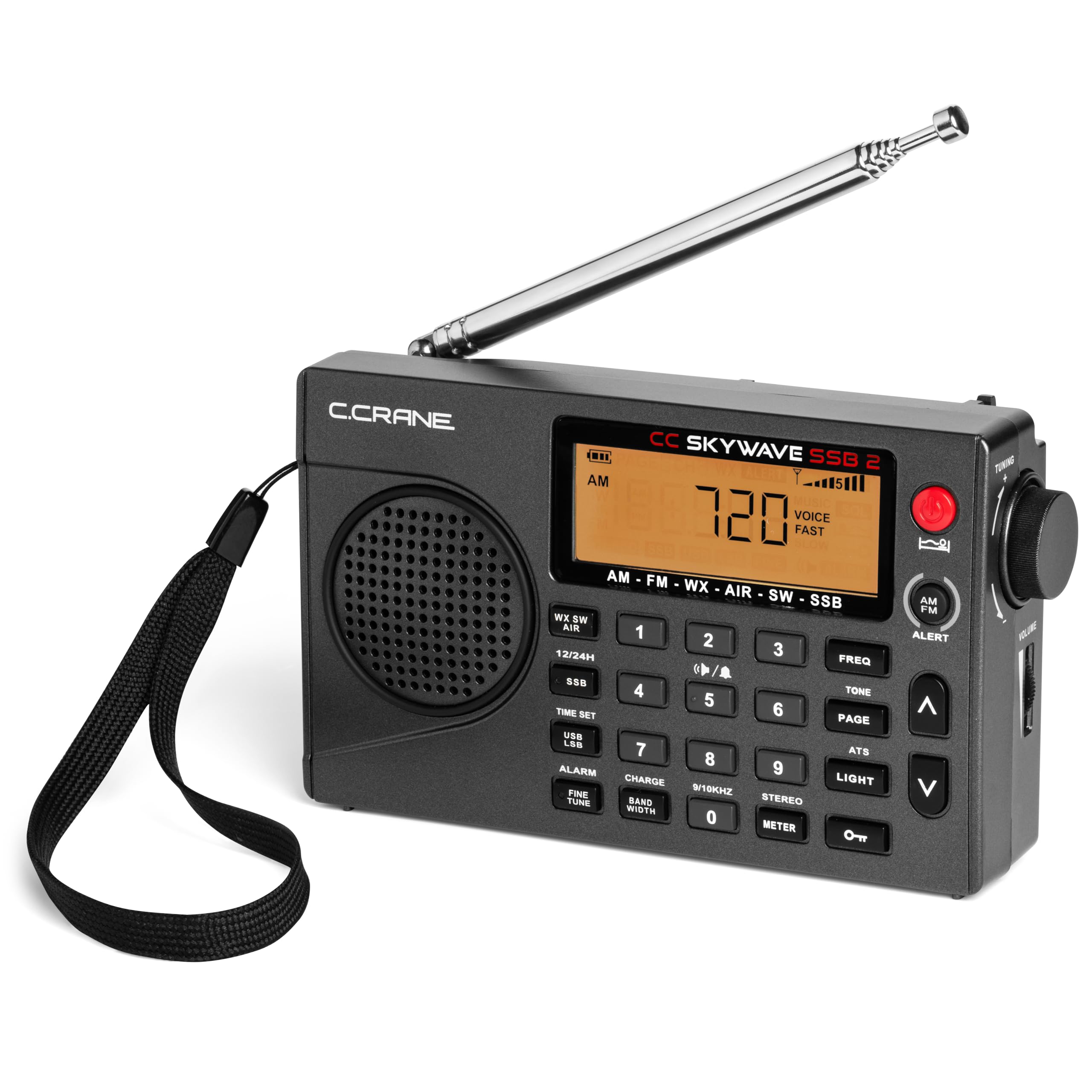
Packing AM, FM, shortwave with SSB, VHF aviation band, and NOAA weather alerts into a 6-ounce chassis, the CC Skywave SSB 2 defines ultraportable radio. Its 400 preset slots and 60-hour battery life make it a practical companion for trips where every ounce matters.

This radio suits travelers and backpackers who need aviation, weather, and SSB in a pocketable device. It is best for speech-based listening (news, weather, air traffic) rather than music – those wanting fuller audio should look at larger models. Premium pricing sits above similarly featured Chinese portables, so value is conditional on needing the size advantage.

For general shortwave listening, the reception on FM and SSB is surprisingly capable for its size, but indoor shortwave performance benefits from the included wire antenna. Listeners prioritizing raw SW sensitivity or audio fidelity should consider full-size receivers like the Tecsun PL880, which deliver stronger performance at a similar or lower cost.

Tip: Use good headphones to improve audio detail for music and SSB decoding – the built-in speaker suits talk radio only.

Bottom line: For travelers who need the smallest possible multi-band radio with aviation and weather alerts, this is the only option. If size isn't your primary constraint, a larger receiver like the Tecsun PL880 offers better sound and value.

4

Kaito KA500

Kaito KA500

Emergency Prep

Our Score 9.0/10
Check Price

Worth Noting

  • Internal rechargeable battery may not hold a charge for extended storage periods
  • Shortwave sensitivity is average
SSB
No
Tuning
Analog
Antenna
No
Battery
NiMH, inconsistent

The Kaito KA500 stands out among emergency radios for its five independent charging methods — solar panel, hand crank, three AA batteries, USB, and AC adapter — all of which function reliably. The impact-resistant ABS shell and built-in flashlight, reading lamp, and SOS beacon make it a self-contained survival tool, not just a radio.

This radio suits buyers building a emergency kit or heading off-grid where wall power is unavailable. The internal NiMH pack may not hold its charge over weeks of storage, so keeping AA alkalines handy is wise. Shortwave reception is usable for casual scanning but noticeably less sensitive than dedicated receivers — a tradeoff that matters only if you plan regular SW listening.

The solar panel delivers a trickle charge in direct sunlight — enough to extend listening time but not a rapid recharge. The hand crank generates power with moderate effort and can provide a few minutes of radio for every minute of cranking. The NOAA weather alert function triggers audibly for warnings, a practical feature during storms.

Tip: Top up the internal NiMH battery every month if storing the radio unused — it extends usable life when you need it most.

Bottom line: This radio belongs in every emergency kit and off-grid camp bag, as long as you plan to keep spare AA batteries handy for the internal pack's occasional charge loss.

5

XHDATA D808

XHDATA D808

Air Band SWL

Our Score 8.6/10
Check Price

Worth Noting

  • Does not include NOAA weather alerts
  • Menu and preset programming can be confusing initially
SSB
Yes
Tuning
Digital
Antenna
Yes
Battery
1x18650, USB-C

The XHDATA D808 delivers sensitive reception across AM, FM, shortwave, longwave, and air band, with SSB decoding and an included external antenna – a combination that rivals pricier models without the premium price tag.

This radio suits listeners who prioritize band coverage and audio clarity over simplicity. Shortwave enthusiasts who also want to scan air band traffic will find the D808 a capable companion, provided they are comfortable navigating its menu structures.

Tip: Before diving into programming, search for user-created guides that simplify the preset memory process.

Bottom line: Best suited for shortwave and air band enthusiasts who value sensitivity and don't mind spending time on initial setup – a strong alternative to the top pick at a lower price.

6

Tecsun PL990

Tecsun PL990

Premium Portable

Our Score 8.8/10
Check Price

Worth Noting

  • Battery charge indicator may wander and run time can be shorter than expected.
  • Premium-priced compared to similar-performing models, making it a value tradeoff for budget-conscious buyers.
SSB
Yes
Tuning
Digital
Antenna
Yes
Battery
Li-ion included

The Tecsun PL990 delivers superior sensitivity and SSB clarity compared to most portables, plus a built-in MP3 player and microSD slot for offline listening. The higher price and occasional battery charge indicator quirks mean it is best for enthusiasts who need those extras; the PL880 offers 95% of the performance at a much lower cost for most listeners.

Tip: Monitor the battery gauge and keep the radio plugged in during extended use to avoid unexpected shutdowns.

Bottom line: Best suited for enthusiasts who prioritize maximum sensitivity, SSB clarity, and MP3 playback over cost savings; for most listeners, the PL880 delivers comparable performance for less.

7

Emgykit R11

Emgykit R11

Emergency Tool

Our Score 8.8/10
Check Price

Worth Noting

  • Shortwave reception can be weak, making it impractical for regular listening
  • Unit longevity may vary
SSB
No
Tuning
Digital
Antenna
No
Battery
4000mAh Li-ion

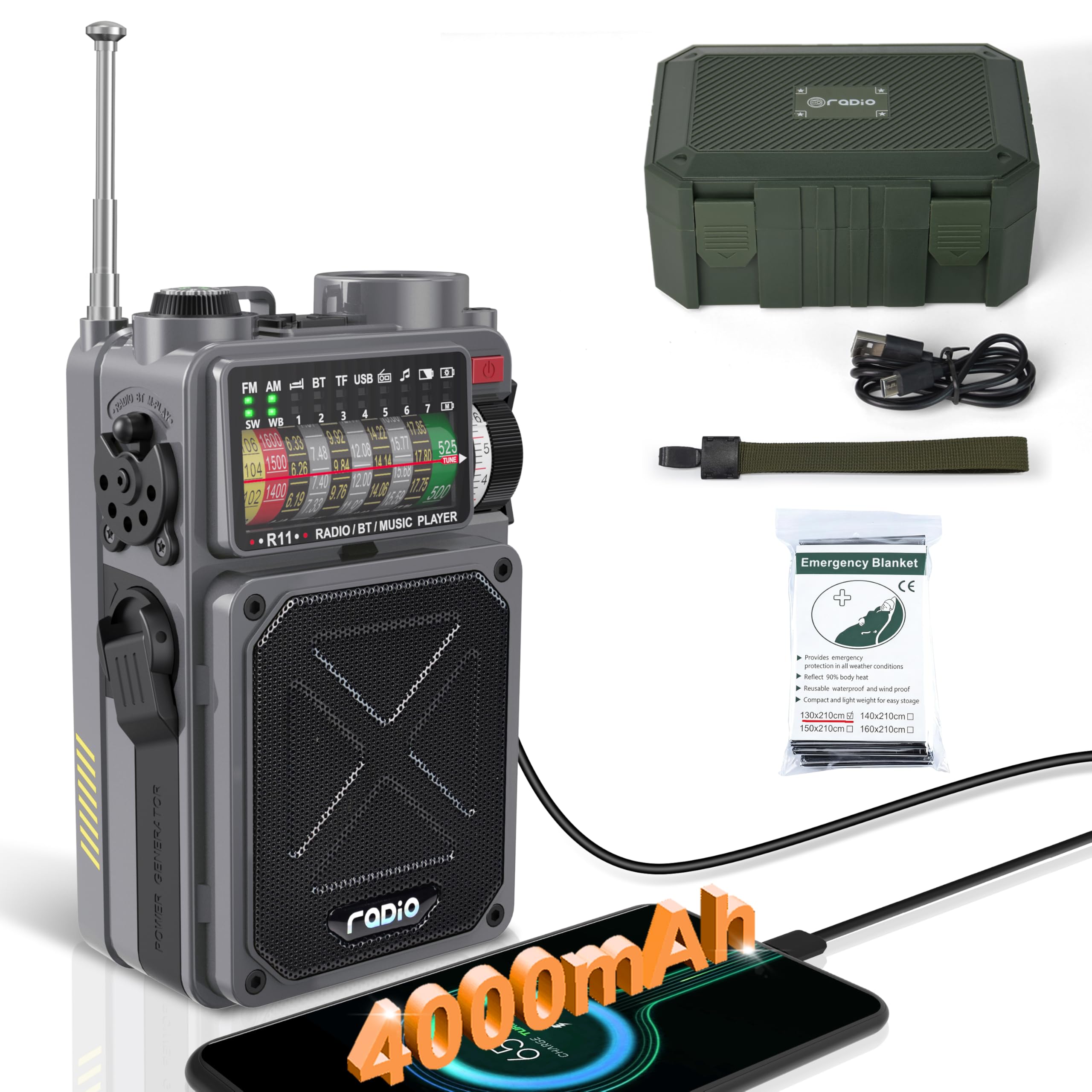
The Emgykit R11 brings together solar, crank, USB-C, and AC charging, a Bluetooth speaker, flashlight, SOS alarm, and NOAA weather alerts in a compact shell – making it a practical companion for power outages and camping trips where staying charged and informed on AM/FM matters. The 4000mAh battery can also top up a phone in a pinch. However, the shortwave section is an afterthought: sensitivity is low, and signals that a dedicated receiver picks up clearly are often lost in noise or absent entirely. Treat this as an emergency AM/FM/NOAA radio with a shortwave bonus – not a tool for exploring the shortwave bands.

Bottom line: A sensible addition to an emergency kit or camping gear if your priority is AM/FM/NOAA alerts and multiple charging paths, not shortwave listening.

8

DreamSky AM/FM/SW

DreamSky AM/FM/SW

Simple AM/FM

Our Score 8.8/10
Check Price

Worth Noting

  • In some indoor locations, shortwave and AM reception can be weak.
  • Analog tuning makes it difficult to precisely select shortwave stations.
SSB
No
Tuning
Analog
Antenna
No
Battery
4 AA or AC

The DreamSky AM/FM/SW radio is refreshingly simple to operate, with large dials and clear labeling that make it easy for seniors or anyone who just wants to tune in without fuss. Sound quality is clean and loud enough for a kitchen or garage, and the built-in clock with backlit display adds everyday convenience at a budget-friendly price.

Shortwave reception is limited by imprecise analog tuning and variable indoor sensitivity – you may pick up strong stations, but consistent listening across the band is not guaranteed. This radio works best for AM/FM use; treat shortwave as a bonus feature rather than a primary reason to buy.

Bottom line: This radio suits seniors or household use where AM/FM is the priority and shortwave is a secondary curiosity – not for those needing reliable access to shortwave broadcasts.

9

Panasonic RF-562D

Panasonic RF-562D

Retro Nostalgia

Our Score 8.6/10
Check Price

Worth Noting

  • Analog tuning is overly sensitive
  • Shortwave reception is weak, especially during daytime hours.
SSB
No
Tuning
Analog
Antenna
No
Battery
2 D cells

The Panasonic RF-562D draws attention with its vintage metal-and-plastic design, a clear draw for collectors and those who want a period piece in their kitchen or workshop. On AM and FM, sound is clear and loud for its size, and battery life from two D cells stretches impressively long. But if you picked it up expecting a capable shortwave receiver, you'll hit limits: the analog dial covers the entire band in just two turns, making fine-tuning frustrating, and daytime shortwave reception falls off noticeably. This is a radio built around looks and basic AM/FM listening, not serious shortwave work.

Bottom line: Fit for someone who values vintage aesthetics and needs a simple AM/FM kitchen radio — but not a tool for shortwave listening.

How to Choose

SSB Support – The Essential Feature

SSB (Single Side Band) lets you hear ham radio operators, utility stations, and military broadcasts that standard AM reception completely misses. Without SSB, the shortwave band is mostly broadcast stations and static. Many budget emergency radios omit SSB, rendering them nearly useless for real shortwave listening.

If you plan to explore beyond the big international broadcasters, SSB is non-negotiable. The difference is night and day: a receiver with SSB can pull in a distant ham conversation, while an AM-only set hears nothing.

Digital vs. Analog Tuning

Analog tuning uses a continuous dial that drifts with temperature and humidity, making it nearly impossible to lock onto a shortwave frequency. You will constantly chase the signal. Digital tuning locks to exact frequencies and often includes memory presets for quick recall.

For shortwave, digital is the only practical choice. Analog is fine for casual AM/FM but a frustrating experience when trying to tune in weak, narrow shortwave signals. Expect to pay at least $50 for a decent digital model.

Battery Type and Life

Battery life varies wildly. Built-in rechargeable Li-ion packs are convenient but eventually degrade, and some models have unreliable charging circuits. Replaceable AA or D cells let you swap in fresh batteries when power runs out, which is critical for emergency or off-grid use.

Look for a radio that can run on standard batteries as a backup. Some radios claim weeks of battery life, but that assumes a few hours of use per day. In practice, continuous shortwave listening drains batteries much faster.

Portability and Form Factor

Portability determines where and how you use the radio. A pocket-sized model like the CC Skywave fits in a jacket and is ideal for travel, but the tiny speaker limits audio quality. Larger tabletop models offer better sound and easier controls but take up space.

Consider your primary use case: backpackers need ultra-compact, while home listeners benefit from a larger speaker and more robust tuning controls. There is always a trade-off between size and performance.

External Antenna Input

A built-in whip antenna is rarely enough for reliable shortwave reception indoors, especially in urban areas full of electronic noise. An external antenna jack lets you connect a long-wire or loop antenna that dramatically improves sensitivity.

Many budget radios lack this jack, limiting their shortwave performance to strong signals only. If you plan to listen at home, an external antenna input is essential. For portable use, a compact radio with a good whip may suffice.

Frequently Asked Questions