Phone & Tablet Accessories

7 Best Portable Power Bank of 2026: Find True Capacity and Speed

Not all 20,000mAh power banks charge your phone three times. This guide helps you pick the one that fits your actual use—from pocket carry to laptop charging.

That 20,000mAh power bank you bought probably charges your phone only twice, not the four times the box promised. The gap between advertised capacity and real-world output is frustratingly common, and it’s not just a cheap battery issue—internal conversion efficiency and marketing claims create a disconnect that catches most buyers off guard.

The real challenge is finding the right balance of capacity, charging speed, and weight for how you actually carry and use a power bank. A 50,000mAh brick that stays in your bag is useless if you need a quick top-up during a commute, and a slim 10,000mAh bank won’t save you during a weekend camping trip.

This guide breaks down the trade-offs between capacity, power output, portability, and reliability so you can pick the power bank that matches your daily routine—without overspending or ending up with a dead battery when you need it most.

1

Anker Zolo 20K 30W

Top Pick
Anker Zolo 20K 30W

Phones & Tablets

Our Score 9.0/10
Check Price

Worth Noting

  • At 12.45 oz, it is heavier than some rivals of similar capacity - best for bag carry rather than pockets
Weight
12.45 oz
Capacity
20,000mAh
Max Output
30W
Ports & Cables
Built-in USB-C + 1C1A

The Anker Zolo 20K 30W puts out 30W that tops up phones and small tablets quickly - a full charge from empty takes around 90 minutes for most recent iPhones. The built-in USB-C cable eliminates one cord to pack, and the extra USB-C and USB-A ports handle simultaneous charging of multiple devices without slowing each other down significantly.

Build quality holds up under regular travel use, with ActiveShield 2.0 temperature monitoring adding safety during fast charging sessions. Few owners report issues after months of daily use, and the unit's sturdy plastic body resists scratches and minor drops well.

This power bank suits everyday users and frequent travelers who carry a bag. At 12.45 oz, it is heavier than some 20,000mAh competitors - fine in a backpack or tote, but not ideal for pocket carry. Laptop users needing more than 30W should look at higher-output models like the 87W Anker option for full laptop charging capability.

The 20,000mAh capacity handles two full phone charges with some reserve, making it a practical companion for day trips or overnight stays. The mid-range price undercuts many similarly specced alternatives while keeping the build quality that Anker is known for.

Tip: The weight is noticeable in a jacket pocket - use a bag or backpack for daily carry.

Bottom line: For phone and tablet users who want fast charging, a built-in cable, and solid build quality at a mid-range price, the Zolo 20K 30W is the most balanced option in this group. The added weight is a compromise that bag carriers can live with.

2

Anker 20K 87W

Anker 20K 87W

Laptop Charging

Our Score 9.2/10
Check Price

Worth Noting

  • At 15.5 oz, the weight is noticeable in a bag
Weight
15.5 oz
Capacity
20,000mAh
Max Output
87W
Ports & Cables
Built-in USB-C + 1C1A

The 87W output delivers enough power to charge a MacBook to 50% in under 40 minutes, putting it ahead of typical 30W power banks. The built-in USB-C cable withstands over 10,000 bends in testing, and the unit itself recharges in about 1.5 hours – handy for quick turnaround between flights.

This 20,000mAh pack is built for travelers who need to top up a laptop alongside a phone and tablet. It fits in a crossbody bag or backpack, but at 15.5 ounces the weight is noticeable – this is not a pocket-friendly option for light daily carry.

Tip: Keep it in a backpack or tote; the weight is manageable for bag carry but too heavy for daily pocket use.

Bottom line: If you need laptop-level power in a portable pack, this Anker delivers fast charging and a built-in cable – just plan to carry it in a bag, not a pocket.

3

YBYP 50K 22.5W

YBYP 50K 22.5W

Extended Off-Grid

Our Score 9.2/10
Check Price

Worth Noting

  • Weighs 0.75 lb, adding noticeable heft to a pack or bag compared to smaller capacity banks.
  • Recharging the bank itself takes 6-8 hours via micro-USB input, requiring an overnight top-up.
Weight
12 oz
Capacity
50,000mAh
Max Output
22.5W
Ports & Cables
4 built-in cables + 3 ports

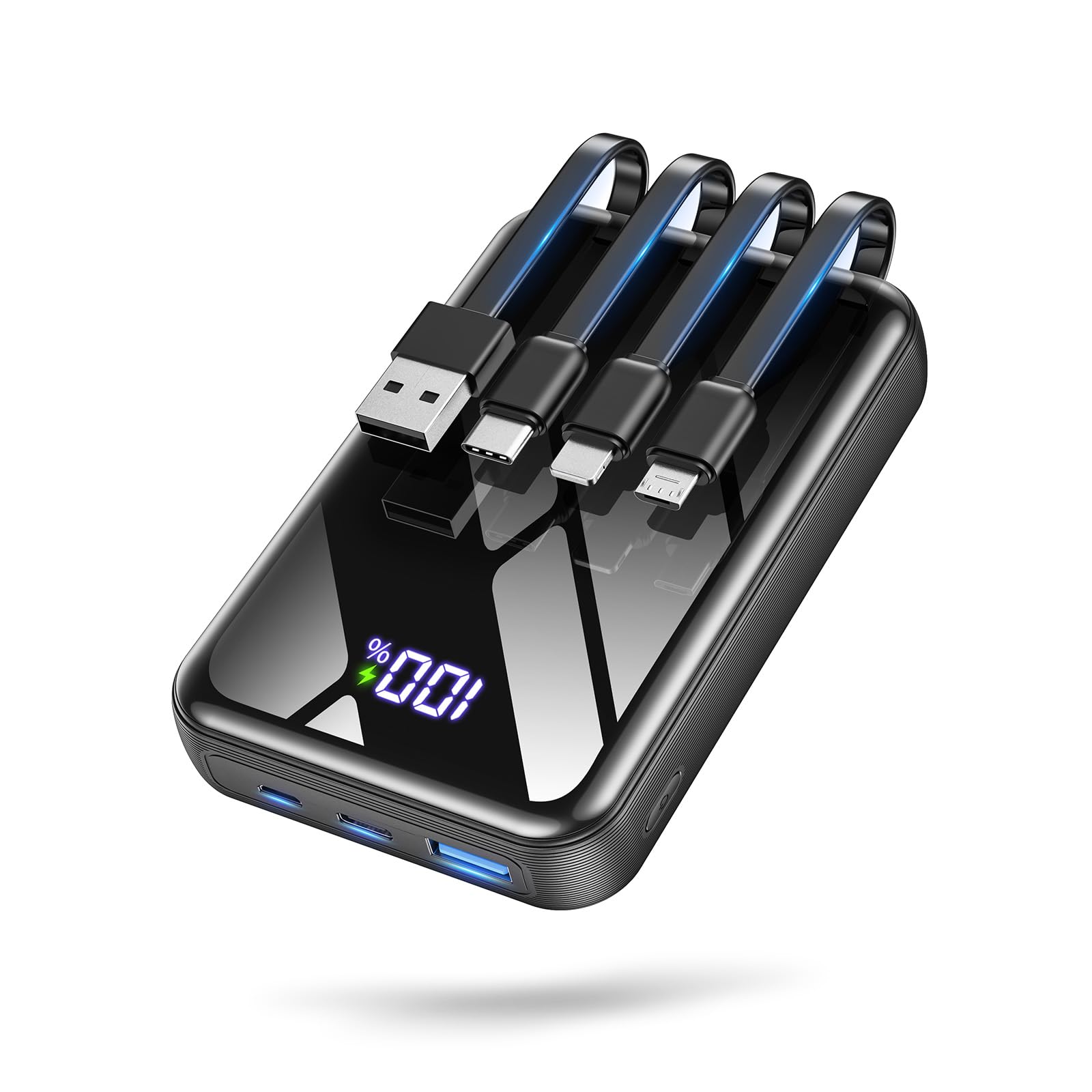
The YBYP packs 50,000mAh into a surprisingly compact shell, with four built-in cables (Lightning, USB-C, Micro, USB-A) that cover nearly every device without extra cords. A clear LED display shows remaining charge at a glance. Compared to the top pick’s 20,000mAh, this bank holds enough energy to recharge a phone eight or nine times and keep a tablet running for days.

This is for campers, emergency preppers, or anyone who needs power for a group over several days without access to an outlet. The tradeoff shows up in two places: the bank weighs 0.75 lb — noticeable in a backpack — and recharging it from empty takes 6-8 hours via the micro-USB input, so plan to top it off overnight before heading out.

The 22.5W output is adequate for phones and tablets, but won’t charge a laptop — that's by design for this budget tier. The built-in cables are a genuine convenience, though users who prefer to use their own high-speed cords may find the included ones a bit short. Overall, the combination of capacity, features, and price makes it a strong alternative if you value endurance over daily portability.

Tip: Leave it plugged into a wall outlet overnight before a trip — the slow recharge is manageable with planning, but a headache if you forget.

Bottom line: If your priority is maximum power per dollar and you can tolerate the weight and overnight recharge, this bank is the volume leader for extended off-grid trips.

4

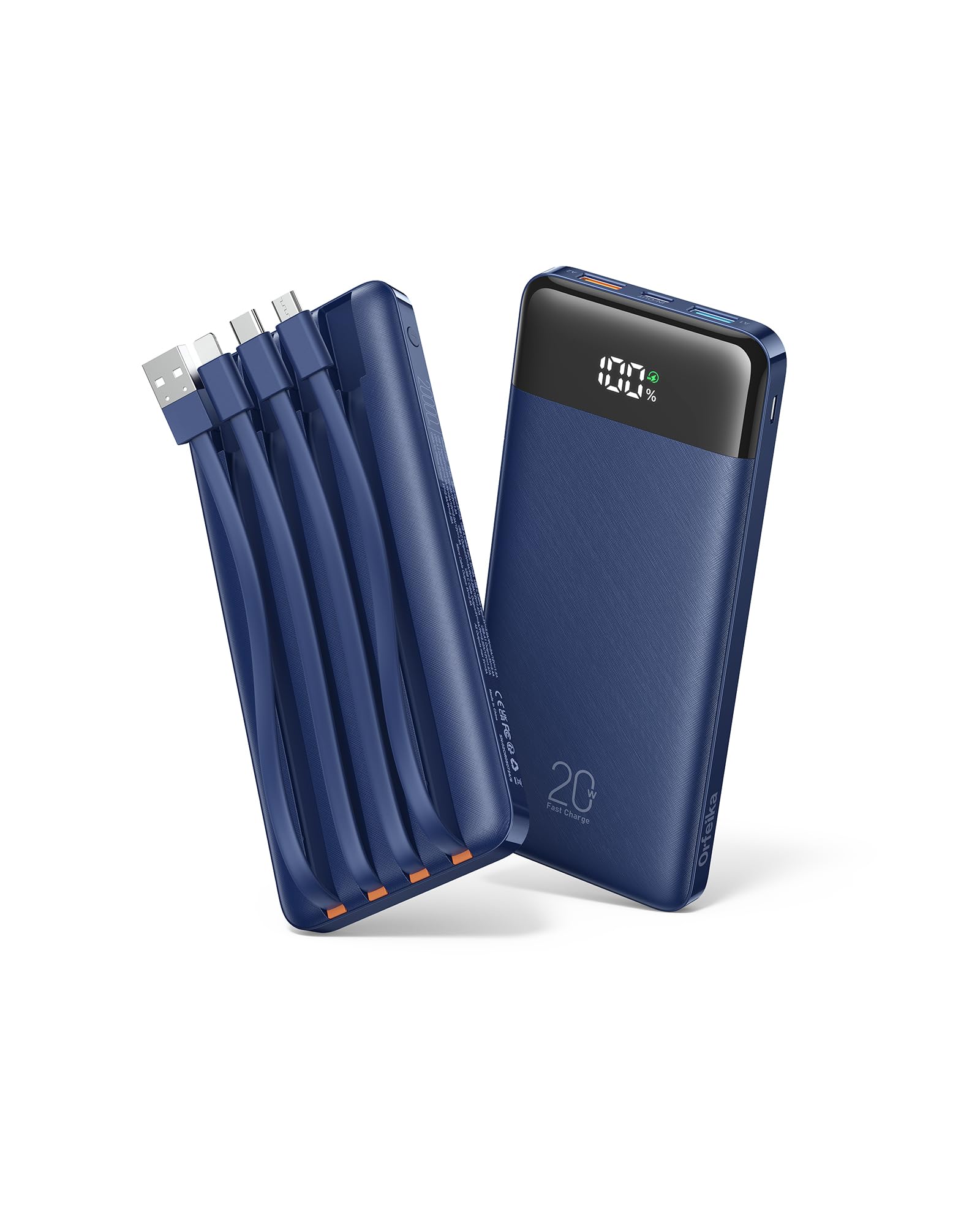
Orfeika 20K 20W

Orfeika 20K 20W

Budget Traveler

Our Score 9.2/10
Check Price

Worth Noting

  • In a pants pocket the 11.8 oz weight is noticeable
Weight
11.8 oz
Capacity
20,000mAh
Max Output
20W
Ports & Cables
4 built-in cables + 3 ports

The Orfeika 20K stands out for its four built-in cables (Lightning, USB-C, Micro, USB-A) plus three extra ports, covering nearly any device without carrying adapters. A digital LED display shows remaining battery, and a low-power mode handles earbuds and wearables.

This bank suits budget-conscious travelers who juggle different devices — one accessory tops up phones, tablets, and small gadgets. At 11.8 oz it's heavier than some 20K competitors, so it's better suited for a backpack or purse than a pants pocket.

Tip: The weight sits well in a backpack or tote – keep it there rather than a jacket pocket.

Bottom line: If you want one accessory that charges everything without extra cables, this is the budget-friendly choice – just don't expect pocket-friendly weight.

5

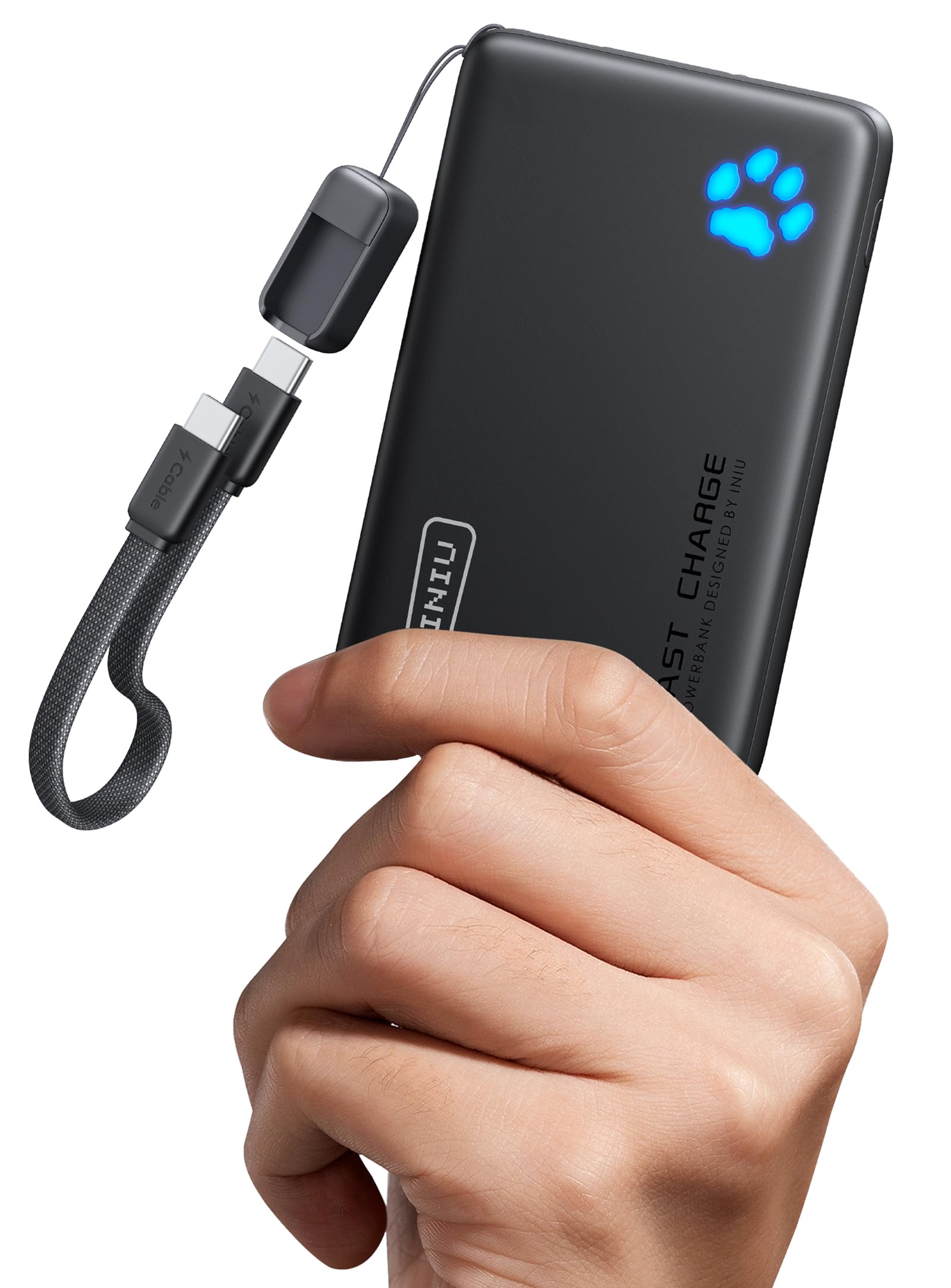
INIU 45W 10000mAh

INIU 45W 10000mAh

Budget Fast Charge

Our Score 9.0/10
Check Price

Worth Noting

  • 10,000mAh capacity provides roughly one full charge for most phones
  • Detachable cable can be misplaced, and replacement may not be readily available.
Weight
Capacity
10,000mAh
Max Output
45W
Ports & Cables
USB-C detachable + 1C1A

The INIU 45W delivers fast 45W charging in a remarkably compact design, ideal for slipping into a pocket or small bag. Its detachable USB-C cable and flight-safe rating make it a convenient travel companion, backed by a 3-year warranty. However, the 10,000mAh capacity limits it to about one full phone charge — not suitable for multi-day trips or charging multiple devices. If your need is a quick daily top-up rather than heavy backup power, this budget-friendly option fits the bill.

Bottom line: A practical choice for daily commuters who prioritize portability and fast charging over high capacity.

6

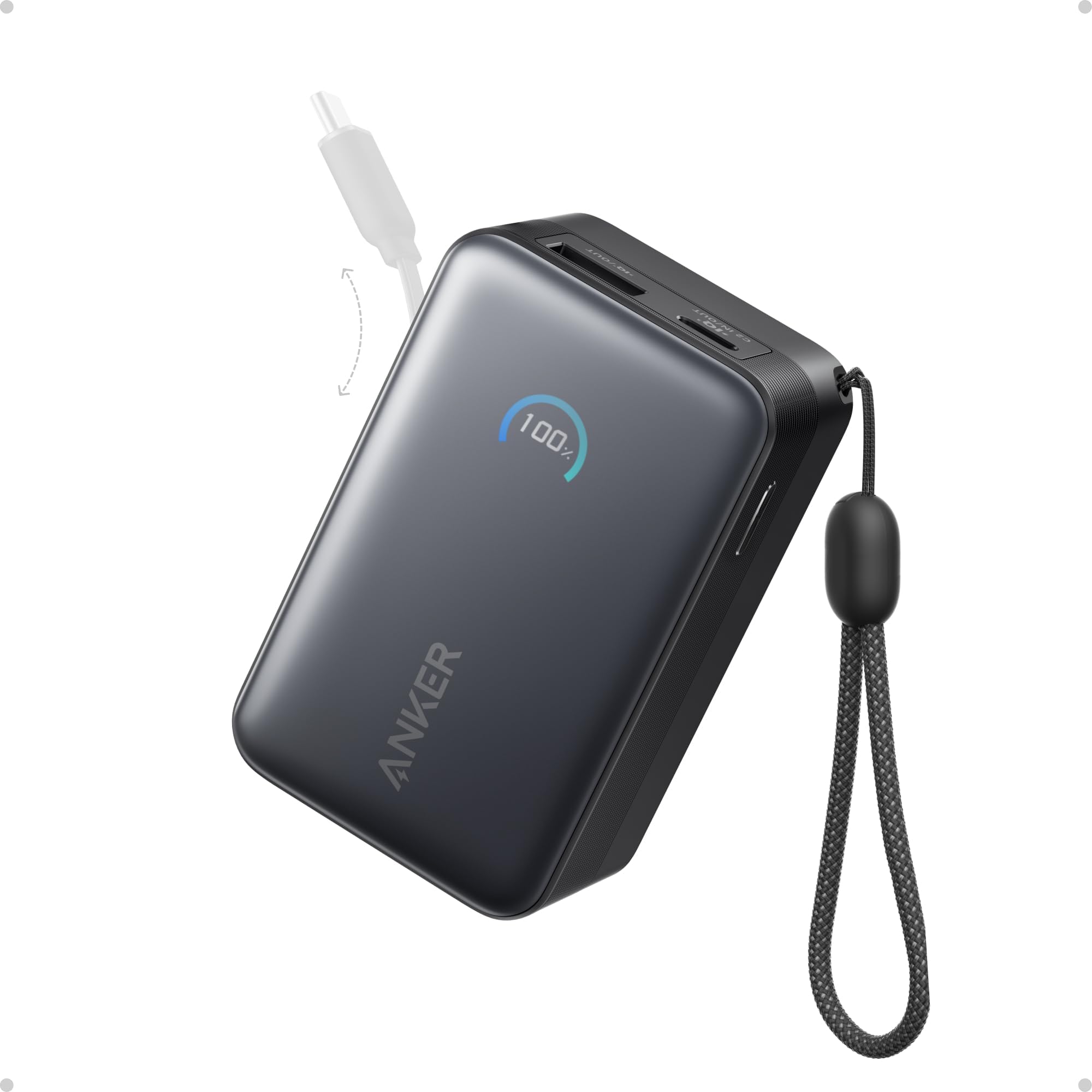
Anker Nano 10K 45W

Anker Nano 10K 45W

Pocket Fast Charger

Our Score 9.2/10
Check Price

Worth Noting

  • Capacity loss may occur in some units over time
  • 10,000mAh capacity covers one phone charge
Weight
Capacity
10,000mAh
Max Output
45W
Ports & Cables
Retractable USB-C + 1C1A

The Anker Nano delivers 45W output from a compact 10,000mAh pack that slips into a jeans pocket. The retractable cable keeps things tidy. For daily top-ups of a phone or small tablet, this is one of the most travel-friendly options. However, battery longevity has been inconsistent across units – some hold charge well, others degrade faster than expected. Combined with the modest capacity, heavy users or those needing a long-term daily driver may want to look at larger, more established models.

Tip: For best battery lifespan, avoid deep discharges and store at partial charge when not in use.

Bottom line: Best suited for daily commuters who want a pocket-sized fast charger and don't need high capacity or guaranteed long-term battery stability.

7

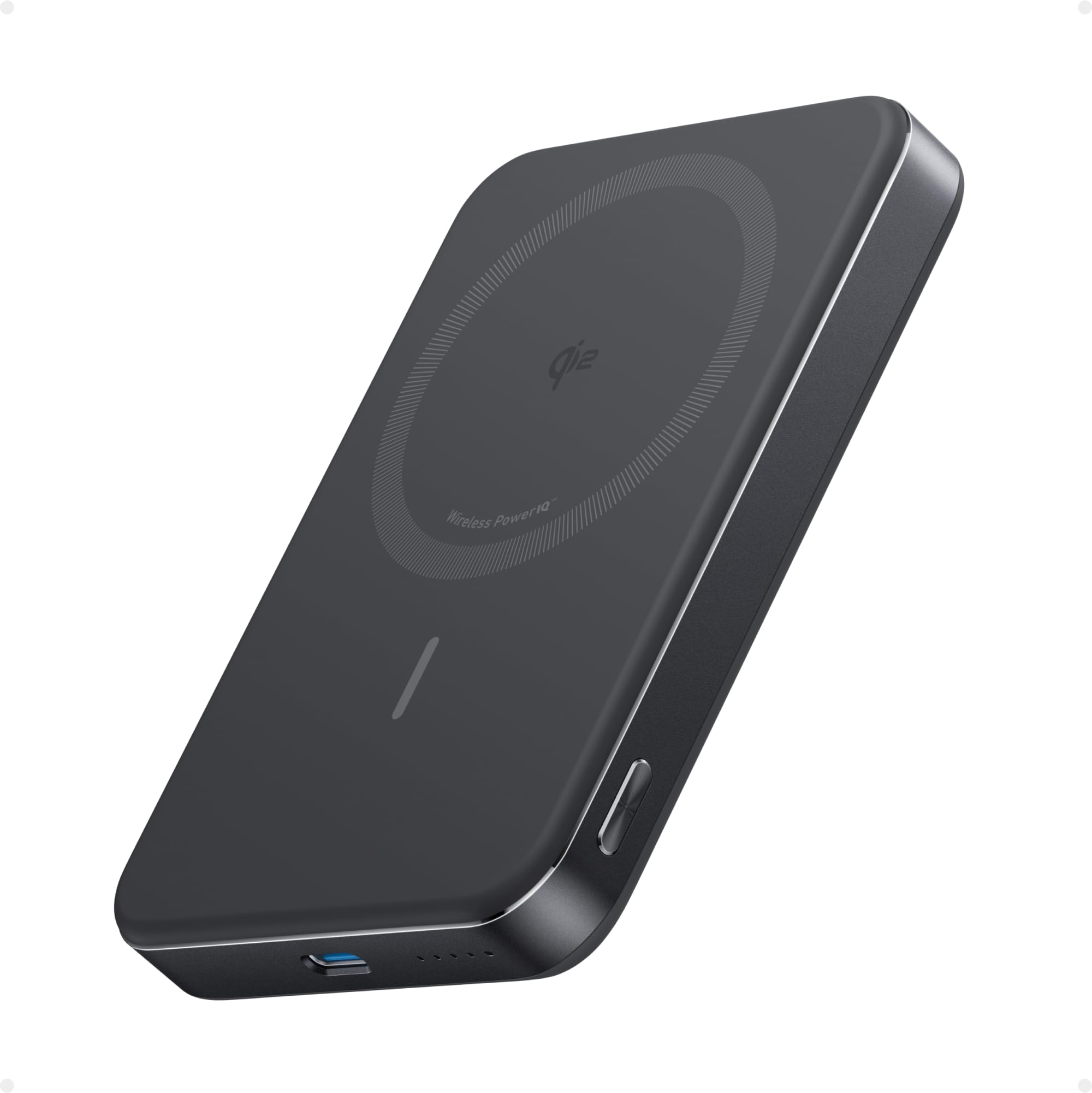
Anker MagGo 10K Wireless

Anker MagGo 10K Wireless

iPhone Wireless

Our Score 8.8/10
Check Price

Worth Noting

  • Wireless charging speed is slower than wired alternatives
  • Battery can become hot during wireless charging sessions
Weight
Capacity
10,000mAh
Max Output
15W wireless, 30W USB
Ports & Cables
USB-C

The Anker MagGo Power Bank delivers Qi2 certified 15W wireless charging with a magnetic hold that keeps the battery firmly attached to your iPhone. Its slim profile and premium build make it easy to slip into a pocket for short trips. However, the wireless charging speed is slower than a wired connection, and the battery can heat up noticeably during use. This makes it a convenient option for iPhone users who want cable-free top-ups, but less suited for heavy charging sessions or those who need rapid power.

Bottom line: Best for iPhone users who prioritize magnetic convenience over charging speed and are comfortable with occasional heat.

How to Choose

Capacity (mAh) – What You'll Actually Get

Advertised mAh is the raw battery cell capacity, but a power bank's internal circuitry converts battery voltage to the 5V, 9V, or 20V your device needs. That conversion loses roughly 30-40% of the energy. A 20,000mAh bank typically delivers 12,000-14,000mAh in real charges.

For a typical smartphone with a 4,000mAh battery, expect 2-3 full charges from a 20,000mAh bank, not five. If you need multiple days of power, a 30,000mAh or 50,000mAh bank is necessary, but prepare for added weight.

Output Power (W) – Charging Speed Matters

Higher wattage means faster charging, but only if your device supports that speed. Most phones top out at 20-30W, while laptops need 45W or more for meaningful charging. A 30W power bank charges a phone from empty to 50% in about 30 minutes; the same bank will barely trickle-charge a MacBook.

When you plug in multiple devices, the total output is shared. A single port may deliver 45W, but two ports might split 30W total. Check the fine print on multi-port ratings to avoid slow charging when you need it most.

Ports and Built-in Cables – Convenience vs. Durability

Built-in cables eliminate the need to pack a separate cord, making them ideal for on-the-go use. However, the cable is often the first component to fail after repeated bending or pulling. Detachable cables let you replace a broken cord without replacing the whole power bank.

For maximum flexibility, look for banks with at least one USB-C and one USB-A port. Models with retractable cables trade durability for neatness – they're convenient but may wear faster than a standard port.

Weight and Size – Portability Trade-offs

A 10,000mAh power bank weighs around 7-9 oz and slips into a pocket. Step up to 20,000mAh and you're looking at 12-16 oz – comfortable in a bag but heavy in a jacket. The 50,000mAh bricks can top 1.5 lb, making them strictly backpack or car material.

Don't underestimate the impact of weight on daily carry. A power bank that stays home because it's too bulky is worthless. Choose capacity based on how often you actually need it, not the maximum possible.

Real-World Reliability – Consistency Over Paper Specs

Some power banks deliver consistent charging speeds and hold their capacity over years of use. Others show impressive specs on paper but slow down after a few months or fail entirely. User reviews often highlight reliability issues that spec sheets don't reveal.

Prioritize brands with a proven track record and look for models with strong user feedback on long-term performance. A slightly higher upfront cost can save the frustration of a dead battery at a critical moment.

Frequently Asked Questions