Audio & Headphones

10 Best Phono Preamp of 2026: Match Gain and Noise to Your System

Find a phono preamp that matches your cartridge and budget without paying for features you don't need.

Choosing a phono preamp often comes down to two things: how much gain you need and how quiet your system is. Many budget options work fine for casual setups, but the moment you pair a fixed-gain preamp with a low-output cartridge or sensitive speakers, hum and distortion creep in.

This guide focuses on the real differentiators: adjustable gain, cartridge compatibility, and noise floor. Whether you run a moving magnet or moving coil cartridge, the right preamp will cleanly amplify your signal without introducing hiss or rumble.

1

Fosi Box X2

Top Pick
Fosi Box X2

Tube sound value

Our Score 9.2/10
Check Price

Worth Noting

  • Tubes may need replacement over time for consistent performance
  • High-frequency noise or popping sounds can occur in some units
Connectivity
RCA in/out, 3.5mm AUX, ground
Adjustable Gain
3 levels (39/42/45 dB)
Cartridge Compatibility
MM only

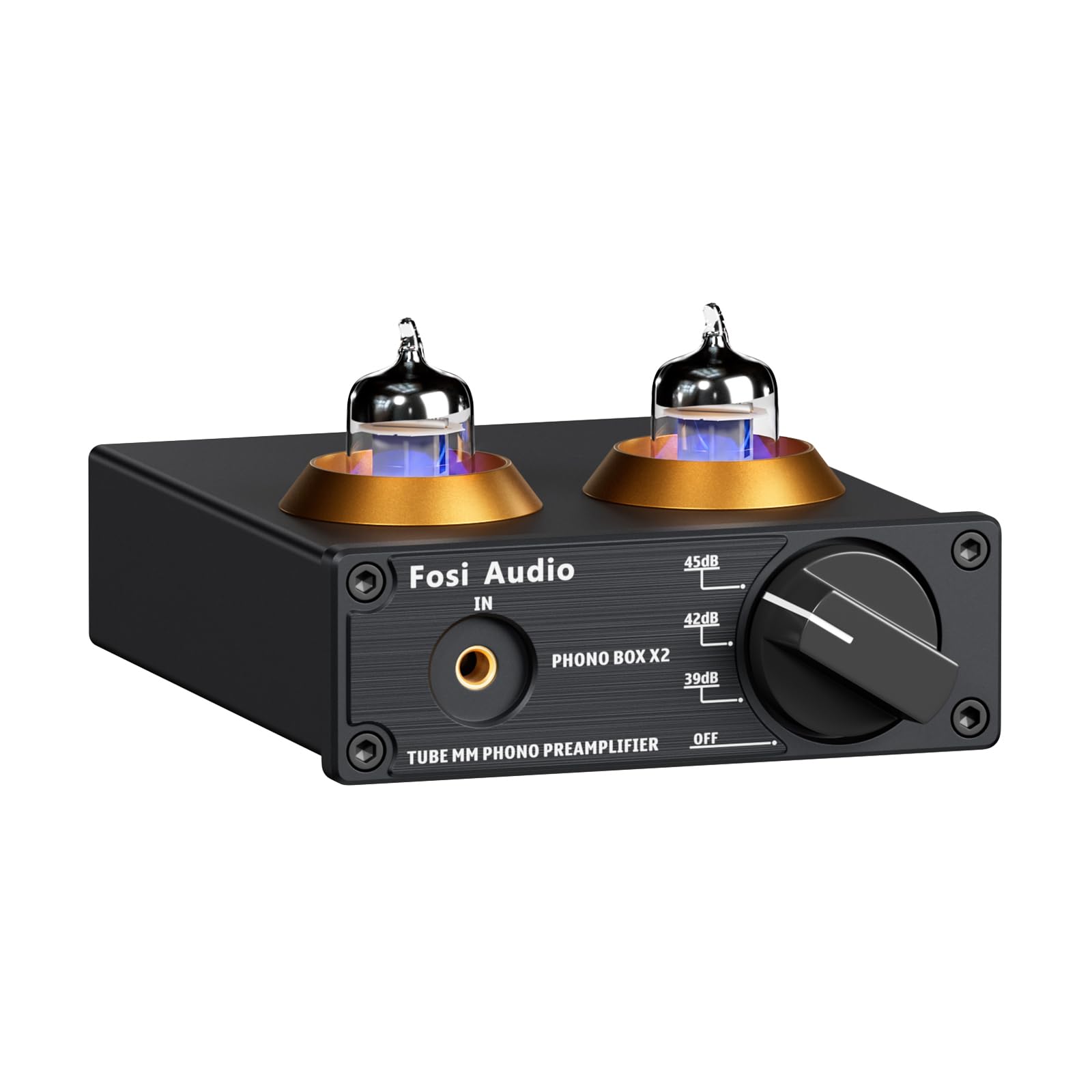
The Fosi Box X2 uses a hybrid tube/solid-state circuit to introduce tube warmth without the cost of a fully tube design. Three switchable gain levels (39, 42, and 45 dB) provide flexibility to match different MM cartridges, a feature uncommon in this price segment. The sound leans toward smooth and inviting, adding body to leaner turntable setups. The preamp connects via standard RCA input and output, includes a ground post for hum reduction, and has an additional 3.5mm AUX input for secondary sources.

The tube character is subtle enough to avoid overwhelming the original recording, but present enough to be noticeable on vocals and acoustic instruments. The two 6J1 tubes are visible through cutouts in the metal case, adding a visual element that fits well in a retro-styled audio rack. The preamp's compact size allows easy placement near the turntable. Power comes from a 12V DC adapter, and there is no on/off switch – the unit is live when plugged in.

This preamp is best suited for vinyl enthusiasts using MM cartridges who want to experiment with tube sound without moving to higher-priced options. The three gain settings help fine-tune the volume match to the amplifier, particularly useful when pairing with cartridges of varying output levels. It works well with turntables that have a moderate output level, and the warm character can smooth out recordings that sound bright or harsh. Those with MC cartridges should look elsewhere, as this unit supports moving-magnet only.

Compared to other mid-range phono preamps, the Box X2 stands out for its adjustable gain and tube stage. A lower-priced alternative offers a rumble filter and switchable capacitance but lacks the tube warmth. The choice between them comes down to whether you prioritize noise floor or tonal character. For users who value the latter, the Box X2 delivers a unique value at its price.

Tip: If you experience tube rattle, ensure the 6J1 tubes are fully seated in their sockets — they are user-replaceable.

Bottom line: The Box X2 offers tube warmth and gain adjustability at a mid-range price — a compelling choice for vinyl enthusiasts who prioritize tonal character.

2

ART DJPREII

ART DJPREII

Adjustable budget preamp

Our Score 9.0/10
Check Price

Worth Noting

  • Blue power LED is extremely bright, distracting in low-light rooms
  • No power switch on the unit; must unplug or use a switched strip
Connectivity
RCA in/out, ground
Adjustable Gain
Variable, clip LED, 100/200pF
Cartridge Compatibility
MM only

The ART DJPREII sets itself apart from basic budget preamps with adjustable gain, switchable input capacitance (100/200pF), and a low-cut rumble filter — all at a budget-friendly price. While some similarly priced options lean on tube character, this unit focuses on clean, detailed sound with clear channel separation. The variable gain lets you match output to your amplifier, and the clip LED helps avoid overloading.

This preamp suits vinyl listeners who want precise control over their cartridge's loading and the ability to filter out subsonic noise from record warps or motor rumble. The blue power LED is intensely bright and cannot be dimmed (easily taped over), and there is no power switch on the unit itself, so you will need to power it via a switched strip. These are design quirks rather than performance flaws, and they matter most in quiet, dim listening spaces.

Build quality is solid for the price, with a metal chassis that fits neatly into a desktop or shelf system. The low-cut filter is effective at cleaning up bass that can muddy speakers, and the capacitance switching lets you fine-tune the treble response for moving magnet cartridges. For those who value adjustability over simplified operation, the DJPREII delivers consistent performance without unnecessary frills.

Tip: Cover the blue LED with electrical tape if it disturbs your listening environment.

Bottom line: A strong alternative for those who want adjustable loading and a rumble filter without paying for tube warmth — just be prepared for the bright LED and lack of a power switch.

3

iFi Zen Phono 3

iFi Zen Phono 3

Audiophile MM/MC

Our Score 8.6/10
Check Price

Worth Noting

  • In some cases, a unit may arrive non-functional or develop issues after a short period of use.
  • Premium price
Connectivity
RCA in/out, ground
Adjustable Gain
36-72 dB, loading adjustable
Cartridge Compatibility
MM and MC

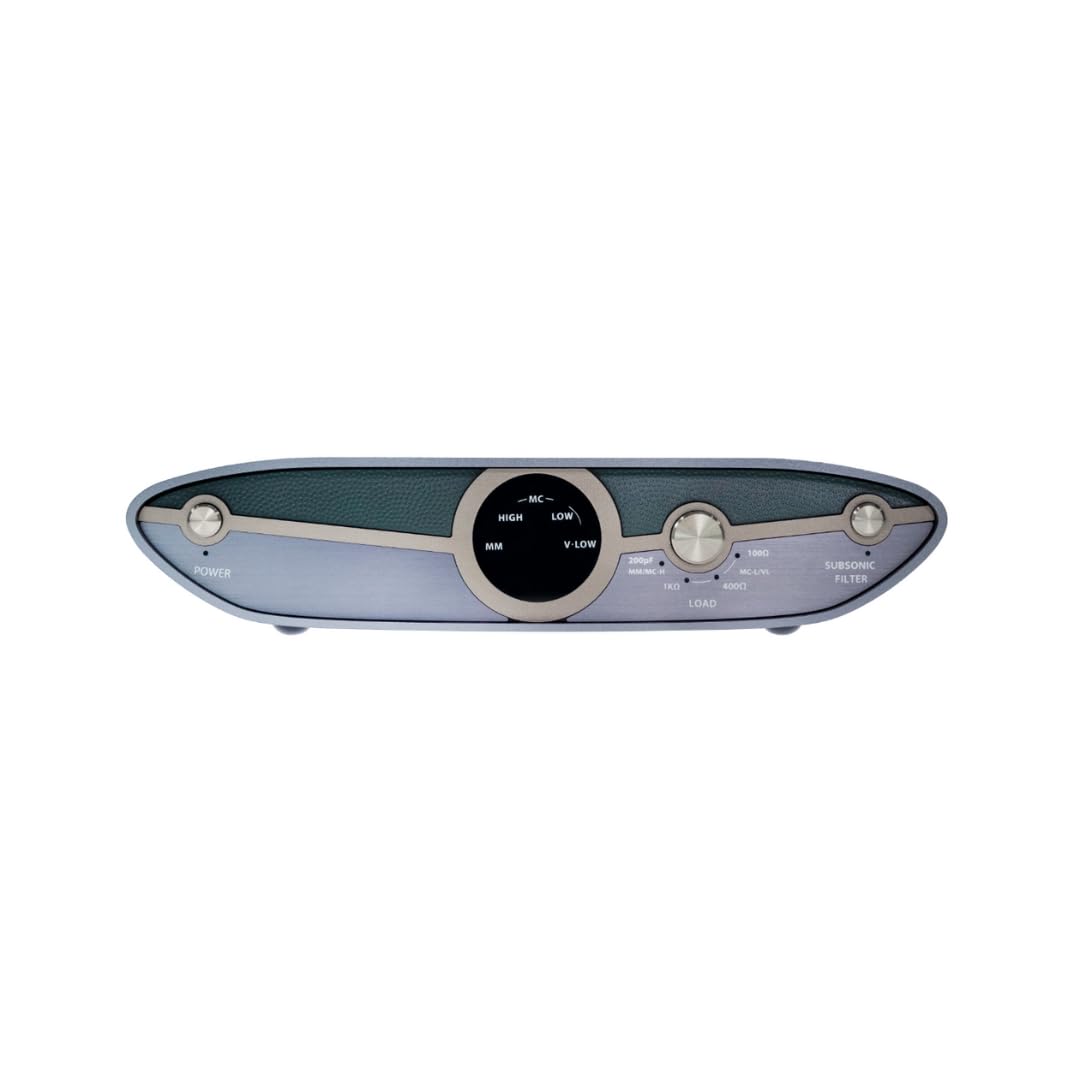
91 dB signal-to-noise ratio and adjustable gain from 36 to 72 dB mean the iFi Zen Phono 3 can handle low-output moving coil cartridges without adding audible hiss. Where budget-friendly tube preamps like the Fosi Box X2 offer warmth and three gain steps, the Zen Phono 3 adds resistance and capacitance adjustments for precise cartridge matching — a level of control rarely seen outside of costlier separates.

In quiet listening rooms or headphone systems, the lack of background noise and the intelligent subsonic filter keep turntable rumble from muddying the signal. The result is a stage that lets quiet passages and micro-details come through, provided the rest of the system is resolving enough to benefit.

This is a preamp for dedicated vinyl enthusiasts who own moving coil cartridges and want to dial in loading capacitance or resistance. The premium price is a barrier for casual listeners or those running only moving magnet cartridges, and a small number of units may need replacement shortly after arrival — worth confirming the return policy before buying.

Tip: Test the unit as soon as it arrives and keep proof of purchase — a small number of units may need replacement early on.

Bottom line: For vinyl enthusiasts running moving coil cartridges who prioritize absolute silence and loading precision over budget savings, the iFi Zen Phono 3 delivers reference-grade performance.

4

U-Turn Pluto 2

U-Turn Pluto 2

U-Turn system match

Our Score 9.4/10
Check Price

Worth Noting

  • Fixed 40 dB gain may not match all MM cartridges
  • No capacitance or loading adjustment, limiting cartridge tuning compared to competitors like the ART DJPREII
Connectivity
RCA in/out
Adjustable Gain
Fixed
Cartridge Compatibility
MM only

The Pluto 2 skips adjustable gain and loading in favor of a set-and-forget design with an active subsonic filter, US assembly, and a three-year warranty. Unlike the Fosi Box X2's tube-driven gain options, this unit offers no such flexibility, but its noise floor is low and its build quality is consistent across units.

This preamp suits U-Turn turntable owners who want a matching aesthetic and worry-free operation, or anyone who prefers not to fiddle with gain switches or capacitance settings. However, it is MM-only with fixed gain, so cartridges with unusually low output (below 3 mV) may not reach optimal volume, and there is no loading adjustment for fine-tuning cartridge response.

Tip: Check your cartridge output — if it's below 3 mV, the fixed gain may leave you wanting more volume; consider a preamp with switchable gain.

Bottom line: If you own a U-Turn turntable or simply want a preamp that works without adjustments, the Pluto 2 delivers reliable, quiet performance. For those who need gain flexibility or MC support, the Fosi Box X2 or ART DJPREII are better fits.

5

Ampapa A1

Ampapa A1

Tube headphone combo

Our Score 9.4/10
Check Price

Worth Noting

  • Treble can sound bright even with tone controls turned down
  • A few units have experienced failure within months of use, though most perform without issue.
Connectivity
RCA in/out, 3.5mm headphone, AUX
Adjustable Gain
Fixed (volume for headphone)
Cartridge Compatibility
MM only

The AMPAPA A1 sets itself apart by integrating a headphone amplifier and bass/treble controls into a tube phono preamp. This makes it a practical desktop companion for listeners who want to switch between speakers and headphones without extra gear. The tube stage adds a warm character that many find engaging, and the machined aluminum housing with glowing tubes gives it a visual presence that matches its audio ambitions.

This unit is best suited for anyone who wants a two-in-one solution for turntable and headphone listening, especially those who appreciate tone shaping and tube aesthetics. However, the treble can come across as bright in some systems even with the treble control turned down — this is system-dependent and not a dealbreaker for everyone. Also, a small number of units have shown early failure after a few months, so checking return policy is worth consideration. The phono stage is MM-only, so MC cartridge owners should look elsewhere.

Tip: If treble seems sharp, start with the treble control at minimum and adjust slowly — many find a sweet spot around the middle range.

Bottom line: If you need a single box that handles phono preamp duties and headphone listening with tone adjustability, the AMPAPA A1 delivers — just be mindful of the treble character and the small risk of early failure.

6

Pyle PP999

Pyle PP999

Ultra-budget basic

Our Score 8.6/10
Check Price

Worth Noting

  • Fixed gain may result in output level mismatched with certain cartridges or amplifier inputs.
  • In quiet listening spaces, the preamp can introduce audible hum or high-end distortion depending on the unit.
Connectivity
RCA in/out, ground
Adjustable Gain
Fixed
Cartridge Compatibility
MM only

The Pyle PP999 provides basic RIAA equalization and signal amplification for turntables, making it the cheapest solution for receivers without a phono input. Its compact size fits easily behind equipment, and setup takes seconds. The tradeoff is a fixed gain that may not match all cartridges and a noise floor that can vary between units — audible hum or distortion may appear in quiet rooms or with sensitive speakers. This preamp is best for casual listening in secondary systems, not for critical audiophile setups. If you need adjustable gain or lower noise, the ART DJPREII is a better choice.

Bottom line: For a secondary bedroom setup or a temporary fix, the Pyle PP999 works — just keep expectations in check for noise and gain matching.

7

Fosi Box X5

Fosi Box X5

MC budget pick

Our Score 9.2/10
Check Price

Worth Noting

  • A minority of units have been noted as becoming inoperative within a short period
  • Included power adapter may be of lower quality and may need replacement
Connectivity
RCA in/out, ground
Adjustable Gain
4 levels (38/48/56/66 dB)
Cartridge Compatibility
MM and MC

The Fosi Box X5 delivers four gain settings (38-66 dB) for both MM and MC cartridges at a mid-range price, with sound quality that is clear and extends into the bass region. Its noise floor is low — described as dead quiet — which suits sensitive systems. However, reliability reports indicate that some units may become inoperative within a few months, and the included power adapter is frequently criticized as needing replacement. Because of these QC concerns, the Box X2 remains a safer bet for MM-only users who prioritize long-term dependability.

Bottom line: Best for MC cartridge users who want gain flexibility and are comfortable with a possible early defect; for MM-only use, the Box X2 offers better long-term value.

8

Fluance PA10

Fluance PA10

Fluance system match

Our Score 9.2/10
Check Price

Worth Noting

  • Fixed gain and no volume or headphone output
  • Ground-dependent hum may appear in some setups despite proper grounding
Connectivity
RCA in/out, ground
Adjustable Gain
Fixed
Cartridge Compatibility
MM only

The Fluance PA10 delivers a clean, detailed soundstage and effectively silences background noise, thanks to internal shielding and a selectable 20Hz high-pass filter that keeps rumble out of your speakers. Build quality is solid, with a wood-accented chassis that blends into a vinyl rig. However, the fixed gain (2.2V output) and lack of volume control or headphone output limit its flexibility — this preamp is designed to pair with Fluance turntables and MM cartridges, not to accommodate varied setups or low-output moving coils. Some users have noted a persistent hum in certain systems even with proper grounding, so it may not suit every listening environment.

Bottom line: Best for Fluance turntable owners who want a cohesive, hum-free system and don't need gain adjustability or headphone output.

9

Douk T9

Douk T9

Tube visuals, tone

Our Score 9.0/10
Check Price

Worth Noting

  • Phono stage can be non-functional on arrival or develop issues early
  • Headphone output may be underpowered for high-impedance headphones
Connectivity
RCA in/out, 3.5mm headphone, AUX
Adjustable Gain
Fixed
Cartridge Compatibility
MM and MC

The Douk T9 stands out with its magic eye tube display, adjustable backlight colors, and bass/treble knobs – a visual showpiece that also delivers a warm, natural tube sound. Its tone controls let you tailor the frequency balance, adding flexibility not common in phono preamps at this price. However, phono stage reliability is inconsistent: some units may arrive with a non-functional phono input or develop issues early. The headphone output also lacks power for high-impedance headphones. For listeners who prioritize aesthetics and tone shaping over long-term certainty, the T9 offers a unique combination, but it's a product that demands awareness of possible QC variance.

Bottom line: If you value vintage tube aesthetics and tone shaping over absolute reliability, the T9 delivers a unique visual and sonic character – but be prepared for possible QC issues.

10

ART DJ Pre II

ART DJ Pre II

Budget + cable bonus

Our Score 9.0/10
Check Price

Worth Noting

  • In a dark listening space, the bright blue LED can be distracting
  • Grounding can be touchy; a low hum may appear with certain turntable or receiver setups.
Connectivity
RCA in/out, ground
Adjustable Gain
Variable, clip LED, 100/200pF
Cartridge Compatibility
MM only

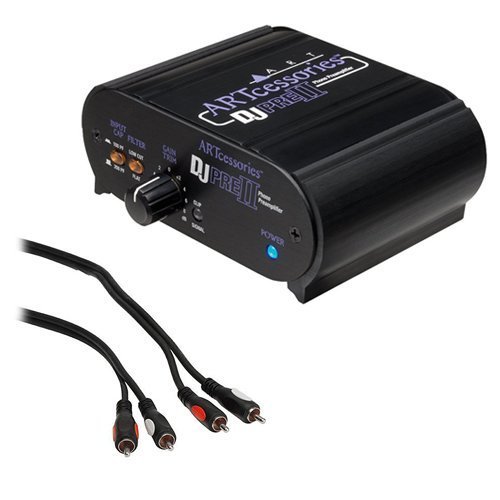
The ART DJ Pre II (with cable) delivers the same variable gain, switchable capacitance, and subsonic filter as the standalone DJPREII at a near-identical price. Sound quality is clean with a wide soundstage, and the clip LED helps avoid distortion — a strong value for budget turntable setups.

The included RCA cable is a small convenience but does not change the product itself; the bright blue LED and lack of power switch remain. This is a minor annoyance for those sensitive to light in a listening room, but can be covered with tape. For buyers who already own cables, the standalone DJPREII is identical and often cheaper.

Tip: Cover the LED with tape after setup — it serves no functional purpose and can be dimmed easily.

Bottom line: A sensible buy if you need the DJPREII's features and an extra RCA cable — just keep a piece of tape handy for that LED.

How to Choose

Cartridge Compatibility

Moving magnet (MM) cartridges output around 3-5 mV and work with nearly all preamps. Moving coil (MC) cartridges output as low as 0.2 mV and require a preamp with higher gain (typically 60 dB+) and often adjustable loading. If you own an MC cartridge, you must choose a preamp that explicitly supports MC or be prepared to add a step-up transformer.

Many budget and mid-range preamps are MM-only. If you plan to upgrade to MC later, spending a bit more for a dual-compatible model saves you from buying a second preamp.

Adjustable Gain and Loading

Fixed-gain preamps output a set voltage (usually around 2V). If your cartridge has unusually high or low output, this can cause clipping or a weak signal. Adjustable gain lets you dial in the right level for your system. For MM, 39-45 dB is typical; for MC, 60-72 dB is needed.

Loading options (resistance and capacitance) let you fine-tune the cartridge's frequency response. This is especially useful for cartridges that sound bright or rolled-off with standard loading. Preamp input capacitance of 100-200 pF matches most MM cartridges, but some benefit from switching.

Noise Floor

A preamp's noise floor determines how much background hiss or hum you hear during quiet passages. Lower noise (higher SNR) is critical for high-efficiency speakers or headphones. A preamp with SNR above 85 dB is generally quiet enough for most listeners.

Ground loops are a common source of hum. Ensure your turntable and preamp share a common ground (via the ground terminal) and that the power supply is not near sensitive cables. Some preamps include subsonic filters that cut rumble below 20 Hz, which can reduce audible noise from warped records or footfalls.

RIAA Equalization Accuracy

Every phono preamp applies the RIAA equalization curve to restore the original frequency balance. Deviations from the standard curve produce tonal shifts: too much bass or treble. Well-designed preamps follow the curve within ±0.5 dB across the audio band.

In practice, cheaper preamps may deviate more, leading to a thin or muddy sound. Quality preamps from established brands (iFi, Cambridge, Pro-Ject) are typically more accurate. If you notice your vinyl sounds 'off' compared to digital, the preamp's RIAA accuracy could be the culprit.

Connectivity Options

RCA inputs and outputs are standard. A ground terminal is essential for hum-free operation. Some preamps add a 3.5mm headphone output for private listening, but be aware that headphone outputs on budget units often lack volume control or sufficient power for high-impedance cans.

XLR balanced outputs are rare at this price range but offer better noise rejection over long cable runs. If your amplifier or powered speakers have XLR inputs, a preamp with XLR output can reduce hum and improve dynamic range. USB output for digitizing vinyl is another feature, but less common in standalone phono stages.

Frequently Asked Questions