Audio & Headphones

12 Best Surround Sound System 2026: Wireless Atmos, No Hidden Cables

Find the best surround sound system that delivers true wireless Atmos without hidden cables. Helps home theater buyers avoid marketing pitfalls.

Shopping for a surround sound system often means wading through 'wireless' claims that still require speaker cables or virtual processing that fakes rear channels. Physically separate rear speakers are the only way to genuine immersion, but even those come with trade-offs in placement, power, and connectivity. Many systems advertised as 5.1 or 7.1 leave rear speakers underpowered or prone to dropouts.

This guide focuses on systems that include actual multi-channel speakers - not virtual surround - and cuts through the marketing to highlight what matters: wireless reliability, subwoofer integration, and ease of setup. We've identified the key choices between soundbar-based and component systems, and where each excels.

Getting the right match often means deciding between a 5.1.4 system that covers most needs at a reasonable price, or a step-up 7.1.4 with a larger subwoofer for deeper bass in bigger rooms. Choosing wisely avoids the need to upgrade later.

1

ULTIMEA Skywave X50

Top Pick
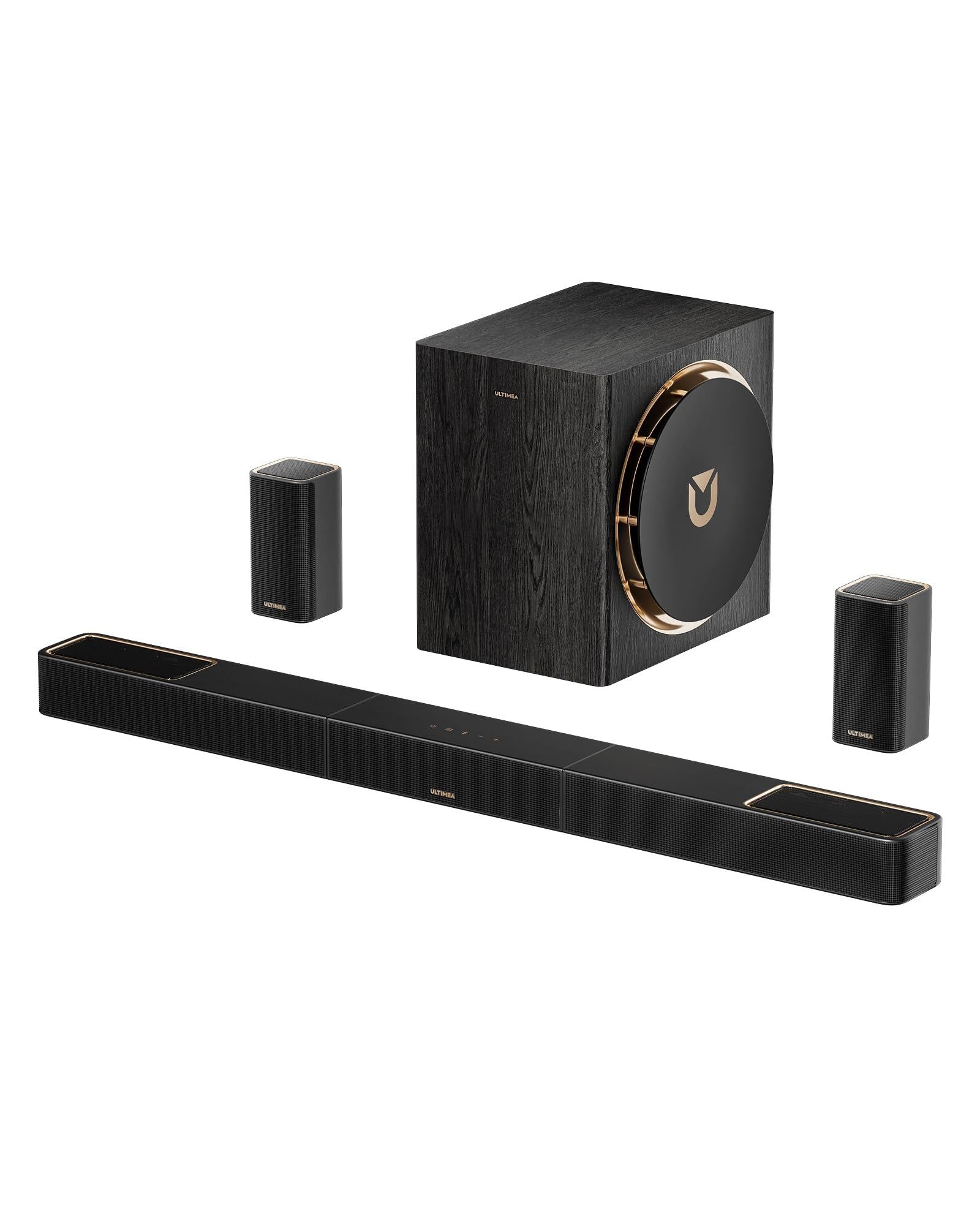
ULTIMEA Skywave X50

Budget Atmos buyer

Our Score 9.4/10
Check Price

Worth Noting

Channels
5.1.4
Subwoofer
8-inch wireless
HDMI/4K HDR
HDMI eARC, 4K HDR
Rear Speakers
Wireless

The ULTIMEA Skywave X50 delivers a genuine 5.1.4 Dolby Atmos experience with rear speakers that connect wirelessly to the soundbar, no extra cables or power outlets needed. The 8-inch subwoofer produces deep bass, while the GaN amplifier drives clear highs and a wide soundstage that fills medium-sized rooms with theater-like immersion.

Setup is plug-and-play — rear speakers sync automatically without manual pairing. HDMI eARC simplifies connection to modern TVs, and the companion app offers EQ presets and level adjustments for front speakers, subwoofer, and overall balance. Optical, Bluetooth, and USB inputs add flexibility for older devices.

This system is built for buyers who want a full Atmos surround setup without complex wiring or a high budget. It suits mixed movie and music use in medium rooms. Note that rear surround speakers cannot be independently adjusted for volume — careful placement can balance the soundstage, but audiophiles seeking granular control will want a component-based alternative.

Bottom line: The Skywave X50 is the most direct path to wireless 5.1.4 Atmos sound without stretching your budget, as long as you can work with the rear volume balance through placement rather than independent controls.
2

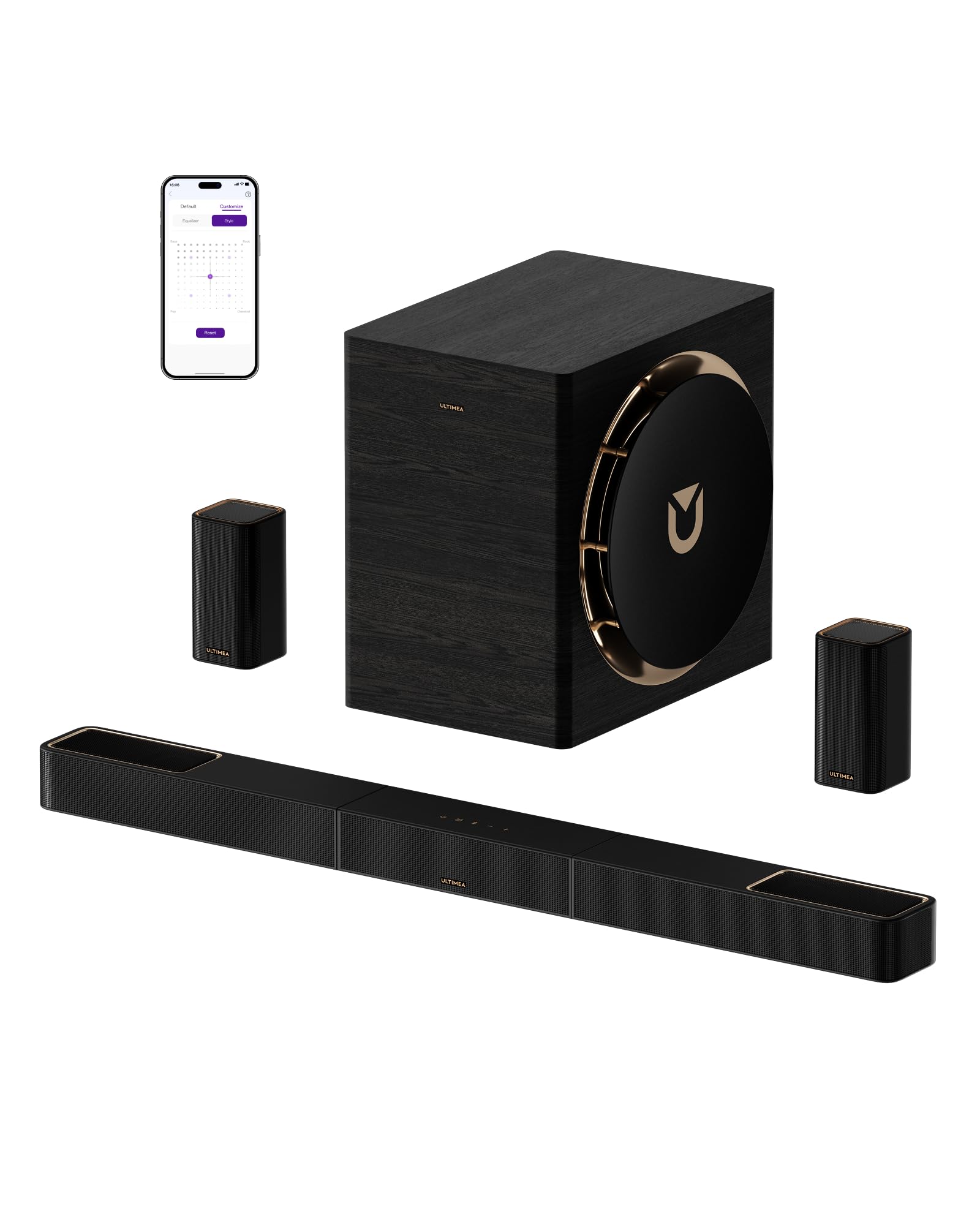
ULTIMEA Skywave X70

ULTIMEA Skywave X70

Large room Atmos

Our Score 9.4/10
Check Price

Worth Noting

  • In bass-heavy scenes, center channel dialogue may become less clear
  • Rear and surround speaker volume cannot be adjusted independently
Channels
7.1.4
Subwoofer
10-inch wireless, 20Hz
HDMI/4K HDR
HDMI eARC, 4K HDR
Rear Speakers
Wireless

With a 10-inch subwoofer reaching 20Hz and 980W peak power, the Skywave X70 expands on the X50's 5.1.4 foundation by adding two extra surround channels and deeper bass extension. The GaN amplifier and NEURACORE DSP keep distortion low even at high volumes, making this system feel bigger than its price suggests.

This system suits home theater enthusiasts with medium to large rooms who want the impact of a 7.1.4 layout without stepping up to a full AV receiver and separate speakers. However, the surround and rear speaker volumes cannot be adjusted individually — they only track the master volume. For content with heavy bass, the center channel dialogue may get buried, though adjusting the subwoofer level or using one of the 121 app presets can help.

The wireless rear speakers sync instantly via HDMI eARC, and the four upward-firing drivers create convincing overhead effects with Dolby Atmos content. The metal grille and wood subwoofer enclosure feel substantial, and the subwoofer's low-end output can pressurize a larger room without obvious distortion.

Tip: Use the app's preset EQ to tweak overall balance if rear speakers feel too quiet or too loud; physical placement symmetry also helps.

Bottom line: For those who prioritize bass impact and height effects over fine-grained control, the Skywave X70 delivers a substantial upgrade from the X50 — just accept that rear speaker levels are fixed relative to the main volume.

3

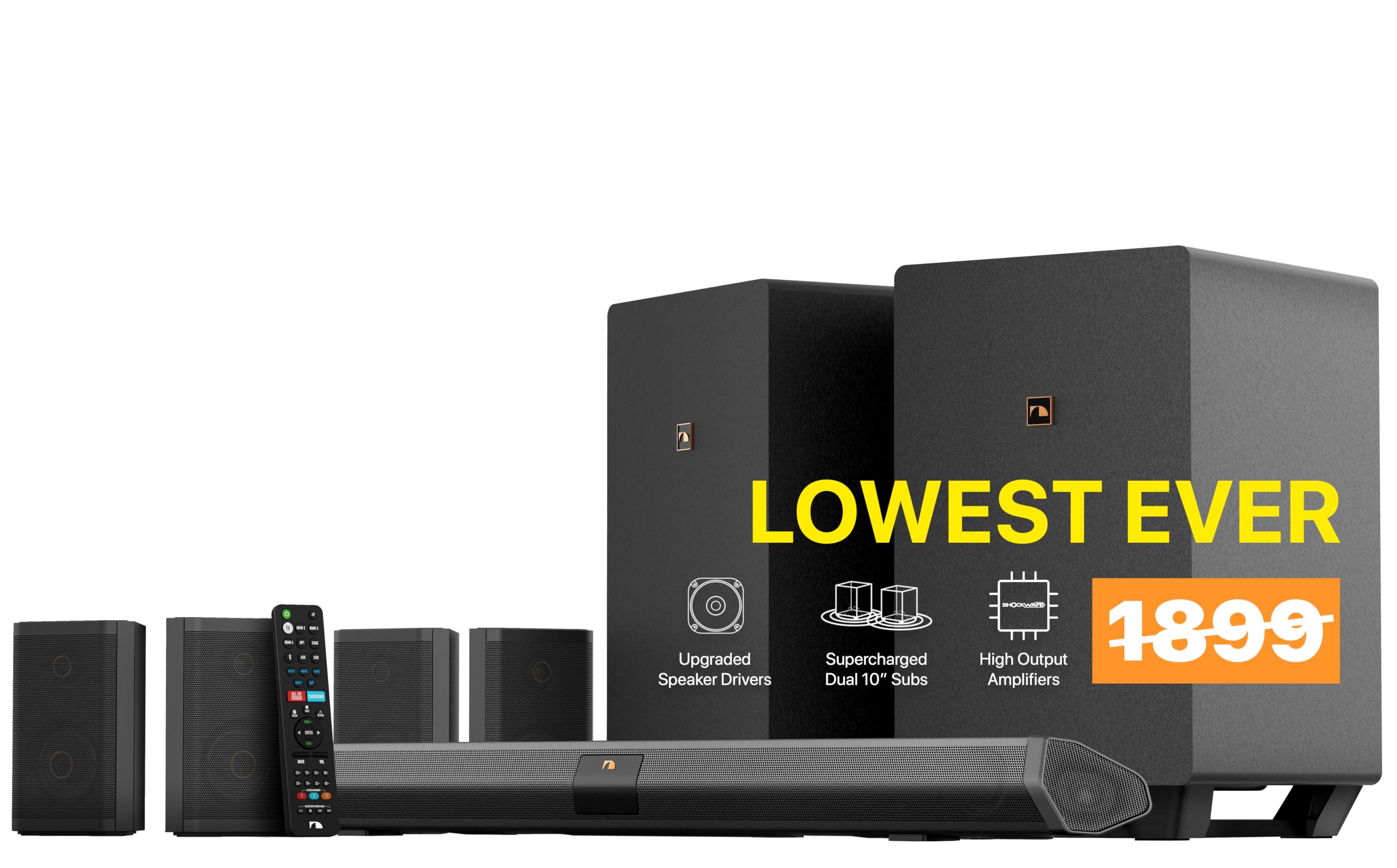
Nakamichi Shockwafe Ultra

Nakamichi Shockwafe Ultra

Dual sub enthusiast

Our Score 9.0/10
Check Price

Worth Noting

  • In a small apartment, the dual 10-inch subs and four rears demand substantial floor space
  • For a completely wireless setup, the rear speakers require RCA cables to the subs
  • Some units can produce cracking or popping from the rear speakers or subwoofer
Channels
9.2.4
Subwoofer
Dual 10-inch wireless
HDMI/4K HDR
HDMI eARC, 3xHDMI in
Rear Speakers
Wired to subs

The Nakamichi Shockwafe Ultra offers a 9.2.4-channel configuration with dual 10-inch subwoofers and four rear speakers – the highest discrete channel count available in a soundbar system under $1,000. Unlike the top-pick ULTIMEA Skywave X50, which provides genuinely wireless rears at a lower channel count, the Shockwafe prioritizes sheer speaker count and bass output for a more immersive, multi-directional soundstage.

This system is built for home theater purists with large, dedicated rooms who want powerful dual subs and multiple discrete surround channels. The rear speakers connect via RCA cables to the subwoofers rather than being fully wireless, and the dual 10-inch subs require significant floor space. Some units can exhibit occasional cracking or popping from the rear speakers – something to check after initial setup, though many units perform without issue.

The dual subs and four rears create a genuinely room-filling surround field with deep, tactile bass that adds weight to explosions and immersive details to gaming. Setup is relatively straightforward for a multi-channel system, and the soundbar handles Dolby Atmos and DTS:X with authority, making it a strong choice for movie nights and competitive gaming sessions.

Tip: Plan for speaker cables between subs and rear speakers – the system is not fully wireless despite the soundbar’s wireless sub connection.

Bottom line: Buyers with the space who want the most immersive discrete surround sound under $1,000 will find the Shockwafe unmatched – just be prepared for the wiring and large components.

4

Samsung Q990D

Samsung Q990D

Samsung TV owner

Our Score 8.8/10
Check Price

Worth Noting

  • Bass can dominate dialogue in some content or room setups
  • Bluetooth and SmartThings app connectivity may be inconsistent with non-Samsung devices
  • Occasional reports of the soundbar powering off or rear speakers losing connection
Channels
11.1.4
Subwoofer
8-inch wireless
HDMI/4K HDR
HDMI eARC
Rear Speakers
Wireless

The Samsung Q990D delivers a full 11.1.4-channel Dolby Atmos experience with genuinely wireless rear speakers, Q-Symphony compatibility, and consistently strong audio performance. It undercuts the 2025 flagship model while offering nearly identical features, making it the value choice in Samsung's current lineup.

Surround imaging is expansive with clear rear channel presence, and the system handles busy action scenes without strain. The bass can overpower dialogue in some content or room layouts, but a quick subwoofer level adjustment balances the output. Setup is truly plug-and-play with a Samsung TV, and the SmartThings app provides useful calibration options.

This system is best for Samsung TV owners who want deep integration and top-tier Atmos without paying for the 2025 update. The tradeoff: occasional hardware reports include the soundbar powering off or rear speakers losing connection, and non-Samsung devices may experience Bluetooth or app glitches. Buyers who prioritize long-term certainty over peak performance should consider alternatives.

Tip: Lower the subwoofer level in the SmartThings app if dialogue clarity is a priority in your room.

Bottom line: If you own a Samsung TV and want the best soundbar-based Atmos without paying the premium for the 2025 model, the Q990D delivers — just be aware that some units may exhibit intermittent hardware quirks.

5

Klipsch Reference Cinema

Klipsch Reference Cinema

Component buyer

Our Score 9.2/10
Check Price

Worth Noting

  • Push-type speaker terminals can be finicky when securing bare stranded wire
  • Subwoofer output may lack deep bass punch in medium to large rooms
  • Requires a separate AV receiver
Channels
5.1.4
Subwoofer
8-inch wired
HDMI/4K HDR
Rear Speakers
Wired (AV receiver)

The Klipsch Reference Cinema 5.1.4 system uses dedicated up-firing Atmos drivers and Tractrix horn tweeters to create a crisp, immersive surround soundstage that virtual processing cannot replicate. Each of the five satellite speakers and the center channel handles discrete audio for precise imaging, while the subwoofer adds low-end foundation.

Dialogue remains clear during dense action scenes, and the height effects from the up-firing speakers produce a convincing overhead layer when ceiling height is above eight feet. The subwoofer adequate for normal living rooms may leave larger spaces wanting deeper extension. The included speaker wire and labels help keep connections organized.

This system is best for buyers who already own a capable AV receiver or plan to purchase one, and who value dedicated speaker placement over all-in-one convenience. The wired setup requires some cable management, but the payoff in sound staging and overhead effects makes it worthwhile for those willing to invest the effort.

Tip: Use pin connectors or pre-tin speaker wire ends to make the push terminals easier to secure.

Bottom line: Rewards buyers who already own or plan to buy a capable AV receiver and value dedicated speaker performance over convenience.

6

Yamaha YHT-4950U

Yamaha YHT-4950U

Value receiver buyer

Our Score 9.0/10
Check Price

Worth Noting

  • Included speaker wire is short and thin, limiting placement options for larger rooms.
  • Speakers may distort at high volume levels; the subwoofer can underwhelm in larger spaces.
  • Some receivers can develop HDMI output or power problems over extended use.
Channels
5.1
Subwoofer
8-inch wired
HDMI/4K HDR
HDMI 4 in/1 out, 4K
Rear Speakers
Wired

The Yamaha YHT-4950U delivers a separate AV receiver with YPAO room calibration and four HDMI inputs, making it one of the most affordable ways to get a true receiver-based 5.1 system. Unlike soundbar bundles that lock you into proprietary speakers, this setup allows you to swap out components over time. Its YPAO calibration automatically adjusts speaker levels for balanced surround sound.

Dialogue clarity and surround immersion are strong points — the system fills medium-sized rooms with clear audio. The included speakers are entry-level, so those seating farther from the subwoofer may find the bass underwhelming at lower volumes. Some receivers have developed HDMI output or power issues after months of use, so long-term durability varies.

This system suits buyers who want a wired, upgrade-friendly home theater without the premium cost of a high-end receiver. It's not ideal if you prioritize a clutter-free soundbar setup or need wireless rear speakers — the rear channels require running speaker wire. The included speaker wire is short and thin, so you may need to buy your own for larger rooms.

Tip: Consider upgrading the included speaker wire to thicker, longer cables for better placement and performance.

Bottom line: Best for buyers who want a traditional wired receiver system and are willing to upgrade speakers over time — it provides a strong foundation at a low entry cost.

7

Sony BRAVIA Theater 6

Sony BRAVIA Theater 6

Sony TV owner

Our Score 9.0/10
Check Price

Worth Noting

  • Rear speakers are not truly wireless
  • Possible audio dropouts during 4K content or HDMI handshake issues
Channels
5.1
Subwoofer
wired
HDMI/4K HDR
HDMI eARC
Rear Speakers
Wired to subwoofer

The Sony BRAVIA Theater System 6 delivers crisp dialogue and room-filling sound that pairs seamlessly with BRAVIA TVs via the Bravia Connect app and Voice Zoom 3. However, it is limited to 5.1 channels with rear speakers that require a wired connection to the subwoofer amplifier—not the fully wireless setup some expect. Occasional audio dropouts with 4K content have been noted. This system suits smaller rooms where a focused front soundstage and dialogue clarity matter more than channel count or wireless convenience.

Tip: Plan cable routing for the rear speakers during setup – they connect to the subwoofer amplifier, not directly to the soundbar.

Bottom line: Best for Sony TV owners in smaller rooms who prioritize dialogue clarity and easy integration over channel count and wireless rear convenience.

8

JBL Bar 700MK2

JBL Bar 700MK2

Detachable speaker fan

Our Score 9.2/10
Check Price

Worth Noting

  • Rear speaker battery life may require docking mid-movie for extended viewing sessions.
  • Some units have experienced charging or soundbar functionality issues.
Channels
7.1
Subwoofer
10-inch wireless
HDMI/4K HDR
HDMI eARC, Wi-Fi
Rear Speakers
Detachable battery

The Bar 700MK2 delivers clear dialogue and deep bass from its 10-inch subwoofer, with 780W and Dolby Atmos support. Its standout feature is the detachable rear speakers that click into the soundbar to charge and can be placed anywhere without wires. However, those rear speakers run on battery for about 4–5 hours, which may cut short longer movie sessions unless recharged. Additionally, isolated reports of charging issues or unit failures mean buyers should verify return policies. For rooms where true wireless placement matters more than marathon viewing, this is a compelling option.

Tip: Keep the rear speakers docked on the soundbar when not in use to ensure full charge for movie nights.

Bottom line: Best suited for those who value clutter-free rear placement and shorter listening sessions, and are comfortable with the occasional reliability check.

9

Samsung Q990F

Samsung Q990F

Latest tech buyer

Our Score 9.2/10
Check Price

Worth Noting

  • Premium pricing may not justify the incremental upgrade over the previous generation
  • Connectivity can be intermittent with non-Samsung devices; SmartThings app login can be unreliable
Channels
11.1.4
Subwoofer
8-inch wireless
HDMI/4K HDR
HDMI eARC, Wi-Fi
Rear Speakers
Wireless

The Q990F delivers impressive 11.1.4-channel Dolby Atmos with full immersion, especially when paired with a Samsung TV via Q-Symphony. However, the performance gain over the Q990D is modest, and the steep price makes that incremental step hard to swallow. Connectivity with non-Samsung devices can be spotty, and the 48.5-inch width won't suit every stand. For Samsung loyalists who want the absolute latest features like Game Mode Pro, it's a worthy option, but most buyers will find better value in the previous generation.

Bottom line: If you own a Samsung TV and prioritize having the latest 2025 model with Game Mode Pro, the Q990F delivers, but only if the premium price doesn't give you pause.

10

LG S95TR

LG S95TR

LG TV owner

Our Score 8.8/10
Check Price

Worth Noting

  • Wireless disconnections and subwoofer pairing issues can occur in some setups.
  • At its premium price, the sound quality may not feel proportionate for all buyers.
Channels
9.1.5
Subwoofer
8-inch wireless
HDMI/4K HDR
HDMI eARC, WOWCAST
Rear Speakers
Wireless

The LG S95TR brings a 9.1.5 channel layout with triple up-firing speakers, wireless Dolby Atmos transmission via WOWCAST, and AI room calibration — features that create a spacious, immersive soundstage when everything works. Dialogue clarity is strong, and the surround effects are genuinely convincing in compatible content. The seamless integration with LG TVs, including WOW Orchestra and single-remote control, makes setup nearly effortless for LG owners. However, the system can experience intermittent wireless dropouts between the soundbar, subwoofer, and rear speakers, and the subwoofer may struggle to pair reliably in some cases. At its premium price, the value proposition is debatable — the sound quality is good but not obviously superior to more stable competitors like the Samsung flagship. This system best suits LG TV owners who prioritize advanced calibration and wireless Atmos features and are willing to work around occasional connectivity hiccups.

Tip: Keep the subwoofer and rears within 10 feet of the soundbar and update your LG TV’s firmware to minimize dropouts.

Bottom line: A good fit for LG TV owners who want WOW Orchestra and wireless Atmos, provided they can tolerate occasional connectivity hiccups.

11

LG S40TR

LG S40TR

Budget rear user

Our Score 8.8/10
Check Price

Worth Noting

  • Rear speakers require a wired connection between them, not truly wireless
  • Audio dropouts may occur between subwoofer and soundbar during use
Channels
4.1
Subwoofer
wireless
HDMI/4K HDR
Rear Speakers
Wired to each other

The LG S40TR delivers clear dialogue and a balanced soundstage that elevates TV audio noticeably. Yet the rear speakers are connected by a physical cable (only the subwoofer is wire-free), and the system can experience intermittent dropouts between the soundbar and satellite speakers. The subwoofer produces modest bass, adequate for dialogue but lacking the rumble for action scenes. This setup works best as an entry-level surround solution for small rooms, especially when paired with an LG TV for integrated control, provided you can accept the wiring and occasional connectivity quirks.

Bottom line: Only worth grabbing at a deep discount for basic rear surround with an LG TV; persistent connectivity issues and wired rears make it a compromise for most buyers looking for a complete wireless home theater.

12

Yamaha YHT-5960U

Yamaha YHT-5960U

Gaming receiver buyer

Our Score 8.2/10
Check Price

Worth Noting

  • Included speakers and subwoofer are entry-level
  • Receiver may not power on after months of use in some units.
Channels
5.1
Subwoofer
wired
HDMI/4K HDR
HDMI 2.1, eARC
Rear Speakers
Wired

The Yamaha YHT-5960U delivers a future-proof receiver base with HDMI 2.1 features that gamers want: 4K120 and 8K60 passthrough, ALLM, VRR, and Dolby Vision. YPAO room calibration and MusicCast multi-room streaming add versatility. However, the bundled speakers and subwoofer are entry-level — thin on bass and clarity — so the value lies in the receiver alone. Some owners have reported the receiver not powering on after a few months, which is worth factoring in. This system makes sense for buyers who plan to upgrade speakers later and want a capable receiver at a mid-range price.

Bottom line: Best for gamers and DIY upgraders who want HDMI 2.1 features now and plan to replace speakers — but only if you accept the risk of possible receiver power issues.

How to Choose

Number of Channels

Channel count (e.g., 5.1, 7.1.4, 11.1.4) determines how many discrete audio sources the system can place around the room. More channels mean more precise object-based sound placement, but they also require more speakers and careful positioning.

The '.4' in 7.1.4 refers to up-firing or height speakers for Dolby Atmos. These rely on ceiling reflection; textured or angled ceilings reduce effectiveness. A 5.1.4 system can be sufficient in smaller rooms, while 7.1.4 or higher benefits larger spaces.

Dolby Atmos / DTS:X Support

Dolby Atmos and DTS:X are object-based audio formats that add a height dimension to surround sound. Support for both is ideal, but many systems only include Atmos. The difference is most noticeable with content mixed specifically for these formats.

A system that lacks DTS:X may still play DTS tracks in stereo or downmixed surround. If you watch many Blu-rays or stream with DTS:X soundtracks, favor systems that include both codecs.

Rear Speaker Type (Wireless vs. Wired)

True wireless rear speakers connect to the main unit via RF or Bluetooth without any cable to the soundbar, but they still need a power outlet. Many 'wireless' systems actually require a wired connection from the subwoofer or between rear speakers themselves.

The trade-off: true wireless rears simplify placement and hide cables, but they often have lower maximum volume and may introduce latency. Wired rears deliver more reliable signal and higher output but require running speaker wire across the room.

Subwoofer Size and Power

Subwoofer size (typically 8-inch to 12-inch) directly affects low-frequency extension and bass impact. A 10-inch sub can reach down to around 25Hz, while a 12-inch can go to 20Hz or below, which is felt as 'floor-shaking' bass.

Larger subs need more space and may overwhelm dialogue if the system lacks independent subwoofer volume control. For medium rooms, an 8-inch is often adequate; for larger rooms or home theater enthusiasts, a 10-inch or dual subs provide cleaner, deeper bass.

HDMI Connectivity and 4K Passthrough

HDMI eARC (enhanced Audio Return Channel) is essential for passing lossless Dolby Atmos from a TV or streaming device. Systems with multiple HDMI inputs allow you to connect sources like a Blu-ray player or game console directly to the soundbar.

4K HDR passthrough (including Dolby Vision) ensures video quality isn't downgraded. If you have a 4K TV and game console, prefer a system with at least one HDMI 2.1 input for VRR and ALLM to avoid input lag.

Frequently Asked Questions