TVs & Video

7 Best OLED TV of 2026: Which One Fits Your Room and Use?

Find the right OLED for your living room, gaming setup, or home theater — without getting lost in specs and marketing.

OLED TVs deliver perfect blacks and vibrant colors, but the choice between a WOLED and QD-OLED panel matters more than brand names. Brightness, anti-glare, and HDR format support separate the models that work in sunlit living rooms from those that truly shine in a darkened home theater.

Buyers often discover after purchase that built-in speakers vary wildly and that some remotes frustrate more than they help. This guide focuses on the trade-offs that affect daily use — like whether Dolby Vision matters for your streaming habits or if a 144Hz refresh rate actually improves console gaming.

The right OLED balances picture quality, room conditions, and how you plan to use it. Skip the hype and match the TV to your space.

1

LG OLED evo C5 65"

Top Pick
LG OLED evo C5 65"

All-around home theater

Our Score 9.0/10
Check Price

Worth Noting

  • The Magic Remote’s pointer function can feel twitchy and unintuitive for those who prefer a traditional remote.
  • A minority of units may experience power-on issues or software glitches over months of use.
Panel Type
OLED evo (WOLED)
HDR Support
Dolby Vision, HDR10, HLG
Screen Size
65-inch
Refresh Rate
144 Hz

The C5’s Alpha 9 Gen8 processor drives exceptional picture quality with perfect black levels and vibrant HDR highlights across Dolby Vision, HDR10, and HLG. The OLED evo panel delivers the deep contrast and color saturation that makes cinematic content look natural and immersive. Motion handling and upscaling benefit from the new chip, keeping fast action crisp and lower-resolution sources cleaner than previous generations.

Color accuracy out of the box is strong, with deep black levels that require no calibration for most viewers. The built-in Dolby Atmos audio provides enough presence for casual watching and dialogue clarity, reducing the need for an external soundbar in typical living rooms. For gaming, the TV supports 144Hz refresh rate, 0.1ms response time, G-Sync, FreeSync Premium, and four HDMI 2.1 ports – enough to drive a PC and current-gen consoles simultaneously without compromise.

This setup suits home theater enthusiasts who prioritize reference-level contrast and gamers who want full VRR support and low input lag. It also fits buyers who want the latest LG technology without stepping up to the brighter, wall-mount-oriented G5. However, the remote may frustrate those who prefer a simple traditional design – the Magic Remote’s pointer function can feel twitchy and unintuitive. Some units may also develop power-on issues or software glitches over months of use, though this is not a widespread pattern.

In very bright rooms, the C5’s peak brightness falls short of QD-OLED competitors like the Samsung S95F or the LG G5 – those models handle glare and direct sunlight better. For most light-controlled home theater spaces, the C5’s black levels and color volume create a more cinematic image. Its reliability record and Dolby Vision support make it a safer all-around choice than QD-OLED alternatives that lack Dolby Vision or carry higher defect rates.

Tip: If the Magic Remote’s pointer feels twitchy, switch to a standard remote or disable the pointer in settings – the TV works well with universal remotes.

Bottom line: Home theater and gaming buyers who want a proven all-around OLED with the latest processing and gaming features – and who don’t mind the remote’s learning curve – will find the C5 the most balanced pick in its class.
2

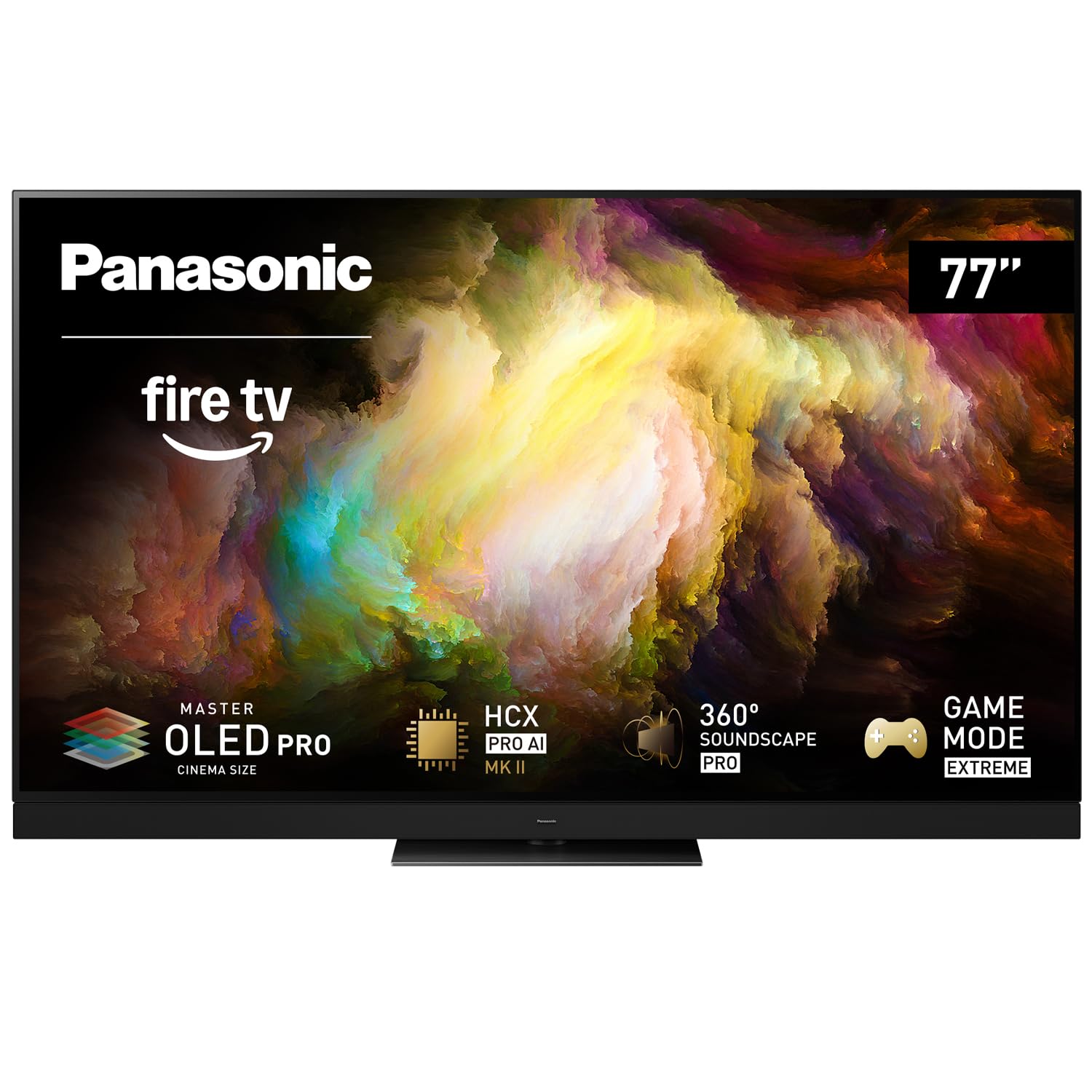
Panasonic Z8 77"

Panasonic Z8 77"

Large screen value

Our Score 9.2/10
Check Price

Worth Noting

  • Peak brightness is not class-leading
Panel Type
Master OLED PRO (WOLED)
HDR Support
Dolby Vision IQ, HDR10+, HLG
Screen Size
77-inch
Refresh Rate
144 Hz

At under $1,400 for 77 inches, the Panasonic Z8 offers an OLED panel with deep blacks, Dolby Vision IQ, and a 160W built-in speaker system that can replace a separate soundbar for many setups. This makes it the strongest value proposition among large OLEDs, though it trails the top pick in peak HDR brightness — a tradeoff that matters primarily in sunlit spaces.

Buyers who watch movies and game in a dedicated home theater room will get the most from this set. The natural color accuracy and 144Hz refresh rate suit both cinematic content and gaming, while the modest brightness holds up fine in controlled light. If your living room has large windows or direct sunlight, the top pick's higher luminance will be worth the extra cost.

The 160W 2.1-channel built-in audio provides enough presence for most rooms, reducing the appeal of a separate soundbar. The robust metal stand and premium construction add to the sense of quality. Four HDMI 2.1 ports support 144Hz gaming, though the Fire TV interface may not appeal to everyone.

For those who want the biggest OLED without breaking the bank, the Z8 delivers where it counts: picture, sound, and build.

Tip: Place the TV in a room with controlled lighting to get the full benefit of its deep blacks and HDR performance.

Bottom line: For buyers who prioritize screen size and built-in audio over peak brightness, this is the smartest OLED investment at 77 inches.

3

Samsung S95F 65"

Samsung S95F 65"

Bright room use

Our Score 8.6/10
Check Price

Worth Noting

  • Lacks Dolby Vision
  • Setup can be more involved than typical plug-and-play TVs due to software configuration steps.
Panel Type
QD-OLED with Glare Free
HDR Support
HDR10+ (no Dolby Vision)
Screen Size
65-inch
Refresh Rate
165 Hz

The S95F's glare-free matte screen eliminates reflections that plague glossy OLEDs in sunlit rooms – a distinct advantage over other QD-OLED models. Its QD-OLED panel delivers high brightness and deep blacks, while the 165Hz refresh rate and low input lag suit competitive gaming. Compared to the more affordable QD-OLED option, the S95F adds this anti-glare coating and higher refresh rate without sacrificing color vibrancy.

In real-world use, the matte screen maintains contrast and black levels even with direct window light. Colors remain punchy, and HDR highlights look vivid. The NQ4 AI Gen3 processor handles motion well, and the four HDMI 2.1 ports support full 4K 165Hz. However, HDR10+ content is limited compared to Dolby Vision, so streaming HDR varies by service.

This TV suits viewers who watch in bright rooms and don't need Dolby Vision from major streamers. The initial setup may take longer than expected – some users find the software configuration less intuitive. If HDR10+ coverage and a premium price are acceptable, the S95F's unique glare-free performance makes it a standout for light-controlled environments.

Tip: Allocate extra time for initial setup – following the on-screen guidance carefully can prevent configuration headaches.

Bottom line: For bright-room viewers who prioritize reflection-free viewing over Dolby Vision, the S95F is the most capable OLED in this category.

4

Sony BRAVIA 8 II 65"

Sony BRAVIA 8 II 65"

PS5 gaming

Our Score 8.8/10
Check Price

Worth Noting

  • In bright rooms with direct light, the peak brightness can feel underwhelming compared to other QD-OLEDs.
  • The extensive calibration options and picture settings can be a learning curve for those who prefer a simpler setup.
Panel Type
QD-OLED
HDR Support
Dolby Vision, HDR10, HLG
Screen Size
65-inch
Refresh Rate
120 Hz

Sony's exclusive PS5 features—including Auto HDR Tone Mapping and 4K 120Hz VRR—integrate seamlessly, and the XR processor upscales streaming content and HD sources with clarity that rivals native 4K. Four HDMI ports, two of which support HDMI 2.1 at 4K 120Hz, provide ample connectivity for gaming consoles and streaming devices. The build quality is solid, with a slim profile that sits flush against a wall. The QD-OLED panel delivers rich, accurate colors that pop in dark scenes.

Acoustic Surface Audio+ uses the screen as a diaphragm, delivering dialogue clarity and bass that many users describe as immersive enough to skip a separate soundbar. The QD-OLED panel reaches moderate peak brightness; in a sunlit room, specular highlights may not appear as punchy as on competing QD-OLEDs. In a dark home theater, contrast and black level performance are reference-grade.

This TV is built for movie enthusiasts who prioritize accurate, lifelike color over raw luminance. PS5 owners benefit from exclusive gaming features and low input lag. The Acoustic Surface Audio also means one less device to place, appealing to those who value a clean aesthetic. The premium price and average brightness mean it is not the best fit for bright-room viewers or value-focused shoppers.

Enthusiasts who take time to calibrate can achieve reference-level accuracy, while most viewers will find the Cinema preset satisfying out of the box.

Tip: Start with the 'Cinema' or 'Game' preset for best out-of-box results, then fine-tune brightness to match your room's lighting.

Bottom line: For PS5 gamers and movie purists who value color accuracy over maximum brightness, the BRAVIA 8 II delivers a premium cinema-like experience—if the steep price is within reach.

5

LG OLED evo G5 77"

LG OLED evo G5 77"

Premium home theater

Our Score 9.0/10
Check Price

Worth Noting

  • For buyers planning to use the TV on a stand, no stand is included
  • In a market with strong performers at lower price points, the premium cost is a significant commitment.
Panel Type
OLED evo with Brightness Booster Max
HDR Support
Dolby Vision, HDR10, HLG
Screen Size
77-inch
Refresh Rate
120 Hz

The G5's OLED evo panel with Brightness Booster Max produces the most vivid and luminous image of any LG OLED, with colors that appear almost three-dimensional. The Alpha 11 AI processor enhances real-time optimization for HDR content, making Dolby Vision films look exceptionally dynamic.

Where the LG C5 offers a versatile all-rounder package, the G5 targets home theater enthusiasts who prioritize brightness and a sleek wall-mounted aesthetic. The TV sits nearly flush against the wall, but no stand is included — buyers using a tabletop will need to purchase a separate stand. This deliberate design choice makes the G5 less flexible for changing setups.

This TV is best for buyers who will wall-mount in a dedicated home theater room, want the brightest LG OLED, and are willing to pay a premium for the best-in-class picture. The high price limits its appeal to those who prioritize light output over cost savings, and the missing stand means additional expense for non-wall-mount uses.

Tip: Include a wall mount or separate stand in your budget when purchasing this TV.

Bottom line: For home theater enthusiasts planning to wall-mount and seeking the brightest LG OLED, the G5 delivers unmatched performance — provided the premium cost and missing stand are acceptable.

6

LG OLED evo C4 65"

LG OLED evo C4 65"

Budget entry-level

Our Score 8.8/10
Check Price

Worth Noting

  • Magic Remote pointer can be frustrating to use compared to traditional remotes
  • Some units may experience power failures or HDMI port issues within the first year
Panel Type
OLED evo (WOLED)
HDR Support
Dolby Vision, HDR10, HLG
Screen Size
65-inch
Refresh Rate
144 Hz

The LG C4 delivers the same OLED evo panel found in newer models, producing vibrant colors and deep blacks that make HDR content pop. The 144Hz refresh rate and four HDMI 2.1 ports cater to gamers without breaking the bank. However, it uses last year's Alpha 9 Gen7 processor, which means slower AI processing and no future software updates after a certain point. Some units have experienced power failures or HDMI port issues within the first year, so checking warranty coverage is wise. The Magic Remote's pointer control also divides opinion. For the price, the picture quality and feature set are hard to beat.

Tip: If the Magic Remote's pointer feels imprecise, switching to a standard universal remote or using the LG ThinQ app can provide a more familiar control experience.

Bottom line: Value-focused buyers who prioritize OLED picture quality and gaming specs over the latest processor and long-term reliability certainty will find this a compelling choice.

7

Samsung S90F 65"

Samsung S90F 65"

QD-OLED alternative

Our Score 8.8/10
Check Price

Worth Noting

  • Some units may fail to power on or show color artifacts requiring a reset
  • No Dolby Vision support limits HDR compatibility with major streaming and disc content
Panel Type
QD-OLED
HDR Support
HDR10+ (no Dolby Vision)
Screen Size
65-inch
Refresh Rate
144 Hz

The Samsung S90F delivers vibrant QD-OLED colors and deep blacks that make SDR and HDR10+ content look punchy, and its 144Hz refresh rate with four HDMI 2.1 ports suits gaming well. However, it lacks Dolby Vision, which limits compatibility with major streaming services and Blu-ray libraries – a dealbreaker for movie purists. Additionally, some units may fail to power on or show color artifacts that require a reset, so verifying functionality after purchase is prudent. For buyers who prioritize HDR10+ and want QD-OLED vibrancy without paying S95F prices, this remains a worthwhile option, but the LG C5 offers a more reliable and format-complete package for most home theater setups.

Bottom line: For HDR10+ gamers and streamers who want QD-OLED brightness at a lower price, the S90F is a strong value – provided you don't rely on Dolby Vision and can confirm unit reliability after purchase.

How to Choose

Screen Size and Panel Type

WOLED panels (LG, Panasonic) provide excellent black levels and Dolby Vision support. QD-OLED panels (Samsung, Sony) offer higher color volume and peak brightness but skip Dolby Vision in Samsung's case. The trade-off matters most if you watch a lot of HDR content from streaming services: Dolby Vision is more widely supported than HDR10+.

Size choice depends on viewing distance. A 65-inch OLED works well in most living rooms, but a 77-inch model like the Panasonic Z8 delivers a more immersive experience for the same cost as a 65-inch competitor.

Refresh Rate and HDMI 2.1

All modern OLEDs support 120Hz, but many now offer 144Hz (LG C5, Panasonic Z8) or even 165Hz (Samsung S95F). For PC gamers with high frame rate GPUs, the extra headroom reduces screen tearing. Console gamers are capped at 120Hz, so 144Hz is future-proofing rather than a current benefit.

HDMI 2.1 ports matter for 4K at 120Hz. Most OLEDs include four 2.1 ports, but some Sony models have only two. If you connect a PS5, Xbox Series X, soundbar, and streaming box, four ports save you an HDMI switch.

HDR Format Support

Dolby Vision is the dominant HDR format in movies and streaming (Netflix, Disney+, Apple TV). HDR10+ is used more in Amazon Prime Video and by Samsung's ecosystem. If you watch a mix of services, selecting a TV that supports Dolby Vision ensures consistent quality. Samsung OLEDs lack Dolby Vision, forcing apps to fall back to HDR10, which reduces dynamic range.

The real-world difference varies: QD-OLED panels (like Samsung S95F) have higher native brightness, so HDR10 content can still look excellent. But movie enthusiasts often notice the missing metadata that Dolby Vision provides.

Processor and Upscaling

The processor handles low-resolution content upscaling and motion handling. LG's Alpha 9 Gen8 (C5) and Sony's XR Processor lead in upscaling 1080p to 4K with minimal artifacts. Sony's cognitive processing adds realistic textures, while LG's AI Picture Pro optimizes brightness scene by scene.

For those who watch a lot of cable TV or older streaming content, a better processor reduces the 'soap opera effect' and keeps edges sharp. For pure 4K HDR movies, the differences are smaller.

Brightness and Anti-Glare

Measured in nits, peak brightness determines HDR pop in bright scenes. Most OLEDs hit 800-1000 nits, while QD-OLEDs can exceed 1300 nits. The LG G5 with Brightness Booster Max reaches higher than the C5. For a bright room with windows, a bright panel with anti-glare coating (Samsung S95F matte screen) reduces reflections significantly.

Without proper anti-glare, even a bright OLED can look washed out in sunlight. Matte screens trade a tiny bit of black-level depth for nearly eliminating reflections — a worthwhile swap for living rooms.

Built-In Sound Quality

TV speakers vary widely. The Panasonic Z8's 160W 2.1 system and Sony's Acoustic Surface Audio+ create room-filling sound that many users find adequate without a soundbar. LG and Samsung models are decent for TV speakers but lack bass and clarity at higher volumes.

If you watch movies with dialogue-heavy scenes or want immersive audio, a separate soundbar or home theater system is still recommended. The built-in speakers on most OLEDs handle casual TV well but strain during action sequences.

Frequently Asked Questions