PC Components & Storage

9 Best Memory Card Reader of 2026: Reliable Picks That Actually Work

Find a memory card reader that won't disconnect or break. This guide helps you choose a reliable model for USB-A, USB-C, or iPhone use.

A memory card reader seems like a simple purchase: plug it in, transfer files. But the budget section is full of readers that look identical on paper yet vary wildly in real-world reliability. Some disconnect mid-transfer, others stop being recognized after a few weeks, and a few even damage expensive CompactFlash cards.

The tradeoff is clear: a reader with more card slots or dual interfaces often cuts corners on build quality or component tolerances. A basic two-slot reader from a well-known brand can outlast a feature-packed multi-format hub that bends pins on first use. The key is matching the reader's capabilities to your actual devices without paying for slots you won't use.

This guide focuses on readers that work consistently across modern laptops, phones, and even iPhones. Whether you need USB-C, CompactFlash, or just a dependable backup, the model that avoids daily frustration is the one that matches your devices and your tolerance for risk.

1

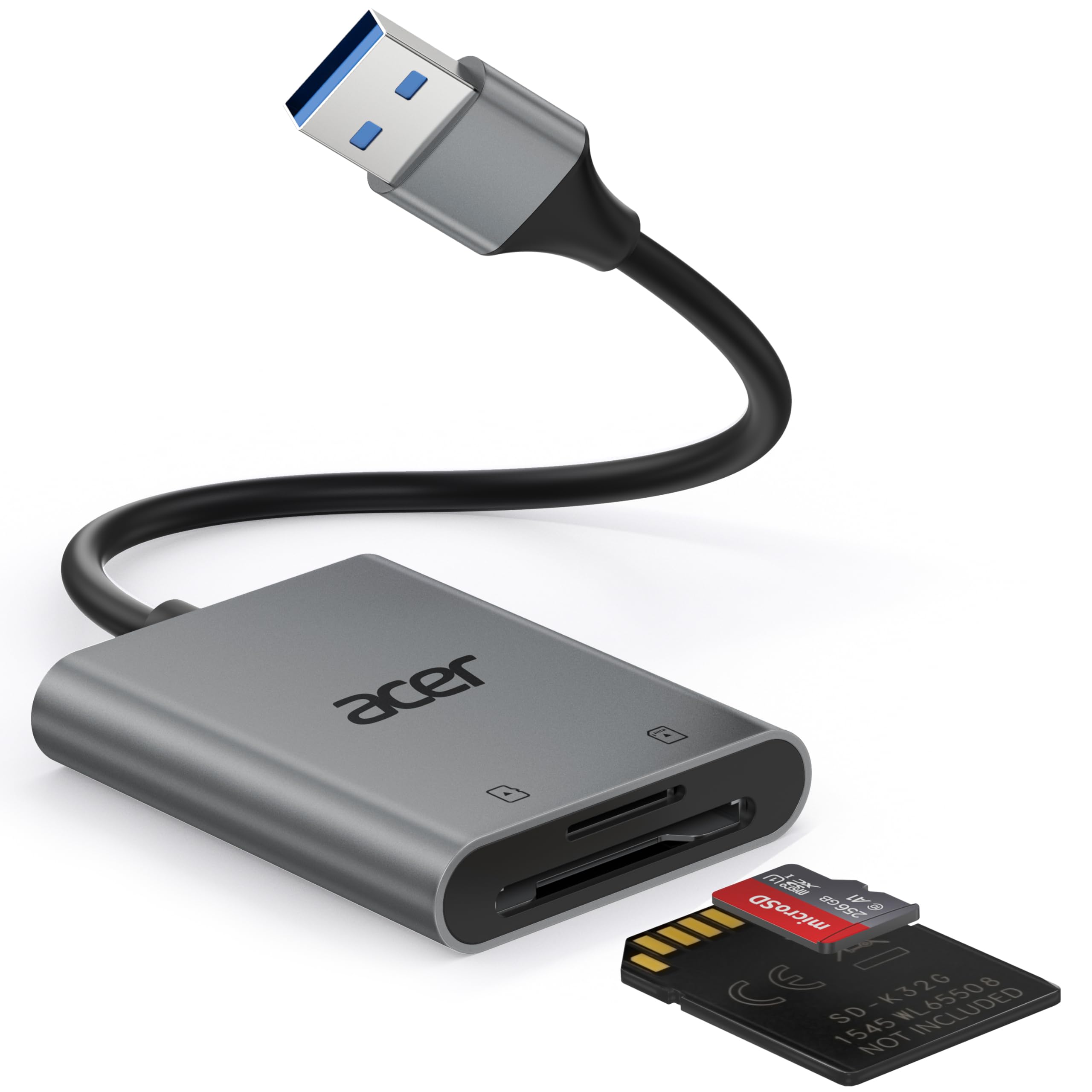
Acer USB-C Dual Slot

Top Pick
Acer USB-C Dual Slot

Modern laptop users

Our Score 9.4/10
Check Price

Worth Noting

  • USB-C plug may warm up during prolonged transfers.
  • Requires a USB-C port; not compatible with Lightning devices.
Slots
2
Speed
5 Gbps
Card Formats
SD, microSD
Connectivity
USB-A & USB-C

Built with an aluminum shell, this Acer reader handles SD and microSD cards at USB 3.0 speeds up to 5 Gbps. It connects via a built-in USB-C plug and includes a USB-A adapter, so it works with modern MacBooks, iPhones, and older laptops alike. The dual slots allow simultaneous use of both card types, and the compact frame leaves adjacent ports accessible.

During extended file transfers, the USB-C connector can get warm — a common trait in metal-bodied readers that doesn't affect performance or safety. The reader is recognized instantly on Windows, macOS, and iOS devices without drivers, and the snug fit prevents accidental disconnection. Travelers will appreciate the pocket-friendly size that fits alongside a phone or laptop.

This reader suits owners of USB-C laptops (MacBook Pro/Air, Dell XPS), iPhone 15/16 users wanting direct photo imports, and anyone who needs a single adapter for both USB-C and USB-A devices. It's not intended for Lightning-equipped iPhones or older iPads without USB-C, nor does it support CompactFlash or Memory Stick formats.

Tip: If your phone case is thick, a short USB-C extension cable ensures a secure fit without removing the case.

Bottom line: If you need one card reader that covers both modern USB-C laptops and older USB-A devices without breaking the bank, this Acer is the straightforward pick.

2

Anker 2-in-1 USB 3.0

Anker 2-in-1 USB 3.0

Budget buyers

Our Score 9.2/10
Check Price

Worth Noting

  • Some units may develop reading difficulties or become unresponsive after a few months of use.
  • Compatibility may be inconsistent with certain computer models, requiring a trial period.
Slots
2
Speed
5 Gbps
Card Formats
SD, microSD
Connectivity
USB-A only

The Anker USB 3.0 reader provides a simple plug-and-play solution for moving files from SD and microSD cards to computers with USB-A ports. Its dual slots allow simultaneous reading and writing, useful for backing up one card while previewing another.

This reader is best for casual users who need a low-cost way to transfer photos or documents from standard memory cards to older laptops or desktops. However, a small number of units may stop recognizing cards or become unresponsive over time, so it is not the best choice for irreplaceable data transfers or professional workloads where uptime matters.

Tip: Test the reader with your specific cards and computer within the return period to confirm compatibility.

Bottom line: This reader fits users who need a basic, low-cost way to transfer SD and microSD files to USB-A devices and aren't relying on it for irreplaceable data.

3

UGREEN 4-Slot Hub

UGREEN 4-Slot Hub

Photographers

Our Score 9.2/10
Check Price

Worth Noting

  • Standard Memory Stick works, but Memory Stick Duo cards require a separate adapter.
  • The attached 1.7 ft cable can limit placement on desks with distant ports.
Slots
4
Speed
5 Gbps
Card Formats
SD, microSD, CF, MS
Connectivity
USB-A only

With a CompactFlash slot that handles insertion smoothly and the ability to read all four slots at once, this UGREEN reader stands apart from many budget multi-format options. Transfer speeds reach the USB 3.0 ceiling of 5 Gbps, moving large raw files or video clips in seconds. The body feels solid, with slots that grip cards firmly without excessive force.

Photographers regularly offloading from CF cameras and SD drones will find the format support exactly what they need. The reader uses USB-A only, so it connects directly to older laptops and desktops but requires an adapter for modern USB-C machines. The attached 1.7 ft cable reaches comfortably on a laptop but may feel short on a desktop tower — a simple extension cord resolves that. Note that Memory Stick Duo cards are not supported, only standard MS.

Setup is plug-and-play on Windows, macOS, and Linux — no driver hunting. The reader maintains steady connection during sustained transfers, and card recognition is consistent across formats. Build quality holds up under regular handling, with no slot looseness reported over months of use.

Tip: A USB 3.0 extension cable adds flexibility for desktop setups where the short cable is restrictive.

Bottom line: If your workflow revolves around CF and SD cards and you don't need USB-C, this UGREEN reader delivers dependable multi-format support at a budget price.

4

uni Aluminum Dual Slot

uni Aluminum Dual Slot

Durability seekers

Our Score 9.2/10
Check Price

Worth Noting

  • SD card slot lacks clear insertion markings; orientation can be confusing at first.
  • No USB-C connectivity
Slots
2
Speed
5 Gbps
Card Formats
SD, microSD
Connectivity
USB-A only

The uni SD card reader stands out in the budget segment for its solid aluminum housing and braided nylon cable — materials typically found on more expensive readers. The spring-loaded slots let you eject cards with a single press, and the card reader is recognized instantly when plugged into a USB-A port. It’s a compact, no-nonsense design for users who prioritize build quality over format versatility.

This is the right choice if your workflow stays within USB-A territory — desktop PCs, older laptops, or docks with Type-A ports. The aluminum shell adds weight that keeps the reader planted on a desk, while the short 6-inch cable keeps clutter low. The main tradeoff is the lack of USB-C support, so it won’t connect directly to modern ultrabooks, tablets, or smartphones. Additionally, the SD card slot lacks clear orientation markings, which may lead to initial fumbling when inserting cards — a minor annoyance that becomes intuitive after a few uses.

Tip: The SD slot accepts cards with the label facing up; a quick check before inserting saves the first awkward fumble.

Bottom line: For desktop users who want a durable USB-A card reader and can live without USB-C, the uni delivers solid construction at a budget price.

5

Warrky 7-in-1 Hub

Warrky 7-in-1 Hub

Desktop setups

Our Score 9.2/10
Check Price

Worth Noting

  • Certain memory cards may not be recognized on first insertion; reinserting or cleaning contacts often resolves the issue.
Slots
4 cards + 3 USB-A
Speed
5 Gbps
Card Formats
SD, microSD, CF, MS
Connectivity
USB-A only

The Warrky 7-in-1 hub brings together a memory card reader and a USB hub in one device, offering three USB 3.0 ports alongside slots for SD, microSD, CompactFlash, and Memory Stick. Its 2.5-foot braided nylon cable provides more reach than the short tethers on most dedicated readers, making cable management easier on a cluttered desk.

Data transfers over USB 3.0 reach up to 5 Gbps, which keeps up with UHS-I cards for quick photo imports. The four slots can be used simultaneously, each supporting cards up to 2TB. No driver installation is needed — Windows, macOS, and Linux recognize it on plug-in. Given the combination of card reading and USB hub functions, the price is reasonable for what it offers.

This setup suits desktop workers and photographers who regularly handle CompactFlash or Memory Stick cards and want extra USB ports for peripherals. The plastic shell and larger footprint mean it is best left on a desk rather than carried in a bag. Those who prefer a premium metal finish will find aluminum alternatives elsewhere. If you only need SD and microSD support, a smaller two-slot reader is more portable and cheaper.

Bottom line: For desktop setups needing a single hub for card reading and peripherals, the Warrky delivers capable performance at a fair price — just don't expect an aluminum chassis.

6

xdgeLoad USB-C Reader

xdgeLoad USB-C Reader

iPhone users

Our Score 9.4/10
Check Price

Worth Noting

  • MicroSD card can be difficult to grip when removing from slot
  • Compatibility may be inconsistent with certain iPhone models
  • Data transfer limited to USB 2.0 speeds (480 Mbps), making large video transfers slow
Slots
2
Speed
480 Mbps
Card Formats
SD, microSD
Connectivity
USB-C only

The xdgeLoad USB-C Reader focuses on one task: connecting to iPhones and iPads for photo transfers with minimal effort. Unlike some dual-connector readers that can be hit-or-miss with iOS, this model maintains consistent recognition across most USB-C Apple devices. The attached short cable keeps it pocketable, and the two slots (SD and microSD) cover the formats trail camera owners typically use.

This reader suits iPhone 15/16 owners who want to offload holiday snapshots or trail camera images without installing apps. It also works with MacBooks and iPads, but not Windows PCs or Android phones. Large video transfers will take noticeably longer due to the USB 2.0 bottleneck, and occasional compatibility hiccups have been reported with certain iPhone models. The microSD slot can be tricky to extract cards from, though that’s a minor ergonomic quirk.

Tip: Use a fingernail or tweezers to grasp the microSD card edge when removing it from the slot.

Bottom line: A straightforward option for iPhone users who prioritize simplicity over speed, but not the best choice for video-heavy workflows or PC use.

7

SmartQ C368 USB 3.0

SmartQ C368 USB 3.0

Budget multi-format

Our Score 9.2/10
Check Price

Worth Noting

  • Device can disconnect and reconnect intermittently during card access
  • Compatibility with certain computers may be inconsistent, with some systems not recognizing the reader
Slots
4
Speed
5 Gbps
Card Formats
SD, microSD, CF, MS
Connectivity
USB-A only

The SmartQ C368 brings CF and MS card support to a budget-friendly price point, making it one of the few low-cost readers that handles these formats. It supports SD, microSD, MS, and CF slots simultaneously via USB 3.0, and setup is genuinely plug-and-play. However, the device can disconnect and reconnect intermittently during transfers, and some computers may not recognize it at all. These issues make it a gamble for critical file transfers, which is why the UGREEN 4-in-1 offers more consistent performance for a small step up in price.

Bottom line: If you need occasional CF or MS card access on a tight budget and can tolerate potential hiccups, this reader works — but avoid it for bulk transfers or when data integrity matters.

8

UGREEN USB-C 2-in-1

UGREEN USB-C 2-in-1

Travelers

Our Score 9.2/10
Check Price

Worth Noting

  • iPhone compatibility can be inconsistent; some models may not mount the card.
  • When using a phone with a case, the USB-C plug may not reach fully
Slots
2
Speed
5 Gbps
Card Formats
SD, microSD
Connectivity
USB-A & USB-C

This UGREEN reader is impressively compact, with both USB-A and USB-C connectors built into the body so there’s no cable to fuss with. It reads SD and microSD cards at USB 3.0 speeds and works reliably with laptops and tablets. The tradeoff is that the USB-C plug sits flush with the housing — too short to work through most phone cases. iPhone compatibility can also be hit or miss, with some models failing to mount the card. That makes this a better match for laptop or desktop use than for daily mobile photo transfers.

Tip: If you plan to use this with a phone, allow for case removal — the plug is short.

Bottom line: Best for travelers who need a compact dual-interface reader for laptops and tablets and don’t need to plug into an iPhone without removing its case.

9

Acer USB-A Dual Slot

Acer USB-A Dual Slot

Linux users

Our Score 9.4/10
Check Price

Worth Noting

  • Occasional file corruption has been noted during transfers.
  • No USB-C connectivity limits compatibility with newer laptops and phones.
Slots
2
Speed
5 Gbps
Card Formats
SD, microSD
Connectivity
USB-A only

The Acer SD Card Reader delivers consistent performance with both Windows and Linux systems, and its aluminum body feels substantially built compared to plastic alternatives. It supports SD and microSD cards via USB 3.0, and the compact design leaves adjacent ports free. However, the USB-A interface means modern laptops and smartphones with USB-C ports require an adapter. Occasional file corruption during transfers has been noted — keeping backups for critical data is advisable.

Bottom line: Best suited for desktop or laptop users who only need USB-A and prioritize build quality over port versatility.

How to Choose

Card Formats

SD and microSD are the standard for most cameras, phones, and laptops. Adding CompactFlash or Memory Stick support widens compatibility but often comes with fragile pin designs that can bend or break. If you rarely use CF, a dedicated SD/microSD reader is more reliable.

The physical mechanism for CF slots is inherently more delicate; the thin pins are easy to misalign. A reader with a poorly designed CF slot can damage both the reader and the card. Only buy a multi-format reader if you regularly need those older standards.

Number of Slots

Two-slot readers (SD and microSD) are the most reliable because they have fewer moving parts and simpler internal routing. Four-slot readers add convenience for simultaneous transfers but also add points of failure. The tradeoff is speed vs. trust: a 2-slot reader from a known brand often outlasts a 4-slot budget hub.

Simultaneous read/write is a useful feature for photographers transferring multiple cards at once. However, many multi-slot readers split the USB bandwidth, so all slots together can't exceed the USB 3.0 5Gbps limit. This rarely matters for JPEGs but can slow RAW or video dumps.

Connectivity

USB-A is the universal legacy port found on most desktop PCs and older laptops. USB-C is now standard on modern MacBooks, ultrabooks, and recent iPhones. A dual-interface reader with both connectors is the most flexible choice, but the USB-C plug length matters: shorter plugs may not fit through thicker phone cases.

Readers with a short attached cable often sit flush against the laptop, which can block adjacent ports on tightly spaced devices. Detachable cables or longer plugs avoid this issue. For iPhone 15/16 users, specifically look for readers with positive iOS compatibility reviews, as many USB-C readers work only with computers.

Data Transfer Speed

USB 3.0 at 5 Gbps is the baseline for modern SD and microSD card speeds. USB 2.0 at 480 Mbps is a bottleneck for large video files, adding minutes to transfers. However, USB 3.0 readers don't always achieve full speed due to card or controller limitations. For casual photo transfers, USB 2.0 is acceptable; for 4K video, insist on USB 3.0.

The practical speed you get depends on the card's UHS rating and the reader's chipset. Most budget readers use the same standard controller, so speed differences are small. UHS-II cards need a specific reader to reach their full speed, but those are rare in the sub-$15 market.

Build Quality

Aluminum housings dissipate heat better and feel more durable, but they can warm up during extended use. Plastic readers are lighter and cheaper but more prone to cracking if dropped or stuffed in a bag. The real differentiator is the connector: braided cables resist fraying, and spring-loaded card slots prevent accidental ejection.

Failures often happen not at the reader's body but at the USB connector or the card slot pins. A reader that is recognized consistently across multiple computers is a sign of decent shielding and power management. Checking user-reported failure rates is more useful than looking at star ratings alone.

Frequently Asked Questions