Audio & Headphones

10 Best Kids Headphones of 2026: The Ones That Survive Daily Use

Protect your child's hearing with volume-limited headphones that survive daily use. Best wired and wireless picks for every budget.

Most kids headphones break within months. Hinges crack, ear pads detach, or sound cuts out entirely. That's because the category prioritizes low cost over long-term build, and many parents end up buying replacements mid-school year. The problem is so common that durability has become the single most important factor in choosing a pair.

But that doesn't mean you have to choose between safe volume and durability. The best options in this guide combine volume limiting (85dB or lower) with reinforced hinges and materials that survive backpacks and drops. Some even add features like LED lights or app-based parental controls.

This guide focuses on headphones that deliver on safety and fun without falling apart after a few uses. Whether you need a wired pair for school or a wireless one for road trips, these are the ones that hold up to daily life and keep your child safe.

1

iClever BTH12

Top Pick
iClever BTH12

Fun & travel

Our Score 9.2/10
Check Price

Worth Noting

Mic
Yes
Type
Wireless
Battery Life
85h
Volume Limit
74/85 dBA

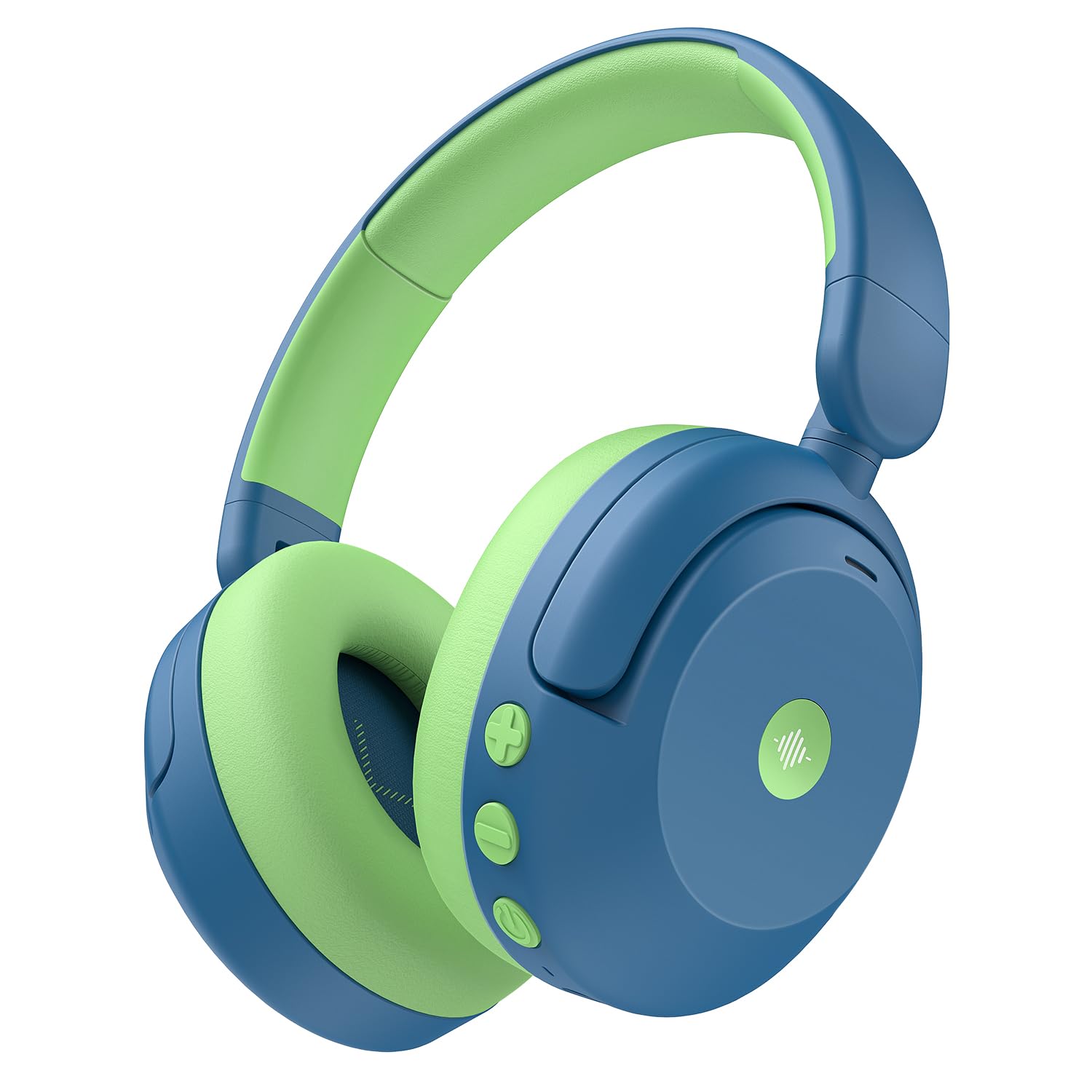
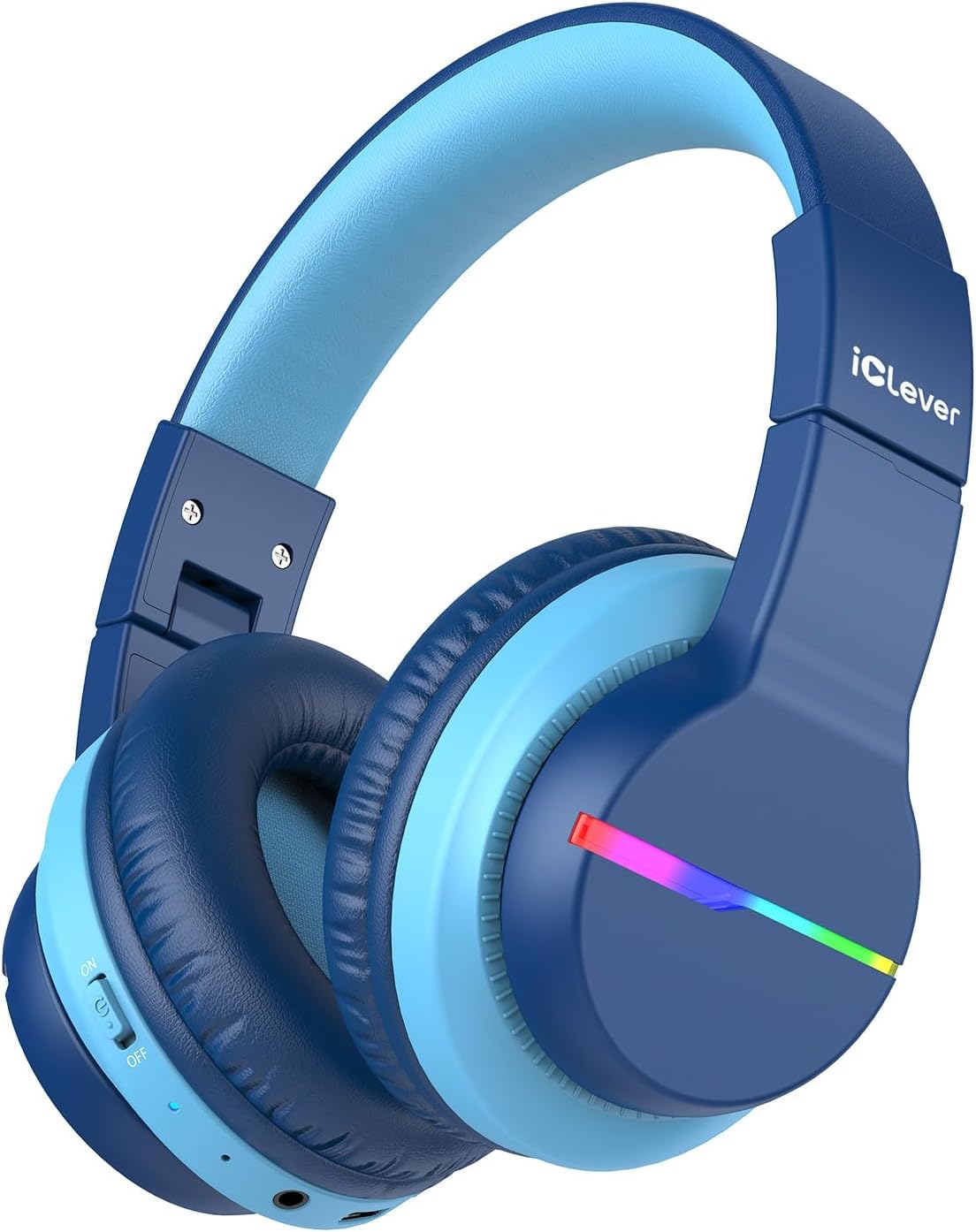
With 85 hours of playback, the iClever BTH12 outlasts any other budget kids headphone by a wide margin — enough for a round-trip international flight plus daily use for weeks. The LEDs cycle through seven colors and are bright enough to be noticed without distracting the wearer, adding a fun element that children genuinely enjoy.

Sound quality is warm with a bass boost that masks some detail but suits cartoons and pop music well. The 74/85 dBA volume limiter gives parents a safer option without the headphones sounding muffled. Bluetooth 5.2 pairs reliably and maintains connection across a typical house.

This headphone suits families who want a fun, long-playing wireless option for home and travel — provided the child is gentle with gear. The plastic build means hinges can crack under rough use and some units have stopped working within a few months. For kids who treat headphones carefully, this is a standout value; for heavier use, consider the iClever BTH20 with a more durable frame.

Tip: Encourage your child to place the headphones on a soft surface or in a case when not in use to reduce hinge stress.

Bottom line: For parents who can accept that a budget-friendly headphone may not survive a clumsy toddler, the BTH12 delivers outstanding battery life and kid-approved fun at a price that makes replacement painless.

2

EarFun K1

EarFun K1

School budget

Our Score 9.2/10
Check Price

Worth Noting

  • Sound can drop out in one ear after several months of daily use.
  • Folding hinge may crack under repeated opening and closing in a backpack.
Mic
Yes
Type
Wired
Battery Life
Volume Limit
85/94 dB

At under $10, the EarFun K1 delivers a set of features rarely seen at this price: a two-level volume limiter (85/94 dB), a built-in microphone, and a share port that lets two kids plug into one device. That combination makes it the clear value pick for school use or travel backup, especially compared to wireless options that cost twice as much.

Comfort is a strong point — the padded headband and ear cups keep kids content during a full school day or a long car ride. Sound quality is more than adequate for audiobooks, videos, and classroom assignments. The share port works as advertised, making it easy for siblings to share a tablet without a splitter.

This headset suits families who need multiple affordable pairs for school or trips and are comfortable swapping them out within a year. If you have a very rough kid or need a daily driver for years, the sturdier wireless options like the BTH12 are a better fit. The volume limiter gives peace of mind, but the build quality asks for occasional replacements.

Tip: Avoid folding the headset flat when not in use; storing it unfolded may reduce stress on the hinge.

Bottom line: If you need a cheap, wired headset with volume limiting for school or the car, the K1 is hard to beat — just budget for a replacement if it gets daily heavy use.

3

EarFun K2

EarFun K2

Budget wireless

Our Score 9.2/10
Check Price

Worth Noting

  • Headband and hinges may loosen or crack within months under repeated folding
Mic
Yes
Type
Wireless
Battery Life
40h
Volume Limit
85/94 dB

The EarFun K2 packs Bluetooth 5.4 and a 40-hour battery into a foldable design for under $15, making it the most affordable wireless option with these specs. Audio is clear and comfortable for school or travel use, and the built-in volume limiter offers two levels (85/94 dB) for hearing safety.

Parents on a tight budget who don't expect years of heavy use will find the K2 a practical pick. The headband and hinges can loosen or crack over time, so it works best for gentle kids in controlled settings — not for rough play or daily tossing into backpacks.

The ear pads are soft enough for extended listening sessions, and Bluetooth pairing is straightforward. Battery life meets the advertised 40 hours under normal volume, so weekly charging is typical.

Tip: Store the headphones flat or in a hard case to reduce stress on the folding hinges.

Bottom line: A smart entry-level wireless choice for families who want volume safety and long battery on a tight budget — just accept that durability is a short-term bet.

4

iClever BTH20

iClever BTH20

Travel noise

Our Score 9.2/10
Check Price

Worth Noting

  • Battery performance may degrade over time; some units stop holding a charge after months.
  • Hinge or earcup breakage has been noted after a few months of typical use.
Mic
Yes
Type
Wireless
Battery Life
60h
Volume Limit
80 dBA

The iClever BTH20 brings active noise cancellation and a 60-hour battery to a kids headphone at a mid-range price, outclassing many adult-oriented ANC models. Its 40dB of noise reduction and 80dBA volume limit make it a strong option for flights or car rides where engine drone and loud surroundings are the main distractions.

Bluetooth 5.4 pairs easily with tablets and phones, and the fit is comfortable enough for extended wear. The sound is clear and balanced for music and stories. Where some travel-focused kids headphones skimp on battery, the BTH20 lasts through long journeys without a recharge.

This model suits families who prioritize noise isolation and battery life over flashy features like LED lights (the top pick BTH12 covers that angle). However, battery longevity can vary between units, and some owners have seen the charge stop holding after several months. Durability also shows mixed results, with hinge or earcup issues reported in a portion of cases. For travelers who accept that any electronic may have unit-level variation, the BTH20 delivers strong performance where it counts most.

Tip: Keep it charged at least once a week when not in use, and consider an extended warranty – battery inconsistency is the main tradeoff.

Bottom line: If your family’s priority is travel-ready noise cancellation with a long-lasting battery, the BTH20 delivers that better than many alternatives at twice the price.

5

JBL 320BT

JBL 320BT

Parental controls

Our Score 9.2/10
Check Price

Worth Noting

Mic
No
Type
Wireless
Battery Life
50h
Volume Limit
<85dB

The JBL Junior 320BT differentiates itself with its companion app, giving parents direct control over volume limits and listening time – a feature not found on the category's top pick. The app runs smoothly on both iOS and Android.

Bluetooth 5.3 ensures a stable connection for streaming from tablets or phones. The headset delivers clean sound at safe volume levels, with the <85dB limit adjustable through the app.

This model suits tech-savvy parents who want app monitoring for short listening sessions. The ear cushions may detach during active play and the plastic build feels less robust than some alternatives – a manageable tradeoff when headphones stay on a desk rather than in a backpack.

Tip: Store headphones in a protective case when not in use to reduce stress on ear cushion attachments.

Bottom line: For parents who prioritize app-based controls over long-term durability, the JBL delivers exactly what it promises. Those needing a tougher build for daily backpack travel may want to look elsewhere.

6

Acer HK03

Acer HK03

Reliable wired

Our Score 9.4/10
Check Price

Worth Noting

  • Hinge may loosen or break after months of daily use in some units.
Mic
No
Type
Wired
Battery Life
Volume Limit
85/94 dB

The Acer HK03 stands out among budget kids headphones for its build quality — sturdier than many alternatives at this price point. The 85/94 dB volume limiter with two selectable levels and a tangle-free cable make it a straightforward fit for classrooms, where safety and simplicity are priorities. The reinforced jack and foldable hinge add to the overall durability.

This pair suits parents who want a no-nonsense wired set for school use, where volume control is required and a wireless connection isn't needed. It offers better construction than the ultra-budget wired alternatives, though some units may show hinge wear over time — a tradeoff that's acceptable given the price. The soft ear pads and foldable design add everyday practicality.

Comfort is a highlight: the plush ear pads and lightweight frame let kids wear them for extended periods without complaint. Sound quality is clear for audio lessons and videos, and the volume limiter gives parents peace of mind during unsupervised use. The foldable design stows easily in a backpack, and the tangle-free cable keeps things simple.

Tip: Store the headphones in a protective case when not in use to minimize hinge strain.

Bottom line: For wired school headphones with a volume limit and above-average build, the Acer HK03 is a sensible pick.

7

noot K11

noot K11

Wired no limiter

Our Score 9.4/10
Check Price

Worth Noting

  • No volume limiter; parents must set device volume limits manually to protect young ears.
  • No microphone
Mic
No
Type
Wired
Battery Life
Volume Limit
None

The noot K11 delivers exceptional comfort and clear sound for the price, with a tangle-free braided cord that holds up well to daily use. It suits families who already manage device volume manually and don't need a microphone for classes or calls. The lack of built-in volume limiting means parents must actively monitor output to protect hearing — a major reason this doesn't rank higher among safety-focused options.

Bottom line: A good wired option for budget-minded parents who already control device volume and don't need a mic, but not for those seeking integrated hearing safety features.

8

Acer OHR668

Acer OHR668

New budget wireless

Our Score 9.2/10
Check Price

Worth Noting

  • Fit may be too large for very young children around age three
  • Durability over months of daily use remains unverified
Mic
Yes
Type
Wireless
Battery Life
60h
Volume Limit
85/94 dB

The Acer OHR668 pairs quickly and delivers clear sound for the price, with a lightweight build that fits most school-age kids. The 85/94 dB limiter gives parents control over listening levels, and the 60-hour battery covers weeks of casual use. Foldable design makes it easy to toss in a bag for travel. However, the ear cups may be too large for a three-year-old, and long-term durability over months of daily use is not yet confirmed.

Bottom line: Best suited as a travel backup or short-term wireless option for school-age children where long-term durability is less critical.

9

Belkin SoundForm Mini

Belkin SoundForm Mini

Case included

Our Score 9.0/10
Check Price

Worth Noting

  • Bluetooth pairing may be intermittent, especially with Kindle devices
  • Unit-to-unit build consistency varies; some owners note issues with hinges or electronics over time.
Mic
Yes
Type
Wireless
Battery Life
30h
Volume Limit
85 dB

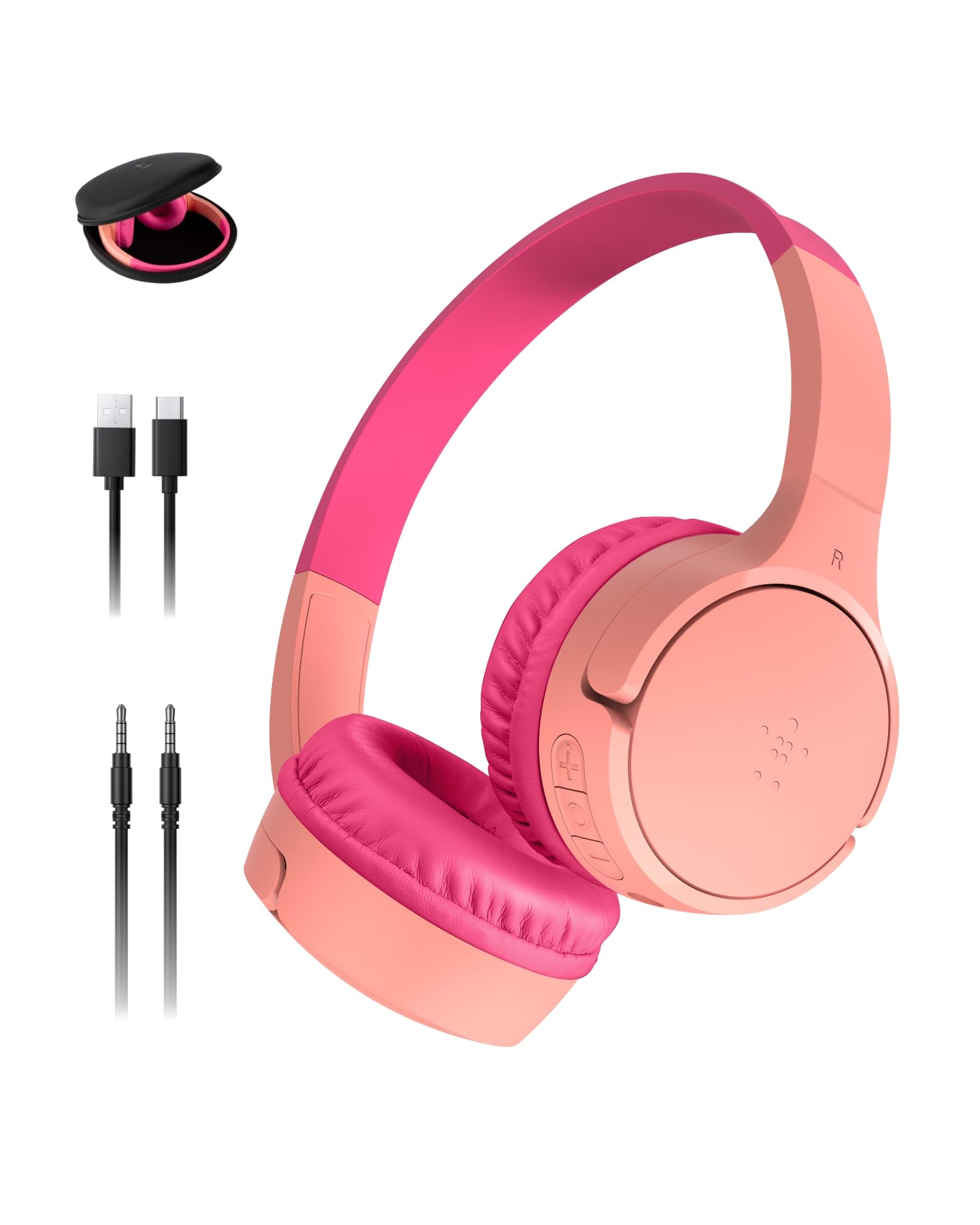
The Belkin SoundForm Mini comes with a protective carrying case and comfortable over-ear fit, plus a safe 85 dB volume limit. Bluetooth pairing can be inconsistent, particularly with Kindle devices, making this a better fit for short trips and occasional use rather than daily wireless streaming. Build quality shows some unit-to-unit variance, so it is best treated as a travel companion for light-duty listening.

Bottom line: Best for parents who want a carrying case for occasional use and are willing to accept Bluetooth quirks — avoid if the child primarily uses a Kindle or needs a dependable wireless connection.

10

Candy Bila BH03

Candy Bila BH03

Cute wired

Our Score 9.2/10
Check Price

Worth Noting

  • For daily use, some units may stop producing sound after a few weeks
  • Sound volume on some devices may be too low, and clarity varies across media.
Mic
Yes
Type
Wired
Battery Life
Volume Limit
85/94 dB

The Candy Bila BH03 catches eyes with its gradient purple finish and padded ear cups that keep kids comfortable during short listening sessions. The built-in volume limiter (85/94 dB) and microphone add safety and utility for school calls or tablet use. However, some units may stop producing sound after limited use, and audio clarity can be inconsistent. This makes the BH03 a good choice for occasional home entertainment or travel, but not for daily school use where reliability matters more.

Bottom line: For a parent seeking a visually appealing headphone for occasional home use or travel, the Candy Bila BH03 works as a budget-friendly option – but not for daily school reliance.

How to Choose

Volume Limiting: Safe or Too Quiet?

Most kids headphones limit volume to 85dB, the WHO-recommended safe level. Some offer a switchable 85/94dB mode for noisier environments like outdoor play. The trade-off is that the 85dB setting can sound too quiet in a loud classroom or car, leading kids to push the volume to the higher limit.

If your child uses headphones primarily in quiet spaces, 85dB is fine. For mixed environments, models with a switchable limiter give you flexibility - but you'll need to monitor when they flip to 94dB.

Wireless vs Wired: Convenience vs Reliability

Wireless headphones free kids from cords but introduce battery management and Bluetooth connection quirks. Wired models are cheaper, never need charging, and don't suffer from signal drops - but the cable can snag on desks or become a tripping hazard for younger children.

For school and tablet use, wired is often the more reliable choice. For car trips and travel, wireless wins on convenience, provided the battery lasts the journey.

Battery Life: How Long Is Enough?

Wireless kids headphones range from 30 to 85 hours of playback. Longer battery means less frequent charging, but also often means a larger battery cell that adds weight. Fast charging is a bonus - 10 minutes of charge for several hours of use can save a road trip.

Beware that battery capacity degrades over time. A pair that starts at 50 hours may only last 30 after a year. If you plan to use them for multiple years, look for models with user-replaceable batteries or a generous warranty.

Microphone: Not All Mics Are Equal

A built-in microphone matters for online classes, video calls, and gaming. But placement and quality vary widely. Cheap mics pick up background noise and make the child's voice sound muffled. Some headphones place the mic in the cable, others in the ear cup.

If your child uses headphones for school, choose a model with a dedicated mic and reviews that praise its clarity. Avoid ear-cup mics that rub against hair and create static.

Frequently Asked Questions